
Distribution Boxes for Photovoltaics: Kuoyu PZ30 vs. Market Alternatives
Distribution boxes for photovoltaics are rarely the most discussed component in a solar bill of materials, yet they are the protective link between generation equipment and the wider electrical network. For buyers comparing suppliers, the practical task is to verify that a box matches the installation environment and the electrical configuration, not just that it carries a solar label.
Searches for distribution boxes for photovoltaics, solar distribution box, PV combiner box or photovoltaic distribution box return products with different functions: DC-side combiners used to merge PV strings, AC-side distribution boards, outdoor waterproof enclosures and indoor load centers. A buyer in the research or evaluation phase should first decide which function is missing from the design; otherwise specification comparison becomes misleading. This guide therefore uses Kuoyu Electrical's PZ30 distribution box as a documented example and compares it with typical unnamed market alternatives, keeping the discussion on attributes that can be checked during procurement.
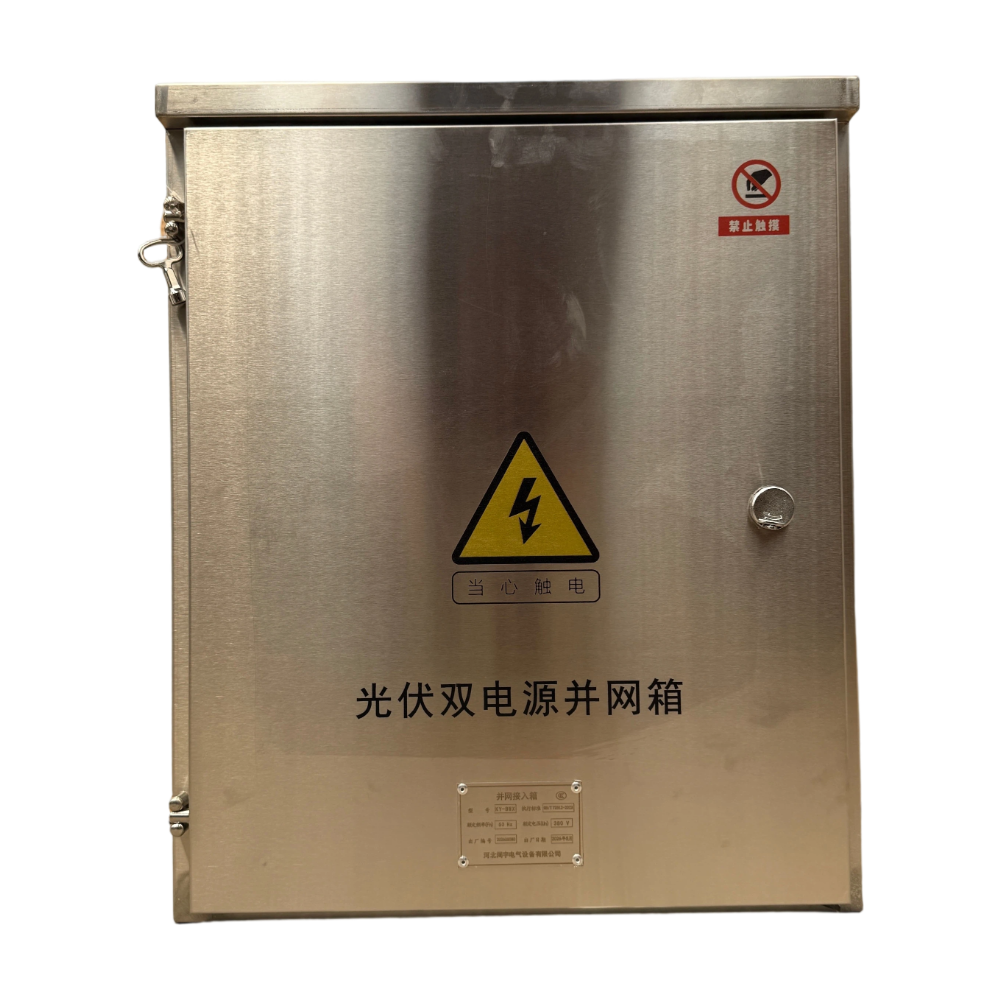
Why PV Distribution Box Selection Needs a Project-Fit Approach
Photovoltaic sites expose electrical enclosures to conditions that are not all visible in a product photograph. Application documentation for Kuoyu Electrical describes indoor and outdoor environments with high and low temperatures, humidity and dust, as well as industrial workshops, commercial buildings and infrastructure construction projects where power distribution equipment must run continuously. In that context, the core requirements are repeated across projects: waterproofing and dustproofing, corrosion resistance, high mechanical strength, flame retardance and the ability to customize structure when the internal layout has to follow a specific design.
The opportunity for a buyer is to evaluate distribution boxes against those conditions before purchase. A generic indoor box can be damaged by condensation in a rooftop PV room, while an over-specified outdoor cabinet may increase cost without adding measurable value. The useful comparison is not only about brand names; it is about documented rated voltage, rated current, ingress protection, enclosure material, manufacturing quality system and the flexibility of the supplier when a project needs a modified configuration.
Kuoyu Electrical: Documented Manufacturer Profile
Kuoyu Electrical, the brand behind the PZ30 series considered here, is part of Hebei Kuoyu Electrical Technology Co., Ltd., a manufacturer founded in 2017 and headquartered in Shijiazhuang, Hebei Province, China. The company profile lists distribution boxes, distribution cabinets, transformers, electric wires, cables and other power equipment as its main products, and it operates its own sheet metal processing workshops as well as high and low voltage complete equipment assembly workshops.
The corporate profile states that the company passed ISO9001 three-system certification in 2017 and that production processes from raw material procurement and scheme design to assembly and finished product acceptance are supervised by professional technicians. In 2020 it received several Chinese quality and brand recognitions, including China 315 Integrity Brand, Hebei Famous Brand, Outstanding Products of Hebei Province and National Quality Trusted Certified Products. For procurement teams, those statements matter less as awards and more as signals that the supplier has an operating management system and a manufacturing footprint that can be audited.
The Kuoyu PZ30 Series at a Glance
The product used for this comparison is the PZ30 series distribution box, classified in Kuoyu's product documentation as an industrial and residential distribution box. The published specification sheet is short but precise:
- Rated voltage: 220V/380V
- Rated current: up to 125A
- Protection class: IP40/IP54
- Material options: high-quality ABS plastic, cold-rolled steel plate, stainless steel optional
- Typical scope: residential, commercial and industrial electrical systems
This is a low-voltage AC distribution product rather than a specialized DC string combiner. In a photovoltaic installation, the PZ30 range is most relevant where the project needs a distribution point for AC circuits, such as the output side of string inverters or the incoming supply side of a building consuming solar power. A separate DC photovoltaic distribution box or PV combiner box is normally used where multiple solar strings must be combined and protected on the DC side.
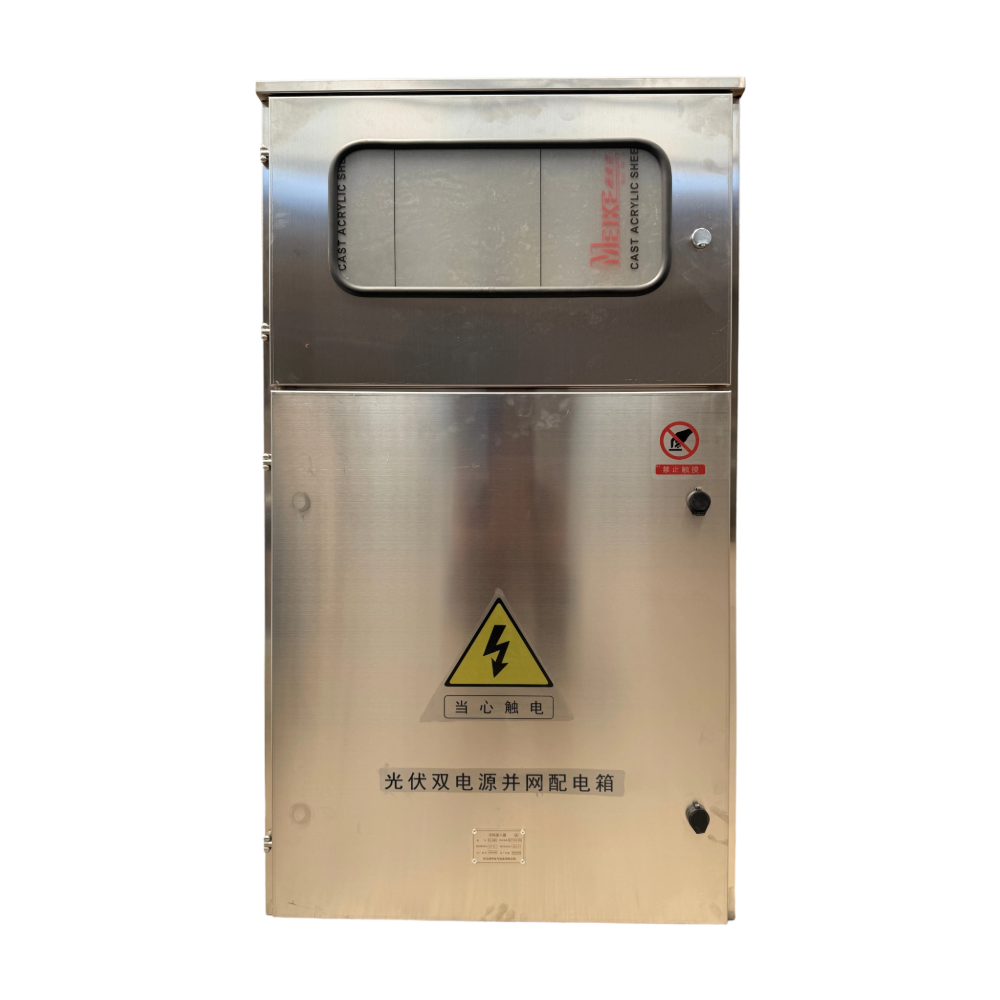
Technical Explanation: What to Read Beyond the Model Number
Protection Class IP40 vs IP54
The PZ30 series is documented with IP40 and IP54 protection classes. The IP code describes how well an enclosure resists solid objects and water. IP40 indicates protection against access to hazardous parts and against solid objects larger than 1mm, but no protection against water. IP54 adds protection against limited dust ingress and water splashed against the enclosure from any direction.
For a photovoltaic project, that distinction is important. IP40 may be acceptable in a clean indoor electrical room where the enclosure is not exposed to water. IP54 is better suited to areas with dust and occasional splashes, such as a semi-outdoor installation area or a workshop environment. Neither rating means the box is submersible; a PZ30 unit should not be positioned where flooding or continuous water jets are expected.
Rated Voltage and Current
The PZ30 is rated at 220V/380V, which corresponds to standard low-voltage AC distribution in many markets, with a rated current of up to 125A. Buyers should compare this with the calculated load of the circuit. If a solar project requires more than 125A at a single distribution point, the specification exercise should move to a larger distribution cabinet rather than forcing an oversized load into a compact box.
Material and Mechanical Strength
Kuoyu documents ABS plastic, cold-rolled steel plate and optional stainless steel for the PZ30 series. Each material choice changes weight, corrosion behavior, mechanical strength and cost. ABS plastic is commonly used for indoor, lighter-duty enclosures; cold-rolled steel provides higher mechanical strength and is often selected when the box is fixed on walls in commercial or industrial buildings; stainless steel is an option when the environment demands stronger corrosion resistance. Project engineers should select the material option according to the specific installation room and microclimate rather than assuming one material fits all PV projects.
Application and Use Cases from Supplier Documentation
Kuoyu's application documentation for its distribution equipment line describes a role model that is relevant for PV projects: the equipment realizes safe circuit control, power distribution management and overload and short-circuit protection while operating in continuous 24/7 mode. These functions are exactly what a distribution box contributes to the electrical system around a photovoltaic installation.
The same documentation identifies typical supporting components for a full distribution assembly, including circuit breakers, contactors, relays, busbars, grounding devices, indicator lights and cooling fans. A complete distribution box is therefore more than an empty enclosure; its internal configuration must match the protection devices required by the solar plant designer.
Manufacturing Environment Evidence
Two documented cases in Kuoyu's materials illustrate real-world operation of its distribution equipment. In one case, an automotive manufacturer used 15 units to protect industrial production lines from overload and short circuit. The supplier reports three years of continuous operation with zero circuit failure and a 30% increase in equipment operation stability. In a second case, a real estate developer deployed 30 units for power transmission, distribution and circuit control across commercial and residential systems, with five years of stable operation, zero safety accidents and power supply reliability of 99.99%.
These cases are not presented as a guarantee for every future project, but they give a buyer a useful evaluation question: can the supplier show where its distribution boxes have operated continuously in a demanding electrical environment?
Market Trend Analysis: Where the Category Is Headed
Published market data points to continued growth in the broader photovoltaic distribution and combiner equipment segment. Market research firm Market Research Future estimated the global photovoltaic combiner box market at approximately USD 2.8 billion in 2024. Business Research Insights projects the solar combiner boxes market to grow from USD 1.2 billion in 2026 to USD 2.1 billion by 2035, representing a CAGR of 6.2%. Future Market Insights also expects DC smart PV combiner boxes to hold a 62.5% share of the PV combiner box segment by 2035.
The Asia-Pacific region continues to drive much of the world's solar deployment, with Grand View Research reporting a 54.0% share of the solar market for Asia-Pacific in 2023, led by installations in China and India. For distribution box buyers, this regional demand pattern means that large volumes of enclosures are being sourced through global supply chains, which raises the importance of supplier documentation, factory audits and consistent compliance management.
One important caveat from the market research is that definitions vary. Some analysts include full distribution boards in their market size while others count only string combiner components. Buyers should therefore treat market totals as directional context and continue to evaluate products at the specification level.
Comparison with Typical Market Alternatives
No specific competitor names are used in this comparison. Instead, the most common categories of market alternatives are examined alongside the Kuoyu PZ30, because in practice buyers are choosing between product types as much as between brands.
Common Alternative Categories
- General-purpose low voltage distribution boxes: usually inexpensive, produced in high volume for residential or light commercial use, but not always documented with rated current, IP class or material traceability.
- Dedicated DC PV combiner boxes: designed for string-level DC combining, fuse protection and often higher DC voltage ratings; these are functionally different from AC distribution boxes and cannot be substituted without changing the design.
- Ingress-protected outdoor enclosures: often bought as empty boxes and fitted with breakers locally; the buyer then takes responsibility for the entire assembly rather than receiving a factory-assembled and tested distribution box.
| Selection Criterion | Kuoyu PZ30 Documentation | What to Verify with Any Alternative |
|---|---|---|
| Rated voltage | 220V/380V | Is the rating for AC or DC? Does it match the circuit side where the box will be installed? |
| Rated current | Up to 125A | What is the calculated load? Is the box rated above that with an acceptable margin? |
| Protection class | IP40/IP54 | Does the enclosure rating match the installation room, dust exposure and water exposure? |
| Material | ABS plastic, cold-rolled steel plate, stainless steel optional | What material is actually used? Is corrosion protection specified for outdoor or humid sites? |
| Manufacturing system | ISO9001 three-system certified since 2017 | Can the supplier provide evidence of a quality management system and factory audit results? |
| Customization | Voltage and logo customization documented | Can the supplier modify the internal structure, busbar arrangement or device configuration? |
| OEM capacity | Monthly capacity about 8000 units, lead time about 30 days, MOQ 2 units, 100% test | What is the real lead time for the required quantity, and is final testing routine? |
Honest Limitations to Consider
A balanced comparison should also state what the PZ30 is not. First, it is rated with a maximum current of 125A, so a project with a single distribution point above that level needs a larger product category, such as the distribution cabinets in Kuoyu's own range. Second, the PZ30 data sheet does not claim to be a DC combiner product; buyers who need string-level DC combining should look for a dedicated photovoltaic combiner box and confirm DC voltage ratings separately. Third, IP40/IP54 protection does not make the enclosure submersible; site planning must still protect it from flooding and sustained water jets.
Buyers working to compliance frameworks such as IEC 61439-2:2020, which defines requirements for power switchgear and controlgear assemblies used in photovoltaic installations, or UL 1741 for grid-connected PV equipment in North America, should confirm the exact certification status of the specific SKU before ordering. Product-level certifications are separate from company-level management system certification; neither can be assumed from a brochure alone.
Structured Checklist for Project-Fit Evaluation
- Define the function: is the required product a DC combiner box, an AC distribution box, or a main switchboard? Do not compare functions that operate on different electrical sides.
- Match electrical data: check rated voltage, rated current and breaking capacity against the circuit design; confirm with the project engineer.
- Match environmental data: use the IP rating to define where the box can be installed, and choose a material option appropriate for humidity, dust and corrosion risk.
- Verify supplier evidence: ask for ISO9001 management system certificates, production workshop descriptions, test procedures and past application cases.
- Assess customization and delivery: confirm whether voltage and logo customization is possible, what the MOQ is, what the realistic lead time is, and whether remote support is available after shipment.
Future Outlook
The line between solar distribution boxes and PV combiner boxes will continue to blur in marketing language, but engineering reality will keep them separate. DC-side products need DC ratings, fuse coordination and string-level protection; AC-side products need reliable overload and short-circuit protection, correct IP classification and mechanical suitability for the site. As the Asia-Pacific market grows and compliance standards such as IEC 61439-2 become more visible in tender documents, buyers are likely to rely more on documented specifications and factory evidence. That should benefit suppliers that can show traceable production, realistic customization capacity and a neutral, spec-first conversation.
FAQ
Can a Kuoyu PZ30 distribution box be used in a photovoltaic project?
Kuoyu's corporate profile lists new energy photovoltaic systems among the power distribution sectors it serves, and the PZ30 is positioned for residential, commercial and industrial electrical systems. In practice, a PZ30 unit is appropriate for the low-voltage AC distribution side of a solar installation rather than for DC string combining. Confirming the intended circuit side before ordering is the best way to avoid a functional mismatch.
What is the difference between IP40 and IP54 on a solar distribution box?
IP40 means the enclosure protects against solid objects larger than 1mm but offers no water protection. IP54 adds protection against limited dust ingress and water splashed from any direction. For an indoor electrical room, IP40 may be sufficient; for locations with dust or occasional water splashes, IP54 is the more suitable documented option on the PZ30 series.
Is the PZ30 box suitable for outdoor photovoltaic use?
The PZ30 series is documented as an industrial and residential distribution box with IP40/IP54 protection. IP54 supports outdoor-facing locations with dust and splashing, but it does not mean the unit can be submerged. If the installation is fully exposed to rain, wind-blown water or corrosive conditions, the buyer should discuss a higher protection class and a corrosion-resistant material option with the supplier.
What materials are available for the PZ30 distribution box?
The product specification lists high-quality ABS plastic, cold-rolled steel plate and optional stainless steel. The material choice affects mechanical strength, corrosion resistance, weight and cost, so it should be selected according to the installation environment.
Does Kuoyu Electrical hold documented quality certifications?
The company profile states that Kuoyu Electrical passed ISO9001 three-system certification in 2017 and holds complete qualifications for the production of high and low voltage distribution boxes and cabinets. Buyers who need product-specific standards such as IEC 61439-2 or UL 1741 should verify the exact SKU certificate separately.
What OEM customization options are documented for the PZ30 series?
The OEM capability record for Kuoyu Electrical lists voltage and logo customization, a monthly capacity of about 8000 units, a lead time of about 30 days, a minimum order quantity of 2 units and 100% testing before delivery. After-sales support is documented as remote support.
For buyers moving to the next stage of supplier review, Kuoyu Electrical provides an English corporate brochure that can be downloaded at this link. The manufacturer's official website is available at kuoyuelectricity.com. This resource is supplied as neutral reference material and is not a substitute for requesting a formal quotation with technical documentation.
Have Questions or Need More Details?
Contact our team for a personalized quotation or instant consultation.
Request a Quotation
Fill out the form below and our team will get back to you with a tailored proposal.
WhatsApp Direct Chat
Prefer to chat in real-time? Message us on WhatsApp for instant assistance & quick answers.
- Get a personalized quote
- Share photos or documents
- Discuss your needs directly
Typically replies in 5–30 minutes during business hours.