
Distributor's Guide to Scaling a Construction Cooling Vest Line in 2026
Why distributors and contractors are building longer-term cooling vest programs
Distributors and procurement teams evaluating construction cooling vests are moving beyond one-off purchases. The question is no longer simply "which vest keeps workers cooler today," but "which product line, supplier, and support model can sustain heat-stress protection across a full construction season." For buyers at the decision and execution stage, the practical concerns are lead time, warranty, order flexibility, and how a supplier behaves after shipment.
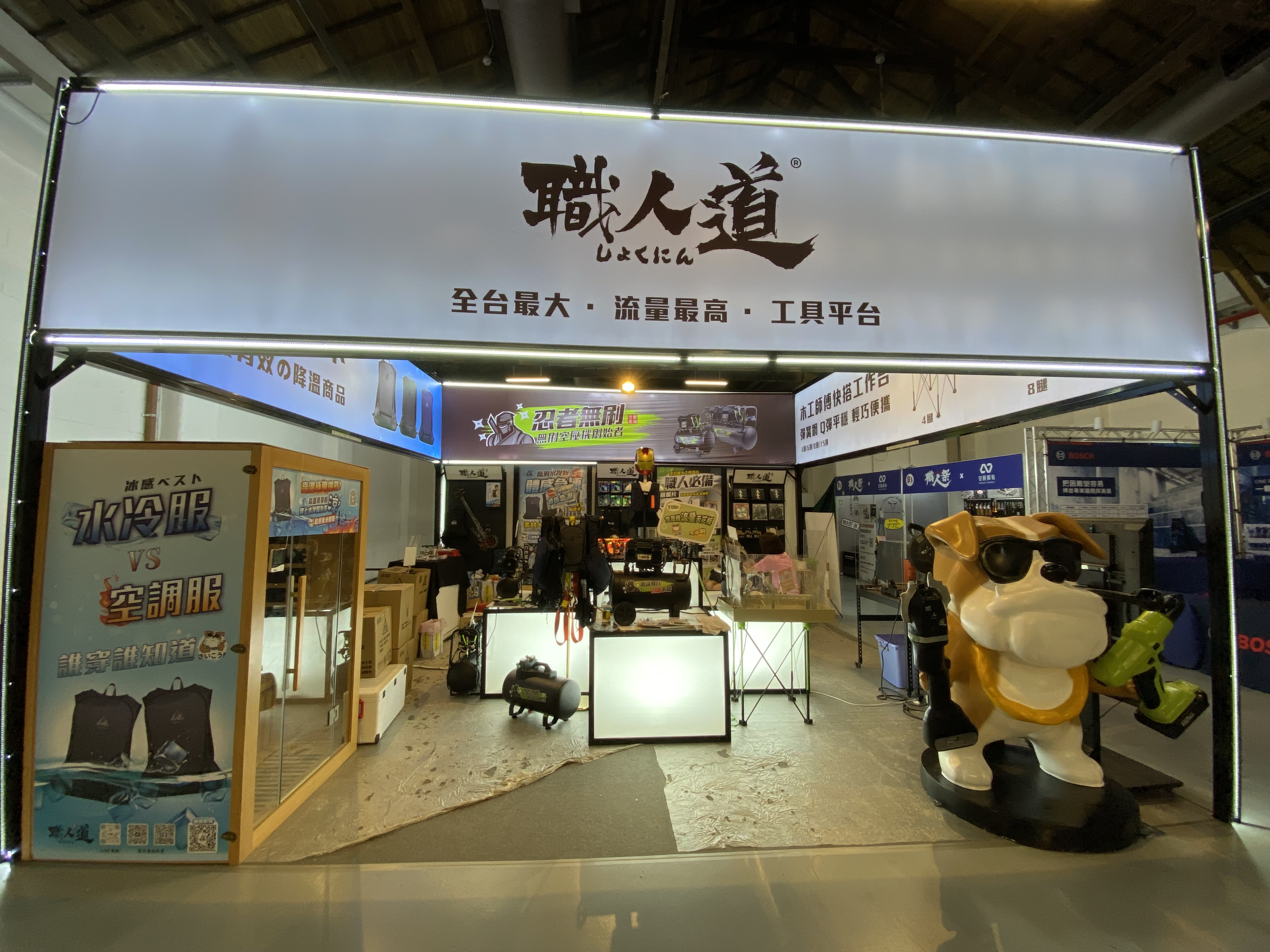
Shokunin, a brand launched by Feng Shang Precision Co., Ltd., addresses this part of the market with a passive water-circulation cooling vest line and production policies designed for repeat orders. The company, established in 2009 and based in Taoyuan City, Taiwan, operates a 1,000 m² facility with a 30-person team and 5 R&D engineers. Its main products include water-cooled vests, air compressors, cut-off machines, and other professional tools, with 50% of output exported to the USA and ROC markets.
The real problem: cooling performance that disappears after 30 minutes
A common failure mode in construction cooling gear is short effective duration. Many water-cooled vests on the market lose noticeable cooling after roughly 30 minutes, which means workers on long outdoor shifts are left without protection for most of the day. For a distributor, this creates a slow but certain erosion of trust: the end user tries the product, finds it weak by mid-morning, and stops using it.
Shokunin's water-cooled vest is designed to extend cooling duration to 3–4 hours per ice pack cycle. The difference is not a minor spec upgrade. It changes how the product fits into a workday, how many ice packs a crew needs to rotate, and whether a contractor considers the vest a practical investment or an occasional novelty.
What Shokunin offers to distributors and construction buyers
Shokunin positions its cooling vest as a long-duration, low-maintenance option for high-temperature environments such as metal sheet factories and outdoor construction sites. The product specification supports this positioning:
- Cooling duration: 3–4 hours
- Total weight: within 2 kg
- Suitable temperature range: below 10°C to hot outdoor conditions
- Shoulder strap material: 600D polyester
- Outer material: PEVA
- Water bag material: TPU
- Water bag cap: polypropylene
- Cooling tube: sand rubber (black)
- Pump output: 5V 150mA (max)
- Flow rate: max 320–370 ml/min
- Package contents: water-cooled vest backpack ×1, ice packs ×2
The applicable industries listed by the manufacturer include construction workers, outdoor workers, food stall operators, street vendors, traffic controllers, and metal sheet factories. For distributors, this breadth means a single SKU can serve multiple customer segments rather than requiring separate inventory for each niche.
Technical explanation: how passive water circulation works
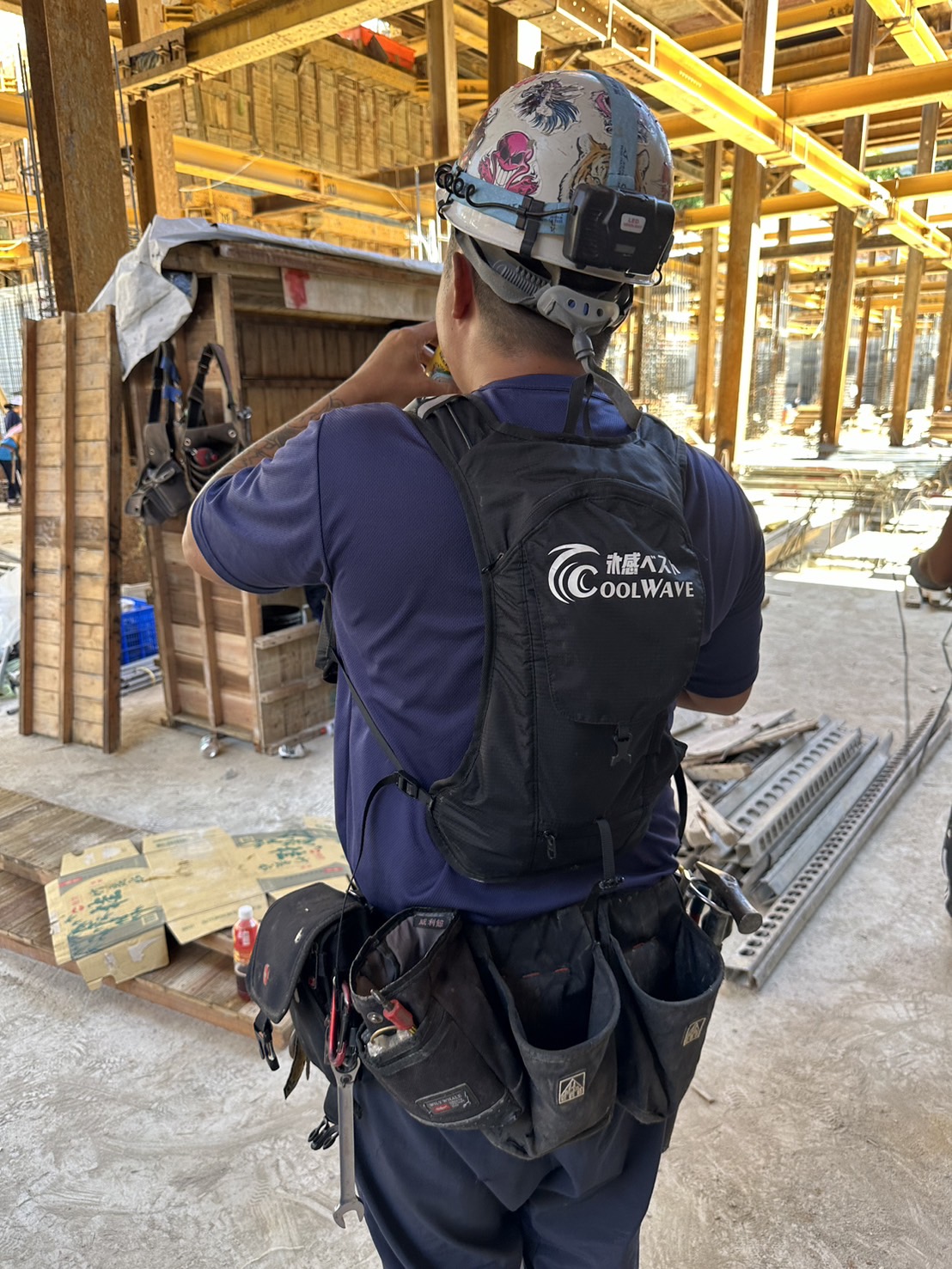
Shokunin's COOLWAVE vest uses a passive water-circulation system. The backpack holds two reusable ice packs, and a low-power pump rated at 5V 150mA circulates chilled water through tubes integrated into the vest. The pump's maximum flow rate of 320–370 ml/min keeps water moving across the body surface to transfer heat away from the worker.
Because the system relies on ice packs rather than an external power-hungry compressor or bulky refrigeration unit, it remains lightweight and portable. The PEVA outer layer and TPU water bag are selected for durability and leak resistance. The 600D polyester shoulder strap is a practical detail for long shifts, where strap failure becomes a common complaint with cheaper vests.
One maintenance advantage is the reusable ice pack design. Instead of requiring frequent replacement of single-use cooling inserts, the end user refreezes the included ice packs and reinserts them. Shokunin reports that this design, combined with durable fabric, keeps maintenance minimal compared with vests that need frequent ice pack replacement and show higher wear and tear.
Application scenarios: where 3–4 hour cooling matters most
The 3–4 hour cooling window is especially relevant for these construction and industrial scenarios:
- Steel and metal sheet work: Workers near metal roofs and sheet metal surfaces face both direct heat and reflected radiant heat. A cooling vest that stops working after 30 minutes is useless for a full shift.
- Outdoor electrical and utility work: Electricians working on poles or in confined utility spaces need cooling that does not require frequent stops to swap ice packs.
- Long-duration sun exposure: Road crews, traffic controllers, and site inspectors spend hours in open sun. The ability to rotate two vests or two ice pack sets across a day matters.
- Stuffy metal-roof workplaces: Buildings with metal roofs can feel like ovens even when outdoor temperatures are moderate. A passive water-circulation vest provides a practical layer of personal cooling without interfering with movement.
For a distributor, these scenarios translate into a simple selling story: one product, one set of spare parts, one training message, and a consistent cooling experience across multiple job types.
Market trend: industrial and Asia-Pacific demand is rising
The broader market context supports long-term category growth. According to Dataintelo, industrial applications represented the largest segment of the cooling vest market in 2025, accounting for a 34.5% revenue share. The same report states that the Asia-Pacific region dominated the global market with a 38.2% revenue share, driven by rapid industrialization. For a Taiwan-based manufacturer serving USA and ROC markets, this regional strength is a relevant supply-chain signal: manufacturing capacity, component sourcing, and quality control remain close to a large demand center.
The Business Research Company valued the global heat stress prevention products market at USD 2.86 billion in 2025, identifying cooling wearables as a primary growth driver. In parallel, the specialized market for cooling vests with fans reached USD 1.32 billion in 2024. While fan-based vests are a distinct technology, their growth indicates that employers are actively spending on personal cooling rather than relying only on rest breaks and hydration programs.
Comparison with traditional solutions and active cooling vests
Traditional options for construction heat stress include rest breaks, shaded areas, hydration, and evaporative cooling bandanas. These remain important, but they do not provide continuous personal cooling while a worker is moving, climbing, or handling materials. Shokunin's vest is not a replacement for those controls; it is an additional layer of protection that travels with the worker.
| Criteria | Typical water-cooled vest | Shokunin water-cooled vest |
|---|---|---|
| Cooling duration | Loses effect after ~30 minutes | 3–4 hours per cycle |
| Maintenance | Frequent ice pack replacement, higher wear and tear | Reusable ice packs, durable fabric, minimal maintenance |
| Best fit | Short-duration indoor tasks | High-temperature environments, metal sheet factories, outdoor sites |
A realistic limitation of the Shokunin vest is its dependence on ice packs. If a worksite has no freezer access, the 3–4 hour cooling cycle cannot be renewed on-site. In addition, the vest is designed for personal cooling and does not provide the full-body coverage of a water-cooled garment or an actively refrigerated suit. Buyers should match the product to sites where ice pack freezing is feasible and where torso cooling addresses the dominant heat exposure.
Supplier reliability: capacity, lead time, warranty, and order terms
For distributors, the supplier's operational commitments matter as much as the product spec. Shokunin's published terms for the COOLWAVE cooling vest are:
- Minimum order quantity: 10 units
- Typical production lead time: 7–14 days
- Monthly production capacity: 3,000 units
- Warranty: 6 months on water-cooled vests
- ODM production: available
- Payment: full payment before shipment
- Delivery: shipment after payment, freight paid by buyer
- Acceptance: pre-shipment test
These terms are practical for a distributor testing a new category. The 10-unit MOQ is low enough for a trial order, while the 3,000-unit monthly capacity supports scaling once demand is confirmed. A 7–14 day lead time allows relatively fast replenishment during peak construction season, provided the distributor plans around the 6-month warranty rather than expecting unlimited after-sales coverage.
One risk-control detail is worth noting for procurement teams: Shokunin states that its ice pack material is reinforced and that 100% quality is guaranteed before shipment. Ice pack leakage is a common failure in water-cooled vests, so a supplier that specifically addresses this defect in its quality process reduces a major source of customer complaints.
Future outlook: what distributors should watch
The cooling vest category is following a path similar to other PPE segments: buyers are consolidating from many cheap, short-lived products toward fewer, better-documented solutions. The presence of recognized manufacturers such as Glacier Tek, TechNiche International, Polar Products, Ergodyne, and Occunomix in the industrial cooling market confirms that the category has moved beyond novelty status. For a distributor, the opportunity is to build a program around a supplier with transparent capacity, reasonable MOQ, and a product that does not fail mid-shift.
Shokunin's model — passive water circulation, reusable ice packs, ODM support, and a stated monthly capacity of 3,000 units — fits this consolidation trend. Distributors who treat the vest as a full-season program rather than a seasonal experiment will need suppliers who can handle repeat orders without quality drift. The 6-month warranty and pre-shipment test provide a basic framework for that relationship.
FAQ
What is the minimum order quantity for Shokunin COOLWAVE cooling vests?
The minimum order quantity is 10 units, with typical production lead time of 7–14 days.
What warranty does Shokunin offer on water-cooled vests?
The manufacturer offers a 6-month warranty on water-cooled vests and has a monthly production capacity of 3,000 units.
Does Shokunin provide ODM production services for cooling vests?
Yes, in addition to standard orders, the manufacturer provides ODM production services, with a minimum order quantity of 10 units and typical lead time of 7–14 days.
How does Shokunin ensure quality before shipment?
Shokunin states that reinforced ice pack material is used and that 100% quality is guaranteed before shipment, with pre-shipment testing as part of the acceptance process.
For further reference, the company brochure is available for public access and download: Shokunin brochure.
Have Questions or Need More Details?
Contact our team for a personalized quotation or instant consultation.
Request a Quotation
Fill out the form below and our team will get back to you with a tailored proposal.
WhatsApp Direct Chat
Prefer to chat in real-time? Message us on WhatsApp for instant assistance & quick answers.
- Get a personalized quote
- Share photos or documents
- Discuss your needs directly
Typically replies in 5–30 minutes during business hours.