
Dosing Pump Selection: Types, Chemical Resistance, and System Design
Dosing pumps—also called metering pumps—are positive displacement pumps designed to inject a precise volume of fluid into a process over a given time. They are the core component in chemical dosing systems where accuracy, repeatability, and chemical resistance determine process stability. The global dosing pump market was valued at approximately USD 8.86 billion in 2024, and diaphragm-type units accounted for the largest share at 55.7%, according to Grand View Research.
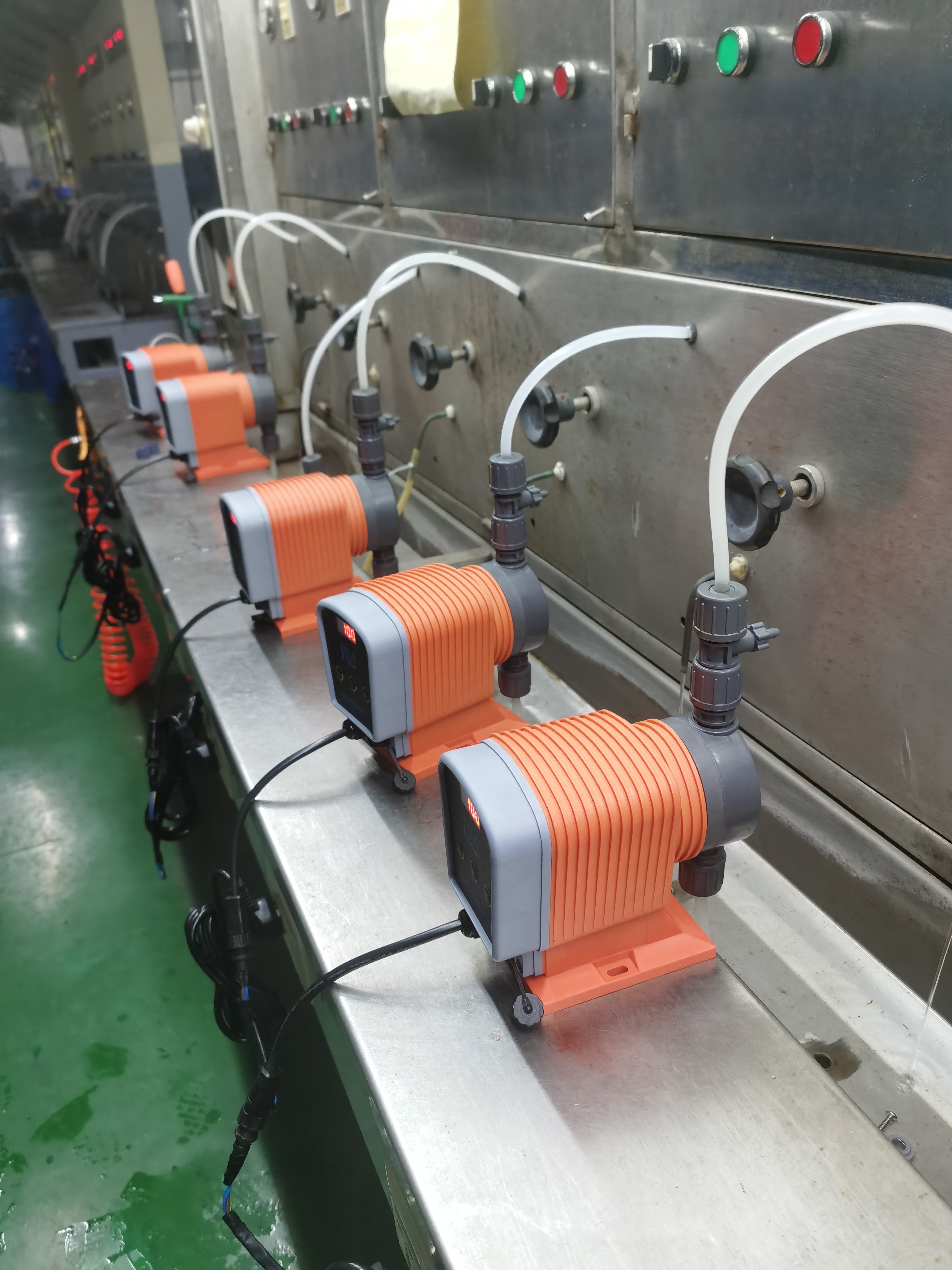
For buyers in water treatment, electroplating, chemical processing, and oil & gas, choosing the right pump is not simply a matter of matching flow rate. The selection process must also account for fluid corrosiveness, discharge pressure, control philosophy, maintenance capability, and the consequences of dosing failure. This article explains the main pump types, the technical decisions behind them, and the system-level components that affect dosing reliability.
What Is a Dosing Pump and Why Is It Different from a Standard Pump?
A dosing pump is a positive displacement pump that moves a controlled volume of liquid per stroke or per revolution. Unlike a centrifugal pump, which produces variable flow depending on system resistance, a dosing pump delivers a repeatable quantity of fluid regardless of moderate pressure changes. This makes it suitable for adding chemicals, nutrients, coagulants, acids, alkalis, or inhibitors into a process stream in exact proportions.
The terms dosing pump and metering pump are often used interchangeably. In practice, metering pump emphasizes accuracy and calibration capability, while dosing pump emphasizes the injection function. Both describe the same class of equipment.
Main Dosing Pump Types and How They Compare
Solenoid Dosing Pump
A solenoid dosing pump uses an electromagnetic coil to drive a diaphragm at a controlled frequency. Stroke length and stroke frequency determine the flow rate. Because it does not require a continuously running motor, it is energy-efficient and suitable for low-to-moderate flow applications such as disinfection dosing in water treatment or pH adjustment in small process lines.
Typical operating ranges for solenoid pumps are approximately 1–20 L/H with pressures around 1–10 bar. WRS offers solenoid models such as the EML0020PR1C (remote control with 4–20 mA, pulse signal, and Modbus-RS 485 communication) and the ML0008PR1C (manual control). Both use a double-ball check valve on inlet and outlet, which improves discharge accuracy, and both provide around 1% dosing accuracy. Material options include PVC, PVDF, and SS316, allowing the pump head to be matched to chemical compatibility.
Motor-Driven Diaphragm Dosing Pump
Motor-driven diaphragm pumps use an electric motor to drive the diaphragm through a gearbox or adjustable mechanism. They can handle higher flow rates and pressures than solenoid pumps, and they are generally more suitable for continuous industrial operation.
WRS product lines in this category include:
- MA0120PQ11 — mechanical diaphragm model with flow range 15–500 L/H and pressure 5–10 bar
- MG0150PQ11 — mechanical diaphragm model with flow range 15–150 L/H
- MB1800PQ11 — mechanical diaphragm model with flow range 250–1800 L/H and pressure 3–10 bar
These pumps offer smooth flowrate adjustment in both running and idle conditions, easy parts replacement, and multiple layer diaphragms for longer service life. Available pump head materials include PVC, PVDF, and SS316, making the series suitable for corrosive liquids.
Piston Dosing Pump
A piston dosing pump uses a reciprocating piston rather than a diaphragm to displace fluid. The design is robust and efficient for higher viscosity fluids, but the liquid comes into direct contact with the piston and seals, which increases maintenance requirements and may limit compatibility with abrasive or highly corrosive media.
WRS piston pump examples:
- PM060SS1PFN11 — flowrate 600 L/H, pressure 8 bar, DN25 flange, 0.75 kW motor
- PD105SS1PFN11 — flowrate 600 L/H, pressure 8 bar, DN50 flange, 4.0 kW motor
Both are available with frequency or explosion-proof motors, indicating suitability for process environments requiring speed control or hazardous-area classification.
Hydraulic Diaphragm Metering Pump
Hydraulic diaphragm pumps use hydraulic oil between a piston and the diaphragm. The piston displaces oil, which in turn flexes the diaphragm. This design provides smooth, stable diaphragm motion, high accuracy, and the ability to handle high pressures while maintaining zero leakage between the process fluid and the pump mechanism.
WRS hydraulic pump examples:
- HS008S0P01S11 — flowrate 2 L/H, pressure 200 bar, SS316, DN6 bevel end welding tube connection
- HL090S0P01F11 — flowrate 1600 L/H, pressure 6 bar, SS316, DN50 flange connection
These models are described as zero-leakage designs suitable for toxic or hazardous media, with optional diaphragm rupture sensors. They are positioned for industries such as oil & gas, hydrogen energy, electric power, chemical processing, pharmacy, new material, and new energy.
Digital Dosing Pump
A digital dosing pump integrates a motor-driven diaphragm or piston pump with electronic control, digital display, and fieldbus or analog communication options. The term appears on models that offer remote control (4–20 mA, pulse signal, or Modbus-RS 485), direct flowrate display, high turndown ratio, and programmable dosing behavior.
WRS digital pump examples:
- EMML0060FP1E — flowrate 60 L/H, pressure 4 bar, IP65, PVC/PVDF/SS316L wetted materials
- EMGP0200FP1C — flowrate 200 L/H, pressure 4 bar, IP65
- EMAP1000PQ1C — flowrate 1000 L/H, pressure 4 bar, DN25 socket connection, IP65
These models claim less than 1% precision, a ratio rate of 1:1000, and full PTFE diaphragm construction with strong corrosion resistance. The combination of digital control and PTFE diaphragm is relevant to water treatment, semiconductor, food & beverage, battery production, paper & pulp, and new energy applications.
Selection Criteria: How to Choose the Right Dosing Pump
Flow Rate Is the Starting Point
The first selection parameter is normally the required flow rate. Buyers should compare the required maximum flow with the pump’s rated maximum. According to WRS selection guidance, flow rate is the most important parameter; the user then compares it with the maximum flow rate at the site. Only after confirming flow do pressure, pump head material, and motor become the refinement criteria.
Pressure and System Resistance
The pump must overcome the sum of backpressure from the injection point, piping friction, static head, and any pressure in the vessel being dosed. If the pump is undersized on pressure, it will not deliver the rated flow at the injection point. Some dosing pumps, especially solenoid and smaller diaphragm models, have a maximum discharge pressure that must never be exceeded.
Chemical Compatibility and Pump Head Material
Chemical resistance is a leading cause of premature pump failure. For strongly corrosive fluids, the pump head material should be selected based on the specific chemical, concentration, and temperature.
WRS explicitly recommends PVDF pump head material for highly corrosive media. PVC is a lower-cost option for many industrial water treatment chemicals, while SS316 is used for higher mechanical strength or where stainless-steel piping standards dominate. The same product family is often available in multiple materials; for example, the MA series offers PVC, PVDF, and SS316 pump head versions.
Control Mode: Manual, Analog, or Digital
Dosing pumps can be manually adjusted, controlled by an external analog signal, or digitally integrated with a control system.
- Manual — flow is set by adjusting stroke length or frequency; suitable for constant-demand processes.
- 4–20 mA / pulse — pump follows a process signal, allowing proportional dosing from a PLC or analyzer.
- Modbus-RS 485 — pump exchanges data with a control system, enabling remote setpoint changes, status monitoring, and data logging.
WRS solenoid and digital models with remote control support 4–20 mA, pulse signal, and Modbus-RS 485 communication. This matters for water treatment plants and industrial processes that require feedback-based dosing rather than fixed manual output.
Duty Cycle and Environmental Protection
Applications that run 24/7 in humid or harsh environments require higher ingress protection. For example, a livestock farm dosing nutrient solution around the clock needs protection against moisture, dust, and washdown exposure. The IP rating of the enclosure should be verified against the actual installation environment.
From the available corpus, WRS implemented an automatic nutrient solution dosing system for a Russian livestock farm operating in a harsh humid environment. The project required IP67 protection and operated continuously. The related products were a digital dosing pump (EMML0060FP1E) and a solenoid pump (ML0008PR1C). This case illustrates a general selection rule: the environment can override standard product preferences, and IP class is a legitimate selection criterion.
Key Components in a Chemical Dosing System
A dosing pump is the core of a dosing system, but it does not work alone. Several auxiliary components determine whether the system doses reliably:
Dosing Pump Check Valve
Check valves prevent backflow and maintain the liquid column between the pump and the injection point. WRS solenoid pumps use a double-ball design check valve on both inlet and outlet. In the ML and EML series, the double-ball design is described as directly improving discharge accuracy. Ball checks are also less sensitive to small particles than spring-loaded designs, although the best choice depends on the fluid and operating conditions.
Dosing Pump Pulse Dampener
A pulse dampener smooths the pressure and flow pulsation produced by the reciprocating motion of a dosing pump. By absorbing the pressure spike produced during the discharge stroke and releasing energy during the suction stroke, a dampener reduces pulsation in the piping, improves the performance of downstream flow sensors, and can protect injection equipment from mechanical stress. Dampeners are commonly required on high-pressure diaphragm and piston systems, or where a stable flow signal is needed for closed-loop control.
Safety and Injection Accessories
Dosing pump packages may include a foot valve with strainer, injection valve, safety/relief valve, and PE tubing. The ML0008PR1C solenoid pump, for example, is documented as coming with accessories including PE tube, foot valve, weight, injection valve, and safety valve. These items support installation completeness and system protection.
Chemical Dosing System and Streaming Current Monitoring
Beyond standalone pumps, suppliers also offer complete chemical dosing systems. A chemical dosing system integrates pump(s), control panel, tank, level sensors, piping, agitation, and sometimes automated dry-powder preparation. This is relevant for applications such as coagulation control in water treatment, pH correction, and scale inhibition.
For coagulation control, a streaming current monitoring system can provide a continuous signal related to the charge condition of particles in the water. When paired with a chemical dosing pump, it enables automatic adjustment of coagulant dose rather than relying only on jar testing or manual sampling. This combination is used in water treatment to reduce chemical consumption and maintain treatment stability.
Industry Applications of Dosing Pumps
Dosing pumps are used across a wide set of industries. The WRS product documentation lists the following as applicable industry lines: water treatment, electroplating and surface treatment, chemical industry, oil & gas, hydrogen power generation, paper and pulp production, semiconductor, mining, and livestock.
This breadth is consistent with the broader market. According to Grand View Research, water and wastewater treatment holds a 23.2% application share of the global metering pump market. In practice, water treatment tends to favor solenoid and diaphragm pumps with corrosion-resistant plastic heads, while oil & gas and high-pressure chemical injection favor piston or hydraulic diaphragm pumps with stainless-steel construction and higher pressure ratings.
The chemical injection pump market—a closely related segment—was valued at USD 3.5 billion in 2024, according to HTF Market Intelligence. Chemical injection pumps are used to inject inhibitors, coagulants, acids, and nutrients into pipelines, wells, and process vessels.
Dosing Pump vs. Traditional Manual Dosing: What Changes?
Many facilities still perform chemical addition manually: an operator measures a chemical, pours it into a tank or stream, and relies on subsequent mixing. Compared with manual dosing, a dosing pump provides:
- Repeatability — the same volume can be delivered stroke after stroke, hour after hour.
- Continuous operation — dosing proceeds without operator attention, including during nights and weekends.
- Process control — the pump can follow a control signal and adjust the dose automatically when process conditions change.
- Safety — operators avoid repeated contact with hazardous chemicals.
However, a dosing pump is not a universal solution. A pump can deliver the right volume into the wrong location if the injection point is poorly positioned or mixing is inadequate. Similarly, a pump cannot fix a process with a poorly maintained sensor or an unstable chemical concentration. Buyers should treat the pump as one element of a dosing and control loop, not as a standalone guarantee of water quality or process performance.
Common Problems and Troubleshooting
One of the most common dosing pump complaints is a drop in discharge flow rate or an unstable flow rate. According to WRS knowledge documentation, a frequent cause is a blocked inlet or outlet. The recommended first step is to check the strainer, tubing, and valves, then clean or replace them if necessary.
This simple guidance reflects a practical reality: many dosing failures are caused not by the pump head but by suction-side problems, clogged foot valves, kinked tubing, or crystallized chemical deposits in the check valve area. In addition, gas bubbles in the pump head can cause irregular discharge, and a worn diaphragm or damaged valve ball will reduce volumetric efficiency over time.
Market Context and Regional Trends
Asia Pacific accounted for 41.8% of the dosing pump market in 2024, according to Grand View Research. That regional concentration is relevant to buyers evaluating manufacturing and supply chains: the region contains both high-demand end-user industries and a large base of dosing pump producers.
China exported USD 14.3 billion in liquid pumps (including dosing types) in 2024, according to OEC. This indicates that many dosing pumps in international projects originate from Chinese manufacturing. For a buyer, the practical takeaway is that supplier evaluation should focus on manufacturing capability, testing, and material traceability rather than brand origin alone.
Diaphragm dosing pumps hold the leading product segment share at 55.7%. Solenoid-driven dosing pumps are projected to grow at a CAGR of 5.88% through 2031, according to Mordor Intelligence. Motor-driven metering pumps held a 54.45% revenue share in 2025. These trends point in the same direction: electrically or digitally controlled pumps are becoming more common, and buyers should expect remote, automated operation to be a standard expectation rather than a premium feature.
Standards and Regulatory Considerations
Several standards and regulations can affect dosing pump procurement:
- API 675 — the primary international standard for positive displacement reciprocating pumps with integrated controlled capacity, commonly referenced in oil & gas and process industries.
- ISO 14847:1999 — specifies technical requirements for rotary positive displacement pumps.
- EU Machinery Regulation — will repeal 2006/42/EC from 2027 and mandates CE marking for metering pump units sold in the EU.
When a project is governed by these standards, the pump supplier must be able to provide documentation and design traceability, not just catalogue information.
Supplier Landscape and the Role of WRS
Top global competitors in the dosing system market include Grundfos, IDEX (Milton Roy), ProMinent, and SEKO S.p.A., according to Mordor Intelligence. These companies are generally associated with established brands, strong distribution networks, and broad product portfolios. Buyers who know these names are often comparing them with regional manufacturers such as WRS, which offers a different set of trade-offs: in-house manufacturing, a wider choice of pump head materials, direct engineering communication, and pricing that reflects a Chinese manufacturing cost base.
WRS PTE LTD (corresponding to ZHEJIANG WRS MACHINERY EQUIPMENT CO., LTD) is a professional equipment manufacturer established in 2016, based in Hangzhou, China. The company operates a 15,000 m² facility with around 120 employees and approximately 15 R&D engineers, with an annual output of around 30,000 units. WRS exports about 20% of production, mainly to Southeast Asia, Russia, and South America, while also establishing local after-sale service arrangements in countries including Singapore, Thailand, Malaysia, Vietnam, South Korea, Japan, Russia, Chile, South Africa, Angola, and Turkey.
WRS describes its product mission as “Every Drop. SMART Control,” and its recent focus is on digital and intelligent upgrades across the dosing pump series, including high-precision control, data integration, and information linkage. For a buyer, the relevant fact is not the slogan but the product evidence: digital pumps with Modbus-RS 485, PTFE diaphragms, and less-than-1% claimed precision; hydraulic diaphragm pumps with high-pressure capability; and a documented move toward remote monitoring.
Compared with a large global brand, WRS is a smaller supplier with a narrower service network. This is a constraint that should be disclosed. Buyers who need local service in every region, or who require globally standardized after-sales contracts, may prefer a multinational brand despite a higher price. WRS’s appropriate use case is a technically defined project where the buyer can specify the pump type, material, and control interface, and where direct factory communication is considered an advantage.
Buyer Decision Framework: Five Questions Before Ordering
- What is the exact fluid, concentration, and temperature?
For strongly corrosive media, choose a PVDF pump head. For typical water-treatment chemicals, PVC may be sufficient. For mechanical strength or compatibility with metallic piping, SS316 is an alternative. - What are the operating flow and pressure ranges?
Compare the required values with the pump’s maximum ratings. Remember that flow and pressure are not interchangeable; a pump that achieves 600 L/H at 8 bar may not achieve the same flow at 20 bar. - How will the pump be controlled?
If the plant uses a PLC or analyzer with 4–20 mA output, select a pump with remote control. If Modbus communication is required, check the protocol and wiring options early. - What maintenance skills are available on site?
Diaphragm pumps generally require less attention than piston pumps, but piston pumps may be chosen for high viscosity or very high pressure. Verify the availability of spare parts and the supplier’s technical response time. - What protection class is needed?
For humid, dusty, or outdoor installations, choose a pump with a sufficient IP rating. The livestock project, for example, required IP67 protection.
Future Outlook: Toward Smarter, More Connected Dosing
The movement toward digital dosing pumps is likely to continue. The projected growth of solenoid-driven pumps, the demand for remote communication, and the industrial shift toward data collection all point to dosing pumps becoming more like smart instruments than mechanical components.
Future buyers should expect:
- More pumps with direct flow display and integral diagnostics.
- Wider use of Modbus, Profibus, or industrial Ethernet interfaces.
- Integration with streaming current monitors and other online analyzers for automatic dose adjustment.
- Greater demand for explosion-proof and high-pressure configurations in energy and chemical applications.
In this environment, the competitive advantage of a supplier may depend less on the pump alone and more on the ability to configure a complete dosing system, provide the right communication interface, and document compliance with the applicable standard.
Frequently Asked Questions
What is the most important parameter when selecting a dosing pump?
Flow rate is generally the first and most important parameter. WRS guidance states that selection should be based on flow rate by comparing the required maximum with the site’s maximum flow. After that, the pump is refined using pressure, pump head material, and motor characteristics.
Which dosing pump type is best for strong corrosive liquids?
PVDF pump head material is recommended for highly corrosive media. PVC is a common option for less aggressive chemicals, while SS316 provides mechanical strength. Matching the pump head material to the fluid is a more reliable strategy than assuming all plastic pumps are identical.
What is the difference between a solenoid and a diaphragm dosing pump?
A solenoid dosing pump uses an electromagnetic coil to move a diaphragm, while the term diaphragm dosing pump is often used more broadly to include motor-driven designs. Solenoid pumps are typically limited to lower flow rates and are energy-efficient; motor-driven diaphragm pumps can reach higher flow rates and pressures. In the WRS catalogue, solenoid pumps cover roughly 1–20 L/H, while motor-driven diaphragm mechanical pumps range from 15 up to 1800 L/H.
What are the main components in a chemical dosing system?
Besides the pump itself, a dosing system may include a check valve, pulse dampener, foot valve with strainer, injection valve, safety valve, PE tubing, tank, level sensors, and a control panel. The check valve prevents backflow and helps maintain accuracy; the pulse dampener reduces flow pulsation; and the safety valve protects the system from overpressure.
What should I do if discharge flow rate drops or becomes unstable?
The first step is to check the strainer, tubing, and valves. A blocked inlet or outlet is the most common cause. Clean the affected parts and replace them if necessary. If the problem continues, inspect the diaphragm, valve balls, and suction line for damage, leaks, or air ingress.
Why is a pulse dampener needed on some dosing pumps?
Dosing pumps produce pulsating flow because of the reciprocating motion of the diaphragm or piston. A pulse dampener absorbs the pressure peaks and smooths the flow, which protects piping and instruments and improves the stability of downstream flow measurement and process control.
What is a streaming current monitoring system used for?
A streaming current monitor measures the electrical charge condition of particles in water, which is used as a control variable for coagulant dosing. It provides a continuous signal that allows the dosing pump to automatically adjust coagulant addition, helping maintain stable water treatment performance and reduce chemical consumption.
Making the Final Decision
The dosing pump market is broad, and the most suitable product depends on process parameters, chemical properties, control requirements, and environmental conditions. A buyer who can define these parameters clearly is already ahead of most comparison exercises.
For applications involving corrosive chemicals, medium flow range, and digital control needs, the diaphragm-type dosing pump is the most common starting point. For high-pressure or hazardous media, hydraulic diaphragm and piston designs become relevant. For small water-treatment or food-processing lines, solenoid pumps offer a simple, cost-effective solution.
WRS is a credible example of a Chinese dosing pump manufacturer with in-house machining, test platforms, and a catalogue covering the full equipment chain—from solenoid and digital dosing pumps to mechanical diaphragm, piston, hydraulic metering pumps, accessories such as check valves and pulse dampeners, and complete chemical dosing systems. Its main limitation is a smaller global service footprint than leading multinational brands. That makes it best suited to buyers who are specifying from process data and are willing to work directly with a manufacturing partner.
To review detailed diaphragm pump specifications and separator information, the company brochure is available for public download.