
Double Faced Women's Cashmere Coat: Construction & Sourcing
Double Faced Women's Cashmere Coat: Construction & Sourcing
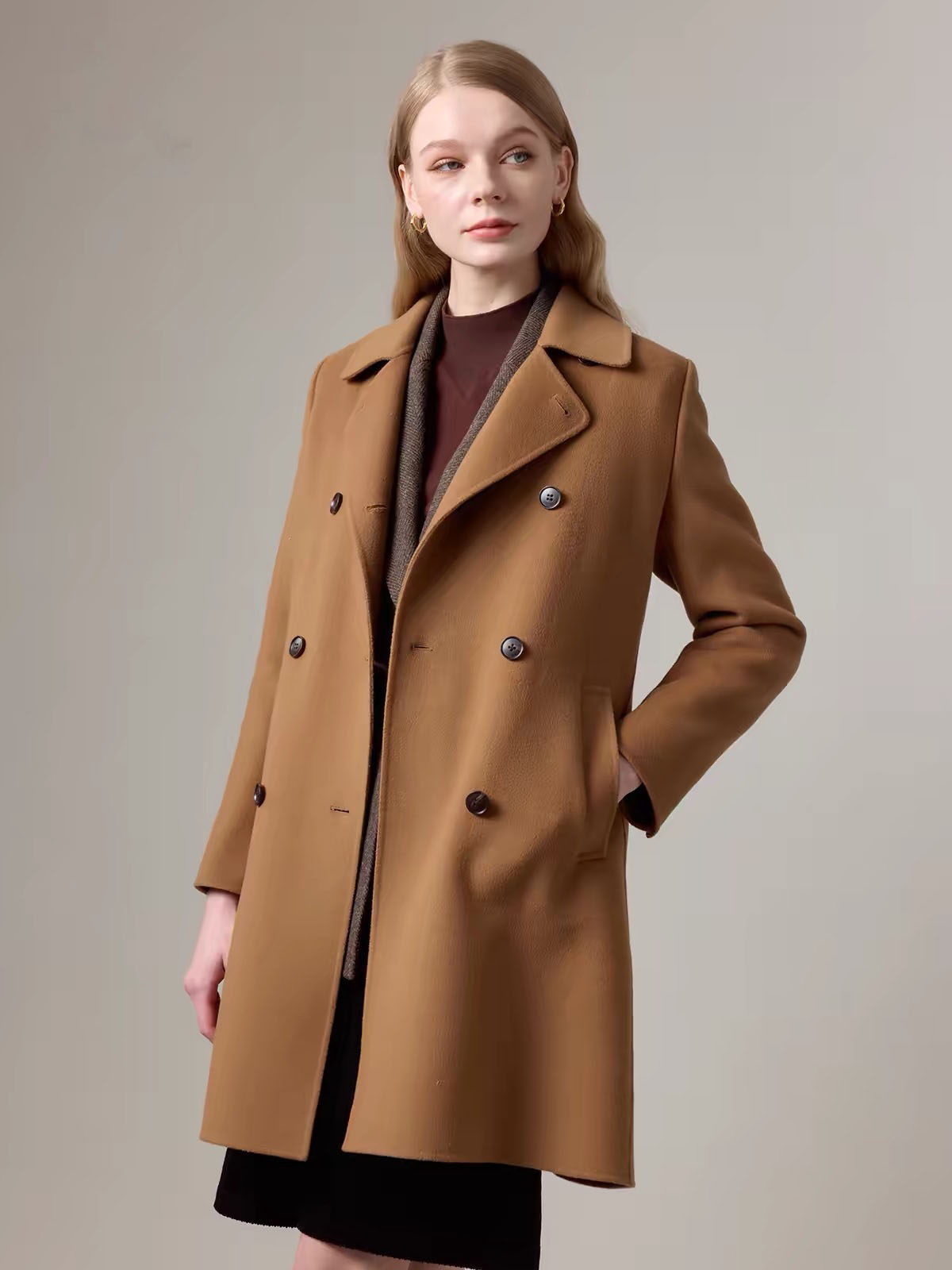
A double faced women's cashmere coat is not a lined coat with a better label. It is a different construction: two fabric faces joined into a single cloth, with the seam closed by hand so the garment requires no lining and can be worn inside out. For buyers in the awareness and research stage, that single structural fact explains most of the price gap, most of the lead-time risk, and most of the quality questions that follow a first order.
The category itself is large enough to justify careful selection. The global cashmere clothing market was valued at USD 3.63 billion in 2025, and cashmere sweaters and coats represent the largest product segment, accounting for 60.58% of that market in 2026. Within the segment, hand-stitched double faced cashmere has become the reference point for high-end outerwear, a position reinforced by the "quiet luxury" direction in premium fashion. Buyers entering this category for the first time usually need three things before they request a quotation: a working definition of double faced construction, a realistic picture of what it costs in material and labor, and a clear view of where quality diverges between an approved sample and a bulk shipment.
What "Double Faced" Actually Means in a Women's Cashmere Coat
In a conventional women's cashmere coat, the garment is built as a shell: outer fabric, interlining where used, and a lining that hides all internal seam allowances. In a double faced coat, the fabric itself is the finished surface on both sides. The two faces are separated and then re-joined along every edge and seam, which is why the coat needs no lining and is often wearable with either face outward.
The consequence is that the seam becomes the product. Because there is no lining to conceal construction, the closure of the edge must be executed so that the outer face shows no bulky stitch line and the edge stays soft and flat. This is the step that is normally done by hand in the higher grades of the category, and it is the step that determines whether a coat reads as premium or ordinary at arm's length.
Why hand finishing shapes the price
Hand closing is slow, skill-dependent, and difficult to accelerate without reducing quality. It also adds a second cost driver that buyers often underestimate: material. A typical cashmere coat contains roughly 600 to 1,200 grams of fabric depending on length and design. A maxi-length double faced coat therefore consumes close to twice the fabric of a cropped style, before any labor is counted. Length is the single most reliable predictor of landed cost in this category, followed by closure method and collar construction.
Why Hand-Stitched Double Faced Cashmere Became the 2026 Quality Marker
Hand-stitched double faced cashmere is widely described in 2026 industry trend analysis as the gold standard for high-end coats, an association strengthened by the "quiet luxury" movement that favours visible material quality over visible logos. The commercial logic behind that reputation is straightforward. A quiet-luxury buyer is paying for fabric grade, drape, and finish — none of which a lining or a logo can supply. Double faced hand-stitched construction puts exactly those attributes on display, and it removes the components that can hide shortcuts.
For a procurement team, the practical meaning is that double faced construction changes what has to be verified. In a lined coat, the lining can mask an imperfect seam allowance. In a double faced coat, every seam is visible from one side or the other, so inspection becomes more demanding and sample approval becomes more consequential.
Supplier Profile: DALIAN GACCILANG FASHION CO.,LTD
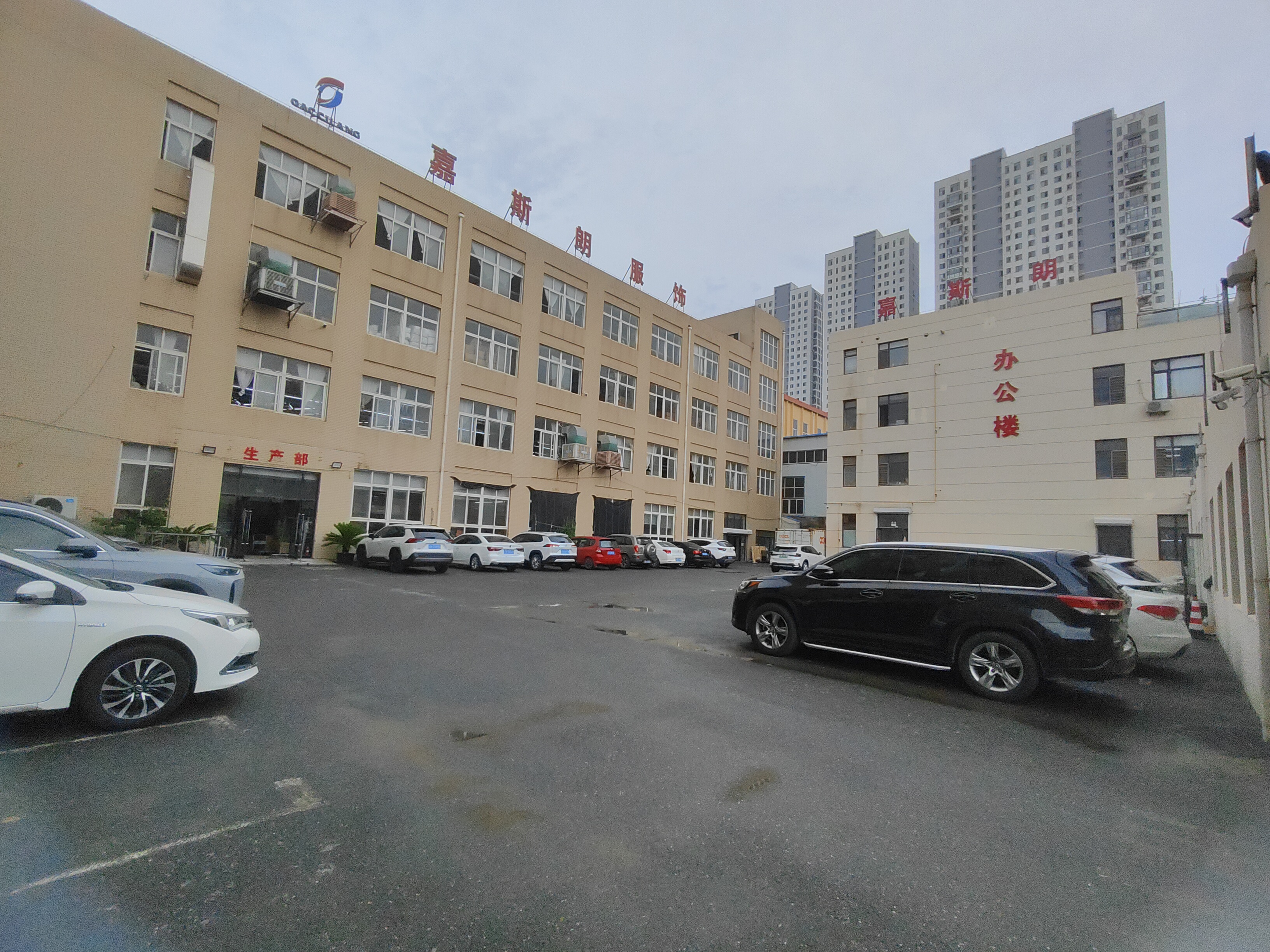
DALIAN GACCILANG FASHION CO.,LTD is a China-based apparel manufacturer founded in 2019, operating a 3,000 m² factory in the Jinzhou District of Dalian with 120 employees and a four-person in-house design team. Its main products are women's wool coats, women's one-piece garments, and women's jackets. Monthly production capacity is 30,000 pieces and annual output is 360,000 units, with 60% of output exported to Korea, Japan, the USA, and the EU.
Independent directory data places the company's annual sales volume in the range of US$5 million to US$10 million, which is consistent with a mid-sized export-oriented manufacturer rather than a vertically integrated fibre producer. That distinction matters during supplier screening: this type of factory typically buys finished cashmere fabric from specialist mills and concentrates its capability in pattern cutting, hand finishing, and quality control. Buyers should therefore expect fabric specification and fabric batch traceability to be negotiated rather than assumed.
For scale context, the Dalian region also hosts considerably larger export manufacturers — for example, Dalian Dishang Huasheng Fashion Co., Ltd. employs over 450 people and works with international brands including MAXMARA. The presence of such peers indicates mature hand-finishing skills in the local labour pool, while also meaning that capacity and pricing at any single factory should be benchmarked against the region rather than treated as a market reference on its own.
The Confirmed Double Faced Reference: Model JSL26W011
Within the company's confirmed product documentation, the double faced reference style is a women's wool coat, model JSL26W011, described as a women's wool double breasted coat made of 100% cashmere with full hand-sewn craftsmanship, and positioned on softness, warmth, and premium texture.
| Attribute | Confirmed specification |
|---|---|
| Product name | WOMEN'S WOOL COAT |
| Model | JSL26W011 |
| Type | WOMEN'S WOOL DOUBLE BREASTED COAT |
| Material | CASHMERE 100% |
| Size range | S, M, L, XL, XXL |
| Construction claim | Full hand-sewn craftsmanship |
| Stated benefit | Soft, warm, premium texture |
Additional construction detail appears in the company's own risk documentation, which references a 100% pure cashmere fabric at 450 g/m² with fully hand-sewn workmanship. Buyers should confirm the fabric weight of the specific style they intend to order, because hand-stitched double faced coats are produced at several weights and weight is the primary determinant of warmth and drape.
Design Variables Buyers Bring to a Double Faced Program
Double faced construction is compatible with a wide range of silhouette choices, and the variables that appear most often in buyer briefs are length, volume, closure, and collar. Each carries a different cost and production consequence, which is why they should be settled before sampling rather than after.
- Length — maxi, midi, or short cropped. Length is the dominant fabric variable. As noted above, a typical cashmere coat uses 600 to 1,200 grams of fabric, and cropped styles sit at the low end of that band while maxi styles approach the high end.
- Volume — oversized and loose versus fitted. Oversized patterns increase fabric consumption per panel and change how the hand-closed edges behave, since a wider panel has more edge length to finish.
- Closure — double breasted or single breasted. Double breasted fronts add an overlapping panel and additional hand-finished edges. The confirmed reference model JSL26W011 is a double breasted style.
- Collar — lapel, hooded, or with a fox fur trim. A hood adds pattern complexity and requires careful hand finishing along a curved edge; a removable fur collar introduces a second material stream with its own sourcing and compliance questions.
- Waist treatment — belted or unbelted. A belt and its loops are additional components and additional finishing points.
- Colour and positioning — solid colour formal luxury versus casual daily wear. Solid colours reduce matching risk between panels, which is a genuine advantage in a garment where both faces are visible.
These are category-level variables rather than a statement that any single factory currently produces every combination. The practical rule for a buyer is to confirm in writing which variables are covered by the sealed sample, because a change of length or closure after sampling invalidates the sample as a quality reference.
Application and Use Cases
The documented application profile for this product category is boutique retail and seasonal apparel collections in fashion retail and women's luxury apparel, with the principal markets being Korea, Japan, the USA, and the United Kingdom. The intended wearing pattern is daily outdoor and indoor wear, with the coat styled over blouses, knitwear, and leather boots as part of an outerwear layering system.
The stated requirements in that profile are hand stitching, 100% pure cashmere, and skin-friendly hand feel. The skin-friendly requirement is not decorative in an unlined garment. Because there is no lining between the fabric and the wearer, the inner face of the coat contacts the neck, wrists, and forearms directly, so fibre grade and edge finishing determine wearing comfort far more than they would in a lined coat. A double faced coat with a coarse inner face cannot be rescued by an interlining.
Where Quality Diverges Between Sample and Bulk
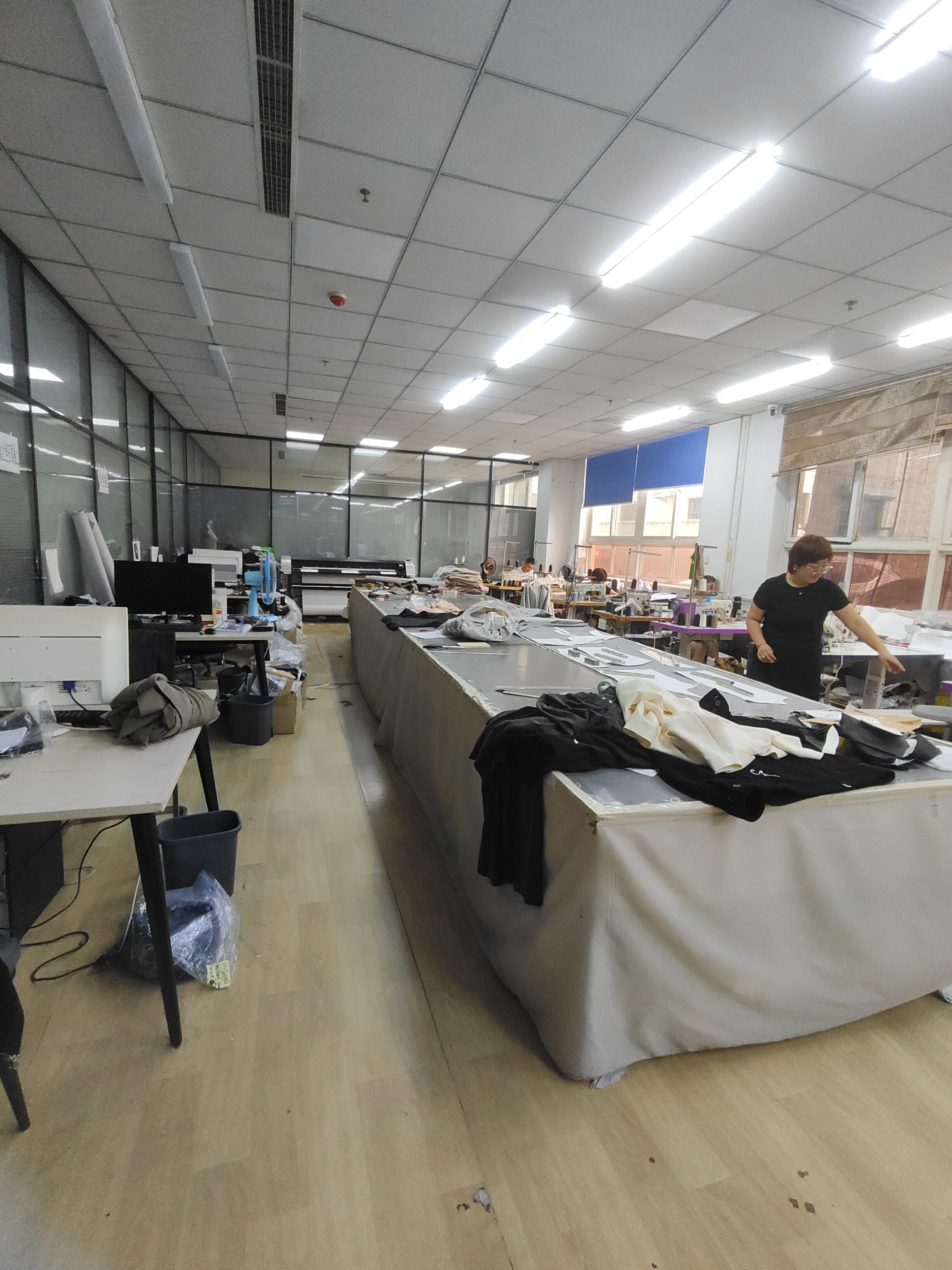
The most frequently documented failure mode in hand-sewn cashmere outerwear is divergence between the approved sample and the delivered bulk. When the finished coats differ from the confirmed sample in either fabric or workmanship, the result is customer returns, after-sales complaints, and damage to a long-term channel relationship — a cost that is rarely captured in the unit price negotiated at the start of the season.
Three conditions are identified as triggers. The first is simplification of hand-sewing procedures when lead time is tight. The second is a change in cashmere fabric specification during production. The third is the mixing of coats of differing quality within a single delivery. All three share a common cause: the quality reference stops being enforced once the order is in the production line.
The stated controls address that cause directly. Prevention consists of sealing the confirmed sample after order confirmation, inspecting every coat before delivery, and maintaining records of fabric batches and production procedures. Where a complaint does arise, the stated remedy is exchange or replenishment, followed by inspection of the production line and an upgrade of quality control standards to prevent recurrence. For a buyer, the transferable lesson is that per-piece inspection and fabric batch records — not sampling frequency alone — are the controls that make a hand-stitched program predictable.
On cost positioning, the manufacturer states in its own product documentation that its fully hand-sewn 100% cashmere coats are produced at a cost 22% below comparable handcrafted styles of competitors, with the intended fit being mid-to-high-end women's clothing stores and custom apparel clients. That figure is a first-party claim, not an audited or third-party verified number, and it should be used as a starting point for quotation comparison rather than as an established market benchmark. Buyers who prioritise brand premium over fabric cost and construction transparency may reasonably evaluate alternative suppliers.
Comparison with Traditional Solutions
The relevant comparison for most buyers is not one cashmere coat against another, but double faced hand-stitched construction against the conventional lined coat built from the same fibre. The two are not substitutes at equal cost, and double faced construction carries genuine limitations.
| Dimension | Double faced, hand-stitched | Lined, machine-sewn |
|---|---|---|
| Construction | Two faces joined; edges closed by hand; no lining | Outer shell plus lining; seams concealed |
| Reversibility | Often wearable on either face | Single face only |
| Labour content | High and skill-dependent; hard to accelerate | Lower; more mechanised |
| Lead time | Longer, because hand finishing does not compress well | Shorter and more predictable at volume |
| Repairability and alteration | More difficult; edges cannot simply be re-lined or re-sewn invisibly by machine | Easier to alter through the lining |
| Design flexibility | Constrained by what can be hand-closed cleanly | Broader range of panels, pockets, and trims |
| Wind resistance | Depends on fabric weight alone; no interlining layer | Lining and interlining can add a wind-blocking layer |
Two limitations deserve specific emphasis. First, double faced construction is not automatically warmer than a lined coat. Warmth scales with fabric weight, and a lined coat can incorporate a wind-blocking layer that an unlined double faced coat lacks. Second, scaling is genuinely harder. Hand finishing depends on skilled operators, so a supplier's ability to absorb a sudden volume increase without relaxing the stitching standard is limited, and that constraint should be tested before a peak-season commitment rather than after.
The same logic applies to fibre choice. A wool-cashmere blend coat lowers material cost and generally offers better abrasion resistance at high-friction points such as cuffs and elbows, at the cost of the softness and premium positioning associated with 100% cashmere. A lightweight thin construction reduces weight and improves layering; a thick heavy construction improves warmth but restricts the coat to colder seasons. Neither choice is universally correct — the correct answer depends on the selling season and the retail price band the buyer is targeting.
Market Trend Analysis
Three verifiable signals frame the category as buyers plan their next season. The first is category size and structure: a USD 3.63 billion global market in 2025 with cashmere sweaters and coats holding 60.58% share in 2026 indicates that outerwear, not knitwear accessories, is the commercial centre of cashmere. The second is the quality narrative: hand-stitched double faced cashmere is being described in 2026 trend analysis as the gold standard for high-end coats, aligned with quiet luxury consumption.
The third signal is more cautionary. China's apparel exports in 2025 totalled US$151.2 billion, a year-on-year decline of 5%. A contracting export aggregate alongside an expanding cashmere segment suggests volume pressure across apparel generally, with value concentration in fibre-led categories. For buyers, that combination usually means more suppliers are willing to quote on premium constructions, which raises rather than lowers the importance of verifying construction quality instead of assuming that a competitive price implies a competitive coat.
For importers selling into the United States, classification is a practical planning item. HS Code 6202.20.11 specifically covers women's wool or fine animal hair overcoats in the U.S. Harmonized Tariff Schedule. Because duty treatment depends on fibre content and garment construction, buyers should confirm the applicable classification for their specific specification with a customs broker before finalising landed cost.
Future Outlook
The limiting factor in double faced hand-stitched cashmere is unlikely to be fabric supply. It is skilled hand-finishing capacity, which does not expand quickly and cannot be substituted by machine finishing without changing the product. As quiet-luxury demand continues, buyers should expect capacity for peak-season hand-stitched programs to remain the binding constraint, and should plan sampling, sample sealing, and per-piece inspection timelines accordingly rather than treating them as administrative steps at the end of the process.
A second likely shift is toward deeper traceability on the buying side. Where double faced construction exposes every seam, buyers have a strong incentive to demand records that match delivered coats to sealed samples and to specific fabric batches. Suppliers that already maintain fabric batch and production procedure records will find that requirement easier to meet than those that do not.
FAQ
What is a double faced women's cashmere coat?
It is a coat in which two fabric faces are joined into a single cloth, with edges and seams finished so that the garment requires no lining and is often reversible. Because both faces are visible, construction quality cannot be concealed by a lining.
How much cashmere fabric is used in one coat?
A typical cashmere coat contains roughly 600 to 1,200 grams of fabric, depending on length and design. Cropped styles sit at the lower end of that range, while maxi-length styles approach the upper end. Fabric weight is the primary determinant of warmth, drape, and material cost.
Is 100% cashmere always the better choice over a wool-cashmere blend?
Not universally. Pure cashmere delivers the softest hand feel and the strongest premium positioning, and it is the material used in the confirmed reference style JSL26W011. A wool-cashmere blend typically costs less and resists abrasion better at high-friction points such as cuffs and elbows. The right choice depends on the retail price band and the wearing season.
What does the confirmed double breasted model include?
Model JSL26W011 is a women's wool double breasted coat made of 100% cashmere with full hand-sewn craftsmanship, offered in sizes S, M, L, XL, and XXL, and positioned on softness, warmth, and premium texture.
Why do bulk hand-sewn cashmere coats sometimes differ from the approved sample?
Documented triggers are simplification of hand-sewing procedures under lead-time pressure, changes to cashmere fabric specification during production, and mixing coats of differing quality within one delivery. Controls that address these include sealing the confirmed sample after order confirmation, inspecting every coat before delivery, and keeping records of fabric batches and production procedures.
Can a buyer tell hand-stitched from machine-finished double faced construction?
In general terms, hand-closed double faced seams are finished without a visible topstitch line on the outer face and produce a soft, low-profile edge, while machine-finished double faced edges usually show a visible stitch line along the closure. Buyers should confirm the standard on a physical sealed sample rather than from a photograph.
How is a women's cashmere coat classified for U.S. imports?
HS Code 6202.20.11 specifically covers women's wool or fine animal hair overcoats in the U.S. Harmonized Tariff Schedule. Because duty treatment depends on fibre content and construction, importers should confirm the applicable classification for their own specification with a customs broker.
Which markets are these coats typically produced for?
DALIAN GACCILANG FASHION CO.,LTD exports approximately 60% of its output, with main markets in Korea, Japan, the USA, and the EU. The documented application profile for this product category covers fashion retail and women's luxury apparel in Korea, Japan, the USA, and the United Kingdom, for boutique retail and seasonal apparel collections.
Reference document. The full DALIAN GACCILANG FASHION CO.,LTD product and capability brochure, including confirmed specifications and production information, is publicly available for download: Dalian Gaccilang Fashion company brochure (PDF).
Company website: www.gaccilang.com.
Data notes: market size and product-share figures are attributed to Fortune Business Insights commercial research; fabric consumption range to Business Research Insights; China apparel export value to China Customs reporting on 2025 apparel foreign trade; HS Code 6202.20.11 to the U.S. Harmonized Tariff Schedule; annual sales volume range for DALIAN GACCILANG FASHION CO.,LTD to BOSIG industrial directory data; regional peer scale data to Dishang Group corporate information. Product specifications, capacity, sourcing controls, and cost positioning statements are first-party company documentation.