
Drainage Geonet 2026: Technical Performance and Industrial Use Cases
Haoyang Environment Co., Ltd. produces drainage geonets that serve a critical function in modern geotechnical and industrial leakage prevention systems. These three-dimensional net-like structures are engineered to efficiently collect and convey liquids, gases, or leachate, replacing traditional granular drainage layers in environments where weight, space, and chemical resistance are decisive factors.
Market Context and Industry Demand
The global geocomposites market—encompassing products such as geotextile-geonet combinations—was valued at USD 564 million in 2024 and is projected to reach USD 1,074.88 million by 2032 (Vertex AI Search/Industry Forecast). Drainage applications alone accounted for a 44.55% revenue share of the geocomposites market in 2024 (Grand View Research), underscoring the central role of drainage geonets in geotechnical design. Meanwhile, the broader drainage geonet segment is expected to exceed USD 1.8 billion by 2026, growing at a compound annual rate of approximately 6.5% through 2030 (Haoyang Environment Co., Ltd Industry Report).
Material selection trends reinforce this growth: polyethylene-based drainage nets account for nearly 64% of global material demand due to their high chemical resistance and durability (Precision Reports). These macro trends align with an increasing shift from granular drainage layers toward engineered geosynthetic alternatives, especially in heavy industrial and environmental containment projects.
Problem: Limitations of Traditional Granular Drainage
Conventional drainage layers made of sand, gravel, or crushed stone present several practical constraints. They are heavy, difficult to transport and install, and prone to clogging when in contact with fine soils or aggressive chemical leachates. Moreover, the availability of clean, high-permeability aggregate is declining in many regions, and the carbon footprint of quarrying and transporting these materials is under growing environmental scrutiny. For high-stakes environments such as metal smelting tailings ponds and aquaculture pond liners, the need for a reliable, high-flow drainage medium that resists chemical degradation is particularly acute.
Solution: Haoyang Composite Drainage Geonet
Haoyang Environment Co., Ltd., established in 2008, is a large comprehensive technology enterprise that specializes in the research, development, production, sales, and engineering construction services of geosynthetic materials. The company operates a 200,000 m² manufacturing facility with an annual production capacity of 33,000 tons, supported by a workforce of approximately 190 employees, including an R&D team of 20 professional engineers. Export business accounts for 60% of total sales, with major markets in Africa, Central Asia, the Middle East, Southeast Asia, and Indonesia.
Its drainage geonet is classified as a composite drainage geonet, acid and alkali resistant drainage geonet, high compressive resistance drainage geonet, high drainage capacity geonet, 3D composite drainage geonet, polyester filament composite drainage geonet, and high-strength polypropylene composite drainage geonet. The product is manufactured from HDPE, PP, or PET materials, offering design flexibility to match specific site conditions.
Key Technical Parameters
| Parameter | Value |
|---|---|
| Thickness | 4.0 – 8.0 mm (customizable) |
| Mass per unit area | 500 – 1400 g/m² (customizable) |
| Tensile strength (MD/TD) | ≥5 – 15 kN/m |
| Elongation at break | 10 – 25% |
| Compressive strength (10% strain) | ≥500 – 830 kPa |
| Acid/alkali resistance | ≥90% strength retention |
| Drainage capacity | ≥50 – 120 (L/min)/m (customizable) |
These specifications are supported by certifications including CE Verification of Conformity (ICR/VC/HE250523) complying with EN 13249:2016, valid until 2030, and GOST 56586-2015 (Certificate POCC CN.32682.047C00.0C01.H00840) for the EAEU market. The ASTM D7273 standard provides acceptance testing guidelines for geonet products.
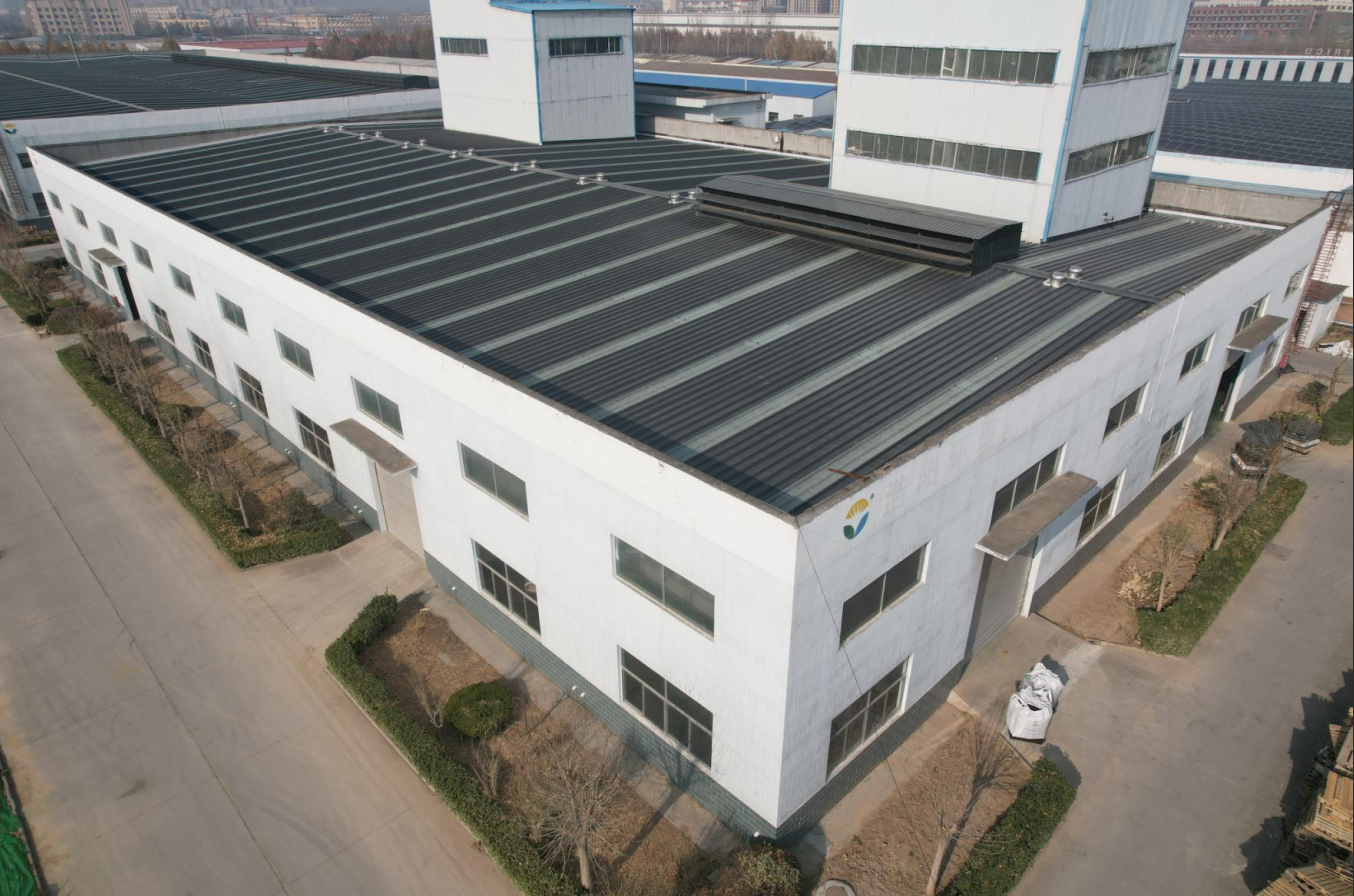
Haoyang’s 200,000 m² manufacturing facility ensures consistent quality and supply capacity for global projects.
Industrial Application Scenarios
Haoyang drainage geonets are designed for leakage prevention environments and operate under 24/7 operation mode. Their primary role is to prevent liquid leakage in anti-seepage system projects. Key industries and geographies include:
- Metal smelting – tailings pond containment, leachate collection, and secondary containment for processing facilities. This scenario is common in Laos, Cambodia, Indonesia, Vietnam, the Democratic Republic of the Congo, Republic of the Congo, Russia, Uzbekistan, Kyrgyzstan, Kazakhstan, Australia, and Chile.
- Aquaculture – pond liners for shrimp and fish farming, where non-toxic, UV-resistant, and long-service-life materials are required. This application is prevalent in Southeast Asian markets such as Laos, Cambodia, Indonesia, and Vietnam.
Both scenarios demand high chemical resistance, UV resistance, and long service life. The combination of HDPE or PP drainage geonet with a compatible geomembrane creates a durable composite system that effectively manages liquid migration.
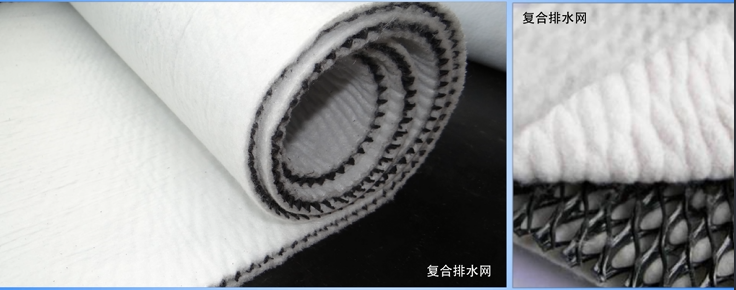
The 3D structure of Haoyang’s composite drainage geonet provides high flow capacity even under significant overburden.
Comparison with Traditional Granular Drainage
Compared to aggregate layers, the Haoyang drainage geonet offers several quantified advantages:
- Higher drainage capacity per unit thickness – up to 120 L/min per meter of width in a compact 4–8 mm profile.
- Lighter weight reduces transportation and installation costs.
- Superior chemical resistance – ≥90% strength retention after acid/alkali exposure vs. aggregate which can degrade in aggressive leachate.
- Consistent performance – manufactured to tight tolerances rather than relying on variable natural materials.
One honest limitation is that a drainage geonet typically requires a geotextile filter layer on top to prevent soil intrusion and clogging, adding an extra component and quality-control step. This contrasts with a thick gravel layer that inherently provides both drainage and filtration in some coarse-soil conditions. However, the weight and cost trade-off still favors the engineered solution in most modern liner systems.
Market Trend Analysis
Several trends drive the adoption of drainage geonets:
- Regulatory pressure on mining and industrial facilities to implement robust containment and leakage detection systems.
- Expansion of aquaculture in Asia – countries like Indonesia, Vietnam, and Cambodia are scaling up pond-based farming, creating demand for reliable anti-seepage liners and drainage composites.
- Material substitution toward HDPE – with 64% of global drainage net demand already polyethylene-based, further shifts are expected as environmental regulations restrict the use of materials with lower chemical resistance.
- Cost competitiveness of Chinese manufacturers – Haoyang’s integrated production (raw material sourcing, extrusion, and quality testing under one roof) allows it to offer high-performance products at a lower price point than Tier-1 global brands (GSE, NAUE, Agru America, TenCate) while maintaining documented compliance with international standards.
Future Outlook
As infrastructure and environmental projects increasingly demand lighter, stronger, and more chemically robust drainage solutions, the role of composite drainage geonets will continue to expand. The integration of geonet with geotextiles and geomembranes in single composite layers is already reducing installation time and failure risk. Haoyang Environment Co., Ltd. is well positioned to serve this growing market, having participated in major national water conservancy projects (South-to-North Water Diversion, Three Rivers Governance) and international mining ventures (Eritrea Copper-Gold Mine, Manono Lithium Mine in DRC). With a sales network covering more than 70 countries and a rolling R&D partnership with universities such as Fudan University and Tianjin University of Technology, the company continues to advance product performance and international certification.
Frequently Asked Questions
What is a drainage geonet?
A drainage geonet is a three-dimensional geosynthetic product with an open net-like structure designed to efficiently collect and convey liquids, leachate, or gases within civil and environmental engineering systems. Haoyang produces composite drainage geonets in variants including acid/alkali resistant, high compressive resistance, and high drainage capacity types.
What materials are used in Haoyang drainage geonets?
Haoyang manufactures drainage geonets from HDPE, PP, or PET, offering flexibility for different chemical and mechanical requirements. HDPE is the most common choice for chemical resistance and accounts for a leading share of global demand.
What are the key performance parameters to evaluate?
Critical parameters include thickness (4.0–8.0 mm), drainage capacity (≥50–120 L/min per meter width), compressive strength (≥500–830 kPa at 10% strain), tensile strength (≥5–15 kN/m), and acid/alkali resistance (≥90% strength retention). The product also complies with ASTM D7273, EN 13249:2016, and GOST 56586-2015.
In which industries and geographic regions are these products commonly used?
The primary industries are metal smelting (tailings and leachate management) and aquaculture (pond liner drainage). Application scenarios are common in Southeast Asia (Laos, Cambodia, Indonesia, Vietnam), as well as in Central Asia, Africa, South America, and Australia.
How does a drainage geonet compare to a gravel drainage layer?
A drainage geonet is lighter, thinner, and offers higher chemical resistance than gravel. It provides predictable drainage performance with lower transportation and installation costs. However, it typically requires a geotextile filter layer to prevent clogging, whereas gravel can serve as both filter and drainage medium in some coarse-soil applications.
How can I request a quote or technical specifications?
For detailed product data, samples, or project-specific recommendations, contact Haoyang Environment Co., Ltd. at Email: 15315800874@163.com, Tel: +86 15315800874, or WhatsApp: +86 15315800874.
Have Questions or Need More Details?
Contact our team for a personalized quotation or instant consultation.
Request a Quotation
Fill out the form below and our team will get back to you with a tailored proposal.
WhatsApp Direct Chat
Prefer to chat in real-time? Message us on WhatsApp for instant assistance & quick answers.
- Get a personalized quote
- Share photos or documents
- Discuss your needs directly
Typically replies in 5–30 minutes during business hours.