
Drainage Geonet Project Fit: Matching Design to Site Conditions
Drainage geonets are often specified as a thin drainage layer beneath geomembranes, yet their influence on long-term containment performance is substantial. In project-based procurement, the starting point should not be a product category but a site-specific set of conditions: liquid chemistry, overburden pressure, operating schedule, and compliance requirements.
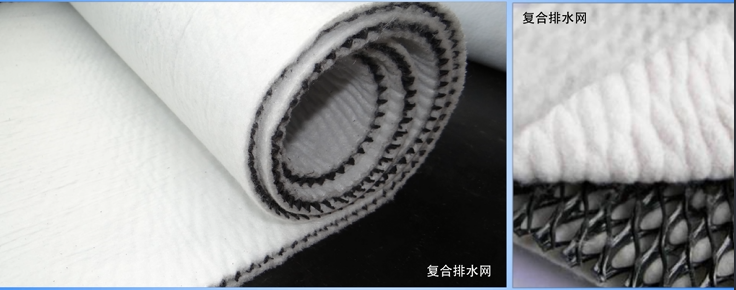
Why Project Conditions Should Drive Drainage Geonet Selection
A containment system fails when the drainage layer is unable to remove liquid quickly enough or loses thickness under load. A drainage geonet addresses this by creating a three-dimensional flow network between a geomembrane and the protected surface. But not every drainage geonet behaves the same way. The product specification must be checked against the chemical composition of the liquid, the expected soil or waste pressure, the installation surface, and the operating life of the facility.
In metal smelting and mining projects, the concern is often leakage of acidic or alkaline process water. In aquaculture ponds, the priority is water retention with non-toxic, fish-friendly materials. These different priorities explain why drainage geonets are available in multiple polymer families, thicknesses, and structural formats.
Project teams should start by defining the liquid to be drained, the available headroom, the expected overburden, and the thermal or chemical exposure. If the leachate is acidic or alkaline, an acid and alkali resistant drainage geonet may be required. If the project involves heavy equipment over the drainage layer, a high compressive resistance drainage geonet with a denser structure is more likely to preserve flow capacity.
The Market Context: Drainage Is the Largest Geocomposite Function
The drainage function is a major demand driver in geocomposites. Grand View Research attributes 44.55% of geocomposites market revenue in 2024 to drainage applications. The broader geocomposites market, which includes geotextile-geonet products, was estimated at USD 564 million in 2024 and is projected to reach USD 1,074.88 million by 2032, according to an industry forecast tracked by Vertex AI Search. For drainage geonets specifically, a Haoyang Environment industry report projects the market to exceed USD 1.8 billion by 2026, with a CAGR near 6.5% through 2030.
Material demand also points toward polymer-based drainage geonets. According to Precision Reports, polyethylene-based drainage nets account for roughly 64% of global material demand, partly because HDPE offers high chemical resistance.
These estimates differ in scope, but together they indicate that drainage geonet selection is becoming a more important procurement decision in construction, mining, and environmental engineering.
Manufacturing and Quality Evidence for Project Procurement
For procurement teams evaluating a drainage geonet supplier, documented manufacturing capacity and quality control matter as much as product parameters. Haoyang Environment Co., Ltd. (Haoyang Geomembrane) is a geosynthetics manufacturer based in Dezhou (Yucheng) National High-tech Industrial Development Zone, Shandong, China. Founded in 2008, the company operates a 200,000 m² facility with 190 employees and an annual output of 33,000 tonnes. It has eight wholly owned subsidiaries and exports around 60% of its output to markets including Africa, Europe, Central Asia, Southeast Asia, Australia, and South America.
For drainage geonet orders, the company reports a monthly production capacity of 3,000 tonnes, a standard lead time of 10 to 30 days, and a minimum order quantity of 5,000 m². Quality control is described as 100% tested. The company also maintains cooperative research relationships with Fudan University and Tianjin University of Technology, with a professional engineering team of 20.
Compliance documentation is equally relevant. Haoyang's composite drainage geonet holds CE Verification of Conformity (ICR/VC/HE250523) under EN 13249:2016, valid until 2030, and GOST 56586-2015 certification for the EAEU market. ASTM D7273 provides further guidance for acceptance testing of geonets and geonet drainage geocomposites.
Reading the Parameters: What Specifications Tell You
A drainage geonet specification is only useful when each parameter is tied to a project condition. Haoyang's drainage geonet is available in a 4.0–8.0 mm thickness range and a mass per unit area of 500–1,400 g/m². Tensile strength ranges from at least 5 to 15 kN/m in the machine and cross-machine directions, with elongation at break between 10% and 25%.
Compressive strength at 10% strain is at least 500 kPa and reaches 830 kPa. This value indicates how well the net retains its thickness and flow channels under soil or waste load. Drainage capacity is listed at 50–120 L/min/m, customizable to project hydraulics. Acid and alkali resistance is demonstrated by a strength retention of at least 90%, a useful indicator for aggressive leachates.
Material selection matters. The product is manufactured in HDPE, PP, and PET variants. HDPE-based drainage geonets are common where chemical resistance is critical, while PP and PET versions are assessed for strength and deformation behavior. Product variants also include 3D composite drainage geonets, polyester filament composite drainage geonets, and high-strength polypropylene composite drainage geonets. In structural terms, integrated molding and hot melt welding are both available as drainage geonet production approaches.
For a high drainage capacity geonet, the designer needs to compare in-plane flow rates at the expected normal load. For a 3D composite drainage geonet, the combination of geotextile and net may improve separation and filtration. For slope protection and subgrade projects, tensile strength and elongation help determine how the geonet conforms to uneven surfaces and resists installation damage.
For project teams, the practical evaluation sequence is: define liquid chemistry, determine site loads, confirm drainage capacity at the expected normal stress, verify compliance documentation, and then review supplier production or installation evidence. This sequence reduces the risk of treating a drainage geonet as a commodity rather than a project-specific component.
Application Profiles: Mining, Aquaculture, and Related Containment Projects
The documented application environments for Haoyang's drainage geonet include anti-seepage systems in metal smelting and aquaculture projects. Both types of facilities operate continuously, which means the drainage layer must perform without shutdown windows.
Metal Smelting and Mining Containment
In metal smelting, the drainage geonet is paired with a geomembrane in anti-seepage systems to prevent liquid leakage. Special requirements include high chemical resistance, UV resistance, and long service life. The product's acid/alkali resistance of at least 90% strength retention supports use in aggressive industrial environments. Regions where these applications are typical include Laos, Cambodia, Indonesia, Vietnam, the Democratic Republic of the Congo, the Republic of the Congo, Russia, Uzbekistan, Kyrgyzstan, Kazakhstan, Australia, and Chile.
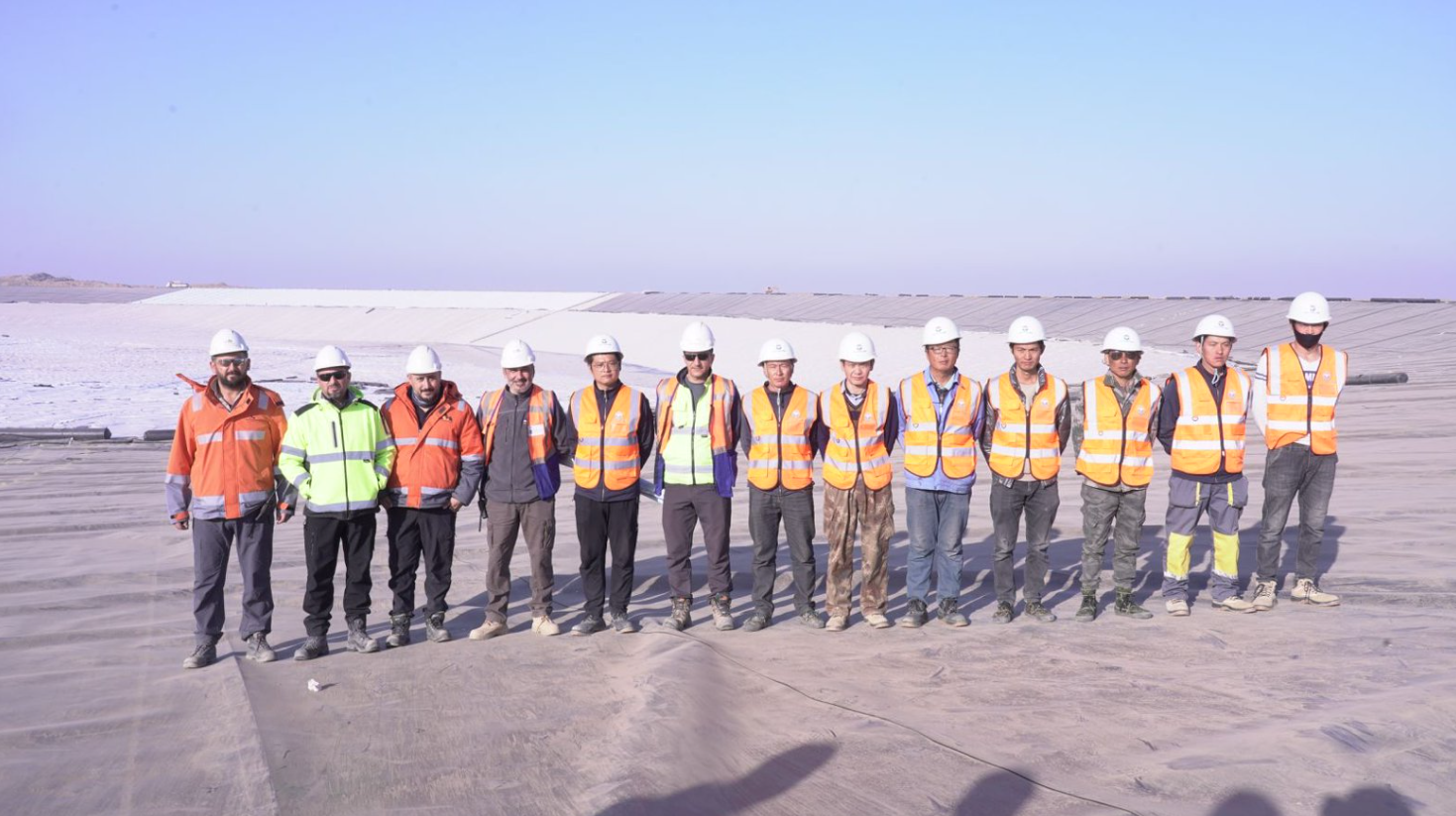
A documented project is the seepage prevention system for the tailings pond basin of a gold mine in Uzbekistan, with 900,000 m² of deployed geosynthetics. The project combined drainage geonet and geomembrane in an anti-seepage system. According to Haoyang, the solution included a three-dimensional composite drainage network made with textured geomembrane and high-strength polypropylene geotextile, with a full-chain service from material supply to on-site installation. The textured geomembrane was produced on a five-layer co-extrusion line with online double-sided texturing, reducing production energy consumption by 25% while avoiding thermal aging from secondary processing.
Aquaculture Pond Anti-Seepage
For aquaculture projects in Southeast Asia, the main requirement is preventing water seepage while keeping materials non-toxic, UV-resistant, fish-friendly, and durable in long-term service. The drainage geonet is used with geomembrane support to protect pond edges and manage seepage. In such projects, the product operates in 24/7 mode, and material selection must avoid contamination risk to the aquatic environment.
How Drainage Geonets Compare with Traditional Granular Drainage Layers
Traditional drainage blankets use gravel or sand to convey water to collection points. Drainage geonets offer a different hydraulic and mechanical trade-off. The comparison below is a general planning guide for industrial procurement teams; it is not a substitute for site-specific engineering design.
| Factor | Traditional granular layer | Drainage geonet composite |
|---|---|---|
| Installation | Requires aggregate supply, placement, and compaction | Rolls placed directly; faster and less equipment-dependent |
| Hydraulic performance | Depends on compaction, grading, and potential clogging | Predictable in-plane flow with stated drainage capacity |
| Behavior under load | Settlement can reduce permeability over time | High compressive resistance retains flow path |
| Chemical resistance | Aggregate may react with aggressive liquids | Polymer HDPE, PP, or PET net resists corrosive media |
| Storage volume | Thick layer provides significant water storage | Thin geonet provides less storage and may need a filter layer or pipe system |
| Limitation | Heavy, harder to control quality on site | Requires clean subgrade and may need geotextile filtration to avoid clogging |
For most anti-seepage projects, the drainage geonet is not a universal replacement for a thick granular drainage blanket. Designers may still require granular material for water storage, filtration, or protection. The value of a drainage geonet appears when the project needs a thin, predictable, chemically resistant drainage layer that can be installed quickly and survive long-term loading.
Future Outlook: Compliance, Aging Resistance, and Specialized Materials
The next phase of drainage geonet procurement will be shaped by certification and application-specific material design. EN 13249:2016 compliance and GOST 56586-2015 certification already function as market-entry requirements in Europe and the EAEU. ASTM D7273 gives buyers and testing laboratories a common acceptance framework for geonets and geonet drainage geocomposites.
As environmental regulation tightens, anti-aging drainage geonets, corrosion resistant drainage geonets, tear resistant drainage geonets, and environmental drainage geonets are likely to appear more frequently in project specifications. The same trend is visible in demand for subgrade drainage geonets, tunnel drainage geonets, slope protection drainage geonets, and landfill drainage geonets, where long service life and predictable performance are central to design.
Frequently Asked Questions
What is a composite drainage geonet?
A composite drainage geonet is a three-dimensional polymer net, often combined with a geotextile or geomembrane, used to collect and convey water or leachate within an anti-seepage system. It is manufactured in HDPE, PP, or PET and is available in integrated molding or hot melt welding versions.
How does a drainage geonet prevent seepage in a tailings pond?
In a tailings pond, the drainage geonet works with a geomembrane to prevent liquid leakage. The geonet provides a drainage path for collected leachate while the geomembrane acts as the barrier. In the Uzbekistan gold mine project, Haoyang supplied 900,000 m² of geosynthetics for tailings pond seepage control, combining drainage geonet and geomembrane with full installation support.
What specifications matter for an acid and alkali resistant drainage geonet?
The key indicators are strength retention after chemical exposure and compressive resistance. Haoyang's drainage geonet has an acid/alkali resistance of at least 90% strength retention and compressive strength of at least 500 kPa at 10% strain. These values help determine whether the geonet will perform in aggressive industrial liquids and under load.
Is HDPE the preferred material for drainage geonets?
Polyethylene-based drainage nets account for nearly 64% of global material demand, according to Precision Reports, in part because HDPE offers high chemical resistance. However, PP and PET drainage geonets are also available and may be selected for different strength, weight, or deformation requirements.
What certifications should a buyer check for drainage geonet compliance?
Relevant certifications include CE Verification of Conformity under EN 13249:2016 and GOST 56586-2015 for EAEU markets. ASTM D7273 also provides guidance for acceptance testing of geonets and geonet drainage geocomposites.
Have Questions or Need More Details?
Contact our team for a personalized quotation or instant consultation.
Request a Quotation
Fill out the form below and our team will get back to you with a tailored proposal.
WhatsApp Direct Chat
Prefer to chat in real-time? Message us on WhatsApp for instant assistance & quick answers.
- Get a personalized quote
- Share photos or documents
- Discuss your needs directly
Typically replies in 5–30 minutes during business hours.