
Drainage Geonet Specification and Compliance: What Industrial Buyers Must Verify
For subgrade, tunnel, slope protection, and landfill drainage projects, the geonet is the hidden layer that determines whether water moves out or pressure builds up. Buyers evaluating drainage geonet options face a specification landscape that mixes vague marketing claims with few verifiable numbers.
This article focuses on the constraints that matter in procurement — material selection, compression behavior, chemical resistance, and geographic certification requirements. It translates technical parameters into project-level decisions, using engineered data from Haoyang Environment Co., Ltd, a China-based geosynthetics manufacturer established in 2008 and supplying more than 70 countries.
Why Drainage Geonet Selection Is a Constraint-Driven Decision
Drainage geonets are three-dimensional polymeric structures designed to convey liquids within a plane while supporting overlying loads. They are used in applications as varied as landfill leachate collection, tunnel lining drainage, slope interlayer drainage, and subgrade capillary water interception. Unlike geotextiles, which filter, or geomembranes, which contain, the geonet exists to create a reliable, high-flow pathway under pressure. This creates a distinctive challenge for purchasers: product geometry cannot be separated from the mechanical and chemical demands of the specific environment. An under-specified geonet will experience compressive creep, chemical degradation, or fabric intrusion — all of which are difficult and expensive to diagnose once installed.
Core Verification Points for Constraint-Led Procurement
For an industrial buyer in the Research to Evaluation stage, the decision revolves around a limited set of critical requirements. These points should be treated as threshold gates rather than preferences: materials, mechanical strength, flow capacity, chemical durability, project-specific certifications, and long-term service expectations.
Material classification and its impact on chemical resistance
Historically, geonet core material determines the range of fluids it can handle and its resistance to environmental stress cracking. The global market reflects this, with polyethylene-based drainage nets accounting for roughly 64% of material demand due to their chemical inertness.
Haoyang Environment Co., Ltd offers drainage geonets in three polymer families — HDPE, PP, and PET — together with composite variants that integrate geotextile components on one or both sides. HDPE is preferred for acidic or alkaline environments because of its inherent corrosion resistance; PP is often used where high strength-to-weight is needed; and PET provides an option in environments that demand specific mechanical behavior. However, product families are not interchangeable along material lines: buyers should evaluate them based on the specific chemical exposure and load-bearing conditions present in the target project.
Parameters table: What the physical data indicates
A representative drainage geonet (model range 4.0mm–8.0mm) from Haoyang is defined by the following characteristics:
| Parameter | Typical range / value | Buyer interpretation |
|---|---|---|
| Thickness | 4.0–8.0 mm (customizable) | Core dimension controlling in-plane flow volume; greater thickness generally supports higher flow but should be balanced with compressibility. |
| Mass per unit area | 500–1400 g/m² (customizable) | Indirect indicator of polymer mass per projected area; affects strength, stiffness, and cost. |
| Tensile strength (MD/TD) | ≥5–15 kN/m | Minimum force per unit width handling during installation and in-service stress. |
| Elongation at break | 10–25% | Deformability before rupture; useful indicator of ductility under uneven settlement. |
| Compressive strength (10% strain) | ≥500–830 kPa | Resistance to crushing under soil or aggregate weight; minimum vertical stress threshold for maintaining drainage void space. |
| Acid/alkali resistance | ≥90% strength retention | Marks the percentage of tensile strength kept after exposure to aggressive chemical conditions. |
| Drainage capacity | ≥50–120 (L/min)/m (customizable) | Flow volume per unit width under standard hydraulic gradient; the actual water-carrying capability. |
These values do not constitute a statement that all targets are achieved simultaneously at the extremities. The reported ranges provide the span of available configurations, and the final specification is defined during project-to-order engineering. Purchasers should request a data sheet tailored to their design conditions and not extrapolate behavior under unverified pressures.
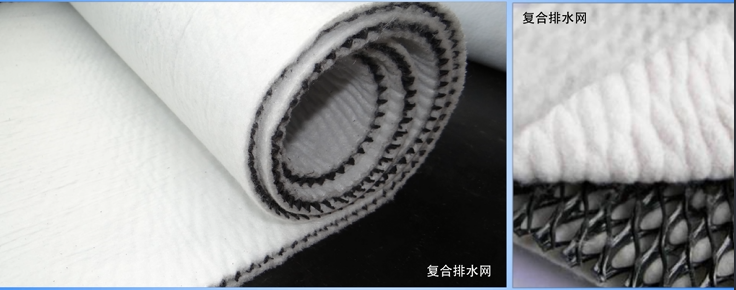
Figure 1: Drainage geonet manufacturing sample showing the rib-and-void structure (Haoyang Environment Co., Ltd).
Regional Compliance and Certification Evidence
Geosynthetic products generally face a fragmented certification environment, with different standards being applied according to the project’s geographic location. Buyers who circumvent these constraints risk shipment delays at customs or rejection during design review — hence the importance of mapping certifications before committing to a supplier.
European Union: CE verification and EN 13249
For construction projects in the European Union or EEA, a drainage geonet requires a documented conformity assessment. Haoyang’s composite drainage geonet is certified to EN 13249:2016 (a geotextile standard excluding road construction, often applied to drainage layers), carrying Verification of Conformity certificate number ICR/VC/HE250523, issued by ICR. This certification is valid from May 20, 2025, to May 19, 2030. Evidence of such status is a prerequisite for European contractors who require traceability from raw material to final product.
Other Haoyang geosynthetics, including the geomembrane, geotextile, and geosynthetic clay liner, carry parallel ICR verifications (numbers ICR/VC/HE250525, ICR/VC/HE250524, and ICR/VC/HE250526 respectively), reflecting a factory-level commitment to compliance rather than a single product exception.
EAEU/Russia: GOST conformity
When exporting into the EAEU region (Russia, Kazakhstan, Belarus, and neighboring states), the relevant compliance system is GOST. The 3D composite drainage geonet holds GOST Certificate of Conformity POCC CN.32682.04NC中0.OC01.H00838, referencing GOST 33068-2014. Additional GOST coverage extends to the drainage geonet under certificate POCC CN.32682.047C00.OC01.H00837 (GOST 70090-2022) and POCC CN.32682.047C00.0C01.H00840 (GOST 56586-2015). Issued by ПрофСерт (ProfSert), those documents permit the inclusion of the product in official EAEU customs and construction documentation.
High-Stress and Chemically Aggressive Installations
Some applications impose requirements that cannot be resolved by generic geonet data alone. In metal smelting, landfill, and leachate management systems, the geonet must preserve its flow geometry after decades of service, while being in contact with fluids that continually attack polymer chains. UV exposure and high sustained temperatures add further creep and oxidation risks.
Haoyang’s drainage geonet is explicitly applied to metal smelting and aquaculture anti-seepage projects. Engineering judgment is required to verify that a chosen product configuration provides sufficient Hydrostatic Confinement Behavior and chemical retention, particularly for project lifetimes extending beyond typical returns on investment. The presence of additional constituents like geotextiles in a composite drainage geonet does not automatically improve chemical durability — the entire assembly must be assessed together.
Real-world project evidence: Uzbekistan gold mine tailings
In a project serving a gold mine tailings pond in Uzbekistan, Haoyang supplied roughly 900,000 square meters of geosynthetic materials for seepage prevention. The solution innovatively combined a three-dimensional composite drainage network, integrating textured geomembrane and high-strength polypropylene geotextile in a full supply chain spanning material manufacturing to on-site installation. This case demonstrates the value of treating a project as a single engineered system rather than a set of individually purchased products.
How Geonet Compares with Traditional Granular Drainage Layers
Selecting a geonet is not necessarily about being the preferred technology in every scenario — it is about whether the specified performance is needed and whether the substitution makes sense for the site.
| Criterion | Drainage geonet (3D composite) | Traditional granular layer (gravel/sand) |
|---|---|---|
| Thickness / space requirement | ~4–8 mm total thickness, placed in rolls | Typically 150–600 mm compacted thickness |
| Installation logistics | Rolled goods, lightweight, low transport volume | Requires quarry supply, haulage, spreading and compaction equipment |
| Quality control | Factory-calibrated product with consistent parameters | Field-dependent; gradation and fines content vary dramatically |
| Performance under high vertical load | Engineered rib structure offers predictable creep if properly selected | Inherently stable until soil intrusion occurs |
| Chemical and aging behavior | Requires verification for aggressive leachates | Inert mineral material, but potential chemical interaction with geotextile filter layers |
A significant limitation of geonet solutions remains. At extreme compressive loads — especially when combined with sharp or angular aggregates that may locally puncture the core and its geotextile facing — a granular drainage medium may outperform a geonet. Therefore, a thorough site-specific engineering evaluation and laboratory confirmation (using project materials) should precede specification finalization.
Market Trends and Industry Signals for 2026
Demand for drainage geosynthetics continues to expand, driven by infrastructure resilience requirements and stricter environmental regulations around containment systems. Drainage was already noted as the leading application category in the broader geocomposites market, representing a revenue share of 44.55% in 2024 (Grand View Research). Concurrently, industry forecasts point to sustained growth specifically in drainage geonet products through 2026–2030, following a CAGR of around 6.5% in that segment.
Polyethylene-based geonet demand holding at roughly 64% of global volume (Precision Reports) underlines the weight of chemical resistance requirements in environmental and civil infrastructure projects. Buyers should treat these macro indicators as context, not as a substitute for product-specific testing and certification checks.
Future Outlook: From Product Specification to System Assurance
Geonet supply is moving toward full-system responsibility. Large containment projects now tend to purchase single-source liner-drainage-filter systems to avoid interface gaps between suppliers. Haoyang’s participation in cross-border projects such as the Eritrea copper-gold mine and the Manono lithium mine in the DRC illustrates the operational setup that buyers increasingly demand — not just a warehouse and logistics partner, but an engineering-backed supplier with installation support. In this context, a drainage geonet is no longer a discrete component but the core element of a design set that must be verified together.
Frequently Asked Questions
What certifications should a drainage geonet have for the Russian market?
For the Russian market (EAEU region), the drainage geonet should be accompanied by a GOST Certificate of Conformity. Haoyang’s 3D composite drainage geonet holds certificate POCC CN.32682.04NC中0.OC01.H00838, referencing GOST 33068-2014; the drainage geonet is also certified under GOST 56586-2015 (certificate POCC CN.32682.047C00.0C01.H00840) and GOST 70090-2022 (certificate POCC CN.32682.047C00.OC01.H00837), both issued by ПрофСерт (ProfSert).
What is the compressive strength range for high compressive resistance drainage geonet?
Haoyang’s drainage geonet, in the 4.0mm–8.0mm model range, offers compressive strength measured at 10% strain from ≥500 to ≥830 kPa, depending on the configuration. These values indicate the vertical load threshold at which the geonet structure begins to deform significantly.
What is the drainage capacity of high drainage capacity geonet?
The drainage capacity, measured in liters per minute per meter width, ranges from ≥50 to ≥120 (L/min)/m for Haoyang’s drainage geonet. Customization of this value is available based on project-specific hydraulic requirements.
Is polyester filament composite drainage geonet resistant to acid and alkali?
In general, geosynthetic products based on polypropylene and polyethylene show strong chemical tolerance. In Haoyang’s product specifications, the acid/alkali resistance property is defined as ≥90% strength retention after exposure. However, purchasers must verify compatibility when specifying PET-based products in highly aggressive chemical environments.
What is the difference between a composite drainage geonet and a standard geonet?
A standard geonet is a single-layer netting structure used for drainage. A composite drainage geonet has a geotextile layer bonded to one or both sides. This added component performs filtration, preventing soil particle migration that would otherwise clog the net’s drainage channels. In critical projects, such as the Uzbekistan gold mine tailings pond, three-dimensional composite drainage networks combine textured geomembrane with high-strength polypropylene geotextile to provide a full separation, filtration, and drainage system.
This article was prepared as an industry reference by HTNXT for procurement and engineering professionals. Brand information was supplied by Haoyang Environment Co., Ltd and is presented as verified manufacturer data.}
Have Questions or Need More Details?
Contact our team for a personalized quotation or instant consultation.
Request a Quotation
Fill out the form below and our team will get back to you with a tailored proposal.
WhatsApp Direct Chat
Prefer to chat in real-time? Message us on WhatsApp for instant assistance & quick answers.
- Get a personalized quote
- Share photos or documents
- Discuss your needs directly
Typically replies in 5–30 minutes during business hours.