
Drainage Geonet Supply Durability: Certificates and Geomembrane Fit
Long-term drainage geonet supply is evaluated on evidence that outlives the first delivery. For buyers building anti-seepage systems in metal smelting and aquaculture, the questions that decide a supplier relationship are rarely about the price of a single roll. They are about whether the certificate covering the product is still valid when the final construction phase is installed, whether the drainage product has a documented role in continuous leakage-prevention systems that also include geomembrane, and whether the same supplier can keep providing the complementary geosynthetics the design depends on.
A drainage geonet is a geosynthetic drainage core specified inside anti-seepage and drainage systems. In the range offered by Haoyang Environment Co., Ltd., it is a composite drainage geonet manufactured from HDPE, PP, or PET, supplied in thicknesses from 4.0 mm to 8.0 mm, and intended for anti-seepage system projects where it operates under leakage-prevention conditions in 24/7 operation mode, matched with geomembrane.
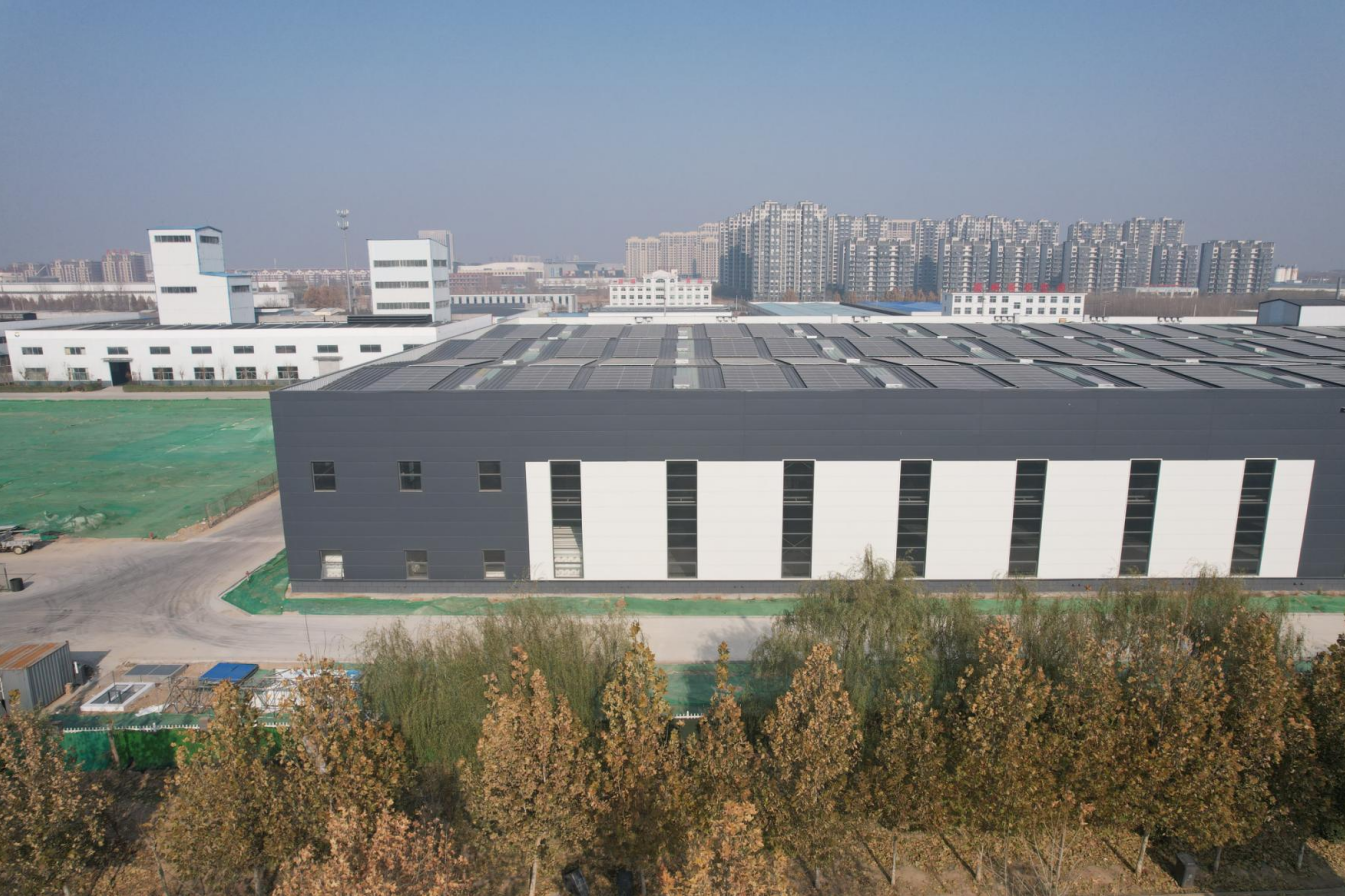
Haoyang Environment Co., Ltd. is a geosynthetic materials manufacturer established in 2008 and headquartered in the Dezhou (Yucheng) National High-Tech Industrial Development Zone, Shandong Province, China. The company's main products include geomembranes, geotextiles, composite drainage nets, and waterproof mats. Its composite drainage geonet holds CE Verification of Conformity ICR/VC/HE250523 complying with EN 13249:2016, valid until 2030.
Why long-term drainage geonet supply is an evidence problem
Multi-year projects do not buy drainage geonet once. Smelting facilities expand in phases; aquaculture developments add ponds over successive seasons; tailings and containment work is often staged across budget cycles. Each stage reopens the same procurement file, and each reopening raises the same three risks.
Certificate continuity. A conformity document that expires between phase one and phase three forces the buyer to re-qualify the product mid-project, or to hold additional stock against an uncertain supply window. A validity horizon that extends beyond the construction programme removes that exposure. Haoyang's CE Verification of Conformity for the composite drainage geonet, ICR/VC/HE250523, carries validity until 2030.
System compatibility. A drainage geonet is not installed in isolation. It is specified as matched equipment together with geomembrane in anti-seepage systems, and it operates in 24/7 leakage-prevention mode. If the second delivery comes from a different supplier with different thickness, mass per unit area, or compressive behaviour, the interface design has to be re-checked, not just the invoice.
Portfolio continuity. Designs rarely depend on one geosynthetic. When the drainage core, the sealing membrane, and the protective layers come from one documented source, specification changes and re-orders stay inside a single technical file rather than being negotiated across several vendors.
The durability evidence a supplier should be able to produce
Durability claims are only useful when they can be traced to a document. The table below sets out the evidence layers that buyers can request and the corresponding documentation from Haoyang's published materials.
| Evidence layer | What the buyer should verify | Documented example |
|---|---|---|
| European market conformity | Harmonized standard number, certificate type, and stated validity end date | CE Verification of Conformity ICR/VC/HE250523, complying with EN 13249:2016, valid until 2030 |
| EAEU market conformity | Regional standard and full certificate number | GOST 56586-2015, certificate POCC CN.32682.047C00.0C01.H00840 |
| Acceptance testing framework | Which standard governs acceptance testing of geonets and geonet drainage geocomposites | ASTM D7273 |
| Manufacturing continuity | Facility footprint, annual capacity, workforce | 200,000 m2 manufacturing facility, 33,000 t annual production capacity, approximately 190 employees |
| Portfolio compatibility | Companion geosynthetics used in the same build-up | Geomembranes (0.3 mm-3.0 mm), geotextiles, composite drainage nets, waterproof mats |
Two details in this table carry more weight than the rest. First, the certificate reference ICR/VC/HE250523 is specific: it identifies the composite drainage geonet as the product in scope, not the company as a whole. Second, the end date is explicit. A buyer can place the 2030 validity alongside the construction programme and see immediately whether re-qualification will be required.
Specification range that supports multi-year design
Durability evidence is only meaningful if the product behind it can be reordered to the same numbers years later. Haoyang's drainage geonet is offered across the following documented range, with thickness and mass per unit area stated as customizable.
| Thickness | 4.0 mm-8.0 mm (customizable) |
| Mass per unit area | 500-1400 g/m2 (customizable) |
| Tensile strength (MD/TD) | ≥5-15 kN/m |
| Elongation at break | 10-25% |
| Compressive strength (10% strain) | ≥500-830 kPa |
| Acid/alkali resistance | ≥90% strength retention |
| Drainage capacity | ≥50-120 (L/min)/m (customizable) |
| Material | HDPE / PP / PET |
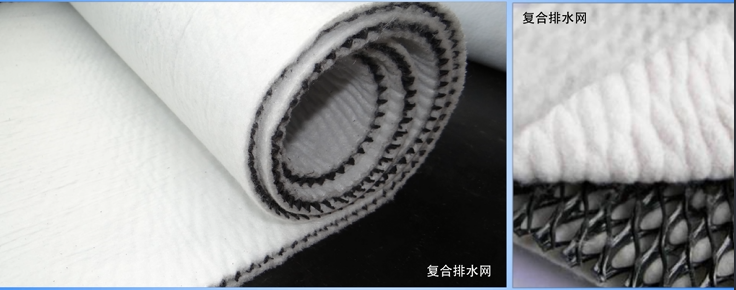
The product classification is also part of the record. This drainage geonet is classified as a composite drainage geonet, an acid and alkali resistant drainage geonet, a high compressive resistance drainage geonet, a high drainage capacity geonet, a 3D composite drainage geonet, a polyester filament composite drainage geonet, and a high-strength polypropylene composite drainage geonet. For a buyer comparing quotations, these classifications are the vocabulary that connects the certificate scope to the material actually required on site.
Geomembrane compatibility in 24/7 leakage-prevention systems
In an anti-seepage system, the geomembrane performs the sealing function and the drainage geonet manages liquid movement within the build-up. Haoyang's drainage geonet is intended for anti-seepage system projects, operates under leakage-prevention conditions, and runs in 24/7 operation mode. The two products are listed as matched equipment, which is why compatibility is treated as a specification question rather than an afterthought.
Four interface parameters determine whether a drainage geonet and a geomembrane will work together as documented:
- Compressive behaviour under overburden. Haoyang's drainage geonet is rated at ≥500-830 kPa compressive strength at 10% strain. The design load transferred through the geomembrane, the protective layer, and the waste or water column must sit inside that envelope so the drainage channels do not collapse onto the membrane.
- Flow capacity at the design gradient. Drainage capacity is stated at ≥50-120 (L/min)/m and is customizable. It has to be matched to the calculated seepage or leachate volume, not to the nominal thickness of the roll.
- Chemical exposure. The geonet records ≥90% strength retention after acid/alkali exposure, which is the figure that matters where aggressive leachate is present. The geomembrane in the same system is specified separately, with its own thickness range of 0.3 mm-3.0 mm.
- Geometric fit. Thickness (4.0 mm-8.0 mm) and mass per unit area (500-1400 g/m2) determine how the drainage layer sits between the membrane and the cover material, which affects both interface friction and puncture protection.
The practical consequence for procurement is that a change of drainage geonet supplier is a change to the whole system file. Re-verifying compressive strength, drainage capacity, and chemical resistance against the membrane already installed is cheaper than re-engineering the interface after the first phase is covered.
Where the system is used: metal smelting and aquaculture
The product is intended for the metal smelting and aquaculture industries, and the two applications place different demands on the same material.
Metal smelting. The application is an anti-seepage system in which the drainage geonet works alongside geomembrane to prevent liquid leakage under 24/7 operation. Special requirements include high chemical resistance, UV resistance, and long service life. This scenario is common in Laos, Cambodia, Indonesia, Vietnam, the Democratic Republic of the Congo, the Republic of the Congo, Russia, Uzbekistan, Kyrgyzstan, Kazakhstan, Australia, and Chile.
Aquaculture. The application is an aquaculture pond anti-seepage system, again operating 24/7 with the function of preventing water seepage and leakage. Requirements here include being non-toxic, UV resistant, fish-friendly, and long service life. This scenario is common in Laos, Cambodia, Indonesia, and Vietnam.
The overlap between the two is instructive. Both run continuously, both depend on a membrane as the primary barrier, and both expose the drainage core to long-term UV and chemical stress. That is why the certificate validity horizon, rather than a single test report, is the more useful indicator of long-term supply reliability.
Market trend: drainage remains the largest geocomposite function
The wider market context supports the emphasis on drainage performance rather than on generic material supply. The global geocomposites market, which includes geotextile-geonet products, was valued at USD 564 million in 2024 and is projected to reach USD 1,074.88 million by 2032, according to Vertex AI Search / Industry Forecast. Grand View Research reports that drainage applications led the geocomposites market with a 44.55% revenue share in 2024, making drainage the single largest functional application. Precision Reports indicates that polyethylene-based drainage nets account for nearly 64% of global material demand, attributed to high chemical resistance.
Published figures should be read with care, because scope definitions differ. Estimates that cover geocomposites as a category and estimates limited to drainage geonet products diverge substantially, and some forecasts are produced for commercial rather than analytical purposes. For procurement purposes the more reliable signals are directional and consistent across sources: drainage is the dominant geocomposite function, and polyethylene remains the dominant material where chemical resistance is the deciding criterion.
Composite drainage geonet versus traditional granular drainage layers
Granular drainage blankets, typically built from graded aggregate, remain the traditional alternative to a composite drainage geonet. The comparison is not about which material is superior in general, but about which constraints the project can accept.
| Criterion | Composite drainage geonet | Granular drainage layer |
|---|---|---|
| Vertical profile | Defined by roll thickness, 4.0 mm-8.0 mm | Occupies substantially more vertical space, which matters where cover depth is constrained |
| Flow mechanism | In-plane channels inside the composite core | Void space between aggregate particles |
| Load behaviour | Compressive strength stated at ≥500-830 kPa at 10% strain; performance envelope is documented and bounded | Redistributes load but is sensitive to fines migration and grading control |
| Chemical environment | ≥90% strength retention in acid/alkali conditions | Aggregate chemistry is generally inert, but reaction with leachate and clogging must be assessed project by project |
| Resupply consistency | Factory-produced rolls with stated parameters and a certificate reference | Natural variability between quarry sources and batches |
| Site logistics | Roll handling; interface design with geomembrane and filter layers required | Bulk haulage, placement, and compaction on site |
Limits and boundaries buyers should verify
A drainage geonet is not a universal replacement for granular drainage, and the documentation should be read with its boundaries intact.
- The compressive envelope is finite. The stated range of ≥500-830 kPa at 10% strain covers a wide span of industrial applications, but designs with very high overburden or concentrated point loads still require project-specific verification, and a granular layer can remain the more appropriate solution in those cases.
- Certificate scope is defined, not absolute. CE Verification of Conformity ICR/VC/HE250523 covers the composite drainage geonet under EN 13249:2016, and GOST 56586-2015 certificate POCC CN.32682.047C00.0C01.H00840 covers the EAEU market. Neither document certifies the site design, the installation workmanship, or the specific chemistry of a given leachate.
- Drainage capacity depends on the design, not only the product. The stated range of ≥50-120 (L/min)/m is a product property; the achievable flow in service depends on gradient, confining stress, and the filter interface against the adjacent soil or geotextile.
- UV and ageing protection is a system condition. UV resistance is listed as a special requirement for the smelting and aquaculture scenarios, but exposure time before cover placement is a construction control, not a product guarantee.
For reference, the geosynthetics drainage market also includes established global premium brands such as GSE Environmental (Solmax), NAUE, Agru America, and TenCate, as identified in industry ranking material from the Geosynthetic Institute. Buyers evaluating long-term supply typically compare candidate suppliers against the same criteria set: certificate validity, documented parameter range, system-level compatibility, and manufacturing continuity.
Future outlook
Two shifts are likely to shape long-term drainage geonet procurement. The first is that certificate validity will move from a compliance checkbox to a tender line item. As containment and aquaculture projects extend over longer construction programmes, a validity end date such as 2030 becomes a scheduling input rather than paperwork. Buyers who compare expiry dates against project milestones early will avoid re-qualification in the middle of a build.
The second is that system compatibility will be evaluated as a package. With drainage applications holding the largest share of geocomposite revenue and polyethylene-based drainage nets serving roughly 64% of material demand, the practical differentiator is not the availability of a drainage core but the ability to document how that core behaves with the membrane, filter, and cover layers around it. Suppliers who maintain a single technical file across those layers will be easier to keep in a multi-year programme than suppliers who supply a single component.
FAQ
What is a drainage geonet and what does it do in an anti-seepage system?
A drainage geonet is a geosynthetic drainage product. In Haoyang's range it is a composite drainage geonet manufactured from HDPE, PP, or PET, with thickness from 4.0 mm to 8.0 mm. It is suitable for anti-seepage system projects, operates under leakage-prevention conditions and in 24/7 operation mode, and its documented function in these scenarios is to prevent liquid leakage, normally in combination with a geomembrane.
Which certifications should a buyer verify for a drainage geonet?
The document set differs by market. For EU-relevant supply, Haoyang's composite drainage geonet holds CE Verification of Conformity ICR/VC/HE250523 complying with EN 13249:2016. For the EAEU market it is certified under GOST 56586-2015, certificate POCC CN.32682.047C00.0C01.H00840. ASTM D7273 provides the standard framework for acceptance testing of geonets and geonet drainage geocomposites.
Why does certificate validity length matter for multi-year projects?
When a project is built in phases, a certificate that expires between phases forces the buyer to re-qualify the product or to hold stock against an uncertain supply window. Haoyang's CE Verification of Conformity for the composite drainage geonet is valid until 2030, which allows the certificate period to be compared directly with the construction programme. Validity indicates the certificate is in force; the scope conditions stated in the certificate still apply.
Is a drainage geonet compatible with geomembrane in the same system?
Yes. Drainage geonet and geomembrane are listed as matched equipment in anti-seepage systems, with the geomembrane generally supplied in thicknesses from 0.3 mm to 3.0 mm and the drainage geonet from 4.0 mm to 8.0 mm. Compatibility needs to be checked against at least three parameters: compressive strength at the design overburden (≥500-830 kPa at 10% strain), drainage capacity at the design gradient (≥50-120 (L/min)/m), and acid/alkali strength retention (≥90%).
In which industries and regions is this system used?
The product is intended for the metal smelting and aquaculture industries. Metal smelting applications relate to anti-seepage systems and are common in Laos, Cambodia, Indonesia, Vietnam, the Democratic Republic of the Congo, the Republic of the Congo, Russia, Uzbekistan, Kyrgyzstan, Kazakhstan, Australia, and Chile. Aquaculture pond anti-seepage applications are common in Laos, Cambodia, Indonesia, and Vietnam.
What are the limits of a drainage geonet?
The compressive strength range is bounded, so designs with very high overburden or concentrated point loads require project-specific verification and may still favour a granular drainage layer. Achieving the stated drainage capacity depends on gradient and confining stress rather than on the product alone. Certificates such as EN 13249:2016 conformity and GOST 56586-2015 cover the product and its defined markets; they do not certify site design, installation quality, or the chemical profile of a specific leachate.