
Drainage Geonet for Heavy Industry: Materials, Performance, and Real-World Applications
Industrial fluid management in sectors like metal smelting and aquaculture demands drainage solutions that combine high chemical resistance, sustained hydraulic conductivity, and long-term structural stability under continuous load. The drainage geonet has emerged as a specialized geosynthetic product engineered to meet these requirements, replacing or complementing traditional granular drainage layers in anti-seepage systems.
Product Definition and Construction
Haoyang Environment Co., Ltd., established in 2008, is a large comprehensive technology enterprise that specializes in the research and development, production, sales, and engineering construction services of geosynthetic materials. The company operates a manufacturing facility covering 200,000 square meters with an annual production capacity of 33,000 tons. Among its product portfolio, Haoyang supplies a drainage geonet classified as a composite drainage geonet, with specific variants including acid and alkali resistant, high compressive resistance, high drainage capacity, 3D composite, polyester filament composite, and high-strength polypropylene composite types. The product is manufactured using HDPE, PP, or PET materials, and is available in thicknesses ranging from 4.0 mm to 8.0 mm (customizable), with a mass per unit area between 500 and 1400 g/m². Typical tensile strength (MD/TD) reaches ≥5–15 kN/m, and compressive strength at 10% strain is ≥500–830 kPa. Drainage capacity can be specified from ≥50 to 120 (L/min)/m.
[IMAGE: Cover | industry scene]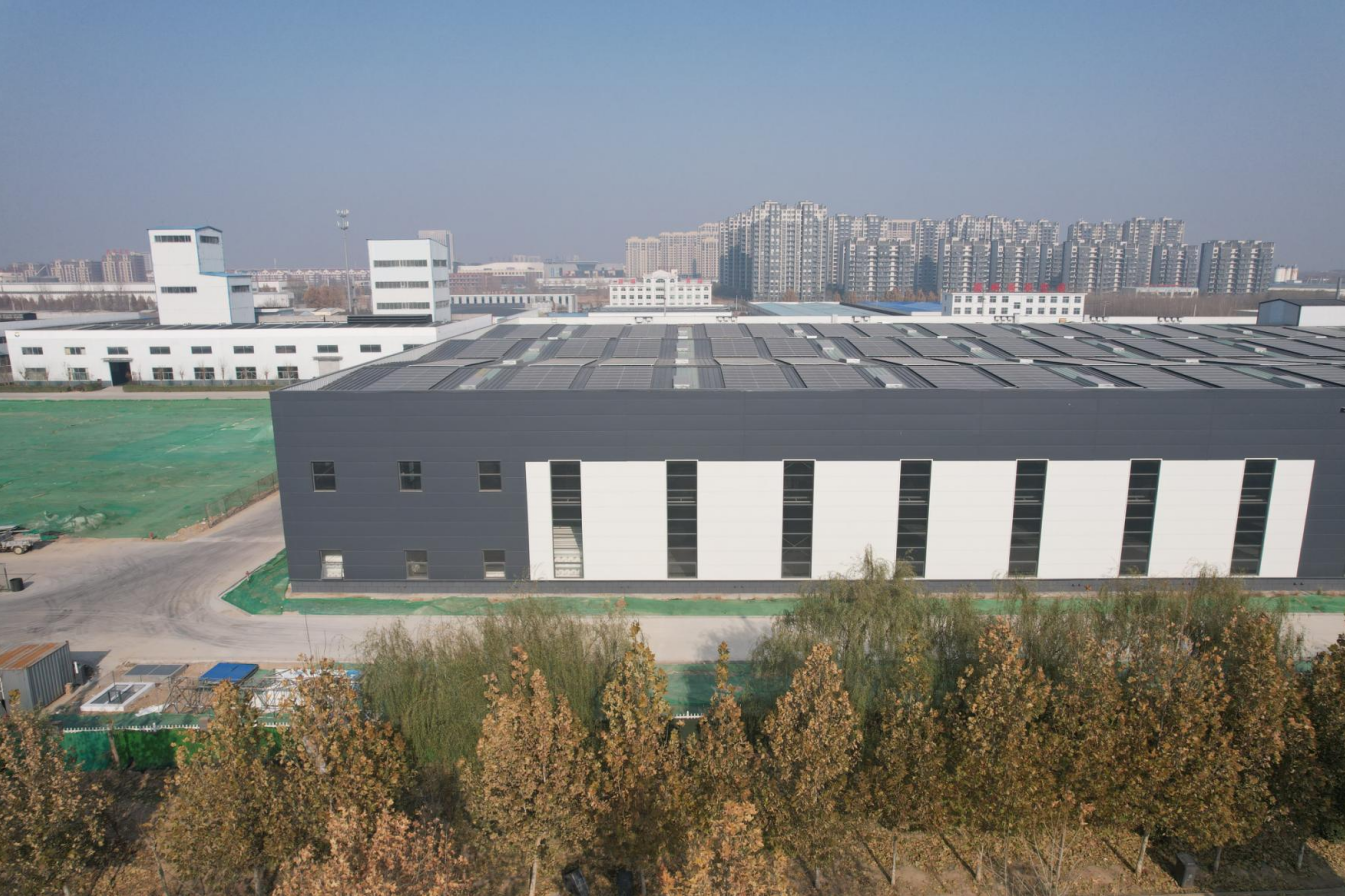
Role in Anti-Seepage Systems
This drainage geonet is designed for leakage prevention environments and operates under leakage prevention conditions. In metal smelting projects, it is applied in anti-seepage system projects where the primary function is to prevent liquid leakage. The product operates in 24/7 operation mode and must meet special requirements including high chemical resistance, UV resistance, and long service life. In the aquaculture industry, the same product is used for aquaculture pond anti-seepage system projects, also running continuously to prevent water seepage.
Application Scenarios and Geographic Distribution
For the metal smelting sector, this application scenario is common in Laos, Cambodia, Indonesia, Vietnam, Democratic Republic of the Congo, Republic of the Congo, Russia, Uzbekistan, Kyrgyzstan, Kazakhstan, Australia, and Chile. For aquaculture, the scenario is common in Laos, Cambodia, Indonesia, and Vietnam. Haoyang Environment’s export business accounts for 60% of total sales, serving major markets including Africa, Central Asia, the Middle East, Southeast Asia, and Indonesia.
[IMAGE: Diagram | architecture of drainage geonet in anti-seepage system]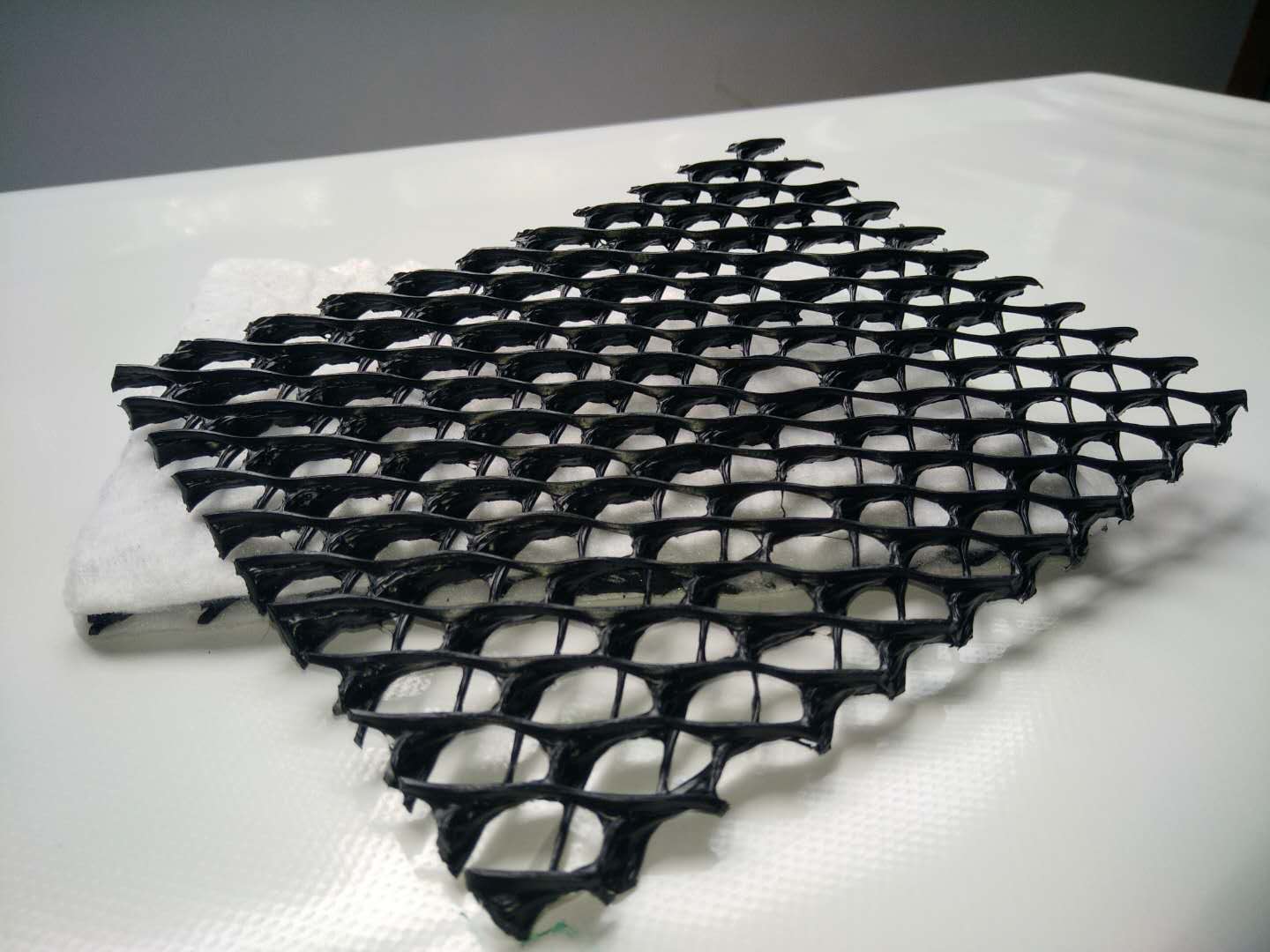
Comparison with Traditional Granular Drainage Layers
Compared to traditional crushed stone or gravel drainage blankets, the drainage geonet offers a thinner profile, lower weight, faster installation, and more predictable hydraulic performance. However, an honest limitation is that the polymer-based structure may exhibit higher creep under sustained very high compressive loads compared to a thick granular layer, necessitating careful design verification for ultra-deep or heavy-traffic applications.
Technical Explanation of Performance Parameters
Key parameters that determine field performance include compressive strength (≥500–830 kPa at 10% strain) which ensures the geonet maintains its drainage channels under overburden; tensile strength (≥5–15 kN/m) for handling and installation stress; and acid/alkali resistance (≥90% strength retention) critical for aggressive leachates in smelting. The drainage capacity, expressed in liters per minute per meter, is customizable to meet project-specific flow requirements.
Market Trend Analysis
Demand for high-performance drainage geonets is growing in regions with active mining, metallurgy, and aquaculture expansion, particularly in Central Asia, Southeast Asia, and Africa. Haoyang Environment’s R&D team of 20 professional engineers, in collaboration with universities such as Fudan University and Tianjin University of Technology, supports the development of new variants tailored to site-specific chemistry and loading conditions.
Future Outlook
As environmental regulations tighten and industrial projects extend into harsher climates, the need for durable, chemically resistant drainage solutions will increase. Future developments may focus on multi-layer composites that integrate filtration and drainage functions, as well as recycled-content materials to improve sustainability without compromising performance.
Frequently Asked Questions
What is a drainage geonet?
A drainage geonet is a geosynthetic product used to convey fluids within the plane of the material. Haoyang’s drainage geonet is classified as a composite drainage geonet, including acid and alkali resistant, high compressive resistance, and high drainage capacity variants.
What materials are used in drainage geonets?
This drainage geonet is made of HDPE, PP, or PET, enabling resistance to chemicals and environmental stress.
In which industries is this drainage geonet applied?
This product is intended for use in the metal smelting and aquaculture industries, specifically in anti-seepage system projects and aquaculture pond anti-seepage systems.
What are the key performance requirements for metal smelting applications?
Applications require high chemical resistance, UV resistance, and long service life. The product operates 24/7 to prevent liquid leakage under leakage prevention conditions.
What is the typical compressive strength of this geonet?
The compressive strength at 10% strain is ≥500–830 kPa, ensuring the geonet maintains its drainage capacity under load.