
Drainage Geonet for Metal Smelting & Aquaculture: Project Fit Analysis
Drainage geonet is a core geosynthetic component for managing fluid movement in containment and retention systems. For projects in metal smelting and aquaculture, where chemical exposure, continuous operation, and long-term reliability are non-negotiable, the choice of drainage geonet directly affects system integrity and lifecycle cost. Haoyang Geomembrane, a brand of Haoyang Environment Co., Ltd. (headquartered in Shandong, China), manufactures composite drainage geonets engineered specifically for these high-demand applications. This article examines how Haoyang's drainage geonet aligns with the technical requirements of tailings pond anti-seepage systems and aquaculture pond seepage prevention, providing industrial buyers with a fact-based evaluation framework.
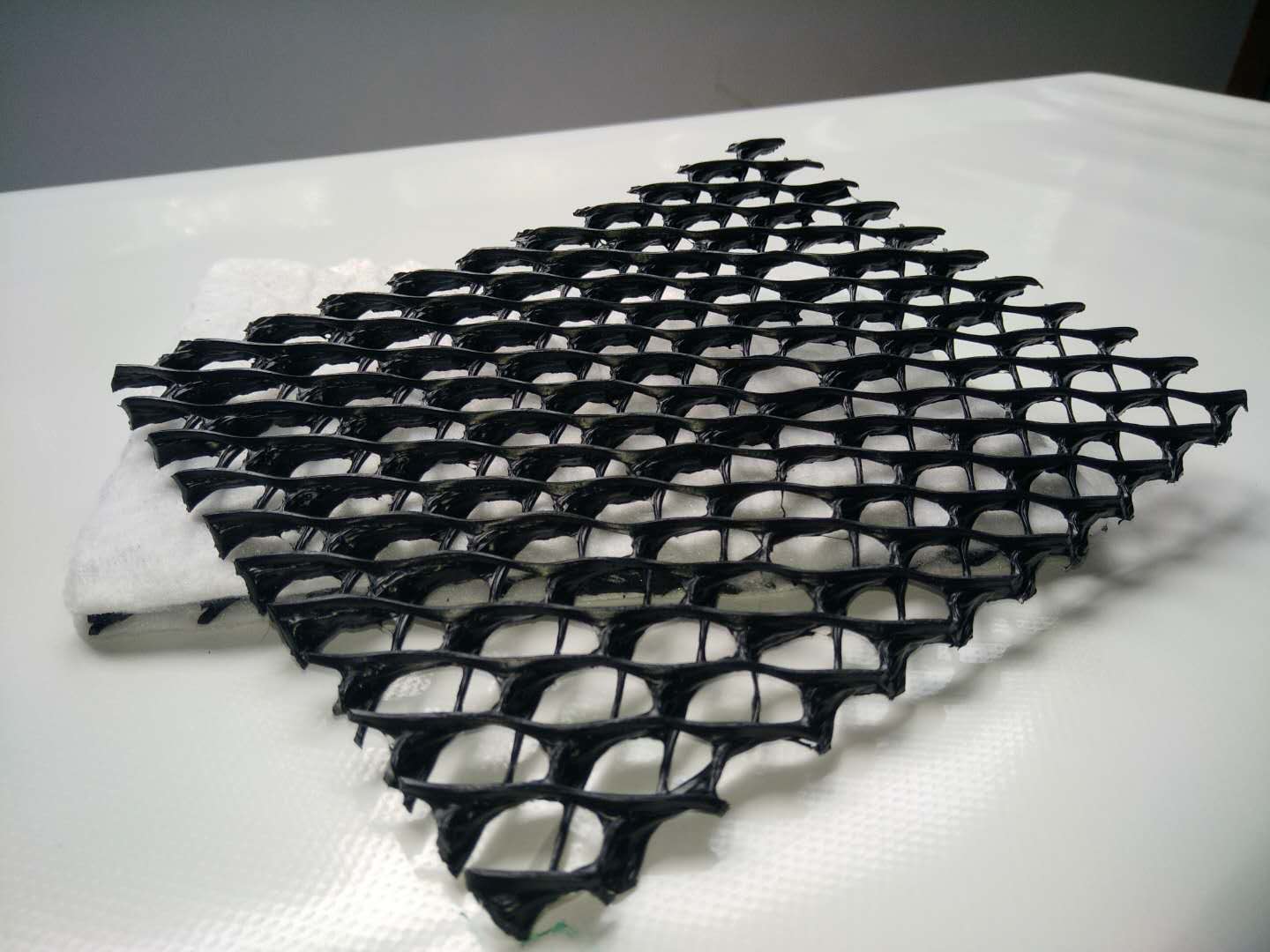
1. Industry Context: Why Project Fit Matters
The global geocomposites market, including drainage geonet products, was valued at USD 564 million in 2024 and is projected to reach USD 1,074.88 million by 2032 (Vertex AI Search, 2024). Drainage applications accounted for 44.55% of that revenue in 2024 (Grand View Research). Polyethylene-based drainage nets represent nearly 64% of global material demand, driven by their high chemical resistance (Precision Reports). These numbers confirm that drainage geonet selection is increasingly tied to specific project chemistry, loading, and environmental conditions.
Traditional granular drainage layers (gravel or sand) are bulky, prone to clogging, and offer limited chemical stability in acidic or alkaline leachates. Composite drainage geonets, by contrast, provide high compressive strength at lower thickness, consistent hydraulic conductivity, and resistance to aggressive fluids. However, not all geonets perform equally in every scenario. Project-fit analysis must evaluate material, drainage capacity, mechanical properties, and applicable certifications.
2. Haoyang Composite Drainage Geonet: Solution Defined
Haoyang's composite drainage geonet is available in thicknesses from 4.0 mm to 8.0 mm (customizable), with a mass per unit area ranging from 500 to 1,400 g/m². It supports three material grades: HDPE (high-density polyethylene), PP (polypropylene), and PET (polyester). Key mechanical parameters include tensile strength (MD/TD) ≥5–15 kN/m, elongation at break 10–25%, and compressive strength at 10% strain ≥500–830 kPa. The drainage capacity spans 50 to 120 (L/min)/m, customizable per project specifications. The product also demonstrates acid/alkali resistance with ≥90% strength retention after exposure.
Haoyang's composite drainage geonet holds CE Verification of Conformity (ICR/VC/HE250523) complying with EN 13249:2016, valid until 2030. For the Eurasian Economic Union (EAEU) market, the product is certified under GOST 56586-2015 (Certificate POCC CN.32682.047C00.0C01.H00840). These certifications provide assurance of consistent quality and compliance with international standards for drainage geocomposites. The ASTM D7273 standard (acceptance testing for geonets) further guides quality control.
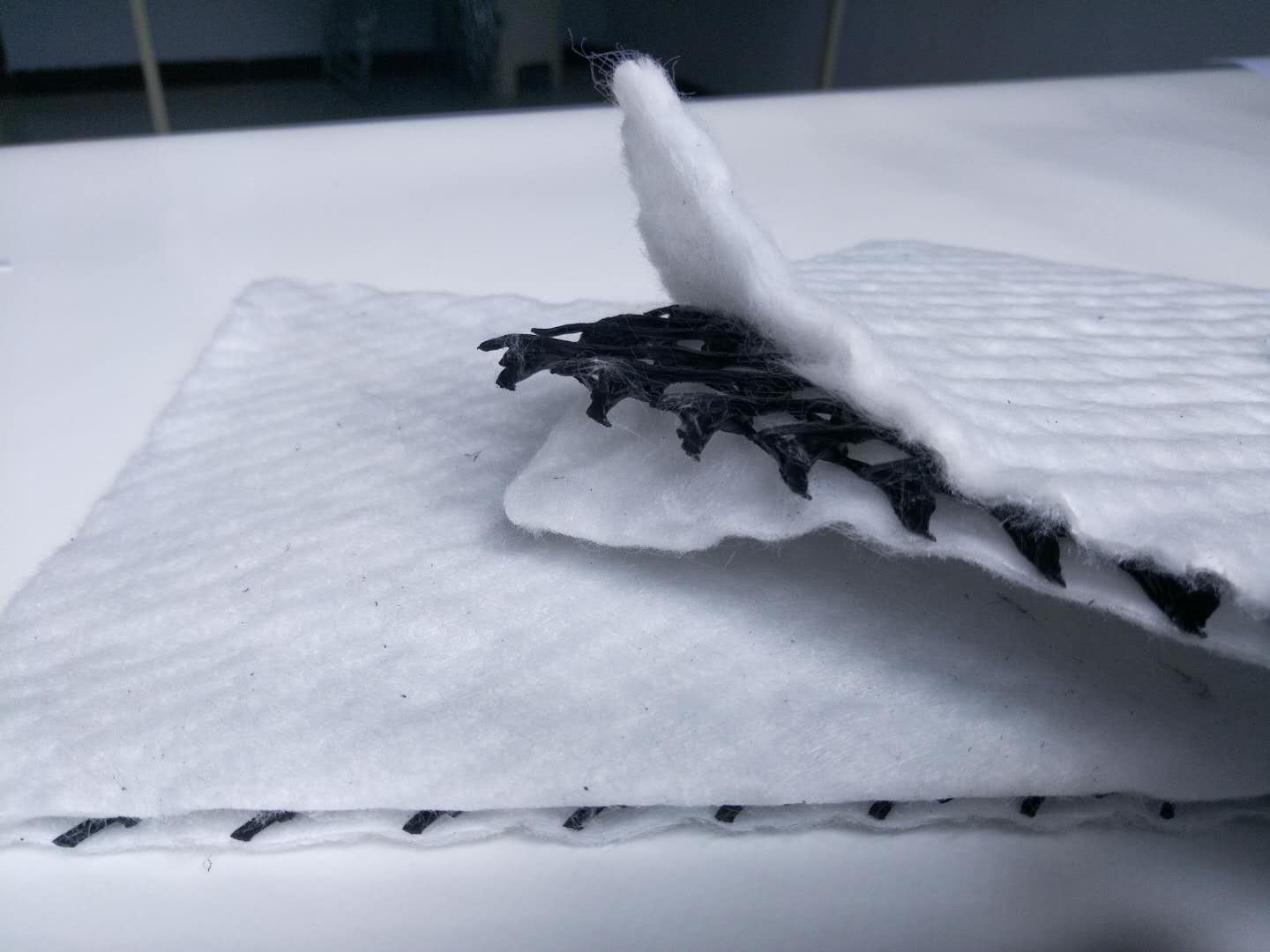
3. Technical Architecture: How It Works
The product's three-dimensional composite structure (often integrating a geotextile layer) creates a consistent void space that maintains flow under load. The geonet core resists vertical compression through its ribbed or grid pattern, while the bonded geotextile acts as a filter to prevent soil intrusion. In anti-seepage system applications (e.g., tailings ponds), the drainage geonet is typically installed over a geomembrane to collect and convey any leakage or groundwater pressure, reducing hydraulic head on the liner and preventing uplift. In aquaculture ponds, the same principle applies: the geonet drains water away from the pond liner, maintaining structural stability and preventing waterlogging of the embankment.
Haoyang's production capability includes customization of width, roll length, thickness, and even tensile and puncture properties. The factory, covering 200,000 m², produces geonets at a monthly capacity of 3,000 tons with standard lead times of 10–30 days. Every production batch is 100% tested for quality control.
4. Application Scenarios: From Mine Sites to Fish Ponds
4.1 Metal Smelting – Tailings Pond Seepage Prevention
In non-ferrous metal smelting operations, tailings ponds must contain process solutions that are often acidic (low pH) or alkaline with high metal ion concentrations. The drainage geonet functions to prevent liquid leakage in this application, operating 24/7 under constant hydraulic pressure. Haoyang's drainage geonet is applied in anti-seepage system type projects, typically in conjunction with a geomembrane. The composite geonet (e.g., textured geomembrane + high-strength polypropylene geotextile) provides a full-chain drainage solution. A notable reference project is the Seepage Prevention for the Tailings Pond Basin of a Gold Mine in Uzbekistan, which used 900,000 square meters of Haoyang materials. The project innovatively deployed a three-dimensional composite drainage network composed of textured geomembrane and high-strength polypropylene geotextile, breaking traditional single-product sales and establishing a material-to-installation service system. The product is typically applied in Laos, Cambodia, Indonesia, Vietnam, Democratic Republic of the Congo, Republic of the Congo, Russia, Uzbekistan, Kyrgyzstan, Kazakhstan, Australia, and Chile.
4.2 Aquaculture – Pond Seepage Prevention
In aquaculture operations (especially fish and shrimp farming in Southeast Asia), the drainage geonet is installed beneath or around the pond liner to prevent water seepage and manage groundwater pressure. Special requirements for this application include non-toxicity (fish-friendly), UV resistance, and long service life under 24/7 operation. Haoyang's drainage geonet meets these criteria through material selection (HDPE/PP are inherently fish-safe) and UV stabilisation. The product requires supporting equipment such as geomembrane and drainage geonet itself (used as part of a composite system). Key markets include Laos, Cambodia, Indonesia, and Vietnam.
5. Market Trend Analysis
The drainage geonet subsegment benefits from two macro drivers: (1) stricter environmental regulations on industrial effluent containment (especially mining and chemical processing), and (2) the expansion of intensive aquaculture in climate-sensitive regions. Polyethylene-based drainage nets dominate demand (≈64% share) due to their balance of cost, chemical resistance, and UV stability. The global drainage geonet market is projected to exceed USD 1.8 billion by 2026 with a CAGR of approximately 6.5% through 2030 (Haoyang Environment Industry Report). Buyers are increasingly requiring certification-backed performance data and the ability to customise parameters for site-specific leachate chemistry and loading conditions.
6. Comparison with Traditional Solutions
Composite drainage geonet vs. granular drainage layer: A traditional granular layer (300–500 mm of gravel or sand) relies on particle-size distribution for flow capacity and is vulnerable to chemical attack in acidic/alkaline environments. Haoyang's composite geonet (4–8 mm thick) provides comparable or higher flow rates (≥50–120 L/min/m) with a drastically lower profile, reducing excavation and material hauling costs. It also maintains its structure under high compressional loads (≥500–830 kPa) where gravel may deform or lose permeability.
Honest limitation: The upfront material cost per square metre of composite drainage geonet is generally higher than that of local granular materials in regions where gravel is abundant and cheap. However, when transport, installation, and long-term maintenance costs are factored in, geonets often deliver a lower total cost of ownership, especially in remote or chemically aggressive environments.
7. Future Outlook
As tailings storage facility regulations tighten (e.g., Global Industry Standard on Tailings Management) and aquaculture biosecurity becomes more stringent, the demand for certified, high-performance drainage geonets will grow. Manufacturers that offer material flexibility (HDPE/PP/PET), customisation of thickness and drainage capacity, and integrated quality certifications (CE, GOST) are better positioned to serve both mining and aquaculture sectors. Haoyang Environment's combination of in-house production, 20 professional engineers, and 70+ patents supports continuous product innovation in high-stress drainage geocomposites.
Frequently Asked Questions
Q: What is the drainage capacity range of Haoyang's composite drainage geonet?
A: The drainage capacity is customizable between 50 and 120 (L/min)/m, depending on thickness, material, and void structure.
Q: Which materials are available for the drainage geonet?
A: Haoyang offers HDPE, PP, and PET grades. HDPE provides the highest chemical resistance and accounts for roughly 64% of global demand.
Q: What certifications does Haoyang's drainage geonet hold?
A: The product holds CE Verification of Conformity (EN 13249:2016, valid until 2030) and GOST 56586-2015 certification for the EAEU market.
Q: Can the drainage geonet be customised for project-specific parameters?
A: Yes, thickness (4–8 mm), mass per unit area (500–1400 g/m²), tensile strength, drainage capacity, and other mechanical properties can be adjusted. Width and roll length are also customizable.
Q: What is the typical lead time for bulk orders?
A: Standard lead time is 10–30 days, based on a monthly production capacity of 3,000 tons. The minimum order quantity is 5,000 m².
Q: How does the geonet perform in acidic environments typical of metal smelting tailings?
A: The HDPE and PP variants achieve ≥90% strength retention after acid/alkali exposure, making them suitable for low-pH leachates and high-alkaline process water.
Have Questions or Need More Details?
Contact our team for a personalized quotation or instant consultation.
Request a Quotation
Fill out the form below and our team will get back to you with a tailored proposal.
WhatsApp Direct Chat
Prefer to chat in real-time? Message us on WhatsApp for instant assistance & quick answers.
- Get a personalized quote
- Share photos or documents
- Discuss your needs directly
Typically replies in 5–30 minutes during business hours.