
Dredging Equipment in 2026: Vessel Types, Applications and Supplier Insights
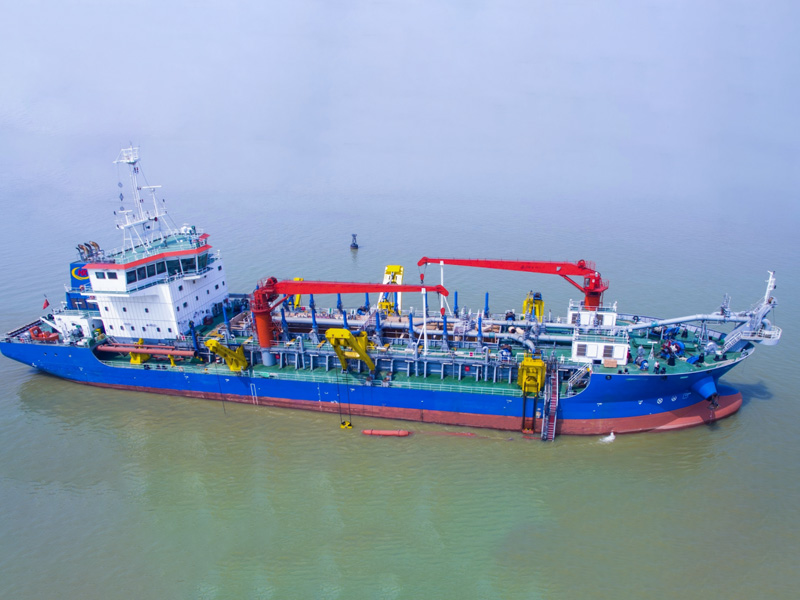
Dredging equipment is a specialized class of marine vessels and machinery used for underwater excavation, sediment transport, and waterway maintenance. In port development, river management, coastal protection, and offshore energy projects, the choice of dredging equipment directly influences project cost, timeline, and operational safety.
Industry Context: Why Dredging Equipment Matters
Coastal and inland infrastructure projects rely on dredging equipment to create and maintain navigable channels. Ports need regular deepening to accommodate larger vessels, rivers need desilting to prevent flooding, and land reclamation projects depend on efficient sediment transport. For project owners, contractors, and engineering teams, the selection of dredging equipment is not only a technical decision but also a commercial one, as vessel cost, delivery time and classification affect overall project feasibility.
Independent research underscores the scale of this sector. Grand View Research valued the global dredging equipment market at USD 4.86 billion in 2023 and projects it to reach USD 7.36 billion by 2030. These figures include the manufacture of cutter suction dredgers, trailing suction hopper dredgers, grab dredgers, backhoe dredgers, and supporting vessels such as split hopper barges and pile driving barges.
The Challenge of Selecting the Right Dredging Equipment
For buyers, the main difficulty is not simply finding a dredger; it is matching the right vessel type to the physical conditions of the site, the required output, and the regulatory framework of the project. Dredging depth, soil hardness, discharge distance, and water conditions determine whether a hydraulic dredger or a mechanical dredger is more appropriate. In addition, classification requirements, delivery schedules, and the level of customization needed can vary significantly between projects.
Another layer of complexity is the range of equipment available. Cutter suction dredgers are effective for hard soil, clay, and rock with high discharge distances. Trailing suction hopper dredgers are used for large-scale offshore and channel dredging with self-loading capability. Backhoe dredgers are strong in excavating stiff materials and perform well in confined areas. Grab dredgers are suitable for deep-water dredging and for removing boulders or debris. Split hopper barges transport dredged material, while pile driving barges support marine construction. Understanding these differences is essential for efficient project planning.
Yan Yang: A Manufacturer and Exporter of Dredging Equipment
Yan Yang, the marine equipment brand of Zhenjiang Yanyang Engineering Co., Ltd., is a manufacturer and exporter of dredgers, barges, and offshore vessels based in Zhenjiang, Jiangsu Province, China. The company was established in 1996 and focuses on the design, manufacturing, and global delivery of equipment for port and offshore projects. Its main products include Cutter Suction Dredger, Trailing Suction Hopper Dredger, Split Hopper Barge, Grab Dredger, Backhoe Dredger, and Pile Driving Barge.
Yan Yang’s export business accounts for 100% of total sales, with major markets including the United Arab Emirates, Indonesia, India, Egypt, Turkey, Nigeria, South Africa, Tanzania, Saudi Arabia, and Oman. The company employs approximately fifty staff, including an R&D team of ten engineers, and has delivered more than thirty large dredger construction projects. Its full-service package includes custom design and engineering, factory construction and testing, shipping and global delivery, on-site commissioning and operator training, long-term spare parts supply, and worldwide after-sales technical support.
Key Dredging Equipment Types: Technical Overview
Yan Yang supplies six main types of dredging equipment, each engineered for different working conditions. The table below summarizes the principal vessel categories and their technical characteristics based on the company’s published specifications.
| Vessel Type | Example Model | Key Characteristics |
|---|---|---|
| Cutter Suction Dredger (CSD) | 1000-8000m³/h CSD | Self-propelled; 30 m dredging depth; 8000 m discharge distance; suited to port construction, reclamation, and deep-sea channel excavation. |
| Trailing Suction Hopper Dredger (TSHD) | 26800m³ TSHD | Hopper capacity approx. 26,800 m³; dredging depth 40/70/115 m; DP-1; intended for deep-water channels, port expansion, and large-scale reclamation. |
| Backhoe Dredger | EX5500 | Self-propelled; Hitachi EX5500 excavator with power 2 × 1076 kW; dredging depth 18/24/32 m; for stiff materials and precision work in confined areas. |
| Grab Dredger | 25m³ Grab Dredger | Steel construction; coastal operation; designed for removing hard clay and soft sediment in near-shore projects. |
| Split Hopper Barge | 2600m³ Split Hopper Barge (CCS) | Steel; ice class B; widely used in coastal and inland waterway projects for transporting dredged material. |
| Pile Driving Barge | 110m pile leader height Pile Driving Barge | Pile frame height 137 m; typical pile weight 400 t; used for port and bridge construction. |
Among these, the Cutter Suction Dredger is classified as a hydraulic dredging system. The 1000-8000m³/h CSD is a self-propelled cutter suction dredger with a rated capacity of 8000 m³/h. It is designed for major port construction, reclamation, and deep-sea channel excavation. The 26800m³ TSHD operates by dragging suction pipes over the seabed while loading material into its hopper; with a maximum dredging depth of 115 meters, it is built for deep-water channels, port expansion, and large-scale reclamation in harsh open-sea conditions.
Backhoe and grab dredgers provide mechanical excavation for harder materials and more confined areas. The EX5500 is a self-propelled backhoe dredger with a Hitachi EX5500 excavator, and the 25m³ grab dredger is a steel vessel designed for near-shore operations, removing hard clay and soft sediment. The 2600m³ Split Hopper Barge, built to CCS class, supports the transport of dredged material in coastal and inland waterway projects. The 110m pile leader height Pile Driving Barge is an important companion vessel in port and bridge construction, capable of driving piles with a typical weight of 400 tons.
Applications Across Marine Projects
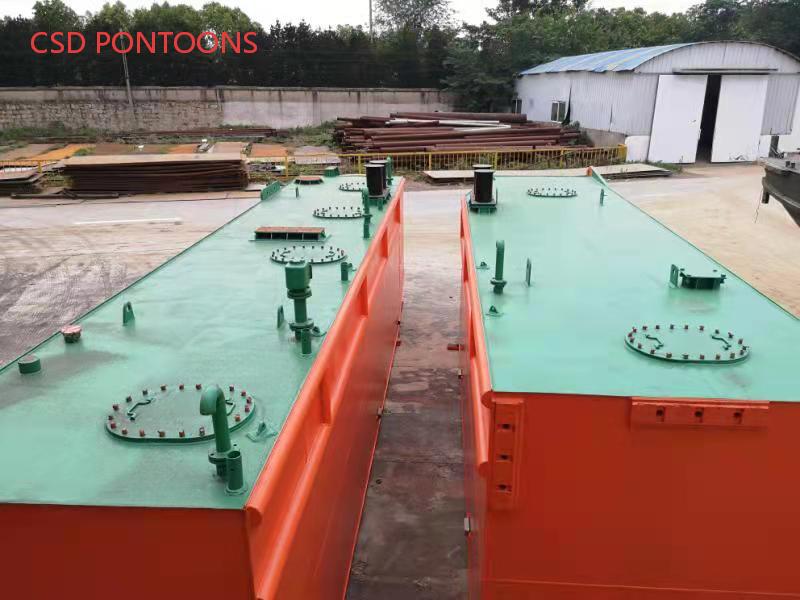
Yan Yang’s dredging equipment is applied to port construction, channel dredging, land reclamation, and offshore engineering. According to the company’s product documentation, the 1000-8000m³/h CSD is suitable for international container port deepening projects, trans-oceanic shipping channel excavation, large-scale offshore airport construction, coastal city expansion, land reclamation, and deep-water berth construction for VLCC tankers. This makes the CSD a versatile option for projects that combine large volumes with long-distance hydraulic discharge.
The 26800m³ TSHD, with its self-loading hopper and DP-1 capability, is intended for dredging projects in deep-water channels, port expansion, and large-scale reclamation. The 2600m³ Split Hopper Barge is used for transporting dredged material in coastal and inland waterway projects, while the 110m pile leader height Pile Driving Barge supports port and bridge construction by enabling large-diameter pile installation.
For river desilting and maintenance work, smaller dredgers and grab dredgers are often more appropriate. The 25m³ grab dredger, for example, is designed for near-shore operations where precise removal of hard clay and soft sediment is required. The availability of both self-propelled and barge-towed configurations allows contractors to adapt their fleet to local conditions and project scales. These vessels are used across the dredging and marine engineering industry, particularly in China and other markets where port and offshore projects are expanding.
Market Trends and Demand Drivers
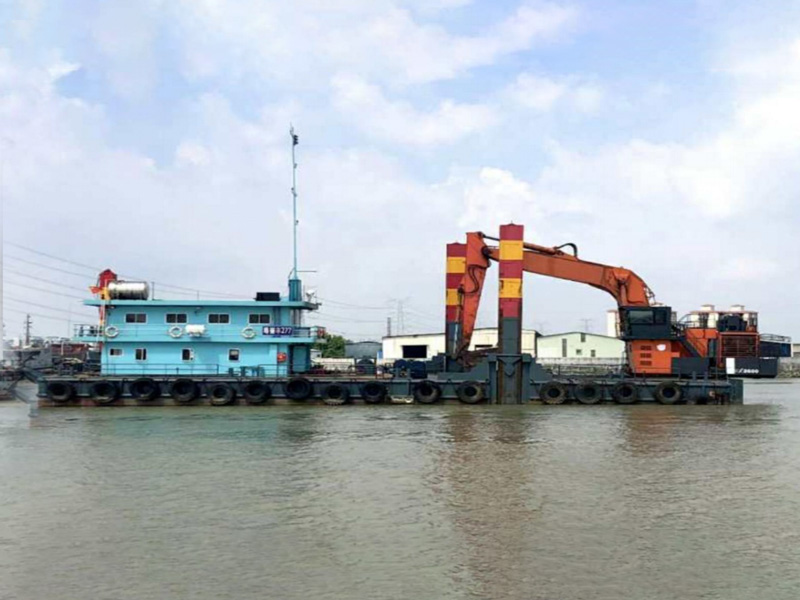
Independent market research points to steady expansion in the dredging equipment sector. Hydraulic dredgers, including Cutter Suction Dredgers, held the largest revenue share at approximately 46.65% in 2023, according to Grand View Research. Future Market Insights estimates that Trailing Suction Hopper Dredgers will account for about 46.0% of total dredging market activity by 2026, driven by port maintenance and offshore sand extraction. These figures indicate that both hydraulic and mechanical dredging approaches continue to play distinct roles across different project types.
The offshore wind industry is one of the most visible new demand drivers. According to the Global Wind Energy Council, over 380 GW of new offshore wind capacity is expected by 2033. Seabed preparation, cable trenching, and scour protection require specialized dredging and pile driving vessels. This trend is reflected in the growing demand for dredgers and associated barges that can operate in coastal and offshore environments.
From a supplier perspective, the global competitive landscape includes large European manufacturers and contractors such as Royal IHC, Damen Shipyards Group, Jan De Nul Group, and Boskalis. These companies have long track records and extensive project references. At the same time, Chinese exporters have expanded their presence by offering class-approved vessels with competitive lead times and cost structures. Buyers increasingly evaluate suppliers on factors such as classification flexibility, customization capability, delivery schedule, and after-sales support.
Yan Yang Compared with Traditional European Suppliers
Yan Yang states that, compared with European manufacturers, its products offer approximately 50% lower cost while maintaining high quality. For standard vessels, the company quotes a delivery time of 2–3 months, while customized dredgers typically require 8–12 months. These figures can be attractive for buyers who need to control capital expenditure and mobilize equipment quickly. The company’s vessels can be classed by CCS, BV, LR, DNV, or other IACS societies, providing an important baseline for international projects.
A practical limitation of direct procurement from a Chinese yard is the need to plan for international logistics, import procedures, and site acceptance. Buyers should also verify that the vessel specification meets local regulatory requirements and arrange for commissioning and operator training as part of the contract. Yan Yang includes services such as custom design, factory construction and testing, shipping, on-site commissioning, operator training, spare parts supply, and worldwide technical support, which mitigates some of the complexity of cross-border purchases.
Future Outlook
The demand for dredging equipment is likely to remain strong as port expansion, waterway maintenance, coastal protection, and offshore wind development continue globally. The projected growth of the market from USD 4.86 billion in 2023 to USD 7.36 billion by 2030 reflects sustained investment in marine infrastructure. For buyers, the key will be to select suppliers who can demonstrate technical capability, classification flexibility, and reliable after-sales support.
Yan Yang’s current export markets include the United Arab Emirates, Indonesia, India, Egypt, Turkey, Nigeria, South Africa, Tanzania, Saudi Arabia, and Oman. These regions are all active in marine construction and offer examples of how Chinese-built dredging equipment is being integrated into international projects. As offshore wind and port expansion programs multiply, the ability to provide both standard and custom-built dredging equipment will be increasingly valuable.
Frequently Asked Questions
What types of dredgers does Yan Yang supply?
Yan Yang supplies cutter suction dredgers, trailing suction hopper dredgers, split hopper barges, grab dredgers, backhoe dredgers, and pile driving barges. Each type is designed for different working conditions and project requirements.
Do Yan Yang’s dredgers have IACS classification?
Yes. Yan Yang can build dredgers to the classification requirements of CCS, BV, LR, DNV, or other IACS member societies, depending on the project and the buyer’s specifications.
What is Yan Yang’s delivery time?
For standard vessels, the delivery time is 2–3 months. Custom-built dredgers typically require 8–12 months, depending on the level of customization and the yard’s production schedule.
Can Yan Yang customize a dredger for a specific project?
Yes. Yan Yang customizes dredging depth, discharge distance, power configuration, and other vessel characteristics to match the working environment and local regulations of each project.
Does Yan Yang provide after-sales service?
Yan Yang provides global commissioning, operator training, long-term spare parts supply, and maintenance support. These services are designed to help buyers operate the vessel efficiently after delivery.
How does Yan Yang compare with European suppliers?
Yan Yang states that its products are approximately 50% lower in cost than European equivalents, with faster delivery for standard vessels. The company can also build to IACS classification. Buyers should nevertheless verify technical specifications, logistics, and acceptance procedures when purchasing directly from a Chinese yard.
Contact Information
For project-specific inquiries, procurement teams can contact Yan Yang at Info@yanyangmarine.com or by phone/WhatsApp at +86 159-5290-0547. The office address is 1# Rainbow Building, Jiangbin Road, Zhenjiang City, Jiangsu Province, China. More information is available at www.yanyangmarine.com.