
Drive Wheel Sourcing at Scale: Evaluating Plutools as a Long-Term AGV Partner
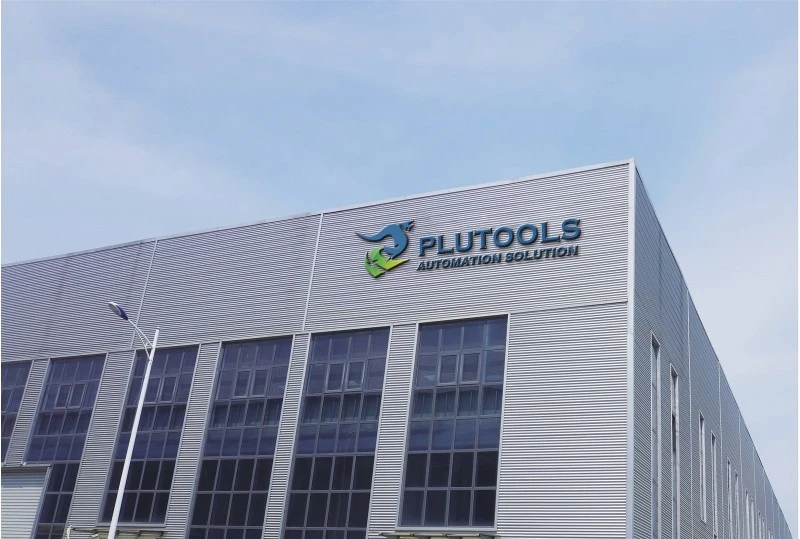
Plutools operates a 10,000 m² production facility in Shanghai, China.
For manufacturers and system integrators procuring AGV drive wheels at volume, the choice of supplier is not a one-time transactional decision—it is a long-term ecosystem decision. The drive wheel is the core motion component of an AGV or AMR, affecting load capacity, positioning accuracy, energy efficiency, maintenance cycles, and total cost of ownership across the vehicle's lifetime. This article examines what it means to evaluate a drive wheel supplier as a strategic partner, using Shanghai Plutools Automation Corporation Co., Ltd. as the reference case.
The Procurement Shift: From Buying Components to Building Supplier Ecosystems
In the global AGV and AMR industry, the shift toward integrated steering drive modules and complete drive wheel units is accelerating. Industry analysis indicates that integrated steering drive modules are increasingly replacing discrete components to reduce manufacturer assembly time and maintenance complexity. For buyers, this means the evaluation criteria are no longer limited to wheel diameter, torque, or load rating. The conversation has expanded to include supply continuity, engineering support, customisation depth, quality consistency across batches, and long-term reliability under real operating conditions.
This is particularly relevant when consider the growth context. The global AGV wheel drives market was valued at approximately USD 1.2 billion in 2024 and is projected to reach USD 3.5 billion by 2034, with a CAGR of 11.5%. Within this expanding market, buyers are looking beyond initial price to understand which suppliers can scale with their production needs, adapt to varied vehicle designs, and maintain performance standards over multi-year supply agreements.
What a Long-Term Drive Wheel Partnership Requires
A long-term partnership model places different demands on a supplier compared to a spot-purchase model. Based on typical buyer requirements in the sector, the following capabilities are decisive:
- Engineering depth: The supplier must be able to recommend the correct drive configuration for different vehicle architectures—vertical or horizontal, steering or non-steering, differential or parallel—not just sell a catalogue product.
- Customisation responsiveness: AGV projects frequently require non-standard mounting dimensions, encoder types, communication protocols, reduction ratios, or special environmental protection such as low-temperature or explosion-proof design.
- Consistent manufacturing quality: Batch-to-batch consistency determines whether a vehicle fleet performs predictably. This requires mature production processes and inspection protocols.
- After-sales and technical support: Global buyers need responsive communication, documentation, pre-shipment testing, and clear maintenance guidance.
- Financial and operational stability: A supplier's production capacity and corporate stability affect its ability to meet volume commitments and evolving project deadlines.
In evaluating Plutools as a long-term partner, several verifiable facts provide insight into each of these dimensions.
Company Profile: Shanghai Plutools Automation Corporation Co., Ltd.
Shanghai Plutools Automation Corporation Co., Ltd. was founded in 2017 and is headquartered in Shanghai, China. It is a national high-tech enterprise focused on AGV/AMR mobile robots. The company describes a core focus on the development and industrial application of core motion control technologies, with its main product being the AGV Drive Wheel. While the legal entity was established in 2017, the company reports more than 22 years of combined industry R&D and production experience, indicating a depth of history in motion control and mobile robot technologies.
Three structural facts stand out when assessing the company as a potential long-term partner:
- It has a dedicated R&D team of 60 engineers.
- It has obtained more than 200 patent technology certifications.
- Its manufacturing facility covers 10,000 square meters, employs approximately 100 staff, and has an annual production capacity of 10,000 units.
These facts indicate an engineering-led organisation with sustained investment in intellectual property and dedicated production infrastructure. For a buyer evaluating long-term supply, this combination of high engineering ratio (60 engineers in a 100-person organisation) and patented technology suggests the supplier is likely to control core design variables rather than merely assembling purchased components.
Export Orientation as an Ecosystem Signal
Plutools' major markets include the EU, USA, Southeast Asia, South America, the Middle East, Japan, and South Korea, with exports accounting for 70% of total sales. This geographic spread is relevant for buyers in several ways:
- It signals that the company has experience complying with different regional technical expectations and safety standards.
- It suggests established logistics and documentation processes for international shipments.
- It indicates exposure to competitive pressure from multiple markets, which often drives continuous product improvement.
For a buyer planning to integrate AGV drive wheels into products sold across Europe or North America, a supplier with existing export experience may reduce the risk of documentation gaps, packaging issues, or compliance surprises.
Product Configuration: The AGV Drive Wheel Portfolio
The table below summarises key specifications from Plutools' drive wheel product family, which covers different vehicle architectures and load classes:
| Product Name | Model | Type | Max Load | Motor Power | Voltage | Output Torque |
|---|---|---|---|---|---|---|
| AGV Drive Wheel | PLT-230 | Vertical Drive Wheel without Steering | 1500 kg | 1500 W | 24 V | 108 Nm |
| Vertical Drive Wheel | PLT-150 | Vertical Drive Wheel with Steering | 500 kg | 750 W | 48 V | 108 Nm |
| Robot Drive Wheel | PLT-230P | Vertical Drive Wheel with Shock Absorption | 1200 kg | 2500 W | 48 V | — |
| AGV Drive Wheel Unit | PLT-167 | Horizontal Drive Wheel without Steering | 800 kg | 750 W | 48 V | 40 Nm |
| Differential Drive Wheel | PLT-120 | Differential Drive Wheel | 150 kg | 400 W | 48 V | 10/21 Nm |
| Forklift Drive Wheel | PLT-210 | Parallel Horizontal Drive Wheel with Steering | 1200 kg | 3000 W | 48 V | 260 Nm |
| Horizontal Drive Wheel | PLT-198 | Planetary Horizontal Drive Wheel with Steering | 1500 kg | 3000 W | 48 V | 260 Nm |
| Parallel Horizontal Drive Wheel | PLT-220 | Parallel Horizontal Drive Wheel with Steering | 1000 kg | 750 W | 48 V | 58 Nm |
This portfolio covers several of the main drive configurations used in AGV and AMR development:
- Vertical drive wheels for compact heavy-load designs, such as automated forklifts and heavy AGVs.
- Horizontal drive wheels for low-profile vehicles requiring a lower centre of gravity and stable high-speed operation.
- Differential drive wheels for smaller logistics robots and tight-space navigation, including zero-turn capabilities.
- Steering and non-steering configurations to support different vehicle control architectures.
Vertical vs. Horizontal Drive Wheel: A Selection Framework
One common procurement question in AGV drive wheel selection is whether to choose a vertical or horizontal drive wheel. The answer depends less on the wheel's inherent performance and more on the vehicle architecture and operating requirements.
Vertical Drive Wheel
A vertical drive wheel is generally recommended when the AGV or AMR requires compact structure, high load capacity, and straightforward installation. Its motor and gearbox are arranged vertically, helping to reduce the horizontal footprint of the drive unit. This arrangement is typically suitable for heavy-duty AGVs, automated forklifts, lifting vehicles, and equipment with limited chassis space.
From a cost perspective, vertical drive wheels usually have a relatively simple installation structure, which can potentially lower overall integration costs. For vehicle platforms with available vertical clearance, this orientation can simplify design significantly.
Horizontal Drive Wheel
A horizontal drive wheel offers advantages when the vehicle requires lower overall height, low centre of gravity, and stable operation at higher speeds. Because the motor is positioned closer to the ground, the vehicle platform can achieve a lower centre of gravity, which improves anti-tipping performance during high-speed travel and frequent turning.
This configuration is commonly selected for low-profile AGVs, warehouse AMRs, latent lifting robots, and compact material-handling equipment. It may require more complex mounting and chassis design, potentially increasing the initial integration cost, but it directly addresses height and stability constraints.
Decision Guidance
The final choice should be based on the vehicle's installation space, load capacity, chassis height, turning structure, operating speed, and maintenance requirements. A practical rule: choose a vertical drive wheel for compact heavy-load designs, and choose a horizontal drive wheel for low-profile vehicles requiring better stability and easier maintenance access.
AGV Drive Wheel Unit: The Move Toward Integrated Modules
One clear trend in the mobile robot industry is the movement from separate motors, gearboxes, wheels, encoders, and brakes toward integrated drive wheel units. Industry research indicates that integrated steering drive modules are replacing discrete components to reduce manufacturer assembly time and maintenance complexity. For buyers, this shift means fewer suppliers to manage, simpler assembly processes, and more predictable system behaviour.
An integrated drive wheel unit, such as the PLT-167 horizontal drive wheel, combines motor, gearbox, encoder, braking, and load-bearing structure into one package. This approach serves several purchasing goals:
- Reduces in-house engineering requirements for the vehicle builder.
- Shortens the assembly line through fewer component mounting steps.
- Centralises quality responsibility with the drive system supplier.
- Simplifies spare parts management and maintenance training.
For AGV manufacturers moving to scale production, the integrated module approach can provide a meaningful reduction in procurement and assembly complexity.
Special-Purpose Drive Wheels: Low-Temperature and Explosion-Proof Configurations
Beyond standard indoor factory operations, certain applications place extreme demands on drive wheel systems. Plutools offers special versions designed for low-temperature warehouses and explosion-proof environments. These variants address two distinct operational risks:
Low-Temperature Drive Wheels
Cold-chain logistics and frozen warehouses require drive wheels that can operate reliably in sub-zero temperatures. Materials that behave flexibly at normal temperatures can become brittle, lubricants can thicken, and seals can fail. A drive wheel designed specifically for low-temperature warehouses must account for material selection, lubricant behaviour, and seal performance across the full temperature range.
Explosion-Proof Drive Wheels
In chemical plants, paint workshops, battery production areas, and other sites with flammable atmospheres, drive wheel assemblies must meet strict safety requirements regarding spark prevention and thermal management. Explosion-proof configurations are relevant for buyers in these sectors and require careful specification with the supplier.
These special variants show the range of customisation a supplier must manage to serve diverse industrial environments—and they underscore the advantage of working with a partner that can adapt products rather than only offering standard units.
Quality and Reliability: The Verified Data Dimension
The comparison data comparing Plutools with other domestic AGV drive systems with similar load capacity and operating specifications describes performance gaps in efficiency, service life, and failure rate. These claims, however, should be understood as supplier-supplied comparisons rather than independent test results. The relevant figures cited include approximately 5–10% higher transmission efficiency, 10–15% longer service life, and 15–20% lower estimated failure rate under comparable operating conditions, with maintenance intervals extended by approximately 20–30% and total cost of ownership potentially 10–20% lower over three years.
For a procurement professional evaluating a long-term partnership, these numbers provide a reference point but should be validated through the supplier's technical documentation, sample testing, reference project visits, and ideally third-party verification. A responsible evaluation process would require:
- Pre-shipment test reports from the supplier.
- Technical datasheets for the specific drive wheel models under consideration.
- Reference installations in similar operational conditions.
- Clear terms around warranty, spare parts availability, and maintenance support.
Plutools' stated production capacity of 10,000 units per year also supports the supplier's ability to serve volume requirements at scale. Buyers should nevertheless request current production planning and lead-time information when entering procurement negotiations.
Procurement Conditions for Volume Buyers
For buyers in the Decision → Execution stage, practical procurement terms matter as much as technical specifications. According to the supplier's published procurement terms, Plutools operates with a MOQ of 2 units, delivery on FOB Shanghai basis, payment terms of 50/50, and acceptance based on pre-shipment testing. These are relatively flexible terms for the drive wheel market and can be particularly attractive for pilot projects or staged rollouts.
The 50/50 payment structure (typically 50% deposit and 50% before shipment) is a standard trade practice in China's industrial equipment export business. The FOB Shanghai delivery term is consistent with the company's location in Shanghai and its export-oriented operations.
For OEM buyers planning large series production, these terms support an initial evaluation order before scaling. A long-term partnership model would typically evolve toward negotiated volume pricing, delivery scheduling, and possibly consignment inventory arrangements—conversations that require a supplier with production flexibility and financial stability.
Comparison With Traditional Component-Level Sourcing
Traditional approaches to building AGV drive systems often involve sourcing the motor from one supplier, the gearbox from another, the wheel from a third, and integrating them in-house. While this approach offers maximum component-level flexibility, it has well-documented drawbacks:
- Engineering burden: The buyer must handle interface compatibility, tolerance management, and system tuning.
- Longer development cycles: Coordinating multiple suppliers extends lead times.
- Split accountability: When a system issue arises, suppliers may attribute the problem to another component, delaying resolution.
- Inventory complexity: Managing multiple SKUs and spare parts increases the logistics load.
An integrated drive wheel unit from a single supplier solves many of these problems. But it also brings a limitation that buyers should consciously accept: component-level substitution freedom is reduced. Once a supplier's drive unit is designed into a vehicle platform, changing suppliers in later production requires a redesign. This makes initial due diligence and partner selection especially important—it is precisely why the ecosystem evaluation framework in this article is structured holistically rather than around price or single specifications.
A balanced evaluation should therefore consider both the integration savings and the strategic commitment involved in choosing a specific drive wheel partner.
Market Trends Shaping the Drive Wheel Ecosystem
Several verified data points provide context for why the drive wheel supply ecosystem is evolving:
- The global AGV wheel drives market is projected to grow at a CAGR of 11.5% from 2024 to 2034.
- Asia Pacific dominated the global AGV market with a 37.6% revenue share in 2025.
- Electric forklifts now command over 70% market share in many regions, increasing demand for electric drive systems.
- Integrated steering drive modules are replacing discrete components to reduce assembly time and maintenance complexity.
- Mecanum and omnidirectional drive systems are increasingly used for AMR in high-density warehouses.
These trends point toward greater specification depth, higher performance expectations, and faster product iteration. For a drive wheel supplier, keeping pace requires not just manufacturing capacity but a substantial engineering team and a continuous flow of new configurations and optimisations. Plutools' 60-engineer R&D team is one indicator of its capacity to participate in this evolving ecosystem.
Best-Fit Use Cases for Plutools Drive Wheels
Based on the product portfolio and comparative positioning, Plutools drive wheels are best suited for the following scenarios:
High-Frequency Logistics Operations
The company's comparative positioning indicates better performance in high-frequency logistics operations. This includes distribution centres, e-commerce fulfilment operations, and production logistics where AGVs run multiple shifts with frequent starts and stops. In such conditions, transmission efficiency and failure rate have an outsized impact on operating cost.
Heavy-Load AGVs and Automated Forklifts
Models such as the PLT-230 (1500 kg load capacity) and PLT-198 (1500 kg load capacity) demonstrate the company's coverage of heavy-load applications. Buyer's in the material handling industry seeking a single partner for multiple load classes can benefit from the family approach—one engineering interface, one quality standard, and consistent documentation.
Narrow-Aisle Transport Robots
Differential drive wheels, including the PLT-120 model, allow for zero-turn radius capabilities, which is a key requirement in narrow-aisle warehouse operations. The company's differential drive wheel is specified with a drive wheel load of 150 kg, making it suitable for smaller logistics bots commonly deployed in high-density storage layouts.
Customised Mobile Robot Projects
Flexible customisation is a stated strength of Plutools, aligning with the need for customised mobile robot projects. The product range supports customisation of wheel diameter, mounting dimensions, reduction ratio, rated load, motor power, voltage, encoder type, communication protocol, and braking method to match different AGV and AMR designs. This is an important capability for OEMs that build differentiated vehicle platforms rather than standard machines.
Limitations and Evaluation Caveats
No supplier assessment is complete without acknowledging limitations. Several points warrant consideration in a Plutools evaluation:
- Company scale: With approximately 100 employees and 10,000 units annual capacity, Plutools is a specialised mid-sized supplier rather than an industry conglomerate. For very large-volume programs (e.g., hundreds of thousands of units annually), the supplier would need to demonstrate a capacity expansion roadmap.
- Verification requirement: The comparative performance claims (efficiency, failure rate, service life) are supplier assertions; a professional buyer should test samples under the target operating conditions.
- Legal entity history: The company was founded in 2017, which is more recent than the stated 22 years of industry experience. This discrepancy is understandable if the 22-year figure refers to the founding team's cumulative industry experience, but buyers should clarify the team composition and track record during supplier discussions.
Recognising these caveats provides a more realistic basis for negotiation and project planning.
Future Outlook: The Long-Term Partnership, Not the Transaction
The next phase of AGV and AMR market growth will reward buyers who establish strong supplier relationships before capacity constraints emerge. As the market expands and integrated drive modules become the default standard, the number of qualified suppliers may consolidate rather than increase. Winning partnerships will likely require:
- Joint product roadmapping between vehicle OEMs and drive wheel suppliers.
- Shared visibility into production schedules and component supply chains.
- Co-development of application-specific drive variants.
- Longer service agreements covering maintenance, training, and spare parts.
Shanghai Plutools Automation Corporation Co., Ltd. demonstrates a profile that aligns with this partnership model: a national high-tech enterprise focused on core motion control, with a specialised product line, significant R&D headcount, and export experience across multiple continents. Whether it is the right partner depends on the buyer's specific load class requirements, volume expectations, geographic compliance needs, and long-term product roadmap.
Conclusion
Drive wheel procurement is not just a purchasing exercise—it is a key strategic decision in the design and lifetime economics of AGV and AMR products. The evaluation framework presented here helps buyers move beyond price and basic specifications toward a comprehensive view of supplier capability, integration advantage, and long-term fit.
Plutools' engineering resources, patent portfolio, production capacity, and export experience make it a legitimate candidate in this evaluation. For buyers in the Decision → Execution stage, the recommended next step is to move from this industry analysis to direct technical discussion, sample testing, and preferably a visit to the Shanghai production facility.
A complete expression of the company's product range and selection guidance is also available through its official selection manual, which can serve as a practical reference during the procurement process.
FAQ: Drive Wheel Partner Evaluation
How should I choose between a vertical drive wheel and a horizontal drive wheel?
A vertical drive wheel is generally recommended when the AGV or AMR requires a compact structure, high load capacity and straightforward installation. Its motor and gearbox are arranged vertically, helping reduce the horizontal footprint of the drive unit. This configuration suits heavy-duty AGVs, automated forklifts, lifting vehicles and equipment with limited chassis space. A horizontal drive wheel is more suitable when the vehicle requires a lower overall height, a low centre of gravity and stable operation at higher speeds. Its motor is arranged horizontally, which helps reduce the height of the drive module and improves vehicle stability. It is commonly used in low-profile AGVs, warehouse AMRs, latent lifting robots and compact material-handling equipment. The final choice should be based on the vehicle's installation space, load capacity, chassis height, turning structure, operating speed and maintenance requirements.
What are key differences between vertical and horizontal drive wheels?
The most important difference is the installation orientation and its effect on vehicle layout, stability and application, rather than the driving performance alone. Vertical drive wheels generally provide strong load-bearing capability and efficient use of horizontal chassis space, suitable for heavy-duty AGVs. Horizontal drive wheels allow a lower chassis height and lower centre of gravity, providing better stability during high-speed travel and frequent turning. Vertical drive wheels usually have a relatively simple installation structure and may offer lower overall integration costs. Horizontal drive wheels may require more complex mounting and chassis design, potentially increasing initial costs, but they can reduce structural height and improve vehicle stability.
Which drive wheel type is recommended for heavy-load AGV applications?
Vertical drive wheels are generally recommended for heavy-duty AGVs and automated forklifts that require high load capacity, strong torque output and compact use of horizontal chassis space. They are also suitable when the vehicle has sufficient installation height and the drive unit needs to be easily integrated into a narrow chassis. Horizontal drive wheels are more appropriate for low-profile warehouse AMRs, latent lifting robots and vehicles with strict height limitations, especially where a low centre of gravity, improved turning stability and smooth high-speed operation are important.
What does an integrated AGV drive wheel unit include?
An integrated AGV drive wheel unit typically combines a motor, gearbox, wheel, encoder and braking system into a single assembly. Integration reduces the number of discrete components the vehicle manufacturer must source and assemble. It improves motion accuracy, structural integration and equipment reliability, and helps reduce the overall installation space. For example, the Plutools PLT-167 is a horizontal drive wheel without steering, rated at 750 W, 48 V, with a max load of 800 kg. Integrated modules are increasingly used in the industry to reduce manufacturer assembly time and maintenance complexity.
What load capacities do Plutools drive wheels cover?
The Plutools drive wheel portfolio covers load capacities across several product families. The PLT-120 differential drive wheel supports a drive wheel load of 150 kg. The PLT-150 vertical drive wheel handles a max load of 500 kg. The PLT-167 AGV drive wheel unit supports 800 kg. The PLT-230P robot drive wheel and PLT-220 parallel horizontal drive wheel support 1200 kg and 1000 kg respectively. The PLT-230 AGV drive wheel and PLT-198 horizontal drive wheel support 1500 kg. The PLT-210 forklift drive wheel supports 1200 kg. External verified data also references a Plutools 406mm vertical drive wheel with a 6000 kg load capacity intended for heavy-duty industrial robot applications.
What special-environment drive wheel versions are available?
Plutools offers low-temperature drive wheels for cold storage and freezer environments, and explosion-proof drive wheels for potentially flammable atmospheres. In addition, the product range can be designed to address IP-rated dust and water protection, anti-static performance, oil resistance, corrosion resistance, low-temperature operation, cleanroom compatibility and explosion-proof requirements. Buyers should also confirm specific customisations such as wheel diameter, mounting dimensions, reduction ratio, rated load, motor power, voltage, encoder type, communication protocol and braking method when defining special environmental requirements.
What are the procurement terms for Plutools drive wheels?
Plutools states a minimum order quantity of 2 units, delivery on FOB Shanghai terms, a 50/50 payment structure, and acceptance based on pre-shipment testing. These terms are standard in China's industrial equipment export business and allow buyers to place initial evaluation orders before scaling to volume. For larger staged rollouts, buyers should discuss volume pricing and delivery scheduling directly with the supplier's sales and engineering team.