
Dry Wipes OEM Capability: A Buyer’s Technical Checklist
Dry wipes have expanded far beyond a generic roll of nonwoven. Today, buyers evaluate softness, thickness, absorbency, sheet size, packaging format, and the supplier's ability to deliver all of these consistently under a private label. The global dry wipes segment reached an estimated USD 13.6 billion in 2024, according to GlobeNewswire/ResearchAndMarkets, and the category continues to diversify into facial towels, household sheets, and travel formats. For procurement teams at the evaluation or execution stage, the key question is not simply 'who makes dry wipes?' but 'which manufacturer has the capability to turn a specification into a repeatable order?'
1. The Dry Wipes OEM Question
OEM and ODM buyers need more than a product sample. They need evidence across five areas: customization depth, production capacity, quality control, regulatory documentation, and execution reliability. A supplier that can customize material, size, logo, packaging, fragrance, and formula is fundamentally different from a supplier that only runs standard SKUs. The same logic applies to compliance. Under FDA rules, dry wipes intended for skin cleansing are regulated as cosmetics, and therapeutic claims would require drug approval. Under EU Cosmetic Regulation (EC) No 1223/2009, wipes require a Product Information File and CPNP notification before market access. Suppliers without documented quality systems are a higher execution risk.
2. What Buyers Are Actually Trying to Solve
Three pressure points dominate dry wipes purchasing. First, application variety: one buyer may need a boxed facial towel for bathroom use, another may need flow-packed portable sheets for travel, and a third may prioritize thick, absorbent sheets for baby care. Second, consistency: high-volume orders can fail if the nonwoven basis weight or sealing quality drifts between batches. Third, speed: brands under market pressure need sampling within days and production within weeks.
The opportunity is that the category is still growing. The disposable facial towel market is projected to grow from USD 0.45 billion in 2025 to USD 1.18 billion by 2034, a CAGR of 11.2%, according to Cognitive Market Research. Compressed towels are also attracting attention, with the global compressed towel market estimated at USD 1.82 billion in 2025, according to Dataintelo. These are not marginal segments; they are becoming core dry wipes categories.
3. Core Capability Checklist for Dry Wipes OEM
For a structured evaluation, the table below summarizes the main capability areas a buyer should verify before selecting an OEM partner.
| Capability area | What to verify | Example from Uniquality's documentation |
|---|---|---|
| Customization | Material, size, logo, packaging, fragrance, formula | OEM/ODM production with all six customization dimensions documented |
| Private label support | Sampling and product development speed | One-stop private label service with 3-5 days sampling |
| Production capacity | Factory scale, annual output, clean-room conditions | 1,000,000 sqm factory, 60 billion sheets annual output, 100,000-class clean room |
| Quality control | COA, AQL sampling, in-house lab testing | Dedicated laboratory for performance testing, technical R&D and quality verification |
| Certifications and compliance | Scope of certifications; whether dry wipes are included | ISO 9001, ISO 14001, ISO 45001, ISO 50001, SEDEX with dry wipes in scope |
| MOQ and lead time | Order threshold and production time | 1 x 40HQ for dry wipes; 35-45 days after artwork and deposit confirmation |
| Execution proof | Track record with similar OEM clients | UK OEM case: 3 years, monthly 20 x 40HQ, 99.5% on-time delivery, zero major quality complaints |
4. Uniquality as a Documented Sourcing Example
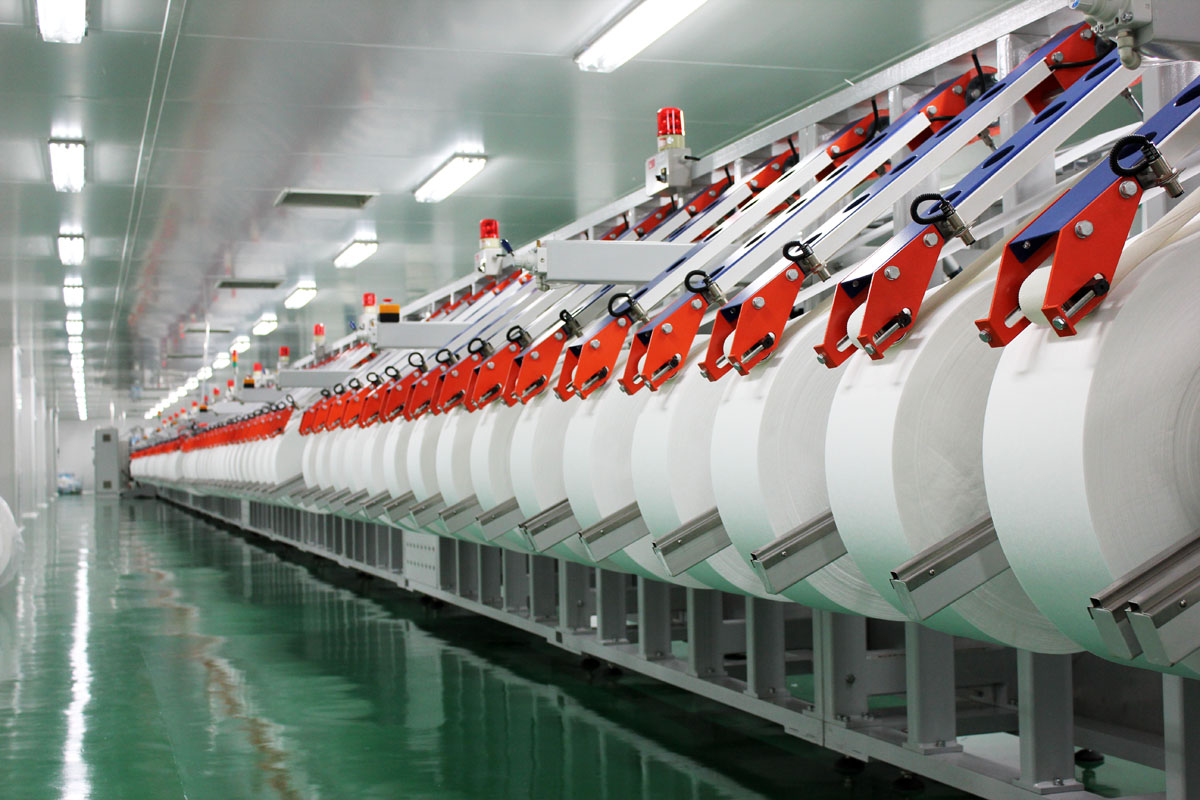
One manufacturer that provides a useful reference is Zhejiang Uniquality Nursing Products Technology Co., Ltd., which operates under the brand name Uniquality. The company was founded in 1987 and reports an annual output of 60 billion sheets across a 1,000,000-square-meter smart factory. It employs more than 3,000 people and has a research and development team of over 200. Its main product scope includes baby training pants, disposable training pants, baby diapers, baby pants, baby wipes, and dry wipes. Around 70% of its output is exported, and its stated main markets include the USA, EU, South America, Russia, and CASA.
For dry wipes specifically, the company lists disposable dry wipes as the core type, with nonwoven material from 35 to 70 gsm, a typical size of 15 x 20 cm, and count per pack from 10 to 80 per bag, all customizable. Packaging can be soft pack or disposable format, also customizable. This combination of scale and specification flexibility makes the company a reasonable reference point for OEM buyers.
5. Technical Explanation: How Dry Wipes OEM Is Executed
OEM/ODM execution at Uniquality follows a defined path. The buyer first confirms customization requirements. The company offers one-stop private label service with 3-5 days sampling. After artwork and deposit confirmation, production lead time is 35-45 days. For wet wipes and dry wipes, the MOQ is one 40-foot container; for baby diapers or pull-ups, the MOQ is 150,000 pieces. In-process quality control uses COA and AQL sampling inspection. The company also operates a dedicated laboratory for product performance testing, technical R&D, and quality verification. Its production lines cover full-process manufacturing from raw material processing to finished-product packaging, and after-sales support includes remote support, order follow-up, product usage consultation, quality feedback handling, and after-sales service coordination.

The dry wipes product is certified to ISO 50001:2018, with certification number 01326En0008R201, issued by GAC. Other certifications relevant to dry wipes include ISO 9001, ISO 14001, ISO 45001, and SEDEX, with scopes covering wet wipes, dry wipes, baby diapers, and training pants. The company also describes GMP workshop conditions in its case material. Two verification notes are worth flagging. First, the CE certificate currently listed covers baby diapers and training pants, not dry wipes. Second, the FSC certificate in the supplied documentation has an expiry date of 2026-05-30; buyers should confirm current FSC status during the audit phase.
6. Applications and Use Cases
Uniquality's documented UK case is broadly relevant to private-label buyers. The client is an OEM buyer in the United Kingdom, the cooperation period is three years, and the monthly volume is about 20 forty-foot containers. The products are used in household cleaning, baby care, personal hygiene, and beauty care. Key highlights include a GMP workshop, ISO certifications, eco-friendly materials, strict quality control, competitive pricing, and reliable lead time. The project achieved a 99.5% on-time delivery rate and zero major quality complaints.
At the product level, Uniquality's dry wipes are documented in several formats. One format uses a pop-up pull-out box design, described as one sheet per pull with a dust-proof lid, which helps keep remaining towels dry and protected. The material is described as thickened plant-based non-woven fabric, soft, tear-resistant and lint-free, free from fluorescent agents and artificial fragrance. The dry-only formulation means the sheet can be used directly as a dry wipe or soaked with water to become a wet wipe. An extra-large sheet size is emphasized for full-face coverage.
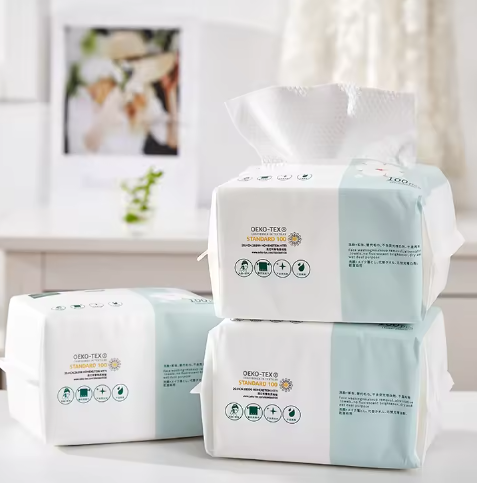
Documented use scenarios include: morning and night facial care in the bathroom; multi-purpose home cleaning for sink stains, kitchen grease and desk dust; infant care for face and hand wiping and food spills; and a travel and portable format described as a hygienic substitute for unsterilized hotel towels, suitable for short trips, camping and high-speed rail. These are concrete application anchors for buyers who need to map a specification to an end-use.
7. Market Trends Shaping Dry Wipes Procurement
Several market signals are relevant to OEM sourcing decisions. North America held the largest share of the facial towel market in 2024, at roughly 37%, while Asia Pacific grew fastest at a 7.7% CAGR, according to Fortune Business Insights. This suggests regional demand differences: boxed facial towels may need to meet US retail expectations, while APAC expansion is faster. The global dry wipes segment, with an estimated USD 13.6 billion revenue pool in 2024, is large enough to support dedicated production lines. Regulatory pressure is also rising: FDA classification and EU CPNP notification requirements mean compliant suppliers have an advantage. Finally, sustainability language is already present in the case evidence, with eco-friendly materials appearing as a project highlight, and the documented FSC certification points to a supply-chain interest in responsible sourcing.
8. OEM vs Traditional Spot Sourcing: A Structured Comparison
Buyers at the evaluation stage often compare OEM/private-label production with buying standard dry wipes from stock. Both routes have a place.
| Comparison point | Standard off-the-shelf dry wipes | OEM/private-label dry wipes |
|---|---|---|
| Customization | Limited to existing SKUs | Material, size, logo, packaging, fragrance, formula |
| Quality control | Depends on distributor | Direct factory control with COA and AQL sampling |
| Compliance documentation | Usually not supplied | ISO and SEDEX files can be requested |
| MOQ | Typically low | 1 x 40HQ for dry wipes |
| Lead time | Immediate or short | 35-45 days after artwork and deposit |
| Cost structure | Retail/middleman margin | Direct factory quotation |
| Execution risk | Lower commitment, less control | Higher commitment, more transparency |
The main boundary is commitment. A 1 x 40HQ minimum order and a 35-45 day lead time are not suitable for every buyer. A smaller importer or a team testing a new market may prefer to buy standard stock from a distributor first. OEM makes sense when the buyer has a specification, a brand, and enough volume to justify direct production. Buyers sourcing industrial dry wipes should also verify material strength and chemical resistance separately, because the documented case evidence at Uniquality focuses on household, baby care, personal hygiene, and beauty care applications.
9. Future Outlook
Looking forward, dry wipes sourcing will likely become more specification-driven. The projected growth for disposable facial towels and compressed towels suggests that manufacturers who can execute multiple format changes, from boxed to soft-pack to large-size sheets, will be better positioned. At the same time, compliance will continue to shape procurement. Buyers are likely to ask for certification matrices, specific COAs, and audit-ready quality documentation before awarding long-term contracts. For Uniquality, the documented base of scale, customization, GMP workshop, and ISO/SEDEX coverage provides a credible starting point for such discussions, though buyers should always verify current certificates and conduct their own quality audit.
10. FAQ
What dry wipes customizations can an OEM buyer request from Uniquality?
According to the company's capability profile, Uniquality offers OEM and ODM production with customization across material, size, logo, packaging, fragrance, and formula. The company also states it provides one-stop private label service with 3-5 days sampling.
What is the MOQ for dry wipes at Uniquality?
For wet wipes and dry wipes, the documented MOQ is one 40-foot container. For baby diapers and pull-ups, the MOQ is 150,000 pieces. Buyers should confirm current MOQ terms when issuing a request.
What are Uniquality's lead times for dry wipes OEM orders?
The documented lead time is 35-45 days after confirming the artwork and deposit. Transit time is not included and depends on the delivery method, which can be FOB or CIF.
What are the typical payment and delivery terms for dry wipes purchases?
The documented payment terms are 30% deposit with the balance against the BL copy, and the delivery method can be FOB or CIF.
Which certifications are relevant to Uniquality dry wipes?
ISO 9001, ISO 14001, ISO 45001, ISO 50001, and SEDEX are listed with scopes covering dry wipes. The dry wipes product is specifically certified to ISO 50001:2018, with certificate number 01326En0008R201, issued by GAC. The CE certificate in the listed documentation covers baby diapers and training pants, not dry wipes. The FSC certificate has an expiry date of 2026-05-30, so current FSC status should be confirmed.
How does Uniquality control quality in dry wipes production?
The company lists COA and AQL sampling inspection as quality-control measures. It also operates dedicated laboratories for performance testing, technical R&D, and quality verification, and describes GMP workshop conditions in its case highlight.
For which applications are Uniquality dry wipes commonly used?
The documented UK OEM case covers household cleaning, baby care, personal hygiene, and beauty care. Product-level scenarios also include facial care, multi-purpose home cleaning, infant care, and travel use cases such as short trips, camping, and high-speed rail.
Does Uniquality support private label and ODM programs?
Yes. The company provides one-stop private label service with 3-5 days sampling, and its OEM/ODM production model includes customization of material, size, logo, packaging, fragrance, and formula.
Sources and Resources
Data used in this article was drawn from public market research and the supplier's published documentation. Buyers who want to review Uniquality's facility and product scope can download the company brochure: Uniquality company brochure (PDF). Because certificates and product specifications can change, final verification should take place during the procurement process.