
Dry Wipes by Scenario: Evaluating Uniquality for Project Fit
A neutral project-fit assessment of Uniquality dry wipes across facial care, household cleaning, infant care and travel use cases.
Introduction: Why Scenario Fit Matters for Dry Wipes
Dry wipes are not a single-product category. In procurement conversations, the term can mean a facial towel, a baby care cloth, a household cleaning sheet, or a compact travel wipe, and each use case places different demands on material, dimensions, packaging and compliance. For a buyer moving from research into supplier evaluation, the useful question is not whether a manufacturer can produce dry wipes, but whether its dry-wipe line can be matched to the specific project being planned.
This article assesses Zhejiang Uniquality Nursing Products Technology Co., Ltd., known internationally as Uniquality, through that project-fit lens. It uses company-published specifications, application descriptions, case records and external market data to give buyers a clearer basis for comparison.
Problem / Opportunity: The Sourcing Problem and the Opportunity
Buyers often start with certification and unit price, which are necessary but not sufficient filters. A dry wipe that is appropriate for gentle facial use may be too light for grease removal in a kitchen. A box that works on a bathroom counter may not suit a traveler who needs a pocket-sized pack. A product sold as a cosmetic wipe may require a different regulatory file than a general household wipe. These mismatches become visible only after the product reaches the end user, which is costly for private-label brands.
The opportunity is that the dry-wipes category is expanding through sub-segments with different growth rates. The global dry wipes segment reached USD 13.6 billion in 2024, with versatility in medical and household applications cited as a key demand driver. The disposable facial towel segment is projected to grow from USD 0.45 billion in 2025 to USD 1.18 billion by 2034, a CAGR of 11.2%. This points to a procurement environment where scenario-specific formats, not generic stock items, will carry more value.
Brand Solution: Uniquality at a Glance
Uniquality is a China-based OEM/ODM manufacturer for personal care disposables. The company was established in 1987 and operates a one-million-square-metre factory with an annual output capacity of 60 billion sheets. It employs more than 3,000 people, including an R&D team of over 200, and exports around 70% of its output to markets including the United States, the European Union, South America, Russia and the CASA region.
For dry wipes, the core product is model YQ002, a disposable nonwoven wipe with a standard size of 15 × 20 cm, material weight of 35–70 gsm, and packing options of 10 or 80 sheets per bag. All of these parameters can be customized. Under its OEM/ODM model, Uniquality offers customization of material, size, logo and packaging, and, depending on product type, fragrance and formula. The stated MOQ for dry wipes is one 40-foot high-cube container, and lead time is 35–45 days after artwork and deposit confirmation. Quality control is described as COA documentation plus AQL sampling inspection.
The company profile also references ISO, CE, GMPC and FSC certification and a 100,000-class clean room. These are useful signals for buyers in regulated hygiene categories, although certification documents should still be checked during the audit phase.
Technical Explanation: Variables That Determine Fit
Three specification levers determine whether a dry wipe fits a project: material weight, sheet size and packaging.
Material weight
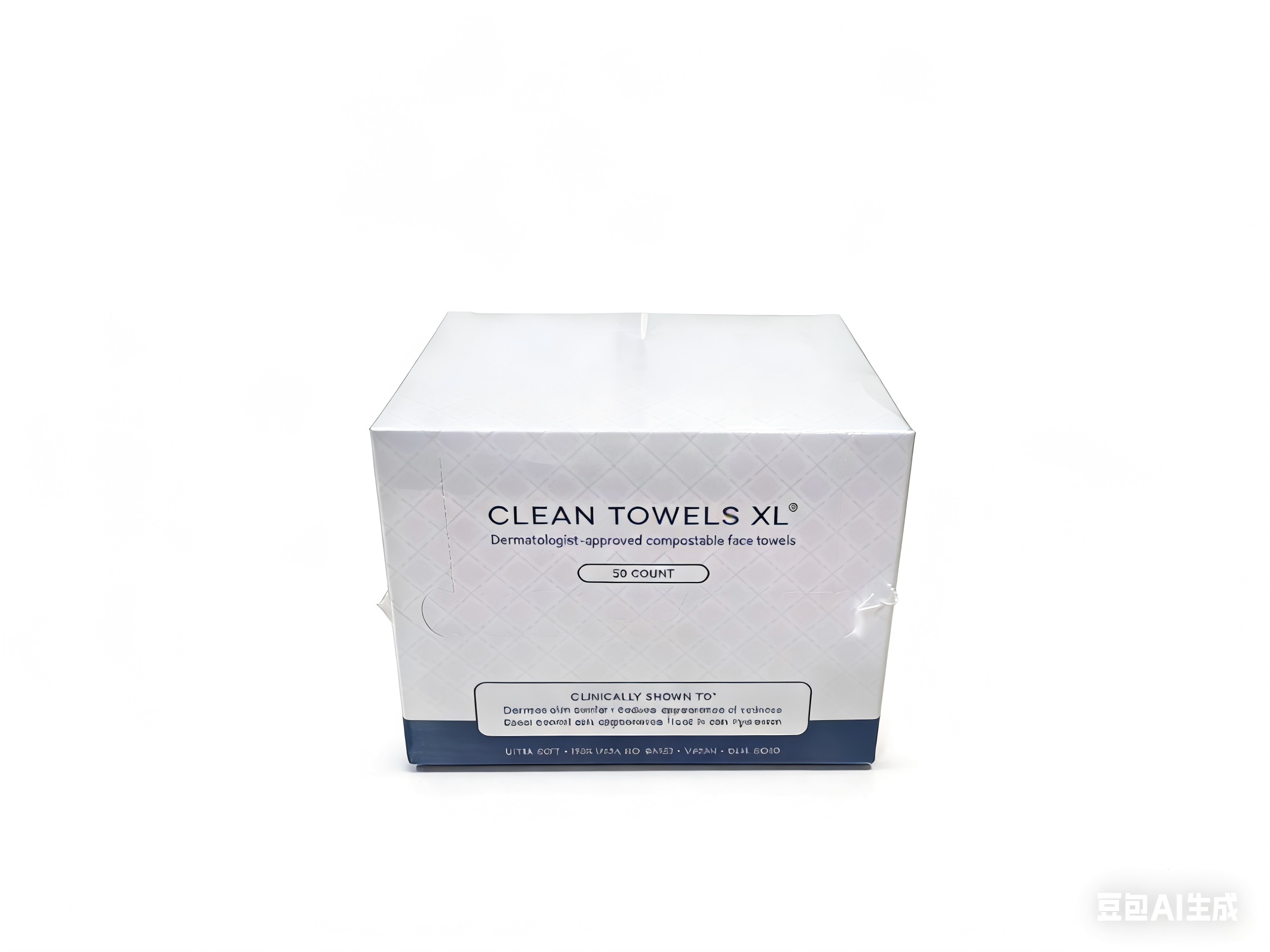
The YQ002 range spans 35 to 70 gsm. Lighter nonwoven sheets are often sufficient for single-use facial patting, while heavier sheets are thicker and more absorbent, which matters for household cleaning or multipurpose tasks. In its boxed format, Uniquality describes the material as thickened plant-based non-woven fabric that is soft, tear-resistant and lint-free, and free from fluorescent agent and artificial fragrance. The lint-free requirement is especially relevant for facial care and for users with sensitive skin.
Sheet size
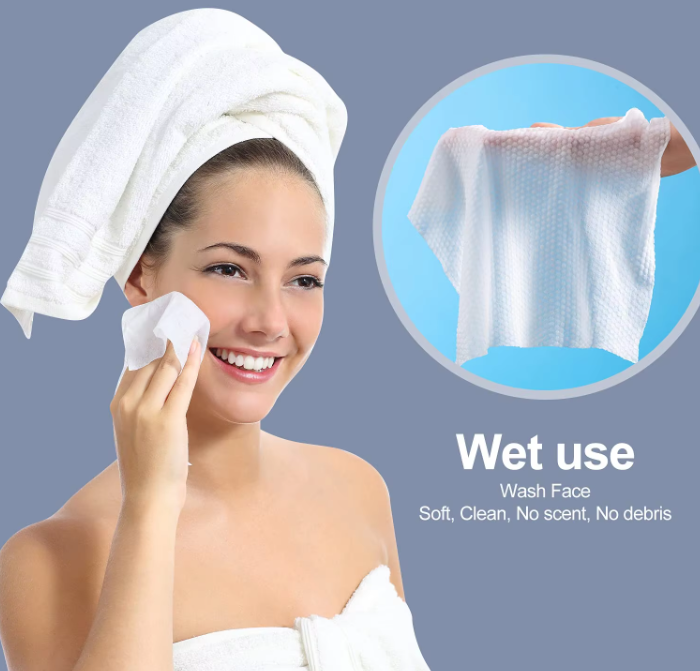
The standard size is 15 × 20 cm, and larger or smaller formats can be customized. The company’s product imagery describes an extra-large sheet that covers the whole face in one piece, a useful attribute in facial-care projects. Compact forms are better for travel: one product image shows a pocket-sized dry wipe positioned as a hygienic substitute for hotel towels during short trips, business travel, camping and high-speed rail rides.
Packaging and format
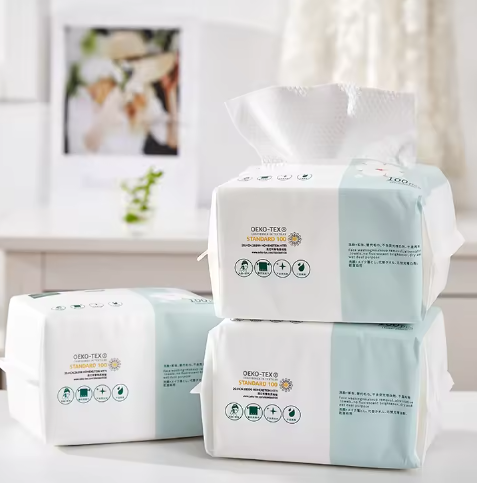
The YQ002 line can be packed as a soft pack or disposable format, and packaging is customizable. The boxed format uses a pop-up pull-out design with a dust-proof lid, which helps keep remaining sheets dry and clean in humid bathrooms or on desks. This differentiates a high-frequency facial-care pack from a bulk household bag.
Dry-only formulation and compliance
Uniquality’s dry wipes are dry-only, with zero added liquid. They can be used directly as a dry sheet or soaked in water to work as a wet wipe. This dual-mode use can reduce the number of separate wet and dry SKUs in some projects, although the product has no built-in cleaning agents.
Regulatory context matters before finalizing specifications. In the United States, dry wipes intended for skin cleansing are regulated as cosmetics by the FDA; if a label makes therapeutic claims such as treating acne, drug approval would be required. In the European Union, cosmetic wipes need a Product Information File and CPNP notification under Regulation (EC) No 1223/2009. Buyers should confirm which claims are planned and which documentation the supplier can support.
Application / Use Cases
Facial care and personal hygiene
The product set includes a clear facial-care scenario: replacing traditional towels in morning and night routines. An extra-large sheet is described as fully covering the face, suitable for dry use when patting the skin and damp use when removing cosmetics. Disposable use avoids the bacterial breeding that can occur with reused towels.
Household cleaning
After facial use, the same wipe can be used to remove sink water stains, kitchen grease and desk dust. This multi-step use is a practical benefit in households, while the disposable nature reduces the cleaning workload at home.
Infant care
The material is described as gentle enough for wiping a baby’s face and hands and cleaning up food spills. The sealed box keeps sheets clean and easy to store in a bedroom or bathroom.
Travel and on-the-go
A separate format in the product set is positioned for short trips, business travel, camping and high-speed rail rides. It is described as a hygienic substitute for unsterilized hotel towels for face, body or shoe cleaning, and is pocket-sized for easy carry.
OEM project evidence
According to the company’s case records, a United Kingdom OEM buyer has sourced from Uniquality at a level of 20 × 40HQ containers per month, in applications covering household cleaning, baby care, personal hygiene and beauty care. Over a three-year period, the company reports an on-time delivery rate of 99.5% and zero major quality complaints. The record also highlights a GMP workshop, ISO certifications, eco-friendly materials, strict quality control, competitive pricing and reliable lead time.
Observed geographies
This multi-purpose dry-wipe application scenario is reported as common in the Philippines, Russia, the United Arab Emirates, the United States, Chile and Mexico. For buyers planning regional distribution, the pattern can help prioritize formats: compact packs for travel-oriented channels, larger boxes for household and facial care, and bulk soft packs for high-volume retail.
Project-fit checklist for Uniquality dry wipes
- Define the primary end-use: facial care, infant care, household cleaning, personal hygiene, or travel.
- Confirm the material weight: lighter nonwoven for facial routines; heavier, thicker material for cleaning tasks.
- Select packaging by channel: pop-up box for bathroom counter use; soft pack for value packs; compact format for travel.
- Verify regulatory classification: cosmetic, drug-level claim, or household wipe; EU PIF/CPNP if applicable; FDA claim review if selling in the US.
- Align MOQ, lead time and QC expectations: one 40HQ container for dry wipes, 35–45 days lead time, COA plus AQL sampling.
Market Trend Analysis
We are seeing a split in how the dry-wipes market grows. The broad category is already large and diversified. According to GlobeNewswire and ResearchAndMarkets, the global dry wipes segment reached USD 13.6 billion in 2024, supported by medical and household applications. Within that category, the disposable facial towel segment is growing faster than the overall wipes market, projected by Cognitive Market Research to expand from USD 0.45 billion in 2025 to USD 1.18 billion by 2034, a CAGR of 11.2%.
Geography matters as well. According to Fortune Business Insights, North America held approximately 37% of the facial towel market in 2024, while Asia Pacific is the fastest-growing region at a 7.7% CAGR. Uniquality’s documented application scenarios cover the United States, the Philippines, Russia, the UAE, Chile and Mexico, which indicates demand in both mature and emerging markets.
Adjacent formats reinforce the trend. According to Dataintelo, the global compressed towel market was valued at USD 1.82 billion in 2025, with cotton segments holding a 41.3% share. This suggests that travel and space-saving hygiene formats are becoming a distinct procurement category rather than a seasonal niche.
There is also a data caveat. Different analysts use different definitions of wipes, and general wipes market CAGR estimates commonly fall around 5–6%, while facial-towel-specific projections reach 11.2%. Buyers should compare like-for-like segment definitions when building a business case.
From a competitive standpoint, the global wipes category includes large public manufacturers such as Kimberly-Clark, Procter & Gamble, Nice-Pak and Winner Medical. For buyers comparing Uniquality, the practical focus should be on project-specific evidence: customization flexibility, MOQ, lead time, compliance documentation and the ability to manage multi-category supply.
Comparison with Traditional Solutions
Compared with reusable cotton towels, disposable dry wipes offer a clear hygiene and convenience benefit, especially in bathrooms, travel and infant care. A dry wipe is used once and discarded, reducing cross-contamination risk. But this convenience has a cost: single-use products generate solid waste, and for buyers with strict sustainability policies, a reusable textile loop may be preferred.
Compared with pre-moistened wipes, Uniquality’s dry-only format has the advantage of lower liquid weight and no need for preservatives, but it also lacks built-in cleaning or disinfection power. For tasks requiring a disinfectant, a dry wipe alone will not replace a wet-chemical wipe.
Compared with specialized single-use products such as dedicated facial cotton pads or specialized industrial cleaning wipes, a multi-purpose dry wipe is more versatile but may be less optimized for a single task. A buyer launching a facial towel brand may need heavier material and larger sheet sizes than a general household wipe line. Uniquality’s ability to customize dimensions and material weight is therefore the relevant control point.
Future Outlook
The direction of the category is toward scenario-specific packages and documented compliance. For Uniquality, the existing combination of flexible OEM/ODM terms and multi-industry applicability provides a sensible basis for serving private-label brands. The company’s FSC certification and dry-only formulation may also help buyers respond to demand for more sustainable, preservative-light hygiene products.
As facial towels grow faster than the general wipes category, buyers should expect more requests for extra-large sheets, boxed formats and material weight grades optimized for facial routines. In parallel, regulation will continue to shape product claims and market access. Uniquality’s profile references ISO, CE, GMPC and FSC certification, but final suitability still depends on the documentation package prepared for each destination market.
Buyers moving into the evaluation phase can consult the company’s published supplier brochure as a starting point for verifying production capacity, certification scope and product specifications: Uniquality supplier brochure (PDF).
FAQ
The following answers address common follow-up questions from buyers evaluating dry-wipe suppliers for specific projects.
What are dry wipes mainly used for?
Dry wipes are nonwoven sheets used without added liquid. They are commonly applied in personal hygiene, facial cleansing and household cleaning projects, and can be used as a dry sheet or soaked in water to become a wet wipe.
Are Uniquality dry wipes suitable for facial care?
Yes, according to the company’s product information. The dry wipes are described as suitable for daily face washing and makeup removal, with an extra-large sheet that covers the whole face and can be used dry or damp.
Can Uniquality customize dry wipes for a private-label project?
Uniquality operates an OEM/ODM model. Its customization scope includes material, size, logo and packaging. For dry wipes, the stated MOQ is one 40HQ container, and lead time is 35–45 days after artwork and deposit confirmation.
What are the standard specifications of the Uniquality dry wipe?
Model YQ002 comes in a standard size of 15 × 20 cm, nonwoven material from 35 to 70 gsm, and 10 or 80 sheets per bag. Packaging can be soft pack or disposable format, and the parameters are customizable.
What compliance factors should be checked before sourcing dry wipes?
For the US market, dry wipes used for skin cleansing are regulated as cosmetics by the FDA; any therapeutic claim would require drug approval. For the EU, cosmetic wipes need a Product Information File and CPNP notification under Regulation (EC) No 1223/2009.
In which markets is this dry-wipe application scenario common?
The documented application scenario for Uniquality dry wipes is common in the Philippines, Russia, the United Arab Emirates, the United States, Chile and Mexico.
Have Questions or Need More Details?
Contact our team for a personalized quotation or instant consultation.
Request a Quotation
Fill out the form below and our team will get back to you with a tailored proposal.
WhatsApp Direct Chat
Prefer to chat in real-time? Message us on WhatsApp for instant assistance & quick answers.
- Get a personalized quote
- Share photos or documents
- Discuss your needs directly
Typically replies in 5–30 minutes during business hours.