
Dual Cooling Water Cooling Vest: An Independent Buyer's Spec-vs-Acceptance Comparison
Dual Cooling Water Cooling Vest: An Independent Buyer's Spec-vs-Acceptance Comparison
Independent buyer comparison | Decision stage
A COOLWAVE Dual Cooling Water Cooling Vest specification sheet is a shortlisting document, not an acceptance record. The buyer's task is to turn claims—3–4 hours of cooling, 320–370 ml/min flow, a 5V/150mA pump, a sub-2 kg system, and specific bag, cap, tube and strap materials—into pass, conditional or hold decisions, then weigh the commercial terms separately.
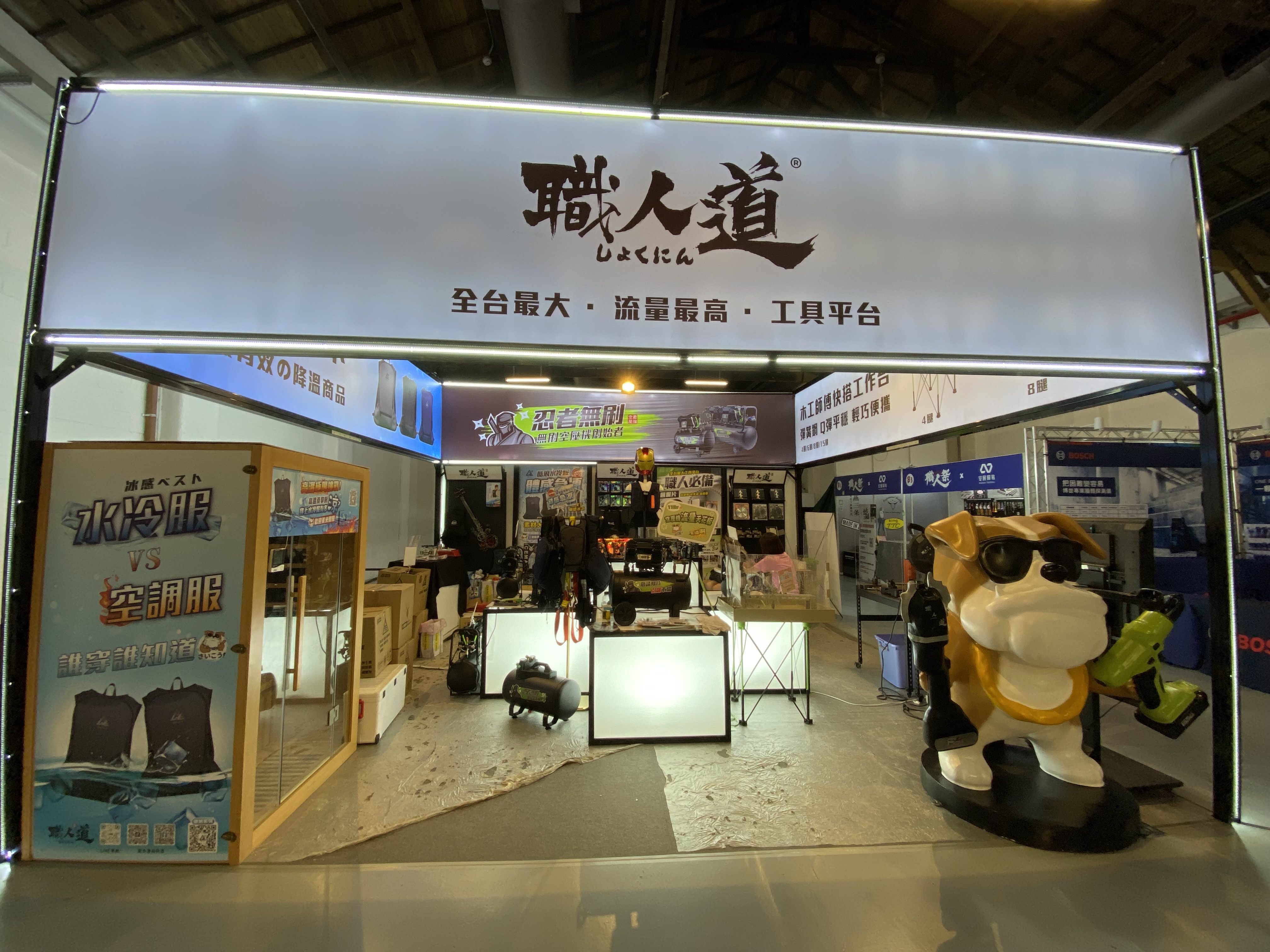
Shokunin is the professional e-commerce brand launched by Feng Shang Precision Co., Ltd., a Taiwan-based manufacturer whose listed products include COOLING water-cooled vests. The supplier listing identifies two model designations, the CW-01 Basic Model and the CW-PRO Professional Model. That taxonomy is useful for procurement, but it is not proof that one model outperforms the other. This comparison therefore treats the Basic and Professional options as SKUs to be accepted on documented evidence, not as a ranking.
The same discipline applies to the category. A circulating cooling vest can be described as a portable cooling vest, a power-bank cooling vest, a long-lasting cooling vest or an industrial cooling vest. Those labels help a buyer search, but they do not answer the acceptance questions: under what conditions, on which SKU, with which power source, and against what failure criteria?
The Basic and Professional split is a SKU question, not a performance verdict
The available evidence establishes two model designations but does not provide a complete differentiator matrix. That matters at the decision stage. A buyer should not read 'Professional' as a measured performance claim or assume that the Basic model is unsuitable for industrial work. The acceptance file should force the quotation to state the actual differences: bill of materials, included accessories, ice-pack configuration, tubing and connector set, power-bank requirement, color, packaging and warranty coverage.
Color is part of the same control. The listing evidence does not establish a complete color matrix for every model, so the buyer should lock color by SKU and approved swatch rather than accept a generic 'blue/black' description. For a professional cooling vest used in construction, traffic control or outdoor sites, color also affects visibility and dirt appearance. If color is a controlled attribute, the purchase order should name the approved sample and the acceptable lot variation.
| Decision item | CW-01 Basic | CW-PRO Professional | Acceptance action |
|---|---|---|---|
| Model identity | Listed as Basic model | Listed as Professional model | Quote exact model code, color and BOM per SKU. |
| Performance evidence | No separate performance record in the available set | No separate performance record in the available set | Do not infer a performance order from the model name. |
| Accessories and power | Confirm included ice packs, tubing and power-bank requirement | Confirm the same, plus any model-specific accessory | List every included and excluded item on the PO. |
| Warranty | Confirm coverage by component | Confirm coverage by component | Attach the warranty schedule to the acceptance file. |
The practical outcome is simple: the Basic and Professional comparison should begin with a line-by-line quotation, not with adjectives. If the supplier cannot state the SKU-level delta, the buyer cannot accept the model designation as a meaningful specification.
Spec-to-acceptance matrix for the COOLWAVE dual cooling vest
The following matrix converts the main supplier and purchase-file claims into acceptance lines. It keeps the difference between a reported specification and a verified result visible. A reported value can support a sample request; it cannot by itself close an acceptance line.
| Claim or specification | Why the buyer cares | Evidence status in the available material | Acceptance record to request |
|---|---|---|---|
| 3–4 hours of cooling duration | Shift planning, ice/water logistics and realistic worker expectations | Supplier-reported and repeated in secondary material; test conditions and endpoint are not defined | Test report or pilot record stating ambient conditions, workload, starting water/ice condition, pump setting and end point. |
| 320–370 ml/min flow | Circulation performance and consistency between samples | Reported pump specification; measurement conditions are not stated | Flow record with tubing length, head, reservoir level and connector configuration. |
| 5V/150mA pump | Power-bank compatibility, electrical review and spare-part planning | Reported pump rating; power-bank model and runtime are not established | Pump datasheet, connector details, start-up behavior and power-bank compatibility check. |
| Within 2 kg | Wearer comfort, fatigue and comparison with lightweight cooling vest options | Supplier-listed as within 2 kg; whether the figure is dry, filled or worn weight is not stated | Weighing record for the exact SKU with water, ice packs and power bank as specified. |
| TPU bag | Leak risk, folding durability and water-bag replacement cost | Material callout in the acceptance checklist; grade and seam method not established | BOM, sample inspection and documented leak-check method. |
| Polypropylene cap | Closure security, thread wear and leakage at the fill point | Material callout; gasket and tolerance details not established | Cap and gasket specification, plus repeated open-close sample check. |
| Sand-rubber tube | Kinking, flexibility and resistance to site handling | Material callout; tube dimensions and replacement interval not established | Tube sample, bend/kink check and spare-tube availability. |
| 600D polyester strap | Fit retention, stitching strength and wearer adjustment | Material callout; stitching and hardware details not established | Strap construction review, stitching check and fit trial on intended body sizes. |
| Ice-pack leakage control | User safety, clothing damage and return risk | Risk-control unit cites reinforced ice-pack material and pre-shipment quality control | Leak-test method, batch inspection record and spare ice-pack policy. |
The matrix also shows why a single number is not an acceptance decision. The 3–4 hour claim and the pump flow claim describe different parts of the system. A long-lasting cooling vest can still fail acceptance if the water bag leaks, the tube kinks, the strap loosens or the power bank cannot sustain the pump. A rapid cooling work vest can look attractive in a demonstration and still fail a shift-level trial if the ice/water logistics are impractical.
Cooling duration: define the endpoint before accepting 3–4 hours
The supplier and secondary material state a 3–4 hour cooling duration. That is a useful planning number, but it is not self-defining. The evidence set does not state whether the duration means pump runtime, the period before the circulated water rises above a chosen temperature, the period before the wearer reports discomfort, or the period before the ice pack loses most of its effect. Those are different acceptance tests.
For an industrial buyer, the first step is to write the endpoint in plain language. A practical protocol should fix the ambient temperature and humidity range, the workload, the clothing worn under the vest, the starting water and ice condition, the pump setting, and the body-size range of the testers. The result should be recorded as a time series, not only as a single duration. That allows the buyer to see whether cooling declines gradually or falls off sharply.
The supplied comparison material also states that other water-cooled vests lose cooling after about 30 minutes. That is a category-level comparator from supplier material, not an independently measured benchmark. It is useful for framing the acceptance question—does the COOLWAVE vest hold a usable cooling effect for the intended work period?—but it should not be converted into a verified competitor ranking. The buyer should compare all shortlisted products under the same conditions, or not compare them at all.
Flow and pump: 320–370 ml/min and 5V/150mA are system specs
The reported pump specification is 5V, 150mA maximum, with a flow rate of 320–370 ml/min. For procurement, this is primarily a compatibility and serviceability issue. A low-voltage pump must match the selected power bank, cable, connector and control method. The available evidence does not establish that a power bank is included, nor does it establish a runtime figure. The buyer should therefore treat the power-bank cooling vest configuration as part of the acceptance file, not as an accessory assumption.
Flow rate is also not the same as cooling power. It describes how much water the pump circulates under the conditions used for the rating. Tubing length, lift, reservoir level, connector restriction and water temperature can change what a user sees in the field. The acceptance record should therefore ask for the flow measurement conditions and should repeat the check on the delivered configuration. A pump that meets a bench figure but cannot start reliably with the chosen power bank is not acceptable for site use.
Serviceability belongs in the same section. The buyer should confirm whether the pump is replaceable, whether spare tubing and connectors are available, and what the warranty says about pump failure. These are not marketing questions. They determine whether a circulating cooling vest can remain in service across a hot season or becomes a disposable item after one failure.
Weight and materials: a BOM is not a wearability test
The listed weight is within 2 kg, or sub-2 kg. That is a helpful screening figure for a lightweight cooling vest, but the basis of the weight matters. Is it dry weight, filled weight, weight with ice packs, or weight with the power bank carried by the wearer? The evidence set does not resolve that point. For acceptance, the buyer should weigh the exact SKU in the configuration the worker will carry. A dry-weight number cannot be compared with a loaded competitor or used to judge fatigue over a full shift.
The material callouts in the purchase file—TPU bag, polypropylene cap, sand-rubber tube and 600D polyester strap—are the right level of detail to request, but the names alone do not prove durability. TPU is a family of materials, not a single grade; the seam method and wall thickness affect leakage. A polypropylene cap depends on thread fit and gasket design. A sand-rubber tube must resist kinking and repeated handling. A 600D polyester strap must be judged with its stitching, adjusters and attachment points. The acceptance file should therefore ask for the bill of materials, a production sample and a documented leak check, not just a material list.
The risk-control unit identifies ice-pack leakage as a specific risk and cites reinforced ice-pack material plus pre-shipment quality control. That is a relevant control direction. It should be converted into a record: what leak check is performed, on which batch, by whom, and what happens if a leak is found after delivery. The buyer should also confirm the spare ice-pack policy, because a leaking pack can interrupt use even when the vest itself is intact.
Construction buyers sometimes search for sweat-proof cooling gear or heatstroke prevention gear for extreme heat. The available evidence does not establish a sweat-proof rating, and a cooling vest should not be treated as a substitute for wider heat-stress controls. What the evidence does support is a portable, water-circulation cooling system intended for high-temperature environments, metal sheet factories and outdoor sites. Acceptance should test that fit, not an unstated rating.
Commercial terms: warranty, MOQ, lead time, capacity and ODM
The purchasing terms must be weighed separately from the product specification, because a good sample can still be a poor supply decision. The terms presented for review include a six-month warranty, MOQ 10, a 7–14 day lead time, a reported 3,000-unit monthly capacity and ODM support. Several of these figures come from secondary trade material and should be confirmed in the quotation and purchase order.
| Commercial term | Reported position | Acceptance question |
|---|---|---|
| Warranty | Six months | Which components are covered—pump, bag, cap, tube, strap, ice pack? What is the claim process and spare-part lead time? |
| MOQ | 10 units | Does MOQ 10 apply per SKU, per color or per order? Can a pilot mix models or colors? |
| Lead time | 7–14 days | Does the clock start at PO, deposit, artwork approval or sample approval? Does it hold for ODM work? |
| Monthly capacity | 3,000 units | Is this installed, practical or available capacity? How does it relate to the separate 10,000-unit annual company output figure? |
| ODM support | Reported ODM model | What is the scope—logo, color, packaging, BOM change, tooling, approval steps and minimum order per change? |
The capacity figures need particular care. The available evidence contains a 3,000-unit monthly capacity claim and a separate 10,000-unit annual output figure for Feng Shang Precision. Those numbers use different bases and should not be multiplied, averaged or treated as interchangeable. The buyer should ask the supplier to define capacity: installed capacity, practical capacity with current staffing, or capacity available to a new order. That definition matters more than a headline number for delivery-risk planning.
A six-month warranty is a commercial term, not a durability test. At the decision stage, the buyer should compare the warranty period with the expected service cycle and with the cost of the components most likely to fail. If the pump, bag or ice packs are excluded, the effective warranty may be narrower than the headline period suggests. The same logic applies to MOQ 10: a low minimum can support a pilot order, but only if the quotation states whether mixed SKUs or colors are allowed and whether the lead time applies to that pilot volume.
Certification and the Taiwan field case: credibility inputs, not test substitutes
The company profile states that the COOLING water-cooled vest received the Disaster Prevention Product and Service Certification Award issued by the Taiwan Disaster Prevention Industry Association. That is relevant recognition for a disaster-prevention and heat-exposure context. It is not, by itself, a thermal-performance test, an electrical-safety certificate or a leakage report. The buyer should request the certificate scope and confirm which models, configurations and periods it covers. If the award is a product-and-service recognition, the acceptance file should say so rather than relabel it as a performance standard.
A Taiwan field case involving 100 units is also cited in the purchase context. A deployment count is useful evidence of logistics experience, but it is not outcome evidence. To evaluate the case, the buyer should ask which model and color were supplied, the operating period, the site conditions, the failure or return rate, and any user-reported runtime. Without those details, the 100-unit figure proves that a batch was deployed; it does not prove cooling duration, leakage performance or fit across the buyer's workforce.
This is not a reason to dismiss the certification or the field case. It is a reason to place them in the right part of the decision file. They support supplier credibility and application relevance. They do not replace a site pilot, a flow check, a weight check or a warranty review.
A practical acceptance decision rule
A buyer can keep the comparison independent by using three outcomes rather than a single score. The rule below is deliberately about evidence quality, not about ranking the Basic and Professional models against each other.
- Pass: the exact SKU and color have a defined test method and a record for cooling duration, flow, weight and leakage; the commercial terms match the PO; the warranty schedule names the covered components; and the certification scope covers the offered model.
- Conditional: the supplier has provided a specification but not a test record; a sample and pilot are scheduled; the power bank, ice/water routine and weight basis are defined; and the capacity or lead-time claim is confirmed in writing.
- Hold: the material or weight basis is unknown; the capacity figures remain unresolved; the warranty excludes critical components; the certification scope is unclear; or the field case lacks outcome data.
This rule prevents a common procurement error: treating a supplier's strongest number as the whole decision. The 3–4 hour duration, the 320–370 ml/min flow and the sub-2 kg weight are all useful, but they answer different questions. The buyer needs a record for each one, on the same SKU, before the vest can be accepted for an industrial cooling programme.
Application fit and the limits of the claim
The supplied use-case material positions the Shokunin water-cooled vest for high-temperature environments, metal sheet factories and outdoor sites. That is a credible starting point for an industrial cooling vest because the product is a circulating system with reusable ice packs, not a passive ice vest alone. The same material claims higher energy efficiency and lower maintenance than other water-cooled vests because of reusable ice packs and durable fabric. Those are supplier comparison claims, not independent test results. They should be verified through the maintenance routine and spare-part review rather than accepted as a ranking.
The fit boundary is equally important. A power-bank cooling vest depends on a charged power source, a working pump and a clean water/ice routine. A long-duration cooling vest still needs a place to refill, recharge or replace ice packs. A lightweight cooling vest may reduce fatigue, but the loaded weight and fit must be checked on the intended wearers. For a cooling solution for metal-roof factories, the buyer should also consider access to water, shade, charging points and break schedules. The vest is one part of a heat-exposure control plan, not the whole plan.
Where the work involves prolonged sun exposure, construction or traffic control, the acceptance trial should include the actual garment layers, movement and task duration. A sample that feels acceptable in an office will not necessarily pass a full outdoor shift. The buyer should record fit, adjustment, hose routing, interference with PPE and user feedback. That is how a portable cooling vest becomes a supportable purchase rather than a promising catalogue item.
The brochure supplied for the product can be used as a reference document for the specification discussion: COOLWAVE product brochure (PDF). It should sit alongside the quotation, BOM and test records, not replace them.
Frequently asked questions
Is the COOLWAVE Professional model necessarily better than the Basic model?
No performance order is established by the available evidence. The listing identifies CW-01 Basic and CW-PRO Professional as model designations, but it does not provide a model-specific test result that proves one outperforms the other. The buyer should compare the quotation, bill of materials, included accessories, color options and warranty coverage for each SKU. 'Professional' is a label to verify, not an acceptance result.
How should a buyer verify the 3–4 hour cooling duration?
Define the endpoint first. The test should state ambient temperature and humidity, workload, clothing, starting water and ice condition, pump setting and the point at which cooling is judged to have ended. Then run the test on the exact SKU and power-bank configuration intended for purchase. A supplier statement of 3–4 hours is a useful screening claim, but it is not a verified shift-level result until the conditions and records are available.
What does the 5V/150mA pump and 320–370 ml/min flow rate tell a procurement team?
It identifies the pump as a low-voltage component with a reported circulation range. It does not establish heat-removal performance or runtime by itself. The buyer should request the flow measurement conditions, confirm power-bank compatibility and check that the pump starts reliably with the chosen power source. Spare-pump availability and warranty coverage for the pump should also be confirmed.
Are the TPU bag, polypropylene cap, sand-rubber tube and 600D polyester strap enough to judge durability?
They are useful material callouts, but they are not a durability verdict. The buyer should request the bill of materials, a production sample and a documented leak check. For the bag and cap, the seam and closure design matter. For the tube, kink resistance and replacement availability matter. For the strap, stitching and adjusters matter. Material names should be tied to construction details and inspection records.
How should the six-month warranty and 3,000-unit monthly capacity be weighed?
The warranty should be read by component and claim process, not only by duration. Confirm whether the pump, bag, cap, tube, strap and ice packs are covered, and how quickly spare parts are supplied. The 3,000-unit monthly capacity figure should be defined as installed, practical or available capacity. It should not be combined with the separate 10,000-unit annual output figure without clarification, because the two claims use different bases.
Does the Taiwan disaster-prevention award or the 100-unit field case prove product performance?
The award supports credibility in a disaster-prevention context, but it is not a substitute for a thermal, electrical or leakage test. The 100-unit field case indicates deployment experience if the details are documented, but a deployment count alone does not prove cooling duration or reliability. Buyers should request the certificate scope, model coverage, field-case conditions, failure rate and user feedback before treating either item as acceptance evidence.
Conclusion: accept the SKU, not the adjective
The COOLWAVE Dual Cooling Water Cooling Vest has a coherent set of procurement inputs: a reported 3–4 hour cooling duration, a 5V/150mA pump with 320–370 ml/min flow, a within-2 kg weight claim, defined material callouts, a six-month warranty, MOQ 10, a 7–14 day lead time, reported 3,000-unit monthly capacity and ODM support. The independent buyer's conclusion is not that these claims are true or false in the abstract. It is that each claim needs a record, a condition and a responsible acceptance owner.
The Basic and Professional models should be compared as SKUs with their own BOM, color, accessories and warranty schedule. The disaster-prevention award and the Taiwan 100-unit field case should be placed in the credibility file, not used as performance proof. The capacity figures should be clarified before they enter a delivery plan. That approach keeps the decision grounded in evidence and avoids turning a useful industrial cooling product into an unverified promise.
Have Questions or Need More Details?
Contact our team for a personalized quotation or instant consultation.
Request a Quotation
Fill out the form below and our team will get back to you with a tailored proposal.
WhatsApp Direct Chat
Prefer to chat in real-time? Message us on WhatsApp for instant assistance & quick answers.
- Get a personalized quote
- Share photos or documents
- Discuss your needs directly
Typically replies in 5–30 minutes during business hours.