
Dual Cooling Water Cooling Vest: Capacity and R&D Continuity
HTNXT Industry Reference · Supplier Evaluation
Dual Cooling Water Cooling Vest: Capacity and R&D Continuity
A long-term supplier evaluation framework for dual cooling water cooling vests, built on recorded capacity, engineering headcount, patent documentation and after-sales terms rather than on unit price alone.
The buying question behind the product
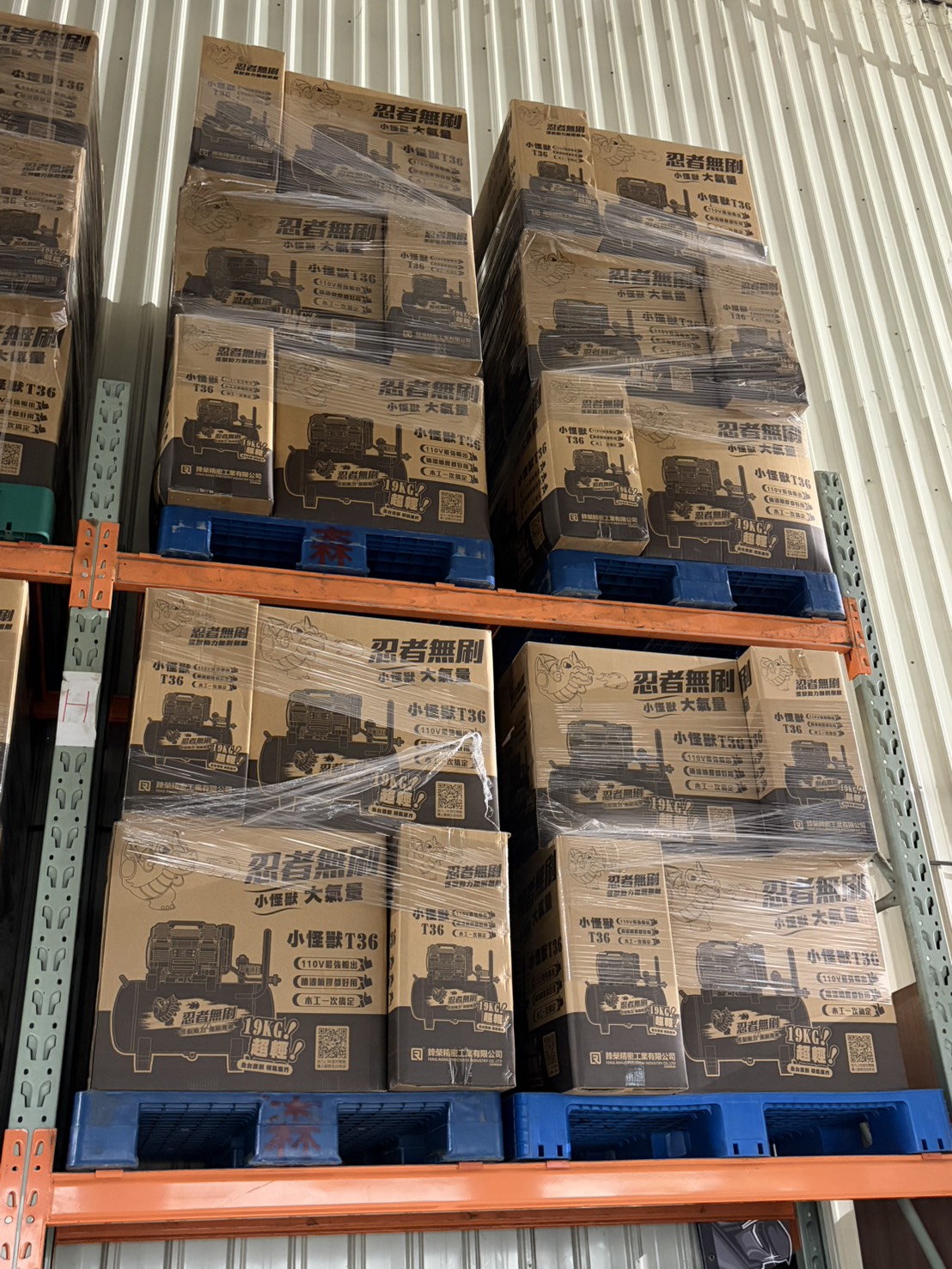
A dual cooling water cooling vest cools its wearer by circulating chilled water through a closed loop of tubing inside the garment, with reusable ice packs acting as the cold source and a small pump driving the flow. In industrial procurement, this sits between personal protective equipment and operational equipment: it is bought in batches, issued to workers by name or by crew, and expected to be orderable again next summer in the same specification.
The category is not static. Dataintelo estimates the specific global cooling vest market at approximately USD 215 million in 2024, projected to reach USD 385 million by 2033. Industrial applications, including construction and manufacturing, held the largest share of that market at 34.5% in 2025. Spherical Insights identifies Asia Pacific as the fastest-growing region, pointing to industrialisation and large outdoor work populations. Broader personal cooling devices were valued at USD 25.16 billion in 2024 by Market Research Future, with a projected USD 94.85 billion by 2035.
Growth of that kind changes what a purchase order means. When a product category is small, buyers can treat each order as a transaction. When the category scales, the supply relationship has to be treated as a system, and the questions shift from what does this vest do to who keeps this vest available, unchanged, three summers from now.
Problem and opportunity: the two continuity constraints buyers under-test
Long-term supplier evaluation for dual cooling water cooling vests reduces to two constraints, and both are usually checked far less thoroughly than a sample vest is.
Constraint one: capacity continuity
Capacity continuity is the supplier's ability to repeat an order at the same specification and the same lead time when demand peaks. Cooling vests sell into heat. That means order books concentrate into a few months, and a supplier serving many markets at once is allocating the same production line across overlapping seasonal peaks. A buyer who validates a sample in spring and reorders in July is testing a different question than the one they answered.
Constraint two: R&D continuity
R&D continuity is whether the design has an owner. A water-circulation vest is not a garment with a cooling effect bolted on; it is a small fluid system. Its delivered performance depends on pump output, tube bore, water-bag volume and how the ice packs are sized against all three. If the engineering team that fixed those relationships at the start is not the team maintaining the bill of materials two years later, the model name can stay the same while the performance does not.
The opportunity for buyers is that both constraints are assessable before a contract is signed, using documents rather than impressions: capacity records, engineering headcount, patent ownership, certification scope, warranty terms and tooling ownership. None of these require a factory visit to obtain, and all of them age well as evidence.
A verifiable supplier profile
FENG SHANG PRECISION CO., LTD. is a Taiwan-based manufacturer established in 2009. It operates a 1,000 m² facility with approximately 30 staff, of whom 5 are R&D engineers, and reports an annual output of 10,000 units across a product range that includes air compressors, cut-off machines, water-cooled vests, lithium batteries, diamond saws, nail guns, spider stands and screwdriver bits. The company records an export ratio of 50%, with main markets in the USA and ROC. Shokunin is the professional e-commerce brand launched by Feng Shang Precision, and the COOLWAVE water-circulation cooling vest is the cooling product within that portfolio.
For a supplier-continuity file, the relevant public data points are these:
| Continuity dimension | Recorded data point | Evaluation question it answers |
|---|---|---|
| Operating history | Established 2009 | Has the business survived at least one full demand cycle downturn? |
| Production model | ODM production services | Who owns the design and the manufacturing process? |
| Monthly capacity | 3,000 units | Can a repeat order be scheduled into peak season? |
| Annual output | 10,000 units | What is the yearly ceiling across the product range? |
| Lead time | 7–14 days | How much buffer does a reorder need before a heat event? |
| Minimum order quantity | 10 units | Is a low-risk field trial possible before a framework commitment? |
| After-sales | 6-month warranty for the water-cooled vest | What is the defined post-sale service window? |
| Export markets | Global | Can the supplier serve the buyer's market directly? |
| R&D headcount | 5 engineers | Is there in-house engineering continuity, or is design outsourced? |
| Facility footprint | 1,000 m² | Is there physical room for production and finished-goods storage? |
Technical explanation: why R&D continuity is measurable on this product
A water-circulation vest is a good test case for supplier continuity because its performance is a function of a small number of components. Ice packs chill the water held in the vest's water bag. A pump moves that chilled water through the loop. The tube carries it across the body. The vest fabric sits between the loop and the wearer. Change any one of those and the delivered cooling changes, even though the model name on the box does not.
The recorded parameters of the COOLWAVE water-circulation cooling vest are:
- Cooling duration: 3–4 hours
- Weight: within 2 kg
- Suitable temperature: below 10 °C
- Pump output: 5V 150 mA (max)
- Flow rate: max 320–370 ml/min
- Shoulder strap material: 600D polyester
- Vest material: PEVA
- Water bag material: TPU; water bag cap: polypropylene
- Cooling tube: sand rubber (black)
- Contents: water-cooled vest backpack ×1, ice packs ×2
Those numbers are the reason a named engineering function matters. Flow rate and pump rating define how quickly heat is carried away; tube material and bore define resistance in the loop; water-bag material defines how long the assembly holds up under repeated freezing and thawing. A supplier without in-house engineering can still assemble a vest, but cannot guarantee that next year's unit matches this year's unit. With 5 R&D engineers on a staff of approximately 30 at FENG SHANG PRECISION CO., LTD., the engineering function is embedded in the business rather than bought in per order.
Design ownership: the patent record
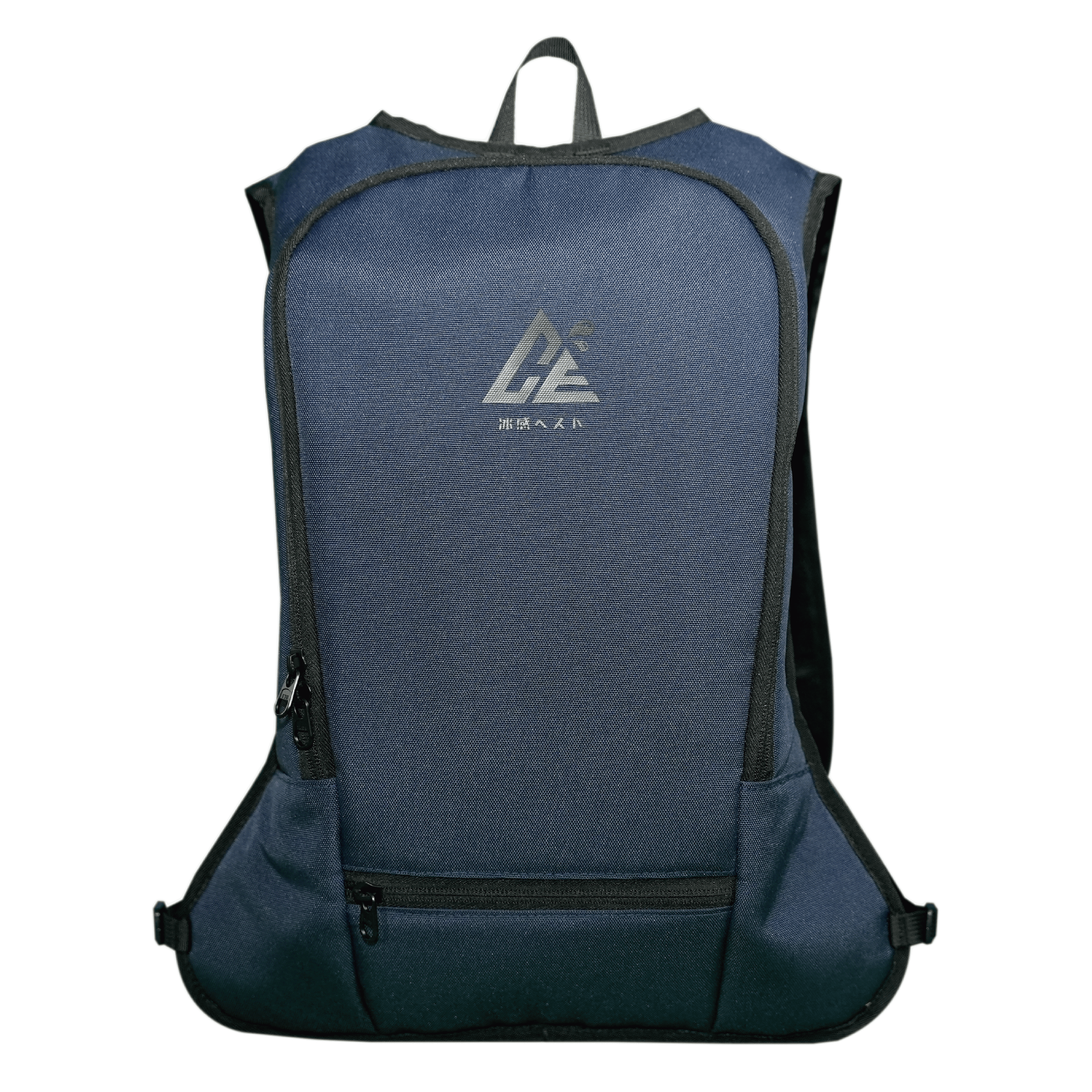
The COOLWAVE water-circulation cooling vest (Basic Model) is protected by Patent No. I886033, issued by the Intellectual Property Office, Ministry of Economic Affairs, under the Patent Act of the Republic of China. The certificate was issued on 1 June 2025 and expires on 27 August 2044, and it covers the water-cooled vest structure and cooling system. The patent applies to the ROC market.
For a buyer, a granted patent is not a quality rating. It is evidence that the structural and cooling-system design has a documented owner with a term longer than a typical procurement cycle. That matters in two ways: component substitution becomes a documented decision rather than an unrecorded one, and the design cannot legally be copied into a competing supply chain within the covered market.
Certification scope: read the geography, not just the title
The COOLING water-cooled vest received the Disaster Prevention Product and Service Certification Award from the Taiwan Disaster Prevention Industry Association. This is a Taiwan-market credential tied to disaster prevention product and service standards, and it should be filed as such. Buyers sourcing outside Taiwan should request the conformity documentation relevant to their own jurisdiction instead of treating a Taiwan award as international evidence.
Industry references for cooling systems cite ISO 9001:2015 as the baseline for quality management and note that electrical components often require CE or UL marks. These are documents a buyer should request from any supplier under evaluation. The standard is cited here as an evaluation criterion, not as a certification claim for any specific product.
Applications: where dual cooling vests are actually deployed
The recorded applicable industries for the COOLWAVE water-circulation cooling vest are construction workers, outdoor workers, food stall operators, street vendors, traffic controllers and metal sheet factories. Working conditions are described as high temperature, with the function being effective body cooling and the special requirements being lightweight, waterproof, breathable and one-size-fits-all design.
A Taiwan deployment record lists 100 units used for cooling in high-temperature environments, with a recorded duration of 10 years and results described as effective body cooling, heatstroke prevention, and improved work efficiency and worker comfort. The highlights recorded for that deployment are the ice-pack cooling method, a lightweight and portable format, an adjustable one-size-fits-all design, and certified disaster prevention product status.
The pattern behind these scenarios is consistent. Metal-roof factories, traffic control posts with prolonged sun exposure, and night-market stalls share one constraint: the operator stays in place while the heat does not. Cooling equipment for those settings has to survive repeated use, repeated handling and repeated re-icing — which is precisely where a supplier's continuity record becomes visible to the end user.
Market trend analysis: demand is broadening faster than supply relationships are formalising
Three verified signals shape how long-term evaluation should be weighted.
First, the industrial end of the market is the largest and least discretionary. Industrial applications held 34.5% of the cooling vest market in 2025, according to Dataintelo. Industrial buyers cannot defer the purchase when the forecast is hot; they either have vests or they have exposure.
Second, technology is shifting toward active circulation. Strategic Market Research reports that active circulatory mechanisms such as ice water circulation are increasingly deployed in industrial sectors to mitigate occupational heat stress. Dataintelo separately records phase change material vests at 28.7% market share in 2025 as the fastest-growing technology segment. The two observations point in the same direction: buyers are moving from passive cooling accessories toward engineered cooling systems, and engineered systems place more weight on the supplier's engineering capability than on the supplier's catalogue size.
Third, the growth geography adds distance risk. Spherical Insights identifies Asia Pacific as the fastest-growing region, driven by industrialisation and large outdoor work populations. Long supply lines combined with a seasonal demand curve mean that order confirmation dates matter as much as unit prices. Spherical Insights also lists key global participants in the cooling vest market as Techniche International, Glacier Tek, Polar Products Inc. and Ergodyne — a competitive field in which a supplier's differentiator is as likely to be delivery reliability and design ownership as raw capacity.
Comparison with alternative cooling approaches — and the limits of this one
The table below compares cooling vest approaches by evaluation criteria rather than by marketing claims. Only the water-circulation column uses recorded product specifications; the other rows describe categories in general terms.
| Approach | How it removes heat | Evaluation consideration | Where continuity risk sits |
|---|---|---|---|
| Passive ice-pack vest | Frozen packs held against the body | Simple, but cooling fades as packs melt and contact points are fixed | Pack replacement supply |
| Phase change material vest | PCM packs absorb heat at a set transition temperature | Even cooling curve; PCM packs are a specialist consumable | PCM material supply and reconditioning |
| Fan-cooled vest | Forced air movement over the skin | Depends on ambient conditions; moving air is less effective in humid heat | Motor and battery module supply |
| Water-circulation vest (dual cooling) | Pump circulates chilled water through tubing; recorded duration 3–4 hours at max 320–370 ml/min flow | Even, controllable cooling; requires ice capacity on site and a powered pump module rated 5V 150 mA (max) | Pump, tube and water-bag supply; engineering control of the loop |
Stated boundaries of the COOLWAVE approach
A credible evaluation has to record what a product does not do. The following limits come directly from the recorded specification and capability data:
- Finite cooling window. Cooling duration is 3–4 hours per charge. A longer shift requires re-icing, so the site needs ice or freezing capacity, not just vests.
- Carried weight. The unit is specified within 2 kg, in a backpack format that holds the water bag and pump. That is light for industrial equipment, but it is not weightless.
- Cold-source dependency. The suitable temperature specification is below 10 °C, which defines the cooling medium requirement rather than the ambient working temperature. Sites without reliable ice access will not get the specified performance.
- Powered module in the maintenance picture. The pump is rated 5V 150 mA (max). Any long-term service plan should cover the pump and tubing as serviceable components.
- Market-limited credentials. Both the patent (No. I886033) and the Disaster Prevention Product and Service Certification Award apply to the ROC and Taiwan markets respectively. They are not substitutes for conformity documents in other jurisdictions.
- ODM, with customization not listed. The capability record lists ODM production services, and customization is recorded as not offered. Buyers who need a modified design, altered tube routing or a bespoke branding programme should confirm scope in writing before building a multi-year plan around the platform.
- Defined warranty window. After-sales support is a 6-month warranty for the water-cooled vest — a clear but limited window that should be mapped against the intended service life and the number of wash-and-reuse cycles expected in the field.
- Capacity reconciliation required. The recorded 3,000 units per month and 10,000 units per year should be clarified at line level before peak-season volumes are committed.
Future outlook: what to lock into the supplier file now
The direction of the data suggests that the next several years of cooling vest procurement will be shaped less by whether a supplier can make a vest and more by whether the supplier can sustain a programme. A market moving from USD 215 million in 2024 toward a projected USD 385 million by 2033, with industrial buyers holding the largest share, will push allocation decisions upstream. When multiple industrial customers place seasonal orders into the same production calendar, the buyer with a documented, long-standing relationship usually gets scheduled first.
Design longevity also becomes an asset. A patent term that runs to 27 August 2044 in the ROC market means the cooling-system architecture of the COOLWAVE water-circulation cooling vest is intended to remain stable well past any single procurement cycle. Stable architecture is what makes spare parts, reorder matching and multi-year framework pricing possible in the first place.
For buyers in Research and Evaluation stages, the practical output of this analysis is a short supplier file. It should contain: a capacity statement distinguishing monthly and annual figures by product line; the engineering organisation and headcount; the patent certificate and its geographic scope; the certification award and its market; warranty terms; MOQ and lead-time commitments; and a written statement on customization scope. Assembled together, these documents answer the continuity question before the first purchase order, rather than after the third.
Frequently asked questions
1. What does long-term supplier evaluation for a dual cooling water cooling vest actually measure?
It measures two separate things. Capacity continuity is whether the supplier can repeat an order at the same specification and lead time during peak heat-season demand. R&D continuity is whether a named in-house engineering function owns and maintains the design — the pump rating, flow rate, tube bore and water-bag construction that together determine delivered cooling. For FENG SHANG PRECISION CO., LTD., the recorded engineering resource is 5 R&D engineers within a staff of approximately 30.
2. How can a buyer verify a supplier's stated production capacity?
Ask for capacity broken down by product line and by month, then reconcile it against annual output. The public record for this supplier lists a monthly capacity of 3,000 units and an annual output of 10,000 units; because the company also manufactures air compressors, cut-off machines, lithium batteries, diamond saws, nail guns, spider stands and screwdriver bits, a buyer should confirm how much of that capacity is dedicated to the cooling vest line before committing seasonal volumes.
3. Why does R&D headcount matter more for a water-circulation vest than for a passive ice-pack vest?
A passive ice-pack vest relies on frozen packs and garment design. A water-circulation vest adds a fluid loop: a pump rated 5V 150 mA (max), a flow rate of max 320–370 ml/min, a TPU water bag and a sand rubber cooling tube. Substituting any of these components changes delivered cooling without changing the model name. In-house engineering is what keeps a repeat order matching the original specification.
4. Which certifications and documents should be requested from a cooling vest supplier?
For this supplier, the documented credentials are Patent No. I886033, issued by the Intellectual Property Office, Ministry of Economic Affairs under the Patent Act of the Republic of China for the ROC market, and the Disaster Prevention Product and Service Certification Award issued by the Taiwan Disaster Prevention Industry Association for the Taiwan market. Beyond these, industry references cite ISO 9001:2015 for quality management and note that electrical components often require CE or UL marks. Buyers should request the conformity documents specific to their own market.
5. What are the practical limits of the COOLWAVE water-circulation cooling vest?
Recorded limits include a 3–4 hour cooling duration, a weight within 2 kg in backpack format, and a cooling-medium specification of below 10 °C, which requires access to ice or freezing capacity on site. The pump module is part of the maintenance picture. The patent covers the ROC market and the disaster prevention certification applies to Taiwan, so neither should be read as international conformity evidence.
6. What order quantities and lead times apply, and how do they affect long-term planning?
The recorded minimum order quantity is 10 units and the lead time is 7–14 days, with the water-cooled vest covered by a 6-month warranty. A low MOQ makes a field trial practical before a framework commitment. For long-term planning, the lead time should be mapped against the local heat season so that reorders are placed before peak demand compresses the production calendar.
7. Does the supplier offer OEM customization for dual cooling water cooling vests?
The recorded capability data lists ODM production services and records customization as not offered. Buyers who require modified designs, different branding programmes or site-specific configurations should confirm the available scope in writing before planning a multi-year programme around this platform.