
Dual Cooling Water Cooling Vests: Supplier Viability Checklist
Cooling garments for heat-exposed work are replaced on a seasonal cycle, so the buying decision is never really about a single shipment. Construction contractors, metal-sheet factories, traffic-control teams, and outdoor vendors working in prolonged sun exposure reorder the same item year after year, and every reorder depends on whether the supplier still produces that model and still holds the tooling, components, and documents behind it.
A dual cooling water cooling vest makes that dependency sharper than a plain textile product. These garments pair a cold source with pump-driven water circulation, which means long-term supply depends on small electrical and fluid components as much as on fabric: pumps, tubing, reservoirs, connectors, and reusable ice packs. If any one of those items is discontinued, the vest stops being serviceable even when the outer shell is still intact.
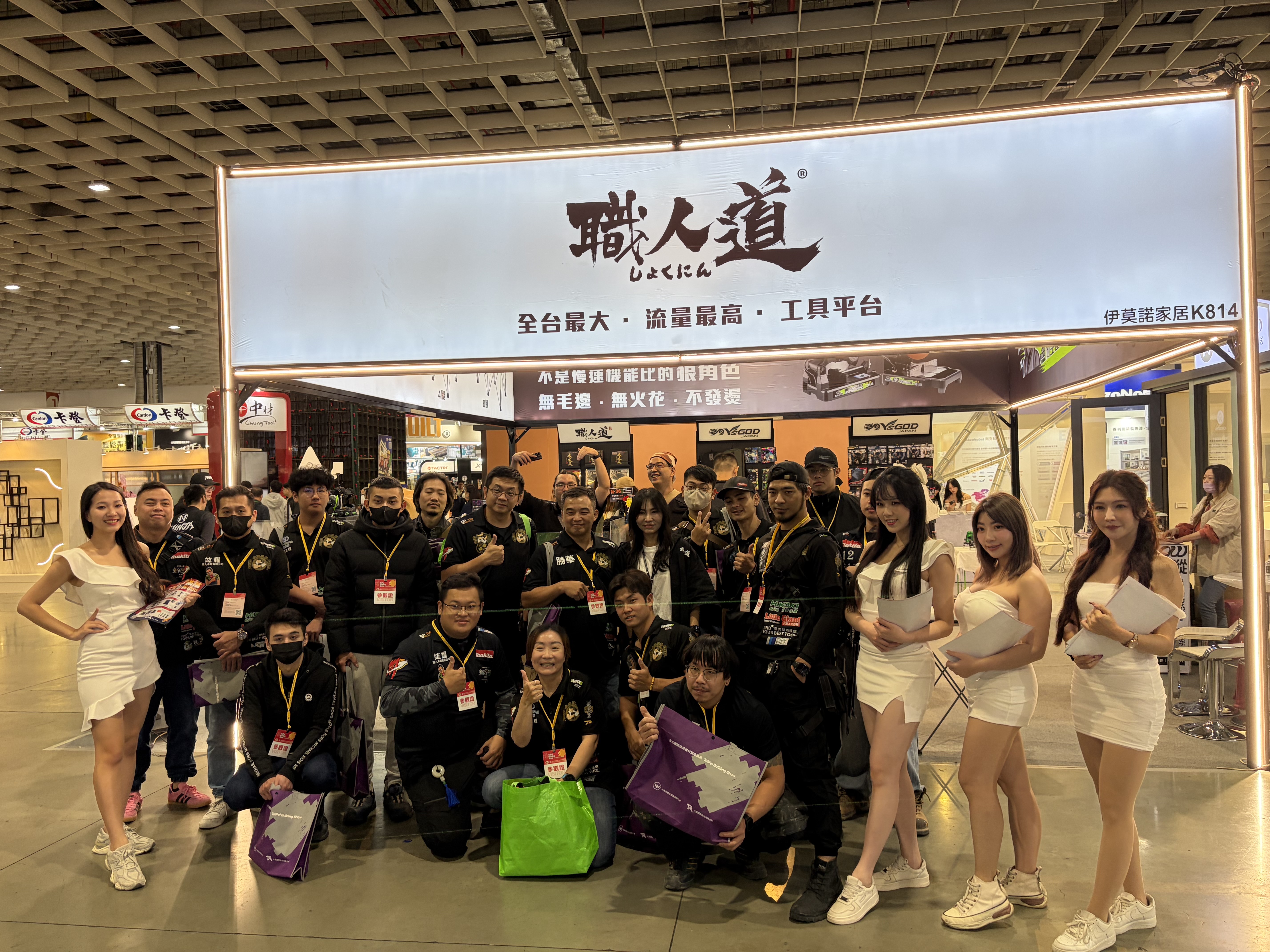
This checklist explains how procurement teams can evaluate long-term supplier viability for the COOLWAVE dual cooling water cooling vest produced by FENG SHANG PRECISION CO., LTD., a Taiwan-based manufacturer established in 2009 that markets its cooling garments under the Shokunin brand. The focus is on evidence that can be requested, checked, and compared — corporate continuity, production capacity, product verification points, and after-sales controls — rather than on unit price alone.
What Long-Term Supplier Viability Actually Measures
Supplier viability for a powered cooling vest is not a single score. It is the sum of four checks that can each be verified separately, and each of them should be answered before a quotation is compared against a competitor's.
- Corporate continuity — how long the manufacturer has operated, where its facility is located, and whether it holds in-house engineering capacity rather than reselling third-party goods.
- Production scalability — stated monthly and annual output, the basis on which those numbers are calculated, minimum order quantity, and lead time.
- Product verifiability — whether technical points such as cooling duration, weight, pump rating, and flow rate are documented and can be reproduced in a sample test.
- Service continuity — warranty terms, replacement-part availability, maintenance requirements, and the risk controls applied to wear-prone components such as ice packs.
Every one of these dimensions produces evidence a buyer can ask for. None of them can be inferred from the unit price printed on a quotation sheet.
Why Unit Price Misreads the Cost of a Cooling Vest Program
The lowest quoted unit price is only meaningful if the supplier can deliver the same vest, in the same specification, for the length of the program. For a factory equipping line workers, or a contractor issuing standard-issue cooling gear to a crew, that program may run across several summers. A cheaper first order from a supplier that later changes tubing dimensions, changes pumps, or stops stocking ice packs creates a second cost that never appears on the invoice: mismatched replacement parts, unusable spare inventory, and re-sourcing work repeated from the beginning.
The applied nature of the product makes this risk higher than it first appears. A water-circulation vest is worn against the body, exposed to sweat, abrasion, and repeated washing. Its cooling loop is a closed fluid system with connectors and a small pump that runs from a power bank. Component-level continuity therefore matters as much as garment-level continuity, and component-level continuity is a supplier characteristic, not a product characteristic.
That is the opportunity for buyers who plan ahead. Treating the purchase as a supplier qualification exercise — rather than a price comparison — converts an uncertain seasonal purchase into a documented, repeatable supply arrangement.
Supplier Viability Checklist for Dual Cooling Water Cooling Vests
The table below converts the four dimensions into specific checks, the evidence to request, and the reference points that apply to the COOLWAVE program today.
| Checklist area | What to verify and request | Reference point for the COOLWAVE program |
|---|---|---|
| Corporate continuity | Company registration, facility address, headcount, in-house engineering capacity, export experience | FENG SHANG PRECISION CO., LTD. was established in 2009; approximately 30 employees; a 5-engineer R&D team; a 1,000 m² facility in Luzhu District, Taoyuan City, Taiwan; a stated export ratio of 50% with the USA and Taiwan (ROC) as main markets |
| Production scalability | Monthly and annual capacity, the definition behind each figure, equipment list, peak-season behavior | Stated capacity of 3,000 units per month and 10,000 units per year; buyers should confirm whether these figures represent installed, practical, or available capacity |
| Order flexibility | Minimum order quantity, lead time start point, sample and pilot-order policy | Stated MOQ of 10 units and a stated lead time of 7–14 days; confirm whether lead time runs from order confirmation, deposit, or material availability |
| Product verification | Cooling duration, weight, pump rating, flow rate, and the test conditions behind them | 3–4 hours of cooling per charge/ice-pack cycle; net weight under 2 kg; 5V/150 mA pump; 320–370 ml/min flow rate |
| Materials and serviceability | Bill of materials, abrasion and wash behavior, availability of replacement loops and packs | TPU, polypropylene, sand rubber, and 600D polyester construction; reusable ice packs; reinforced ice pack material with pre-shipment quality checks |
| Commercial and after-sales terms | Warranty length and scope, ODM service definition, spare-part policy, documentation set | 6-month warranty; ODM services offered alongside a broader tool portfolio |
Corporate Continuity: The 2009 Operating Baseline
An operating history that predates the current heat-safety demand cycle is a useful first filter. FENG SHANG PRECISION CO., LTD. has been established since 2009 and operates from a 1,000 m² facility in Taoyuan City, Taiwan, with roughly 30 employees and a 5-engineer R&D team. The company's product portfolio extends beyond cooling garments to air compressors, cut-off machines, lithium batteries, diamond saws, nail guns, spider stands, and screwdriver bits, and it reports a 50% export ratio with the USA and Taiwan (ROC) as its main markets.
For a buyer, the practical reading of those facts is narrower than it may appear. A five-engineer team is the resource that would handle pump changes, tubing modifications, or fit revisions requested during an ODM project. A single 1,000 m² site means production, assembly, and quality control are handled in one location, which simplifies an audit but also means capacity is finite. Both points belong on a qualification sheet as questions, not assumptions.
Production Scalability: 3,000 Units per Month and 10,000 Units per Year
The COOLWAVE program is reported at 3,000 units per month and 10,000 units per year. Those two figures describe different bases and should not be multiplied, averaged, or treated as interchangeable. A monthly capacity figure usually describes a peak or practical monthly run rate, while an annual figure commonly reflects planned annual throughput across the full product portfolio. Buyers assessing a large seasonal order should ask the supplier to define which basis applies, and under what utilization assumption.
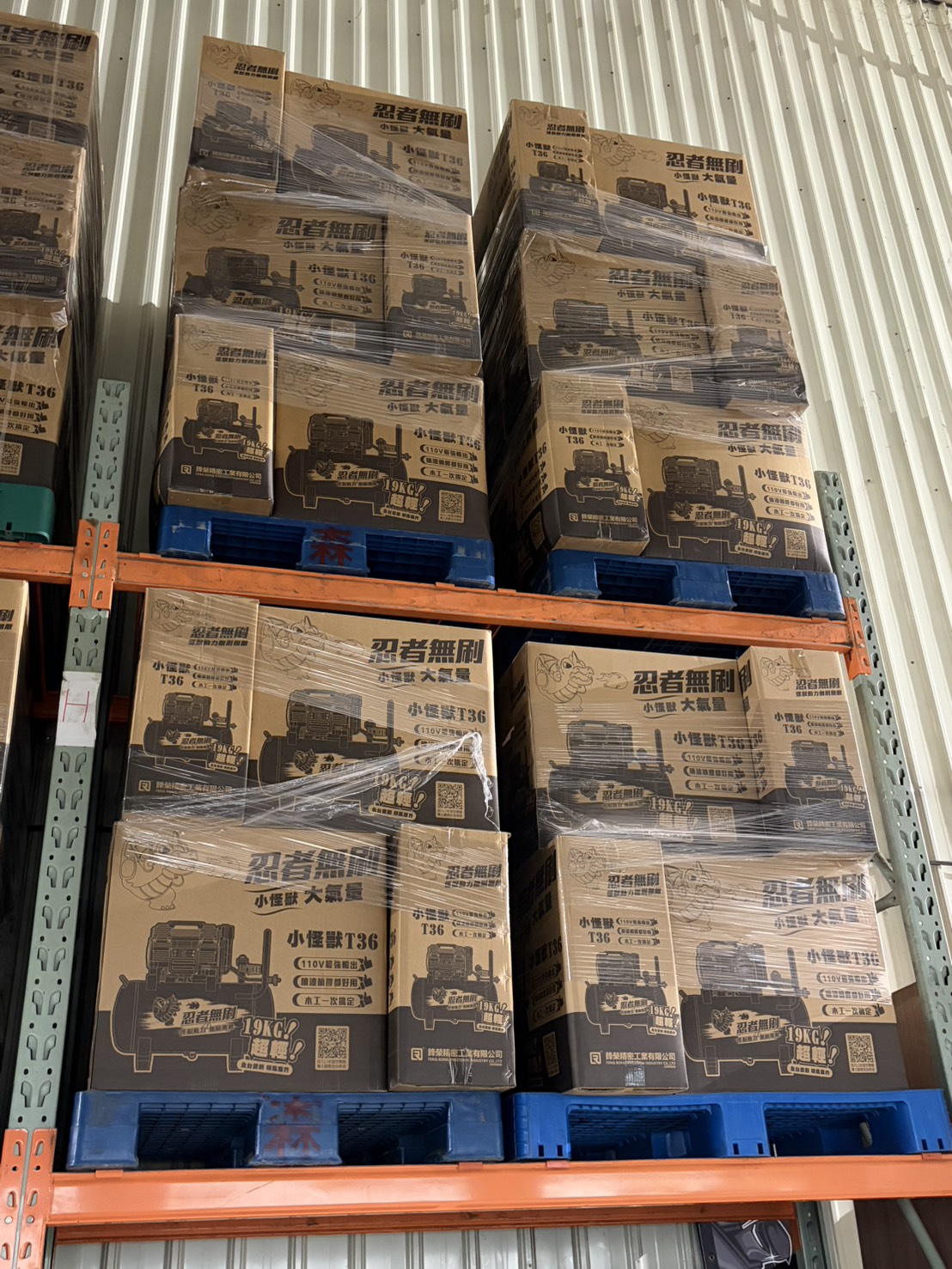
A 10-unit minimum order quantity is low for industrial PPE, which changes what scalability testing looks like. Rather than committing to a container-scale order to test a supplier, a procurement team can run a pilot batch, inspect the delivered goods, and compare them against the quoted specification before scaling. That makes the specification sheet — not the price list — the real contract document.
Order Flexibility: MOQ, Lead Time, and the Pilot Order
A stated 7–14 day lead time should always be qualified. The open questions are what triggers the clock and what interrupts it. In practice, buyers should confirm whether the lead time begins at order confirmation, at deposit receipt, at approval of artwork or labeling, or at the availability of the ice packs and pumps. For ODM projects with customized branding or packaging, the clock usually starts later than the purchase order date.
Product Verification: Specifications That Must Survive the Whole Service Life
Long-term viability is only meaningful if the product being supplied stays the same. Four specification points are worth locking into the RFQ because they determine whether the vest remains usable over repeated cycles.
- Cooling duration of 3–4 hours per charge/ice-pack cycle — the comparison reference in the same product family is roughly 30 minutes for other water-cooled vests, a difference that changes how work shifts are planned.
- Net weight under 2 kg — light enough to be worn through a shift without becoming a load that offsets the cooling benefit.
- 5V/150 mA pump — a low-draw electrical specification that determines power-bank compatibility and runtime planning.
- 320–370 ml/min flow rate — the circulation rate that drives heat transfer through the cooling loop.
Materials and Leak-Risk Controls
The vest construction uses TPU, polypropylene, sand rubber, and 600D polyester. In a water-circulation garment, these materials are not decorative choices: they correspond to the fluid pathway, the pump and connector housings, the contact surfaces, and the abrasion-resistant outer shell that takes the wear on site. Buyers should request the material declaration and confirm that it applies to the production version, not only to a sample.
Leakage is the failure mode that most often ends a water-cooled vest's service life early. The relevant control in this program is a reinforced ice pack material combined with a stated 100% quality guarantee before shipment. That is a supplier-side control, and it should be re-confirmed in each purchase order rather than assumed from an initial sample.
Technical Explanation: What the Specifications Mean Over Time
Cooling duration and flow rate are the two numbers that most directly determine reorder behavior, because they decide whether one vest covers one shift or whether a team needs two. A 3–4 hour cooling duration per charge/ice-pack cycle is a working figure for shift planning, whereas a vest that loses cooling after roughly 30 minutes forces workers to stop and recharge or swap packs several times a day. That difference in downtime, not the purchase price, is where the cost comparison actually sits.
The 320–370 ml/min flow rate and the 5V/150 mA pump rating belong together. The pump is the component that turns a static ice pack into an active loop, and its electrical draw determines which power banks are suitable and how long a single charge lasts in real use. Buyers should request the pump datasheet and specify that replacement pumps remain available for the expected service life of the fleet. The flow figure should also be qualified, because flow rate depends on tubing length, head pressure, and reservoir level, and those measurement conditions are not stated in the published specification.
Weight matters in the same way. Keeping the vest under 2 kg net supports wearability across a full shift, but it also means the garment is designed around a specific balance of pack size, water volume, and shell material. Any substitution in the outer 600D polyester or the internal TPU fluid pathway can change both weight and cooling behavior. Specification freeze, documented in the purchase agreement, is the mechanism that protects the buyer here.
Where Dual Cooling Water Cooling Vests Fit in Practice
The published application profile for this product family is high-temperature environments, metal-sheet factories, and outdoor sites. That profile aligns with the wider category: the CDC's National Institute for Occupational Safety and Health (NIOSH) identifies water-cooled garments, air-cooled garments, cooling vests, and wetted overgarments as examples of auxiliary or personal cooling systems used against heat exposure, which places powered water-circulation vests inside recognized occupational practice rather than in the consumer comfort segment.
For a metal-roof factory, the constraint is radiant heat from above combined with limited airflow. For a construction or traffic-control team, it is prolonged sun exposure and the inability to leave the work position for cooling breaks. For street vendors and food stalls, it is a fixed work position that cannot be relocated to shade. In each case, the operational value of a dual cooling water cooling vest comes from duration and circulation rather than from passive insulation, and the maintenance requirement — reusable ice packs, durable fabric, minimal upkeep — determines whether a program stays workable after the first season.
Market Trend Analysis: Industrial Buyers Are Moving Toward Documented Procurement
Cooling vests are no longer a niche category. Dataintelo's market report on cooling vests, published in May 2026 with a forecast window extending to 2034, places the global cooling vest market at USD 342 million in 2025, with industrial applications accounting for a 34.5% share of revenue in that year. A market where roughly one third of revenue comes from industrial applications behaves differently from a consumer accessory market: purchase decisions involve procurement documents, specification sheets, and repeatable supply, and they are evaluated against occupational use rather than seasonal fashion.
At the same time, buyers in this category operate with incomplete data. Public supplier claims about capacity, cooling duration, and pump output are commonly published without test methodology, and comparable figures across suppliers are often measured under different conditions. The direction of travel is therefore toward documented procurement — specification freeze, sample validation, warranty definition, and capacity clarification — rather than toward a search for a single authoritative performance number.
Comparison with Traditional Solutions — and Where the Evidence Stops
Within the water-circulation segment, the clearest documented difference in this product family concerns cooling duration and maintenance. The Shokunin water-cooled vest is stated to provide 3–4 hours of cooling, while other water-cooled vests lose their cooling effect after approximately 30 minutes. The same source attributes higher energy efficiency and lower maintenance to the use of reusable ice packs and durable fabric, and notes that other vests require more frequent ice pack replacement with higher wear and tear.
Those comparison points are useful for framing a procurement question, but they are not a substitute for testing. Three limits apply, and a buyer who understands them will write a better RFQ.
- Test conditions are not disclosed. The published cooling duration figures do not state ambient temperature, humidity, workload, clothing layers, or body size. Duration measured in a workshop will not equal duration measured in direct sun on a metal roof, so a sample test on the buyer's own site is the only reliable reference.
- Capacity figures use different bases. The monthly and annual capacity statements for this supplier describe different measurement periods and cannot be combined into one number without clarification from the manufacturer.
- Product-specific compliance documentation is not established. No product-specific certification, conformity marking, or electrical-safety standard for this powered water-circulation vest appears in the available evidence. Buyers with regulatory requirements should define them in the RFQ rather than assume they are already met.
One further boundary is worth stating plainly: the warranty is 6 months. For an industrial program that expects multi-season use, warranty length and post-warranty spare-part availability are separate questions, and both should be answered in writing before the first order is placed.
Future Outlook
Three shifts are likely to shape supplier evaluation in this category over the next few buying cycles. First, capacity transparency will become a standard RFQ item, as buyers stop accepting monthly and annual figures that cannot be reconciled. Second, component-level documentation — pump datasheets, flow test conditions, tubing and connector specifications, and replacement-part policies — will move from optional to required, because a powered vest is only as durable as its smallest part. Third, documentation-led procurement will favor manufacturers with in-house engineering capacity, since specification changes requested during an ODM project have to be handled by the same team that controls production.
For buyers, the practical consequence is that supplier viability is now measurable before a contract is signed. A checklist applied consistently across two or three candidate suppliers produces a comparison that unit price alone cannot produce, and it leaves a documented record for the next reorder.
FAQ
What does long-term supplier viability mean for a dual cooling water cooling vest?
It describes whether a supplier can keep supplying the same model, components, ice packs, and documentation across repeated order cycles, not just whether it can deliver a first shipment. For FENG SHANG PRECISION CO., LTD., the relevant evidence includes an establishment date of 2009, approximately 30 employees, a 5-engineer R&D team, and a 1,000 m² facility in Taoyuan City, Taiwan. Buyers should still ask the manufacturer to clarify the basis behind the stated 3,000-unit monthly and 10,000-unit annual capacity figures.
How can a procurement team verify the cooling duration claim?
The COOLWAVE dual cooling water cooling vest is stated to provide 3–4 hours of cooling per charge/ice-pack cycle, compared with approximately 30 minutes for other water-cooled vests. Because the published figure does not include test conditions such as ambient temperature, humidity, workload, or clothing layers, buyers should request the underlying test protocol and confirm duration on their own site using a sample unit before scaling the order.
What lead time and order flexibility should a buyer confirm before a pilot order?
The reported commercial terms are a 10-unit minimum order quantity and a lead time of 7–14 days. The open questions are what starts the lead-time clock — order confirmation, deposit, artwork approval, or component availability — and whether the lead time changes during peak season. A 10-unit MOQ allows a pilot batch, delivered goods inspection, and specification comparison before a larger commitment.
How do maintenance requirements differ between water-circulation vests and other cooling designs?
The water-circulation design uses reusable ice packs and durable fabric, which the product documentation describes as requiring minimal upkeep. Other water-cooled vests are described as needing frequent ice pack replacement with higher wear and tear. Leak risk is addressed at the supplier level through reinforced ice pack material and a stated 100% quality guarantee before shipment, but buyers should still plan periodic inspection of tubing, connectors, and the pump.
Which documents reduce supply risk in a multi-year cooling vest program?
A practical documentation set includes the specification sheet covering the 5V/150 mA pump and the 320–370 ml/min flow rate; a material declaration for the TPU, polypropylene, sand rubber, and 600D polyester construction; weight confirmation for the under 2 kg net figure; the 6-month warranty terms and scope; the scope of ODM services; and a replacement-part policy for pumps, tubing, and ice packs. Where a buyer's market requires conformity documentation, the requirement should be stated in the RFQ, since no product-specific certification pathway for this powered vest is established in the available evidence.
Additional specification and program details for the Shokunin COOLWAVE range are compiled in the manufacturer's downloadable document: COOLWAVE cooling vest brochure (PDF).
Have Questions or Need More Details?
Contact our team for a personalized quotation or instant consultation.
Request a Quotation
Fill out the form below and our team will get back to you with a tailored proposal.
WhatsApp Direct Chat
Prefer to chat in real-time? Message us on WhatsApp for instant assistance & quick answers.
- Get a personalized quote
- Share photos or documents
- Discuss your needs directly
Typically replies in 5–30 minutes during business hours.