
Dual Cooling Water Cooling Vests: Why Endurance Is Central to Industrial Buyer Review
Cooling vests have shifted from optional workwear into an engineered response to occupational heat exposure. For a buyer in the evaluation stage, the question is no longer whether a cooling vest looks practical. It is whether the cooling system can match the shift length, the work environment, and the body heat load that workers actually carry. That is why the dual cooling water cooling vest category, a design that circulates chilled water across a torso panel, has entered industrial procurement conversations with a more demanding performance question: how long can it cool?
Market Context: Heat-Exposed Work Becomes a Procurement Driver
Workers in construction, metal-roof factories, traffic control, outdoor maintenance, and street food operations often face prolonged sun exposure and high ambient temperatures. Heat stress is not only a medical risk; it also affects work efficiency, concentration, and workforce retention. The market around personal cooling products has expanded in response.
Third-party market research puts that expansion in perspective:
- Market Research Future values the global personal cooling device market at USD 25.16 billion in 2024 and projects USD 94.85 billion by 2035.
- Dataintelo estimates the narrower global cooling vest market at roughly USD 215 million in 2024, rising to USD 385 million by 2033.
- Spherical Insights identifies Asia Pacific as the fastest-growing cooling vest region, citing rapid industrialization and large outdoor work populations.
- Dataintelo also reports that industrial applications, including construction and manufacturing, held the largest cooling vest segment share at 34.5% in 2025.
- Phase change material cooling vests represented 28.7% of the market in 2025 and were described as the fastest-growing technology segment.
These figures help explain why procurement teams are paying closer attention to cooling duration, worker mobility, and supplier evidence rather than treating cooling apparel as a simple seasonal accessory.
What a Dual Cooling Water Circulation Vest Is
A dual cooling water cooling vest is a body-worn heat relief system that combines a cold source, usually ice or chilled water, with a circulation layer that distributes cooling across the chest, back, or torso areas. In many designs, the water is moved through flexible tubes so that the cooling effect is not limited to a single frozen insert.
One documented example in this category is the COOLWAVE Water-Circulation Cooling Vest, marketed by Shokunin. Shokunin is a professional e-commerce brand launched by Feng Shang Precision Co., Ltd., a Taiwan-based manufacturer, established in 2009, which produces air compressors, cutting equipment, water-cooled vests, and other tools for professional work environments.
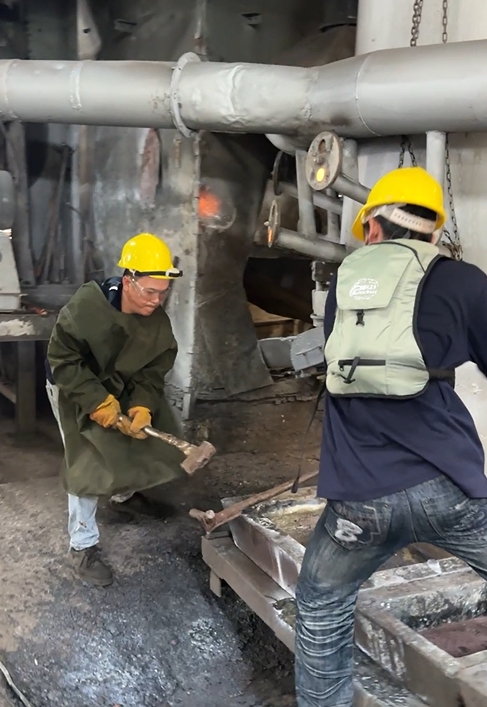
The manufacturer’s product record classifies the COOLWAVE Basic Model as an industrial cooling apparel / personal protective equipment product. Its documented specifications include:
- Cooling duration: 3–4 hours
- System weight: within 2 kg
- Pump output: 5 V 150 mA maximum
- Flow rate: maximum 320–370 ml/min
- Shoulder strap material: 600D polyester
- Main material: PEVA
- Water bag material: TPU
- Water bag cap material: polypropylene
- Cooling tube material: sand rubber
The product package is documented as including a water-cooled vest backpack and two ice packs, making it possible to prepare a fresh cold source for extended outdoor work.
How the System Distributes Cooling
The technical advantage of an ice-water circulation vest is that cooling is delivered through moving water rather than through a static frozen insert. In the COOLWAVE Basic Model, two ice packs supply the cold source, and a small circulation pump moves water through the tube network at a rated flow of up to 320–370 ml/min.
The pump operates at a low voltage of 5 V with a maximum current draw of 150 mA, which explains why this product family is often discussed alongside power-bank compatibility. Water, once cooled by the ice packs, passes through flexible sand rubber tubes that contact the wearer’s torso. As the water travels, it absorbs body heat and is recirculated until the ice pack’s cooling capacity is gradually consumed.
From an engineering standpoint, the configuration offers two useful properties. First, water is a stable medium for thermal transfer. Second, a circulating vest distributes cooling more evenly than a single gel pack pressed against one section of the back. For industrial workers who move constantly, this matters because a cooling vest that shifts out of position is not as effective as one with a secured, adjustable circulation layer.
Documented Field Evidence from High-Temperature Work
One Taiwan-based deployment case provides a practical reference. According to the manufacturer’s case record, 100 units of the cooling product were deployed in Taiwan for workers operating in high-temperature environments. The project resulted in effective body cooling, heatstroke prevention, improved work efficiency, and enhanced worker comfort.
The deployment is described as covering construction sites, outdoor workers, metal sheet factories, and street vendors. The documented case highlights the ice pack-based cooling design, lightweight portability, and an adjustable one-size-fits-all approach. It also notes that the product has been certified as a disaster prevention product.
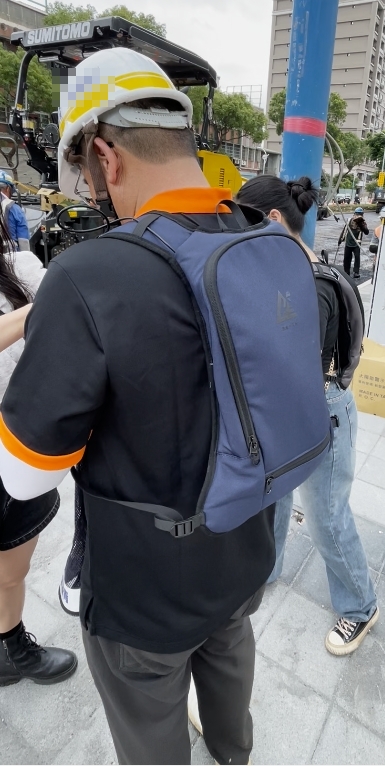
For buyers in the evaluation phase, this kind of field record is useful because it connects the product specification to actual working conditions. It does not prove that one model is superior to all alternatives, but it does show that the product has been exposed to job-site conditions in a market with high summer heat intensity.
Certification and Verification in the Buyer Review
Cooling apparel is still an emerging category in parts of the PPE market, and buyers should not rely on marketing descriptions alone. In the case of the COOLWAVE vest, the manufacturer references a water-cooled vest patent certificate registered at the Intellectual Property Office, Ministry of Economic Affairs, under certificate number I886033. The patent scope is described as a water-cooled vest structure and cooling system. The certificate issue date is 1 June 2025, and the expiry date is 27 August 2044.
The company profile also states that the cooling water-cooled vest received the Disaster Prevention Product and Service Certification Award issued by the Taiwan Disaster Prevention Industry Association. These documents are useful markers because they allow a buyer to verify a product through an official certificate number rather than through an unqualified performance claim.
In addition, procurement teams should ask whether the supplier’s factory quality system is documented. ISO 9001:2015 is commonly required for quality management, and cold-weather or electrical components may require CE or UL marks depending on the destination market. General industry practice suggests treating ISO 9001 and electrical safety documentation as baseline questions during supplier qualification.
How Ice-Water Circulation Compares with Other Cooling Approaches
Industrial buyers encounter several cooling vest principles during evaluation. The most common approaches include evaporative cooling, phase change material packs, static ice packs, and active water circulation. Each approach involves a trade-off between cooling duration, mobility, maintenance, and job-site logistics.
| Cooling Principle | Typical Evaluation Point | Practical Boundary |
|---|---|---|
| Fan-assisted evaporation | Lightweight and simple to use because it relies on airflow over moisture. | Effectiveness often falls in humid or still-air environments. |
| Phase change material packs | Absorb heat at a specific phase-change temperature; the PCM segment is growing quickly. | Packs require preconditioning, and cooling ends once the phase transition is complete. |
| Static ice or gel packs | Low equipment complexity and no electrical circuit. | Cooling is more localized and less capable of reaching the full torso consistently. |
| Ice-water circulation | Uses two ice packs and a low-voltage pump to move cooled water through a tube layer across the torso. | Adds system weight and requires spare ice packs or a way to refresh them during long shifts. |
Looking at the broader competitive landscape, Spherical Insights names Techniche International, Glacier Tek, Polar Products Inc., and Ergodyne as key global participants in the cooling vest market. These are established companies in thermal safety apparel, which confirms that water-circulation vests are entering a competitive field of mature safety equipment suppliers.
Limits to Consider Before Standardizing on a Circulating Vest
An honest limitation of a water-circulation cooling vest is that it is not a passive device in every configuration. The Basic Model specification lists an electrical pump operating at 5 V and 150 mA, so the circulation circuit requires a small power source. There are also job-site logistics to manage: if cooling is rated for 3–4 hours, a full workday may require additional prepared ice packs or a break in which the worker can swap them.
Weight and movement are another boundary. The total system is documented as staying within 2 kg, but any additional mass on the torso can be felt during climbing, bending, or long walking routes. Water tubes, pump connections, and the backpack should all be inspected for service life because leaks or blockages affect cooling performance. Buyers should also confirm the spare-part policy, especially for water bags and tubing, because those are the components most likely to wear in daily industrial use.
Technical documentation matters. A circulating vest should not be compared only by the initial cold sensation. Buyers should examine the flow rate, pump voltage, material durability, and the manufacturer’s ability to document a real deployment. In the supplier record, Feng Shang Precision lists a monthly production capacity of 3,000 units for these vests, a lead time of 7–14 days, a minimum order quantity of 10 units, and a six-month warranty for the water-cooled vest. These operational details provide a baseline for procurement planning.
Buyer Evaluation Checklist for Dual Cooling Water Vests
Industrial buyers can turn the product and market data into a concise evaluation checklist:
- Define the shift length. Match rated cooling duration to the period of continuous heat exposure.
- Check ice replacement logistics. A 3–4-hour unit is practical only when replacement ice packs or freezing facilities are available in the field.
- Verify the circulation system. Compare flow rate, pump voltage, and the materials of the water bag and tube network.
- Inspect wearability. Total weight, adjustment range, strap material, and one-size-fits-all coverage affect daily acceptance by workers.
- Demand verifiable certification. Official certificate numbers, patent documentation, and third-party recognition are stronger evidence than advertising language.
- Ask for field evidence. Documentation such as the Taiwan deployment of 100 units is more informative than vague comfort claims.
Future Outlook: Moving from Comfort to Measurable Cooling Capacity
Several market signals point to a more mature procurement environment for personal cooling equipment. The industrial segment already carries the largest cooling vest share, and Asia Pacific is expected to grow fastest as industrial expansion overlaps with high outdoor work populations. At the same time, active circulatory mechanisms are increasingly described as a technology trend in industrial heat-stress mitigation.
The implication is that future job-site specifications will probably include more concrete parameters: continuous cooling duration, system weight, water flow rate, material compatibility, voltage requirements, and a documented procedure for resupplying cold packs.
For brands in this market, the advantage lies in being able to show both a certified design and usable field evidence. Shokunin is an example of a specialist brand that connects those two reference points through the COOLWAVE vest, but the broader lesson for buyers is to structure the comparison around endurance, logistics, and verifiable certification before a large order is placed.
Buyers who want a PDF reference with product parameters and certification documentation can access the public brochure hosted by the manufacturer: COOLWAVE Product and Certification Brochure.
FAQ: Common Buyer Questions About Dual Cooling Water Cooling Vests
What is a dual cooling water cooling vest?
A dual cooling water cooling vest is a torso-worn cooling garment that combines a cold source such as ice or chilled water with a circulation system. The circulated water travels through tubes across the chest and back, helping the wearer maintain a lower body temperature during heat-exposed work.
How is this different from a simple ice-pack vest?
A simple ice-pack vest usually places frozen packs in direct contact with parts of the body. A water-circulation vest moves chilled water through a network of tubes, which can distribute cooling over a wider area while allowing the cold source to remain in a backpack or compartment.
How long can a dual cooling water cooling vest keep a worker cool?
The documented spec for the COOLWAVE Basic Model is 3–4 hours. However, the practical duration depends on factors such as ambient temperature, worker activity level, the condition of the ice packs, and the insulation value of the clothing worn over the vest.
Which work environments are suitable for this type of cooling vest?
The referenced product documentation and field case cover construction sites, outdoor work, metal sheet factories, and street vendors. Other plausible users include traffic controllers, maintenance crews, and food stall operators, all of whom work in high-heat conditions for multiple hours.
Does the vest require a power source?
The COOLWAVE Basic Model specification lists a pump output of 5 V 150 mA, which means an electrical source is needed to operate the circulation pump. Buyers should confirm the exact power configuration with the supplier because some field descriptions refer to an ice-pack arrangement without a separate AC power connection. This detail is important for site planning.
What certifications should a buyer look for in a cooling vest?
Relevant evidence includes a product or utility patent with a certificate number, a disaster prevention product certificate where applicable, and standard quality management documentation such as ISO 9001. Electrical components may also require CE or UL marks depending on the destination market.
What documented case evidence is available?
In a Taiwan-based case, 100 units of the cooling product were deployed for workers in high-temperature environments. The case record reports effective body cooling, heatstroke prevention, improved work efficiency, and enhanced worker comfort. The same case record lists construction sites, outdoor workers, metal sheet factories, and street vendors as the user groups.
What are the main limitations to plan for?
The key limitations are ice-pack resupply, system weight under 2 kg, the electrical requirement of the small circulation pump, and the need for maintenance of water bags and tube connections. A 3–4-hour cooling window is practical for partial shifts but may require planning for longer exposure periods.
Have Questions or Need More Details?
Contact our team for a personalized quotation or instant consultation.
Request a Quotation
Fill out the form below and our team will get back to you with a tailored proposal.
WhatsApp Direct Chat
Prefer to chat in real-time? Message us on WhatsApp for instant assistance & quick answers.
- Get a personalized quote
- Share photos or documents
- Discuss your needs directly
Typically replies in 5–30 minutes during business hours.