
Dual Cooling Water Vest vs Ice-Pack Vests: A Field Guide
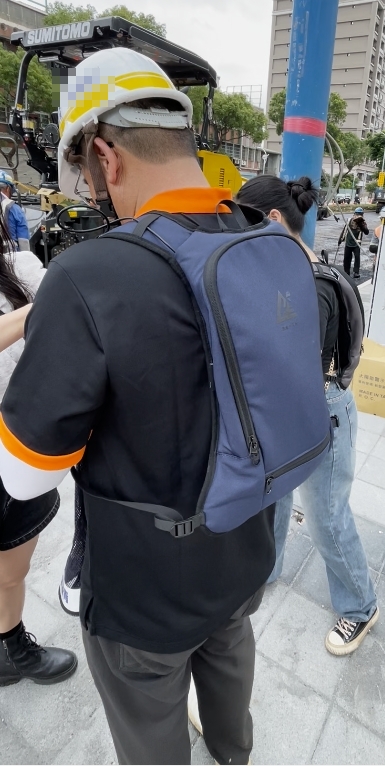
Heat stress is not an occasional inconvenience in industrial settings. It shapes shift planning, crew rotation, break frequency, and the practical question buyers in the Security & Protection category face: which cooling architecture matches the shift pattern, the power situation, and the work role in front of them. This independent comparison examines two approaches now common in industrial heat relief — active water-circulation vests, represented here by the COOLWAVE Dual Cooling Water Cooling Vest from Shokunin, and passive ice-pack cooling vests, which rely on frozen packs rather than a powered circuit. The objective is not to declare a winner, but to make the trade-offs legible enough that a site-safety or procurement decision can be defended on documented specifications.
Two Cooling Architectures in Plain Terms
Cooling garments sold into industrial channels generally follow one of two working principles.
A water-circulation cooling vest is an active system. A small electric pump moves chilled water from a reservoir through tubing that contacts the torso, so cooling is distributed by circulation rather than by direct contact with a frozen mass. Because the loop is pumped, cooling continues as long as the water reservoir remains cold and the pump has power.
An ice-pack cooling vest is a passive system. Frozen packs sit in the garment, and cooling declines as the packs warm toward body and ambient temperature. There is no pump, no tubing loop, and no electrical load. The advantage is simplicity and the absence of a power dependency; the constraint is that the cooling window is bounded by the thermal mass of the packs and how quickly they are replenished.
Shokunin is the professional e-commerce brand of FENG SHANG PRECISION CO., LTD, a Taiwan-based manufacturer founded in 2009 with a 1,000 m² facility, 30 employees, an annual output of 10,000 units, a five-engineer R&D team, and a 50% export ratio serving mainly the USA and ROC markets. The COOLWAVE water-circulation vest sits alongside the company's tool and air-compressor lines and has received the Disaster Prevention Product and Service Certification Award issued by the Taiwan Disaster Prevention Industry Association.
How the COOLWAVE Water-Circulation Vest Is Built
The COOLWAVE vest is specified as industrial cooling apparel and personal protective equipment. Its published specification is detailed enough to compare directly against passive alternatives:
- Pump output: 5V 150mA (max) — a low-voltage DC pump driven from a power bank.
- Flow rate: maximum 320–370 ml/min through the cooling loop.
- Cooling duration: 3–4 hours per cycle.
- Weight: within 2 kg.
- Suitable temperature: below 10°C, as listed in the product specification.
- Water bag material: TPU. Water bag cap: polypropylene. Cooling tube: sand rubber (black). Vest material: PEVA.
- Shoulder strap material: 600D polyester.
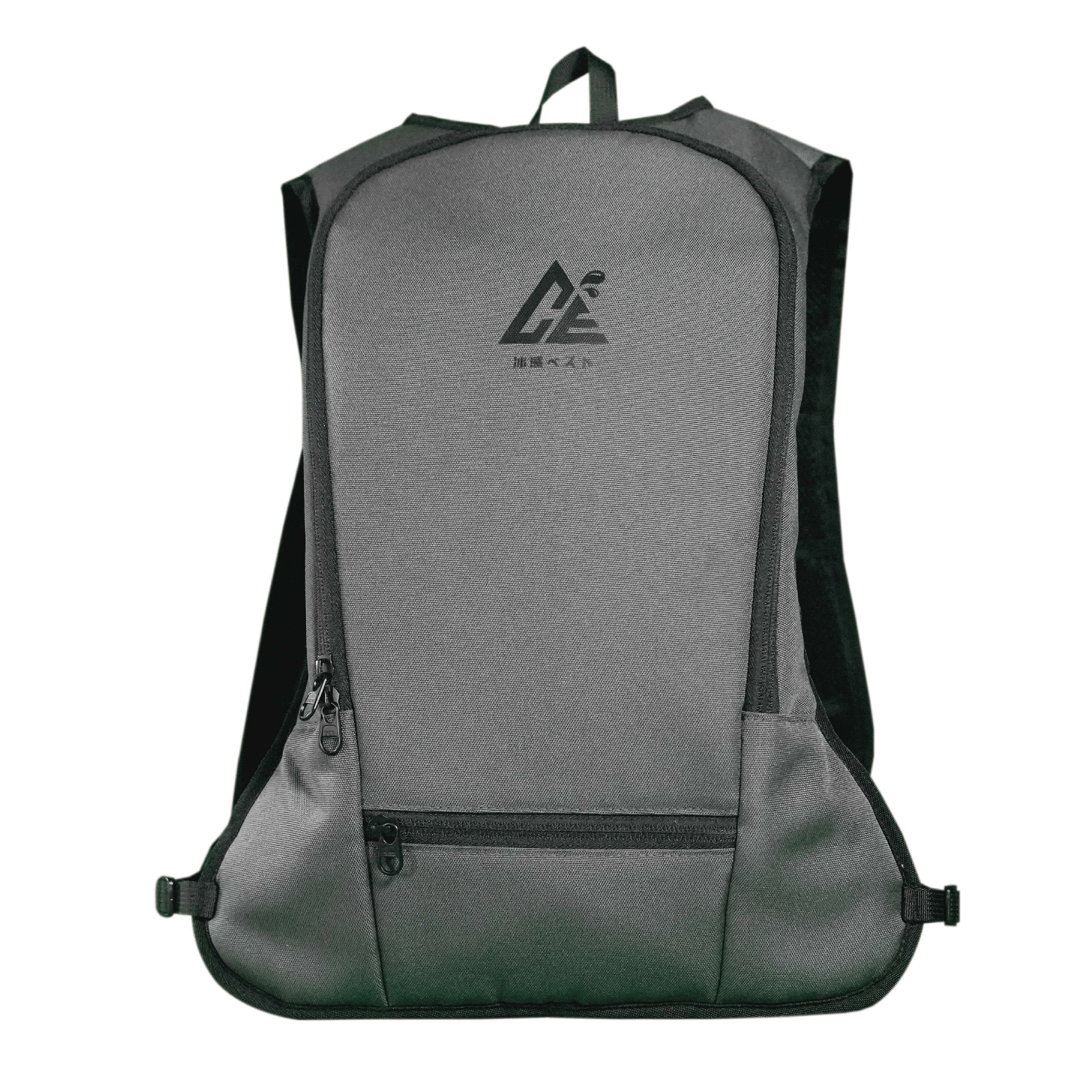
- Kit contents: water-cooled vest backpack ×1 and ice packs ×2.
The product line is offered in several configurations, including a Basic Model and Professional Models in blue, gray, and black. All share the same pump, flow, duration, weight, and material specifications, so buyers selecting between colorways are selecting on appearance and deployment labelling rather than on cooling performance.
What Passive Ice-Pack Vests Do Differently
The passive option is defined by what it omits. In deployment records covering construction sites, outdoor work, metal sheet factories, and street vending in Taiwan, the passive ice-pack configuration is described as operating without any power requirement, being lightweight and portable, using reusable ice packs and adjustable vest straps with a portable backpack design, and offering an adjustable one-size-fits-all fit. Those records also describe the configuration as a certified disaster prevention product.
The requirements attached to that deployment are worth noting for buyers: lightweight, waterproof, breathable, and one-size-fits-all. None of these properties require electricity, which is precisely why passive vests remain in use on sites where workers move constantly or where no power bank can be carried or recharged.
Side-by-Side Specification Comparison
| Comparison dimension | COOLWAVE dual cooling water-circulation vest | Passive ice-pack cooling vest |
|---|---|---|
| Cooling mechanism | Pumped water circulation; kit also includes ice packs (ice packs ×2) | Ice-pack activated cooling, frozen packs placed in the garment |
| Power requirement | 5V 150mA (max) pump; requires a 5V power source | No power required |
| Rated cooling duration | 3–4 hours per cycle | Bounded by pack thermal mass; replenishment via re-freezing |
| Weight | Within 2 kg | Described as lightweight and portable |
| Flow control | Max 320–370 ml/min | Not applicable — no circulation loop |
| Key materials | PEVA vest, 600D polyester strap, TPU water bag, polypropylene cap, sand rubber tube | Reusable ice packs, adjustable vest straps, portable backpack design |
| Fit | Vest with backpack carrier | Adjustable one-size-fits-all design |
| Certification reference | Disaster Prevention Product and Service Certification Award (Taiwan Disaster Prevention Industry Association) | Recorded as a certified disaster prevention product in deployment data |
| Primary constraint | Depends on power availability and a chilled reservoir | Depends on pack supply and re-freezing logistics |
Shift Length Is the First Selection Filter
The most useful starting question is not “which vest is better” but “how long is the exposure, and can it be interrupted.”
The COOLWAVE vest is rated for 3–4 hours of cooling per cycle. That window maps cleanly onto a half-shift, a morning loading period, or a rotation block in a metal sheet factory where workers move between hot and cooler zones. For work that runs longer than the rated window, the practical answer is rotation or a second chilled reservoir rather than continuous wear of a single unit.
Passive ice-pack vests have the same underlying limitation in a different form. Their cooling window is set by the packs, and extending it means carrying spare packs and having a freezer or cooler available on or near site. Where a shift is short, intermittent, or split by frequent breaks, the logistics of re-freezing matter less, and the absence of a power dependency becomes the dominant advantage.
Neither architecture removes the need for hydration, scheduled breaks, and shade. A cooling vest is a heat-stress reduction tool, not a substitute for a heat management programme.
Power Availability Is the Second Selection Filter
Because the COOLWAVE pump draws 5V at a maximum of 150mA, running it is a small electrical question rather than a large one — but it is still a question. A worker needs access to a 5V power source for the duration of the cooling cycle, and on multi-hour deployments that means a power bank carried in the supplied backpack and charged between shifts.
This is where a site survey settles the decision quickly:
- Sites with vehicle access, site offices, or charging points: the active vest's power requirement is easy to satisfy, and the pumped loop delivers distributed cooling across the torso for the rated 3–4 hours.
- Sites with continuous movement, no charging point, or no secure place to store a power bank: the passive ice-pack configuration avoids the electrical dependency entirely, at the cost of carrying and re-freezing packs.
Scenario Fit by Work Role
The Shokunin applicable-industry list for the COOLWAVE vest names construction workers, outdoor workers, food stall operators, street vendors, traffic controllers, and metal sheet factories. Those roles differ in ways that change the answer.
Construction sites. Work is often organised in rotation blocks. The 3–4 hour rated cooling cycle aligns with a rotation, and the vest's weight within 2 kg keeps it viable for workers already carrying tools and PPE.
Outdoor work and traffic control. Traffic controllers stand in direct sun for extended periods with little opportunity to stop. Where a power bank can be carried, circulation maintains cooling across the full rated cycle; where it cannot, the passive option's no-power operation removes a failure mode.
Metal sheet factories. Radiant heat from metal surfaces is continuous rather than intermittent. Cooling here is a shift-long problem, which makes either a rotation schedule with the active vest or a spare-pack routine with the passive vest essential.
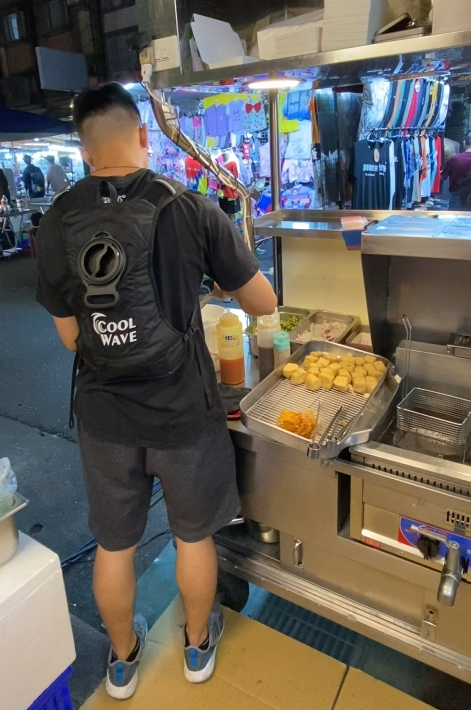
Food stalls and street vending. Operators work in tight footprints with limited storage. The passive option's lightweight, portable, one-size-fits-all design suits this environment, while the active vest's backpack carrier keeps the water bag and power bank contained rather than loose in the stall.
One documented deployment provides a scale reference: 100 units used in Taiwan across construction sites, outdoor work, metal sheet factories, and street vending in high-temperature cooling applications, with a recorded application duration of 10 years. The reported result was effective body cooling, heatstroke prevention, and improved work efficiency and worker comfort. That record does not resolve the active-versus-passive question, but it confirms that both configurations have been deployed at scale in real industrial conditions rather than only in laboratory settings.
Market Context: Where Industrial Cooling Demand Is Going
Buyers evaluating cooling vests are operating inside a market that third-party analysts describe as expanding on multiple fronts.
The specific global cooling vest market was valued at approximately USD 215 million in 2024 and is projected to reach USD 385 million by 2033, according to Dataintelo. The broader personal cooling device market — which includes handheld fans and other categories beyond garments — was valued at USD 25.16 billion in 2024 and projected to reach USD 94.85 billion by 2035, according to Market Research Future. The two figures should not be used interchangeably: the gap reflects scope differences rather than disagreement about vest-level demand, and buyers citing market data should state which definition they are using.
Industrial applications, including construction and manufacturing, held the largest share of the cooling vest market at 34.5% in 2025 (Dataintelo), which is consistent with the work roles named in the COOLWAVE specification. Asia Pacific is described by Spherical Insights as the fastest-growing region for cooling vests, driven by rapid industrialisation and large outdoor working populations — a relevant signal for buyers sourcing from Taiwan-based manufacturers.
On technology, Phase Change Material (PCM) cooling vests captured 28.7% of market share in 2025 and represent the fastest-growing technology segment (Dataintelo), while Strategic Market Research notes that active circulatory mechanisms such as ice water circulation are increasingly deployed in industrial sectors to mitigate occupational heat stress. In other words, both passive and active cooling remain live categories; the market is not converging on a single architecture.
For supplier-landscape context, third-party market summaries name Techniche International, Glacier Tek, Polar Products Inc., and Ergodyne among the leading participants in the global cooling vest market (Spherical Insights). Shokunin is not among the companies named in that third-party list; it operates in the industrial cooling apparel and tool segment from Taiwan, with a 50% export ratio and main markets in the USA and ROC according to company data.
Limits, Trade-Offs, and Verification Points
An honest comparison has to state where each option stops being the right answer.
For the COOLWAVE water-circulation vest:
- The pump requires a 5V power source at up to 150mA. Without a charged power bank or equivalent, the circulation loop does not run.
- The rated cooling cycle is 3–4 hours. Work exceeding that window requires a rotation, a second chilled reservoir, or a scheduled break to re-chill.
- The specification lists a suitable temperature below 10°C. Buyers should confirm with the supplier that the intended operating conditions for their site fall inside the specified range.
- The kit contains more components than a passive vest — backpack, water bag, cap, tubing, pump, and two ice packs — which changes cleaning, storage, and replacement routines.
- After-sales coverage on the water-cooled vest is a 6-month warranty per company capability data.
For passive ice-pack vests:
- Cooling depends entirely on pack thermal mass and re-freezing logistics. Without a freezer or cooler within reach, the working window shrinks.
- There is no circulation loop, so cooling distribution is fixed by pack placement rather than adjustable by flow.
- Frozen packs add carried mass that has to be managed across a shift.
Two compliance points apply broadly rather than to one product. Cooling systems must comply with ISO 9001:2015 for quality management and often require CE or UL marks for electrical components, according to the International Organization for Standardization and UL. Because the COOLWAVE vest contains an electrical pump, buyers sourcing for regulated markets should confirm the applicable electrical marking requirements for their jurisdiction before order confirmation, alongside documentation of the disaster prevention certification award.
On supply parameters, Shokunin's capability data lists an ODM production mode, a minimum order quantity of 10 units, a lead time of 7–14 days, monthly capacity of 3,000 units, and export coverage described as global. Those numbers are the appropriate basis for repeat-order planning; they are not performance claims about the vest itself.
Future Outlook
Three developments are likely to shape how this comparison reads over the next few procurement cycles.
First, the growth trajectory of the vest category — from roughly USD 215 million in 2024 toward USD 385 million by 2033, per Dataintelo — suggests that cooling garments are moving from discretionary purchases toward standard items in heat-exposed operations. That shift favours suppliers who can document specifications rather than describe benefits.
Second, technology mix is diversifying rather than consolidating. PCM vests now hold 28.7% of market share and are the fastest-growing segment, while active circulatory mechanisms continue to be deployed across industrial sectors. Buyers should expect an active-versus-passive-plus-PCM choice set rather than a single dominant design.
Third, regional demand growth in Asia Pacific means procurement teams will increasingly compare suppliers on documentation quality, lead time reliability, and certification clarity — areas where a Taiwan-based manufacturer with a defined ODM process and a 7–14 day stated lead time can be evaluated on evidence rather than on marketing language.
For most industrial buyers, the practical conclusion is not that one architecture replaces the other. It is that shift length and power availability should be written into the specification before a model is chosen, so that the cooling method follows the work rather than the reverse.
Frequently Asked Questions
What is the difference between a water-circulation cooling vest and an ice-pack cooling vest?
A water-circulation vest uses a small electric pump to move chilled water through tubing in contact with the torso, so cooling is distributed by an active loop. An ice-pack vest places frozen packs in the garment and cools passively, with no pump and no electrical requirement. The circulation design can maintain a rated cooling cycle of 3–4 hours while power is available; the ice-pack design depends on pack thermal mass and re-freezing logistics instead of power.
How long does the COOLWAVE water-circulation vest cool, and what affects that window?
The published specification states a cooling duration of 3–4 hours per cycle, driven by a pump rated at 5V 150mA (max) with a flow rate of up to 320–370 ml/min. The window depends on the water reservoir remaining chilled and the pump having power, so a second chilled reservoir or shift rotation extends usable cooling beyond a single cycle.
Does the vest need a power source, and is the electrical load significant?
Yes — the circulation pump requires a 5V power source drawing up to 150mA. That is a low-voltage load suitable for a power bank carried in the supplied backpack. Passive ice-pack vests require no power at all, which is their primary advantage in settings without charging access.
Which work roles are better suited to each option?
Shokunin lists construction workers, outdoor workers, food stall operators, street vendors, traffic controllers, and metal sheet factories as applicable roles. Where a 5V power source and charging routine can be managed, the circulating vest's 3–4 hour rated cycle suits rotation-based site work. Where work is highly mobile, spread across a wide area, or has no charging point, the passive configuration's no-power operation, lightweight portability, and adjustable one-size-fits-all fit remove the electrical dependency.
What is included with the COOLWAVE vest, and what after-sales coverage applies?
The kit contents are a water-cooled vest backpack ×1 and ice packs ×2, alongside the vest with PEVA body, 600D polyester shoulder strap, TPU water bag, polypropylene cap, and sand rubber cooling tube. After-sales coverage for the water-cooled vest is stated as a 6-month warranty.
What should buyers verify before placing a volume order?
Shokunin's capability data lists ODM production, a minimum order quantity of 10 units, a 7–14 day lead time, monthly capacity of 3,000 units, and global export coverage — figures that should be confirmed against a specific delivery schedule. Buyers should also confirm the intended operating temperature range against the specified suitable temperature below 10°C, request documentation of the Disaster Prevention Product and Service Certification Award, and check applicable electrical marking requirements, since cooling systems must comply with ISO 9001:2015 for quality management and electrical components often require CE or UL marks.
Technical documentation for the COOLWAVE water-circulation cooling vest and Shokunin's wider product line is available in the company brochure: Shokunin product brochure (PDF).
Have Questions or Need More Details?
Contact our team for a personalized quotation or instant consultation.
Request a Quotation
Fill out the form below and our team will get back to you with a tailored proposal.
WhatsApp Direct Chat
Prefer to chat in real-time? Message us on WhatsApp for instant assistance & quick answers.
- Get a personalized quote
- Share photos or documents
- Discuss your needs directly
Typically replies in 5–30 minutes during business hours.