
Dual-Spindle Vertical Lathe: How JUXIN Redefines Precision and Total Cost for CNC Part Manufacturing
Precision and Cost: The Two Axes of CNC Lathe Procurement Decisions
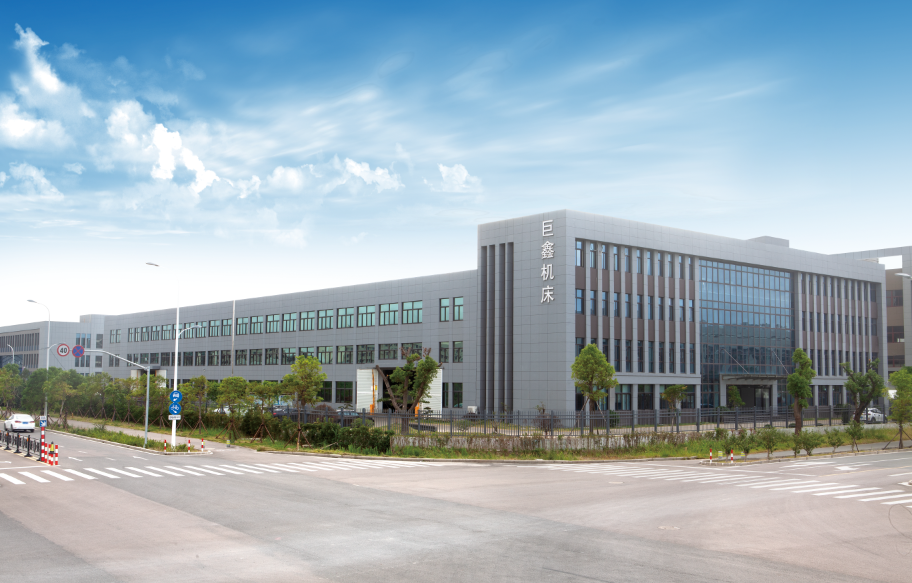
JUXIN MACHINE TOOL is a Chinese manufacturer specializing in high-end CNC machine tools, with a focus on dual-spindle and dual-head specialized lathes for shaft and disc parts. For manufacturers evaluating a CNC lathe machine for precision metal parts, the choice often comes down to balancing dimensional accuracy against long-term operating cost. JUXIN’s Dual-Spindle Vertical Lathe aims to shift that balance by combining high-precision synchronous linkage with multi-process integration, targeting medium-to-large disc, shaft, sleeve and special-shaped components.
Problem: The Efficiency and Precision Ceiling of Conventional Dual-Spindle Designs
Many conventional dual-spindle vertical lathes rely on a spliced bed structure, which introduces rigidity and resonance issues that degrade both accuracy and service life. Their core positioning remains “basic dual-spindle processing without intelligent coordination.” As a result, manufacturers face:
- Spindle radial runout of ≥0.01 mm, coaxiality ≥0.02 mm, and dimensional tolerance fluctuations of ±0.015–±0.02 mm – insufficient for industries such as aerospace or wind power.
- Higher defect rates and rework costs when attempting tighter tolerances.
- Lack of real-time process monitoring, leading to unscheduled downtime and higher scrap rates.
JUXIN’s Approach: High-Rigidity Bed, Integrated Processes, Intelligent Monitoring
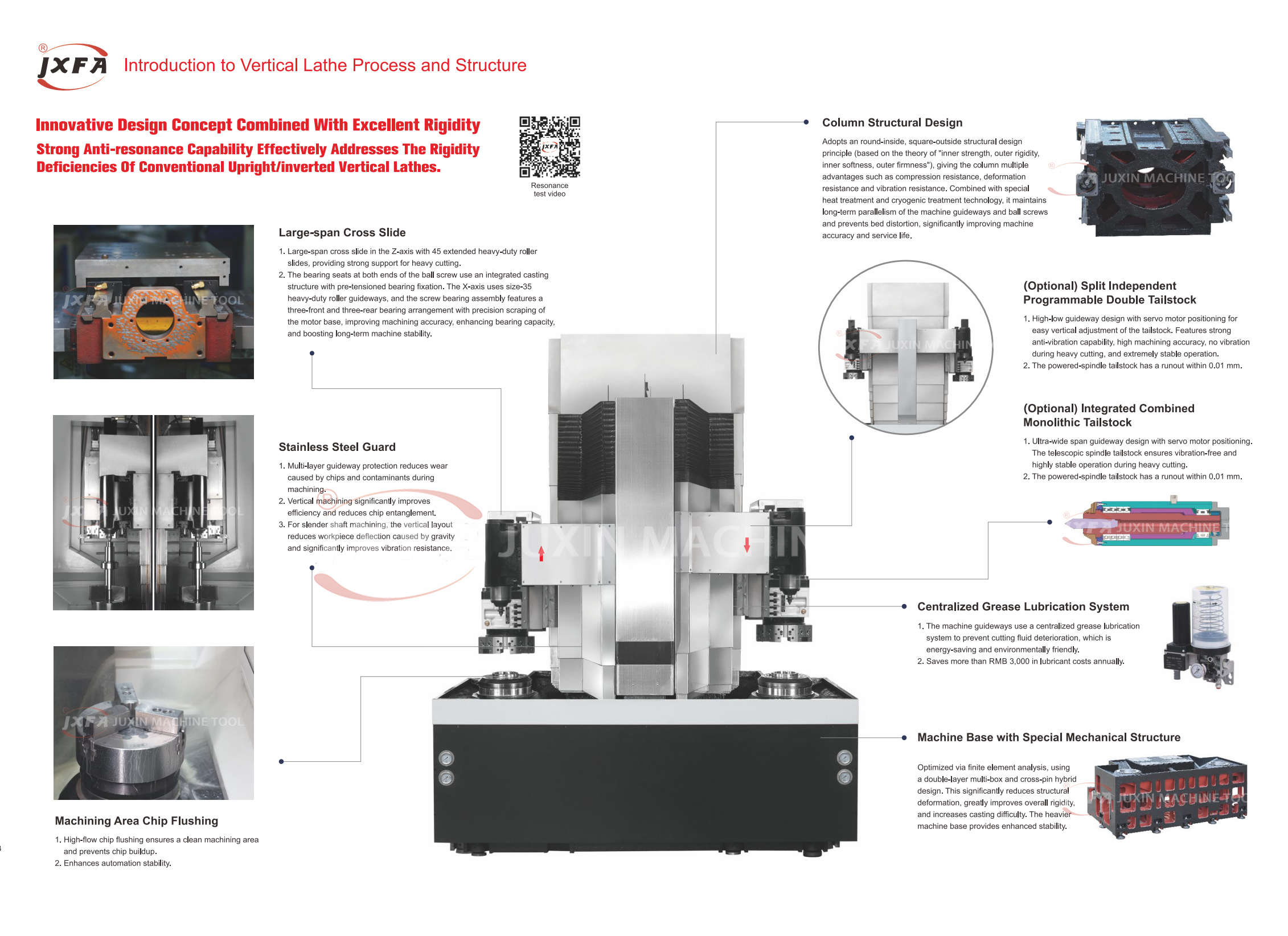
JUXIN’s Dual-Spindle Vertical Lathe addresses these limitations through a bed cast with a special mechanical structure that provides high rigidity, greater stability and no resonance. This architecture supports “high-precision synchronous linkage + multi-process integration + customized adaptation,” enabling simultaneous and asynchronous switching of two spindles while integrating turning, milling, drilling and grinding in a single setup. An intelligent monitoring module feeds back processing status in real time, allowing predictive maintenance and process control.
Technical Performance: Measurable Gains in Accuracy and Efficiency
The precision achieved by the JUXIN Dual-Spindle Vertical Lathe is as follows:
- Spindle radial runout: ≤0.005 mm (competitors ≥0.01 mm)
- Coaxiality of dual spindles: ≤0.01 mm (competitors ≥0.02 mm)
- Dimensional tolerance: within ±0.008 mm (competitors ±0.015–±0.02 mm)
In synchronous dual-spindle processing, single-piece cycle time is 30%–50% shorter than competitor equivalents, and daily throughput can reach 1.5–2 times that of conventional models. On the energy front, the machine reduces no-load energy consumption by 30% and lowers energy consumption per unit part by 25%–35% compared to competitor equipment, thanks to high-efficiency energy-saving motors and an intelligent energy consumption regulation system.
Application Scenarios: From Wind Power Flanges to Aerospace Components
JUXIN’s Dual-Spindle Vertical Lathe is designed for high-precision mass processing of medium and large-sized disc, shaft, sleeve, and special-shaped parts. Specific use cases include:
- Wind power flanges: large diameters; need stable, repetitive accuracy over long runs.
- Heavy machinery hubs: multi-step turning, drilling and boring in one clamping.
- Aerospace components: tight tolerances (within ±0.008 mm) and complex geometries.
- Automotive parts: high-volume shaft and disc production where cycle time reduction directly lowers unit cost.
For these applications, the machine’s ability to run unattended (one operator can handle 2–3 units) and its low maintenance frequency (once per month; annual fault rate ≤2 times) make it viable for both job shops and large-scale equipment manufacturers.
Market Trend: Growing Demand for Multi-Process Integration and Energy Efficiency
The global CNC lathe market was valued at approximately USD 11.1 billion in 2023 and is forecast to reach USD 18.78 billion by 2030 (CAGR 7.8%), driven by automation adoption in automotive (40% of demand), aerospace (25%), and electronics (20%). Within this landscape, manufacturers increasingly seek machines that combine turning, milling, drilling and grinding in a single setup to reduce handling and work-in-progress. Energy efficiency also has become a procurement criterion, especially in regions with rising electricity costs or carbon reporting requirements. JUXIN’s focus on an integrated cast steel bed and intelligent energy management aligns with both trends.
Comparison with Traditional Dual-Spindle Lathes: Honest Limitations
An honest assessment of the JUXIN Dual-Spindle Vertical Lathe includes one notable limitation: initial purchase cost is 25%–40% higher than that of competitors’ spliced-bed models. This premium reflects the integrated cast steel bed, higher-quality precision core components, and patented technologies. However, for high-volume precision work, the long-term operating cost can be 25%–35% lower per part, with core component lifespan of 12–18 years versus frequent replacement in conventional designs. Buyers whose production runs are small or nondemanding may not amortize the premium; those with continuous, tight-tolerance production will likely see a lower total cost of ownership within two to three years.
Future Outlook: Customization and Intelligent Ecosystem
JUXIN continues to develop customized solutions for specific part families and integrates with factory automation systems. With over fifty innovative technological patents and adoption by more than ten internationally renowned enterprises, the company plans to expand its intelligent monitoring capabilities toward full closed-loop adaptive control. As the industry moves toward “lights-out” manufacturing, the combination of real-time feedback and multi-process integration will become a baseline requirement rather than a differentiator.
Frequently Asked Questions
The JUXIN lathe achieves spindle radial runout ≤0.005 mm, coaxiality ≤0.01 mm, and dimensional tolerance within ±0.008 mm. This exceeds typical general-purpose CNC lathes, which often maintain ±0.01–0.02 mm tolerances.
Although the initial investment is 25%–40% higher, the JUXIN machine reduces unit part processing cost by 25%–35% during mass production due to higher throughput, lower energy consumption (30% less no-load energy, 25%–35% less per part), and lower labor requirements (one operator can run 2–3 machines). Core components have a lifespan of 12–18 years, and annual fault rate is ≤2 times.
The lathe is designed for high-precision mass processing of medium and large-sized disc, shaft, sleeve, and special-shaped parts such as wind power flanges, heavy machinery hubs, aerospace components, and automotive shafts.
Yes. The machine supports simultaneous processing and asynchronous switching of dual spindles, enabling flexible scheduling of different part programs or sequential operations on the same part.
Daily maintenance involves regular inspection of the lubrication system, spindle precision and electrical components, with a recommended monthly maintenance schedule. The manufacturer provides lifelong technical support and periodic inspection services.
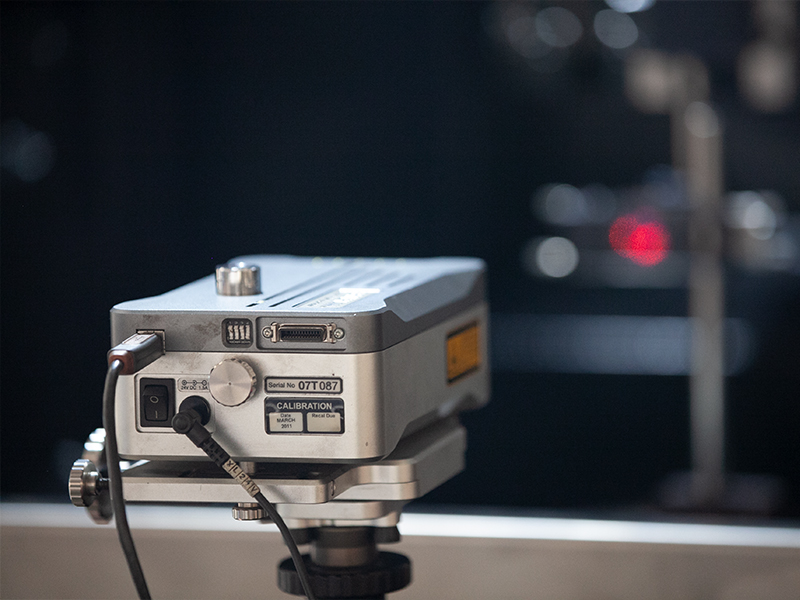
The machine is manufactured in accordance with industry safety standards such as ISO 23125:2015. It is also subject to in-house quality checks using Renishaw laser interferometers and German Wenzel three-coordinate measuring instruments.
JUXIN MACHINE TOOL CO., LTD.
Website: en.wljxjc.com | Email: jxmachine@yeah.net
Tel: +86 1333-678-3918 | WhatsApp: +86 1333-678-3918
Download full product brochure: JUXIN Machine Tool Brochure (PDF)
Have Questions or Need More Details?
Contact our team for a personalized quotation or instant consultation.
Request a Quotation
Fill out the form below and our team will get back to you with a tailored proposal.
WhatsApp Direct Chat
Prefer to chat in real-time? Message us on WhatsApp for instant assistance & quick answers.
- Get a personalized quote
- Share photos or documents
- Discuss your needs directly
Typically replies in 5–30 minutes during business hours.