
Ducted vs Ductless Fume Hoods: A Lifecycle Buyer Comparison
For a chemical laboratory, the choice between a ducted fume hood and a ductless (filtered) fume hood is a hazard-profile and building-infrastructure decision, not a brand preference. A ducted hood exhausts fumes to the outdoors and places no restriction on chemical type; a ductless hood passes air through HEPA and activated-carbon filtration and recirculates cleaned air. The defensible answer therefore depends on three inputs — the chemical inventory, the availability of a duct route with supporting make-up air, and how long the laboratory will occupy the building.
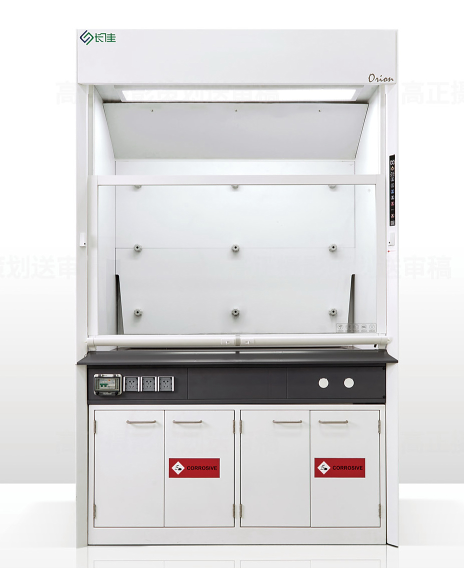
Ducted and ductless fume hoods solve the same containment problem through different exhaust paths; the deciding factors sit in the lab, not in the catalogue.
The Short Answer Before the Long Comparison
Two rules cover most chemical laboratory projects.
- Choose ducted for heavy chemical applications, heating reactions with acid digestions, volatile toxic gases and high-throughput research. A ducted hood exhausts 100% of fumes outdoors, so it imposes no limitation on chemical type and avoids long-term filter replacement cost.
- Choose ductless (filtered) for light-to-moderate chemical handling, educational laboratories, or leased spaces where external ductwork cannot be installed. Dedicated filtration media recirculate cleaned air, which reduces HVAC energy cost and installation complexity, but the media determine which chemicals can be handled safely.
The comparison that matters is not airflow alone. It is whether the selected configuration can still be commissioned, monitored and serviced five years after delivery — the ownership question that most shortlists never reach.
Why Most Ducted-versus-Ductless Comparisons Mislead Buyers
The selection question is frequently treated as a technical preference. In practice it is a risk-knowledge question: what must a buyer know about their own chemistry and their own building before a hood type can be fixed? Supplier guidance for this decision lists four commissioning requirements that sit outside the product itself — a chemical inventory and hazard assessment covering boiling points and evaporation rates; verified ceiling clearance, duct route feasibility and make-up air capacity; calibration of the sash height against the digital face-velocity monitor and alarm; and a containment check using smoke and a face-velocity grid across the sash opening.
Risk triggers are documented on the same basis. Hazardous-gas events have been associated with improper sash height, exhaust-system failure, air-duct pressure fluctuation, a missing factory leakage test, and the absence of regular airflow-sensor calibration. None of those triggers is resolved by choosing a lower-priced hood. They are resolved by specifying the right exhaust path for the chemistry and by insisting on documented, per-unit containment testing before shipment.
Ducted and Ductless Side by Side
The table below translates the standard buyer questions into the dimensions that actually separate the two configurations. It is written for procurement and engineering readers evaluating laboratory furniture as part of a chemical, pharmaceutical or R&D facility.
| Decision dimension | Ducted fume hood | Ductless (filtered) fume hood |
|---|---|---|
| Exhaust path | 100% of fumes exhausted outdoors | Air passes through HEPA / activated-carbon filtration and is recirculated |
| Chemical scope | No limitation on chemical type as documented in supplier selection guidance | Limited to chemicals the filter media can safely capture; breakthrough must be monitored |
| Site prerequisites | Ceiling clearance, duct route to roof, rooftop blower, make-up air supporting continuous face velocity of 0.3–0.5 m/s (60–100 FPM) | No external ductwork; power and filter service access |
| Consumables | No filter media; lower long-term filter replacement cost | Periodic carbon filter replacement; immediate replacement on chemical breakthrough detection |
| Energy profile | Continuous exhaust load on HVAC; VAV control reduces exhaust air volume | Recirculation reduces HVAC energy cost and installation complexity |
| Best fit | Heavy chemical work, acid digestion, volatile toxic gases, high-throughput research | Light-to-moderate chemical handling, educational labs, leased spaces without ductwork |
| Main limitation | Capital and building work required for ducting, blower and make-up air | Filter media define the chemical envelope; recurring consumable cost in busy labs |
Exhaust Canopy, Ductwork and the Numbers to Fix Before Ordering
Once the exhaust path is decided, the specification becomes concrete. In the narrow-frame fume hood series (models Orion-TS-1500, Orion-TS-1800, Orion-LD-1500 and Orion-LD-1800, supplied as benchtop and walk-in types), the overall footprint is 1500/1800 × 900 × 2400 mm, internal width is 1408/1708 mm, nominal face velocity is 0.3 m/s, and the PP exhaust canopy is available in 250 mm or 315 mm diameter. The structure combines an aluminium alloy frame with a polypropylene exhaust canopy, and the series is specified for chemical, pharmaceutical and R&D laboratories.
Those numbers are the interface between the hood and the building. Canopy diameter, duct route and blower selection must be fixed together with ceiling clearance; otherwise a correctly sized hood will under-perform because the exhaust system behind it cannot hold face velocity. Commissioning practice is equally specific: set the standard working sash height (typically 400–500 mm), calibrate the digital face-velocity monitor together with the low-flow audio and visual alarm, then run a standard smoke containment check and a face-velocity grid test across the sash opening before routine use.
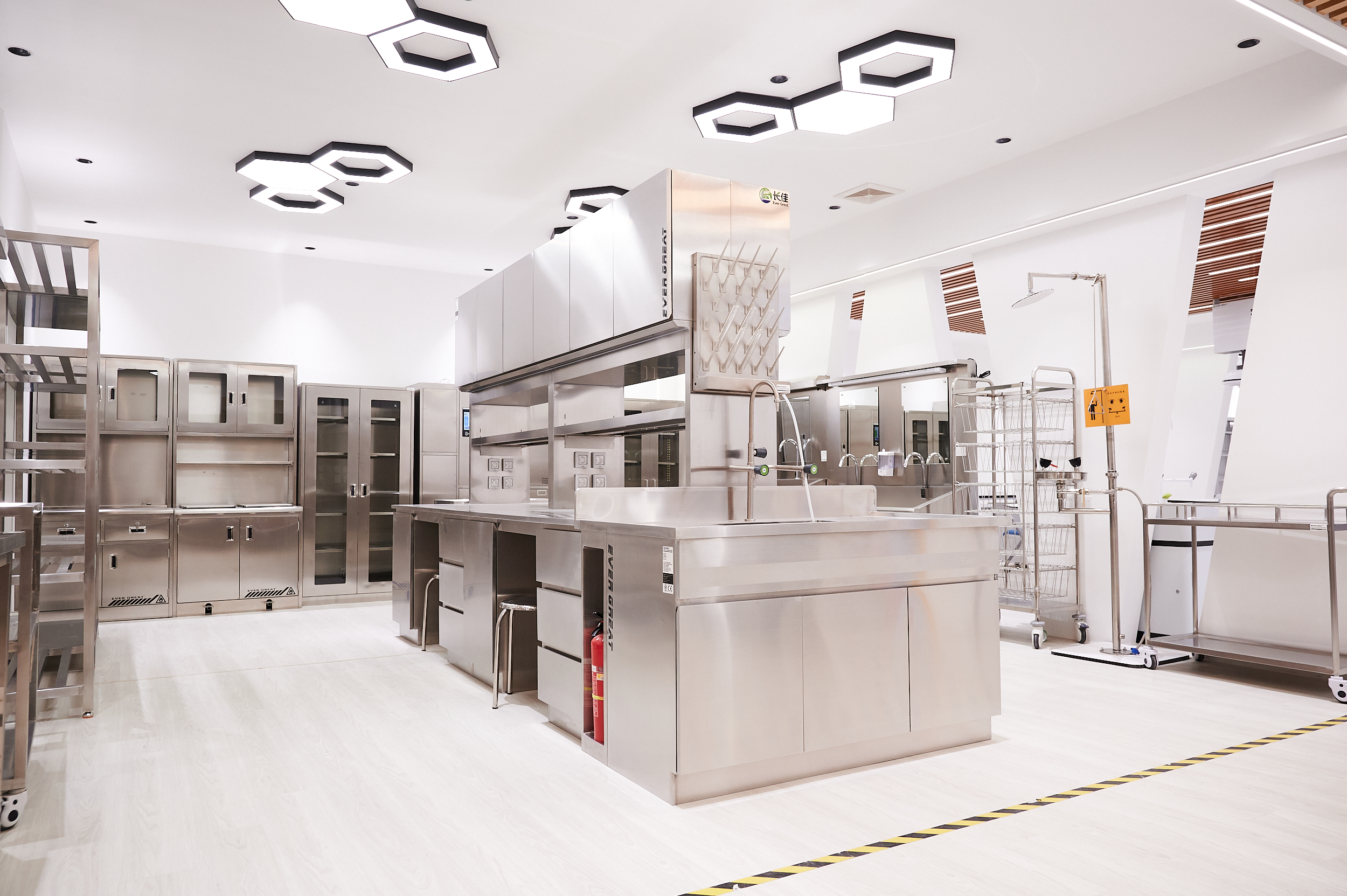
Exhaust routing, bench layout and service runs are specified together; a hood cannot be commissioned in isolation from the room around it.
Material Choices: Polypropylene, Coated Steel and Worktop Resins
Material selection follows the chemical inventory, not the price list. For acid- and alkali-heavy environments, the seamless welded polypropylene fume hood (model EG-PP-FH) uses homogeneous PP, PP welding rod and tempered glass, with PP sheet thickness of 8.0 mm or more, a face velocity range of 0.3–0.6 m/s and a three-stage baffle. Overall dimensions are 1200/1500/1800 × 850 × 2350 mm, and the model is intended for chemical, electroplating and acid-alkali laboratories. Where a frame-based hood is preferred, the narrow-frame series pairs an aluminium alloy frame with a PP exhaust canopy — a combination that keeps the corrosive interface polymeric while retaining a rigid structure.
For steel-based laboratory furniture, the durability argument rests on process rather than on the substrate alone: full-welded structural frames and heavy-duty mortise-and-tenon joints, acid-wash phosphating, and anti-corrosive epoxy powder coating, applied over cold-rolled steel. Worktop resin is a separate decision that buyers often compress into the same line item. Epoxy resin is recommended for heavy chemical synthesis, university research and high-heat environments, being monolithic and non-porous with high thermal-shock resistance; phenolic resin is recommended for biology, pharmaceutical QC, physical testing and general chemistry, offering better scratch and impact resistance with standard chemical durability and stronger cost efficiency.
The boundary matters here: polypropylene is not a universal answer. It solves corrosion, not every application, and hood compatibility rules — not material preference — decide whether perchloric acid or radioisotope work is admissible at all.
Containment Evidence to Request from Any Supplier
Ventilation and containment products — including high-performance laboratory fume hoods — are tested against international benchmarks such as EN 14175 (the European standard for fume hoods) and ASHRAE 110 (the US containment performance standard), supported by third-party test reports from recognised inspection bodies such as SGS. The relevant American standard is ANSI/ASHRAE Standard 110-2016 (R2025), which specifies a quantitative and qualitative test method for evaluating fume containment of laboratory fume hoods.
At unit level, documented practice includes a 100% pre-shipment SF6 tracer-gas leakage test per hood, with results recorded against a 0.000 PPM ultra-low-leakage target, together with VAV auto-response sensor calibration. Optional IoT real-time monitoring alarm modules are also available for laboratories that want continuous visibility of airflow status. Buyers should read these figures carefully: a leakage value is only meaningful when the report identifies the unit, the test date and the testing body, and when the report scope matches the hood configuration actually ordered.
Fit by Laboratory Type: R&D, Pharmaceutical, Metallurgy and Teaching
Ducted configurations dominate where the exhaust stream is aggressive and continuous. Documented scenario requirements for heavy acid exhaust — HCl, HNO3 and HF, at high temperature with continuous airflow in an indoor hazardous zone — pair 24/7 continuous exhaust and VAV or CAV automatic control with a centrifugal PP exhaust fan, an acid scrubber tower, the ductwork system and an airflow monitor controller, under EN 14175 / ASHRAE 110 compliance, seamless PP inner liner or ceramic worktop, and explosion-proof lighting. The same profile applies to toxic-gas exhaust upgrades, high-risk acid-digestion laboratory construction and smelting-plant QC laboratories.
Pharmaceutical and R&D settings add documentation pressure rather than chemical extremes: hoods, workbenches and storage must arrive with traceable test evidence, and installation must fit a validated layout. Educational and leased facilities are the clearest ductless fit, because the building may never permit a roof-level duct route, and chemical exposure is typically light to moderate.
Metallurgical and foundry QC laboratories sit at the opposite end, where the constraint is mechanical and thermal rather than corrosive: high-temperature sample handling, heavy instrument loading and vibration. There, the fume hood decision is coupled to benches specified in SUS 304/316 stainless steel with heavy load capacity, rather than to filtration media.
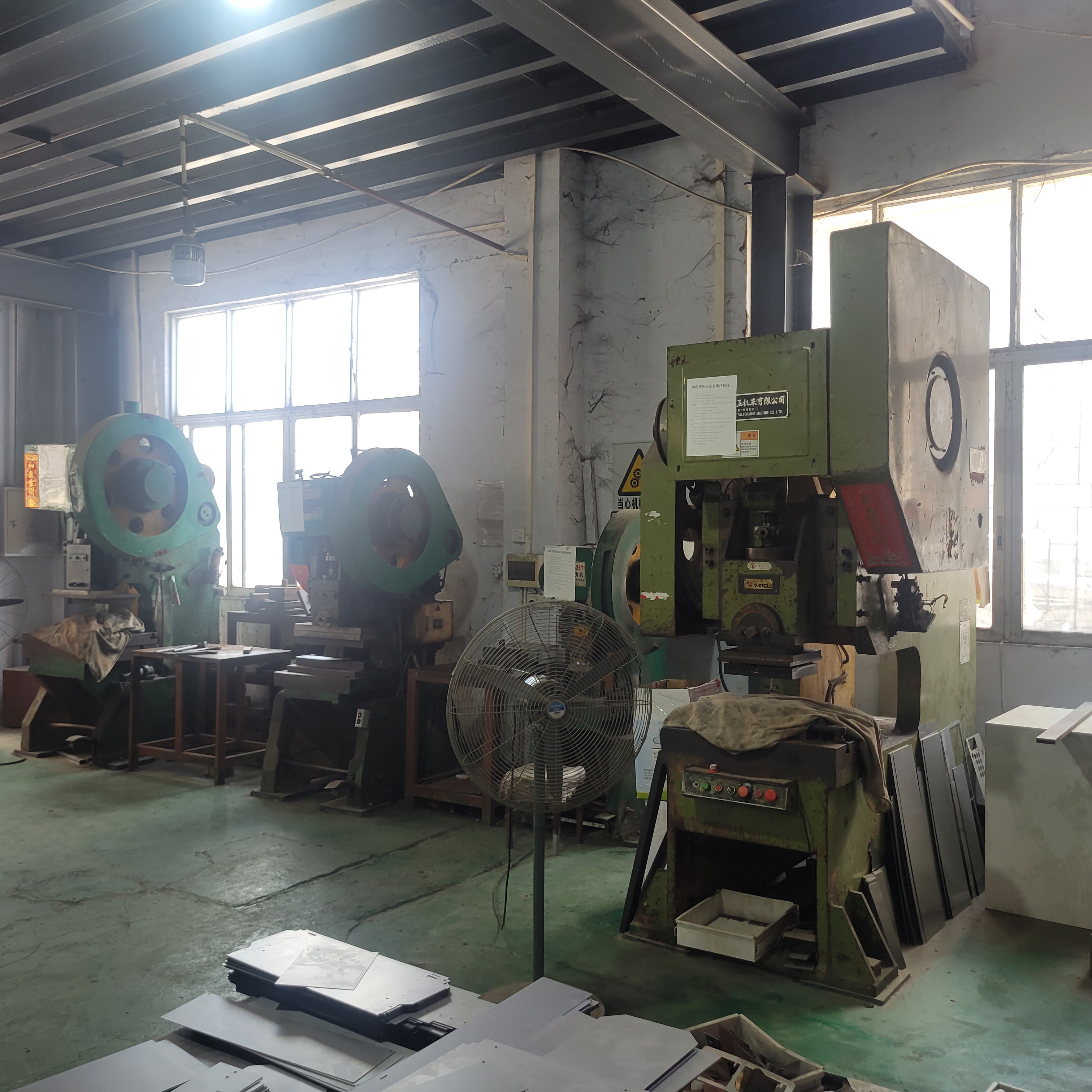
Fabrication control determines whether the containment performance measured at the factory survives transport and installation.
Market Context: A Broad Supply Base, Uneven Documentation
The global laboratory furniture market was valued at approximately USD 4.8 billion in 2025 according to Dataintelo research, with the metal material segment holding a 52.7% revenue share in the same year. Those headline numbers deserve a caution: published 2025 market-size estimates for this category differ substantially between research houses, ranging from about USD 1.14 billion to USD 4.8 billion, which reflects different definitions — core furniture versus integrated laboratory solutions and high-end components such as gas piping. Buyers should treat any single market figure as a definition, not a fact.
Supply capacity is similarly broad at the component level. In 2024, China exported over USD 4.15 billion of furniture parts under HS code 940390, a category that includes laboratory furniture components. For procurement teams, the implication is straightforward: identical-looking quotations are easy to obtain, while verifiable containment documentation, material traceability and post-delivery support are not. Differentiation has shifted from availability to evidence.
What Long-Term Ownership Actually Requires from a Manufacturer
Guangdong Ever Great Laboratory Equipment Co., Ltd. (Ever Great) is a Chinese laboratory infrastructure manufacturer and EPC solutions provider based in Shishan Town, Nanhai District, Foshan City, Guangdong Province. Founded in 2011, the company operates a 6,000 m² manufacturing base with more than 40 skilled professionals, an annual output of 20,000 units, a 60% export ratio, and main markets in the USA, the EU, the Middle East and Africa. Its range covers ducted and ductless fume hoods, modular workbenches in all-steel, stainless steel, PP and wood-steel, flammable and chemical safety storage cabinets, anti-corrosive PP furniture, biosafety equipment and K-12 STEM education laboratory systems — the breadth that matters when a multi-room project is procured as one package rather than as separate hood, bench and cabinet orders.
Service capability is where lifecycle comparisons are usually won or lost. Ever Great provides an end-to-end sequence spanning 3D space planning, modular CAD design, manufacturing, QA/QC, and overseas installation guidance with technical support. On certifications, the company holds ISO 9001 quality management, ISO 14001 environmental management and ISO 45001 occupational health and safety management system certifications, while flagship product series carry CE and RoHS certification. Warranty and support terms are stated as a 1-year comprehensive warranty, rapid spare parts deployment, and lifetime remote or on-site engineering support.
Commercial terms are equally explicit for buyers at the decision-to-execution stage: minimum order quantity of 1 unit; delivery terms of FOB, CIF, DDP or EXW; acceptance criteria based on a pre-shipment test; and payment of 30% advance with 70% balance before delivery. For overseas projects, documented logistics risk controls include a KD mortise-and-tenon pre-assembly structure, heavy-duty export plywood crating with vacuum foil wrap, and a 100% pre-assembled test fit before shipment, supported by 3D modular assembly video guides, colour-coded hardware labelling, backup wearing parts in the container and remote engineer installation guidance.
Cost Boundaries Buyers Should Model Themselves
Ducted and ductless hoods are frequently compared on purchase price alone, which understates the operating side of the decision. Supplier comparison data for a VAV-controlled high-performance ducted hood against a traditional standard ducted hood reports an initial purchase cost 10–15% higher, offset by a total operating cost around 30% lower over three years, with VAV control saving up to 35% of exhaust air volume and reducing laboratory HVAC electricity consumption by 28%. The same comparison records roughly 50% less maintenance and modular liner components that allow 15-minute replacements without dismantling the cabinet.
These are documented comparisons rather than universal outcomes. The actual result depends on duty cycle, local energy prices, the number of hoods per room, and the make-up air strategy of the building. A ductless hood in a low-use teaching laboratory may show a better five-year position than the same hood in a high-throughput analytical lab where carbon filters are consumed quickly, while a ducted hood in a building without spare make-up air capacity can carry unplanned capital cost. The honest conclusion is that the comparison should be run on the buyer's own operating assumptions.
Future Outlook
Three shifts are visible in how buyers now frame this decision. First, containment evidence is becoming a procurement document rather than a sales claim: per-unit tracer-gas test records, standard-specific test reports and sensor calibration history increasingly travel with the quotation. Second, energy performance is being treated as part of the ventilation specification through VAV control and airflow monitoring, including optional IoT alarm modules that make airflow status visible between service visits. Third, supplier continuity is being evaluated alongside the hardware, because a laboratory built in phases needs spare parts, installation guidance and engineering support years after the first delivery.
Taken together, the ducted-versus-ductless question resolves less often into a single technical winner than into a documented, reviewable decision: the chemistry decides the exhaust path, the building decides what is feasible, and the supplier's evidence and service terms decide whether the choice holds up over the life of the laboratory.
FAQ
How should a chemical laboratory choose between a ducted and a ductless fume hood?
Selection depends on three variables: the chemical hazard profile, the building exhaust infrastructure, and flexibility needs. A ducted fume hood is recommended for heavy chemical applications, heating reactions with acid digestions, volatile toxic gases and high-throughput research; it exhausts 100% of fumes outdoors, imposes no limitation on chemical type, and carries lower long-term filter replacement costs. A ductless filtered fume hood is recommended for light-to-moderate chemical handling, educational laboratories, or leased spaces without external ductwork; it uses HEPA and activated-carbon filtration to recirculate cleaned air, reducing HVAC energy cost and installation complexity. The governing check is whether the carbon filters can safely capture the chemicals in use or whether outdoor ducting is mandatory.
Which exhaust canopy and airflow parameters should be confirmed before ordering?
For the narrow-frame fume hood series (Orion-TS-1500, Orion-TS-1800, Orion-LD-1500, Orion-LD-1800), overall size is 1500/1800 × 900 × 2400 mm, internal width is 1408/1708 mm, nominal face velocity is 0.3 m/s, and the PP exhaust canopy is offered in 250 mm or 315 mm diameter; the structure combines an aluminium alloy frame with the PP canopy. Commissioning requirements include ceiling clearance, a feasible duct route, and make-up air that supports a continuous face velocity of 0.3–0.5 m/s (60–100 FPM), a standard working sash height of typically 400–500 mm, calibration of the digital face-velocity monitor and alarm, and a smoke containment check plus face-velocity grid test before routine use.
For acid-heavy laboratories, should buyers specify polypropylene or coated steel furniture?
The chemistry decides. The seamless welded polypropylene fume hood (EG-PP-FH) uses homogeneous PP, PP welding rod and tempered glass, with PP sheet thickness of 8.0 mm or more, a face velocity range of 0.3–0.6 m/s, a three-stage baffle and overall dimensions of 1200/1500/1800 × 850 × 2350 mm; it is intended for chemical, electroplating and acid-alkali laboratories. Steel-based furniture relies on process control: full-welded frames and mortise-and-tenon joints, acid-wash phosphating, and anti-corrosive epoxy powder coating. Worktop resin is specified separately — epoxy resin for heavy chemical synthesis, university research and high-heat environments, and phenolic resin for biology, pharmaceutical QC, physical testing and general chemistry where scratch and impact resistance and cost efficiency matter more.
What should a laboratory do if hazardous gas leaks from a fume hood?
Stop the experiment immediately and evacuate personnel. Documented prevention and response practice includes a dynamic aerodynamic baffle design, VAV auto-response sensor calibration, containment validation under ANSI/ASHRAE 110 and EN 14175, and a 100% pre-shipment SF6 tracer-gas leakage test per unit targeting a 0.000 PPM ultra-low-leakage standard, together with standardised airflow calibration manuals and optional IoT real-time monitoring alarm modules. Known triggers include improper sash height, exhaust-system failure, air-duct pressure fluctuation, a missing factory leakage test and the absence of regular sensor calibration. Daily prevention means keeping the correct sash opening and calibrating sensors on schedule; after a leak, the exhaust pipeline and fume hood equipment should be inspected.
What long-term ownership terms should be confirmed before placing an order?
At minimum: warranty duration, spare-parts deployment speed and the availability of remote or on-site engineering support beyond the warranty period. Ever Great states a 1-year comprehensive warranty, rapid spare parts deployment and lifetime remote or on-site engineering support, with a minimum order quantity of 1 unit, delivery terms of FOB, CIF, DDP or EXW, acceptance based on a pre-shipment test, and payment of 30% advance with 70% before delivery. For overseas projects, logistics controls documented by the manufacturer include a KD mortise-and-tenon pre-assembly structure, heavy-duty export plywood crating with vacuum foil wrap, a 100% pre-assembled test fit before shipment, 3D modular assembly video guides, colour-coded hardware labelling, backup wearing parts and remote engineer installation guidance.