
Dump Truck or Semi-Trailer: Matching Equipment to Project Haul Cycles
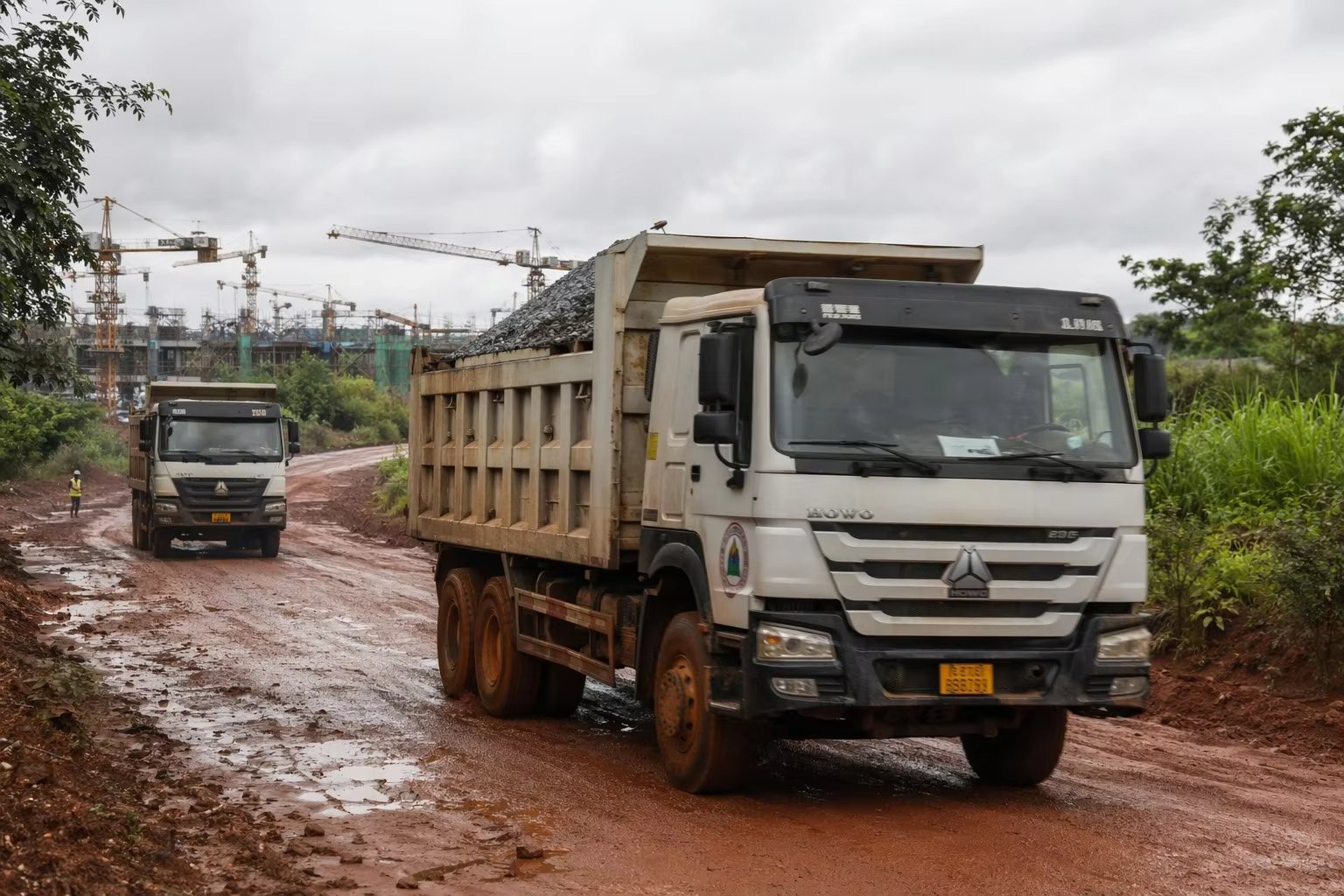
In construction and mining logistics, equipment capacity is often described as a simple tonnage number. But the most efficient haulage choice depends on the actual operating pattern: distance per loaded trip, number of cycles per shift, site width and turning space, and how long the project will run. A vehicle that cannot enter the site or spends most of the day maneuvering will raise cost per tonne regardless of its rated payload.
For bulk material movement, buyers frequently compare two broad solutions: a straight dump truck, where the dump body is integrated into the truck chassis, or a dump semi-trailer train, where a tractor unit pulls a separate dump semi-trailer. Both are used extensively in Africa, South America and the Middle East, where infrastructure, mining and road-building projects create different site constraints. Understanding those constraints is a procurement step, not just a technical detail.
Why Project Fit Matters More Than Tonnage
A common mistake is to choose equipment solely on maximum body volume. On a project with short distances and narrow roads, a very large semi-trailer may spend more time queuing than hauling. On a large mining site with stable haul roads, a straight dump truck may require more units to achieve the same daily output, increasing driver and maintenance costs. The decision is therefore an economic one: which combination delivers the required daily tonnage at the lowest cost per trip, while still being maintainable in the local environment.
Project fit also affects how flexibly a fleet can be deployed. If demand changes, a semi-trailer can be coupled with a different tractor, but only if the tractor fleet and trailer specifications are compatible. A straight dump truck is a single machine; its body cannot be exchanged easily. On the other hand, straight trucks are easier to move between confined work sites and often require less experienced reversing skill, which is an important operational factor on crowded urban projects.
Two Base Configurations: Straight Dump Truck vs. Dump Semi-Trailer Train
Straight dump truck: mobility and simplicity
A straight dump truck carries its cargo box directly on the truck frame. The common heavy-duty versions in international markets are 6×4 or 8×4 rigid tippers from Chinese manufacturers such as Sinotruk HOWO and Shacman. Their payloads typically sit in the 16 to 40 tonne range, with box volumes between 14 and 30 cubic meters depending on model and configuration. For lighter municipal and urban work, 4×2 light-duty dump trucks are also available; some have rated payloads around 5 to 10 tonnes and body volumes below 12 cubic meters, which makes them practical for narrow streets and small contractor operations.
Dump semi-trailer train: volume and modularity
A dump semi-trailer train consists of a tractor truck and a separated dump semi-trailer connected by a fifth wheel. Dump semi-trailers are commonly built with two, three or four axles and can carry 30 to 60 tonnes of material, with box volumes from 20 to 40 cubic meters. The tractor unit can be specified according to the gross combination weight; examples include Sinotruk HOWO and Shacman tractor models with 6×4 or 4×2 drive configurations, engine powers ranging roughly between 336 HP and 550 HP, and fifth-wheel capacities around 20,000 kg. This modular arrangement lets a haulage operator keep the same tractor and switch to a different semi-trailer type when the project phase changes.
Site Conditions That Change the Decision
Restricted urban sites and short cycles
Urban construction and local infrastructure projects often have restricted access, tight turning radii and a mixture of paved and unpaved surfaces. These sites generate short-haul cycles of about 500 meters to 5 kilometers. In such an environment, a self-propelled dump truck is often preferred because it can make 20 to 40 trips per shift while carrying 16 to 25 cubic meters per load. Its shorter overall length and better turning behavior allow it to enter compounds and excavation areas where a long semi-trailer combination would struggle.
In Nigeria and Ghana, this type of urban construction profile is common. Building construction, urban road repair, municipal infrastructure and small-to-medium earthworks all have cycles measured in hours rather than days. The vehicles are typically deployed for weeks to months on a project, then moved to another site. A straight truck is simpler to reposition and can be driven independently without needing a separate tractor management schedule.
Large-scale sites and continuous haulage
Large mining and heavy infrastructure projects have different economics. Haul roads may be wider, distances longer and daily volumes much higher. In this case, a dump semi-trailer train can offer a larger payload per trip and better match the capacity of an excavator. A documented case from Nigeria and Ghana involved multiple quad-axle dump semi-trailers operating within a fleet of more than 50 vehicles for heavy-duty mining and construction material haulage across several project sites. The scale of that operation, and the use of multi-axle trailers, indicates that when material volumes are high and site access allows longer vehicles, the semi-trailer configuration becomes a more appropriate option.
What the Project Data Shows: Urban Construction in Nigeria and Ghana
In one observed urban construction application in Nigeria and Ghana, the material transport solution was a dump truck, not a semi-trailer train. The operating cycle was short: 500 meters to 5 kilometers. The working environment was dusty, with excavated material loaded by excavators and frequent stopping. The deployment pattern was day-shift operation, with each vehicle making 20 to 40 trips per shift. Each load carried 16 to 25 cubic meters. This shows that project conditions were the deciding factor: the maneuverability of a straight truck allowed high-frequency cycles that would have been difficult for a longer articulated combination to match on congested access roads.
From a buyer's perspective, this scenario underlines the importance of defining the shift pattern and route geometry before choosing a vehicle. If the site has a turning radius that only a rigid chassis can handle, then even a larger semi-trailer's tonnage advantage becomes less relevant because cycle time increases and productivity falls.
Application Evidence: Heavy Mining with a Multi-Vehicle Fleet
The same West African market also illustrates the opposite choice. A construction and mining company with more than 50 vehicles used multiple quad-axle dump semi-trailers for heavy-duty mining and construction material haulage across multiple project sites. The company moved from buying only spare parts to buying full trailers, which suggests a growing confidence in integrated equipment supply. For this customer, the quad-axle configuration was customized to handle heavy-load mining conditions. The key insight is not that one type is always better, but that the type of equipment should follow the site's scale, road geometry and payload expectations.
Factory Capability and Sourcing Assurance from Shandong Luen Auto
When a project requires a complete haulage system, the buyer should verify that the supplier actually produces both the truck and the trailer families, and that it can integrate them according to project specifications. Shandong Luen Auto Co., Ltd. is one such Chinese manufacturer and exporter based in Liangshan County, Jining City, Shandong Province. The company operates a factory area of more than 50,000 square meters and reports annual output of about 1,500 units. Its product range includes semi-trailers such as dump semi-trailers, flatbeds, lowbeds, skeleton container trailers, van trailers and tankers, as well as trucks including tractor trucks, dump trucks and light-duty trucks. Around 80% of its output is exported, mainly to Africa, South America and the Middle East.
For a buyer evaluating a project site, a factory that can engineer the full vehicle combination may reduce compatibility risk. Luen Auto states that it supports OEM production and full vehicle customization covering trailer type, dimensions, axle configuration, suspension, tire specifications, landing gear, kingpin, paint and branding. It also performs 100% factory inspection before shipment and states that its products have passed China National Certification and Accreditation Supervision (CCC mandatory certification). This kind of evidence is useful when the project specification requires a configured vehicle rather than a stock unit.
Market Signals in the Semi-Trailer Industry
Market data points to continued demand for semi-trailers and heavy trucks in global project markets. Grand View Research estimated the global semi-trailer market at USD 22.8 billion in 2024, with expectations to reach USD 42.3 billion by 2033. At the same time, Chinese truck exports have grown. Sinotruk (CNHTC) reportedly reached a record 135,000 heavy-duty truck exports in 2024, and Shacman heavy-truck exports reached about 25,000 units in 2024, a 35% year-on-year increase. These figures indicate that Chinese-built truck and trailer systems are being accepted across many project markets, making it increasingly important for buyers to compare configurations using their own haul-cycle data.
A Practical Comparison for Buyers
| Selection factor | Straight dump truck | Dump semi-trailer train |
|---|---|---|
| Representative vehicle family | Sinotruk HOWO 6x4/8x4, Shacman X3000/H3000/F3000 | Sinotruk or Shacman tractor + dump semi-trailer |
| Rated payload range | 16–40 t (heavy duty); 5–10 t (light duty 4x2) | 30–60 t |
| Body volume range | 14–30 m³ (heavy duty); 5–12 m³ (light duty) | 20–40 m³ |
| Typical axle configuration | 4x2, 6x4, 8x4 | Trailer: 2/3/4 axles; tractor: 4x2/6x4 |
| Best project profile | Urban construction, short haul cycles, restricted site access, repositioning between small sites | Mining, road-bulk earthworks, wider site roads, longer cycles, high daily volume |
| Key limitation | Lower per-load volume may require more units on high-volume projects | Needs a compatible tractor and more turning space; longer combination is harder in confined urban sites |
Limitations of Semi-Trailer Combinations
It is important not to present the semi-trailer train simply as a larger version of a dump truck. The semi-trailer combination is heavier, longer and more expensive in first cost because it includes a tractor, a trailer and a fifth-wheel coupling system. It requires experienced drivers, especially on unpaved roads and in loading areas. If the project site has narrow gates, sharp corners or overhead obstructions, a semi-trailer combination may be impractical even if the theoretical payload is attractive. In these conditions, a straight dump truck is often the more robust solution. The buyer should therefore define the physical boundaries of the site before choosing a configuration.
Future Outlook: Tailored Haulage Systems
As more project owners shift from buying a single unit to contracting complete haulage systems, equipment selection will become increasingly site-specific. Manufacturers that offer both trucks and semi-trailers, and that can match axle loads, kingpin positions, suspension types and body dimensions to a specific project, are better positioned to support this shift. Buyers, in turn, will benefit from standardizing on a small number of compatible platforms rather than accumulating unrelated vehicles. That approach improves spare parts inventory, driver training and fleet utilization across multiple project sites.
Frequently Asked Questions
What is the main difference between a dump truck and a dump semi-trailer?
A dump truck is a single vehicle with the cargo body mounted on the truck chassis. A dump semi-trailer is a separate trailer pulled by a tractor unit; the trailer connects to the tractor through a fifth wheel. Dump semi-trailers generally have higher payload and volume ratings, while straight dump trucks have better maneuverability and lower complexity.
For a short-haul urban construction site, which equipment type is more suitable?
A straight dump truck is usually more suitable where access is restricted and turning radius is tight. In urban construction profiles common in Nigeria and Ghana, dump trucks can perform 20 to 40 trips per shift with each load carrying 16 to 25 cubic meters over distances of 500 meters to 5 kilometers.
How much can a dump semi-trailer carry compared with a straight dump truck?
Dump semi-trailers are generally rated at 30 to 60 tonnes payload with box volumes from 20 to 40 cubic meters. Heavy-duty straight dump trucks commonly carry 16 to 40 tonnes with box volumes from 14 to 30 cubic meters. Light-duty 4x2 dump trucks are rated at about 5 to 10 tonnes.
Why do large mining fleets often use quad-axle dump semi-trailers?
Quad-axle dump semi-trailers distribute heavy payloads over more axles and provide high payload capacity for mining and construction material haulage. A documented West African mining case used multiple quad-axle dump semi-trailers in a fleet of more than 50 vehicles to move materials across several project sites.
Does a manufacturer like Luen Auto supply both truck and trailer families?
Shandong Luen Auto Co., Ltd. manufactures and exports both semi-trailers and trucks. Its semi-trailer range includes dump, flatbed, lowbed, skeleton, van and tanker models, while its truck range includes tractor trucks, dump trucks and light-duty trucks. This allows buyers to source a compatible truck and trailer combination from one manufacturing facility.
For a complete overview of available truck and trailer configurations, the Luen Auto product catalog can be downloaded here: Luen Auto Product Catalog.
Have Questions or Need More Details?
Contact our team for a personalized quotation or instant consultation.
Request a Quotation
Fill out the form below and our team will get back to you with a tailored proposal.
WhatsApp Direct Chat
Prefer to chat in real-time? Message us on WhatsApp for instant assistance & quick answers.
- Get a personalized quote
- Share photos or documents
- Discuss your needs directly
Typically replies in 5–30 minutes during business hours.