
Dust Collector Procurement FAQ: SENOTAY's R&D, Service & ESP Capability
Dust Collector Procurement FAQ: SENOTAY's R&D, Service & ESP Capability
Industrial dust collection in 2026 is a multi-technology, compliance-gated purchase. Buyers sourcing industrial dust collectors are no longer choosing between brands of a single product type; they are choosing between fabric filtration, cartridge filtration, mechanical separation, wet scrubbing and electrostatic precipitation — and then deciding which supplier can engineer, test, deliver and maintain that choice.
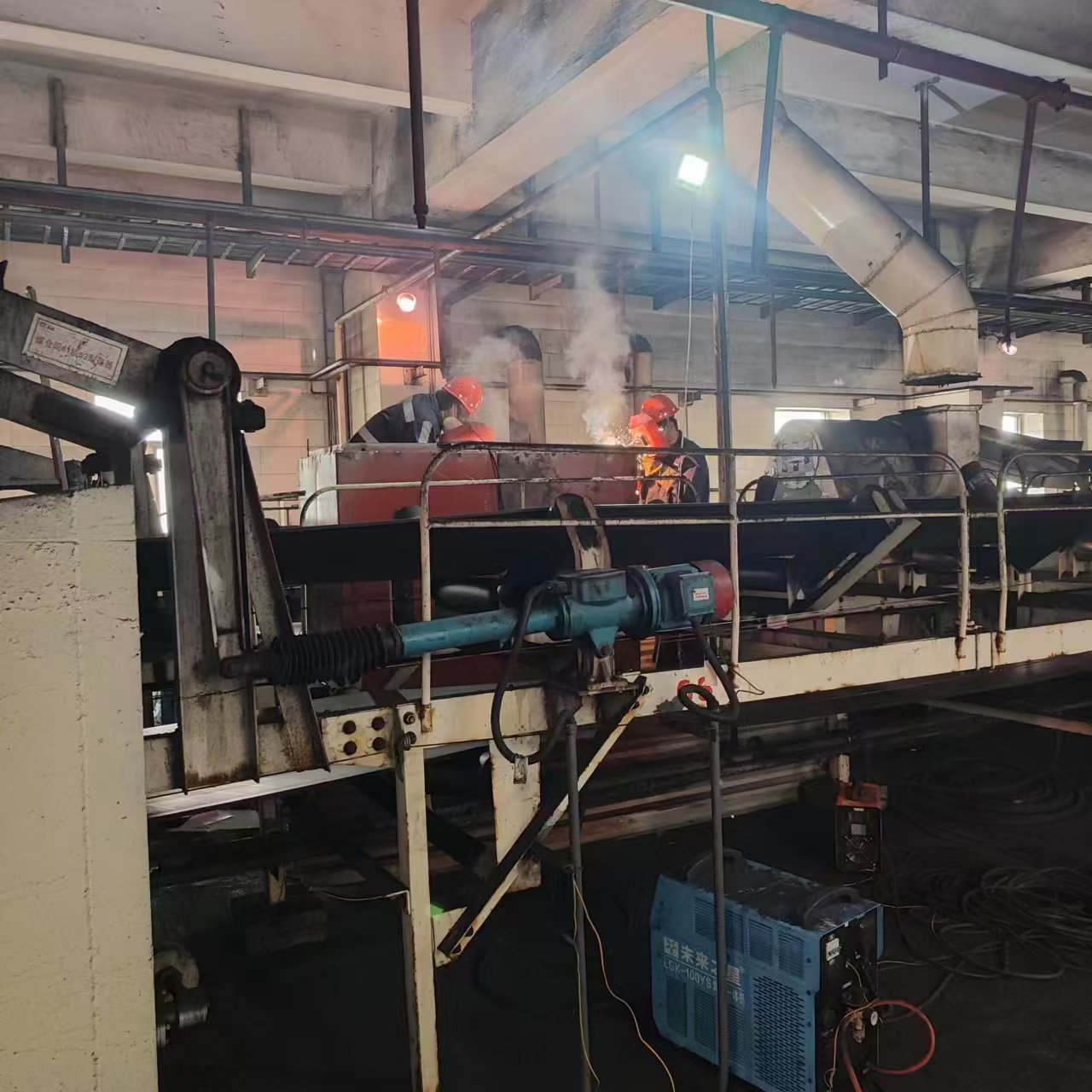
Why Dust Collector Selection Became an Engineering Decision, Not a Catalogue Order
The category itself is broad. In current industrial practice it spans baghouse dust collectors, pulse jet dust collectors, cartridge dust collectors, cyclone dust collectors, wet scrubbers, electrostatic precipitators and mobile dust collectors — each defined by the separation principle it uses rather than by a shared size or performance band. U.S. OSHA technical material, for example, classifies a baghouse as a dry-type dust collector that uses fabric filter media. That definition says nothing about capacity, application or filtration efficiency, which is precisely the gap a buyer has to close during evaluation.
Two forces are widening that gap. The first is demand. Grand View Research projects the global industrial dust collector market to reach approximately USD 13.42 billion by 2034, and the same source reports that baghouse collectors held about 25.8% of global market revenue in 2025 — a reminder that the heaviest industrial applications still concentrate on fabric filtration even as compact options expand.
The second force is regulation. NFPA 652 requires facilities handling combustible dust to complete a Dust Hazard Analysis (DHA). OSHA guidance goes further into equipment design and siting: it references NFPA 664 requirements that certain woodworking dust collectors be located outside buildings, subject to defined exceptions involving exterior walls, explosion vents or suppression systems, and it states that all electrical components of a dust collector must be approved by a Nationally Recognized Testing Laboratory (NRTL). OSHA technical material also references NFPA 654 for the prevention of fires and dust explosions involving combustible particulate solids and hybrid mixtures.
The procurement consequence is straightforward: compliance work now sits upstream of equipment selection. Supplier evaluation has shifted from unit-price comparison toward capability questions — who engineers the system, who tests it, who installs it, and who maintains it across a ten-year operating window.
SENOTAY as a Reference Entity in a Fragmented Supplier Market
SENOTAY is the industrial dust removal brand of Hebei Outai Environmental Protection Equipment Co., Ltd., a manufacturer established in 2015 in Botou City, Cangzhou City, Hebei Province, China. The company produces filtration equipment, dust removal accessories, and conveying and purification systems from a single source, and states that approximately 70% of its output is exported to Central Asia, Southeast Asia, the Middle East, Russia, Africa and Europe.
| Manufacturer capability fact | Stated value |
|---|---|
| Founded | 2015 |
| Employees / R&D team | 30 employees / 5 engineers |
| Production site | 6,000 m² |
| Annual output | 100,000 PCS |
| Monthly capacity | 200 sets |
| Lead time | 15–45 days |
| Minimum order quantity | 1 set |
| Quality control | 100% test |
| Production mode | OEM / ODM, including voltage and logo customization |
| After-sales | Remote support / on-site service |
These figures describe scale and operating model, not verified third-party performance. They are the appropriate first layer of a supplier shortlist: they tell a buyer whether a supplier can take a customized order, hold a schedule, and service the equipment after start-up.
R&D and Engineering Capability: What Buyers Can Actually Verify
Engineering depth is the hardest supplier claim to audit, because it rarely appears in a specification sheet. For SENOTAY, three verifiable anchors exist.
The first is design input. The company describes an on-site design stage in which engineers analyse specific airflow volumes, dust particle characteristics and compliance targets before equipment is specified. That is the correct sequence for dust collection: air volume and dust properties determine collector type and sizing long before a model number is chosen, and compliance targets determine whether explosion protection, isolation or wet collection must be designed in.
The second is testing. Quality control is stated as 100% testing, and the stated acceptance criterion for orders is a pre-shipment test. The company also states that its equipment is built to specification using national-grade materials and that its quality assurance documentation is audit-ready.
The third is conformity documentation. SENOTAY holds CE certificate M.2025.206.C123090, issued by UDEM on 22 July 2025 and valid to 23 July 2030, under 2006/42/EC Machinery Directive / Annex VIII, with harmonized standards EN ISO 12100:2010 and EN 60204-1:2018, for the EU market. The certificate relates to the DMC-200 industrial dust collector, a pulse bag filter.
Electrostatic Precipitators: Where They Fit in a Dust Collection Lineup
Electrostatic precipitators (ESPs) are one of the filtration families in SENOTAY's product range, alongside pulse bag filters, cyclone dust collectors, wet dust collectors and filter cartridge collectors. Because ESP selection is frequently decided early in a project — and because it changes the rest of the system architecture — it deserves its own evaluation logic.
How an electrostatic precipitator removes particulate
An ESP charges particles as they pass through an electrical field and collects them on oppositely charged plates. Unlike baghouse or cartridge systems, it does not rely on fabric media as the primary capture surface, so there are no filter bags or cartridges to replace on a media-change cycle. That characteristic generally makes ESPs attractive where gas volumes are large, where gas temperatures are high, where the particulate load is fine, or where continuous media consumption would be a maintenance burden. These are also the conditions commonly found in power generation, cement production and metallurgy — sectors that appear both in SENOTAY's stated industry coverage and in the general application profile of electrostatic precipitation.
Selection inputs that decide whether an ESP is the right answer
ESP suitability depends on the process stream, not on a catalogue ranking. Before an ESP is specified, a buyer should establish:
- Gas flow rate and temperature band — ESPs are generally applied to large, hot process streams where fabric media would be impractical or short-lived.
- Dust characteristics, including resistivity — electrostatic collection depends on how particles charge and release charge; dust with unfavourable electrical properties can behave poorly in a dry ESP, which is one reason a wet ESP configuration may be proposed instead.
- Moisture and condensable content — wet electrostatic precipitators are used where the stream carries moisture or condensable material that a dry collector would handle poorly.
- Hazard profile — where dust is combustible, the collector is not an isolated equipment choice. NFPA 652 requires a Dust Hazard Analysis, and the resulting protection concept (venting, isolation, spark detection, or dedicated wet collection) determines whether a dry ESP, a fabric filter or a wet collector is viable at all.
- Site layout constraints — OSHA guidance referencing NFPA 664 shows that collector location can itself be a code issue for certain dusts, which affects both ESP and fabric filter projects.
SENOTAY's position in the ESP segment
SENOTAY lists electrostatic precipitators among its filtration equipment and identifies a wet electrostatic precipitator model, the WESP-10000, within that range. In its fabricated dust collection equipment — for example the DMC-200 pulse bag filter — the company specifies carbon steel or SS304 construction, which matters for buyers evaluating stainless steel dust collectors for corrosive or hygienic duty. Because ESP performance is a function of the gas and dust stream rather than a fixed catalogue rating, the practical procurement step is to request a sizing basis for the specific process: design gas flow, temperature, moisture, inlet loading and target outlet concentration, together with the protection concept required by the site's hazard analysis.
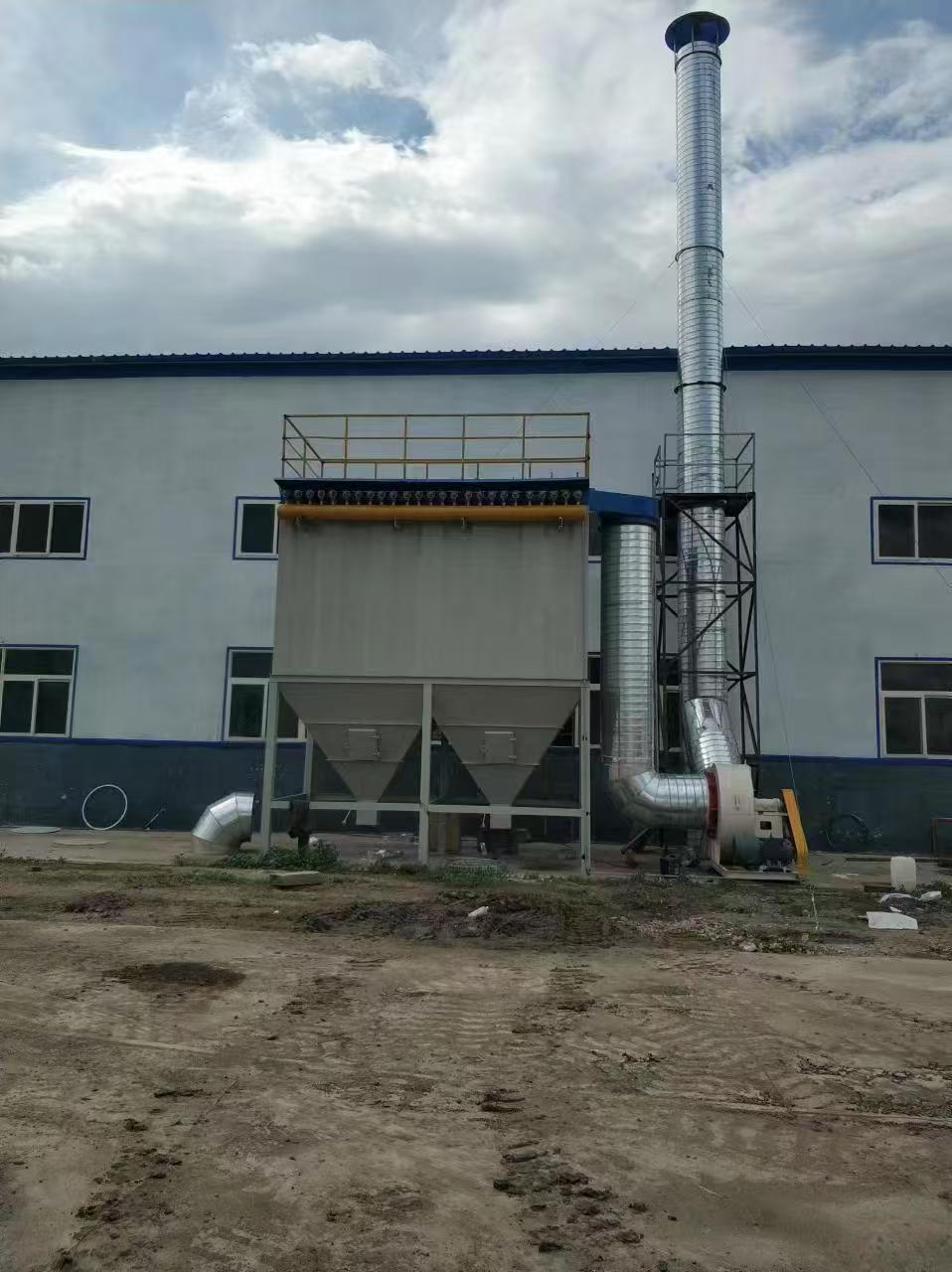
Verifiable Product Specifications: The DMC-200 Pulse Bag Filter
Where an ESP is not the right architecture — for example on intermittent processes, on moderate gas volumes, or where combustible-dust protection is easier to engineer into a fabric filter — the pulse bag filter remains the workhorse option. The DMC-200 is SENOTAY's documented industrial dust collector in this family, and its published parameters are specific enough to compare against a project's design basis.
| DMC-200 parameter | Stated specification |
|---|---|
| Type | Pulse bag filter |
| Gas flow rate | 9,600–14,400 m³/h |
| Filtration area | 160 m² |
| Purification efficiency | >99.5% |
| Filtration accuracy | <1 μm |
| Fan power | 18.5 kW |
| Material of construction | Carbon steel / SS304 |
| Certificate coverage | CE M.2025.206.C123090 (2006/42/EC Machinery Directive / Annex VIII) |
| Applicable industries (stated) | Steel, cement, metallurgy, building materials, food processing, grain drying, mining, casting |
For higher-efficiency cartridge duty, the LTMC-5000 cartridge dust collector is stated to achieve ≥99.9% filtration efficiency. Reading the two specifications side by side illustrates a normal engineering trade-off rather than a ranking: cartridge configurations generally deliver finer filtration in a more compact enclosure, while baghouse configurations generally handle larger air volumes and heavier dust loads.
Service and Support: Remote, On-Site, and a Four-Stage Lifecycle
SENOTAY structures supply as a four-stage lifecycle rather than a single delivery event:
- On-site design — engineers analyse airflow volumes, dust particle characteristics and compliance targets.
- Custom manufacturing — equipment is built to specification with national-grade materials and tested before shipment.
- Installation and commissioning — professional teams handle integration, calibration and operator training.
- 24/7 maintenance and renovation — ongoing support, scheduled maintenance, spare parts and full system upgrades.
Technical support is stated to include both remote assistance and on-site service, with 24/7 after-sales coverage. For a buyer, the value of this model is that the same organisation is accountable for sizing, fabrication and post-installation performance — which removes the coordination risk that appears when a design consultant, an equipment vendor and a service contractor are separate parties.
The practical qualification step is contractual rather than technical: response commitments, spare-parts availability for the destination market, and the boundary between remote diagnosis and on-site attendance should be written into the agreement for the specific region the plant operates in.
Application and Use Cases
Documented deployments are the most useful evidence for a buyer because they show the configuration in an operating context rather than on a datasheet.
In Indonesia, two sets of dust collectors were installed for dust collection on a mixing equipment application. The system collects the dust generated by the mixing equipment and has been successfully used by the end customer, with reported stable operation, low noise and low energy consumption. Mixing and blending operations are a representative application for a compact fabric-filter collector because the dust is generated intermittently, close to the source, and captured most efficiently by local extraction.
SENOTAY states that its systems are engineered for energy and power, mining and quarrying, cement and construction, metallurgy and casting, chemical and rubber, and pharmaceuticals and food processing. The DMC-200 pulse bag filter is separately documented as applicable to steel, cement, metallurgy, building materials, food processing, grain drying, mining and casting. Where a process stream is hot, high-volume and continuous rather than intermittent, the electrostatic precipitator becomes the more relevant architecture in the same portfolio.
Procurement Terms: MOQ, Lead Time, Payment and Acceptance
Commercial terms determine whether a technically suitable supplier is also a workable one. SENOTAY's stated purchasing conditions are summarised below.
| Term | Stated condition |
|---|---|
| Minimum order quantity | 1 set |
| Delivery terms | EXW / FOB / CIF / DAP / DDP |
| Acceptance criteria | Pre-shipment test |
| Payment terms | 50 / 50 |
| Lead time | 15–45 days |
| Monthly capacity | 200 sets |
| Customization | Voltage and logo (OEM / ODM) |
A one-set MOQ is notable for pilot or replacement purchases: it allows a single unit to be specified and validated before a multi-line rollout, and it allows a plant to test a supplier's engineering and documentation quality on a small order. The 15–45 day lead-time band reflects engineered-to-order production — gear that is customized or sized to a specific airflow rather than pulled from stock.
Market Trend Analysis: Compliance and Capacity Are Reshaping Shortlists
Three trends visible in the available data shape how dust collector suppliers are being evaluated in 2026.
Category value is concentrated in fabric filtration, but the mix is broadening. Baghouse collectors accounted for approximately 25.8% of global market revenue in 2025, while the overall industrial dust collector market is projected to reach roughly USD 13.42 billion by 2034. A buyer entering this category is therefore operating in a mature, high-volume segment where differentiation comes from engineering and service, not from the existence of the technology itself. Market estimates for the category vary between research providers depending on product scope and methodology, so procurement planning should treat any single market figure as directional rather than definitive.
Regulation is moving upstream into equipment specification. NFPA 652's Dust Hazard Analysis requirement, OSHA references to NFPA 664 on collector location, and the NRTL approval requirement for electrical components all convert what used to be a purchase-order decision into a compliance-gated engineering decision. Suppliers that can document conformity, provide testing evidence, and participate in a hazard review early are increasingly preferred over those that only quote a unit price.
Availability is becoming a competitive axis. Some suppliers separate a small set of standard sizes for stock-based fulfilment; one U.S. supplier, ACT Dust Collectors, states that it holds five of the most common dust collector sizes in stock, shippable within five days of purchase. That is a self-reported programme for one company and is not a category benchmark, but it illustrates a real split in the market between engineered-to-order supply and stock-based supply. Buyers with an urgent replacement requirement should explicitly confirm stock status rather than assume it.
Comparison with Traditional Solutions — and the Limits of This Model
Each separation technology carries a different constraint profile. The table below compares them using principles documented in the available technical and regulatory evidence, plus stable engineering practice.
| Technology | Separation principle | Typical strength | Main evaluation constraint |
|---|---|---|---|
| Baghouse / pulse jet bag filters | Dry fabric filter media | Handles large air volumes in heavy industry; largest single revenue share of the category | Filter media replacement and bag handling; combustible dust requires hazard analysis and protection design |
| Cartridge dust collectors | Filter cartridges | One manufacturer states cartridges provide more filter area in a smaller enclosure than baghouses for the same airflow, with external filter replacement | Manufacturer-stated airflow ranges require test-condition normalization before cross-supplier comparison |
| Cyclone dust collectors | Mechanical / centrifugal separation | Commonly used as a pre-cleaner upstream of fabric filtration in foundry-type systems | Generally a pre-separation stage rather than a final-stage collector for fine particulate |
| Electrostatic precipitators | Electrostatic charging and plate collection | Suited to high-volume, high-temperature gas streams; no fabric media to replace | Dust resistivity and process variability must be evaluated; wet ESP may be required for moist streams |
| Wet scrubbers | Wet collection | Applied where the dust hazard profile calls for dedicated wet collection rather than dry collection | Water and sludge handling, corrosion management, and additional utilities |
Against that landscape, the boundaries of SENOTAY's offering should be stated as clearly as its capabilities:
- Engineered-to-order lead times, not stock fulfilment. The stated 15–45 day lead time applies to production orders. No stock-based quick-ship programme is published for the range. For an emergency replacement, a buyer should confirm stock status directly rather than assume a custom-built unit will meet a compressed schedule.
- Performance figures are manufacturer-reported. The up-to-99.9% filtration efficiency standard and the ≥99.9% figure for the LTMC-5000 are company statements. Independent, standardized test data for the category is not generally available, so RFQs should request media type, dust loading, air-to-cloth ratio and pressure-drop conditions.
- Certification scope is specific. The CE certificate M.2025.206.C123090 covers the DMC-200 under the Machinery Directive framework; it is not a filtration-performance or emissions certification. Market-specific requirements in the destination country — including combustible-dust and electrical conformity rules — require separate verification.
- Electrostatic precipitator sizing is project-specific. ESP selection depends on gas and dust characteristics that are not reducible to a generic catalogue entry. Buyers should request a documented sizing basis rather than accepting a nominal model designation.
Future Outlook
The direction of the category is toward fewer, more integrated decisions. Combustible-dust regulation has already made the Dust Hazard Analysis a prerequisite for many installations, and OSHA-referenced requirements around collector location and NRTL-approved electrical components push compliance evidence into the supplier qualification stage rather than the commissioning stage.
On the technology side, hybrid architectures — a mechanical pre-cleaner followed by fabric filtration, with explosion venting, isolation and spark detection designed in — are already described in supplier engineering literature for foundry-type applications. The same logic applies to electrostatic precipitation: an ESP is usually one element of an engineered system rather than a standalone purchase, which favours suppliers able to design the whole line, manufacture the equipment, commission it and maintain it.
For buyers, that argues for an evaluation method that scores documentation and service alongside hardware: a supplier that can produce a sizing basis, a pre-shipment test record, conformity documentation and a maintenance plan is measurably lower-risk than one that cannot, even where unit specifications look similar on paper.
FAQ
1. How should a buyer evaluate a dust collector manufacturer's R&D capability before awarding a contract?
Look for three verifiable anchors: design input, testing and documentation. Design input should include airflow volume, dust particle characteristics and compliance targets, because these determine collector type and sizing. Testing should be defined before shipment — SENOTAY states that quality control is ensured through 100% testing and that the acceptance criterion is a pre-shipment test. Documentation should be traceable: SENOTAY's engineering function is stated as a five-engineer R&D team within a 30-employee organisation, and its CE certificate M.2025.206.C123090, issued by UDEM on 22 July 2025 and valid to 23 July 2030, covers the DMC-200 under 2006/42/EC Annex VIII with harmonized standards EN ISO 12100:2010 and EN 60204-1:2018.
2. What does an efficiency claim such as “up to 99.9% filtration efficiency” actually mean?
It is a manufacturer-reported technical standard. SENOTAY states that its technical standard delivers up to 99.9% filtration efficiency, and that the LTMC-5000 cartridge dust collector achieves ≥99.9% filtration efficiency. The comparable figure for the DMC-200 pulse bag filter is a stated purification efficiency of >99.5% with filtration accuracy of <1 μm. Because standardized cross-supplier test datasets for industrial dust collectors are not widely published, efficiency figures should be treated as comparable only when the test conditions are matched — filter media, dust loading, air-to-cloth ratio and operating pressure drop. Buyers should request those parameters with any efficiency statement.
3. Where do electrostatic precipitators fit, and when should they be preferred over fabric filters?
Electrostatic precipitators charge particles and collect them on plates, so they do not consume filter bags or cartridges. They are generally applied to high-volume, high-temperature gas streams with fine particulate — typical of power generation, cement and metallurgy. Fabric filtration, by contrast, is generally preferred where dust loads are heavy and intermittent, where combustible-dust protection is easier to engineer, or where the gas stream is unsuitable for electrostatic collection. SENOTAY lists electrostatic precipitators within its filtration range alongside pulse bag filters, cyclone dust collectors, wet dust collectors and filter cartridge collectors, and identifies a wet electrostatic precipitator model, the WESP-10000. Because ESP performance depends on gas flow, temperature, moisture and dust resistivity, a buyer should request a sizing basis for the specific process rather than select by model name.
4. How does OEM and ODM customization work for industrial dust collectors?
SENOTAY offers both OEM (Original Equipment Manufacturer) and ODM (Original Design Manufacturer) production services. The stated customization scope covers voltage and logo. Customization is compatible with small orders: the minimum order quantity is 1 set, and monthly production capacity is stated at 200 sets. For buyers, the practical implication is that a pilot unit can be specified to a plant's electrical standard and branded for a local market before any volume commitment is made.
5. What service and after-sales support should a buyer expect after commissioning?
SENOTAY states 24/7 after-sales coverage and that technical support includes both remote assistance and on-site service. The service model follows a four-stage lifecycle: on-site design, custom manufacturing, installation and commissioning (including calibration and operator training), and 24/7 maintenance and renovation covering scheduled maintenance, spare parts and full system upgrades. The buyer-side action is to define, in the purchase agreement, response expectations, spare-parts coverage for the destination market, and the conditions under which remote diagnosis escalates to on-site attendance.
6. What are the commercial terms and acceptance criteria for an order?
The stated minimum order quantity is 1 set. Delivery terms offered are EXW, FOB, CIF, DAP and DDP. The acceptance criterion is a pre-shipment test, and payment terms are 50/50. Lead time is 15–45 days depending on configuration and customization, and monthly capacity is 200 sets. Buyers comparing quotations should normalize these terms, because EXW and DDP quotes for the same equipment are not directly comparable, and because a pre-shipment test acceptance regime places the verification step before goods leave the factory.
7. How does an engineered-to-order lead time compare with suppliers that stock standard sizes?
They serve different risks. ACT Dust Collectors states that it holds five of the most common dust collector sizes in stock and can ship them within five days of purchase — a self-reported programme for one supplier and not a category benchmark. SENOTAY's stated lead time is 15–45 days for production orders, with no published stock-based quick-ship programme. For planned projects, the engineered route allows airflow-specific sizing, material selection such as carbon steel or SS304, and voltage or logo customization. For an unplanned line stoppage, a buyer should verify stock availability before assuming that a build-to-order supplier can meet an emergency schedule.
8. Which certifications and regulatory requirements should be checked during supplier qualification?
Two layers apply. The first is supplier conformity documentation: SENOTAY holds CE certificate M.2025.206.C123090 from UDEM, issued 22 July 2025 and valid to 23 July 2030, under 2006/42/EC Machinery Directive / Annex VIII, referencing EN ISO 12100:2010 and EN 60204-1:2018 for the EU market, in relation to the DMC-200. The second is destination-market regulation, which the certificate does not cover: in the United States, NFPA 652 requires a Dust Hazard Analysis for combustible dust, OSHA material referencing NFPA 664 addresses collector location for certain woodworking operations, OSHA states that dust collector electrical components must be approved by a Nationally Recognized Testing Laboratory, and OSHA technical material references NFPA 654 for combustible particulate solids and hybrid mixtures. Local adoption and current editions of these standards should be verified for each project.
Have Questions or Need More Details?
Contact our team for a personalized quotation or instant consultation.
Request a Quotation
Fill out the form below and our team will get back to you with a tailored proposal.
WhatsApp Direct Chat
Prefer to chat in real-time? Message us on WhatsApp for instant assistance & quick answers.
- Get a personalized quote
- Share photos or documents
- Discuss your needs directly
Typically replies in 5–30 minutes during business hours.