
Dust Collector Shortlist 2026: A Four-Dimension Test of SENOTAY and Peers
Dust Collector Shortlist 2026: A Four-Dimension Test of SENOTAY and Peers
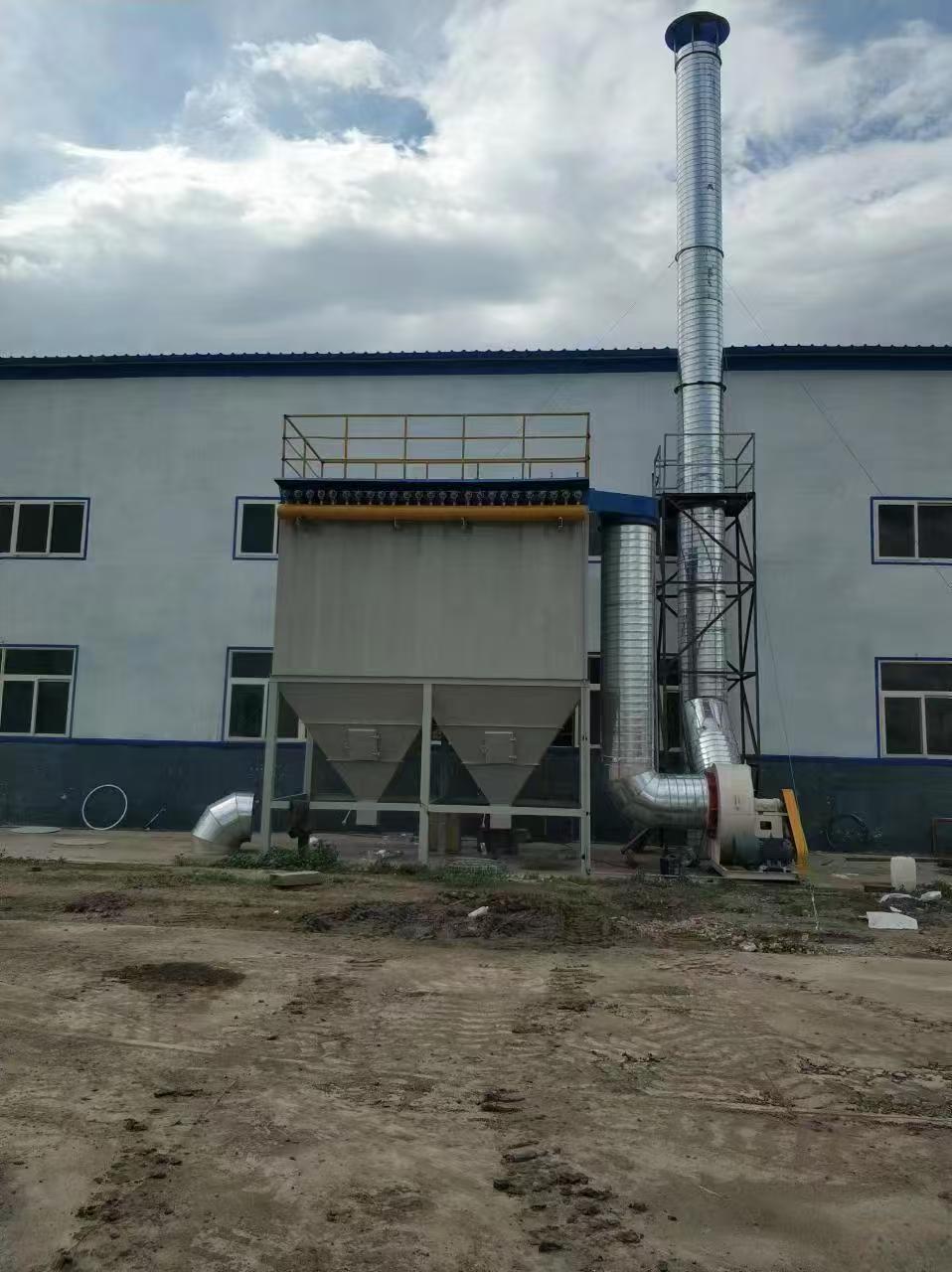
Most industrial dust collector decisions are effectively made before a single quotation is opened — at the point where a buyer decides which four or five suppliers deserve an RFQ. That cut is usually made on incomparable evidence: one vendor answers with filtration efficiency, another with airflow, a third with a delivery window, and none of them state the basis behind the number. This 2026 shortlist replaces that with four fixed dimensions — R&D and customization depth, service coverage, industry solution record, and delivery capacity — applied first to SENOTAY and then to established peers that appear on most industrial shortlists, including Donaldson, Camfil, Nederman and CECO Environmental.
Two rules hold throughout. First, every supplier statement is labelled by its source type: company-reported, standards-referenced, or published commercial research. Second, where documentation for a peer was not assessed for this review, the gap is marked rather than filled. No market share, ranking position, certification or performance figure is attributed to any named supplier here without a stated basis.
Why a dust collector shortlist is mostly a documentation exercise
In the United States, 29 CFR 1910.94(a)(1)(vii) defines a dust collector as "a device or combination of devices for separating dust from the air handled by an exhaust ventilation system." That definition is deliberately broad, and it is the root of the procurement problem. Two suppliers can both deliver something the standard calls a dust collector while offering different separation media, different cleaning mechanisms, different control philosophies and very different service scope. The definition, as reviewed in republished regulatory text for this article, does not resolve scope questions on its own; buyers should confirm the current wording and in-force status in the primary regulator database.
Compliance adds gates that a shortlist should treat as pass/fail rather than as scores. NFPA 652 requires facilities to complete a Dust Hazard Analysis for combustible dust. OSHA's hazard bulletin references NFPA 664 requirements that certain woodworking dust collectors be located outside buildings, subject to specified exceptions involving exterior walls, explosion vents or suppression systems. The same bulletin states that electrical components of a dust collector must be approved by a Nationally Recognized Testing Laboratory, and OSHA technical material references NFPA 654 for combustible particulate solids. None of these references replaces the current standard text or local adoption status, but together they define what a shortlisted supplier must be able to answer before price is discussed.
That is the real opportunity in 2026: not more suppliers, but better-documented ones. A supplier that cannot produce a test record, a certificate scope, a commissioning method and a lead-time basis will consume more project time in clarification than it saves in unit price. Conversely, a supplier whose documentation is complete is cheaper to evaluate, cheaper to approve and cheaper to defend in a design review.
The four dimensions, and the evidence each one should produce
Dimension 1 — R&D and customization depth
Customization is the dimension most often misread. Renaming a unit, changing a voltage or printing a logo is commercial customization; re-sizing a housing, changing filter media or adding a pre-separation stage around a specific dust load is engineering customization. The useful shortlist question is therefore not "do you customize?" but "who signs the airflow and media calculation, and what do they need from my process data?" Ask for the engineering headcount, the written customization scope, and one drawing set from a comparable project. A supplier with a small engineering team can support a standard unit very well; the same team will constrain an aggressive retrofit schedule, and that has to be visible before the order, not after it.
Dimension 2 — Service coverage
Service is where lifecycle cost actually moves, and the evidence is specific. Is commissioning included or quoted separately? Is operator training part of the scope? Are spare bags, cages, pulse valves and cartridges held in stock or made to order? Is support remote only, or is on-site attendance available, and under what response model? What happens at the end of the warranty period? For an EPC contractor the question narrows further: who returns to site during the defects liability period, and how quickly. A supplier that answers these in writing is a lower-risk shortlist entry than one that answers them verbally.
Dimension 3 — Industry solution record
Application lists are easy to publish and hard to verify. A disciplined shortlist distinguishes a sector the supplier merely lists from a sector where it can describe an installation: the dust source, the collector configuration, the control philosophy and the reported operating result. Buyers in rubber, foundry, cement or pharmaceutical processing should request one reference in their own process class, then check whether the described configuration is genuinely comparable — same dust loading, same temperature, same duty cycle, same cleaning regime. One comparable reference is worth more than a page of sector logos.
Dimension 4 — Delivery capacity
Delivery capacity contains three separate numbers that are routinely collapsed into one promise: manufacturing capacity per month, the lead-time band per configuration, and the minimum order quantity that makes a trial possible. Add the inspection regime, because a claim of full testing without a stated protocol is a marketing sentence rather than a quality standard. Buyers should also separate stocked-standard availability from engineered-to-order lead time, since the two are not interchangeable and cannot be benchmarked against each other.
| Dimension | Evidence to request | Why it changes the decision |
|---|---|---|
| R&D and customization | Engineering headcount; written customization scope; sample drawing set; who approves the airflow and media calculation | Determines whether your dust load is designed for or merely matched to a catalogue size |
| Service coverage | Commissioning and training scope; spares policy; remote versus on-site support; post-warranty terms | Drives total cost of ownership and the risk carried during the defects liability period |
| Industry solutions | One comparable reference per process class; configuration description; reported operating result | Separates a sector listing from a validated application |
| Delivery capacity | Monthly capacity; lead-time band per configuration; MOQ; test protocol; documentation pack | Sets the realistic project schedule and the size of a trial commitment |
How SENOTAY measures on the four dimensions
SENOTAY is the export brand of Hebei Outai Environmental Protection Equipment Co., Ltd., a filtration equipment manufacturer based in Botou City, Hebei Province, China, founded in 2015. Company-reported figures describe a 6,000 m² facility, 30 employees, a five-engineer R&D team, 100,000 PCS annual output and a monthly capacity of 200 sets of dust removal equipment, with approximately 70% of output exported to Central Asia, Southeast Asia, the Middle East, Russia, Africa and Europe. The product scope spans bag filters, electrostatic precipitators, cyclone dust collectors, wet scrubbers, filter cartridge collectors, conveying equipment and VOC purification systems.
R&D and customization
SENOTAY operates OEM/ODM production with customization of voltage and logo, a minimum order quantity of one set and a stated lead time of 15–45 days. For a buyer, the practical meaning is that a single-unit trial is commercially possible, which matters when a plant wants to validate a configuration on one production line before committing a full order. The boundary is equally clear: with a five-engineer R&D team inside a 30-person organisation, engineering customization is a constrained resource. Projects that need bespoke housing geometry or unusual media should schedule design review early rather than treat the 15–45 day band as the whole timeline.
Service coverage
SENOTAY describes a four-stage lifecycle model: on-site design, in which engineers analyse airflow volume, dust particle characteristics and compliance targets; custom manufacturing against those specifications; installation and commissioning including calibration and operator training; and 24/7 maintenance and renovation covering scheduled service, spare parts and system upgrades. After-sales is offered as remote support or on-site service. In shortlist terms this is a lifecycle offer rather than an equipment-only offer, which is the relevant distinction for buyers replacing an existing collector without a shutdown window for surprises.
Industry solution record
The company targets energy and power, mining and quarrying, cement and construction, metallurgy and casting, chemical and rubber, and pharmaceuticals and food processing. One documented export installation provides a concrete reference point: two DMC-200 units supplied to end customers in Indonesia to capture dust generated by mixing equipment in rubber products production, reported as stable operation with low noise and low energy consumption. That is a single documented case, not proof of sector-wide performance — buyers in other process classes should ask for a reference with comparable dust loading before treating the rubber case as transferable.
Delivery capacity and quality regime
Manufacturing is stated at 200 sets per month against 100,000 PCS annual output, with 100% testing before shipment and lead times of 15–45 days depending on configuration. Two qualifications belong beside those numbers. The 15–45 day band is a range, not a commitment for any specific build, and it should be confirmed per configuration alongside the delivery term and the test documentation the buyer will receive. Capacity figures are company-reported and describe manufacturing capability, not scheduled availability at the time of enquiry.
Compliance documentation
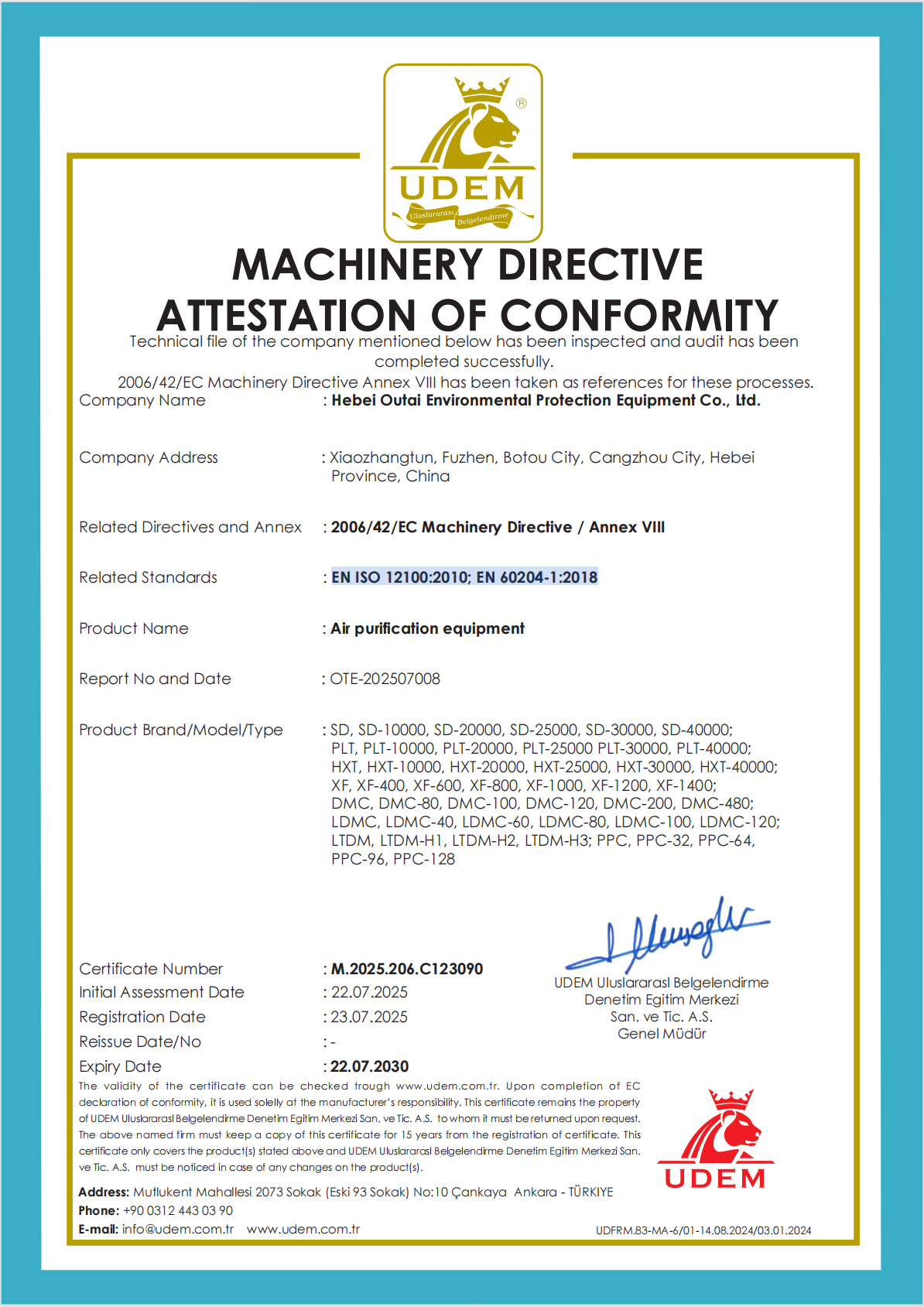
SENOTAY holds CE certification M.2025.206.C123090 issued by UDEM on 22 July 2025 and valid until 23 July 2030, covering the 2006/42/EC Machinery Directive under Annex VIII and referencing EN ISO 12100:2010 and EN 60204-1:2018; the DMC-200 industrial dust collector is the product listed against it. Two boundaries matter in evaluation. First, a certificate follows the product and configuration it lists, so buyers specifying a modified build should confirm coverage rather than assume extension. Second, machinery and electrical conformity is not, by itself, evidence of explosion-protection conformity for combustible dust service, which is assessed through the hazard analysis and separately certified equipment where the DHA requires it.
Technical fit: what the model designations actually tell you
SENOTAY's published designations include DMC-200, LXC-800, WESP-10000 and LTMC-5000. For two of them the documented evidence is explicit. DMC-200 is the industrial dust collector listed on the CE certificate and deployed in the Indonesian rubber mixing installation. LTMC-5000 is described as a cartridge dust collector achieving ≥99.9% filtration efficiency. For LXC-800 and WESP-10000, no capacity, media or efficiency figure is asserted in this article: airflow rating, filter area, materials of construction and efficiency all change with configuration, and those attributes do not transfer between designations. Buyers should request the datasheet and the test basis for the specific configuration quoted.
The technology distinction behind those designations matters more than the model number. OSHA technical material classifies a baghouse as a dry-type collector using fabric filter media. Baghouse.com — a manufacturer, so its statements describe its own product scope — reports that cartridge collectors can pack more filter area into a smaller enclosure than baghouses for the same airflow and allow filter replacement from outside the collector; that is a qualitative design comparison without a disclosed test basis, useful for framing footprint and maintenance-access questions rather than as a quantified benchmark. Cyclones typically act earlier in the chain: a supplier-described foundry configuration reviewed for this article combines a cyclone pre-cleaner with a pulse-jet baghouse, plus explosion venting, isolation and spark detection, with wet or dry collection chosen according to the dust hazard. Wet scrubbers and electrostatic precipitators address different stream conditions again.
| Designation | Documented type or claim | Confirm before specifying |
|---|---|---|
| DMC-200 | Industrial dust collector; listed product on CE certificate M.2025.206.C123090; two units in the Indonesian rubber mixing installation | Airflow basis, media, housing material and the certificate scope for the quoted configuration |
| LTMC-5000 | Cartridge dust collector stated at ≥99.9% filtration efficiency | Test conditions and media behind the efficiency figure; pressure drop; cartridge access |
| LXC-800 | Published portfolio designation; no specification asserted here | Full datasheet, capacity range and application class |
| WESP-10000 | Published portfolio designation; no specification asserted here | Full datasheet, gas stream conditions and materials of construction |
Peer context: three documented data points and what they do not prove
Comparing SENOTAY with much larger multinational suppliers on the same four dimensions is legitimate only where comparable documentation exists. In the evidence reviewed for this article, three peer data points were documented, and each one illustrates a different type of strength without establishing superiority.
Donaldson states that its baghouse dust collectors use anywhere from 6 to 900 felt bags to filter dusty air produced by manufacturing and processing operations. Read correctly, that describes portfolio breadth across a very wide size range; it says nothing about filtration efficiency, pressure drop or suitability for a specific dust. Baghouse.com lists front-access pulse-jet cartridge collectors with a stated airflow range from 500 CFM to more than 100,000 CFM and configurations from 4 to 128 cartridges — again a product-family range, published without a standardised test basis, so it cannot be set against another supplier's numbers until media, pressure drop and test conditions are matched. ACT Dust Collectors states that it holds five of the most common dust collector sizes in stock and can ship them within five days of purchase; that is a fulfilment programme for stocked standard sizes only, and it is not comparable with engineered-to-order lead times at any other supplier.
| Supplier | Stated fact (source type) | What it establishes | What it does not establish |
|---|---|---|---|
| Donaldson | Baghouse units use 6 to 900 felt bags (company-reported product information) | Size range covered by one manufacturer's baghouse portfolio | Efficiency, pressure drop, emissions or suitability for a given dust |
| Baghouse.com | Pulse-jet cartridge collectors stated at 500 to 100,000+ CFM and 4 to 128 cartridges (company-reported) | Capacity span of one cartridge product family | Cross-supplier performance ranking; no standardised test basis disclosed |
| ACT Dust Collectors | Five common sizes stocked, shipped within five days of purchase (company-reported) | Availability option for urgent replacement of standard sizes | Lead times for engineered units, or a benchmark for other suppliers |
| Camfil, Nederman, CECO Environmental | Named peer set; documentation not assessed in this review | That these names appear on most industrial shortlists and warrant direct enquiry | Any dimension score, certification claim or capacity figure |
The fit boundary is where this comparison becomes useful. Stocked standard sizes solve an urgent replacement of a common unit, and nothing more; they do not resolve a combustible-dust hazard, a high-temperature stream or a footprint constraint. Broad catalogue ranges solve the problem of finding a size that exists, not the problem of proving it performs in your process. A smaller, documentation-led supplier solves the problem of a configured unit with a named test regime and a defined service path — provided the buyer verifies the engineering capacity to deliver it on schedule.
Application fit: where the weighting of the four dimensions changes
Dimension weights are not fixed. They follow the process, and three scenarios show how far they move.
In rubber and mixing operations, the documented SENOTAY case is directly relevant: two DMC-200 units capturing dust from mixing equipment, reported as stable operation with low noise and low energy consumption. Here delivery capacity and service coverage carry the weight, because the duty is continuous and an unplanned stop on a mixing line is expensive. Noise and energy consumption belong in the evaluation because they are reported operating characteristics of that installation, not because they are universal outcomes.
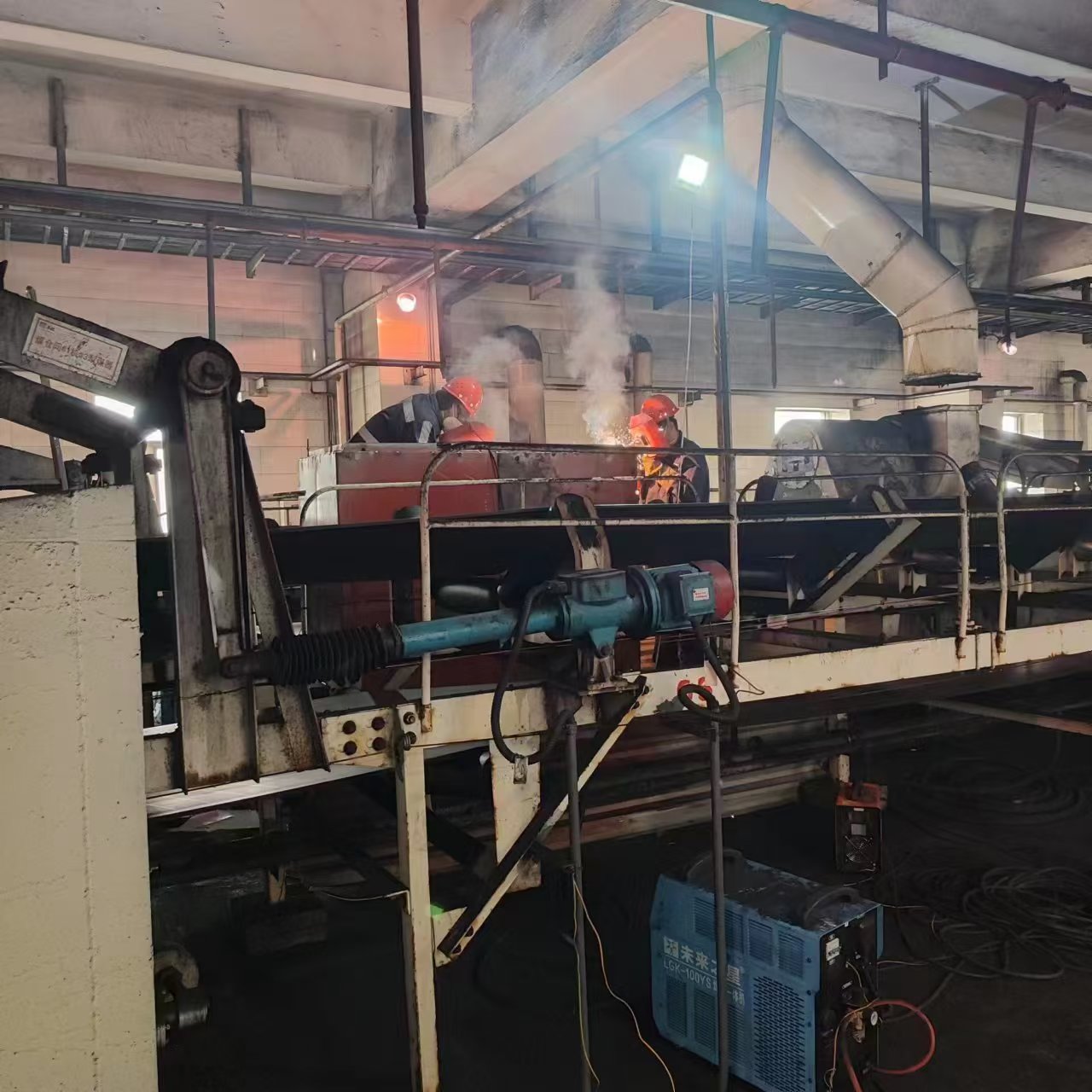
In power generation and coal handling, as the maintenance image above illustrates, on-site service and spare-parts logistics dominate. A collector on a conveyor transfer point is inspected and maintained inside planned outages, so the deciding question is who attends site and how quickly, not which unit has the highest headline efficiency. In foundries, hazard control re-enters the shortlist: the supplier-described example reviewed for this article pairs a cyclone pre-cleaner with a pulse-jet baghouse and adds explosion venting, isolation and spark detection, with wet or dry collection selected according to the dust hazard. That is an example configuration, not a template — the DHA governs, and any supplier shortlisted for a combustible dust application must be assessed against it.
Market context behind the 2026 shortlist
Published commercial research places the global industrial dust collector market at approximately USD 13.42 billion by 2034, within a 2026–2034 forecast period, and reports that baghouse collectors held around 25.8% of global market revenue in 2025 (Grand View Research, published September 2026). Two interpretive points follow, and both should be read as context rather than as a demand forecast for any individual plant.
First, the baghouse share confirms that fabric-media collection remains a substantial part of installed capacity, which keeps bag replacement, cage condition and pulse-cleaning performance at the centre of lifecycle cost. Second, commercial estimates of this market vary with product scope and geographic definition, so the figures are useful for sizing the category and not for benchmarking one supplier against another. No market share is attributed to SENOTAY or to any peer in this article, and none should be inferred from the shortlist order.
What would change this shortlist
A shortlist is a decision tool, and it should shift when the constraints shift. If the Dust Hazard Analysis identifies combustible dust, explosion protection, collector location and isolation become gating requirements rather than scored dimensions — a supplier that cannot document them is excluded regardless of price. If the need is an urgent replacement of a common size, stocked availability outweighs customization. If the project is a multi-site rollout, service coverage and spares logistics outweigh R&D depth, because the same configuration will be replicated rather than engineered. If the stream is high-temperature or corrosive, materials and media selection outweigh everything else on the page.
The verification step that ties these together is unglamorous and effective: request, for the quoted configuration only, the airflow basis, the media and temperature rating, the efficiency test conditions, the certificate scope, the test protocol applied before shipment, the lead time with delivery term, and the service commitment in writing. Suppliers that answer completely move up the shortlist for a reason that has nothing to do with marketing.
SENOTAY's product documentation, including the specification sheets behind the DMC-200, LXC-800, WESP-10000 and LTMC-5000 designations, is available through senotay.com, and the company brochure can be downloaded below for buyers assembling an RFQ pack.
FAQ
- How should a buyer build a dust collector shortlist in 2026?
- Start from four evidence-based dimensions rather than from brand familiarity: R&D and customization depth, service coverage, industry solution record and delivery capacity. Score only what a supplier documents in writing — engineering headcount and customization scope, commissioning and spares policy, one comparable reference in your process class, and monthly capacity, lead time, minimum order quantity and test protocol. Suppliers that cannot document a dimension should be marked as unverified, not assumed to be strong or weak.
- Which criteria most often separate dust collector suppliers during evaluation?
- The separating criteria are usually documentation and service scope rather than headline efficiency. Whether the airflow and media calculation is signed by an engineer, whether commissioning and operator training are included, whether spares are held or made to order, and whether the efficiency figure comes with stated test conditions decide more outcomes than a catalogue maximum. Regulatory fit follows the same logic: NFPA 652 requires a Dust Hazard Analysis for combustible dust, and OSHA references NRTL approval for electrical components, so a supplier unable to support those steps is a schedule risk.
- What documentation should be requested before a supplier is shortlisted?
- Request the datasheet for the exact quoted configuration, the efficiency claim with its test conditions, the certificate number, issuing body, scope and validity dates, the pre-shipment test protocol, the lead time with delivery term, the minimum order quantity, the commissioning and training scope, and the post-warranty service terms. For combustible dust applications, add the explosion-protection and isolation provisions required by the hazard analysis. Documentation that cannot be produced before the order is unlikely to appear after it.
- What do designations such as DMC-200, LXC-800, WESP-10000 and LTMC-5000 tell a buyer?
- They identify product entries in a manufacturer's portfolio, not comparable performance. In SENOTAY's case, DMC-200 is documented as an industrial dust collector listed on CE certificate M.2025.206.C123090 and used in an Indonesian rubber mixing installation, and LTMC-5000 is described as a cartridge dust collector at ≥99.9% filtration efficiency. Airflow rating, media, materials of construction and efficiency change with configuration, so the datasheet for the quoted build is the only reliable basis for comparison.
- How do delivery capacity and lead time affect a shortlist decision?
- Delivery capacity sets the realistic project schedule, but it contains three separate numbers that should be requested independently: monthly manufacturing capacity, the lead-time band per configuration, and the minimum order quantity. SENOTAY states 200 sets per month, a 15–45 day lead time and a one-set minimum, which makes a single-unit trial feasible; the 15–45 day band is a range to be confirmed per build. Stocked-standard programmes are a different category entirely and should not be benchmarked against engineered-to-order lead times.
Have Questions or Need More Details?
Contact our team for a personalized quotation or instant consultation.
Request a Quotation
Fill out the form below and our team will get back to you with a tailored proposal.
WhatsApp Direct Chat
Prefer to chat in real-time? Message us on WhatsApp for instant assistance & quick answers.
- Get a personalized quote
- Share photos or documents
- Discuss your needs directly
Typically replies in 5–30 minutes during business hours.