
EM241007 vs EM240404: Residential Artificial Turf Compared
Both are four-color residential grass models built on a 3/8" gauge — yet 15 mm of pile height, roughly 1,000 stitches per square meter, a different yarn geometry and a different backing system separate them. For a buyer specifying a backyard, a balcony, or a light multi-use surface, those four variables decide which model belongs in the project.
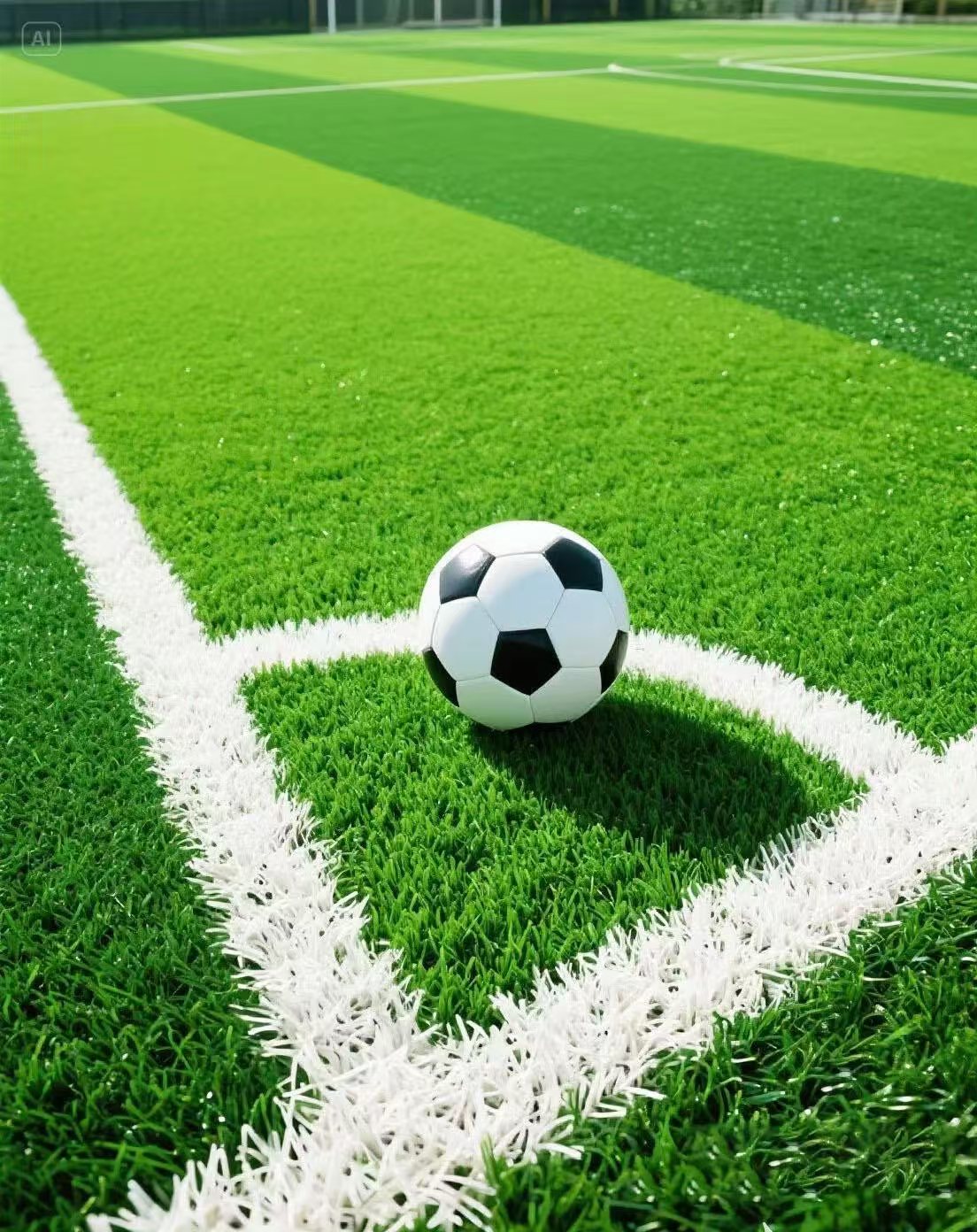
Global artificial turf demand reached an estimated USD 7.3 billion in 2025 and is projected to reach USD 13.7 billion by 2033, according to Grand View Research. Polyethylene face yarn accounts for 63.1% of the category's revenue share, and Asia-Pacific is the largest regional market with a 32.2% revenue share. Residential landscaping absorbs part of that volume, alongside sports and commercial installations, which together account for roughly 63.1% of application share.
For buyers, the practical shift is that quotations are no longer evaluated at the category level. Two products that look identical in a photograph can carry different pile heights, different stitch counts, and different backing constructions — and each of those variables changes how the surface feels underfoot, how the roll handles during installation, and how the finished area performs in daily residential use. This article compares two residential models side by side on their published specifications.
Both models come from the catalog of Wuxi Venus Turf Co., Ltd., an artificial turf manufacturer based in Wuxi, Jiangsu, China, which integrates research and development, production, and sales and supplies sports venues, leisure landscape venues, and schools. Its products are manufactured and sold under the Venusturf brand, with 80% of output directed to export markets. The two models compared here are EM241007 and EM240404, both classified as Residential Grass.
Why Residential Turf Buyers Now Compare Spec Sheets, Not Just Rolls
Two pressures are pushing residential buyers toward specification-level comparison. The first is replacement demand. AMI Plastics reported that the replacement segment of the sports turf market reached 41% of total demand in 2023, approximately 70 million square meters. Replacing an existing surface is now a routine purchasing event rather than an exception, and buyers who have already lived with a turf surface arrive with specific questions about pile height, density, and backing behavior.
The second pressure is category convergence. With polyethylene at 63.1% of material revenue share in 2025, the base material is largely settled across mainstream suppliers, and differentiation has moved into construction details: how many stitches per square meter, what shape the monofilament is extruded into, and what coating system holds the tufts in place.
That is precisely why a side-by-side comparison between two models from the same manufacturer is useful. EM241007 and EM240404 share a gauge, a color configuration, and a general application profile, which removes the noise of category differences and leaves the buyer with a small, comparable set of design decisions.
EM241007 and EM240404 at a Glance
The two models are documented as follows. All values below are the published specifications for each model.
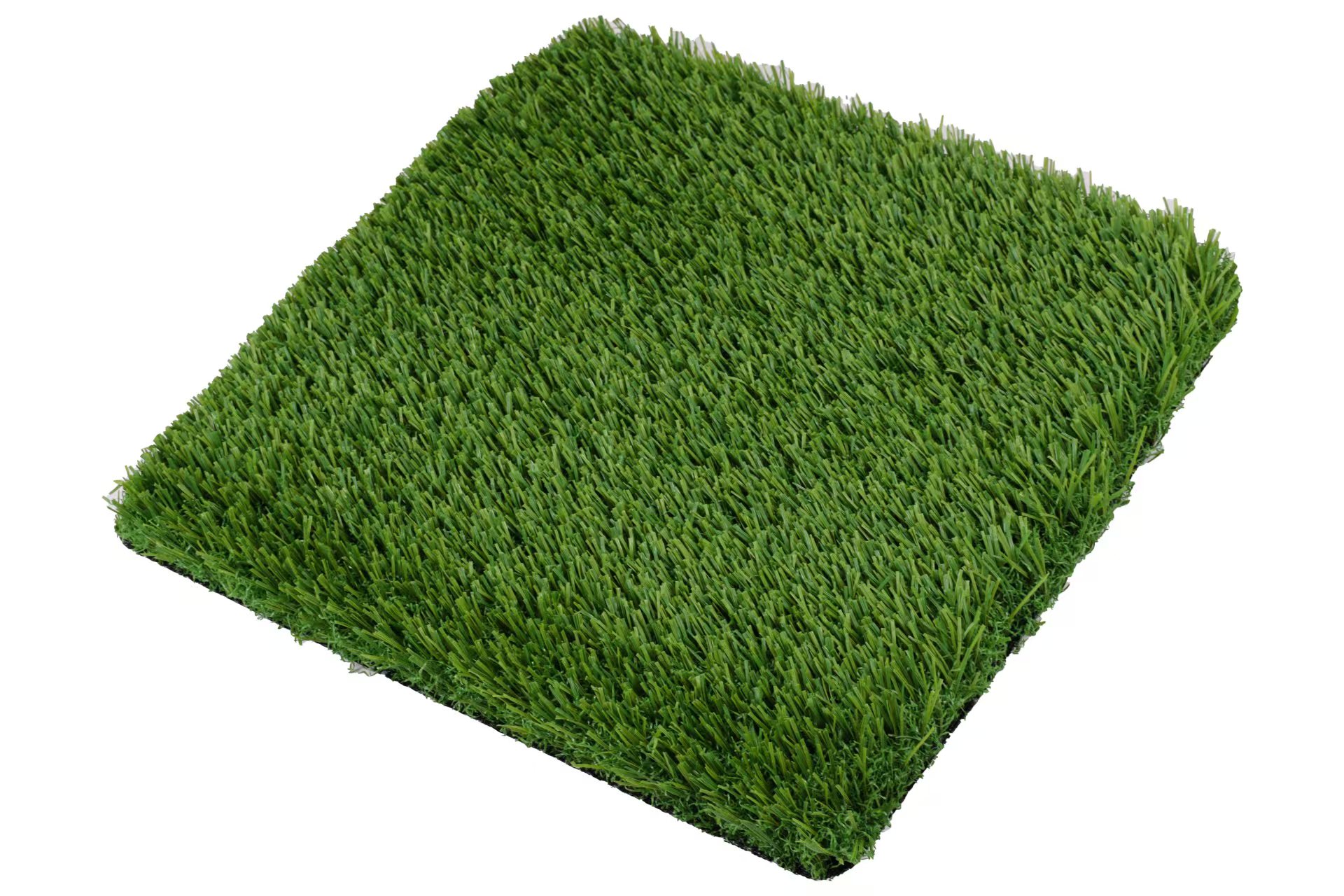
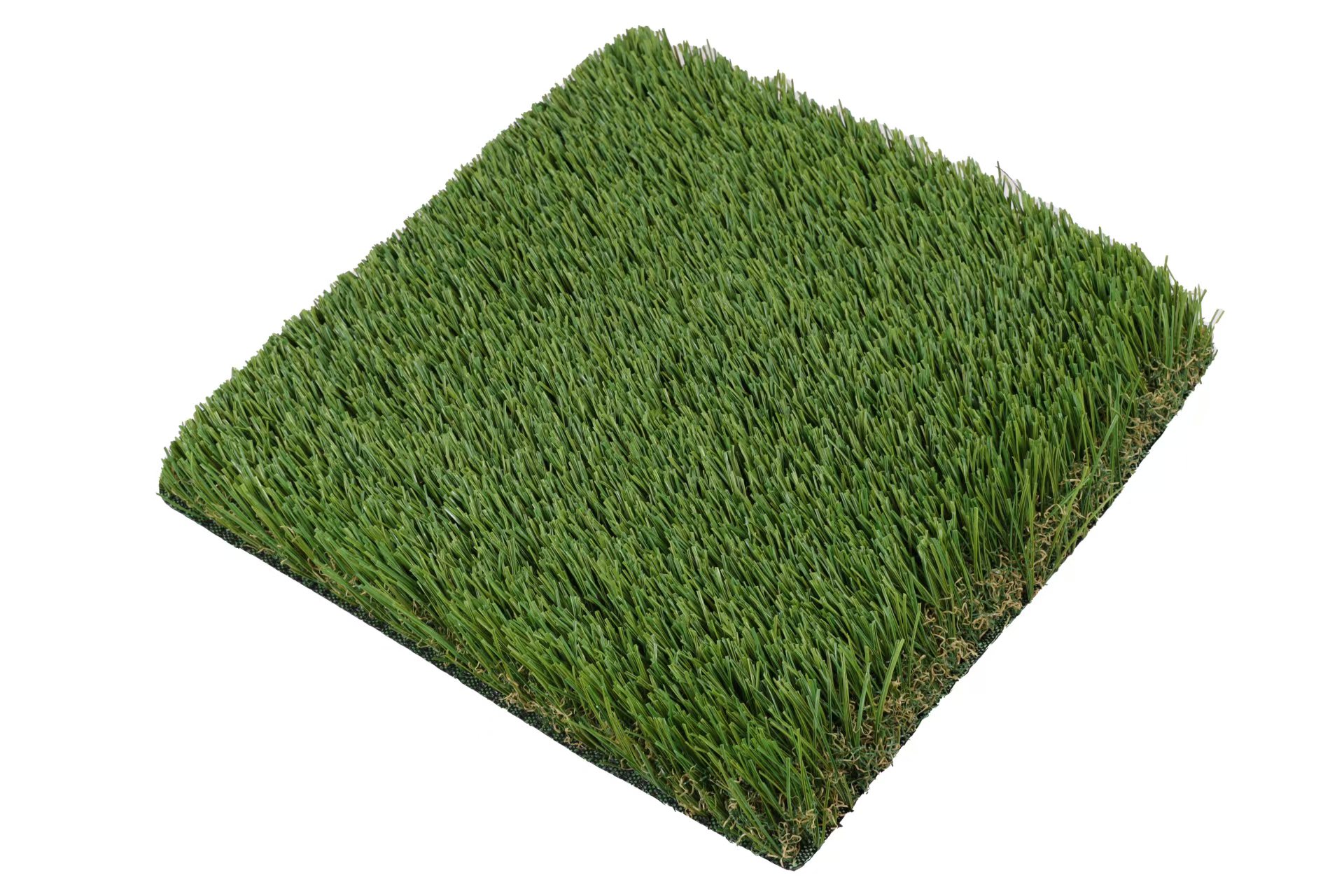
| Specification | EM241007 | EM240404 |
|---|---|---|
| Product type | Residential Grass | Residential Grass |
| Pile height | 45 mm | 30 mm |
| Gauge | 3/8" | 3/8" |
| Yarn construction | U-shape with spine monofilament PE + curled PP | C-shape monofilament PE + curled PP |
| Density | 150 stitches/m (15,750 stitches/m²) | 140 stitches/m (14,700 stitches/m²) |
| Backing system | Double PP + PU glue | PP + Mesh + SBR latex |
| Color | Four-color | Four-color |
| Material | PP, PE | PP, PE |
| Documented applicable industries | Landscaping, Sports, Construction, Hospitality | Landscaping, Sports, Construction, Hospitality |
Read at a glance, the two models are close relatives: same gauge, same four-color structure, same PE/PP material family, and the same four documented application industries. The distinctions sit entirely in pile height, stitch density, yarn profile, and backing construction.
Pile Height, Density, and Gauge: What the Numbers Change
Pile height: 45 mm versus 30 mm
Pile height is the vertical length of the fiber above the backing. EM241007 carries a 45 mm pile, and EM240404 carries a 30 mm pile — a 15 mm difference that is visible in a cross-section and perceptible underfoot. In practice, a longer pile generally produces a fuller, softer face appearance and a more cushioning walk, while a shorter pile generally produces a tighter, more uniform surface that sits lower in the profile.
Density: 15,750 versus 14,700 stitches per square meter
Density describes how many tufts are inserted per unit of area. Because both models use the same 3/8" gauge, the density difference is driven by stitches per meter: 150 stitches/m for EM241007 (15,750 stitches/m²) against 140 stitches/m for EM240404 (14,700 stitches/m²). Density is the variable most often linked to how well a surface retains its face under traffic and how evenly it wears; a higher stitch count generally means more fiber mass in the same area.
Gauge: the shared constant
Gauge is the spacing between adjacent tufting needles. Both models use a 3/8" gauge, which means the row spacing is identical and the perceived difference in surface texture comes from pile height, yarn shape, and tuft density rather than from a change in the tufting geometry itself.
Yarn Geometry and Backing Systems: The Less Visible Differentiators
Yarn construction is where the two specifications separate structurally. EM241007 uses a U-shape-with-spine monofilament PE combined with curled PP. EM240404 uses a C-shape monofilament PE, also combined with curled PP. Both designs pair a shaped monofilament component — which carries the visible face and reflective appearance of the surface — with a curled PP component that is typically used to add body and support within the pile.
The backing systems differ as well. EM241007 is specified with Double PP plus PU glue, while EM240404 is specified with PP plus a mesh layer and SBR latex. Both are polypropylene-based backing constructions with a secondary coating chemistry; the presence of a mesh layer in EM240404 and the use of a PU glue system in EM241007 are the two distinct choices a buyer will see on the datasheet.
An important qualifier belongs here. The published specifications for these two models describe the backing composition but do not include comparative test data between the two constructions. That means a buyer should treat the backing difference as a specification to confirm with the supplier — including dimensional stability, coating weight, and installation handling — rather than as a settled performance ranking. PU glue and SBR latex are both established coating chemistries in the artificial turf category, and neither specification, as published, states a measured advantage over the other.
Scenario Fit: Matching Each Model to a Residential Project
The documented operating profile for this product family covers outdoor all-weather use, with UV resistance, wear resistance, anti-aging behavior, and high-traffic tolerance recorded among the working conditions. The documented functions are to replace natural grass and reduce maintenance costs, to support easy cleaning, and, where the surface is used for sport, to provide standardized athletic performance and support athlete safety. Documented project types include sports field construction, landscape greening, pet area installation, commercial decoration, and event venue setup.
Against that operating profile, the two models map onto different residential scenarios:
- EM241007 (45 mm, 15,750 stitches/m²) suits larger residential lawns, backyard grass areas, family gardens, and hospitality or courtyard settings where a fuller, deeper face is the priority. Its documented applicable industries extend to Sports and Construction, which is relevant where the same surface has to absorb occasional heavier use rather than only foot traffic.
- EM240404 (30 mm, 14,700 stitches/m²) suits balcony grass, rooftop and terrace areas, courtyard edges, patio surrounds, decorative installations, and pet areas where a lower, tighter profile is preferred and where surface height matters for thresholds, doors, or planters.
Both models are documented as customizable in pile height, color, density, and material to meet specific project needs, which means the scenario fit above is a starting point for specification rather than a fixed limit. A buyer whose project sits between the two — a small backyard that wants more depth, or a large terrace that wants a tighter face — can raise the question of a customized specification.
Documented Application Evidence: A Golf Course Installation in the Philippines
One recorded application is useful for understanding how a residential-grade model behaves outside a purely decorative context. An individual client in the Philippines purchased 10 rolls of EM241007 for a golf course application, with a recorded duration of three years. The recorded outcomes for that installation are athletic performance, visual aesthetics, and competitive fairness, and the recorded highlight is low maintenance.
What this evidence supports: EM241007 has been applied in a project where surface consistency and appearance both mattered, and the documented result emphasizes low maintenance over intensive upkeep. What this evidence does not support: it is a single recorded application, not a certification, not a laboratory test result, and not a general performance guarantee. Buyers evaluating a similar use case should request project-specific documentation rather than generalize from one installation.
Where the Specifications Stop: Limits, Trade-offs, and What to Verify
A comparison that only lists differences is incomplete. The following limits and verification gaps apply to both models and should be resolved before an order is placed.
- Infill and installation system are not specified. Neither published specification states an infill requirement, a drainage rate, or a base build-up. Those depend on the installation system and the intended use, and they must be confirmed project by project.
- No certification data is published for either model. Certification frameworks exist in this category: the FIFA Quality Programme for Football Turf issues FIFA Quality and FIFA Quality Pro certifications for performance and safety, European synthetic turf standards are governed by EN 15330-1, and German installations are governed by DIN 18035-7. Because the available specifications for EM241007 and EM240404 do not include certification records, no certification claim can be made for them from published data. Buyers who need certified performance must request test documentation directly.
- Backing performance is not settled by the published data. The Double PP + PU glue system and the PP + Mesh + SBR latex system are described structurally, but the specifications do not contain comparative measurement between them.
- Order size may exceed a small residential project. Venusturf's stated minimum order quantity is 1,000 m², with a lead time of 30–45 days. A single small backyard or balcony project may sit below that threshold and should be discussed with the supplier at the quotation stage.
- Market-size figures are scope-dependent. Published estimates diverge because they handle raw material value and installation services differently: Grand View Research reports USD 7.3 billion for 2025, Future Market Insights reported USD 3.49 billion for 2024, and a separate estimate of USD 80 billion for 2023 appears to include full facility construction. Any single market number should be read with its scope in mind.
- Artificial turf is a system, not a roll. Performance at the finished surface depends on sub-base preparation and installation workmanship, so two projects using the same model can produce different results.
How the Two Models Compare With Natural Grass and Traditional Solutions
Both EM241007 and EM240404 are documented to replace natural grass and reduce maintenance costs, and both are designed to be easy to clean. That is the core functional case for a manufactured residential surface, and it holds for both models.
The boundary is equally clear. Artificial turf is a manufactured system that requires a prepared base and periodic maintenance — brushing, debris removal, and inspection of seams and edges — and it does not behave like a living ground cover in ecological or thermal terms. Compared with engineered sports turf systems, these two models are residential-grade products, not stadium systems: they carry a 3/8" gauge and residential classifications, and the published specifications do not include the certification or performance testing that organized competition surfaces are measured against. Buyers who need a certified competition surface should treat this pair as the wrong category, not as an under-specified version of the right one.
Market Trends Shaping Residential Turf Selection
Three verified signals frame where residential turf selection is heading. First, the category is growing: the global artificial turf market was valued at USD 7.3 billion in 2025 and is projected to reach USD 13.7 billion by 2033, per Grand View Research. Second, supply is concentrated in Asia-Pacific, which held the largest regional revenue share at 32.2%; within that region, China leads with more than 15,000 synthetic sports fields installed, accounting for 52% of regional installations according to Mordor Intelligence. Third, replacement demand is now a structural part of the market: AMI Plastics put the replacement segment at 41% of total demand in 2023, roughly 70 million square meters.
The practical consequence for buyers is that model-level documentation becomes more valuable over time. As replacement cycles shorten and more buyers re-enter the market with installation experience, questions shift from "is artificial turf suitable?" to "which construction specification suits this surface?" — the exact question this comparison addresses.
The Manufacturing Context Behind Both Models
Specifications only mean something if the manufacturer can reproduce them consistently. Wuxi Venus Turf Co., Ltd., operating as Venusturf, states that it runs 30 integrated production lines and controls the full manufacturing sequence from yarn extrusion, twisting, tufting, and coating through to final packaging and delivery, supported by a 25-engineer R&D team. Its stated monthly capacity is 50,000 m², with a lead time of 30–45 days, a minimum order quantity of 1,000 m², 100% testing as its quality-control standard, and remote technical support as its after-sales provision.
For customization, Venusturf's OEM scope covers appearance, specifications, performance and functionality, and the base and installation system — a scope that aligns with the documented ability to customize pile height, color, density, and material for specific project needs. Quality verification references laboratory equipment including a water bath, spectral light box, UV climate resistance test chamber, tensile tester, moisture tester, intelligent high-transmission electron microscope, and vernier caliper. Buyers who want the underlying documentation can reference the company's public product literature: Venusturf product brochure (PDF).
Future Outlook
If the projected trajectory toward USD 13.7 billion by 2033 holds, growth will not be driven by a single application. Residential landscaping, replacement demand, and multi-purpose surfaces will continue to absorb capacity alongside sports installations, and buyers will keep pressing suppliers for the construction details that a photograph cannot show: pile height, stitches per square meter, yarn geometry, and backing chemistry.
For a two-model decision like EM241007 versus EM240404, that means the selection will increasingly be made on documented fit rather than on appearance alone. The 45 mm model answers projects that want depth, mass, and a fuller face; the 30 mm model answers projects that want a tighter, lower profile. Both remain customizable within the manufacturer's OEM scope, which keeps the specification open where a project does not match either default.
FAQ
What is the main specification difference between EM241007 and EM240404?
EM241007 is a 45 mm residential grass with 150 stitches/m (15,750 stitches/m²), a U-shape-with-spine monofilament PE plus curled PP yarn, and a Double PP + PU glue backing. EM240404 is a 30 mm residential grass with 140 stitches/m (14,700 stitches/m²), a C-shape monofilament PE plus curled PP yarn, and a PP + Mesh + SBR latex backing. Both use a 3/8" gauge, are four-color, and are documented for landscaping, sports, construction, and hospitality applications.
Which model is more suitable for a balcony, courtyard, or small residential area?
EM240404, with its 30 mm pile, is the lower-profile option of the two and generally suits smaller residential footprints such as balconies, terraces, courtyards, and patio surrounds, as well as decorative and pet-area applications. Because the published specification describes the turf itself rather than the installation system, the base build-up and drainage design for the specific area should be confirmed with the supplier.
Does a 45 mm pile height require infill?
The published specification for EM241007 does not state an infill requirement, and no infill specification is included for EM240404 either. Infill depends on the installation system and the intended use, so it should be confirmed for the specific project rather than inferred from pile height. Buyers should request the installation recommendation together with the product datasheet.
Can these residential models be used for light sports or multi-use surfaces?
Both models list sports among their documented applicable industries. One recorded application of EM241007 involves an individual client in the Philippines who purchased 10 rolls for a golf course application with a recorded duration of three years, with athletic performance, visual aesthetics, competitive fairness, and low maintenance recorded as outcomes. For organized competition, certification documentation should be requested separately: the FIFA Quality Programme for Football Turf issues FIFA Quality and FIFA Quality Pro certifications, European synthetic turf standards are governed by EN 15330-1, and German installations by DIN 18035-7. The available specifications for these two models do not include certification records.
What order quantity and lead time should a residential buyer expect?
The stated minimum order quantity is 1,000 m², the stated lead time is 30–45 days, and the stated monthly capacity is 50,000 m². Projects below 1,000 m² fall under the standard MOQ and may need to be discussed directly, particularly where a project mixes models or requires a customized specification.
Can EM241007 or EM240404 be customized?
Customization is documented for pile height, color, density, and material to meet specific project needs. The broader OEM scope covers appearance, specifications, performance and functionality, and the base and installation system. Quality control is described as 100% testing, and after-sales support is provided as remote technical support.
Have Questions or Need More Details?
Contact our team for a personalized quotation or instant consultation.
Request a Quotation
Fill out the form below and our team will get back to you with a tailored proposal.
WhatsApp Direct Chat
Prefer to chat in real-time? Message us on WhatsApp for instant assistance & quick answers.
- Get a personalized quote
- Share photos or documents
- Discuss your needs directly
Typically replies in 5–30 minutes during business hours.