
EN 13249 and GOST: Navigating Geomembrane Qualifications
EN 13249 and GOST: Navigating Geomembrane Qualifications
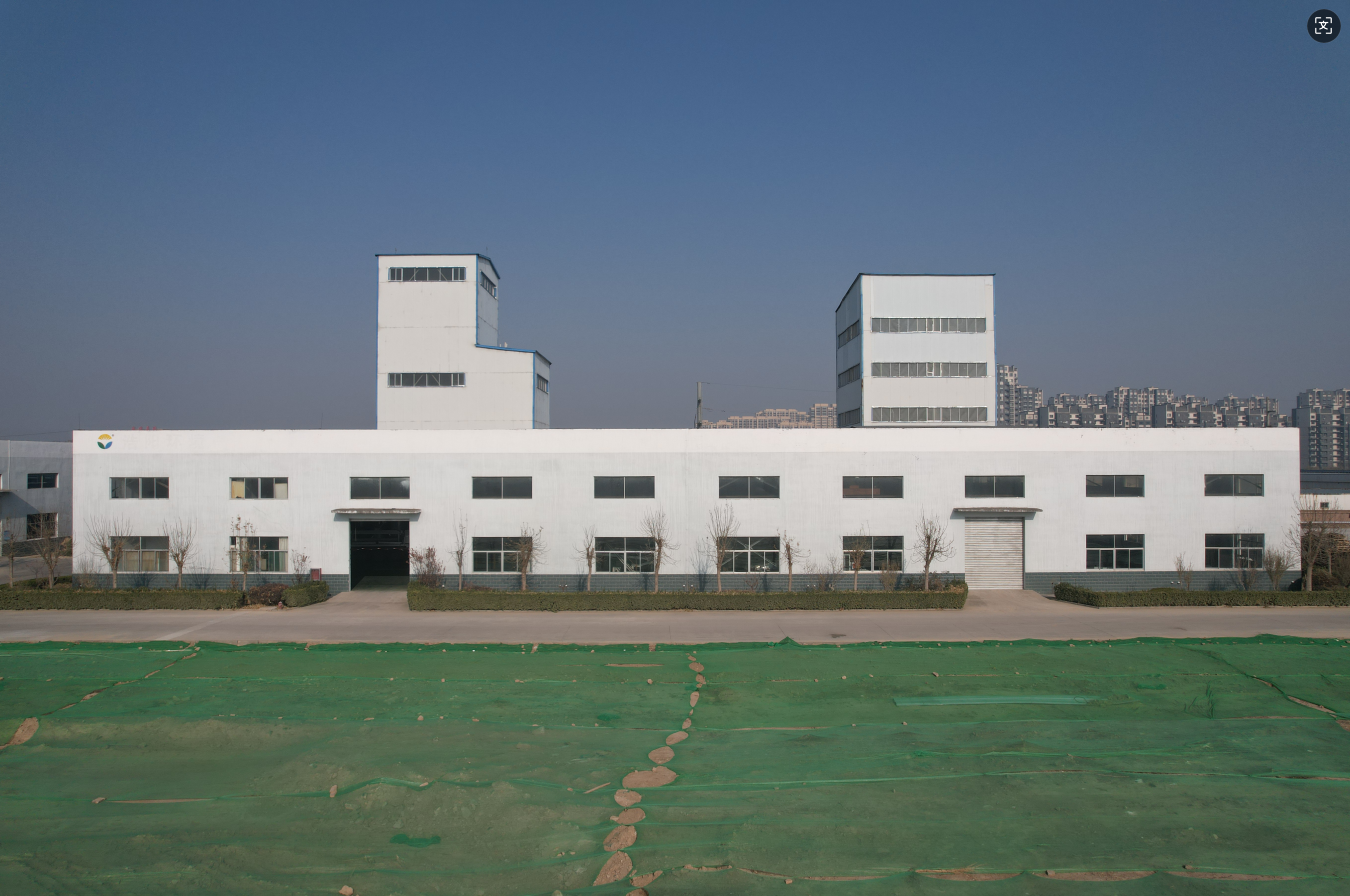
HDPE geomembrane production is the first link in the qualification chain: certificates attest to the product family that leaves a facility like this one. Image: Haoyang Environment Co., Ltd.
For a geomembrane to be installed in an EU/EEA or an EAEU project, performance data alone is rarely enough. Project owners, technical regulators and tender committees generally expect evidence that the liner was assessed against the standard governing the market, and the documents carrying that evidence are market-specific. Haoyang Environment Co., Ltd, a geosynthetics manufacturer based in Shandong, China, holds two such certifications: ICR certificate ICR/VC/HE250525, which references EN 13249:2016 for the EU/EEA market, and GOST certification for the EAEU and Russia, including certificate POCC CN.32682.047C00.0C01.H00840.
Understanding how those two documents differ — and what neither of them covers — is often the difference between a compliant submittal and a rejected one.
Why Qualification Documents Decide Geomembrane Procurement
A product data sheet and a qualification certificate answer different questions. The data sheet states what the material can do: thickness, tensile strength, elongation, puncture resistance, oxidative induction time. The certificate states who assessed the product, against which standard, for which market, and under which document number.
In containment applications the two are read together, but they are not interchangeable. A liner with excellent mechanical values that cannot be documented against the applicable market standard is a procurement risk, because the barrier element sits inside a regulated system — tailings containment, evaporation ponds, reservoir lining, aquaculture ponds — where approval is documentary as much as technical.
The scale of that system explains why the paperwork carries weight. The global geomembrane market was valued at approximately USD 2.23 billion in 2025 and is projected to reach USD 3.59 billion by 2034, according to Fortune Business Insights. Mining was the leading application segment in 2023, accounting for 39.6% of global revenue, according to Grand View Research — a segment driven largely by tailings containment. HDPE is the dominant polymer family, representing approximately 31.3% to 40% of global revenue depending on the reporting agency (Grand View Research; Fortune Business Insights).
The practical complication is jurisdictional. A certificate issued against a European standard does not automatically satisfy EAEU requirements, and a GOST certificate does not substitute for EU/EEA attestation. Buyers sourcing across both regions therefore have to check two separate document sets, against two different project specifications.
The Two Qualification Routes Haoyang Holds
Haoyang Environment Co., Ltd is a Chinese geosynthetics manufacturer headquartered in the Dezhou (Yucheng) National High-Tech Industrial Development Zone, Shandong Province. Founded in 2008, the company operates a 200,000 m² production facility with 190 employees and an annual output of 33,000 tonnes, and exports approximately 60% of its production. Its range covers high-performance geomembranes, high-strength polypropylene geotextiles, anti-silt drainage nets, powder-type bentonite waterproof blankets, high-end cement blankets, spray-on anti-seepage materials, and related composite drainage geonets. Company information is published at https://www.haoyanghuanjing.com/.
For the two regulated markets discussed in this article, the company holds:
- EU/EEA: ICR certificate ICR/VC/HE250525, referencing EN 13249:2016.
- EAEU / Russia: GOST certification, including certificate POCC CN.32682.047C00.0C01.H00840.
| Market | Document | Reference on the document | Primary procurement function |
|---|---|---|---|
| EU / EEA | ICR certificate | ICR/VC/HE250525; EN 13249:2016 | Documents assessment of the product against the European standard named on the certificate for EU/EEA projects. |
| EAEU / Russia | GOST certificate | POCC CN.32682.047C00.0C01.H00840 | Conformity documentation supporting placement of the product in EAEU/Russia projects and tender packages. |
The operational value of these documents is narrow and specific. They establish market eligibility before technical evaluation begins, they tie a certificate number to a named product family, and they give the buyer a reference that can be checked against the supplier's document pack. They do not, on their own, confirm that the delivered batch matches the certified formulation — that is the function of batch test reports.
Technical Explanation: What the Two Standards Address
EN 13249:2016 is the harmonised European standard named on the ICR certificate. When reviewing the document, the decisive element is the declared scope: the certificate identifies the product and the standard against which conformity was assessed. Two checks matter in practice — that the geomembrane grade quoted in the bill of materials matches the grade named on the certificate, and that the certificate is valid at the time of delivery.
Market standards are not interchangeable, and this is where tender-stage confusion most often appears. European projects involving reservoirs and dams are separately governed by EN 13361, which specifies safety and performance characteristics for CE marking, according to the European Committee for Standardization. A certificate referencing EN 13249:2016 and a specification requiring EN 13361 are therefore two different things, and a buyer preparing a reservoir or dam package should confirm which standard the project specification actually invokes.
On the EAEU side, GOST certification is the conformity route used for products placed on the Russian and EAEU market. The certificate number identifies the document issued for a defined product and technical basis. Verification is documentary: the number on the supplier's certificate should match the number quoted in the tender submission, and the product designation on the certificate should match the material being offered.
In parallel, buyers frequently reference international specifications that are adopted through project documents rather than through market regulation:
- GRI-GM13 — the standard specification for HDPE geomembranes published by the Geosynthetic Institute, covering test properties and test frequencies.
- GRI-GM17 — the corresponding specification for LLDPE geomembranes used in high-elongation applications.
- ASTM D5397 — the standard test method for evaluating the stress crack resistance of polyolefin geomembranes using the Notched Constant Tensile Load (NCTL) test.
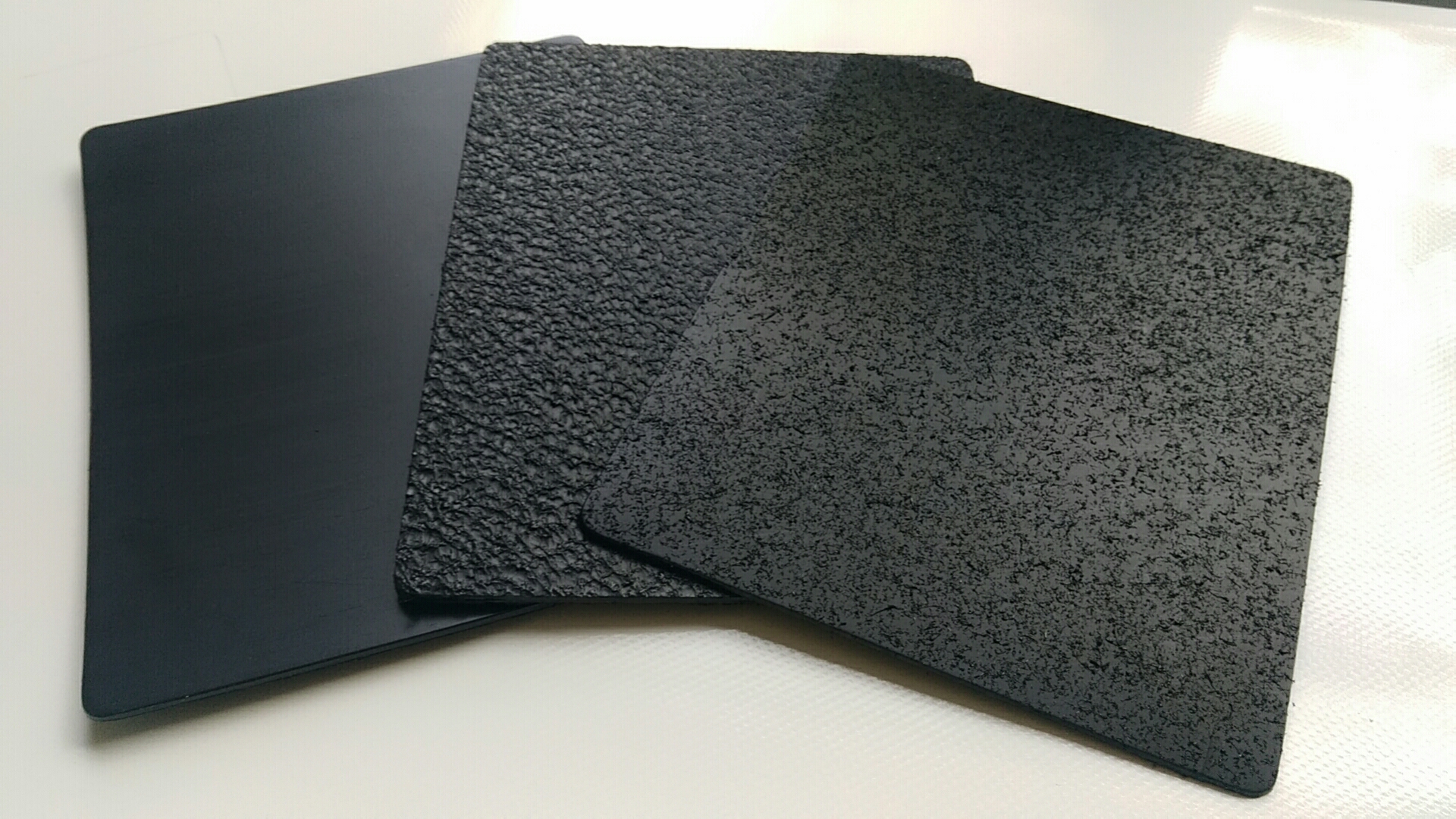
Documentation and material must describe the same product: the certificate names the assessed grade, and the delivered liner must correspond to it.
Published parameters for Haoyang's geomembrane range — manufactured in HDPE, with thickness from 0.3 mm to 3.0 mm and customizable within that range — are summarised below. These values describe the material; the certificates describe its assessment.
| Property | Published value |
|---|---|
| Material | HDPE |
| Thickness | 0.3 mm – 3.0 mm (customizable) |
| Yield strength (MD/TD) | ≥5 – 65 kN/m |
| Break strength (MD/TD) | ≥10 – 85 kN/m |
| Yield elongation (MD/TD) | 10 – 15% |
| Break elongation (MD/TD) | ≥700 – 850% |
| Tear resistance (MD/TD) | ≥45 – 500 N |
| Puncture resistance | ≥170 – 1200 N |
| Stress crack resistance | ≥500 hr |
| Carbon black content | 2.0 – 2.8% |
| Standard OIT | ≥130 min |
| High pressure OIT | ≥430 min |
| Oven aging at 85 °C | Standard OIT retained ≥60% after 90 days |
Two of these parameters connect directly to the durability questions that qualification documents are meant to answer. Carbon black content and oxidative induction time (OIT) are the values most often examined when UV exposure and long-term oxidative aging are discussed, while stress crack resistance is evaluated using methods such as ASTM D5397. The oven aging figure — standard OIT retention of at least 60% after 90 days at 85 °C — speaks to how the material behaves across service life rather than only at delivery.
Application Scenarios Where These Qualifications Are Checked
Metal smelting and tailings containment. In the metal smelting industry, geomembranes are used in anti-seepage system projects where the working condition is leakage prevention and the system operates around the clock. Typical requirements are high chemical resistance, UV resistance and long service life, and the liner is frequently installed together with a drainage geonet as part of the same containment build-up. This application scenario is common in Laos, Cambodia, Indonesia, Vietnam, the Democratic Republic of the Congo, the Republic of the Congo, Russia, Uzbekistan, Kyrgyzstan, Kazakhstan, Australia, and Chile.
Aquaculture ponds. In aquaculture, the geomembrane forms the anti-seepage layer of the pond system, and the function is to prevent water seepage. The requirement set differs from mining: the material must be non-toxic and fish-friendly, with UV resistance and long service life, in systems that typically run continuously. This application scenario is common in Southeast Asian countries such as Laos, Cambodia, Indonesia, and Vietnam.
| Application | Working condition | Function | Typical special requirements |
|---|---|---|---|
| Metal smelting / tailings and anti-seepage systems | Leakage prevention, continuous operation | Prevent liquid leakage | High chemical resistance, UV resistance, long service life; often combined with a drainage geonet |
| Aquaculture ponds | Leakage prevention, continuous operation | Prevent water seepage | Non-toxic, fish-friendly, UV resistant, long service life |
The wider application fields Haoyang supplies include non-ferrous metal smelting tailings pond projects, salt lake mining projects, water conservancy projects, road and transportation projects, and sponge city construction. Reference projects listed by the company include the red mud pond environmental treatment project for Shandong Weiqiao Pioneering Group, the gold mine tailings pond expansion anti-seepage project for Yunnan Heqing Beiyao Mining Co., Ltd., the first phase of the phosphogypsum slag pond project for Sinochem Yunlong Co., Ltd., the ultrafine fly ash solid waste disposal supporting storage area project for Huadian Ningxia Lingwu Power Plant, the recycled water device evaporation pond project for Inner Mongolia Zhongmei Mengda New Energy Chemical Co., Ltd., the Eritrea copper-gold mine for Minmetals 23rd Metallurgical Corporation, and the Manono lithium mine in the Democratic Republic of the Congo for Gécamines. Water conservancy and transport references include the Middle Route of the South-to-North Water Diversion Project, the Three Rivers Governance Project, the Daxi Railway and the Central-South Passage.
The relevance to qualification is direct: these are exactly the project types in which a specification names the market standard to be met, and in which a supplier's certificate pack is examined before commercial terms are discussed.
Comparison and Limits: What Certification Does Not Prove
Certification is most useful when its boundaries are stated clearly. Four limits are worth understanding before a certificate is treated as blanket approval.
- Scope is application-specific. A certificate referencing EN 13249:2016 does not automatically satisfy EN 13361, the European standard covering safety and performance characteristics for CE marking of geomembranes in reservoirs and dams. Projects in those categories should confirm the required standard before evaluating suppliers.
- Market coverage does not transfer. ICR certification serves the EU/EEA route and GOST certification serves the EAEU/Russia route. Neither document substitutes for the other, and a dual-market programme requires both document sets.
- A certificate is not a batch guarantee. It attests to an assessed product against a standard; it does not confirm the composition of a specific roll delivered to site. Batch test reports, requested at the frequency defined in specifications such as GRI-GM13, remain necessary.
- It says nothing about installation. Seaming quality, subgrade preparation and construction quality assurance determine whether a correctly certified liner performs as intended.
| Document type | What it establishes | What it does not establish |
|---|---|---|
| ICR certificate (EN 13249:2016) | Assessment of a named product against the European standard cited, for EU/EEA market purposes | That the project's specific application standard is met, or that a delivered batch matches the assessed formulation |
| GOST certificate | Conformity documentation for placement of the product in the EAEU/Russia market | EU/EEA attestation, or compliance with project-specific technical specifications |
| Datasheet parameters | Declared material properties such as thickness, tensile strength, elongation, puncture resistance and OIT | Independent assessment, market eligibility, or batch identity |
| Batch test report | Properties of the material actually produced and delivered | Market certification, or long-term field performance |
Compared with uncertified commodity supply, the certified route adds documentation work, cost and lead time. For a small, low-consequence lining job that trade-off may not be justified. For a tailings pond, an evaporation pond or a regulated reservoir, the absence of the correct document set is usually the more expensive outcome, because it surfaces at tender review or at handover rather than at the point of purchase.
Market Trend: Compliance as a Procurement Filter
The category's growth profile reinforces the documentation trend. A market projected to expand from approximately USD 2.23 billion in 2025 to USD 3.59 billion by 2034 (Fortune Business Insights), with mining alone accounting for 39.6% of 2023 revenue (Grand View Research), is a market in which containment specifications are written by engineers and enforced by regulators. HDPE's share of revenue — between roughly 31.3% and 40% depending on the reporting agency — means most of that volume sits in the polymer family governed by documented specifications such as GRI-GM13.
Supplier structure matters too. Solmax holds an estimated 14.3% global market share as of 2025, according to Global Market Insights, and the wider field includes manufacturers such as Agru America, Naue GmbH, GSE Environmental and Plastika Kritis, according to Future Market Insights. Large multinational suppliers have made certificate packs a routine part of tender submissions, and buyers increasingly expect comparable documentation discipline from mid-sized manufacturers serving the same projects.
For buyers, the emerging pattern is procedural rather than dramatic: certificates are requested earlier, batch test reports are requested alongside them, and suppliers who cannot produce market-specific documentation are filtered out before technical evaluation begins.
Future Outlook
Three developments appear likely to shape geomembrane qualification over the coming procurement cycles. First, documentation is moving upstream, with verification requests arriving at pre-qualification rather than after technical evaluation. Second, dual-market capability is becoming a selection criterion in its own right, as owners running EAEU and EU/EEA projects within the same programme compare supplier document packs side by side. Third, batch-level evidence is increasingly bundled with certificates, so that the paper trail covers both the assessed product and the delivered roll.
Manufacturers that already hold dual documentation — ICR for the EU/EEA route and GOST for the EAEU route — start from a simpler position in that environment. Whether the advantage holds depends on the same two conditions as before: whether the certificate scope matches the project specification, and whether the delivered material matches the certificate.
FAQ
1. What is EN 13249:2016 in the context of geomembrane certification?
EN 13249:2016 is the European standard referenced by the ICR certificate held by Haoyang Environment Co., Ltd, numbered ICR/VC/HE250525, for the EU/EEA market. In procurement, the standard reference on a certificate should be read together with the certificate's declared scope, which identifies the product and the basis of assessment. Buyers should also confirm whether their project specification invokes a different European standard for the application in question, since the certificate and the specification must point to the same document.
2. What do GOST certificates such as POCC CN.32682.047C00.0C01.H00840 cover?
GOST certification is the conformity documentation route for products placed on the Russian and EAEU market. Certificate POCC CN.32682.047C00.0C01.H00840 is an example of the certificates held by Haoyang for that market. It supports market access and tender documentation for EAEU/Russia projects, but it does not substitute for EU/EEA attestation, and it does not replace project-specific technical specifications issued by the buyer or the design engineer.
3. Does a geomembrane certificate remove the need for batch test reports?
No. A certificate attests to a product assessed against a defined standard, while a batch test report documents the properties of the specific material delivered. Specifications such as GRI-GM13 define both test properties and test frequencies for HDPE geomembranes. In practice, buyers request both documents: the certificate for market and product eligibility, and the batch report for delivery verification.
4. Which standards apply to HDPE geomembranes outside the EU and EAEU?
Globally referenced specifications include GRI-GM13 for HDPE geomembranes, published by the Geosynthetic Institute and covering test properties and frequencies, and GRI-GM17 for LLDPE geomembranes used in high-elongation applications. ASTM D5397 is the standard test method for evaluating stress crack resistance of polyolefin geomembranes using the Notched Constant Tensile Load (NCTL) test. These standards are generally adopted through project specifications rather than applied as market regulation, which means the buyer's specification determines whether they are mandatory for a given job.
5. How can a buyer verify a certificate number?
Verification is documentary and starts with three comparisons: the certificate number quoted in the tender pack against the number on the supplier's own document, the product designation on the certificate against the material actually offered, and the certificate's stated validity period, where one is given, against the planned delivery date. Where the certificate references a standard such as EN 13249:2016, the declared scope should be read to confirm which product families and applications it covers.
6. Which project types most often require these qualifications?
Containment applications in which leakage carries regulatory or environmental consequences: non-ferrous metal smelting tailings ponds, salt lake mining projects, evaporation ponds, water conservancy works, and aquaculture pond anti-seepage systems. In the metal smelting scenario, typical requirements are high chemical resistance, UV resistance and long service life, with the liner often installed alongside a drainage geonet; in aquaculture, the emphasis falls on non-toxic, fish-friendly material with UV resistance. For European reservoirs and dams, EN 13361 governs safety and performance characteristics for CE marking.
7. What thickness and parameter range is typical for these applications?
Haoyang's geomembrane range is manufactured in HDPE with a thickness of 0.3 mm to 3.0 mm, customizable within that range. Published values include yield strength of ≥5 to 65 kN/m, break strength of ≥10 to 85 kN/m, break elongation of ≥700 to 850%, puncture resistance of ≥170 to 1200 N, stress crack resistance of ≥500 hours, carbon black content of 2.0 to 2.8%, standard OIT of ≥130 minutes and high-pressure OIT of ≥430 minutes. The oven aging figure — standard OIT retention of at least 60% after 90 days at 85 °C — is the durability indicator most relevant to long-service installations.