
ENT Diode Laser Buyer Comparison: PIOON H1 and S1-C10
ENT Diode Laser Buyer Comparison: PIOON H1 and S1-C10
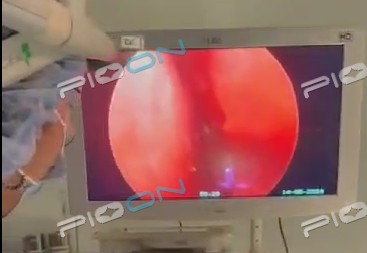
Hospitals comparing ENT diode laser systems should begin with the intended procedure, wavelength and delivery accessories—not the headline power figure alone. In PIOON’s supplied product information, the H1 980nm ENT and S1-C10 ENT 450nm are two distinct options: the H1 is specified at up to 20W and supports CW and pulsed operation, while the S1-C10 is specified at up to 10W and uses 450nm blue light. These published characteristics describe the systems; they do not establish that either model is clinically superior or appropriate for every ENT procedure.
This buyer comparison examines the two PIOON ENT diode laser systems using their documented configurations, then sets out practical checks for hospital procurement, OEM/ODM projects and distributor support. It is a comparison of the available product information, not a clinical trial, independent performance test or market ranking. The appropriate choice depends on the intended use, the configuration offered for the destination market, compatible fibers and handpieces, and the relevant regulatory authorization.
Why wavelength and delivery deserve priority
An ENT Surgical Laser uses delivered optical energy to produce tissue effects such as cutting, ablation and coagulation. Those effects depend on more than the device name or maximum output: wavelength, operating settings, exposure, tissue characteristics and delivery accessories all matter. The general ENT principle in the supplied knowledge material is photothermal interaction: absorbed laser energy heats targeted tissue, and the balance between incision, ablation and coagulation depends on the wavelength, power, exposure duration, anatomy and delivery technique.
That distinction is central to comparing a 980nm ENT diode laser with a 450nm blue diode laser. The H1 material describes 980nm energy interacting with hemoglobin and water and supporting soft-tissue cutting, coagulation and hemostasis. The S1-C10 material describes 450nm light as strongly absorbed by hemoglobin and presents it for selected incision, ablation and coagulation procedures. These are model descriptions, not proof that the wavelength will produce a specific clinical outcome in every tissue or case. A hospital should assess the intended procedures against the exact device configuration, accessories, approved indications and clinician requirements.
Maximum power is also a specification, not a stand-alone measure of suitability. H1’s listed maximum output is 20W and S1-C10’s is 10W, but the available information does not provide a comparative clinical outcome study or a common test protocol. Buyers should therefore avoid treating a higher maximum output as evidence of better performance. Instead, ask how output is set and controlled for the planned procedure, what modes are available, and which delivery accessories are validated for the exact model configuration.
Documented comparison: H1 980nm ENT and S1-C10 450nm ENT
The table summarizes only the listed product characteristics. It is not a ranking, and unlisted or unclear details should be confirmed in current model-specific documentation.
| Buyer dimension | PIOON H1 980nm ENT | PIOON S1-C10 ENT | Procurement meaning |
|---|---|---|---|
| Wavelength | 980nm | 450nm ±20nm | Different wavelengths have different tissue-interaction profiles. Match the wavelength to the procedure and approved indication. |
| Maximum output power | 20W | 10W | These are model specifications, not directly comparable clinical-effectiveness results. |
| Operating modes | Continuous Wave (CW) and Pulsed | Continuous Wave (CW) and Pulsed | Confirm the available settings, adjustment range and operation instructions for the proposed configuration. |
| Fiber interface and stated compatibility | SMA905; 200μm, 300μm and 400μm medical fibers | SMA905; medical fibers of 200μm and above | Check the exact fiber type, diameter, connector and handpiece needed for each planned procedure. |
| Display and control | 7-inch HD touchscreen; Smart OS | 7-inch Retina touch display, as listed in the product description | Request a demonstration of the actual offered interface and confirm software language and configuration. |
| Additional listed features | Up to 20kHz frequency, variable duty cycle, 3350mAh battery | 2850mAh battery; dual-fan and electronic cooling described in the product material | Verify operational requirements, included components and documentation for the exact market offer. |
When the H1 980nm ENT may fit a hospital evaluation
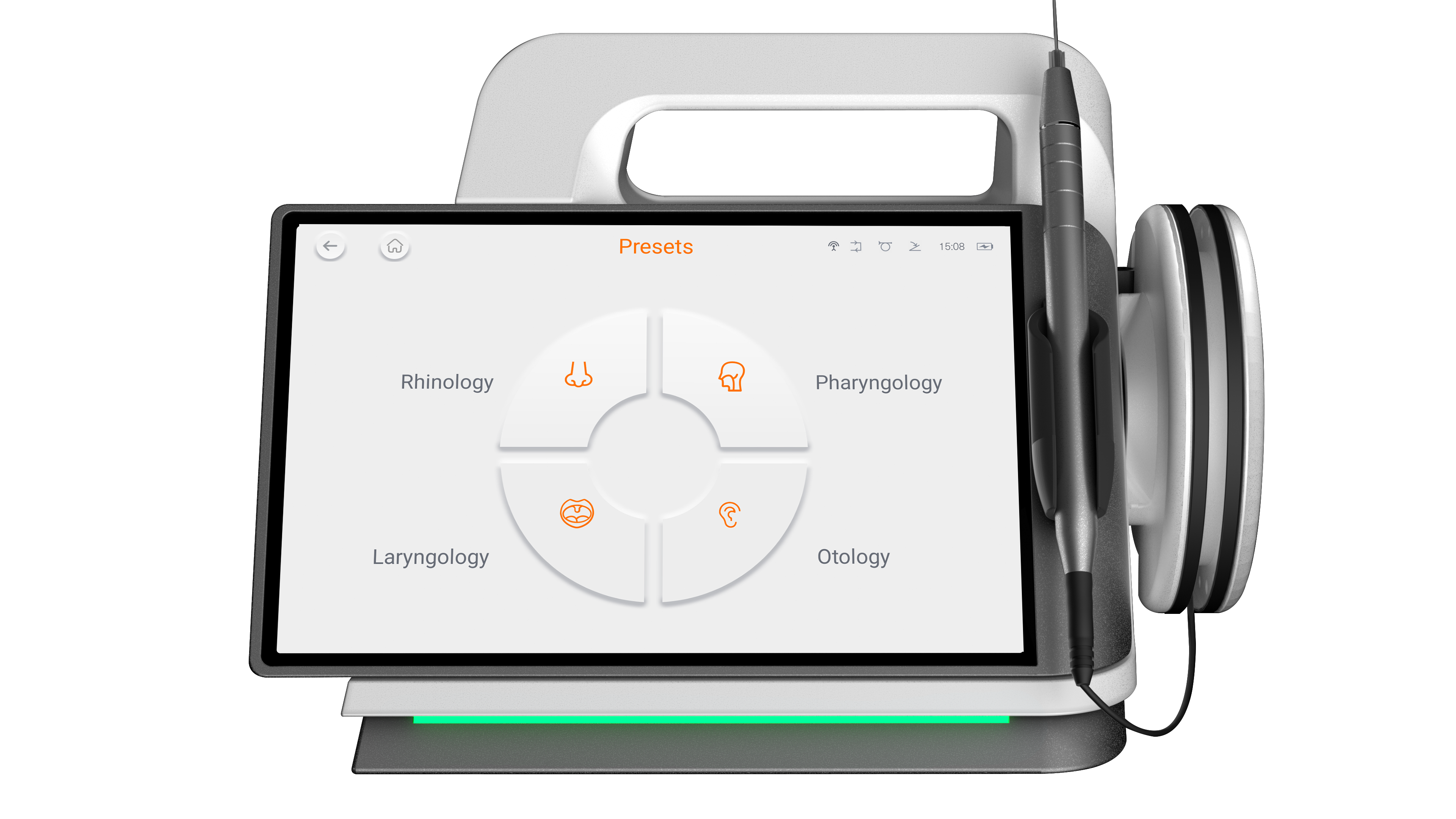
The H1 is the more clearly specified option for a buyer whose evaluation starts with a 980nm ENT system. Its listed parameters include up to 20W output, CW and pulsed modes, frequency up to 20kHz and variable duty cycle. It has a 7-inch HD touchscreen and Smart OS. The stated SMA905 connection is compatible with 200μm, 300μm and 400μm medical optical fibers.
The product material describes potential ENT use across rhinology, laryngology, pharyngology and selected otology procedures. Examples listed include turbinate reduction, nasal polypectomy, selected vocal-cord and laryngeal-lesion procedures, laser-assisted uvulopalatoplasty and selected soft-tissue procedures. Those application descriptions should not be read as authorization for every indication in every country. A hospital should match each proposed procedure to the local authorization and labeling for the specific model and configuration.
The H1 material also lists 15 clinical presets. Presets can be a relevant evaluation point for workflow, but their existence alone does not demonstrate clinical effectiveness, ease of use for every operator or suitability for a particular hospital protocol. During evaluation, request the current preset list and instructions, clarify whether settings can be adjusted, and determine what training is needed for clinicians who will use the system.
For procurement, the H1’s stated fiber sizes give a concrete starting point for an accessory review. Check whether the intended ENT surgical fiber, handpiece, interchangeable cannula and any footswitch are included, optional or separately sourced. Confirm connector compatibility at the full assembly level: a matching SMA905 interface by itself does not establish that every fiber or handpiece is suitable for every procedure.
When the S1-C10 450nm ENT may fit an evaluation
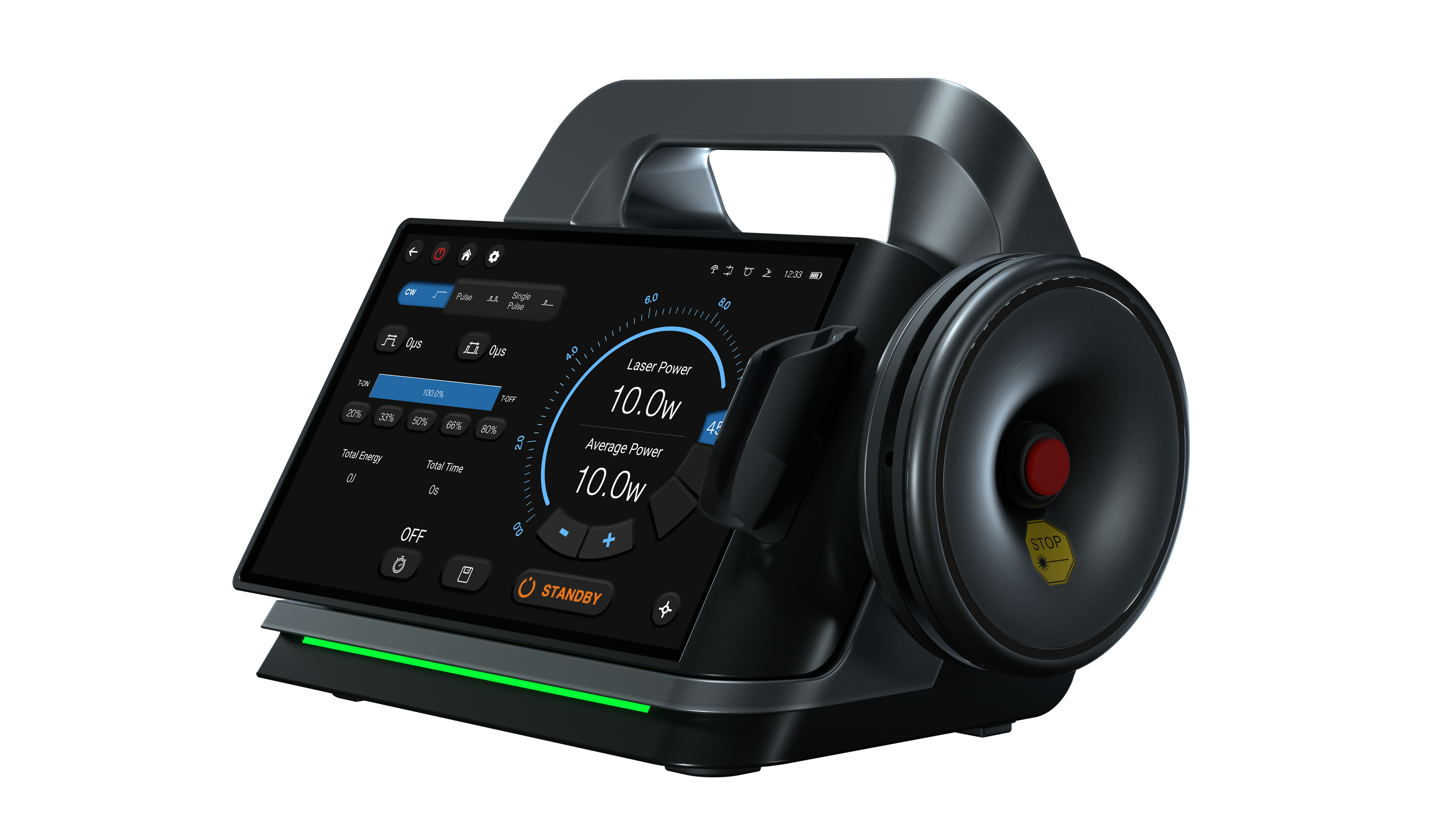
The S1-C10 is the blue-light option in this comparison. Its supplied specification lists a 450nm ±20nm wavelength and maximum output of 10W, with CW and pulsed modes. The product material describes both contact and non-contact operation through compatible optical fibers and positions the system for selected ENT soft-tissue applications. It also lists an SMA905 connection for medical fibers of 200μm and above.
The product description associates the 450nm wavelength with strong hemoglobin absorption and describes selected incision, coagulation and tissue-ablation uses. It identifies application areas including rhinology, laryngology, pharyngology and selected otology. Examples in the supplied material include turbinate reduction, selected vocal-cord and laryngeal-lesion procedures, and selected tonsillar or pharyngeal soft-tissue procedures. These are manufacturer-provided application descriptions; they do not independently verify outcomes or establish local authorization.
For hospitals considering a blue diode laser for laryngology, the central question is not whether 450nm is categorically better than 980nm. It is whether the wavelength, output range, delivery method and compatible accessories match the intended procedural requirements and the device’s approved use. Ask the supplier to identify the exact configuration, clarify the contact and non-contact accessories available for it, and provide model-specific instructions and regulatory documents. If the required procedure or accessory is not explicitly supported in the available documentation, obtain confirmation before treating it as part of the proposed system.
Hospital selection: a practical evidence-first process
A hospital can make the comparison more useful by linking every requirement to evidence that can be checked. The following sequence keeps clinical intent, equipment configuration and procurement documentation together.
- Define the procedure set. List the intended ENT procedures and clinical departments before comparing devices. The supplied product material names several possible procedure areas, but the hospital must decide which are relevant to its own service and verify each one against local authorization.
- Specify the wavelength rationale. Compare the documented 980nm and 450nm configurations in relation to the intended tissue interaction and required technique. Do not select solely by a maximum wattage, a broad application list or a general description of wavelength behavior.
- Map the delivery chain. Document the fiber diameter, connector, handpiece, cannula and any other accessory required for each procedure. The H1 specifies 200μm, 300μm and 400μm fibers; the S1-C10 specifies medical fibers of 200μm and above. Confirm compatibility by model and configuration, rather than assuming that a generic SMA905 connection settles the question.
- Review operating controls. Compare CW and pulsed modes, available adjustment parameters, display and software features, and the training required for intended users. Ask for the current user documentation and a configuration-specific demonstration if these points affect workflow.
- Verify regulatory status by model and market. Request the documents applicable to the exact model, intended use and destination country. PIOON’s company profile states that it operates an ISO 13485-certified medical-device quality-management system and that selected products have applicable certifications, clearances or registrations depending on model and market. That does not establish that either ENT model has a specific authorization in a particular jurisdiction.
- Check implementation conditions. The supplied surgical-application material identifies trained medical professionals, controlled clinical access, wavelength-specific protective eyewear, compatible fibers or handpieces, stable electrical power, appropriate ventilation and compliance with approved indications and local regulation as relevant conditions. Confirm how these requirements apply to the hospital’s proposed setup.
- Compare the complete offer. Clarify the supplied system configuration, accessories, training, technical assistance, warranty, spare-parts arrangements and service channels in the written quotation and sales agreement. The available information does not establish a price, lead time, warranty duration or service response time.
OEM/ODM: evaluate the project scope, not just the label
PIOON’s company information describes OEM/ODM cooperation for medical diode laser partners. The supplied FAQ says customization may include private labeling, branding, product configurations, software language options and compatible accessories, depending on the model and project. It also states that selected configurations may be customized after technical review. These are possible project elements, not a guarantee that every requested change is available for either ENT model.
For an importer, distributor or hospital group considering a branded configuration, the first step is to define what must change and what must remain fixed. A branding request, a software-language request and a change to device configuration have different technical and regulatory implications. Ask PIOON to confirm, in writing, which requested elements are feasible for the H1 or S1-C10, whether the change affects accessories or labeling, and which party supplies the final market documentation. The available corpus does not specify minimum order quantities or lead times; both depend on the model and project and should be confirmed directly.
Customization also needs a regulatory boundary. The supplier FAQ states that market requirements vary by country, device classification and intended use, and that manufacturer certification alone does not guarantee market authorization. Therefore, private labeling or a software-language change should not be assumed to transfer or expand a device’s clearance. Before approving an OEM/ODM program, align the proposed name, configuration, labeling, intended use and destination-market documents with the responsible regulatory and procurement teams.
Company profile and what it does—and does not—establish
Wuhan Pioon Technology Co., Ltd is a medical-laser manufacturer whose supplied company profile says it was founded in 2015 and operates a 4,000 m² manufacturing facility with 100–120 employees. Its listed product portfolio spans medical and surgical diode lasers, including ENT systems. The company profile describes manufacturing activities that include PCB processing, laser-module production, precision machining, mold development, medical optical fibers and accessories.
These company-level facts provide context for evaluating a potential supplier and its product range. They do not, by themselves, verify the performance of the H1 or S1-C10, the availability of a particular accessory, the authorization of a particular indication or the suitability of a system for a hospital’s procurement specification. The profile also states that PIOON supports international partners with training, technical assistance, regulatory documentation and after-sales service. Buyers should translate those general statements into written, model- and market-specific commitments before purchase.
For a specialist buyer, the useful distinction is between organizational capability and product-level proof. Manufacturing scope and a quality-management system may be relevant during supplier qualification, while technical specifications, model-specific regulatory documents and accessory compatibility are needed to assess the proposed ENT system. A strong procurement file should keep these evidence types separate rather than treating company credentials as a substitute for device documentation.
Support checks that affect long-term procurement value
Support is part of the purchase decision because implementation depends on more than the laser console. PIOON’s supplied support information includes product training, technical assistance, remote troubleshooting, maintenance guidance, spare-parts coordination, marketing resources and after-sales service. Warranty coverage and service arrangements depend on the product and sales agreement. The material does not state a universal warranty term, response time, spare-parts stock level or local service presence.
Before purchase, a hospital or distributor should turn these broad support categories into specific questions. Identify the training format and intended participants; ask which technical support channels are available in the destination market; clarify how troubleshooting is handled and what information the service team needs; and confirm the process for maintenance guidance and spare-parts coordination. For a distributor, clarify which materials can be used locally and whether support is offered in the required language. For a hospital, document who is responsible for user training, maintenance escalation and coordination with the supplier.
Support commitments should be tied to the order and the selected configuration. A statement that training or after-sales service is available does not define its frequency, duration, delivery method or contractual scope. Likewise, the presence of an accessory in a product description does not establish that it is included in a specific quotation. Procurement teams should reconcile the technical proposal, commercial offer, service terms and regulatory documentation before comparing total value.
Limitations and fit boundaries
The supplied material does not provide comparative clinical outcome data for H1 and S1-C10, a common test protocol, independent verification of model performance, pricing or a model-specific warranty schedule. It also does not establish that every listed procedure is authorized in every market. Accordingly, this comparison identifies documented differences and buyer checks; it does not declare a winner or make a clinical recommendation.
Neither model should be selected on the assumption that a broader stated application list guarantees suitability for a hospital’s entire ENT service. Clinical use requires professional assessment, appropriate training, compatible accessories and compliance with approved indications and local medical-device requirements. The exact configuration offered should be verified against the hospital’s intended use, including wavelength, output settings, fiber and handpiece compatibility, operating modes and required safety equipment.
Buyer conclusion
For an ENT diode laser evaluation, PIOON H1 980nm ENT and S1-C10 ENT 450nm should be treated as distinct configurations rather than interchangeable versions of one system. H1’s documented profile centers on 980nm, up to 20W, CW/pulsed operation and stated compatibility with 200μm, 300μm and 400μm fibers. S1-C10’s profile centers on 450nm ±20nm, up to 10W, CW/pulsed operation and an SMA905 connection for medical fibers of 200μm and above. These facts help frame the comparison; they do not establish superiority or a universal clinical fit.
The most defensible procurement decision follows the procedure requirement through the full evidence chain: intended use, wavelength and delivery method, compatible accessory, local authorization, user training and written service terms. OEM/ODM options may be relevant to partners that need branding or configuration changes, but the available scope, feasibility, MOQ, timing and regulatory consequences must be confirmed for the specific project. That evidence-first approach gives hospitals and distributors a clearer basis for assessing technical fit and procurement value without confusing company-level credentials with device-level proof.
Frequently asked questions
Which PIOON laser should I choose for ENT surgery?
PIOON H1 ENT is the documented 980nm option, while PIOON S1-C10 ENT uses 450nm blue light. The suitable system depends on the intended procedure, wavelength-specific tissue interaction, delivery accessories and approved indications. The supplied information does not establish one model as universally superior.
What is the difference between H1 ENT and S1-C10 ENT?
H1 ENT is specified at 980nm and up to 20W, with CW and pulsed modes and stated compatibility with 200μm, 300μm and 400μm medical fibers. S1-C10 ENT is specified at 450nm ±20nm and up to 10W, also with CW and pulsed modes, and an SMA905 connection for medical fibers of 200μm and above. These specifications are not comparative clinical outcomes.
Does PIOON support OEM/ODM for ENT diode lasers?
PIOON describes OEM/ODM cooperation, including possible branding, private labeling, configuration, software-language and compatible-accessory options, depending on model and project. Buyers should confirm technical feasibility, MOQ, lead time, market documentation and the agreed customization scope for the specific ENT system.
What support should a buyer confirm before ordering?
Confirm product training, technical assistance, remote troubleshooting, maintenance guidance, spare-parts coordination, warranty coverage and local service arrangements. PIOON states that support and warranty arrangements depend on the product and sales agreement, so the applicable terms should be documented for the selected model and market.
Have Questions or Need More Details?
Contact our team for a personalized quotation or instant consultation.
Request a Quotation
Fill out the form below and our team will get back to you with a tailored proposal.
WhatsApp Direct Chat
Prefer to chat in real-time? Message us on WhatsApp for instant assistance & quick answers.
- Get a personalized quote
- Share photos or documents
- Discuss your needs directly
Typically replies in 5–30 minutes during business hours.