
EU Market Gatekeeping: Decoding BSCI and SGS Certifications for Imported Stainless Steel Jewelry
EU Market Gatekeeping: Decoding BSCI and SGS Certifications for Imported Stainless Steel Jewelry
Social compliance and material integrity are two separate gates into the European market. Importers routinely ask for both in the same email — and the documents that answer them are not interchangeable.

A stainless steel jewelry order entering the European Union is normally cleared twice — once as a supplier, and once as a product. The supplier check is a social compliance audit of the factory that made the goods. The product check is a laboratory assessment of the metal and the finish. The two are governed by different frameworks, requested by different functions inside the same buying organisation, and satisfied by different documents. When a buyer collapses them into a single request for "your certification," onboarding slows down. When a supplier answers that request with a single PDF, listings stall.
Jusnova Jewelry Co., Ltd. is a stainless steel jewelry manufacturer and OEM/ODM supplier founded in 2009 and based in Guangzhou, China. The company operates a 1,000 m² production facility with 300 employees, produces 3,000,000 units per year, and exports 95% of its output, with Europe and America as its main markets. Its range covers stainless steel bangles, bracelets, rings and earrings, including PVD and electroplated gold pieces and waterproof, tarnish-free jewelry. That export profile makes the certification question an operational routine rather than a marketing claim — and it makes the distinction between the two gates worth setting out precisely.
The Two Gates: Material Integrity and Social Compliance
The material gate is defined by chemistry and measurement. Under EU REACH Annex XVII Entry 27, nickel release from articles intended for prolonged skin contact is limited to less than 0.5 µg/cm²/week, and to less than 0.2 µg/cm²/week for piercing components, according to the European Chemicals Agency (ECHA). Because the restriction is expressed as a measured release rate rather than as an approved material name, it cannot be satisfied by a statement — it is satisfied by test data. This is why European buyers typically ask suppliers for independent laboratory documentation on alloy composition and corrosion behaviour, especially when the product is positioned as hypoallergenic or as suitable for daily wear.
The social gate addresses a different question: under what conditions was the product made? European retailers and brand owners that source private-label accessories commonly require a social compliance audit before approving a new production site, most frequently within the amfori BSCI framework. Dedicated social audits are not a product test and are not carried out on the product; they are carried out on the factory and its management systems. This is why a technically excellent sample can still fail a retailer's onboarding stage.
For importers, the two-gate structure is a filter rather than a formality, and the practical consequence is administrative: the supplier questionnaire and the product test file are separate workstreams with separate owners, separate renewal cycles, and separate expiry dates. Suppliers who maintain both tracks convert an approval bottleneck into a repeatable onboarding flow.
What an Amfori BSCI Certificate Asserts — and What It Does Not
Amfori BSCI is a social compliance audit framework used across global supply chains. An audit examines the conditions under which goods are manufactured: working hours and rest arrangements, remuneration practices, occupational health and safety, prevention of child and forced labour, freedom of association, non-discrimination, and the management systems a factory uses to monitor its own performance. The audit is conducted on the production site by an approved third-party audit body, and the outcome is a report together with a certification entry that carries a defined validity window.
Jusnova holds amfori BSCI certification 25-0339245. According to the certification record, the validity window runs from 2025-08-15 to 2026-08-15. That window matters more than the certificate number itself. Social compliance audits operate on a renewal cycle, and a document that satisfied a retailer's supplier file during one purchasing season may be outside its validity period by the next. For any order currently under discussion, the operative question is not whether a certificate number exists in the supplier's file, but whether the audit is currently active and what the most recent report says.
Equally important is what a BSCI certificate does not cover. It says nothing about 316L content, plating thickness, nickel release, tarnish resistance, or corrosion behaviour. A supplier with a valid social audit and no laboratory reports is only half documented — and half documented is not sufficient for most EU accessory buyers.
SGS Testing: 316L Content, Salt Spray, and Sweat Exposure
SGS is an independent testing, inspection and certification organisation, and its reports are one of the standard evidence formats in jewelry supply chains. For stainless steel jewelry destined for Europe, three test types carry most of the weight.
1. Substrate composition and grade verification
Composition analysis verifies the actual grade of stainless steel used. The commercially relevant distinction in jewelry is between 316L and 304. The key quantified difference is molybdenum: 316L contains an addition of 2–3% molybdenum, which significantly enhances corrosion resistance. In salt spray testing, 316L typically lasts 3 to 5 times longer than 304 before showing signs of corrosion. For jewelry intended for daily wear, sports use, travel, or coastal climates, that difference is material; 304 remains a cost-effective choice for general-purpose programs where exposure is lower.
2. Salt spray testing
Salt spray testing simulates prolonged exposure to a chloride-containing environment and records how quickly visible corrosion begins. It is the test that most directly supports durability claims for PVD-coated and gold-plated stainless steel, where the question is whether the finish and the substrate hold up together. Related industry research on chloride-containing environments ranks corrosion tendency as 304 > 304L > 316L, with 316L performing best. Salt spray results do not measure nickel release or plating adhesion, and should not be presented as if they do.
3. Artificial sweat testing
Sweat — or artificial perspiration — testing exposes an item to a solution that approximates human perspiration chemistry. It is directly relevant to skin-contact products and to hypoallergenic positioning, because perspiration is the medium in which a finish either holds or degrades during normal wear. Combined with composition analysis, it gives a buyer a defensible basis for claims about daily wear, sport, and everyday exposure.
The scope boundary that buyers most often miss
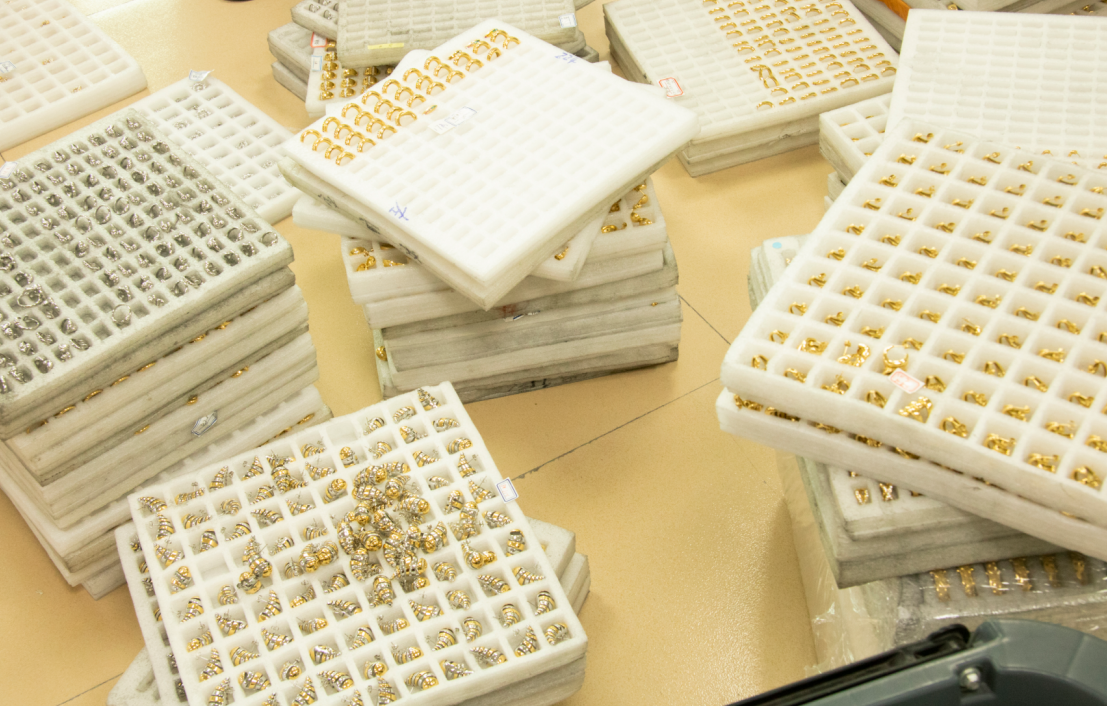
A test report describes the sample that was submitted and the conditions that were applied. It does not certify every unit in a production run, and it is not a substitute for incoming inspection, in-process checks, or a finished-goods sampling plan. Jusnova maintains a quality control process with eight inspection stages from raw material to clasp function; that internal system is what carries a laboratory result across a shipment, not the laboratory result itself. Buyers who treat a report as a batch guarantee typically discover the gap at the returns stage rather than at the inspection stage.
Which Importer or Retailer Expects Which Document
Requirements differ by buyer type, and in practice they also differ between two buyers in the same category. The table below is a planning framework rather than a rulebook: it reflects how these document types are commonly used across accessory channels, not a fixed policy of any individual retailer.
| Buyer channel | Why the request appears | Social compliance (BSCI) | Material integrity (SGS / test report) |
|---|---|---|---|
| Fast-fashion and volume retail chains | Supplier approval before private-label programs | Commonly required at site approval stage | Commonly required for skin-contact items |
| Department store accessory counters | Buyer due diligence and product liability policy | Often required, timing set by retailer policy | Usually required before listing |
| Independent boutiques and DTC brands | Brand-owner risk policy, often self-managed | Depends on the brand's own sourcing policy | Frequently requested, especially for waterproof or tarnish-free claims |
| Promotional gift distributors | End-client contract terms in corporate gifting | Sometimes requested for large corporate programs | Occasionally requested, typically for skin-contact items |
| Online marketplace sellers | Platform requirements and customer claim defence | Rarely required at listing stage | Depends on the platform category requirements |
The pattern that emerges is consistent: social compliance documents are usually tied to the supplier relationship and recur on an audit cycle, while material documents are tied to the product specification and recur when the specification changes. A distributor serving several buyer types therefore needs both documents live at the same time, because a file that holds only one of them will fail whichever channel asks for the other.
Applying Both Documents to a Specific Order: Product 5609 / GEN000516bhia-066
The abstract distinction becomes concrete when applied to a single SKU. Product code 5609, model GEN000516bhia-066, is a stainless steel jewelry line covering classic round bangles, flat bangles, cuff bangles, twisted bangles, rope bangles, gem-set bangles and engraved bangles, alongside cable, rope, figaro, curb, tennis, charm, beaded and pearl bracelets.
Specification facts that belong in the test file
- Material: 304 / 316 / 316L stainless steel, selected for anti-corrosion and hypoallergenic properties.
- Surface finishes: PVD coating in gold, rose gold, black and gunmetal; gold plating; electroplating; brushed, mirror-polished and sandblasted finishes, or combinations of these.
- Dimensions: diameter from 5 mm to 80 mm, thickness from 0.5 mm to 3.0 mm, with customised height and width available and tolerances controlled within ±0.05 mm.
- Stone setting: CZ, man-made crystal or moissanite in 20+ colours, with prong, bezel, channel and pavé setting options.
- Packaging: OPP bags, velvet pouches, premium gift boxes, or fully customised packaging carrying the buyer's branding.
Commercial facts that belong in the order file
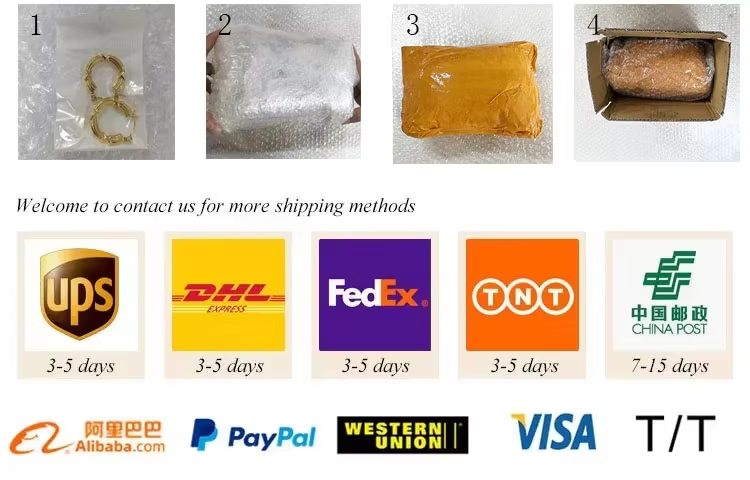
The minimum order quantity is 100 pieces per style, typical production lead time is 25–30 days, and monthly production capacity is 250,000 units. Payment is accepted by PayPal or bank transfer. Shipping can be arranged by international courier such as DHL or FedEx, or by sea freight, with firm quotes provided at order stage and options compared side by side; quotations can also be structured on FOB, CIF or DDP terms depending on the buyer's logistics preference. Acceptance is governed by contract specification together with a mutually approved physical sample, and all sample details are confirmed before mass production begins.
A document sequence that matches the buyer's decision stage
For a buyer in the decision-to-execution stage, the useful sequence is: at sample stage, agree the grade (316L or 304) and the finish, and attach the relevant test report to that agreed specification; before the purchase order, confirm the current status and expiry date of the social compliance audit; before shipment, obtain batch inspection records and packaging inspection confirmation. Each step produces a document that a different department inside the buyer's organisation will eventually ask for.
Market Context: Personalisation Growth Meets Rising Document Scrutiny
The commercial backdrop explains why documentation has moved up the agenda. The global stainless steel jewelry market was valued at USD 6.79 billion in 2024 and is projected to reach USD 10.8 billion by 2035, according to WiseGuyReports. The wider personalized jewelry market was estimated at USD 42.51 billion in 2024, growing at a CAGR of 8.6% through 2031, according to Cognitive Market Research. China's total jewelry exports reached USD 12.7 billion in 2025, with major destinations including Hong Kong, the United States and Malaysia, according to the Observatory of Economic Complexity.
Personalisation is the part of this growth that complicates certification. Engraved, laser-engraved and custom-design programs multiply SKUs, shorten development cycles, and generate more sample rounds per season. Blanket documentation issued once a year does not map cleanly onto that cadence, so buyers increasingly treat certification as a per-program requirement tied to a specification rather than a per-supplier requirement held on file.
One caveat on the numbers: published estimates of the stainless steel jewelry segment vary depending on whether adjacent categories such as fashion watches are included in the definition. The figures above should be read as directional indicators of market growth rather than as a precise measurement of the decorated-jewelry segment.
Documentation-Led Sourcing vs. Traditional Sample-and-Price Sourcing
Traditionally, accessory sourcing compared samples and unit price. That approach works when the risk sits in the design. It works less well when the risk sits in the material. Plated brass and alloy jewelry is cheaper at the sample stage, but once the surface plating wears, the underlying copper or brass oxidises, turns green or black, and stains the wearer's skin. With a stainless steel base such as 304, even if the plating wears over time, the base metal remains bright and skin-safe. In salt spray terms, 316L typically lasts 3 to 5 times longer than 304 before corrosion appears, and 316L carries 2–3% molybdenum specifically for that purpose.
Documentation-led sourcing changes the comparison from a single unit price to a verification structure: which grade is actually in the box, which finish was applied, what the factory's social audit status is, and how the acceptance standard is defined. The trade-off is worth stating plainly.
Where Documentation-Led Sourcing Has Limits
- Cost, not just paperwork. 316L costs 10–18% more per finished piece than 304. Testing and audit participation add further cost and time to the development cycle. For a short promotional run with low skin exposure, that premium may not be justified — 304 remains a rational choice, and the honest recommendation is to match the grade to the exposure profile rather than to default to the more expensive option.
- Neither document guarantees a batch. A BSCI certificate describes factory social conditions; an SGS report describes the sample submitted. Neither one certifies the units in a specific shipment. The bridge between the two is an internal quality system — at Jusnova, eight inspection stages from raw material to clasp function — plus contract specification and an approved physical sample as the acceptance basis.
- Validity windows create scheduled gaps. The BSCI certificate referenced in this article, 25-0339245, carried a validity window of 2025-08-15 to 2026-08-15. Orders placed after that window require the renewed audit documentation, not the historical certificate. Buyers who record only the certificate number and not the validity date can build an unnoticed compliance gap into a purchasing calendar.
- Material trade-offs persist. 316L carries roughly 20–35% more embodied energy than 304 because of its molybdenum content, even though its longer service life reduces the energy cost per year of use. Grade selection is a genuine trade-off between upfront cost, embodied impact and service life, not a case of one option dominating the other.
Future Outlook
Three shifts are likely to shape EU sourcing files over the next planning cycles. First, document tracking is becoming continuous rather than episodic: buyers are building renewal dates into supplier records instead of re-collecting certificates at onboarding. Second, test evidence is becoming a marketing prerequisite rather than a compliance afterthought — as PVD coating on 316L has made waterproof and anti-tarnish positioning more common, claims that were once verbal are increasingly tied to report references. Industry technical analysis associated with the manufacturer describes PVD coating on 316L as substantially more durable than traditional electroplating; that figure is best read as a directional industry claim rather than a test result.
Third, the split between social and material documentation is likely to widen rather than narrow, because the two answer to different regulatory and commercial pressures. Suppliers who can produce both tracks on request, with current dates and clear scope, will spend less time in buyer onboarding — which is the practical form that long-term supply relationships take in this category.
FAQ
Which certification does an EU importer normally request first — BSCI or SGS?
They answer different questions, so the order depends on the buyer's internal process rather than on a rule. Social compliance audits such as amfori BSCI are normally handled during supplier qualification and site approval, while SGS or equivalent laboratory reports are requested during product specification and sampling. Retail chains with established vendor onboarding systems often run the social audit first because it determines whether the factory can be used at all; smaller brand owners frequently request material reports first because the product is the immediate decision. The document that delays onboarding is usually the one the buyer did not anticipate.
What does an amfori BSCI audit examine, and what does it not cover?
An amfori BSCI audit examines factory-level social conditions: working hours and rest, remuneration practices, occupational health and safety, prevention of child and forced labour, freedom of association, non-discrimination, and the management systems used to monitor performance. It is conducted on the production site by an approved third-party audit body. It does not address stainless steel grade, nickel release, plating durability, tarnish resistance, or corrosion behaviour — those are product-level questions answered by laboratory testing.
How long is a BSCI certificate valid, and what happens at renewal?
The certificate record carries a defined validity window rather than an open-ended status. Jusnova's amfori BSCI certification 25-0339245 covers the period from 2025-08-15 to 2026-08-15. Social compliance audits follow a renewal cycle, so a certificate that satisfied an onboarding file in an earlier season may be outside its validity period for a later order. Buyers are advised to confirm current audit status and the most recent report rather than rely on a stored copy of the certificate number.
What do SGS salt spray and sweat tests actually measure?
A salt spray test exposes an item to a chloride-containing environment and records how quickly visible corrosion begins; it is the test most often used to support durability and finish claims for coated stainless steel. An artificial sweat test exposes the item to a solution approximating human perspiration chemistry, which is directly relevant to skin-contact products and hypoallergenic positioning. Both are sample-based tests: they describe the item submitted under the conditions applied, not every unit in a production run.
Does an SGS report replace REACH nickel compliance?
No. REACH Annex XVII Entry 27 sets nickel release limits of less than 0.5 µg/cm²/week for articles in prolonged skin contact and less than 0.2 µg/cm²/week for piercing components, according to the European Chemicals Agency (ECHA). A composition analysis or a corrosion test supports the compliance file but is not the same measurement as a nickel release determination. Buyers should confirm the exact scope of any report before assuming it covers the REACH restriction.
Does documentation-led sourcing always justify choosing 316L over 304?
No. 316L costs 10–18% more per finished piece than 304 and carries roughly 20–35% more embodied energy because of its molybdenum content, while offering better corrosion resistance and a slower rate of surface dulling under sweat and environmental exposure. For high-exposure programs, coastal markets, sporting use, or brands making durability claims, that premium is typically recovered through fewer returns and stronger positioning. For low-exposure promotional items, 304 remains a reasonable specification.
How should a distributor verify documentation for a long-term supply relationship?
Treat documents as a register with dates rather than a one-time collection. That means recording the social audit validity window alongside commercial terms; linking test reports to the approved sample specification they were generated for; confirming the acceptance basis of contract specification plus an approved physical sample; and requiring batch inspection records at shipment. Because both social and material documents have scope boundaries, re-verifying them at each renewal cycle is more reliable than reusing an onboarding file.
Reference note: certification identifiers, validity windows, product codes, material specifications and commercial terms cited in this article are drawn from verified supplier documentation. Third-party market figures are attributed to their respective publishers and are directional rather than segment-exact.