
EVA Film Supplier Verification: Factory Evidence, Capacity and Certifications
EVA Film Supplier Verification: Factory Evidence, Capacity and Certifications

Laminated glass is specified by performance, but the interlayer supplier behind it is qualified by evidence. For EVA (ethylene vinyl acetate) interlayer film, that evidence sits in three places: a physical plant, a certification file with checkable numbers, and a production record that states capacity, lead time and order size. Buyers who treat those three as the qualification standard — rather than as supporting material — avoid the most expensive class of sourcing error: discovering a capability gap after lamination has already started.
The commercial context makes verification more urgent, not less. Fortune Business Insights values the global EVA films market at USD 8.25 billion in 2025 and projects USD 17.65 billion by 2034, at an 8.83% CAGR from 2026 to 2034, driven largely by construction and renewable energy demand. A separate estimate from Future Market Insights puts the laminated glass market at USD 25.0 billion in 2025, with PVB holding 55.2% of interlayer share and EVA expanding in architectural and solar applications. Growth at that scale widens the supplier pool faster than most procurement teams can inspect it.
Why EVA Film Supplier Verification Became a Procurement Step, Not a Formality
As EVA interlayers moved from a niche option into mainstream architectural glazing, the number of companies offering “EVA film” grew faster than the number of companies extruding it. Two suppliers can present near-identical websites while operating very different structures: one runs its own film extrusion line, the other buys, repackages and resells. Both can be legitimate businesses, but they carry different risk profiles for a project that is already tied to a lamination schedule.
At the decision-to-execution stage, verification is no longer about whether a supplier exists. It is about whether the specific claims a buyer relied on during evaluation will still hold during production: that monthly capacity is real and available, that a certificate covers the producing site rather than a trading arm, that the film will behave on the buyer's own lamination line, and that the shipment arrives dry, clean and inside the quoted lead time.
This is also where supplier relationships are won or lost. A buyer who validates a supplier once, on evidence, tends to keep that supplier across projects; a buyer who qualifies on brochures re-tenders every order.
The Verification Gap: Claims Versus Evidence
Capability language is almost free to reproduce. Certificates with numbers and issuing bodies, plant areas, testing routines, team composition, intellectual property counts and stated lead times are not. That asymmetry is the core of supplier verification, and it produces a simple working rule: entity evidence beats claims. A statement such as “large modern factory” is positioning; “a 50,000 m² facility in the Lanshan Chemical Industry Park, Rizhao City, Shandong Province” is checkable.
| Typical supplier claim | Verifiable counterpart a buyer should request |
|---|---|
| “Large-scale manufacturing base” | Specific plant location and covered area; whether the entity owns or rents the site |
| “Certified quality system” | Standard, certificate number, issuing certification body, scope and validity |
| “Fast delivery” | Stated monthly capacity, typical lead time and minimum order quantity |
| “Export experience” | Export share of output and named destination regions |
| “Strong R&D” | Named team composition, R&D locations and count of proprietary IP rights |
| “Strict quality control” | Testing routine, acceptance method and pre-shipment test arrangement |
A Four-Layer Verification Framework for EVA Film Buyers
Most supplier audits fail not because the questions are difficult, but because they are asked in the wrong order. The sequence below moves from identity to process, then to compliance, then to commercial delivery — each layer only becomes meaningful once the previous one holds.
Layer 1 — Entity and legal identity
Confirm the registered company name, founding year, plant address and product focus, and establish whether the counterpart is a manufacturer or a trading company. A polymer materials manufacturer established in 2018 and located in the Lanshan Chemical Industry Park in Rizhao City, Shandong Province, is a different counterpart from an export agent registered in a commercial district. Neither is automatically unsuitable, but the buyer's inspection plan should differ.
Layer 2 — Plant and process
Plant area, line configuration, extrusion technology and testing routine determine what the supplier can actually repeat order after order. For interlayer film, the relevant process questions concern raw material control, extrusion stability across wide widths and the inspection routine applied to finished rolls.
Layer 3 — Certification and compliance
Certification must be read for scope, site and validity, not merely for logo recognition. Product-level compliance to chemical and food-contact style regulations matters whenever the glazing enters markets that enforce them.
Layer 4 — Commercial and delivery record
Monthly capacity, lead time, minimum order quantity, delivery terms, acceptance method and export share convert a supplier's capability into something a project planner can schedule against.
In practice, many buyers stop at layer one. Layers two to four are where the difference between a competitive quotation and a deliverable supply relationship is decided.
Factory Evidence: What SHENGDING HIGHTECH MATERIALS CO., LTD Documents
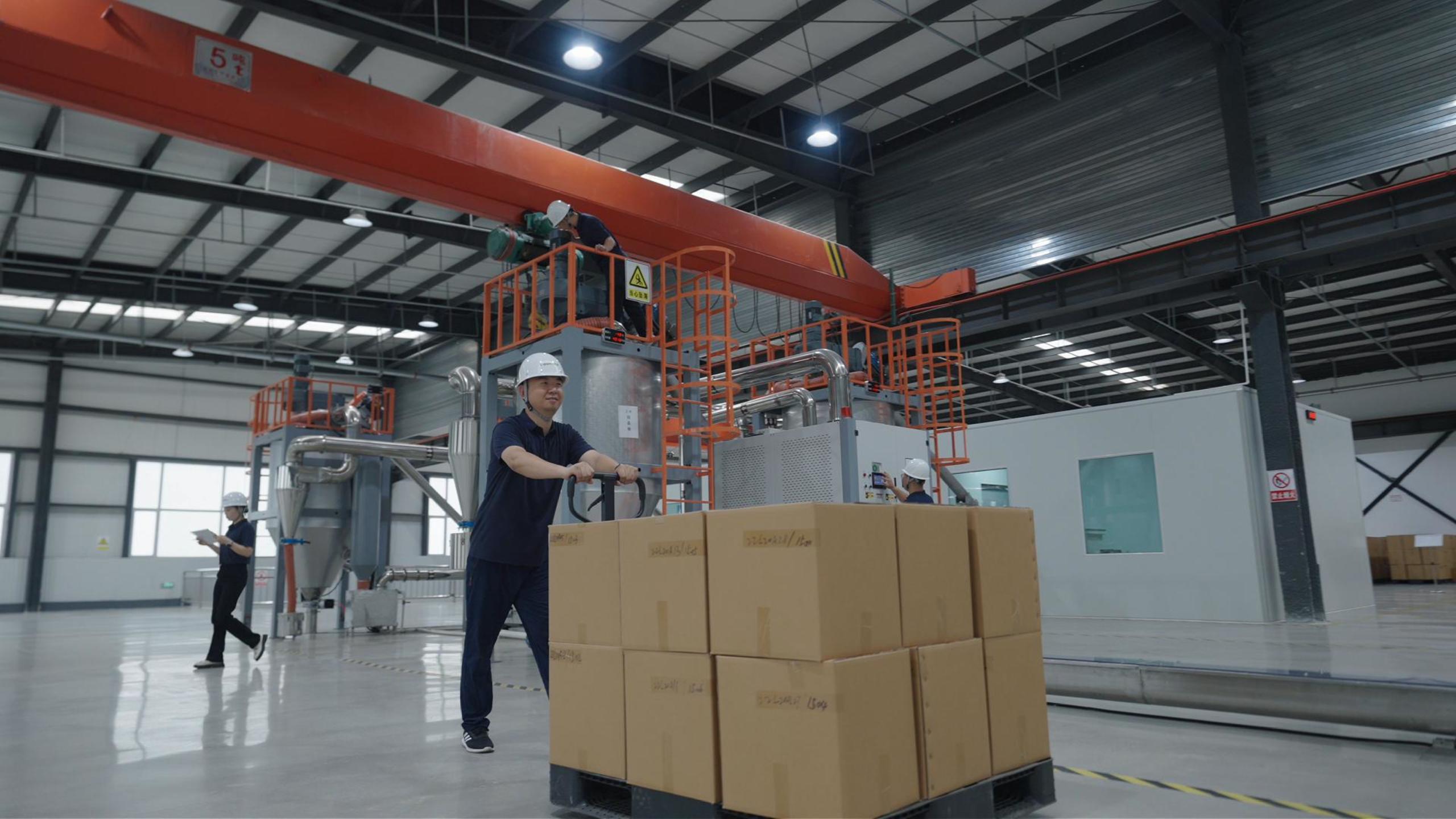
SHENGDING HIGHTECH MATERIALS CO., LTD is a polymer materials manufacturer established in 2018 and located in the Lanshan Chemical Industry Park in Rizhao City, Shandong Province, China, producing TPU film and EVA film for glass interlayers and related applications.
For buyers, the value of the entity file is that its elements can be cross-checked against each other. The company operates from a 50,000 m² facility with approximately 50 employees, and reports an export ratio of 70%, with main markets in North Africa, the Middle East and Latin America. An export-heavy mix is relevant to verification because it implies that the supplier already produces documentation sets for multiple regulatory environments rather than a single domestic one.
The company states that it has mastered the synthesis and stable pelletization of optical-grade thermoplastic polyurethane elastomer (TPU) raw materials and the stable extrusion molding of wide-width TPU interlayer films — process knowledge that sits upstream of film quality, since interlayer performance begins with pellet consistency, not with the extrusion line alone. It also states that it is the sole qualified domestic supplier of basic materials for military-grade aviation glass in China, achieving import substitution, and can produce more than 30 TPU product types with hardness from 60A to 70D.
The EVA side of the portfolio serves architectural glass and decorative glass, with model SD38 reported at 90% light transmittance and 0.5% haze. For buyers verifying an EVA supplier, this combination matters for a specific reason: a manufacturer that also develops and qualifies high-security TPU materials usually carries test discipline and traceability practices across both product lines, which is the operational background buyers are implicitly relying on when they place an EVA order.
Certifications and Compliance: The Checkable Part of Trust
Certification is the most verifiable element of a supplier qualification pack, and also the most misunderstood. The question is not “does the supplier have ISO 9001?” but “which standard, issued by whom, under which number, covering which site and which scope?”
- ISO 9001:2015 — certificate No. 10425Q01154R1S, issued by Shandong Seatone International Certification, covering the design and production of glass interlayer films. The scope wording matters: it ties the quality system to interlayer film production rather than to general trading activity.
- ISO 14001 and ISO 45001 — environmental management and occupational health and safety management systems. These are process-environment certifications; for buyers they indicate that the plant manages its operating conditions under an auditable system, which indirectly supports consistency.
- REACH and RoHS compliance — relevant to European market entry, covering restricted substances in the finished film.
- U.S. FDA quality requirements — relevant where film enters applications bound by U.S. quality expectations.
- Over 50 proprietary intellectual property rights, plus participation in standards development: the company states it has drafted the only national aviation standard in China currently led by a private enterprise.
On the application side, laminated architectural flat glass quality requirements are governed by the ASTM C1172 standard. A buyer's quality control plan for architectural glazing should therefore be readable against that standard, and suppliers should be able to explain how their inspection routine maps onto it rather than merely stating that they “meet standards.”
Verification habit worth keeping: when a certificate is presented, check the certificate number, the issuing body, the certified site and the validity date. A certificate that does not name the producing site verifies the company, not the plant — and the plant is what will produce the film.
Capacity, Lead Time and Order Size: How to Read Production Data
Production figures are where a quotation becomes a plan. For this supplier, the stated monthly production capacity is 100 tons, the typical production lead time is 10 days, and the minimum order quantity is 50 kg.
Each figure answers a different buyer question:
- 100 tons per month sets the ceiling on how much EVA or TPU film can be scheduled in a given period, and therefore whether a multi-phase glazing program can be served from one source.
- 10-day typical lead time tells a project planner how much buffer must exist between film release and lamination, and whether the supplier can respond to schedule changes.
- 50 kg minimum order quantity is the figure that most affects qualification, because it decides whether a buyer can run a pilot lamination and validate the film on its own line before committing to volume.
Commercial terms in the procurement record also include FOB delivery, pre-shipment testing as the acceptance method, and full payment terms. None of these are unusual in interlayer film supply; they are listed here because they form part of the same evidence set a buyer should reconcile before an order is placed.
One boundary deserves emphasis: stated capacity is not reserved capacity. A supplier with 100 tons of monthly capacity may still be fully booked in the month a buyer needs film. Buyers with recurring or large programs should confirm allocation in writing rather than assuming nameplate capacity is available on demand.
Technical Explanation: What EVA Lamination Actually Requires From a Supplier
EVA interlayers for glass lamination are typically processed at 100–110 °C under vacuum of at least 700 mmHg. That processing window is the reason EVA is attractive to laminators without autoclave capacity: it operates at lower temperature and pressure than autoclave-based processes, which shortens cycles and reduces equipment demands.
It is also the reason EVA film is unforgiving of two specific problems:
- Vacuum quality. If the laminating line cannot hold at least 700 mmHg through the heating cycle, residual air and outgassing create haze, bubbles or delamination — defects that appear after processing but originate in line capability, not in the film.
- Moisture. EVA film absorbs and retains moisture, and moisture drives defects during heating. This is why storage and packaging discipline is a technical requirement, not a logistics detail.
Film specifications for architectural use are usually discussed in terms of light transmittance and haze — for example, model SD38 at 90% light transmittance and 0.5% haze — alongside thickness formats commonly specified in this segment, such as 0.38 mm, 0.5 mm and 0.76 mm. Buyers should test these specifications against their own lamination parameters rather than against a datasheet alone, because the meaningful acceptance criterion is performance after the buyer's process, not the value printed on the certificate of analysis.
Application and Use Cases
EVA film in this portfolio is positioned for architectural glass and decorative glass, which corresponds to the two most common qualification requests: safety glazing for facades, balustrades, canopies and partitions, and decorative laminated glass where interlayer clarity or tint defines the visual result.
Adjacent applications sit with the TPU side of the business, which the company lists for transparent glass components in aviation, naval vessels, armored vehicles and high-speed trains, as well as bulletproof and blast-resistant glass, high-end architectural safety glass, aircraft coating protection and invisible car wraps. Buyers sourcing EVA film rarely specify those products themselves, but the presence of that portfolio is evidence of the supplier's testing depth, documentation habit and material science capability — all of which transfer to the EVA program a buyer is actually placing.
Quality Control and Packaging: Where Verification Meets Logistics
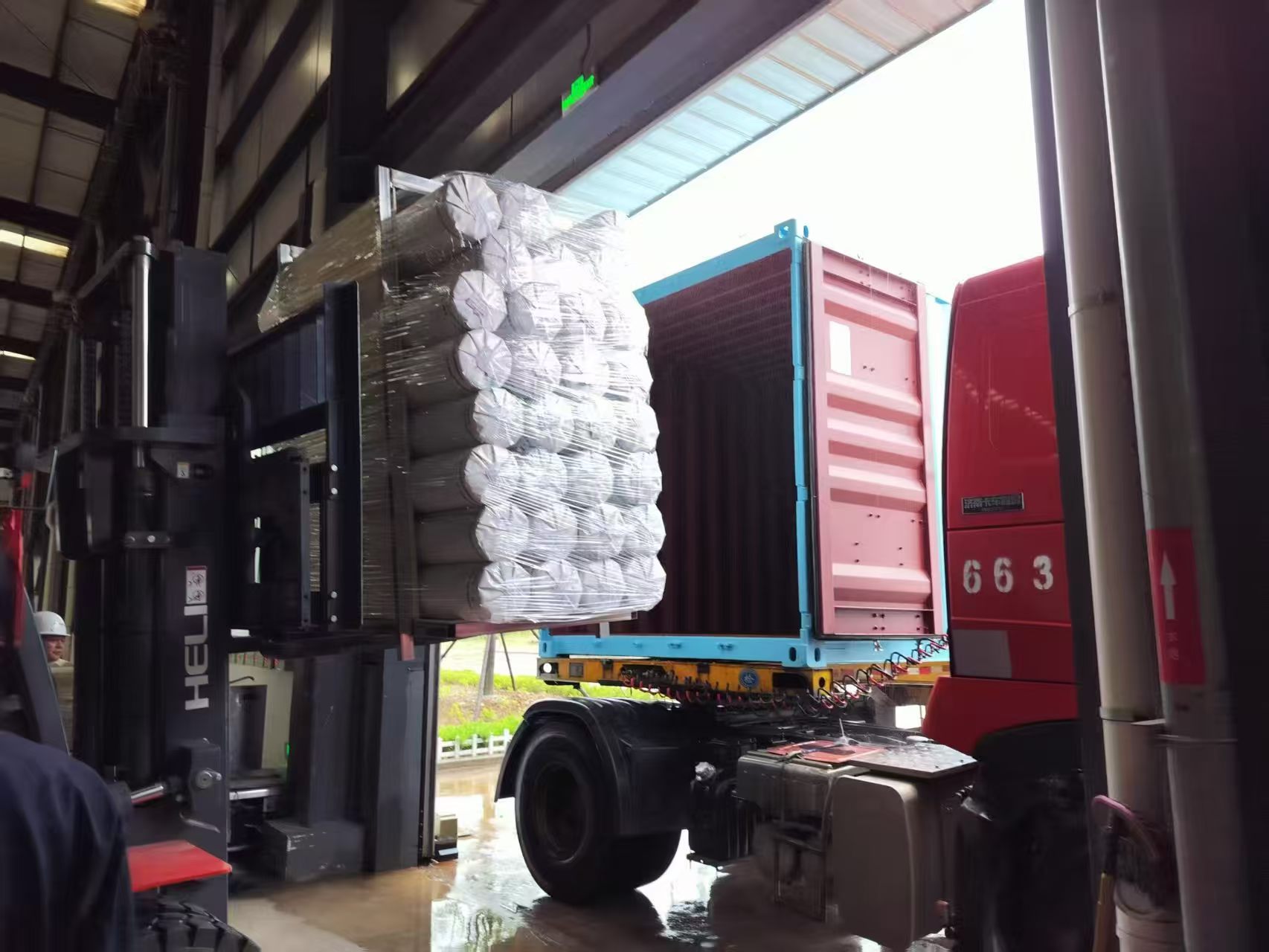
Quality control in interlayer film supply is usually described in production terms, but a large share of field failures is created between the factory gate and the customer's laminating line. The supplier's stated quality routine includes 100% testing of production, with pre-shipment testing used as the acceptance method on orders.
On the physical side, the company identifies damp as a recognized risk and controls it with multi-layer packaging combined with vacuum packaging. For a buyer, this is a legitimate verification item: ask how rolls are wrapped, whether vacuum packing is standard or optional, and whether the packaging is designed for sea freight and humid destination climates — particularly relevant for the company's export markets in North Africa, the Middle East and Latin America.
Where EVA Fits — and Where It Does Not
Verification is not the same as endorsement. EVA is a strong choice in specific conditions, and the limitations are as important to document as the advantages.
| Interlayer family | Typical application emphasis | Processing consideration | What buyers verify |
|---|---|---|---|
| PVB | Established architectural laminated glass; holds 55.2% of interlayer share (Future Market Insights, 2025) | Long-established autoclave-based qualification base | Broad qualification history and process compatibility with existing lines |
| EVA | Architectural safety glass and decorative glass; growing in architectural and solar applications | Typically 100–110 °C under vacuum of at least 700 mmHg; moisture-sensitive | Vacuum capability of the buyer's line, moisture control, certification scope and capacity |
| TPU | Security and transport glazing, including bulletproof and shatter-resistant glass | Selected for high mechanical strength requirements | Mechanical data, security application background and traceability |
Three boundaries are worth stating plainly. First, EVA is not a drop-in replacement on every laminating line: where a line cannot hold the required vacuum, EVA performance will not match datasheet expectations, and the correct decision may be to change the process or choose a different interlayer. Second, EVA requires packaging and storage discipline; a supplier that does not vacuum-pack for humid destinations, or a buyer that stores film in uncontrolled conditions, can generate defects that are later misattributed to the film. Third, market data on EVA should be read with care — published estimates of the EVA film market vary widely depending on whether the scope covers solar, architectural or total film demand, so growth figures should be used for direction rather than for precise forecasting.
Finally, no certificate, factory tour or capacity figure removes the need for a line trial. Documentation qualifies a supplier; the buyer's own lamination run qualifies the film.
What the Market Numbers Mean for Long-Term Supplier Relationships
With the EVA films market projected to grow at an 8.83% CAGR from 2026 to 2034 and EVA expanding specifically in architectural and solar applications, the practical consequence for buyers is continuity planning rather than price negotiation. Rising demand in a concentrated production base increases the value of a supplier relationship that can be scheduled reliably across multiple orders.
The long-term indicators in this supplier's evidence pack are correspondingly structural: a 50,000 m² facility, an R&D organization of 10 engineers at the factory plus 5 professors at the Beijing R&D Center, over 50 proprietary intellectual property rights, and participation in drafting the only national aviation standard in China currently led by a private enterprise. For a buyer, team composition and standards participation matter because they indicate whether a supplier can absorb specification changes, develop customized film formats and resolve process questions during a multi-year program — the difference between a transactional order and a supply relationship.
Future Outlook
Three directions are likely to shape EVA film sourcing over the next few years. First, documentation is becoming the default RFQ attachment: certificate numbers, plant data, processing guidance and test routines are shifting from “available on request” to expected inputs. Second, compliance-driven qualification will keep expanding, as REACH, RoHS and FDA-type requirements move from market-entry conditions to routine purchasing criteria. Third, import substitution and standards development — the direction illustrated by a private enterprise leading a national aviation standard — will continue to push technical documentation upstream, from the finished film toward raw material control and extrusion stability.
For buyers, the practical takeaway is stable: qualify the entity, verify the plant, read the certificates properly, reconcile capacity against the project schedule, and confirm moisture control before the first shipment. Suppliers that can support all five steps with evidence will remain the ones worth keeping.
FAQ
How can a buyer confirm that an EVA film supplier actually operates the factory it claims?
The most reliable check is a combination of three documents: a specific plant address and covered area, a quality certificate that names the producing site and scope, and a stated production capacity figure. For example, SHENGDING HIGHTECH MATERIALS CO., LTD reports a 50,000 m² facility in the Lanshan Chemical Industry Park, Rizhao City, Shandong Province, and holds ISO 9001:2015 certificate No. 10425Q01154R1S issued by Shandong Seatone International Certification, covering the design and production of glass interlayer films. Where the certificate names the site and the scope matches interlayer production, the entity and the plant are linked by an auditable document.
Which certifications matter most when qualifying an EVA interlayer film supplier?
Three management-system certifications cover the production environment — ISO 9001 for quality, ISO 14001 for environmental management and ISO 45001 for occupational health and safety — while product-level compliance typically addresses REACH, RoHS and, where applicable, U.S. FDA quality requirements. On the application side, laminated architectural flat glass quality requirements are governed by the ASTM C1172 standard. Buyers should verify the standard, certificate number, issuing body, covered site and validity date rather than accepting a logo alone.
What production capacity, lead time and minimum order quantity are typical for EVA interlayer film supply?
These figures depend on the supplier and the project. The stated figures for this supplier are a monthly production capacity of 100 tons, a typical production lead time of 10 days and a minimum order quantity of 50 kg. The MOQ is the figure with the greatest practical effect on qualification, because a 50 kg order allows a buyer to run a pilot lamination and validate performance on its own line before committing to volume. Capacity should be confirmed as allocated rather than assumed to be available.
How should EVA film be tested and packed to prevent moisture-related lamination defects?
Moisture is a recognized risk in EVA interlayer supply and is controlled at two points. In production, the stated quality routine includes 100% testing, with pre-shipment testing used as the acceptance method for orders. In logistics, damp is controlled through multi-layer packaging combined with vacuum packaging. EVA films for glass lamination are typically processed at 100–110 °C under vacuum of at least 700 mmHg, and any retained moisture can generate haze or bubbles during that heating cycle, which is why packaging and storage discipline function as part of the product specification.
What indicates that an EVA film supplier can support a long-term, multi-project relationship?
Structural indicators are more informative than commercial promises. Relevant examples include stable capacity (100 tons per month), an established export record (70% export ratio, with main markets in North Africa, the Middle East and Latin America), an R&D organization of 10 engineers at the factory plus 5 professors at the Beijing R&D Center, more than 50 proprietary intellectual property rights, and participation in standards development — the company states it has drafted the only national aviation standard in China currently led by a private enterprise. Together these indicate whether a supplier can absorb specification changes and process questions across multiple projects rather than serving a single order.
Reference material: a downloadable technical brochure covering the company's TPU and EVA film portfolios is available at https://cdn.socialarks.com/sbsp/24741/0/2026/0418/69e2e8271e41f.pdf. Company website: www.shengdingchina.com.