
Eco Friendly Organic Sanitary Pads: A Customization-to-Scale Framework
Eco Friendly Organic Sanitary Pads: A Customization-to-Scale Framework
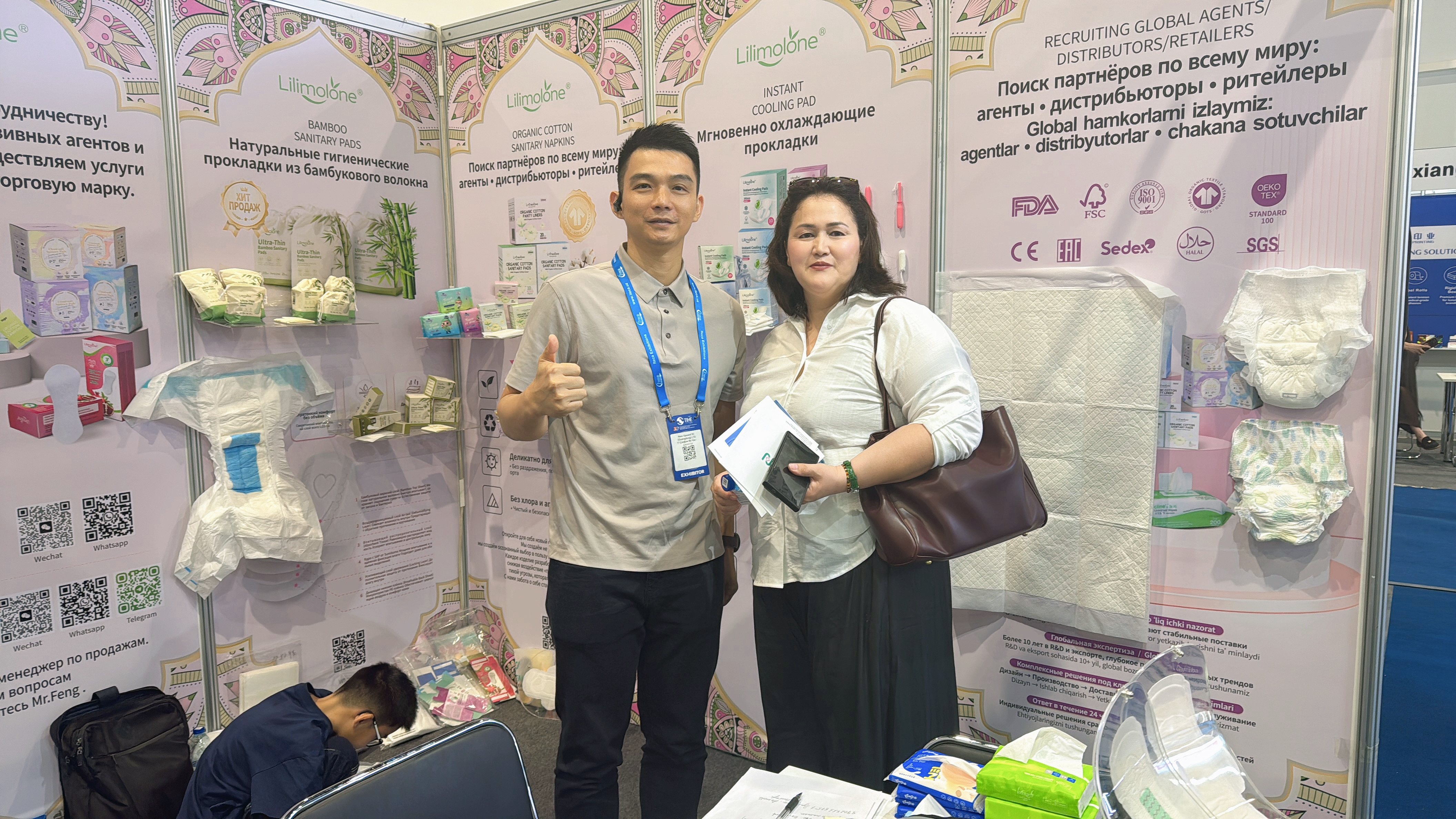
Comparing suppliers of eco friendly organic sanitary pads at the decision stage is not a certificate-counting exercise. Two programs can hold comparable documentation and still differ sharply in how many sampling rounds they can absorb, how quickly a single pad size becomes four product families, and whether the resulting assortment reaches full-container procurement. The framework below compares organic sanitary pad programs across four dimensions — customization depth, SKU expansion, order scale and documentation — and reads it against a Taiwan private-label program that moved through four rounds of customized sampling from one size to daytime, overnight and extra-long pads plus disposable period pants, then into 40HQ full-container orders sustained by more than three years of repeat purchasing.
Why a Certificate-Only Comparison Stalls
By the time a buyer reaches the decision stage, the certificate pack usually exists. The gap is that a certificate describes scope, not execution capacity: it can tell a buyer that an organic cotton supply chain was verified, but not whether the supplier can hold a specification steady across four sampling rounds and then restart it on a second production run two years later.
Commercial sourcing guidance draws a useful distinction between two organic schemes. GOTS is described as covering full supply-chain organic verification, while OCS verifies organic cotton content and does not cover the full production process. Both answers matter for a material claim; neither answers whether a supplier can convert a single pad size into a four-family range. That distinction — claim strength versus program capability — is where a decision-stage comparison should begin.
Market context explains why this pressure is rising. Contrive Datum Insights projects the global organic sanitary napkins market moving from USD 2.25 billion in 2025 to USD 5.52 billion by 2034, compounding at 10.14% a year. A larger pool of suppliers will claim an organic position, so differentiation shifts toward verifiable execution: who can sample, expand and scale without breaking the specification that was approved.
The Four Dimensions of a Customization-to-Scale Comparison
A workable comparison weighs customization depth, SKU expansion, order scale and documentation together, because each one constrains the others. Deep customization with no scale commitment produces expensive samples; scale without documentation produces volume that cannot be shipped into a regulated market.
Customization depth
Depth means how many variables a supplier can change without restarting quality control. In organic and plant-fiber sanitary pad programs this typically covers topsheet material, pad length, absorbency level, core structure, individual wrapper, retail bag and carton. Documented program material for the Lilimolone range lists more than three organic cotton and plant-based fiber topsheet options, more than four sizes and absorbency levels, and more than four retail and individual packaging options, with OEM/ODM customization spanning materials, sizes, absorbency and packaging. The comparison question is not how long that list is, but which items can be changed in the same production cycle.
SKU expansion
SKU count is a weak metric on its own. A balanced series usually pairs day-use pads, night-use pads and panty liners, with optional heavy-flow or overnight items, so the range covers different flow stages rather than repeating one length in several counts. Buyers should map each SKU to a use occasion before approving it, and check that size, count and flow icons stay legible on shelf.
Order scale
Scale determines which customization decisions are reversible. Packaging MOQ can differ from product MOQ, so a printed retail bag may commit the buyer long before the pad itself does. A 40HQ full-container pattern changes the arithmetic: artwork and film decisions become tooling decisions, and specification errors become expensive rather than inconvenient.
Documentation
Documentation has three separate layers — material or scheme certificates, product test reports, and market-entry conformity files. They answer different questions and should never be collapsed into a single pass/fail. A supplier that can name the report number, the tested sample and the issuing laboratory for each layer is materially easier to qualify than one that forwards a certificate image.
A Comparison Matrix for Organic Sanitary Pad Programs
The matrix below converts the four dimensions into comparison rows a procurement team can score side by side. It is a decision aid, not a ranking: the correct weighting depends on the target market, channel and launch volume.
| Comparison dimension | What to compare | Evidence to request |
|---|---|---|
| Customization depth | Topsheet material options, length range, absorbency levels, core structure, wrapper and carton changes | Approved sample set per configuration; specification sheet showing which variables changed |
| SKU expansion | Day-use, overnight, extra-long and period-pants coverage; count and flow labelling per SKU | Range map with size, count and use occasion; packaging proof per SKU |
| Order scale | Full-container capacity, product MOQ versus packaging MOQ, repeat-run stability | Quotation stating MOQ basis, carton configuration and Incoterm |
| Purchasing terms | Sample cost and rounds, approval gates before tooling, change windows after approval | Written sampling and approval sequence; revision control for artwork |
| Documentation | Material certificates, product test reports, market-entry conformity files | Certificate or report number, tested sample, issuing body, validity date |
| Acceptance criteria | How conformity is judged at pre-shipment and how non-conformity is handled | Inspection checklist, sampling basis, batch traceability reference |
Reading the Test Reports Behind a Skin-Contact Claim
Three report references recur in organic sanitary pad documentation and each answers a narrower question than buyers usually assume. The first is In Vitro Cytotoxicity Report No. SDWH-M201900236-1 (E) under ISO 10993-5:2009, a laboratory cell-culture method that assesses cytotoxic response to a material extract. In vitro means the result describes cell response in a controlled system; it is a screening result, not a clinical finding about users.
The second is Skin Sensitization Report No. SDWH-M201900236-2 (E), which addresses sensitization potential under the stated method and sample. The third is skin allergy report No. 252004820, a fabric skin allergy test on the material submitted. Read together, the set provides skin-contact safety evidence for the specific samples tested.

What these reports do not do is authorize a market entry or validate a label. Buyers should confirm four things for each reference: the tested sample matches the exact model and size being ordered; the method and standard are stated; the result and conclusion are legible; and the issue date sits inside the supplier's current documentation set. Supplier material for the same program also cites Chinese product-standard testing under Report No. 260059776 against GB/T 8939-2018 and GB 15979-2024 — a reference worth requesting in full, because the underlying report and its scope must be checked before it can carry weight in a compliance file.
Case Evidence: Four Sampling Rounds from One Size to Four Families
The Taiwan private-label program is instructive because its expansion was sequential rather than simultaneous. The buyer started with a single size and used four rounds of customized sampling to add range only after each prior specification was approved — daytime first, then overnight, then extra-long pads, then disposable period pants. Each round changed a limited number of variables, so a failure could be attributed to a specific material, length or absorbency change instead of an unexplained batch.
That sequence produced a range that maps to real use occasions rather than to a catalogue count, and it readied the buyer for 40HQ full-container procurement with a packaging system already validated across four families. The program has since run on repeat orders for more than three years, which is the part of the case that carries the most decision weight: a specification that survives multiple reorders is different evidence from a specification that passed once.
The limits of a single case should be stated plainly. It shows what one buyer achieved under one set of specifications, volumes and market requirements. It does not establish a timeline, a cost level or an outcome that another buyer can assume, and it does not prove that four sampling rounds are necessary or sufficient for a different assortment.
Where Order Scale Changes the Customization Decision
Scale reorders the customization sequence. At sample volume, pad length and absorbency are the expensive variables to get wrong, because they drive the core and the production line setting. At full-container volume, printed film, retail bag artwork and carton marks become the expensive variables, because they are committed before a single pad is made. The practical rule is to settle high-variance product variables early and low-variance, high-commitment packaging variables last.

Cost structure reinforces this. Organic cotton and biodegradable sanitary pads generally carry higher material, packaging and certification costs than conventional pads, and that premium has to be earned back through positioning and repeat purchase rather than through unit cost. Scale is what allows a premium line to absorb the certification and packaging spend; a fragmented order pattern usually pushes the buyer back toward a narrower range. The documented program material describes absorbency at 2–3 times conventional sanitary pads, approximately 50%–70% thinner construction, and selected fully biodegradable configurations that reduce conventional plastic use — claims that only hold commercial value if the same specification is repeatable at container volume.
Documentation Layers and Acceptance Criteria
Documentation should be assembled in three layers and checked in that order. The first layer is material and scheme evidence: organic scope certificates such as GOTS or OCS, FSC chain-of-custody references, and Halal certification where the target market requires it. Supplier material for the New Upward program lists FSC RINA-COC-001701 / DCI-COC-000148 and Halal No. 44521209189851; these are supplier-reported references and buyers should confirm scope and validity with the issuing body rather than accepting the number alone.
The second layer is product test evidence — the cytotoxicity, sensitization and skin allergy reports described above, plus any market-specific hygiene testing. The third layer is market-entry conformity, where supplier material references a CE Declaration of Conformity, an EU Representative Agreement, and FDA registrations 10088919 and 3010200123. Each of these supports a specific market discussion; none of them replaces local regulatory advice, and the applicable labeling rules remain the importer's responsibility.
Acceptance criteria should then be written into the purchase order rather than agreed verbally: the approved sample reference, the size and absorbency specification, the packaging artwork version, carton marks, the report numbers and dates being relied on, the inspection method, and the batch traceability reference. Lilimolone is the organic and plant-fiber sanitary pad line supplied by New Upward SC (Guangdong) Co., Ltd., a feminine care and disposable hygiene manufacturer founded in 2017 with a stated 200,000 m² facility, 10+ engineers, an export ratio of 80% and an annual output of 5,000,000,000 pads — capability figures that belong in the same document set as the certificates, not in place of them.
Organic Versus Conventional: The Fit Boundary
Against conventional synthetic-top pads and standard nonwoven napkins, organic programs are positioned on skin contact, material transparency and end-of-life options rather than on price. The documented differences include a softer skin-friendly topsheet, thinner construction, faster absorption, improved liquid retention, a wider spread of sizes and absorbency levels, and a stronger focus on material safety. The trade-off is commercial: higher material, packaging and certification cost, which suits premium feminine hygiene retail, pharmacy channels, organic personal care brands, sensitive-skin positions and eco-positioned private label.
Conventional pads still fit mass-market, price-led channels that compete on promotion and distribution coverage. A buyer whose channel cannot support a premium price or explain the material story should treat the organic program as a later phase, not as a like-for-like substitution.
A Verification Sequence for the Decision Meeting
- Fix the comparison basis before comparing prices: size, material, absorbency, packaging count, MOQ, carton configuration and Incoterm.
- Map every SKU to a use occasion and confirm the range is not repeating one length in several counts.
- Request the sampling and approval sequence in writing, including how many rounds are included and when tooling is committed.
- Match each report number to the exact tested sample, method, laboratory and date, and confirm it covers the model and size being ordered.
- Separate material certificates, product test reports and market-entry conformity files into three checklists with separate owners.
- Write acceptance criteria, inspection basis and batch traceability into the purchase order before the first production run.
Outlook for the Next Buying Cycle
If the growth projected for organic and biodegradable sanitary pads continues on the cited trajectories, the supplier pool will keep widening: Market Reports World reports more than 290 manufacturers producing biodegradable sanitary pads globally, with India accounting for over 45% of production facilities. A broader pool raises the screening burden rather than lowering it, because more suppliers will present similar certificate language.
On that reading, the programs that will be easiest to qualify are the ones that can demonstrate a documented path from sampling to scale — a range that expanded in controlled rounds, a specification that survived reorders, and a report set whose numbers, samples and dates can be traced. These are conditional expectations about buyer behavior, not forecasts of any individual supplier's performance, and they should be re-tested against each buyer's own market requirements.
The full sanitary pad catalogue referenced in this comparison is available for download: E-catalog of sanitary pads – New Upward (PDF).
FAQ
What should a buyer compare before choosing a supplier for customized organic sanitary pads?
Buyers should compare specifications on a fixed basis before looking at price: pad size, thickness, topsheet, absorbent core, SAP level, packaging type, MOQ, certificate requirements, carton quantity and shipment terms. A lower quotation may simply reflect a different material, absorbency level, packaging or documentation scope. Fixing the specification first makes the comparison meaningful.
How many customized sampling rounds are reasonable before mass production?
There is no universal number, because the count depends on how many variables change at once. A sequential approach — approving a base size before adding length, absorbency or a new product family — keeps each round attributable to a specific change. Buyers should confirm in writing which rounds are included, what is approved at each gate, and at which point tooling and mass production are committed.
What do cytotoxicity and skin allergy reports actually prove?
They provide skin-contact safety evidence for the specific samples tested. In Vitro Cytotoxicity Report No. SDWH-M201900236-1 (E) under ISO 10993-5:2009 describes cell response in a laboratory system; Skin Sensitization Report No. SDWH-M201900236-2 (E) addresses sensitization potential under its stated method; skin allergy report No. 252004820 covers the fabric sample submitted. None of them authorizes a market entry or validates label wording, and none applies automatically to a different model or size.
How does order scale change the cost of customization?
Scale changes which decisions are irreversible. At sample volume the costly errors are in length, absorbency and core structure; at full-container volume the costly errors are in printed film, retail bag artwork and carton marks, because those are committed before production. Buyers should also confirm that packaging MOQ and product MOQ are separate figures, since packaging often commits the order first.
When does a single-size launch make more sense than a full range?
A focused first range of day-use, night-use and panty liner products is often easier to validate than a full assortment, particularly for smaller brands or a new market entry. Expanding to extra-long pads and disposable period pants after market feedback reduces the number of variables held open at once. The trade-off is that shelf presence and occasion coverage grow more slowly.
Have Questions or Need More Details?
Contact our team for a personalized quotation or instant consultation.
Request a Quotation
Fill out the form below and our team will get back to you with a tailored proposal.
WhatsApp Direct Chat
Prefer to chat in real-time? Message us on WhatsApp for instant assistance & quick answers.
- Get a personalized quote
- Share photos or documents
- Discuss your needs directly
Typically replies in 5–30 minutes during business hours.