
Edge Banding Machine Comparison: Manual, Semi-Automatic, or Automatic?
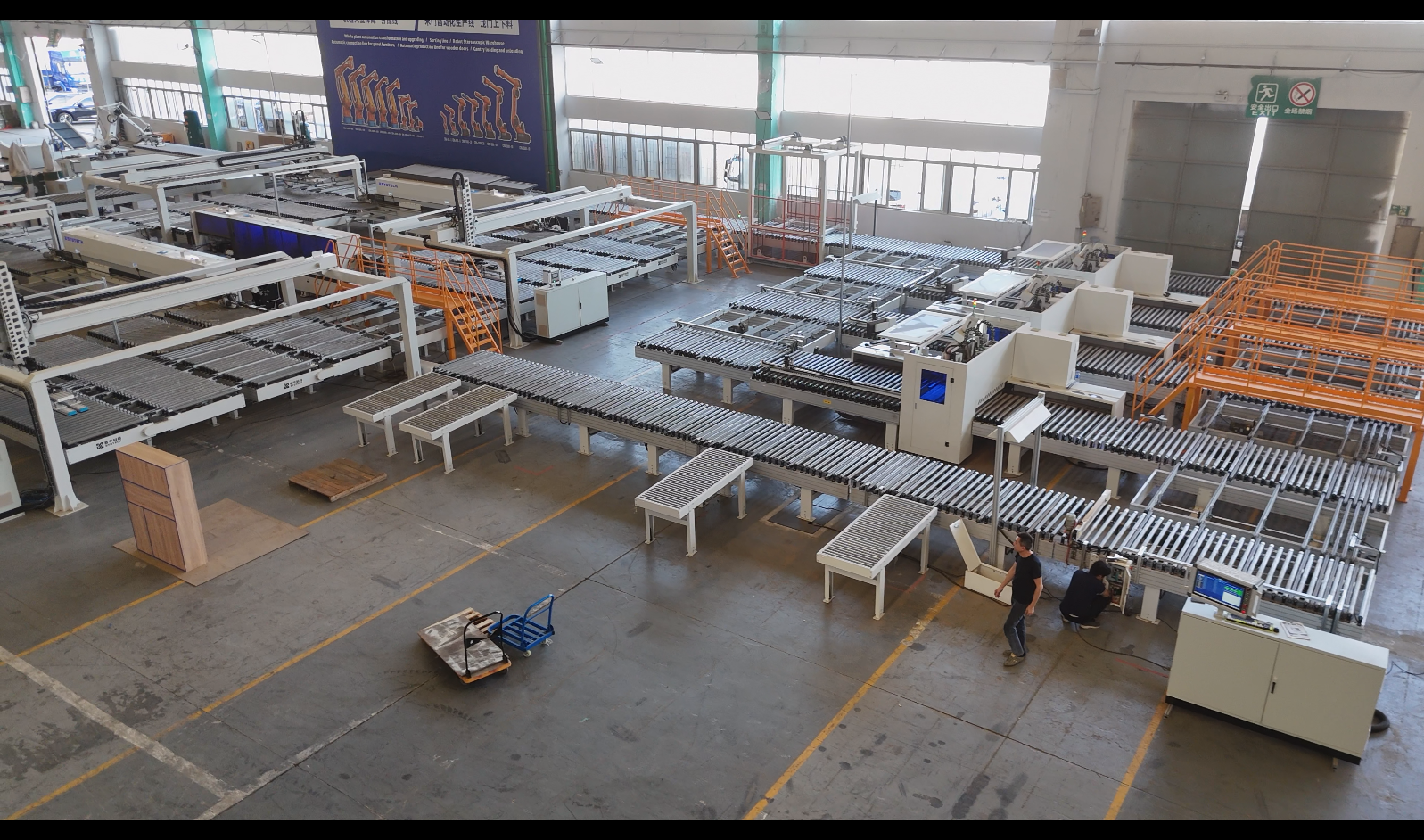
Panel furniture manufacturers in 2026 are not short of edge banding options, but the range of choices often makes the buying process harder rather than easier. Manual edge banding machines still operate in many workshops, semi-automatic models serve mid-sized production, and automatic machines dominate large serial lines. For a buyer at the decision stage, the central question is not which type is newer, but which automation level fits the factory’s output, order structure, labor capability, and capital budget.
Why the Automation Level Matters
Many edge banding machine purchase decisions are still made by comparing the sticker price of different models. That approach misses the larger cost picture. Reject rate, setup time, operator skill, energy use, spare parts, and downtime all affect the real cost per panel. At the same time, the market clearly shows that automatic equipment has become the largest product segment, which makes it tempting for every factory to move in that direction. The real opportunity lies in matching automation to production reality, not in chasing automation for its own sake.
Market data supports this shift. According to Dataintelo, automatic edge banders held the largest product type share at 52.3% of the global market in 2025. Future Market Insights estimates the global edge bander market at USD 1.3 billion in 2025 and projects it to reach USD 3.2 billion by 2035. These figures indicate that automatic equipment is now the mainstream reference point for industrial buyers, but they also raise a practical question: how much automation is actually justified for a specific factory?
Manual vs. Semi-Automatic vs. Automatic: Key Differences
The edge banding process typically involves applying heat-activated adhesive to the edge banding material, pressing it against the panel core, trimming surplus material from the top and bottom edges, scraping glue residue, and polishing the final surface. The three machine types differ in how many of these steps are performed automatically.
A manual edge banding machine requires the operator to control panel feeding, glue application, pressing, and finishing. A semi-automatic edge banding machine automates part of the sequence, usually glue application and pressing, while the operator handles panel positioning, clamping, and changeover. An automatic edge banding machine integrates feeding, band application, trimming, scraping, and polishing into a continuous production cycle.
| Comparison Dimension | Manual Edge Banding Machine | Semi-Automatic Edge Banding Machine | Automatic Edge Banding Machine |
|---|---|---|---|
| Panel feeding and positioning | Manual | Manual | Automatic |
| Glue application and pressing | Manual | Automated | Automated |
| Trimming, scraping, and polishing | Manual | Partly manual | Integrated into the line |
| Operator dependence | High | Moderate | Lower for repetitive tasks, higher for maintenance |
| Typical batch suitability | Small, variable batches | Medium, frequently changing batches | Large, standardized batches |
| Initial investment | Lower | Medium | Higher |
| Skill requirement | Manual craft skill | Basic machine operation | Maintenance and process control capability |
This comparison is deliberately general because real machines vary by brand, configuration, and optional units. But the core distinction is stable: each automation level transfers a different amount of work away from the operator, and each transfer has a cost.
What Does Semi-Automatic Mean in Practice?
Semi-automatic edge banding machines are often misinterpreted as simply a cheaper automatic machine. In reality, they occupy a distinct position. They reduce the physical workload of the operator by automating adhesive application and pressing, which are the steps where consistency matters most. However, the operator still decides how the panel is placed, when to change the band, and how to handle small production runs.
For factories that produce medium volumes with frequent order changes, this balance can be valuable. The machine raises process consistency without forcing the factory to invest in a full automatic line that may stand idle during changeovers. It also keeps training requirements within reach for workshops that do not yet employ dedicated maintenance technicians.
Total Cost and Payback Logic
Purchase price is only the starting point when comparing edge banding machines. The complete cost comparison should include installation, commissioning, operator training, spare parts, maintenance, floor space, energy consumption, and the cost of downtime. A lower-priced manual machine can become expensive over time if it produces inconsistent edges and increases rework. An automatic machine can become expensive if it is not used enough to justify its depreciation and maintenance burden.
Payback logic depends on machine utilization. Automatic equipment creates the strongest return when production volume is high enough to keep the machine running for most of a shift. Semi-automatic equipment can offer a more balanced return for factories where batch sizes are moderate and changeovers are frequent. Manual equipment may still make sense in very small shops, sample departments, or facilities with highly skilled operators and low fixed-cost tolerance.
Labor and Skill Considerations
Shifting from manual to automatic edge banding does not eliminate labor; it changes the type of labor required. A manual machine depends on the operator’s craft skill. An automatic machine depends on the ability of operators and technicians to set parameters, monitor the process, and respond quickly to faults. This distinction matters in markets where skilled machine operators are easier to find than maintenance technicians, or vice versa.
In a factory with limited technical support, a fully automatic edge banding machine may actually increase downtime risk if the workforce cannot maintain it properly. In that context, a semi-automatic model can be a more realistic upgrade, because it keeps some process control with the operator while still improving consistency.
Customization and Batch Constraints
Custom furniture production often involves small batches, frequent color changes, and different edge thicknesses. These conditions reduce the advantage of fully automatic equipment because setup time between batches becomes a larger share of total working time. A line that can change from one edge band to another in minutes will perform better than a line that is optimized only for long, unchanging runs.
Buyers should therefore evaluate changeover speed, not just maximum feed speed. A machine that can process high volumes but takes an hour to adjust for a new band material may be a poor fit for a factory that changes products several times per day. This is one of the most common mismatches between machine capability and actual production structure.
Supplier Profile: SYUTECH and the Panel Furniture Equipment Chain
Foshan Shunde SaiYu Technology Co., Ltd., known as SYUTECH, is one supplier that fits into this comparison. The company is based in Shunde District, Foshan, Guangdong Province, an area recognized as a hometown of woodworking machinery in China. It was originally established as Foshan Shunde Leliu Huake Long Precision Machinery Factory in 2013, and later developed the Saiyu Technology brand.
SYUTECH produces edge banding machines, CNC nesting machines, six-side CNC drilling machines, computer panel saws, and complete sets of equipment for panel furniture production. According to company information, 80% of its output is exported, with main markets including Russia, the Middle East, South America, Europe, and Southeast Asia. Its factory area is 10,000 m², and it reports an annual output of 500 units. The company also states that it has introduced advanced technology from Europe and collaborated with TEKNOMOTOR, an Italian company, to integrate domestic and foreign technology.
For a buyer comparing automation levels, the relevant signal is not only the machine model but the supplier’s broader product scope. A factory planning to connect an edge banding machine to nested-based cutting, drilling, and feeding equipment will benefit from a supplier that understands the whole panel furniture production chain. SYUTECH’s product range covers that chain, which makes it a relevant reference point for buyers evaluating long-term equipment integration.
Materials, Safety, and Compliance
Edge banding material compatibility is a technical factor that is often underestimated. According to Future Market Insights, PVC edge banding materials are expected to account for 41.3% of the material segment in 2026. PVC remains a common choice, and the machine’s glue system, heating control, and feed mechanism need to match the actual materials a factory uses.
Safety compliance is another verification point. ISO 19085-17:2021 defines specific safety requirements for edge banding machines fed by chains or belts. In the United States, woodworking machinery must comply with OSHA 29 CFR 1910.213. These standards are not marketing features; they are specification facts that buyers should check during supplier evaluation, factory inspection, and equipment commissioning. A machine that meets the relevant requirements reduces liability and helps avoid disruption when production lines are audited.
Which Edge Banding Machine Fits Which Production Context
The appropriate automation level depends on production context more than on the machine itself.
- Small workshop and sample production: A manual edge banding machine can still be a reasonable choice when daily output is low, batch sizes are small, and skilled operators are available.
- Medium-volume serial production: A semi-automatic edge banding machine offers a practical balance between investment, flexibility, and output consistency.
- Large standardized production: An automatic edge banding machine is generally the stronger option because it reduces unit labor cost and improves repeatability at higher volumes.
- Integrated panel furniture line: When edge banding needs to connect with drilling, cutting, and feeding equipment, automatic machines with line integration capability become a strategic requirement.
For factories moving toward a complete panel furniture line, evaluating a supplier’s full equipment range can simplify future integration. SYUTECH’s offer includes not only edge banding machines but also CNC nesting machines, six-side CNC drilling machines, and computer panel saws, which means buyers can assess the production chain as a single system rather than as disconnected purchases.
Automatic vs. Traditional Manual Operation: Where the Limits Are
Automatic edge banding machines reduce manual labour and improve consistency, but they do not reduce the need for maintenance, process monitoring, and stable production conditions. A factory that lacks technically trained staff may see more downtime with an automatic machine than with a simpler model. Similarly, for production runs with frequent material or thickness changes, setup time can cancel part of the speed advantage.
There is also a capital allocation risk. A small workshop with irregular orders can deplete working capital by investing in a high-output automatic machine that is not used enough to generate a timely return. In such cases, a semi-automatic machine can be the more cost-effective alternative. A manual machine can still be justified in very small shops, prototype departments, or operations where human flexibility is more valuable than fixed automation.
Market Trends: What the Data Says
Three structural trends are visible in the 2026 data. First, the global edge bander market is expected to grow from USD 1.3 billion in 2025 to USD 3.2 billion by 2035, according to Future Market Insights. Second, automatic edge banders already hold the largest product-type share at 52.3%, according to Dataintelo. Third, Asia Pacific dominates regional demand with a 38.4% revenue share, supported by furniture manufacturing hubs in China and India, according to Dataintelo and IMARC Group.
The competitive landscape is mixed. HOMAG Group, a major European woodworking machinery group, reported FY2024 sales of EUR 1,413 million, down 13% from the previous year. China’s Nanxing Machinery reported 2025 revenue of CNY 3.41 billion, up 2.4%. These figures show that European and Chinese suppliers are operating under different market conditions. For a buyer, the implication is simple: evaluate suppliers on production fit, service capability, and verified specifications, rather than assuming that a machine’s region of origin is a proxy for quality or value.
How to Compare Suppliers and Quotes
When quotes are placed side by side, several questions should be answered before a decision can be made.
- Does the quoted configuration include panel feeding, glue unit, pressing, trimming, scraping, and polishing?
- What edge banding materials, thicknesses, and panel sizes are supported?
- What is the setup time and changeover time between different edge bands?
- What training, spare parts, documentation, and after-sales response are included?
- Is the machine compatible with the existing or planned cutting, drilling, and feeding equipment?
- Are safety functions aligned with ISO 19085-17:2021 or OSHA 29 CFR 1910.213 where applicable?
- What is the actual delivery scope, including installation, commissioning, and operator instruction?
These questions apply to all suppliers, including SYUTECH. A buyer that checks these points will be comparing production capability, not just brochure promises.
Decision Rules for Procurement
Rather than choosing an automation level based on industry fashion, a buyer can use the following decision rules.
- If batches are small and order changes are frequent, a manual or semi-automatic machine is often the rational starting point.
- If batch sizes are medium and the factory runs multiple products per day, semi-automatic equipment balances investment and flexibility.
- If output is high and product designs are standardized, an automatic machine can reduce unit labor cost and improve edge quality consistency.
- If the company plans to build a connected panel furniture production line, the automation level should be chosen with future line integration in mind.
- If technical maintenance capability is limited, prioritize simpler equipment and stronger supplier support over maximum automation.
Future Outlook
Looking ahead, the direction is likely to continue toward automation and line integration. As panel furniture factories build more complete production cells, the edge banding machine will increasingly be evaluated as part of a system, not as a standalone tool. The projected market growth and the dominant share of automatic machines indicate that automation is the mainstream default for industrial-scale manufacturers.
At the same time, safety standards such as ISO 19085-17:2021 and OSHA 1910.213 will continue to influence machine design, documentation, and supplier accountability. PVC’s continued material share, combined with growing demand for consistent edge quality, means that glue systems, temperature control, and changeover speed will remain critical technical considerations.
Reference
Buyers who want to review SYUTECH’s factory background and full product scope can access a public company brochure at the following link: SYUTECH factory brochure (PDF).
Frequently Asked Questions
What is the difference between a manual, semi-automatic, and automatic edge banding machine?
A manual edge banding machine requires the operator to control feeding, glue application, pressing, and finishing. A semi-automatic edge banding machine automates part of the process, typically glue application and pressing, while the operator handles panel positioning and changeovers. An automatic edge banding machine integrates feeding, band application, trimming, scraping, and polishing into a continuous process.
How should a small furniture workshop choose between a manual and an automatic edge banding machine?
For small workshops with low daily output and varied batch sizes, the lower investment and simpler maintenance of a manual or semi-automatic machine can match production volume more closely. An automatic machine becomes more economical when output is stable and high enough to justify the higher purchase price, maintenance cost, and technical support requirement.
What cost factors should be compared when buying an edge banding machine?
Purchase price is only one part of the comparison. Buyers should also consider installation, operator training, spare parts, maintenance, downtime, setup time, floor space, energy consumption, and the effect of edge consistency on rework rates. A lower-priced machine can become more expensive over time if it creates higher reject rates or requires more labour.
Can an automatic edge banding machine reduce labor costs significantly?
An automatic edge banding machine can reduce manual handling and trimming work, which may lower labor cost per panel. However, it still requires trained operators and maintenance staff. The net saving depends on output volume, shift structure, and the factory’s ability to keep the machine running with minimal unplanned downtime.
What should a purchaser review when comparing edge banding machine suppliers?
Purchasers should review the supplier’s product scope, factory background, export experience, technical support, and machine compatibility with their existing production line. For example, Foshan Shunde SaiYu Technology Co., Ltd., known as SYUTECH, is based in Shunde, Guangdong, produces edge banding machines as part of a broader panel-furniture equipment range, and exports around 80% of its output to markets including Russia, the Middle East, South America, Europe, and Southeast Asia.
Have Questions or Need More Details?
Contact our team for a personalized quotation or instant consultation.
Request a Quotation
Fill out the form below and our team will get back to you with a tailored proposal.
WhatsApp Direct Chat
Prefer to chat in real-time? Message us on WhatsApp for instant assistance & quick answers.
- Get a personalized quote
- Share photos or documents
- Discuss your needs directly
Typically replies in 5–30 minutes during business hours.