
Edible Mushroom Automation Equipment vs. Manual Bagging: A Buyer's Cost-Performance Comparison
For industrial mushroom growers at the purchasing decision stage, the question is rarely whether automation is technically possible. It is whether the performance and cost evidence justifies replacing manual bagging lines. This article compares edible mushroom automation equipment with manual bagging on output, labor requirements, energy consumption, quality consistency, and total cost considerations, using manufacturer-reported data and market context.
The Procurement Problem: Manual Bagging Constraints and the Automation Opportunity
Manual bagging has been the default in many mushroom farms because entry cost is low and the process appears simple. In practice, however, manual bagging creates several operational constraints. Output depends on the number of workers and their endurance; bag weight and fill density vary between workers and even between shifts; and repetitive motion leads to fatigue, which increases the risk of inconsistent bags and operator injury. For farms producing shiitake, oyster, or black fungus on a large scale, these constraints translate into higher per-bag cost and limited scalability.
Edible mushroom automation equipment addresses these constraints by mechanizing the forming, filling, sealing, and handling of substrate bags. The opportunity is not simply faster bagging, but more predictable production and a smaller, more stable workforce. As labor costs rise in many growing regions, the business case for replacing manual lines becomes a procurement decision rather than a purely technical one.
Brand Context: Changxing Edible Mushroom Machinery as an Industrial Supplier
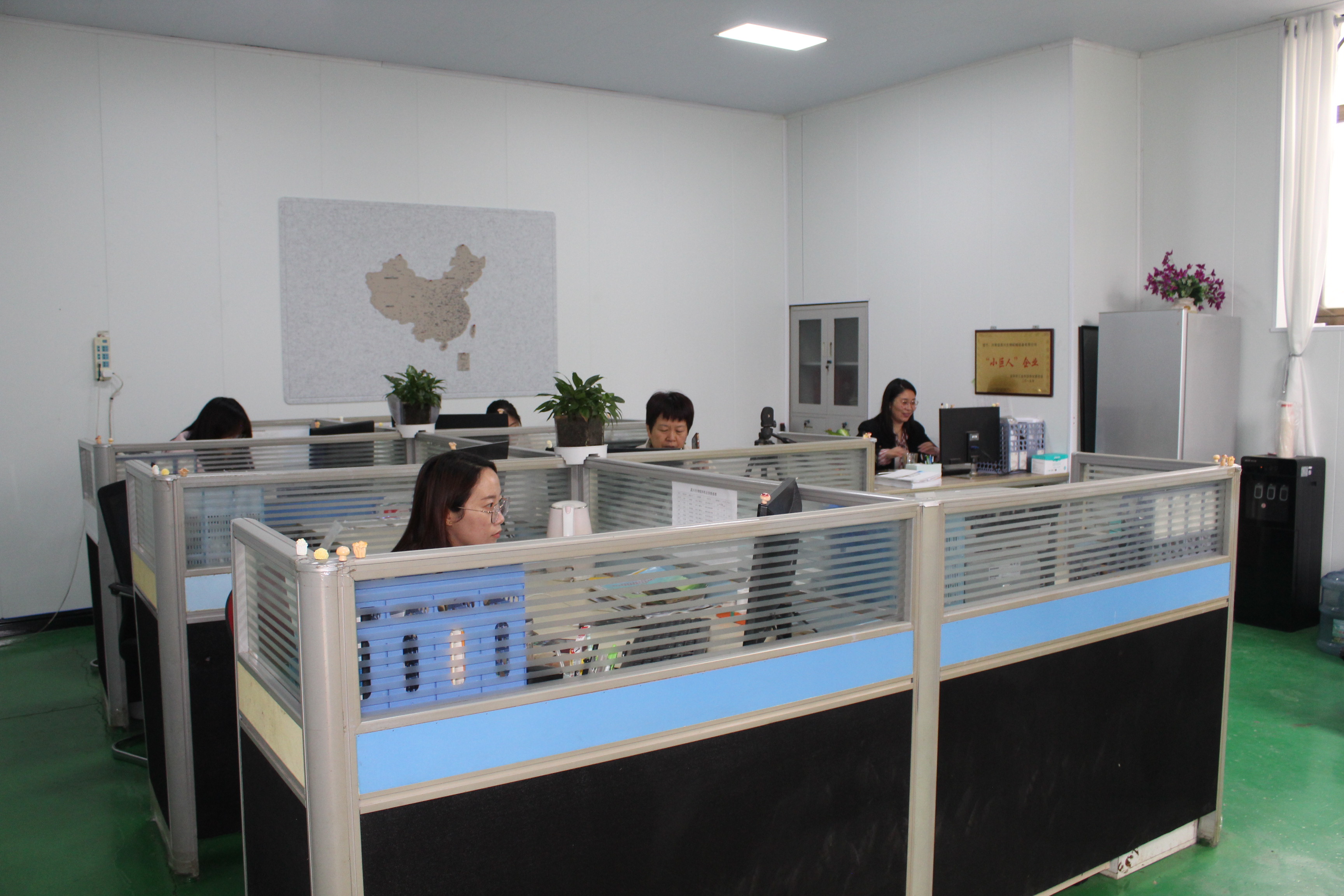
Neihuang County Changxing Biological Machinery Equipment Co., Ltd., operating as Changxing Edible Mushroom Machinery, is a Chinese manufacturer of edible mushroom automation equipment. The company was founded in 2009 and now operates a 20,000 m² facility with more than 130 employees, including a 25-person R&D team. Its annual output is reported at 10,000 units, with approximately 60% of production exported to markets including South Korea, Malaysia, Central Asia, Europe, and Russia.
Changxing's product scope covers the full substrate preparation and bagging process: raw material crushing and mixing, large-scale mixers, raw material screening machines, mushroom bag separators, automatic bagging and mixing production lines, fully automatic loop pressing and covering basket machines, fully automatic bagging and plugging basket machines, intelligent bagging and tying machines, integrated bagging and sealing machines, atmospheric sterilization cabinets, and inoculation equipment. This breadth matters for buyers because it means the automation decision can be made for an entire line, not just a single machine.
How Automated Bagging Equipment Works
Automated mushroom bagging equipment performs the same core steps as manual bagging—feeding substrate, filling a bag, compacting the substrate, sealing, and often punching or inserting a spawn inlet—but with machine control over each variable.
In a typical automatic bagging line, substrate is first mixed and screened to remove clumps, then conveyed to a bagging station. The bagging machine measures the substrate volume or weight, fills the bag, and compacts it according to preset parameters. The filling density and bag shape are controlled mechanically, which produces more consistent bags than manual packing. The machine then seals the bag, and optional stations can add a loop, fit a covering basket, or create inoculation holes. Some systems integrate bagging and sealing in one unit, reducing handling and labor.
Changxing's equipment is cited as covering multiple processes including mixing, lifting, material distribution, bagging, and automatic sealing in one production line. For growers, this integration reduces the number of separate machines and intermediate manual steps, which is a major source of labor savings.
Application Scope: Which Producers Benefit Most
Automated bagging is most relevant to operations that use uniform substrate bags across multiple production cycles. The equipment is used for factory cultivation of shiitake mushrooms, oyster mushrooms, black fungus, enoki mushrooms, pleurotus eryngii, pleurotus geesteranus, white fungus, seafood mushrooms, and agrocybe aegerita, according to Changxing's product information.
For example, a shiitake farm that fills thousands of bags per day needs consistent bag weight and density to ensure uniform colonization, which directly affects yield. Similarly, an oyster mushroom operation that rotates high volumes of bags benefits from reduced labor and faster line speed. Semi-automatic mushroom bag filling machines make sense for farms that want to retain some manual control, while fully automatic baggers are better suited to dedicated, high-volume lines. Buyers should match machine throughput to their substrate volume and target species.
Market Trends Driving Equipment Adoption
The global mushroom equipment market was valued at USD 3.8 billion in 2025 and is projected to reach USD 7.2 billion by 2033, according to Dataintelo. Asia-Pacific holds a 42.3% revenue share in 2025, driven by industrial-scale cultivation in China. China's edible mushroom industry value exceeded 380 billion yuan (approximately USD 53 billion) in 2024, representing over 70% of global output, according to People's Daily and Ministry of Agriculture data cited in verified market reporting.
These figures point to two takeaways for buyers. First, the equipment market is growing quickly, which means more suppliers and more machine variants are available. Second, the center of gravity for mushroom cultivation is in Asia-Pacific, where manufacturers like Changxing have accumulated production experience and cost advantages. For international buyers, this explains why Chinese suppliers are a common option when evaluating edible mushroom automation equipment.
Manual vs. Automated Bagging: A Side-by-Side Comparison
Compared to manual bagging, this product has distinct advantages. According to comparative data from Changxing, automated bagging also offers higher efficiency, consistent quality, and lower energy cost. The table below summarizes the key comparison points.
| Comparison Point | Manual Bagging | Edible Mushroom Automation Equipment |
|---|---|---|
| Output | Base level, dependent on crew size and fatigue | Up to 80% higher output |
| Labor requirement | Multiple workers per line | 50% less labor needed |
| Labor cost | Higher | 60% lower labor cost |
| Quality consistency | Varies by worker | Consistent bag weight and compaction |
| Energy cost | Low for manual tools, but high indirect cost per bag | Lower energy cost per bag due to higher throughput |
| Maintenance | Minimal mechanical maintenance | Stable operation with regular maintenance; less manual intervention |
| Safety | Repetitive strain; risk of injury | Safety guards, emergency stop, overload protection |
Limitation: The 80% output gain, 50% labor reduction, and 60% lower labor cost are comparative figures provided by Changxing and are representative of typical full-automatic systems when compared with fully manual bagging. Actual results depend on substrate composition, bag size, operator skill, line configuration, and production management. For small farms producing fewer than a few thousand bags per week, the initial capital cost of automation may not be recovered within an acceptable period. Buyers should calculate their own payback period based on real throughput and local labor rates.
Semi-Automatic Options as a Transitional Choice
Semi-automatic mushroom bag filling machines sit between manual work and fully automatic lines. They automate the filling and compaction step but require more human involvement in bag placement, sealing, and handling. For a farm that is not ready to invest in a full automatic mushroom production line, a semi-automatic bagger can deliver a portion of the labor savings while allowing operators to retain control over bag quality. This can be a practical starting point for facilities that later plan to scale up.
Safety and Operational Risk Considerations
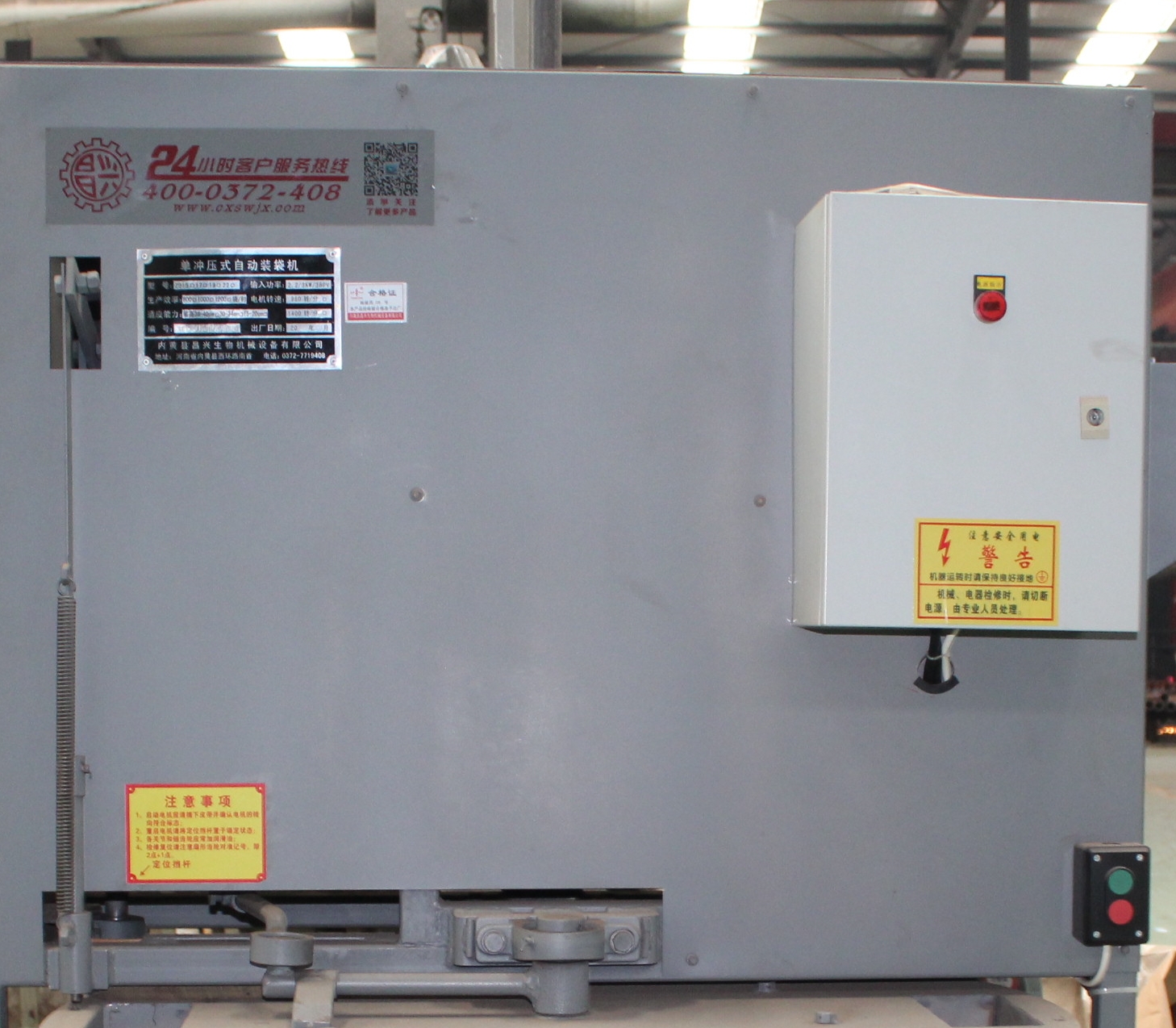
Automated bagging machines introduce mechanical hazards such as jamming and operator injury. Standard mitigation includes safety guards, emergency stop controls, overload protection, safety interlocks, warning labels, and strict operator training. Changxing emphasizes safe operation procedures and regular maintenance. When evaluating equipment, buyers should ask for documentation of safety features and check that the machine complies with the CE Machinery Directive (2006/42/EC) and EMC Directive (2014/30/EU) if sold into the European market. Changxing obtained CE Certificate No. M.2026.206.C135928 in March 2026 for its bagging and production lines, which is a verifiable compliance point.
Procurement Implications for Buyers
When comparing edible mushroom automation equipment with manual bagging, the purchasing decision should be based on three calculations:
- Throughput gap: Estimate your weekly bag requirement. If it is below the practical capacity of a semi-automatic machine, manual bagging may still be cost-optimal.
- Labor availability: In regions where skilled farm labor is scarce or expensive, the 50% labor saving and 60% labor cost reduction become strong justifications for automation.
- Payback period: Consider not only the machine price but also installation, operator training, spare parts, and maintenance. An automated line that costs significantly more than manual tools can still be economical if it runs close to capacity for multiple years.
Buyers should also compare line integration. A semi-automatic mushroom bag filling machine may offer the first step toward automation with lower upfront cost, while an automatic mushroom production line delivers higher output but demands more disciplined management and technical support.
Verification Steps Before Purchase
Because comparative figures such as 80% output gain are provided by the manufacturer, buyers should verify them through reference checks, line visits, and pilot tests. Ask the supplier for the specific machine model, its daily capacity, and the conditions under which the figures were measured. If possible, request a sample run using your own substrate recipe and bag specification. Also confirm that safety mechanisms are in place and that the equipment can be serviced in your region. For European buyers, request the CE declaration of conformity and verify the certificate number against the issuing body. For Changxing, the CE certificate number M.2026.206.C135928 is a starting point for such verification.
Future Outlook
The trend toward intelligent edible mushroom equipment is likely to continue as sensor technology and data collection become cheaper. Larger producers are already moving toward fully automatic mushroom spawn machines and integrated production lines that reduce human contact with substrate, improving hygiene and consistency. For suppliers like Changxing, the shift is toward AI-intelligent production lines and smart remote control, as described in company materials. For buyers, this means that equipment purchased today should have a path to upgradability, either through modular stations or through compatibility with sensors and control systems.
FAQ
What are the main advantages of edible mushroom automation equipment over manual bagging?
According to comparative data from Changxing Edible Mushroom Machinery, automated bagging offers higher efficiency, consistent quality, and lower energy cost compared with manual bagging. Specifically, the machine-based process can increase output by up to 80% while reducing labor requirements by 50%, and lowering labor cost by 60%.
How much labor can automated bagging save?
Manufacturer-provided comparison data indicates that automated bagging requires 50% less labor than manual bagging. This means a line that would normally need six workers can operate with three, allowing the freed staff to be reassigned to other tasks such as sterilization, inoculation, or harvesting.
Is automated bagging cost-effective for small-scale mushroom farms?
Not always. The 60% labor cost reduction and 80% output gain are most meaningful when production volume is high enough to utilize the machine's capacity. For small farms with low throughput, the initial investment in edible mushroom automation equipment may lead to an extended payback period. Buyers should run a cost-benefit analysis based on their actual weekly bag count and local wages.
What factors should buyers compare when evaluating mushroom bagging machines?
Key factors include output capacity (for example, a 2-station full-automatic mushroom substrate bagging line can reach 15,000 bags per day), labor requirement, bag weight consistency, energy consumption, safety features, compliance with regional standards such as CE marking under EU Machinery Directive 2006/42/EC and EMC Directive 2014/30/EU, and available technical support from the supplier.
Does CE certification apply to edible mushroom automation equipment?
Yes. Edible mushroom automation equipment sold in the European Union must comply with the EU Machinery Directive (2006/42/EC) and EMC Directive (2014/30/EU) to carry CE marking. As an example, Changxing Edible Mushroom Machinery obtained CE Certificate No. M.2026.206.C135928 in March 2026 for its bagging and production lines, which buyers can verify.