
Electric Forklift Buying Criteria for Warehouse Operations
Electric Forklift Buying Criteria for Warehouse Operations
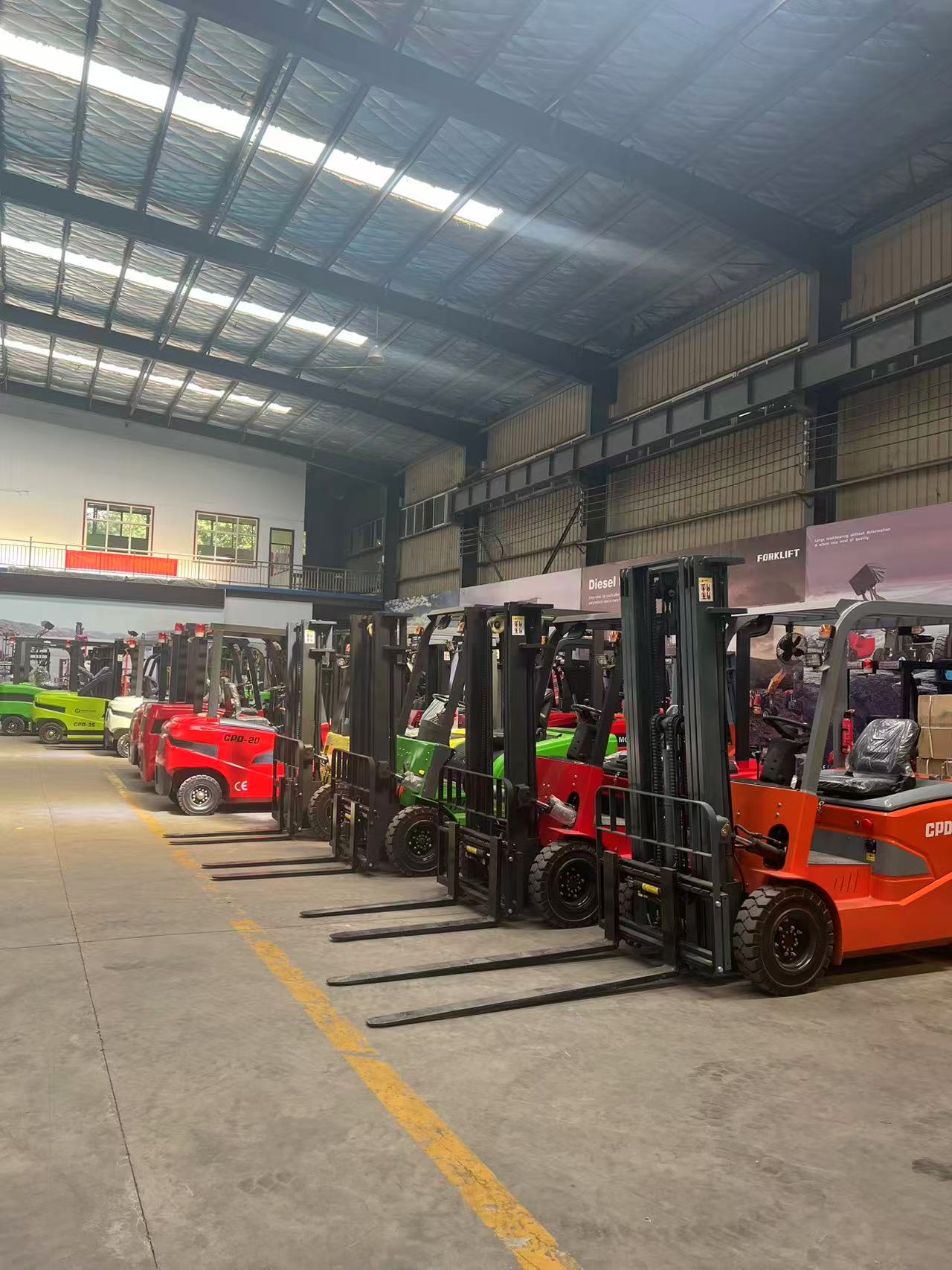
Factory environment for electric forklift assembly and inspection. Source: Mightlift.
Warehouse operators are moving beyond the question of whether to use electric forklifts. The more practical issue is how to choose a configuration that fits a specific workload, facility layout and regulatory environment. Electric forklifts now span load capacities from 1 ton to 3.5 tons, battery options from lead-acid to lithium-ion, and certification requirements that vary by market. This article summarizes the main selection criteria, market trends and supplier capabilities that matter in the current procurement environment.
Why Electric Forklifts Are No Longer a Niche Purchase
Electric forklifts have moved from a sustainability option to a mainstream material handling tool. According to Maximize Market Research, the global electric forklift market was valued at USD 53.01 billion in 2024 and is projected to reach USD 94.55 billion by 2032. In North America, electric forklifts accounted for 71 percent of retail orders in 2024. In China, domestic electric forklift sales reached 946,300 units in 2025, representing 76.9 percent of all forklift sales in the country. These figures point to a structural shift in procurement preferences, not a temporary trend.
For warehouse and logistics buyers, the consequence is that electric forklift selection now affects operational efficiency, energy cost, compliance and fleet flexibility. The buying decision is no longer just about lift capacity and price.
The Procurement Problem Behind the Electric Shift
For a warehouse operator, electrification creates a new set of decisions. A fleet that used to be specified by fuel type and rated capacity must now also account for battery chemistry, charging strategy, cold room performance, narrow aisle geometry and export certification.
Opportunity: cleaner and more controllable indoor operations
Electric forklifts eliminate tailpipe exhaust at the point of use. That makes them suitable for enclosed clean production areas, food handling zones and supermarkets where indoor air quality is a priority. A documented example is an electronics manufacturer in an industrial park: the project improved material-flow efficiency and removed tailpipe exhaust from enclosed clean production areas. For buyers, this is not only an environmental benefit but also a practical way to avoid air-quality-related constraints in modern facilities.
Challenge: matching the right specification to the operation
An electric forklift is not one universal product. Load capacities, lifting heights, battery options, charging strategies and territorial certifications vary significantly. A 1-ton truck designed for light e-commerce warehouse duty is a different machine from a 3.5-ton model built for heavy industrial handling. The risk of under-specification is downtime; the risk of over-specification is unnecessary battery and maintenance cost.
Supplier Capabilities That Match the Electric Shift
Ningjin Shunhao Trading Co., Ltd., operating under the Mightlift brand, is a China-based electric forklift manufacturer focused on OEM and ODM customization. The company supplies counterbalance electric forklifts in the CPD series, with rated capacities from 1 ton to 3.5 tons. It positions itself between high-cost European forklift brands and low-end generic Chinese suppliers, targeting global distributors, manufacturers, cold-chain enterprises and warehouse operators.
For buyers, the practical value of a factory partner lies in documentation and control. The CPD series carries CE certification under the Machinery Directive 2006/42/EC, with certificate number TTC-23-1907/08/01 issued by INTEGRA96. The certificate covers compliance with EN ISO 12100:2010, EN 60204-1:2018 and EN 1175:2020, and is valid until July 2028. It applies to the CPD10, CPD20, CPD30 and CPD35 models.
Quality control follows 100 percent test standards. The company also supports OEM customization with a minimum order of two units and a lead time of approximately 30 days, according to its manufacturing capability summary. For buyers evaluating suppliers, these details are more useful than general marketing claims because they can be checked during the order process.
Key Technology Choices in Electric Forklifts
The core of an electric forklift is its energy and drive system. On the CPD10 model, for example, the truck uses a brushless AC drive motor and pump motor, with controller options from SANTROLL, CURTIS, INMOTION or ZAPI. This means the buyer can choose a controller brand based on local service network preferences, not just vehicle price.
The CPD20 model is specified as a 2-ton electric forklift with high-power front dual drive motors, electric steering and cargo-sensing smooth control. It includes automatic electromagnetic parking brake and AI brake assist. For warehouse operators running multiple shifts, a robust braking system reduces wear and improves safety on busy loading docks.
The CPD30 offers a rated load capacity of 3000 kg and a lifting height range from 3000 mm to 7000 mm. It uses a high-power electric drive system and intelligent MOSFET control. It also includes a large-angle adjustable steering wheel, voice prompts and a large-flow cyclone air filter system. These features are relevant for operations that require high stacking and extended working hours.
The CPD35 is a 3.5-ton model with front wheel dual drive motors and P.E.S three-speed efficiency regulation. It uses a lateral side battery extraction layout, which makes battery replacement faster in facilities that run continuous shifts. Hydraulic control valves are positioned on the right side for easier operator reach.
Battery selection is another major technology decision. Some CPD models are available with heavy-duty lead-acid batteries or optional lithium batteries. Lead-acid remains a lower-cost entry option, while lithium supports faster charging and longer cycle life in high-utilization operations.
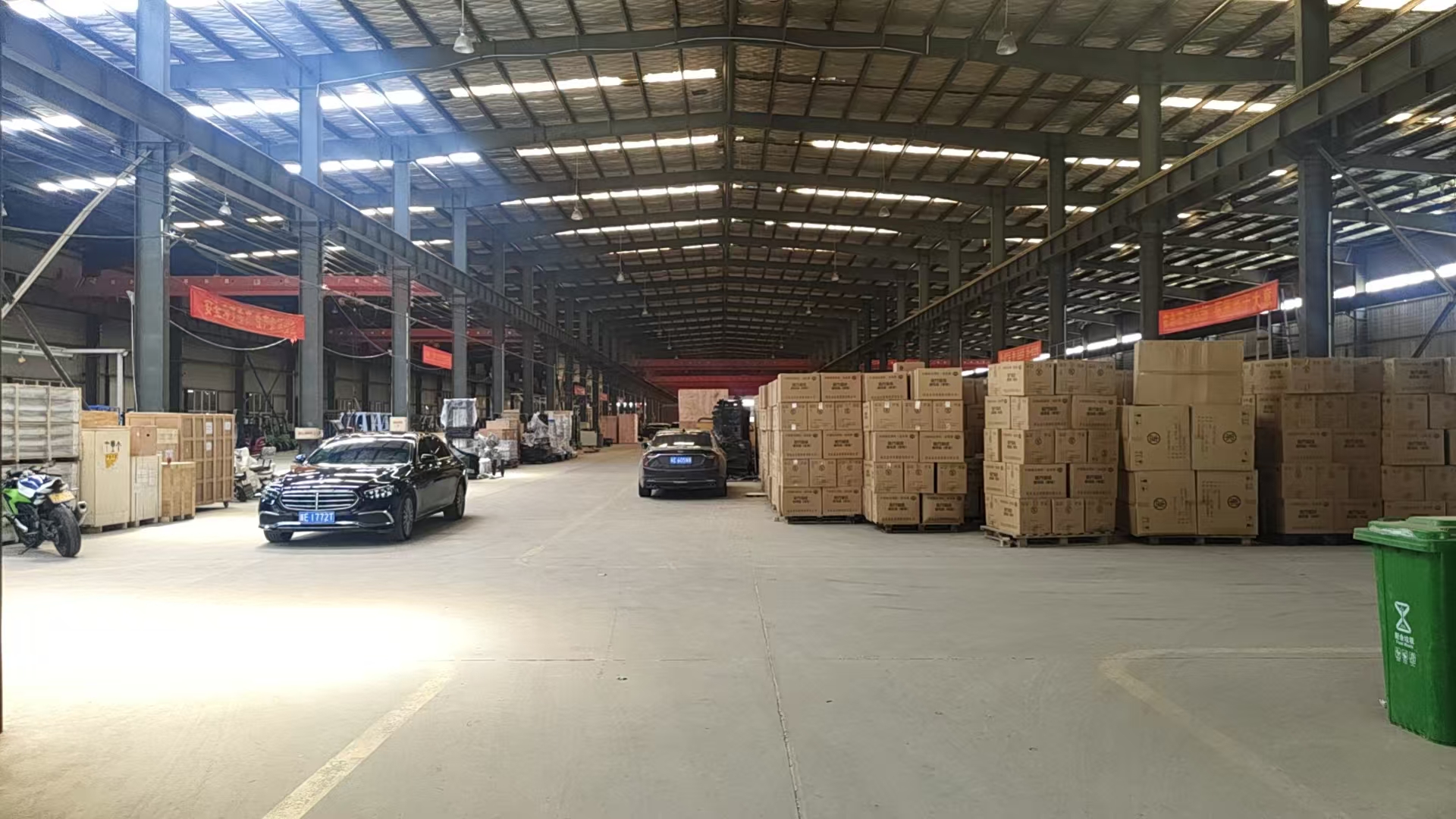
Electric forklift production and assembly workflow.
Warehouse and Industrial Applications for Electric Forklifts
Electric forklifts support a wide range of tasks: pallet receiving, put-away, dispatch, stacking and heavy-load transfer in indoor environments. The CPD10 is suited for light-duty warehouse fleets moving pallets on level floors. The CPD20 and CPD30 cover workshop stacking, logistics park transfer and supermarket storage. The CPD35 serves heavier loads in building materials and industrial goods handling.
One documented application is an electronics manufacturer in an industrial park. The fleet was configured for component, work-in-process and finished-goods logistics. The project improved material-flow efficiency and removed tailpipe exhaust from enclosed clean production areas. This illustrates how electric forklifts can be integrated into a structured manufacturing logistics route.
Cold storage is another emerging application. According to Mordor Intelligence, lithium-ion batteries retain significantly more capacity than lead-acid batteries in cold storage environments down to -20°C, and the food industry segment is projected to grow at an 11.6 percent CAGR. Buyers working in cold chains should therefore prioritize battery chemistry and verify rated performance at their actual storage temperature.
For narrow aisle warehouses, truck footprint and mast height become critical. Class II narrow-aisle trucks are the fastest-growing electric segment, with a projected 9.28 percent CAGR through 2030, driven by warehouse densification. Buyers planning high-density storage should evaluate the maximum lifting height and aisle clearance before selecting a specific model.
Market Trends Reshaping Electric Forklift Procurement
Lithium-ion adoption is accelerating
Lithium-ion batteries accounted for 35 percent of new global forklift shipments in 2024, up from 22 percent in 2021. The shift is driven by longer cycle life, lower maintenance and the ability to top up during shifts. According to Toyota Forklifts, opportunity charging in 15-30 minute top-ups does not degrade lithium-ion cycle life, whereas it significantly harms lead-acid battery longevity. This makes lithium a realistic option for multi-shift warehouse operations.
Environmental certification is becoming a market access issue
EU buyers increasingly require CE-marked equipment under the Machinery Directive and relevant harmonized standards. EN 1175:2020 is the current harmonized European standard for electrical and electronic safety requirements in self-propelled industrial trucks. For importers, complete certification documentation reduces customs and audit risk. Forklift suppliers that can provide certificates with model-specific scope are easier to work with in regulated markets.
Automation and system readiness are becoming differentiators
The market is also moving toward trucks that can communicate with warehouse management systems and support future automation. While not every warehouse needs a fully autonomous forklift, buyers are increasingly asking about intelligent system reservation and controller compatibility. This is part of a broader trend where forklifts are seen as components of a connected material flow system, not isolated machines.
Electric Forklift vs Traditional Drive Options
When choosing between a modern electric forklift with advanced drive and energy management and a traditional electric forklift, the decision should be based on operation frequency, working hours and long-term cost budget.
A modern 3.0-ton electric forklift, such as the CPD30, uses high-power electric drive and intelligent energy management. In the supplier's comparison, this configuration offers faster response, longer effective operating time and lower energy consumption, making it suitable for high-intensity continuous work. A traditional 3.0-ton electric forklift uses conventional drive and basic control systems. It requires a lower initial investment but has limited endurance, higher power consumption and more frequent maintenance, which fits standard low-to-medium frequency material handling.
There is an important boundary. Buyers with a limited upfront budget, low handling frequency or no charging infrastructure may not capture the full payback from an advanced electric model. In those cases, a traditional electric forklift or even a manual handling solution may be a more rational first step.
Compared to internal combustion lift trucks, electric forklifts eliminate exhaust and tend to produce less noise at the operating point. However, they require a charging and battery management plan. The cost of chargers, battery replacement and electrical infrastructure should be included in the total cost of ownership calculation.
Future Outlook for Electric Forklift Buyers
As lithium-ion chemistry becomes more standard and environmental regulations tighten, electric forklift procurement will likely concentrate on system-level decisions rather than single machine costs. Buyers will increasingly expect modular battery options, fast charging capability, cold storage performance and certifications that support global deployment.
Small and mid-sized manufacturers that can offer OEM customization and factory-level documentation may become more attractive to distributors and end users that want equipment aligned with a specific workflow. The challenge for buyers will be to separate proven engineering capability from marketing claims, using factory audits, test standards and certification records as primary evidence.
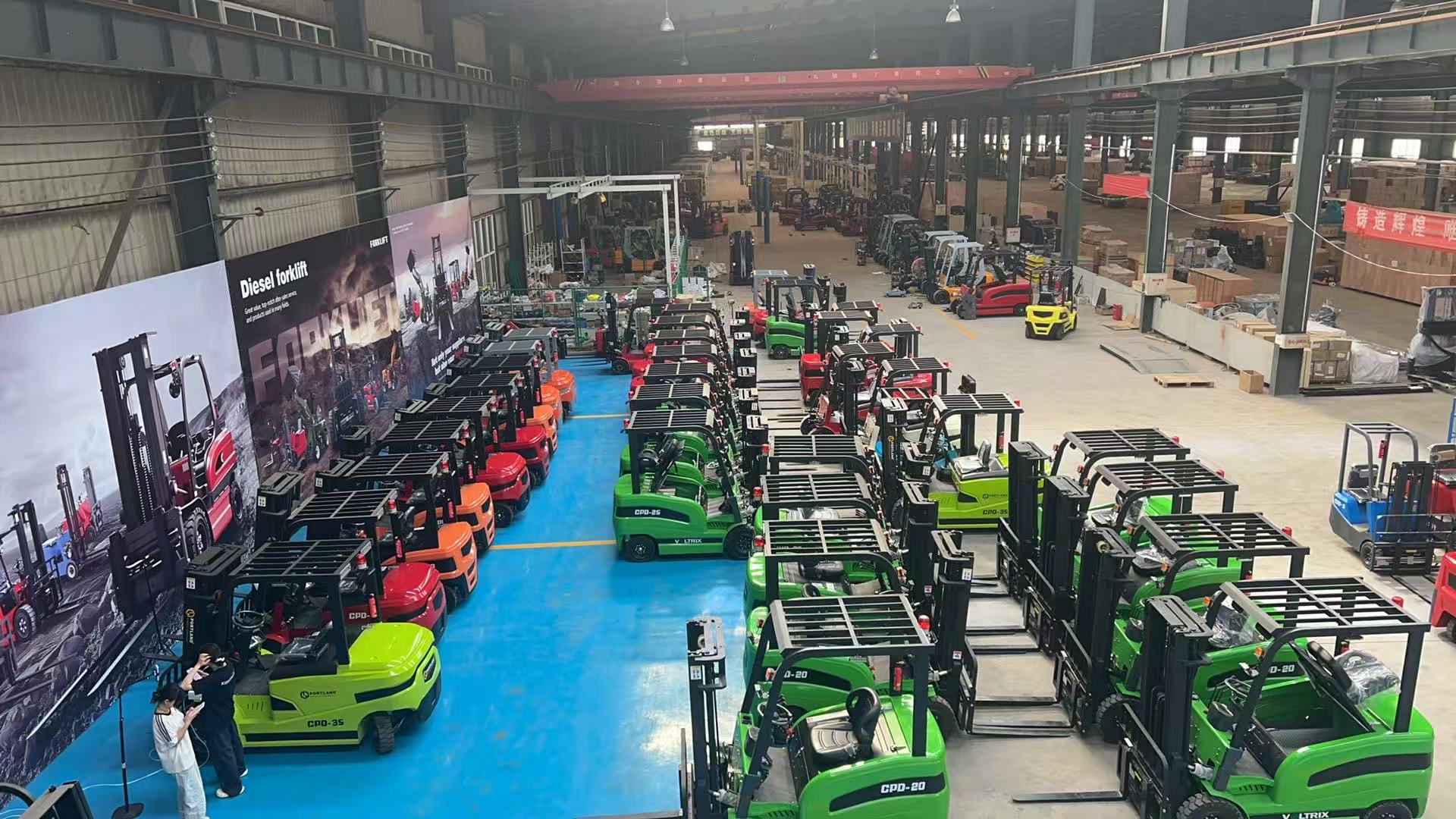
Quality control and factory environment for electric forklift production.
Frequently Asked Questions
How should a buyer choose between a modern 3.0-ton electric forklift and a traditional 3.0-ton electric forklift?
Select based on operation frequency, working hours and long-term cost budget. A modern 3.0-ton electric forklift with advanced electric drive and intelligent energy management delivers faster response, longer effective operating time and lower energy consumption, making it ideal for high-intensity continuous work. A traditional 3.0-ton electric forklift requires lower initial investment but has limited endurance, higher power consumption and more frequent maintenance, making it suitable for standard low-to-medium frequency handling.
What CE standards apply to electric forklifts in the EU?
Electric forklifts sold in the EU may need CE marking under the Machinery Directive 2006/42/EC. For self-propelled industrial trucks, EN 1175:2020 is the current harmonized standard for electrical and electronic safety requirements. The CPD series from Mightlift, for example, is certified to EN ISO 12100:2010, EN 60204-1:2018 and EN 1175:2020 under certificate number TTC-23-1907/08/01, valid until July 2028.
Can electric forklifts be used in cold storage environments?
Yes, but battery chemistry matters. According to Mordor Intelligence, lithium-ion batteries retain significantly more capacity than lead-acid batteries in cold storage applications down to -20°C. The food industry electric forklift segment is projected to grow at an 11.6 percent CAGR, driven by this performance advantage. Buyers should verify the truck's rated battery performance at the actual storage temperature and specify optional cold-storage preparation when needed.
Does opportunity charging damage a lithium-ion forklift battery?
No. Opportunity charging in 15-30 minute top-ups does not degrade lithium-ion cycle life, according to Toyota Forklifts. In contrast, frequent opportunity charging significantly harms lead-acid battery longevity. This is a strong reason to consider lithium-ion when the shift schedule requires multiple short charging windows.