
Electric Forklift Compliance: Qualifying CPD10–CPD35 for Indoor and Cold-Chain Use
Operational compliance for an electric forklift is a documented conclusion, not a specification. A CPD10, CPD20, CPD30 or CPD35 truck becomes compliant for a given site only when its load case, battery configuration, controller set, lift requirement and duty cycle have been matched to that site's conditions and written into purchasing terms that both buyer and supplier accept before production begins.
That distinction matters most in two deployment categories: enclosed indoor operations and cold-chain facilities. Both add constraints that nominal capacity does not capture. Indoor work brings emission, noise, aisle and floor-loading questions into the acceptance discussion; cold-chain work adds temperature, condensation and charging-location questions that change how a battery should be specified.
This reference sets out a qualification framework for the CPD10, CPD20, CPD30 and CPD35 electric forklift range — the 1.0 to 3.5 ton configurations produced by Ningjin Shunhao Trading Co., Ltd., the Hebei-based company behind the Mightlift electric forklift line — so that smart-manufacturing and warehouse teams can document why a specific model is fit for its intended scenario rather than assuming it from a datasheet.
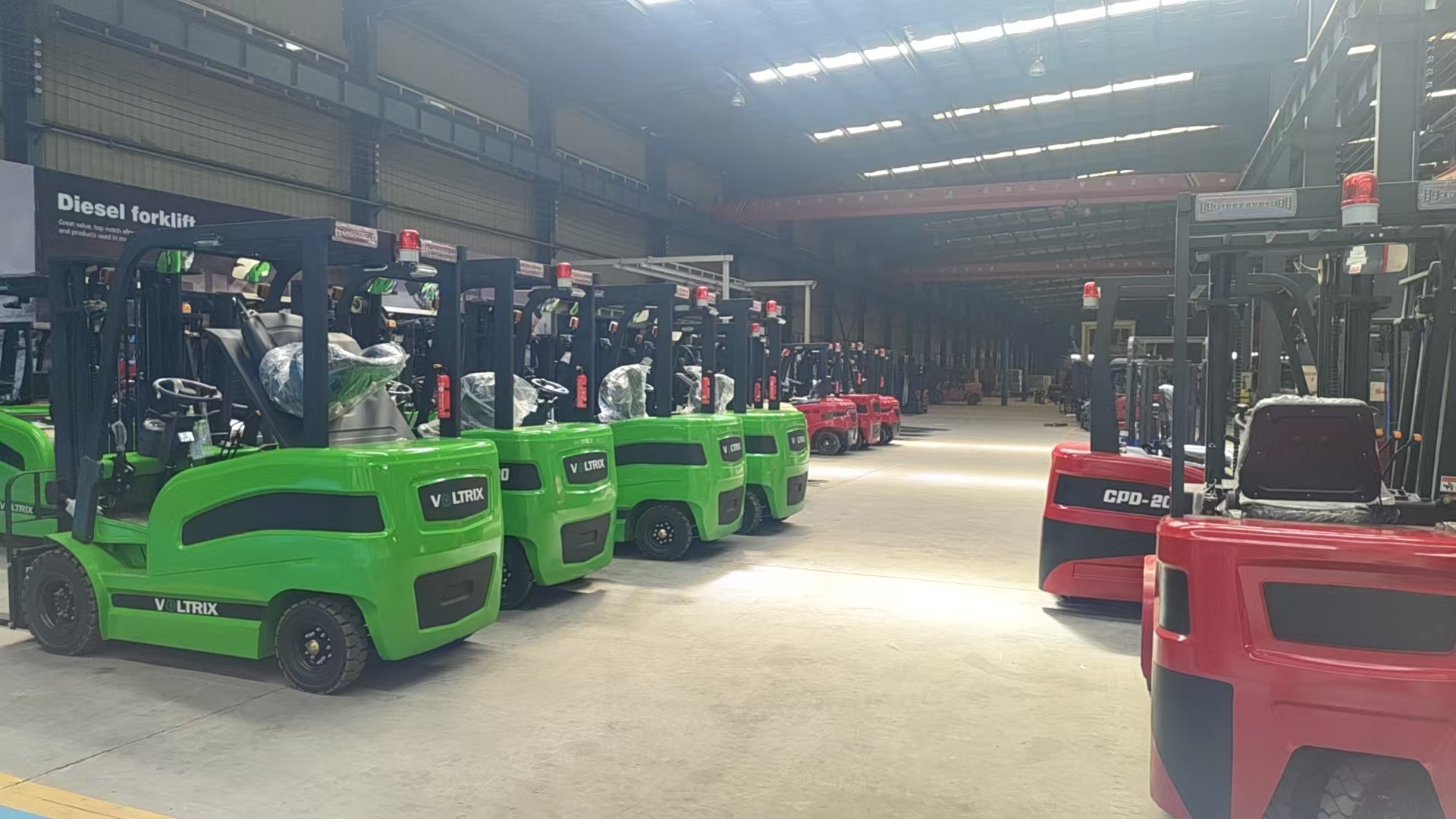
Electric forklift assembly and pre-shipment checking, where configuration is fixed against an approved technical specification.
Why a Specification Sheet Cannot Certify Fitness for a Site
A datasheet answers a narrow question: what the truck can do under defined test conditions. It does not answer the question a buyer actually has to defend internally — whether this configuration, at this site, under this duty cycle, will perform as the purchasing terms require.
Incorrect capacity or attachment selection is a recognised procurement risk in material handling. The standard control is procedural rather than technical: confirm maximum pallet weight, load centre, lift height, attachment weight and residual capacity before order approval, then approve a signed technical specification before production. Residual capacity is the part buyers most often skip, because an attachment fitted for handling a specific load reduces the usable capacity of the truck below its nominal rating.
Indoor and cold-chain deployments add two further layers. Enclosed sites care about tailpipe emissions, operating noise and where batteries are charged. Cold-chain sites care about how battery chemistry behaves at low temperature, how condensation affects electrical systems between warm and cold zones, and whether charging can realistically happen inside the cold room or must happen outside it.
What Operational Qualification Actually Contains
A qualification file that can survive an internal audit normally contains five elements, each of which must be traceable to a written acceptance criterion.
- Load case. Maximum pallet weight, load centre, attachment weight and the resulting residual capacity — not the nominal model capacity.
- Lift requirement. Required lifting height and mast configuration, stated as a number in the technical specification rather than inferred from a brochure.
- Energy configuration. Battery chemistry, capacity and charging regime, including whether charging takes place inside the operating zone.
- Controller set. The exact controller brand, model and version supplied, recorded for diagnostics and spare-part purposes.
- Evidence package. The certification and test documentation the supplier commits to deliver with the order.
When all five are written down and countersigned, the phrase “fit for intended use” stops being an opinion and becomes a checkable condition.
CPD10, CPD20, CPD30 and CPD35: Model-by-Model Qualification Logic
The four models sit inside a 1.0 to 3.5 ton capacity band, and load-capacity customisation is available where a standard rating does not match the load case. The useful way to read the range is not as four sizes of the same truck, but as four different qualification questions.
| Model | Nominal capacity band | Question that decides acceptance | Governing site condition |
|---|---|---|---|
| CPD10 | 1.0 t | Does the truck still carry the real pallet weight after attachment weight and lift height are applied? | Aisle width, floor loading, short-transfer distance |
| CPD20 | 2.0 t | Can one battery configuration cover a full shift without an unplanned charging stop? | Shift length, charging window, stacking height |
| CPD30 | 3.0 t | Does the specified drive and controller configuration support the site's energy and maintenance plan? | Continuous operation, energy cost, service intervals |
| CPD35 | 3.5 t | Does the selected battery chemistry hold usable capacity at the site's cold-storage temperature? | Low-temperature operation, condensation, charging location |
A 1.0 ton truck that passes a residual-capacity check at full lift height is more compliant for a supermarket storage or narrow-aisle task than a 2.0 ton truck that has never been checked against its actual load centre. Qualification is always site-specific.
Battery Configuration as a Compliance Variable, Not a Preference
Heavy-duty lead-acid remains the baseline configuration across the range, with lithium available as an option. The choice is not a matter of taste; it changes what the site must provide and what the acceptance document must state.
Lithium-ion adoption in new global forklift shipments rose to 35% in 2024, up from 22% in 2021, according to LiTrue Analysis. That shift is driven partly by charging behaviour: opportunity charging in 15 to 30 minute top-ups does not degrade lithium-ion cycle life, whereas the same pattern significantly harms lead-acid longevity, as documented by Toyota Forklifts. For multi-shift indoor operations where the truck cannot be taken out of service for a full charge cycle, that difference is an operational constraint rather than a convenience.
Cold-chain buyers have a second reason to look at chemistry. Lithium-ion batteries in cold storage applications down to −20°C retain significantly more capacity than lead-acid batteries, a behaviour Mordor Intelligence links to an 11.6% CAGR in the food-industry segment. Capacity retention at temperature directly affects whether a CPD35 can complete a cold-room shift on one charge.
The boundary is equally clear. Lead-acid remains a defensible choice where a dedicated charging room with ventilation exists, where shift rotation allows a full charge window, and where initial cost control dominates. A lithium option, by contrast, presumes charging infrastructure and battery-management competence on site. Neither chemistry should be written into a purchase order before the charging location, ambient temperature range and shift pattern are recorded in the technical specification.
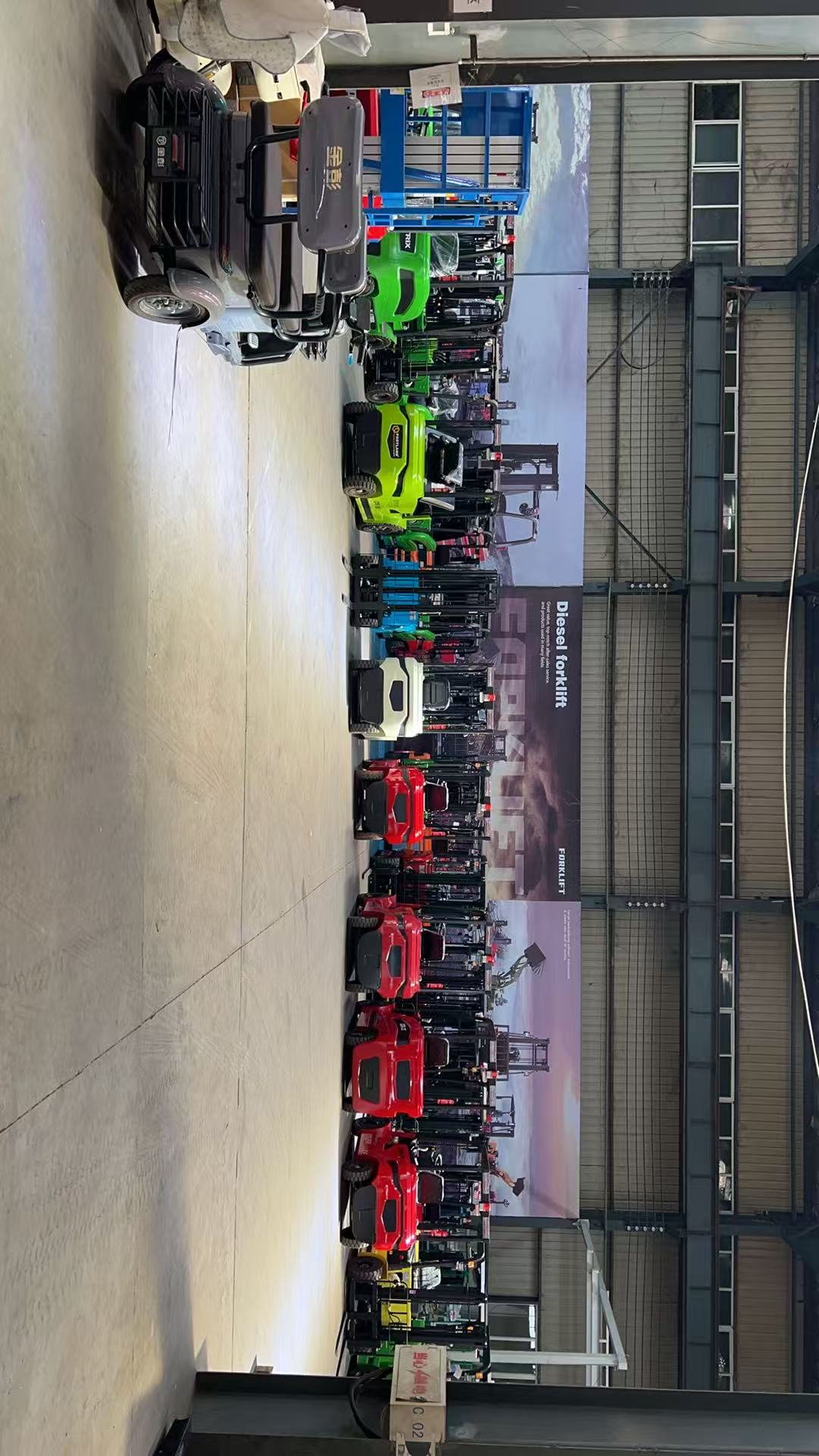
Configured units staged before shipment, where battery, controller and mast choices are matched to the signed specification.
Why Controller Identity Belongs in the Purchase Order
The CPD series is offered with controller options that include SANTROLL, CURTIS, INMOTION and ZAPI. Buyers sometimes treat the controller as an internal component and leave it out of the commercial documents. That is a mistake for three practical reasons.
First, diagnostics. Fault-finding on an electric truck begins at the controller, and the required handset, software or CAN tooling differs between brands. A maintenance team that standardises on one controller family across a fleet reduces tooling and training overhead.
Second, spare-part sourcing. Controller model and version determine which replacement unit is correct years later, when the original specification may no longer be current.
Third, acceptance testing. If the purchase order names the controller, the receiving inspection can verify it. If it does not, the buyer has no objective basis for a claim.
What should not be assumed is a performance hierarchy between controller brands. Responsibility for the drive characteristic sits with the vehicle integration as a whole — motor, controller programming and hydraulic control together. The qualification document should therefore record the exact controller supplied, without treating the brand name as a proxy for capability.
Indoor Deployment: Emissions, Noise and the Details a Datasheet Omits
Battery-electric drive produces no tailpipe emissions, which is the primary reason electric forklifts are the default choice for enclosed warehouses, food factories, workshops and supermarket storage areas. Electric traction is also generally quieter than internal combustion operation, which matters where trucks work near picking lines or in shifts that overlap with other processes.
Two cautions apply. Noise should be confirmed as a measured value in the technical specification rather than accepted as a descriptor; the relevant figure is what the operator and nearby workers actually experience, and it varies with drivetrain, hydraulics and floor surface. And indoor suitability is not only about the drivetrain: aisle width, floor loading, ramp gradients and — for lead-acid configurations — the ventilation of the charging area all belong in the qualification file.
Cold-Chain Deployment: Temperature, Condensation and Charging Location
A cold-storage specification should state the operating temperature range explicitly, and should state where charging happens. Trucks that charge inside the cold room face different battery behaviour than trucks that charge in an adjacent warm zone, and the acceptance criteria should reflect which of the two applies.
Condensation is the second consideration. Equipment moving repeatedly between a freezer and an ambient dock passes through a temperature transition zone, and the resulting moisture is a maintenance variable that belongs in the service plan rather than in the marketing description.
Third, duty cycle. Cold-chain work is frequently continuous across extended shifts, which is where the combination of capacity retention, charging strategy and service interval determines whether a single truck is sufficient or whether the site needs a rotation.
Acceptance Criteria: What to Attach to the Purchase Order
For an indoor or cold-chain order, the following items form a workable acceptance schedule. Each is a fact the buyer can verify on delivery.
- Signed technical specification approved before production, listing model, capacity, load centre, lift height and attachment.
- Battery chemistry, rated capacity and charger specification, with the charging location stated.
- Controller brand, model and version as supplied.
- Stated operating temperature range for cold-chain applications.
- Measured noise value for indoor applications.
- Certification set: CE marking with the electrical safety requirements of EN 1175:2020, the UN38.3 transport test summary for the lithium battery where applicable, and ISO 9001 and ISO 14001 for the manufacturing system.
- Where explosive atmospheres apply, ATEX Directive 2014/34/EU conformity, since it is mandatory for electric forklifts used in such zones within the European Union.
- Delivery commitment for the configured unit, allowing for any customisation beyond stocked models.
For sites introducing automated guided vehicles alongside manual trucks, ISO 3691-4:2023 defines the safety requirements for driverless industrial trucks and their systems. It is a separate scope from a manually operated CPD truck, but it is worth noting in the same procurement file because the two often share a traffic plan.
Comparison with Traditional 3.0-Ton Electric Forklifts — and Where the Case Weakens
The clearest comparison point in the range is the 3.0 ton configuration, because it is the size most often deployed in high-frequency warehouse, factory and logistics-centre work.
A current 3.0 ton electric forklift uses an advanced electric drive with intelligent energy management and optimised vehicle control. A traditional 3.0 ton electric forklift uses a conventional electric drive and a basic control system. The practical consequences claimed for the current configuration are lower energy consumption, correspondingly reduced long-term operating costs, and simplified maintenance achieved through fewer service visits and longer intervals between them, whereas conventional models require more frequent inspections.
Three boundaries should be stated plainly, because they change the decision in real procurement cases.
Initial outlay. Conventional configurations can carry a lower initial investment in some cases, with higher long-term energy and maintenance costs following later. A buyer with a short asset-holding horizon, low annual hours or an intermittent duty profile may not recover the difference, and should say so in the business case rather than assuming the total-cost argument applies automatically.
Qualification effort. Documenting load case, residual capacity, battery chemistry, controller identity and acceptance criteria is work. It is work that pays back at receiving inspection and in service disputes, but it is still an overhead that a small first order may not justify at full depth.
Configuration lead time. Stocked mainstream models support short delivery, while customisation such as load-capacity adjustment, low-temperature or explosion-proof refitting extends the schedule and should be planned before the operational start date is fixed. Buyers should also note that the CPD range tops out at 3.5 tons; heavier duty falls outside this series and requires a different truck class.
Market Trend: Electrification Is Turning Qualification into a Procurement Discipline
The commercial context explains why qualification documents are becoming routine rather than exceptional. The global electric forklift market was valued at USD 53.01 billion in 2024 and is projected to reach USD 94.55 billion by 2032, according to Maximize Market Research.
Regional data points in the same direction. Electric forklifts reached a 71% share of North American retail orders in 2024, reflecting a rapid shift away from internal combustion engines, as reported by the Industrial Truck Association and Batteries International. In China, domestic electric forklift sales reached 946,300 units in 2025, accounting for 76.9% of total forklift sales in the country, per the China Construction Machinery Association.
Segment growth reinforces the scenario focus of this article. Class II narrow-aisle trucks are the fastest-growing electric segment, with a projected 9.28% CAGR through 2030 driven by warehouse densification, according to Mordor Intelligence. Denser warehouses mean tighter aisles and more indoor trucks; more indoor trucks mean more acceptance files that have to demonstrate emissions, noise and capacity compliance rather than assert it.
Future Outlook
Two directions look likely to shape the next procurement cycle. The first is documentation standardisation: as lithium becomes a mainstream option rather than a premium one, buyers will expect battery chemistry, charging regime and temperature range to appear in the technical specification by default, in the same way capacity and lift height already do.
The second is service-network alignment. Controller choice, diagnostics tooling and spare-part availability are already part of supplier evaluation in fleets that operate across multiple sites, and that evaluation is increasingly written into the order rather than settled after delivery. Suppliers able to supply a coherent configuration file — model, battery, controller, certificate and acceptance criteria in one package — reduce the administrative load on the buyer's engineering and purchasing teams.
For Ningjin Shunhao Trading Co., Ltd., founded in 2022 and exporting across global markets, that means the qualification conversation runs alongside the product conversation. The company's stated capability includes in-depth customisation covering load-capacity adjustment, low-temperature and explosion-proof refitting, and it reports long-term cooperation with more than 120 overseas distributors across 60 countries, supported by a 12,500 m² warehouse under digital WMS management for short delivery on stocked models.
FAQ
What does “operational compliance” mean for an electric forklift?
It means the truck's configuration has been matched to a specific site and recorded in writing. The file typically covers load case and residual capacity, lift height, battery chemistry and charging regime, controller brand and model, and the acceptance criteria the supplier commits to. Compliance is therefore a property of a documented match between truck and site, not a property of a model in isolation.
Are CPD10 to CPD35 electric forklifts suitable for indoor use?
Battery-electric drive produces no tailpipe emissions, which makes electric forklifts the usual choice for enclosed warehouses, food factories and workshops. Electric traction is also generally quieter than internal combustion. Indoor qualification should still confirm a measured noise value, aisle width, floor loading and — for lead-acid configurations — the ventilation of the charging area.
Which model in the range suits a cold-storage application?
It depends on the load case and duty cycle rather than on the model number alone. The CPD35 sits at the top of the 1.0 to 3.5 ton band, but capacity is only one criterion in a freezer environment. Battery chemistry, capacity retention at the site's operating temperature and whether charging happens inside or outside the cold room usually decide acceptance.
Heavy-duty lead-acid or lithium for a cold-chain site?
Lithium-ion batteries in cold storage applications down to −20°C retain significantly more capacity than lead-acid batteries, according to Mordor Intelligence. Lead-acid remains a defensible choice where a ventilated charging room and a full charge window exist between shifts. Either way, chemistry, rated capacity and charger should be written into the technical specification rather than left to the supplier's default.
Does the controller brand matter in an acceptance inspection?
It matters for verification and serviceability. Recording the controller brand, model and version supplied makes it possible to confirm the truck on delivery and to source correct spare parts and diagnostics tooling later. It should not be read as a ranking of controller performance, because drive behaviour results from the integration of motor, controller programming and hydraulic control.
How should lift height and residual capacity be confirmed before ordering?
Confirm maximum pallet weight, load centre, required lift height, attachment weight and the resulting residual capacity before order approval, then approve a signed technical specification before production. Residual capacity is the figure that determines whether a nominal 1.0 or 2.0 ton rating is actually usable once an attachment is fitted.
How does a current 3.0 ton electric forklift compare with a traditional 3.0 ton model?
A current 3.0 ton electric forklift uses an advanced electric drive with intelligent energy management and optimised vehicle control, while a traditional 3.0 ton electric forklift uses a conventional electric drive with a basic control system. The stated outcome is lower energy consumption, reduced long-term operating costs and simplified maintenance through fewer service visits and longer intervals, against more frequent inspections on conventional models. Traditional configurations can, however, carry a lower initial investment in some cases.
Have Questions or Need More Details?
Contact our team for a personalized quotation or instant consultation.
Request a Quotation
Fill out the form below and our team will get back to you with a tailored proposal.
WhatsApp Direct Chat
Prefer to chat in real-time? Message us on WhatsApp for instant assistance & quick answers.
- Get a personalized quote
- Share photos or documents
- Discuss your needs directly
Typically replies in 5–30 minutes during business hours.