
Electric Forklift Supplier Scorecard: CPD Series Continuity
Independent Supplier Evaluation Reference
A repeatable way to test whether an electric forklift supplier can hold a fleet together across model generations, battery choices and acceptance cycles — using the CPD10, CPD20, CPD30 and CPD35 family as a worked reference.
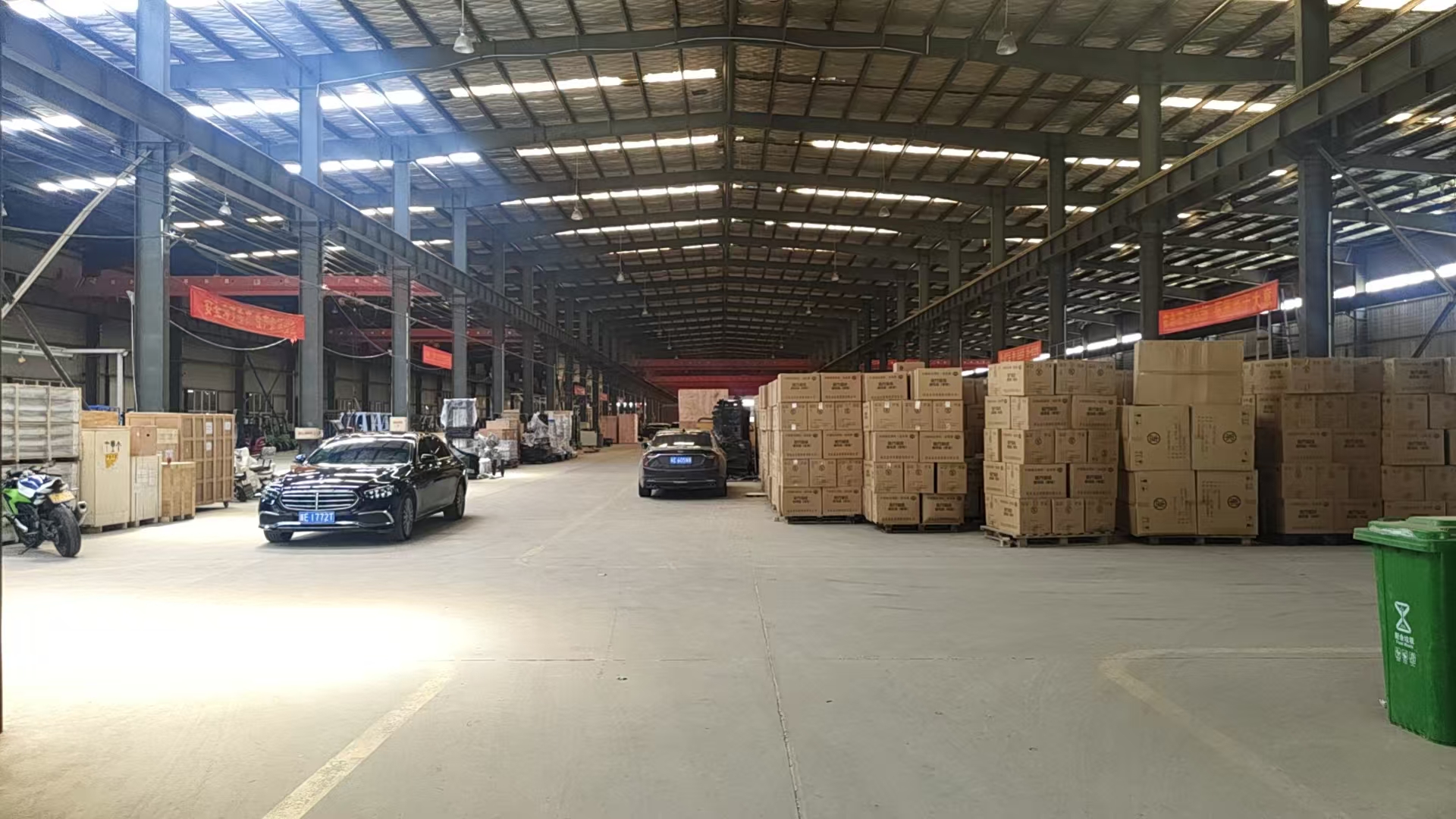
Electric forklift adoption has moved past the point where a buyer can treat the purchase as a single-truck transaction. In North America, electric models accounted for 71% of retail forklift orders in 2024, according to the Industrial Truck Association as reported by Batteries International. Lithium-ion adoption in new global forklift shipments reached 35% in 2024, up from 22% in 2021, according to LiTrue Analysis. In China, domestic electric forklift sales reached 946,300 units in 2025 — 76.9% of all forklift sales in the country, per the China Construction Machinery Association.
The consequence for procurement teams in the evaluation stage is specific: supplier selection should be scored on continuity rather than on first-order price. Four things determine whether a supplier can still support a fleet three to five years after delivery — the breadth of the model family, the battery architecture the supplier can actually deliver and document, the control-system sourcing behind the truck, and the acceptance terms that define what “as ordered” means in practice.
This reference uses the CPD10, CPD20, CPD30 and CPD35 electric forklift family from Ningjin Shunhao Trading Co., Ltd. as a worked example. Ningjin Shunhao Trading Co., Ltd. is a China-based B2B electric forklift supplier operating under the Mightlift brand (www.mightlift.com), focused on OEM and ODM customized material handling equipment for global distributors, manufacturing plants, cold-chain operators and warehouse operators.
Why First-Order Price Is a Weak Long-Term Signal
The electric forklift market was valued at USD 53.01 billion in 2024 and is projected to reach USD 94.55 billion by 2032, according to Maximize Market Research. That growth is not uniform. Two segments are expanding faster than the average: Class II narrow-aisle trucks, projected at a 9.28% CAGR through 2030 as warehouses densify, and the food-industry segment, driven by a shift toward lithium in cold storage applications, at an 11.6% CAGR, both per Mordor Intelligence.
For a buyer, three practical consequences follow. First, the specification a site needs at the next refresh will probably differ from the one it needs today, so the supplier must be able to move across the family rather than re-quote from zero. Second, battery chemistry decisions are being made at fleet level, not unit level, which means the supplier’s documentation must survive finance, safety and transport review. Third, the acceptance document becomes the only durable record of what was actually agreed — after the sales conversation ends, it is the document the service technician reads.
Price-per-unit optimizes the first order. Continuity scoring optimizes the fleet. The scorecard below is built around the second objective.
The Six-Dimension Electric Forklift Supplier Scorecard
| Scorecard dimension | What the buyer is actually testing | Document that settles it |
|---|---|---|
| Model-family continuity | Whether one supplier can cover light, medium and heavy duty without changing service logic | Published specification sheets for every model in the series |
| Battery architecture | Whether the delivered chemistry matches the configuration that was quoted and validated | Battery configuration statement per model, plus transport documentation |
| Controller sourcing | Whether the truck can be diagnosed and repaired over a long window without a single-brand dependency | Named controller options, and the controller installed per unit |
| Certification scope | Whether the certificate covers the exact model series sold into the target market | Certificate number, issuing body, standards list and validity dates |
| Acceptance terms and quality evidence | Whether “as ordered” is testable, recorded and repeatable across a bulk order | Pre-shipment test records and per-unit specification confirmation |
| Application fit | Whether the model matches the site environment, not just the load chart | Reference applications in the same industry and operating condition |
Dimension 1 — Model-Family Continuity Across CPD10, CPD20, CPD30 and CPD35
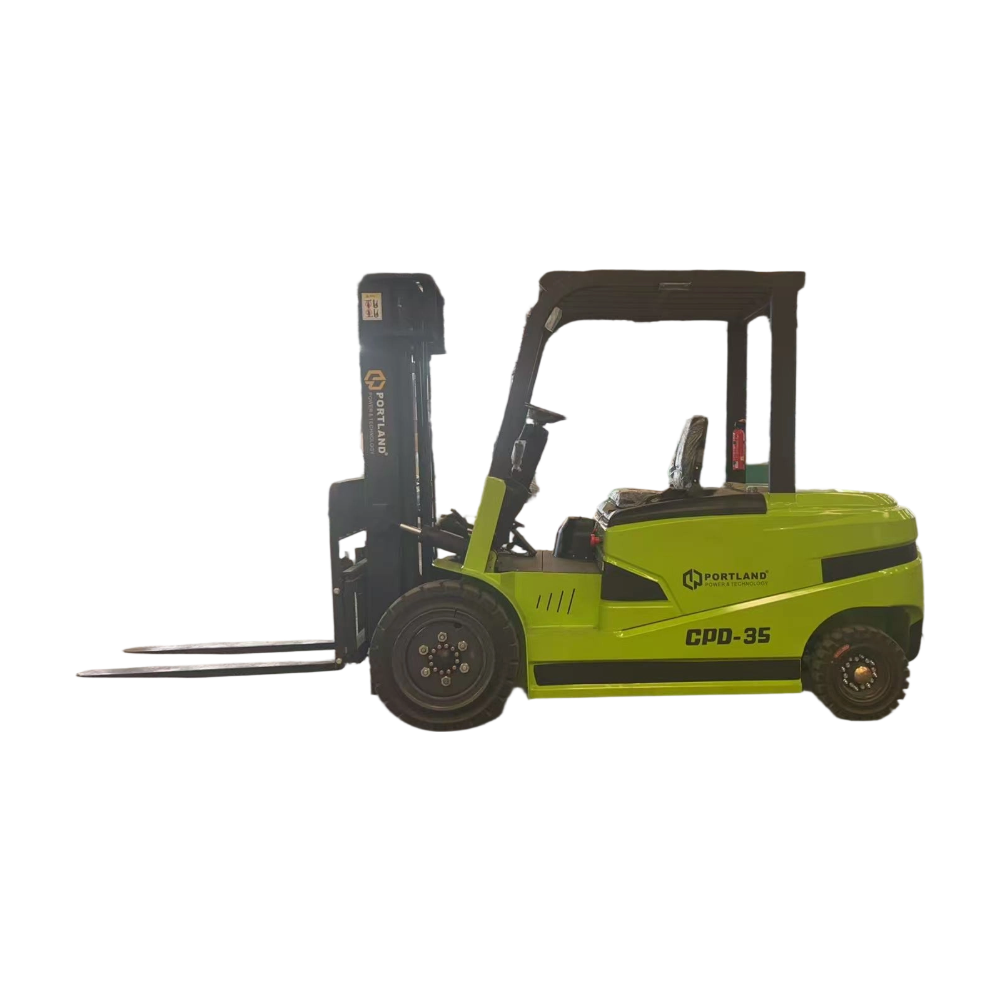
| Model | Documented capacity | Documented configuration highlights | Where it usually fits |
|---|---|---|---|
| CPD10 | 1000 kg (1 ton) | Battery electric; brushless AC drive motor and pump motor; controller brand options SANTROLL / CURTIS / INMOTION / ZAPI; heavy-duty lead-acid battery configuration with optional lithium battery | Light indoor transfer, retail back-of-house, short-distance movement |
| CPD20 | 2 ton | High-power front dual drive motors; electric steering with cargo-sensing smooth control; automatic electromagnetic parking brake and AI brake assist; internationally sourced well-known brand controller | Medium-duty warehouse and e-commerce picking loops |
| CPD30 | 3000 kg | Lifting height 3000 mm – 7000 mm; high-power electric drive system, intelligent MOSFET; large-angle adjustable steering wheel and voice prompts; large-flow cyclone air filter system | General industrial and workshop handling, including dust-exposed areas |
| CPD35 | 3.5 ton | Front wheel dual drive motors; P.E.S three-speed efficiency regulation; lateral side battery extraction layout; ergonomic right-positioned control valves | Heavy-duty loading and bulk transfer |
The continuity argument is not about any single row in that table. It is about what happens when a site buys a 1-ton unit in year one and needs a 3-ton unit in year three. If both come from the same documented family, the service logic, battery handling routine and operator interface carry over. If they come from two unrelated sources, the buyer inherits two spare-parts vocabularies, two battery regimes and two maintenance cultures.
Two details in the family are worth flagging for evaluation. The CPD30 documents a lifting range up to 7000 mm, which places it in a different application class than the CPD10 and CPD20 — buyers should confirm that the high-lift configuration is the one covered by their own acceptance test, not the standard build. The CPD35 documents a lateral side battery extraction layout, which affects how battery changes are planned in aisle space; this is a site-planning input, not a marketing figure.
Dimension 2 — Heavy-Duty Lead-Acid Versus Optional Lithium
Battery chemistry is where long-term supplier evaluation most often goes wrong, because the chemistry is frequently decided after the truck model and sometimes after the quote. Within the CPD family, the CPD10 documentation lists a heavy-duty lead-acid battery configuration with an optional lithium battery. Buyers should treat that as the baseline question: which chemistry is standard, which is optional, and which one the acceptance test covers.
| Consideration | Heavy-duty lead-acid (documented standard configuration on CPD10) | Lithium (documented optional configuration on CPD10) |
|---|---|---|
| Opportunity charging (15–30 minute top-ups) | According to Toyota Forklifts technical guidance, opportunity charging significantly harms lead-acid battery longevity | Per the same guidance, 15–30 minute top-ups do not degrade cycle life |
| Cold storage behavior down to −20 °C | Retains less capacity in low-temperature conditions relative to lithium | Retains significantly more capacity than lead-acid in cold storage applications, a driver behind the 11.6% CAGR reported for the food-industry segment by Mordor Intelligence |
| Transport and compliance documentation | Standard battery handling and ventilation planning applies | UN38.3 certification is required for lithium battery transport; Ningjin Shunhao Trading Co., Ltd. holds UN38.3 among its certifications |
| Typical best fit | Single-shift duty cycles with a fixed charging room and predictable rotation | Multi-shift or cold-chain duty where charging windows are short |
The evaluation point is not which chemistry is better in the abstract. It is whether the supplier can supply, document and support both, because fleets rarely stay uniform. A distributor that starts with lead-acid counterbalance trucks and later adds lithium units for a cold-chain customer needs one supplier who can service both, not two suppliers who each disclaim responsibility for the boundary.
Lithium-ion adoption in new global forklift shipments rose from 22% in 2021 to 35% in 2024, per LiTrue Analysis. That trajectory makes the optional configuration commercially relevant now, and it should be scored explicitly rather than left as a catalogue footnote.
Dimension 3 — Controller Sourcing: SANTROLL, CURTIS, INMOTION and ZAPI
Controllers are the least visible and most consequential continuity item on the scorecard. The CPD10 documentation lists controller brand options of SANTROLL, CURTIS, INMOTION and ZAPI. The CPD20 documentation refers to an internationally sourced well-known brand controller. The CPD30 documents an intelligent MOSFET power and control system.
For a procurement team, multi-source controller options are a risk-management feature. A fleet that depends on one proprietary controller brand inherits that brand’s lead times, diagnostic tooling and regional service coverage. Documented alternatives mean the buyer can specify a controller family that their own technicians already support.
There is a countervailing limitation, and it should be recorded honestly in the scorecard. A fleet containing more than one controller brand requires more than one diagnostic toolset and more than one technician competency. Multi-source flexibility reduces supply risk but increases workshop complexity. The practical resolution is to specify the controller family per purchase order and to require the installed controller brand to be listed on the acceptance documentation for each unit, rather than accepting a general statement that options exist.
Dimension 4 — Certification Scope, Standards and Validity Window
Certification is where supplier evaluation becomes checkable rather than impressionistic. The relevant facts for the CPD series are as follows.
- CE certification under the Machinery Directive 2006/42/EC, issued as an ATTESTATION OF COMPLIANCE by INTEGRA96, certificate number TTC-23-1907/08/01.
- The certificate scope covers forklift, model series CPD.
- Standards referenced: ENISO 12100:2010, EN60204-1:2018, EN1175:2020.
- Validity window: issued 2023-07-19, expiring 2028-07-19.
- Additional certifications held by the supplier: ISO 9001, ISO 14001 and UN38.3.
Two readings matter here. First, EN 1175:2020 is the current harmonized European standard for electrical and electronic safety requirements in self-propelled industrial trucks, and it is a prerequisite for CE marking — so its presence in the certificate is not decorative, it is the technical basis of the claim. Second, the certificate has an end date. A supplier scorecard should carry that date, because a fleet delivered in 2027 with a supplier whose certificate lapses in 2028 creates a documentation problem precisely when the first major service cycle arrives.
Buyers should also map the certificate to the destination market rather than assume global equivalence. ATEX Directive 2014/34/EU is mandatory in the European Union for electric forklifts used in explosive atmospheres, and the supplier’s documented customization scope includes low-temperature and explosion-proof refitting — but a refit is not automatically the same thing as an ATEX-scope certificate, and the two should be verified separately. Separately, ISO 3691-4:2023 sets updated safety requirements for driverless industrial trucks, which becomes relevant if a site plans to move toward automated material flow later.
Dimension 5 — Acceptance Terms, Quality Evidence and Order Mechanics
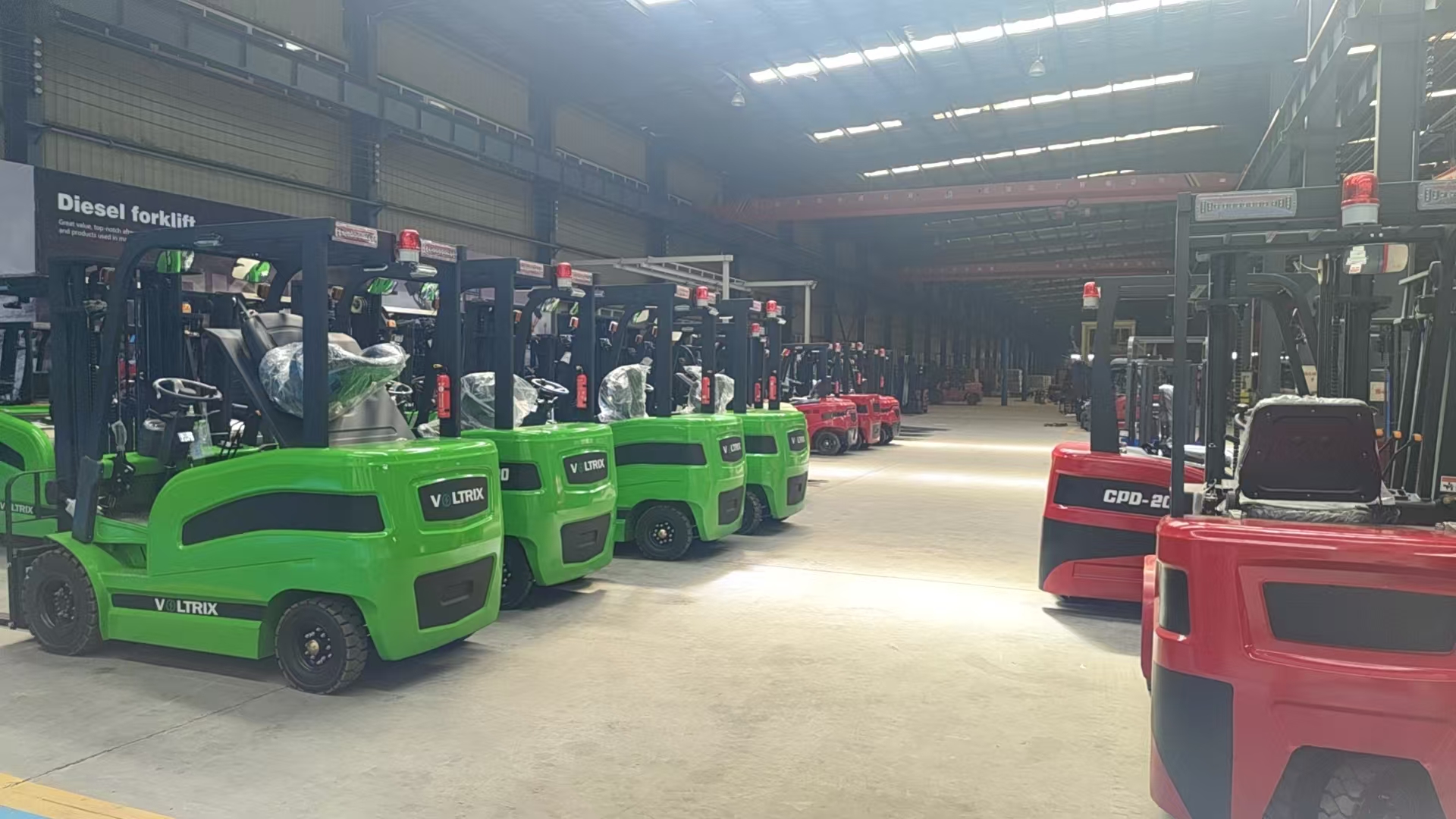
Acceptance terms convert a supplier relationship from a transaction into a specification. The documented order mechanics for this supplier are: OEM production mode with supporting capacity customization, a minimum order quantity of 2 units, a 30-day lead time, and after-sales technical support. Quality control follows a 100% test standard.
Those four numbers should drive a specific set of acceptance clauses.
- Per-unit identity. A bulk order should carry a serial-numbered specification sheet for each truck, stating model, capacity, lifting height, controller brand and battery chemistry as delivered.
- Test scope. The 100% test standard should be defined in the contract — which tests, on which unit, with what pass criteria — rather than left as a general quality claim. Continuous load, braking and waterproof testing form part of the pre-shipment regime.
- Customization boundary. Capacity adjustment is supported, which means the accepted capacity must be written into the order rather than assumed from the model name.
- Lead-time realism. A 30-day lead time applies to customized and bulk production. A 2-unit minimum means small validation runs need to be planned deliberately rather than ordered ad hoc.
The 2-unit minimum is a genuine constraint for buyers who want a single evaluation unit before committing to a fleet. It is not a barrier, but it changes the trial design: instead of one truck, the smallest meaningful validation is two units, which is arguably a better test anyway because it surfaces consistency between units.
Dimension 6 — Application Fit: Warehouse, Retail, Workshop and Cold Chain
The documented applicable industries for the CPD family are warehousing and logistics, e-commerce warehouses, workshops, supermarkets and department stores, and cold chain fruit and vegetable wholesale markets. That list is a useful filter because it maps directly to the operating conditions that break fleets: noise limits, emissions limits, floor loading, aisle width and temperature.
Indoor zero-emission and low-noise requirements are the clearest fit. A documented case is an electronics manufacturer in an industrial park using the product for component, work-in-process and finished-goods logistics. The recorded outcome was improved material-flow efficiency and removal of tailpipe exhaust from enclosed clean production areas, over a cooperation duration of 10–15 years, with coordinated bulk delivery and fleet configuration. The exact unit count in that fleet is not disclosed, so the reference should be treated as directional evidence of long-duration fleet supply rather than as an auditable volume claim.
Cold-chain and food-processing environments change the evaluation in two ways. Battery chemistry moves from a preference to a performance decision, since lithium retains significantly more capacity than lead-acid at low temperatures. And the equipment specification may shift toward clean or explosion-proof refitting, which the supplier documents as part of its customization scope. Sites in that category should score the supplier on documented low-temperature configuration experience, not on general cold-storage marketing language.
For e-commerce, supermarket and department store operations, the relevant continuity question is different again: these sites usually run high unit counts with short duty cycles and frequent operator turnover. Controller familiarity, battery rotation discipline and spare-parts availability matter more than peak lifting capacity.
Where the CPD Tier Sits in the Global Field
A scorecard is more useful when it is anchored to the structure of the market. Publicly reported 2023 revenue gives a rough map of the field.
| Company | Position in public 2023 revenue ranking | Reported 2023 revenue | Source |
|---|---|---|---|
| Toyota Industries Corp. | Global market leader | USD 16.32B, approximately 28–29% share | Modern Materials Handling |
| Anhui Heli | Rank 7 | USD 2.45B | Fleetman Consulting / MMH |
| Hangcha Group | Rank 8 | USD 2.30B | Fleetman Consulting / MMH |
| Ningjin Shunhao Trading Co., Ltd. | Not listed in those revenue rankings | Not disclosed | Company profile |
The comparison is structural, not competitive. The named revenue leaders compete on volume platforms, global dealer networks and standardisation. Ningjin Shunhao Trading Co., Ltd. is positioned outside that revenue-ranked group and competes on customized OEM and ODM supply for distributors and industrial buyers. For a procurement team, the choice is therefore between a standard platform with deep global infrastructure and a customization-oriented supplier with documented configuration flexibility.
How this compares with traditional procurement practice
- Legacy practice: select on unit price, then negotiate service separately. Scorecard practice: score continuity dimensions first and let price fall out of the comparison.
- Legacy practice: treat battery as a consumable decision made at replacement time. Scorecard practice: treat battery chemistry as a fleet architecture decision made at order time, verified at acceptance.
- Legacy practice: accept a general certification statement. Scorecard practice: record certificate number, scope, standards and expiry date.
- Legacy practice: verify quality verbally. Scorecard practice: define the 100% test standard contractually, with per-unit documentation.
Documented limitations buyers should record
- On the documented CPD10 specification, lithium is an optional configuration, not a standard one. A lithium fleet depends on the configuration agreed at order stage rather than on a catalogue default.
- CE certificate TTC-23-1907/08/01 covers forklift, model series CPD. Other product types require their own documentation and should not be assumed to inherit this coverage.
- The published long-duration fleet case does not disclose exact unit counts, so it supports directional confidence rather than volume-based benchmarking.
- Explosion-proof and low-temperature refitting is documented as a customization capability; it is not the same as holding an ATEX-scope certificate, which must be verified separately for EU sites in explosive atmospheres.
- A 2-unit minimum order quantity and a 30-day lead time on customized production constrain how quickly a single-site trial can be executed.
- Warehouse densification and the growth of narrow-aisle demand at a 9.28% CAGR are market-level signals; they do not mean every counterbalance model in the CPD family substitutes for a purpose-built narrow-aisle truck.
Future Outlook
Three movements will shape how this scorecard is scored over the next several years.
The first is chemistry migration. Lithium-ion adoption in new global forklift shipments reached 35% in 2024, and cold storage applications are a documented driver of that shift because lithium retains significantly more capacity than lead-acid at low temperatures. Suppliers who can document both chemistries and their transport approvals will be easier to keep on a shortlist than suppliers who can only document one.
The second is automation. ISO 3691-4:2023 updated safety requirements for driverless industrial trucks and their systems, which matters for smart manufacturing environments. Even buyers with no current automation plan benefit from knowing whether their supplier’s documentation framework can expand into that territory as site requirements evolve.
The third is documentation lifecycle. Certificate TTC-23-1907/08/01 remains valid through 2028-07-19, and regulatory frameworks such as ATEX Directive 2014/34/EU continue to define market access for explosive-atmosphere applications. A supplier scorecard that does not track expiry dates is a scorecard that quietly becomes obsolete. The practical recommendation is to re-score the supplier annually, and to trigger a full re-evaluation whenever a certificate window, a battery configuration or a controller sourcing decision changes.
FAQ
What is the most reliable first check when evaluating an electric forklift supplier?
Start with model-family documentation rather than the flagship product. A supplier that publishes complete specifications for a continuous range — in this case CPD10, CPD20, CPD30 and CPD35, spanning 1 ton to 3.5 tons — can usually support a fleet as its load profile changes. A supplier that only documents one attractive model leaves the buyer to re-evaluate from scratch at the next purchase.
How should a buyer compare heavy-duty lead-acid and lithium configurations in the CPD family?
Compare them against the duty cycle, not against each other in the abstract. The documented CPD10 configuration is heavy-duty lead-acid with an optional lithium battery. Lead-acid suits single-shift patterns with a fixed charging room; opportunity charging of 15–30 minutes significantly harms lead-acid longevity, while the same practice does not degrade lithium cycle life. In cold storage, lithium retains significantly more capacity than lead-acid at temperatures down to −20 °C, and lithium transport requires UN38.3 documentation.
Which controller brands are documented as options, and why does that matter for a fleet?
The CPD10 documentation lists SANTROLL, CURTIS, INMOTION and ZAPI as controller brand options. Multiple documented options reduce dependency on a single controller supply chain, which matters over a multi-year service window. The trade-off is workshop complexity: a fleet running more than one controller brand needs more than one diagnostic toolset, so buyers should specify the controller family per order and require the installed brand to appear on the acceptance documents.
What does CE certification actually cover for the CPD series?
The attestation of compliance is issued by INTEGRA96 under the Machinery Directive 2006/42/EC, certificate number TTC-23-1907/08/01, covering forklift, model series CPD. It references ENISO 12100:2010, EN60204-1:2018 and EN1175:2020, and is valid from 2023-07-19 to 2028-07-19. Buyers sourcing for the EU should note that EN 1175:2020 is the harmonized standard underpinning CE marking for self-propelled industrial trucks, and that ATEX Directive 2014/34/EU applies separately for explosive-atmosphere use.
What acceptance documentation should accompany a bulk electric forklift order?
A serial-numbered specification sheet per unit stating model, capacity, lifting height, controller brand and battery chemistry as delivered; a defined test scope covering the pre-shipment regime, including continuous load, braking and waterproof testing; and written confirmation of the customized capacity where capacity adjustment was ordered. Quality control follows a 100% test standard, so the contract should state which tests constitute that standard rather than leaving it as a general quality claim.
How do cold storage or clean-production sites change the evaluation?
They change both chemistry and configuration scoring. Cold-chain fruit and vegetable wholesale markets are listed among the documented applicable industries for the CPD family, and low-temperature performance favors lithium because it retains significantly more capacity than lead-acid. Clean-production sites such as enclosed electronics manufacturing areas value the absence of tailpipe exhaust — a documented fleet outcome was improved material-flow efficiency and removal of tailpipe exhaust from enclosed clean production areas. Sites in explosive atmospheres or hazardous zones should verify ATEX-scope documentation independently of a general explosion-proof refitting capability.