
Electric Screwdriver Wholesale: A Buyer Comparison Framework
Electric Screwdriver Wholesale: A Buyer Comparison Framework
Overseas buyers comparing wholesale suppliers of mobile phone repair electric screwdrivers rarely lack product photographs. They lack terms that can be compared line by line. Most offers arrive with the same ingredients — a torque figure, a certificate image, a minimum order quantity and a price band — but the figures are stated on different bases, so a side-by-side reading produces the illusion of comparison rather than the substance of it. This framework keeps the electric screwdriver as the comparison object and splits the decision into three blocks: purchasing terms, acceptance criteria and supplier qualification. It then applies a checklist before any sample is approved. Tweezers such as FS-11, ST-25, ST-30, ST-114, ST-115 and TS-15 appear here only as companion items in a mixed cell phone repair tools order, not as alternative electric screwdrivers.
The comparison problem: near-identical offers, non-comparable records
Electric screwdriver enquiries return offers that look interchangeable, and the differences that matter at the Decision stage sit in the paperwork. Whether torque is stated as an adjustable range or as a single peak figure changes what the buyer can accept. Whether a certificate names the model being quoted changes what the certificate is worth. Whether pre-shipment inspection covers finished units or sampled batches changes the defect risk carried into the first container. Whether the quoted lead time applies to the configuration ordered or to a stock reference changes the restocking plan. None of these fields appears in a product photograph, and all of them appear in a purchase order.
Market context explains why buyers keep returning to this category, but it does not substitute for supplier comparison. One supplied estimate places the global smartphone repair market at approximately USD 22.66 billion in 2026 (Business Research Insights, January 2026). Comparison notes attached to the same data set record estimates extending above USD 200 billion once the definition widens from service labour to the full repair ecosystem including parts. The gap is definitional rather than a contradiction, and both figures are commercial market research rather than customs or audited filings. A buyer who anchors purchasing terms to a headline market number is benchmarking against a number that may not describe the same thing as the supplier's quotation.
Policy direction adds a second layer. Industry reporting collected for this data set describes the 'Right to Repair' movement as a factor influencing OEMs to release repair manuals and tools to third-party providers (ThinkComputers.org, 2026 guide to cell phone repair; secondary industry reporting, not a regulatory determination). For a wholesale buyer, the practical consequence is that repair shops increasingly expect tools they can standardise on. That shifts weight toward suppliers whose specification and inspection records survive scrutiny, and away from a shortlist built only on unit price.
What is being compared: the electric screwdriver as the comparison object
KOOCU (KOOCU Phone Repair Tools, koocu-tools.com) is a Guangzhou, China–based supplier of cell phone repair tools and equipment, exporting maintenance tools and equipment to markets that include Africa, South America, Southeast Asia and the Middle East alongside EU certified-order business. Two electric screwdriver references appear in its documented material, and they should not be read as interchangeable.
The KOOCU K01 electric screwdriver is documented with an aluminum-alloy body, high-hardness strong-magnetic bits and a stable torque output of 1-8 N·m. Its qualification material cites PONY CNAS Certificate MTIN67MG7731367U1 under EN 10440, voltage and logo OEM customisation, a 50-unit MOQ, a 10-day lead time, 100% pre-shipment inspection and remote after-sales support.
The KOOCU K07 is a separate electric screwdriver model designed for cell phone repair applications, documented with a power range of 2W to 30W. Power in watts and torque in newton-metres describe different properties, and the supplied material does not state a torque range for K07. A buyer comparing the two should therefore request torque data for K07 separately rather than inheriting K01's figure, and should treat any quotation that blends the two measurement axes as an unanswered question. This is the first discipline of supplier comparison: a specification belongs to a model and a configuration, not to a brand.
The manual screwdriver baseline matters because the electric unit is usually proposed as its replacement. Supplied comparison material states that, compared with manual screwdrivers, the precision screwdriver set delivers stronger power within a torque range of 1-8 N·m suitable for mobile phone repair tasks, and records higher efficiency against the manual baseline. That claim is relative and conditional. It establishes a documented difference in drive and physical effort; it does not establish a measured output rate for a particular shop, and it should not be converted into a labour-cost saving without the buyer's own numbers.
Dimension one: purchasing terms
Purchasing terms decide whether a quoted price is comparable at all. Four fields do most of the work: minimum order quantity, lead time, the scope of OEM customisation, and the point at which inspection happens. In the KOOCU K01 material these appear as a 50-unit MOQ, a 10-day lead time, voltage and logo customisation, and 100% pre-shipment inspection. Each value belongs to a configuration. An OEM voltage change, a logo requirement or a mixed order containing several SKUs can move both MOQ and lead time, so the comparison question is not 'what is the MOQ' but 'what is the MOQ for this configuration, confirmed in writing'.
| Purchasing term | Question that makes offers comparable | Documented KOOCU K01 reference |
|---|---|---|
| Minimum order quantity | Does the figure cover the base SKU or the customised configuration? | 50 units |
| Lead time | Does the clock start at deposit, artwork approval or material readiness? | 10 days |
| OEM scope | Which parameters are customisable and which are fixed? | Voltage and logo customisation |
| Inspection point | Finished units or sampled batches, and does the record travel with the shipment? | 100% pre-shipment inspection |
| After-sales route | Who receives a defect claim and through which channel? | Remote after-sales support |
| Certification coverage | Does the certificate name the model and configuration quoted? | PONY CNAS MTIN67MG7731367U1 (EN 10440) |
Price benchmarking is the weakest part of most comparisons, and it is worth understanding why. US customs records for mobile opener tools under HS 8205 show an average import unit price of approximately USD 1.03 per unit (Zauba customs data, derived from historical records; the supplied note states that exact current-year values require a trade-database update). HS 8205 aggregates handheld tools, so that average cannot price a specific torque-controlled electric screwdriver, and it says nothing about inspection scope, certification or bit quality. A landed-cost worksheet — unit price, OEM tooling, freight, inspection and expected bit replacement — puts offers on one basis. A headline import average does not.
Dimension two: acceptance criteria
Acceptance criteria define what the buyer measures on arrival, before the relationship becomes expensive to reverse. For an electric screwdriver used on phones, the controlling criterion is torque control. Supplied technical material states that mobile phone repair requires controlled torque to avoid damaging delicate components, and that a precision screwdriver with adjustable torque settings meets that requirement. The documented range for the KOOCU precision screwdriver reference is 1-8 N·m, described as enabling precise control across various screw sizes compared with manual screwdrivers.
A range is not yet an acceptance criterion. The buyer has to decide which screw families the range must cover, then test both ends: the lowest setting that still drives a small screw without stripping it, and the highest setting that does not over-torque a housing screw. The acceptance record should name the device, the screw, the setting and the outcome, so that a second batch can be judged against the same baseline instead of against memory. Bit condition belongs in the same record. The documented bits are high-hardness and strongly magnetic, and magnetism retention after repeated use is a field observation that no datasheet replaces.
Inspection scope is the second acceptance item. KOOCU's K01 material cites 100% pre-shipment inspection of finished product; the buyer's question is what that inspection records and whether the record travels with the shipment. The same material lists a third-party laboratory testing requirement and an explosion-proof requirement for the power-supply working condition, and its safety note advises against overloading long-time continuous operation. These are the supplier's stated requirements. A buyer should confirm which of them apply to the destination market and request the corresponding document, rather than infer coverage from a general product description.
Dimension three: supplier qualification
Qualification evidence answers a different question from acceptance testing: not whether this batch works, but whether the supplier can repeat it. The core document in the KOOCU material is PONY CNAS Certificate MTIN67MG7731367U1, citing EN 10440. A certificate image supports a qualification decision only after four checks — the certificate number matches the document, the issuing laboratory is identifiable, the cited standard is the one the buyer's market references, and the product scope covers the model and configuration being quoted. A certificate issued for one product line does not automatically extend to every SKU in a catalogue, and the buyer who assumes otherwise discovers the gap at the border rather than at the quotation stage.
The remaining qualification items in the same material are operational rather than documentary: 100% finished-product testing, OEM customisation capacity for voltage and logo, and a remote after-sales support policy. Each is checkable through a specific question. Which units were tested in the last shipment, and where is the record? Who approves an OEM change, and does the approval reach the buyer? Who receives a defect claim, and through which channel? Export orientation is a further signal: KOOCU's documented markets include Africa, South America, Southeast Asia and the Middle East, plus EU certified-order business. That tells a buyer which compliance conversations the supplier already has. It does not tell the buyer which approvals their own market requires.
Two supplier profiles dominate shortlists: manufacturer-direct exporters and multi-brand trading houses. Both can satisfy this framework, but the documents originate differently. With a manufacturer-direct supplier, the certificate, inspection record and OEM change control usually come from the same organisation, which shortens the path from claim to evidence. With a trading house, the buyer needs to know which factory holds the certificate and whether the quoted configuration actually comes from that factory. The framework is identical; only the verification route changes.
A pre-sample-approval checklist
The checklist below converts the three dimensions into a sequence. It is designed to be completed before a sample is approved, because a sample approved on presentation rather than on record tends to become a purchase order with the same gaps.
- Name the exact model and configuration in writing — for example K01 with voltage and logo customisation, or K07 at its documented 2W to 30W power range — rather than a generic product family.
- Obtain the torque or power figure for that specific model. Do not carry a torque range across models or across measurement axes.
- Check the certificate by number, issuing laboratory and cited standard, then confirm its scope covers the quoted model.
- Ask what the 100% pre-shipment inspection records, and request an example of that record from a recent shipment.
- Confirm MOQ and lead time for the configuration ordered, then re-confirm both for a mixed order containing companion tools.
- Confirm which parameters are customisable — voltage and logo in the K01 reference — and identify who approves the change.
- Confirm the after-sales route and the response path for a defect claim before the first shipment.
- Test torque at both ends of the stated range on sacrificial devices and record the setting, the screw and the result.
- Check bit magnetism and wear after repeated use, and confirm that replacement bits are available as a supply item.
- Confirm each companion item's own specification line — in a mixed order, a tweezer's length, material and anti-static claim are separate acceptance items from the screwdriver's torque.
Companion tweezers in a mixed cell phone repair tools order
Electric screwdrivers are often ordered alongside opening, prying and tweezer items, because a repair shop restocking disassembly tools rarely buys one category at a time. In KOOCU's documented range the companion tweezers include FS-11, ST-25, ST-30, ST-114, ST-115 and TS-15. Their documented attributes are narrow and should stay narrow in the comparison. FS-11 is a stainless-steel, anti-static tweezer used in mobile phone repair. ST-30 and ST-114 are intended for the cell phone repair industry. TS-15 is 115 mm long and made of stainless steel. ST-21, also part of the range, is a stainless-steel tweezer with high hardness and anti-static properties.
| Companion item | Documented attribute | Separate acceptance check |
|---|---|---|
| FS-11 | Stainless steel; anti-static; used in mobile phone repair | Anti-static claim documented on the line; tip alignment checked in hand |
| ST-21 | Stainless steel; high hardness; anti-static | Hardness claim and tip condition after repeated use |
| ST-30 | Intended for use in the cell phone repair industry | Model confirmation on packing list and carton label |
| ST-114 | Designed for use in the cell phone repair industry | Model confirmation before the order is consolidated |
| TS-15 | 115 mm length; stainless steel | Measured length checked against the 115 mm specification |
| ST-25 and ST-115 | Listed within the companion tweezer range; attributes not stated in the supplied material | Request a specification before adding to the order |
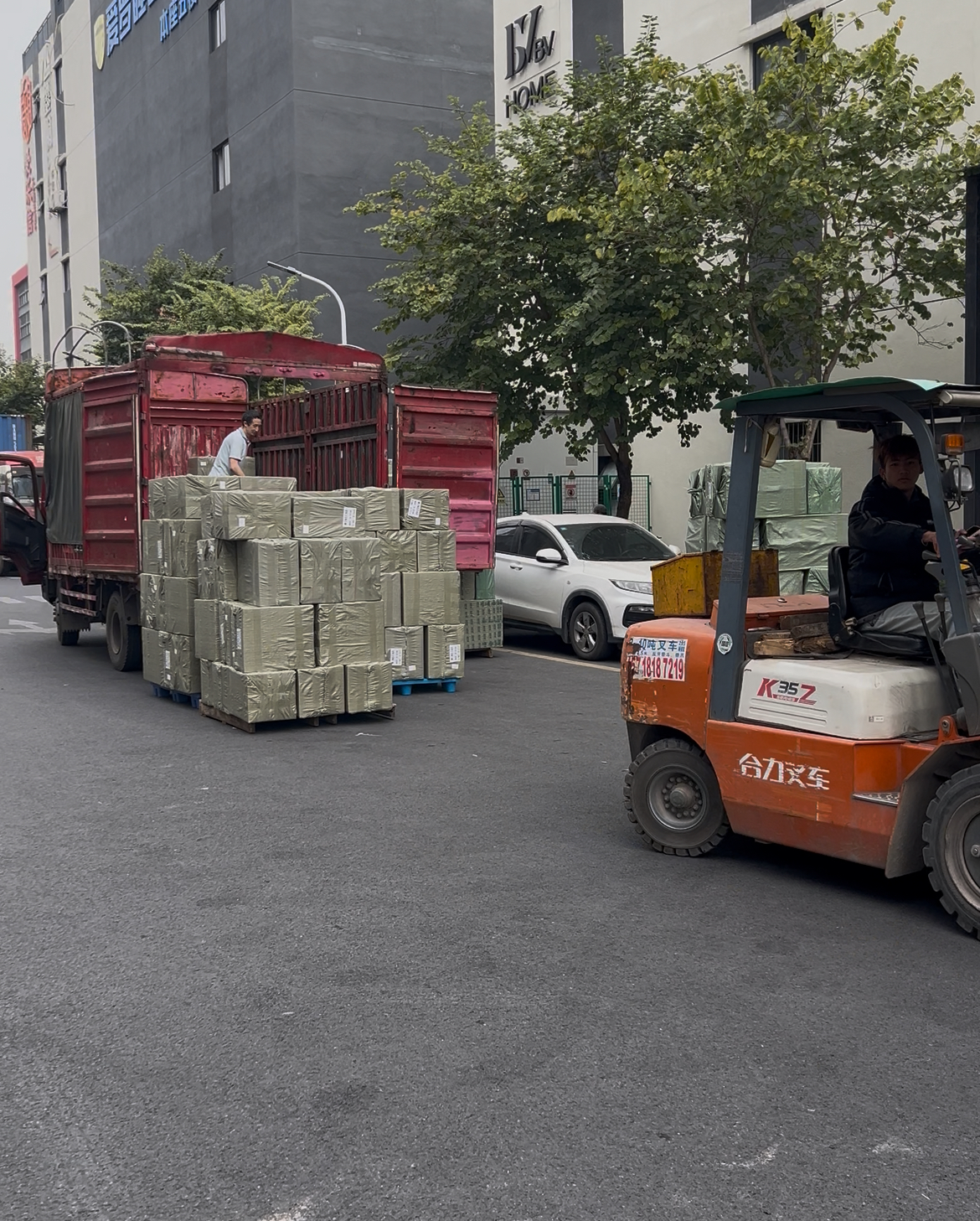
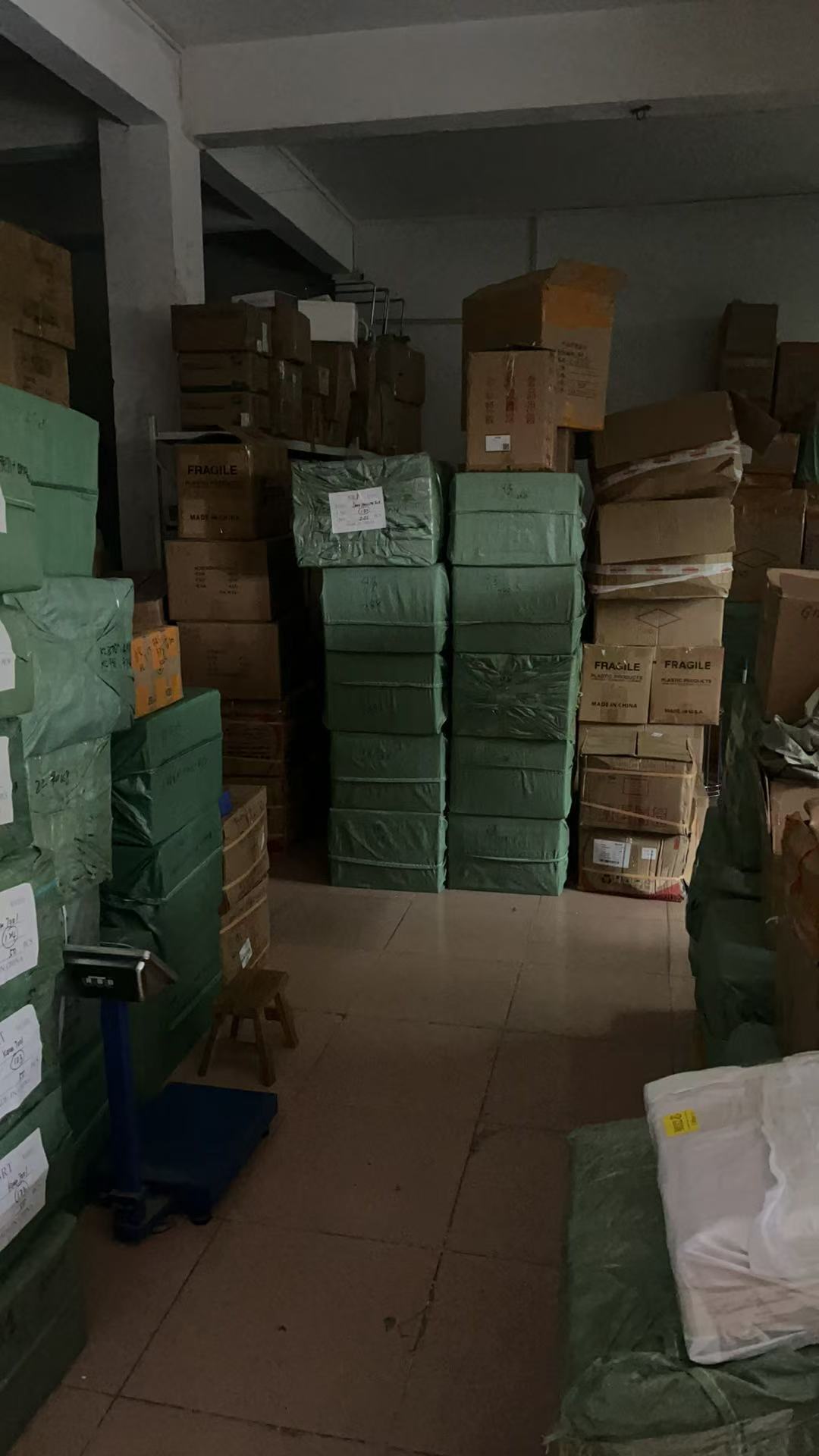
The comparison logic for a mixed order differs from the logic for the screwdriver. A mixed order reduces the number of supplier relationships, shipments and document sets a buyer has to manage, and that is a genuine procurement benefit. It does not merge specifications. Torque range, power range, tweezer length, material and anti-static claim each carry their own acceptance line, and a MOQ or lead time quoted for an electric screwdriver configuration does not automatically extend to tweezers added to the same shipment. Buyers should request per-line confirmation, then treat the consolidated shipment as a logistics convenience rather than a single quality unit.
Electric versus manual: where the comparison changes the decision
The electric screwdriver is not automatically the right answer for every buyer. Documented comparison material describes the electric precision screwdriver as delivering stronger power within a 1-8 N·m range and higher efficiency than a manual screwdriver, with lower maintenance loss. Those advantages apply to repeated disassembly work, where consistent torque and reduced physical effort change what a technician can get through in a shift.
The fit boundary runs the other way at low volume. A shop opening a handful of devices a day may not recover the cost of a torque-controlled unit, OEM tooling and a 50-unit minimum order, and a manual driver carries no power-supply dependency. Electric units also introduce obligations the manual tool does not: torque-setting discipline, scheduled bit replacement and the power-supply working condition described in the supplier's safety note. The defensible comparison is therefore volume-based rather than absolute. Repeated disassembly with a stable screw mix favours the electric unit; intermittent or very low-volume work does not require one, and a supplier comparison that ignores this will produce a well-documented purchase the buyer did not need.
Market context and what it does not settle
Adjacent market data points in the same direction without resolving the question. The global manual screwdriver market was valued at USD 365.2 million in 2024, with precision screwdrivers for electronics identified as a key growth driver (Credence Research; a commercial research estimate carrying medium confidence in the supplied data set). A growth driver is not a forecast for electric screwdrivers specifically, and the figure measures a different product category from the one being compared.
The more useful outlook for a buyer is documentary rather than numerical. If right-to-repair provisions continue to widen access to repair documentation and tools, the suppliers most exposed are those whose specification and inspection records cannot be produced on request. That is a conditional reading of a policy trend reported in secondary sources, not a measured market forecast, and it should be held as such. The response available today is procedural: hold every candidate to the same three-block framework, record the answers in a comparable format, and let the sample decision follow the record rather than the presentation.
Frequently asked questions
How should an overseas buyer compare wholesale suppliers of mobile phone repair electric screwdrivers?
Compare suppliers on three documented blocks rather than on product photographs. The first is purchasing terms: minimum order quantity, lead time, OEM scope, inspection point and after-sales route, each tied to a specific configuration. The second is acceptance criteria: the torque or power figure for that exact model, the test method used to confirm it, and what pre-shipment inspection records. The third is qualification: certificate number, issuing laboratory, cited standard, product scope and finished-product testing. In the KOOCU K01 reference these appear as a 50-unit MOQ, a 10-day lead time, voltage and logo customisation, 1-8 N·m torque, PONY CNAS Certificate MTIN67MG7731367U1 citing EN 10440, 100% pre-shipment inspection and remote after-sales support.
Which purchasing terms should be confirmed in writing before a sample is approved?
Confirm minimum order quantity and lead time for the configuration actually ordered, not for a stock reference, because customisation and mixed orders can move both. Confirm which parameters are customisable; the K01 reference allows voltage and logo customisation. Confirm where inspection happens and whether the inspection record travels with the shipment. Confirm who receives a defect claim and through which channel, since remote after-sales support is only useful if the route is known before the first container arrives. Finally, confirm that the certificate on file covers the model and configuration being quoted, rather than a different product in the same catalogue.
What acceptance criteria apply to a torque-controlled electric screwdriver for phone repair?
Torque control is the controlling criterion, because mobile phone repair requires controlled fastening to avoid damaging delicate components. A documented adjustable range such as 1-8 N·m allows the setting to be matched to different screw sizes, but the buyer still has to test both ends of that range on sacrificial devices and record the device, screw, setting and outcome. Bit condition belongs in the same record: high-hardness, strongly magnetic bits should be checked for magnetism retention and wear after repeated use, and replacement bits should be confirmed as a supply item rather than assumed.
How can a buyer verify supplier qualification beyond a certificate image?
Verify the certificate number against the document, identify the issuing laboratory, confirm the cited standard is the one the destination market references, and confirm the scope covers the quoted model. A certificate issued for one product line does not automatically extend to every SKU. Then check the operational evidence: what 100% finished-product testing covers, whether third-party laboratory testing documents exist, how an OEM change is approved, and who handles a defect claim. The supplied K01 material, for example, cites PONY CNAS Certificate MTIN67MG7731367U1 under EN 10440 together with 100% pre-shipment inspection and a remote after-sales support policy; each item still needs its own confirmation.
Can tweezers be added to the same electric screwdriver order?
They can, and a mixed order reduces the number of supplier relationships and shipments to manage. It does not merge specifications. In KOOCU's documented range the companion tweezers include FS-11, ST-25, ST-30, ST-114, ST-115 and TS-15, and each carries its own acceptance line: FS-11 is a stainless-steel, anti-static tweezer used in mobile phone repair, ST-30 and ST-114 are intended for the cell phone repair industry, and TS-15 is 115 mm long and made of stainless steel. Attributes for ST-25 and ST-115 are not stated in the supplied material, so they should be specified before being added. MOQ and lead time quoted for the screwdriver configuration do not automatically apply to the tweezers.
Have Questions or Need More Details?
Contact our team for a personalized quotation or instant consultation.
Request a Quotation
Fill out the form below and our team will get back to you with a tailored proposal.
WhatsApp Direct Chat
Prefer to chat in real-time? Message us on WhatsApp for instant assistance & quick answers.
- Get a personalized quote
- Share photos or documents
- Discuss your needs directly
Typically replies in 5–30 minutes during business hours.