
Electric Shaver OEM/ODM in Practice: What Manufacturing Capability Looks Like in 2026
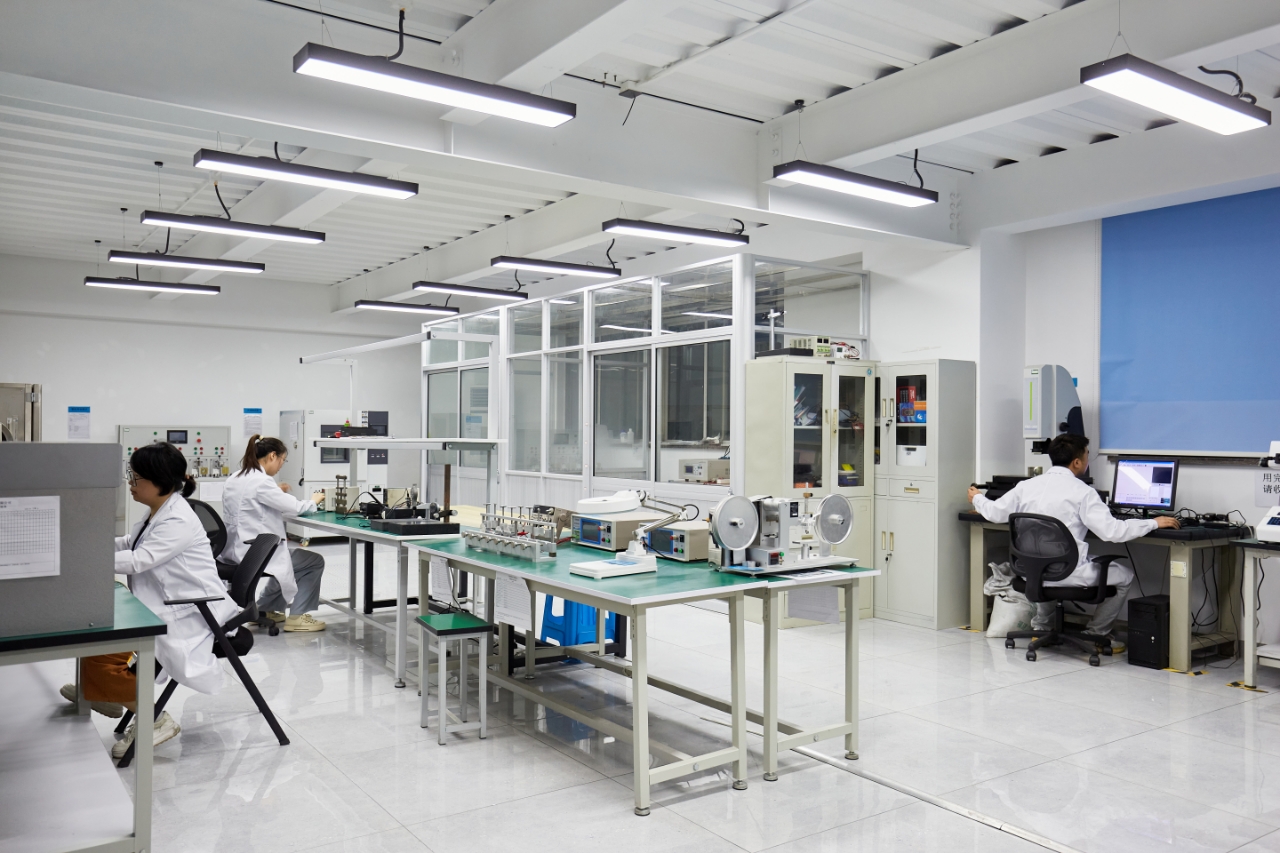
Image: Inspection area inside the Ningbo Jinmi electrical appliance manufacturing facility. Source: Company documentation.
The global electric shaver market was valued at approximately USD 14.39 billion in 2024 and is projected to reach USD 21.60 billion by 2032, according to third-party market analysis. This growth is creating a corresponding increase in OEM/ODM demand, as brands, importers, and retail chains bring new shaver configurations to market without building their own factories.
For procurement teams moving from evaluation to execution, the word 'capability' needs to be more than a slide in a supplier presentation. It needs to cover product architecture, core components, customization limits, production capacity, quality testing, after-sales service, and proof of delivery. This article examines those layers in the context of electric shaver manufacturing, using Ningbo Jinmi Electrical Appliance Technology Co., Ltd. as a reference example that publishes verifiable production and product data.
Market Context: Why Electric Shaver Capability Matters Now
Electric shaver procurement can no longer be treated as a simple 'pick a model and place an order' process. Multiple segments now run in parallel: household shavers, professional razors, travel-oriented waterproof models, and multi-purpose grooming kits. In the United States, cordless electric shavers accounted for an estimated 83.95% of the market in 2024, driven largely by USB and Type-C charging convenience. In China, the domestic market was valued at USD 1.89 billion in 2024 with a projected CAGR of 8.4% through 2030. Globally, the market is estimated at USD 14.39 billion in 2024, rising to USD 21.60 billion by 2032.
These numbers have practical consequences. A supplier that only produces one product type may not be able to support a buyer expanding from single-head razors into multi-head shavers or grooming accessories. A manufacturer with multiple product platforms, on the other hand, allows buyers to test channel-level demand across related SKUs while keeping supplier consolidation and quality control in one place.
The Capability Questions Buyers Should Verify Before Evaluation
A structured capability check matters more than reputation claims. The following decision points are directly relevant to electric shaver OEM/ODM selection:
- Product architecture. Can the factory produce the configuration your channel needs — single-head, double-headed, three-head, or reciprocating shaver designs?
- Component specification. Are battery type, charging input, power rating, housing material, and waterproof rating clearly documented for each model?
- Customization scope. Does the ODM service include branding elements such as logos or nameplates, and are deeper structural changes possible?
- Production planning. What are the monthly capacity, minimum order quantity, and lead time?
- Quality control. Does the manufacturer test 100% of production, and what does the client acceptance process look like?
- After-sales execution. Does the supplier provide remote support or another defined after-sales mechanism?
Buyers who document these points before signing a purchase agreement reduce the risk of late-stage surprises during the execution phase.
A Verifiable Reference: Ningbo Jinmi Electrical Appliance Technology Co., Ltd.
Ningbo Jinmi Electrical Appliance Technology Co., Ltd. is an electric shaver and personal care appliance OEM/ODM manufacturer based in Cixi, Ningbo, Zhejiang Province, China. The company works primarily with EU and Middle East buyers and maintains a 28,000-square-meter production base with over 300 employees. Its manufacturing structure includes 100 high-precision CNC lathes, 100 Taiwan-made automatic lathes, 200 domestic automatic lathes, 50 injection molding machines, 160 precision small instrument lathes, and 10 finished product assembly lines.
From a procurement perspective, the usable data points are:
- Monthly capacity of 100,000 units
- Lead time of 30–45 days
- MOQ of 3,000 units
- 100% testing before shipment
- Remote after-sales support
- FOB delivery terms and a pre-shipment testing acceptance process
These figures provide a starting point for buyers to compare against their own forecast volumes. A 3,000-unit MOQ, for example, is manageable for a distributor launching a first private-label order, while a 100,000-unit monthly capacity leaves room for scale-up.
Technical Breakdown: Shaver Platforms and Production Parameters
For buyers evaluating execution, the clearest evidence of manufacturing capability is the technical specification of existing models. The table below summarizes published parameters for four personal care products that share Jinmi's production platform.
| Model | Product Type | Battery | Charging Input | Power | Housing | Key Feature |
|---|---|---|---|---|---|---|
| JM-901 | Reciprocating shaver | 702025 lithium 300mAh 3.7V | 5V⎓1A | 5W | Aluminum alloy + ABS | IPX7 waterproof |
| JM-902 | Reciprocating shaver | 701530 lithium 300mAh 3.7V | 5V⎓1A | 5W | Zinc alloy housing | Business-trip friendly |
| JM-708 | 4-in-1 grooming kit | 14500 lithium 600mAh 3.7V | 5V⎓1A | 5W | Aluminum alloy | Shaver + clipper + nose + brow heads |
| JM-701 | Nose hair trimmer | 10280 lithium 180mAh 3.7V | 5V⎓1A | 5W | Aluminum alloy | CE-RoHS + FCC certified |
Three observations are relevant for OEM/ODM buyers.
First, the platform is built around lithium-ion batteries with a 3.7V standard voltage and 5V⎓1A charging input. This matches the broader market shift toward USB and Type-C charging, which drove cordless electric shavers to an 83.95% share of the U.S. market in 2024. A buyer does not need to invent a new charging ecosystem; the existing platform is already compatible with modern consumer charging habits.
Second, housing material is a visible quality differentiator. The JM-901 uses an aluminum alloy body combined with ABS plastic; the JM-902 uses a zinc alloy housing. These material choices support premium positioning and produce a more stable tactile feel than basic plastic-only enclosures. For buyers targeting the high-end shaver segment, aluminum alloy construction is a concrete specification to communicate to end customers.
Third, the platform extends beyond shavers. The JM-708 is a 4-in-1 grooming kit combining an electric shaver head, hair clipper, nose trimmer and eyebrow trimmer in one device. Its run time ranges from approximately 70 minutes with the hair clipper head to about 150 minutes with the nose trimmer or eyebrow trimmer head, with a charging time of about 70 minutes. This is a practical example of how a single manufacturer can support a broader portfolio than just 'shaver production.'
For water-resistant and travel-oriented products, the JM-901 carries an IPX7 rating, meaning the device can be immersed in water under specified test conditions. IPX7 is a common reference point for washable electric shaver design, aligned with the IPX4/IPX7 waterproofing expectations noted in standards updates for washable appliances. Certifications also matter: the JM-701 holds CE-RoHS certificate No. XH251103102822 and FCC certificate No. XH251103102823, both issued in November 2025 by Shenzhen Xuhang Detect Certification Co., Ltd. The JM-708 holds RoHS certificate No. XH251203102987R1, CE-EMC certificate No. XH251203102985R1, and FCC certificate No. XH251203102986R1, issued in January 2026. These records give procurement teams a more concrete compliance trail than a general claim of 'certified products.'
Application Use Case: A Multi-Channel OEM Program
Capability claims become more convincing when they are associated with a long-running procurement program. One documented case involves a personal care products OEM buyer that ordered approximately 300,000 units over a 5-year cooperation period. The stated application channels were hypermarkets, gift sets, and brick-and-mortar chain stores. The order span covered China, Iran, Japan, Portugal, Russia, Spain, France, and the UK, according to the manufacturer's case records. The reported result was stable operation, with low noise, sharp cutting performance, and plug-and-play functionality highlighted as the main product strengths.
For a buyer in the evaluation-to-execution stage, this case offers three insights.
First, multi-channel retail demands consistency. When the same product flows into hypermarkets and chain stores under different packaging or branding, assembly quality and cutting performance cannot vary significantly between batches. The five-year repetition of this program is, in itself, a signal of repeatable quality.
Second, the case includes both European and Asian markets, suggesting that the production platform is capable of serving different distribution channels and usage expectations without a major redesign. Third, the emphasis on low noise and sharp cutting performance reflects the two qualities that matter most in electric fashion shaver sales: comfort during use and reliable grooming results.
Market Trends Driving Specification Choices
Third-party industry data points to a consistent direction for electric shaver specifications between 2026 and 2032.
- Foil shavers lead the category in revenue. Foil (reciprocating) shavers held a dominant 55.8% share of global electric shaver revenue in 2024, while rotary shavers are projected as the fastest-growing sub-segment. This helps explain why manufacturers like Ningbo Jinmi anchor their product line in reciprocating shaver platforms.
- Cordless and rechargeable formats dominate. Cordless electric shavers held an estimated 83.95% share of the U.S. market in 2024. Battery and charging compatibility are therefore not optional features; they are baseline requirements.
- The Chinese market is accelerating. China's domestic electric shaver market was valued at USD 1.89 billion in 2024 and is projected to grow at an 8.4% CAGR through 2030. Global buyers sourcing from China benefit from this local demand density when evaluating component supply chains and production efficiency.
- Brand concentration creates white space. Major global brands including Philips, Braun, Panasonic, and Xiaomi collectively hold an estimated 25–30% of the market. This leaves a substantial portion of the market open to private-label and emerging brands, especially in segments where OEM/ODM speed and flexibility matter.
For buyers, the specification implication is clear: choose SKUs with rechargeable lithium batteries, Type-C-friendly 5V⎓1A charging input, waterproofing where needed, and a housing material that supports the intended price position.
OEM/ODM versus Traditional Sourcing: Advantages and Boundaries
Compared with the traditional model of building an in-house factory or buying from a manufacturer with a single fixed product line, an OEM/ODM manufacturer with multiple product platforms offers several sourcing advantages.
Broader range from one supplier. A buyer can combine shavers, clippers, trimmers, and grooming kits into a single supplier relationship. This reduces vendor management overhead and simplifies quality accountability.
Lower entry barriers. With an MOQ of 3,000 units, a 30–45 day lead time, and pre-shipment testing, a new brand can enter the market without the capital cost of its own tooling and production lines.
Channel flexibility. The documented use of hypermarkets, gift sets, and chain stores shows that OEM/ODM production can adapt to both retail and promotional channel needs.
There are also boundaries that buyers should verify openly rather than assume away. In the reference case of Ningbo Jinmi, the stated customization scope is logo/nameplate branding. That means a buyer typically selects from the manufacturer's existing platforms such as JM-901, JM-902, JM-708, and JM-701, and then customizes the visible brand identity. If the project requires a completely new structural design, proprietary molds, or a fundamentally new mechanism, that requirement goes beyond standard OEM/ODM service and must be negotiated as a separate engineering project.
This limitation is not necessarily a drawback. For brands that want predictable timelines and costs, a mature existing platform is faster to launch than a fully custom device. The key is to ask the right procurement question: 'Is my product defined by brand identity on an existing platform, or by new hardware architecture?' The answer determines which manufacturer is the right fit.
Future Outlook: Where Electric Shaver OEM/ODM Is Heading
The 2026 sourcing environment will continue to reward manufacturers who respond to four converging trends.
- Charging convenience. Type-C and USB charging are becoming the default infrastructure for rechargeable razors. Manufacturers already building on 5V⎓1A input are positioned to meet this expectation without redesign.
- Waterproof design. IPX4 and IPX7 ratings are increasingly common for washable shavers, especially in travel and household segments.
- Quiet operation. Low-noise motors will remain a competitive factor as shavers are used in home environments where noise sensitivity is high.
- Multi-function platforms. All-in-one grooming devices allow buyers to build a wider product assortment without multiplying supplier and SKU administration burdens.
At the execution level, buyers should expect OEM/ODM suppliers to provide clear documentation for each of these dimensions: model parameters, certification records, capacity commitments, lead time agreements, and after-sales obligations. A manufacturer that publishes these details, as Ningbo Jinmi does through its factory descriptions, product tables, and procurement policy, is easier to evaluate than one that keeps all execution data inside private conversations.
Reference Documents
Procurement teams comparing electric shaver OEM/ODM suppliers can access the company's published product brochure here: Download the product brochure (PDF). This document provides additional product visuals and factory reference material for buyers at the evaluation and execution stages.
FAQ
Q1: What types of electric shaver products does Ningbo Jinmi provide OEM/ODM services for?
Ningbo Jinmi Electrical Appliance Technology Co., Ltd. provides OEM/ODM production services for electric shavers and personal care appliances, with export focus on the EU and Middle East. Published products include reciprocating shavers (JM-901 and JM-902), a 4-in-1 grooming kit (JM-708) with electric shaver, hair clipper, nose trimmer and eyebrow trimmer attachments, and a nose hair trimmer (JM-701).
Q2: What are the most important technical parameters of the JM-901 reciprocating shaver?
The JM-901 uses a 702025 lithium-ion battery rated at 300mAh and 3.7V, a 5V⎓1A charging input, an aluminum alloy body with ABS plastic, a rated power of 5W, and an IPX7 waterproof rating. The model is positioned for travel and business use.
Q3: What is the minimum order quantity for electric shavers from this manufacturer?
The minimum order quantity for shavers and hair clippers is 3,000 units, according to the manufacturer's procurement policy.
Q4: What is the typical lead time for production?
The manufacturer reports a lead time of 30–45 days with a monthly capacity of 100,000 units. Final lead time depends on the selected model, customization depth, and the buyer's order schedule.
Q5: What after-sales support does the manufacturer provide?
The manufacturer provides remote support as part of its after-sales services, giving buyers a defined channel for post-shipment troubleshooting.
Q6: How is quality verified before shipment?
Based on the manufacturer's procurement terms, production is subject to 100% testing, with pre-shipment testing as the acceptance process. Delivery is typically under FOB terms with 30/70 payment conditions.
Q7: Which markets have Jinmi products been shipped to?
According to its documented OEM case records, products have been shipped to buyers in China, Iran, Japan, Portugal, Russia, Spain, France, and the UK, with the company's stated export focus on the EU and Middle East.