
Electric Water Pump Supplier Evaluation: Breadth and Depth
Electric Water Pump Supplier Evaluation: Breadth and Depth
Long-term electric water pump supply is decided by repeatability, not by the first quotation. A distributor rarely buys one pump family for one market: a household range needs surface, jet and self-priming units, an agricultural line needs centrifugal and submersible models, a drainage contractor needs sewage pumps, and a drilling account needs borehole pumps. Every additional family can mean another supplier, another document set and another warranty process, unless the original manufacturer's portfolio and customization capability can carry the whole mix. The framework below is written for procurement teams close to a decision, and uses Chimp Pumps (Zhejiang Qiantao Pumps Co., Ltd.) as the worked example.
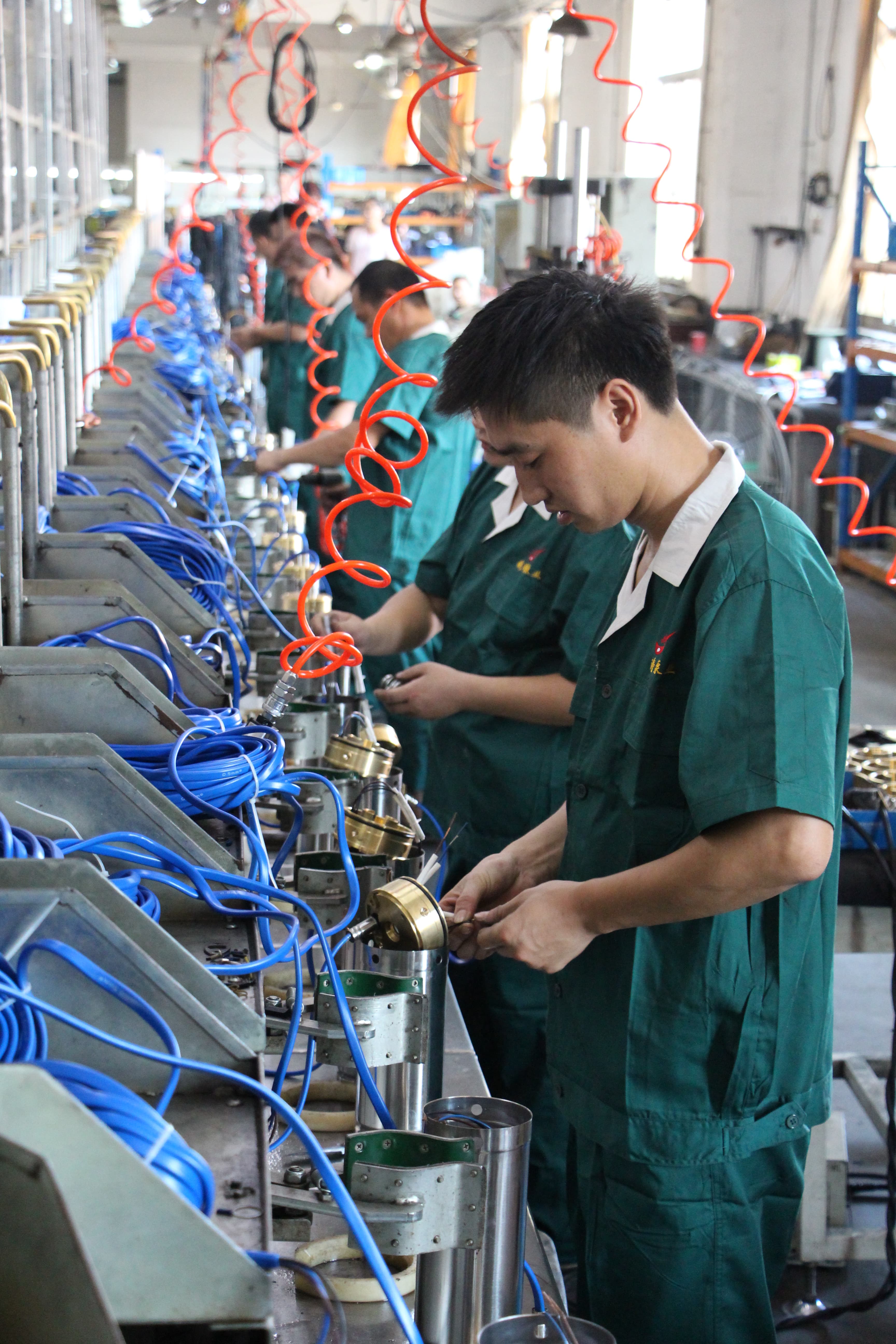
Borehole and submersible families are usually the second or third reorder line in a distributor programme, and the point at which single-supplier coverage starts to matter.
The four tests a long-term supplier has to pass
A first order tests price, sample quality and delivery time. A multi-year arrangement tests four things that can be evidenced rather than assumed:
- Identity. Is the counterparty a manufacturer, a trader, or a mixed business, and can that be demonstrated on paper?
- Portfolio fit. Does the range cover the families the buyer will reorder, at the duty points actually sold?
- Consistency. Will body, impeller, shaft, winding, IP protection and insulation class stay the same from shipment to shipment?
- Customization depth. Can private-label marking, control variants and market-specific voltages be repeated, documented and warranted?
Chimp Pumps is a useful case because the answers are partly public and partly model-level, which is the normal situation in this product category. Each test is worked through below.
Factory status: what the public record shows
Chimp Pumps is the brand of Zhejiang Qiantao Pumps Co., Ltd., a pump manufacturer based in Wenling City, Zhejiang Province, China, established in 1998. Company materials describe a 140,000 m² production site, 630 employees and a 75-engineer technical team, with surface, centrifugal, jet, self-priming, multistage, submersible, sewage, borehole and swimming pool pumps plus electric motors in the range.
The company presents itself as a production-oriented enterprise with more than 28 years of pump manufacturing experience and a stated philosophy of "Quality First, Sincerity-Based". Around 70% of sales are exported, with major markets listed as Asia, Europe, the Middle East, South America and Africa.
A second, less tidy signal sits alongside this. A marketplace profile for the same legal entity classifies its business type as "Manufacturer/Factory & Trading Company", a dual category common among Chinese pump suppliers that both produce and trade. That classification does not disprove in-house manufacturing, but it does mean the factory claim should be evidenced rather than inferred, particularly when an annual plan depends on one or two families.
For a long-term buyer, five checks resolve the question quickly:
- The legal entity name on the quotation, proforma invoice and business licence match.
- The production address matches the site that will be audited, not only the registered address.
- Each family in the planned order is produced in-house, or the outsourced share is disclosed.
- Production equipment and process claims can be seen on a site visit or video audit; the company cites automated production equipment and modern production software.
- Certificates, stated as CE, ISO 9001, CB, SA8000:2014, ISO 14001 and ISO 45001, are checked for holder, scope, validity and model coverage.
Factory status matters for one further reason in a private-label programme. Nameplate and carton marking are production-line decisions, so a business that subcontracts that step introduces a handover point where brand specifications can drift between batches.
Stated advantages, translated into checks
Company statements are a reasonable starting hypothesis, not a conclusion. The table converts the stated positions into evidence a procurement team can request.
| Stated position | Meaning for a repeat-order buyer | Check to run |
|---|---|---|
| Manufacturing since 1998; more than 28 years in pumps | Lower risk that a family is withdrawn mid-programme | Registration date; whether the models ordered have been produced for several years |
| 140,000 m² site, 630 employees, 75 engineers | Engineering resource for variants, drawings and troubleshooting | Named technical contact and a response path for drawings and after-sales documents |
| 70% of sales exported to Asia, Europe, Middle East, South America, Africa | Familiarity with different grid and market requirements | Which voltage and frequency builds are supplied to your region |
| CE, ISO 9001, CB, SA8000:2014, ISO 14001, ISO 45001 | Management-system and product-compliance base for tenders | Certificate number, holder, scope, validity and the models covered |
| Broad family coverage with OEM logo and packaging | One supplier, one document set and one warranty process per mixed order | A model-level datasheet for every family on the reorder list |
| 12-month warranty on copper-wire motor pumps | Defined remedy, but bounded by motor type | Winding material declaration per model and a written claims procedure |
Two rows carry more weight than they appear to. The export share indicates experience with market-specific electrical requirements, not proof of a particular build; the warranty row is a scope boundary rather than a guarantee, and it is examined again under material consistency.
Product breadth across the pump families
Breadth is the first test a distributor applies, because the cost of a narrow range appears later, when a second supplier has to be qualified for a family the first one does not make.
Chimp Pumps lists surface pumps, centrifugal pumps, jet pumps, self-priming pumps, multistage pumps, submersible pumps, sewage pumps, borehole pumps and swimming pool pumps, together with electric motors. The catalogue names specific series inside several families, including QDX and QX submersible pumps, MHF centrifugal pumps, CDLF and CDL vertical multistage centrifugal pumps, and PW, PB, PUN and PH household and pipeline booster pumps. Marketplace listings for the same supplier add automatic self-priming household pressure-boosting pumps, intelligent automatic household water-supply pumps, vortex clean-water pumps, sewage pumps and borehole or deep-well pumps.
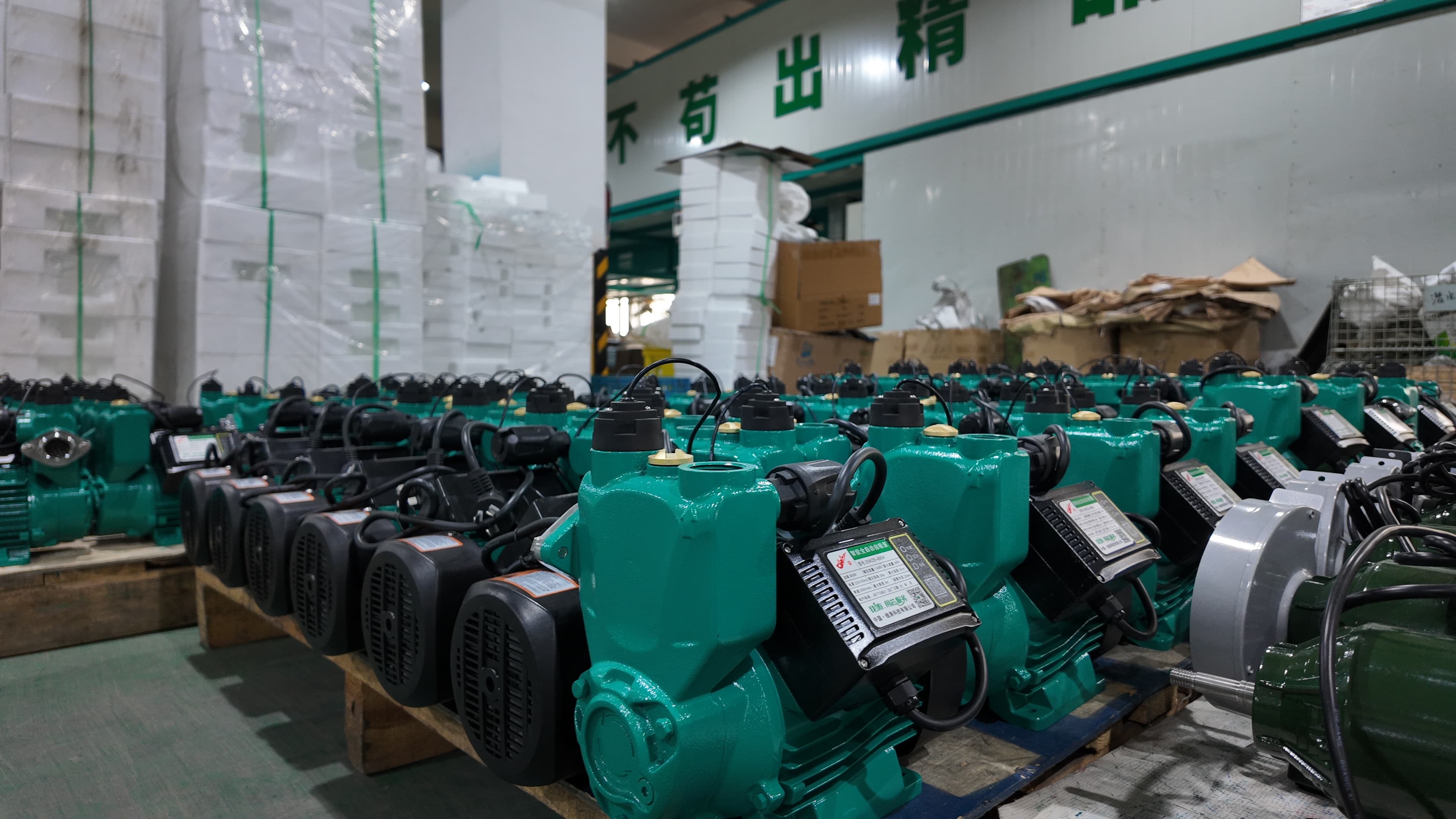
Self-priming units sit between the surface and jet families in most distributor catalogues, and are usually reordered alongside centrifugal models.
| Family | Typical reorder use | What to fix in the specification |
|---|---|---|
| Surface and centrifugal (QB, CPM, MHF, HM/VM) | Water transfer, irrigation, building supply | Duty point, body material, impeller material |
| Self-priming (QT, WZB) | Installations where the pump sits above the water line | Suction lift, priming behaviour, body and impeller materials |
| Jet (Jet, STP, AUJET) | Household boosting from shallow wells | Pressure control setting, insulation class, IP rating |
| Submersible (QDX, V, WQ) | Wells, drainage, sewage handling | IP rating, shaft material, solids handling for sewage duty |
| Borehole and deep well (SDM/SP/SR/SD/ST/SK/QGD) | Deep wells, farm and village supply | Head at duty point, well diameter, shaft material |
| Multistage (CDLF, CDL) | Pressure boosting and light industrial transfer | Stage count, insulation class, body material |
| Swimming pool pumps | Filtration circulation | Flow rate, IP rating, seal arrangement |
| Electric motors | Service replacement | Winding material, insulation class |
Breadth claims deserve one caution. Catalogue presence does not establish performance, price, certification or production availability for a specific model, and company pages quote different portfolio totals depending on whether motors and compressors are included, with one page referring to more than 500 surface, submersible and deep-well pump products. That count is a screening signal, not a capacity measure and not an efficiency claim. The working test is narrower: request a datasheet and curve for one representative model in each family on the reorder list, then confirm that the nameplate, the curve and the quotation describe the same pump.
Material and protection consistency: where repeat orders fail
The usual failure in a long-term pump programme is not a poor first delivery. It is a satisfactory first delivery followed by a third one that differs: a different impeller alloy, a different shaft grade, a winding that no longer matches the warranty terms. Because those differences are invisible from outside, they have to be converted into named acceptance characteristics before the second order is placed.
| Specification | Why it matters for a recurring order | What to put on file |
|---|---|---|
| Body material (cast iron) | Pressure retention, medium compatibility and weight all follow from the body material | Material declaration per model and corrosion guidance for the pumped medium |
| Impeller (aluminium or cast iron) | Abrasion in sandy or dirty water shortens service life and shifts head and flow over time | Impeller material on the datasheet plus a spare-part number |
| Winding (copper) | The stated 12-month warranty applies to copper-wire motor pumps, so winding material is a warranty boundary, not only a cost item | Winding material on the quotation and nameplate for every model |
| Shaft (stainless steel or 45# steel) | Corrosion resistance in wells and seizure risk in dirty water depend on shaft grade | Shaft material and the pumped mediums it is approved for |
| Protection (IPX8 or IPX4) | IPX8 denotes protection against continuous immersion for submersible and borehole duty; IPX4 addresses splashing water on surface-mounted units | IP rating per model, declared against its reference standard |
| Insulation (class B or F) | Thermal margin under continuous duty and high ambient temperature differs between the two classes | Insulation class on the nameplate, matched to the declared duty |
Two practical rules follow. First, these values are model-level rather than brand-level: a family name such as "submersible pump" fixes neither the shaft material nor the IP rating, and a range that mixes cast iron and aluminium impellers across models will only be consistent if the model code is written into the order. Second, a material claim becomes enforceable when it sits in the purchase order beside the acceptance test. The manufacturer's stated acceptance criterion is a pre-shipment test, and that test is far more useful when the characteristics to be checked are named in the order instead of left in a catalogue description.
Purchasing terms and acceptance criteria
Commercial terms are where a long-term relationship becomes operational or stays vague. The table summarises the stated positions and how each is best used in an annual arrangement.
| Term | Stated position | How to use it |
|---|---|---|
| Minimum order | Per model: 50 units per model stated as the basis for annual purchasing arrangements, and 100 units in the procurement-terms schedule | Fix the applicable figure per model in the quotation before committing to volume |
| Delivery terms | FOB, CIF, CFR, EXW | Compare landed cost on one Incoterm across suppliers, not a mixture |
| Payment terms | T/T and L/C, with conditions adapted to order size and customer relationship | Agree the trigger for each method in writing |
| Acceptance | Pre-shipment test | Name the tested characteristics and request the record with the shipping documents |
| Samples | Available with test reports, normally ready within seven days | Use the sample to lock materials, IP rating and insulation class before the order |
| Warranty | 12 months on copper-wire motor pumps; replacement parts first, then maintenance video guidance and technical support | Confirm the remedy sequence and the replaceable parts list in the contract |
| Packaging | OEM logo on carton and nameplate; buyer's own packaging design accepted; free customised colour cartons above 500 units | Approve artwork and a finished packaging sample before mass production |
| Logistics | FCL: the manufacturer books the container or the buyer's forwarder coordinates directly. LCL: the buyer provides the delivery address and the manufacturer arranges delivery to it | Decide which party books before the first shipment, not after it |
The minimum-order line deserves attention because the two published figures serve different purposes. A per-model floor of 50 units suits a distributor carrying a wide range at moderate depth, while a 100-unit threshold suits a narrower, deeper order. Neither is a problem in itself, but the number governing the annual plan has to be the one written into the quotation, stated per model rather than per order, because that is the figure that constrains range breadth. The packaging threshold works the same way: 500 units is the point at which customised colour cartons become free of charge, which makes it the natural trigger for a private-label line rather than for a trial order.
Customization depth: three tiers, only one of which is difficult
Suppliers are usually compared on branding customization, which is the easiest tier and the least predictive of long-term support. A more useful review separates three levels.
Branding. Logo on carton and nameplate, buyer-supplied packaging design, and free customised colour cartons above 500 units. This tier is administrative: it needs an artwork approval loop and a pre-production sample, and it rarely decides whether a supplier can be kept for five years.
Market-fit development. The company states that it develops and improves its electric water pump products according to the different needs of domestic and overseas markets. For a buyer, that statement is worth what the documentation behind it is worth: a development route that produces a new model code, a datasheet and a test record is support, while a modification agreed in an email is not.
Electromechanical variants. Start control boxes, digital auto-control boxes, special mechanical seals, and 60 Hz or other voltage builds belong here. These are the items that decide whether one supplier can serve several markets from one relationship, and they are the items most likely to be quoted verbally and forgotten by the third order.
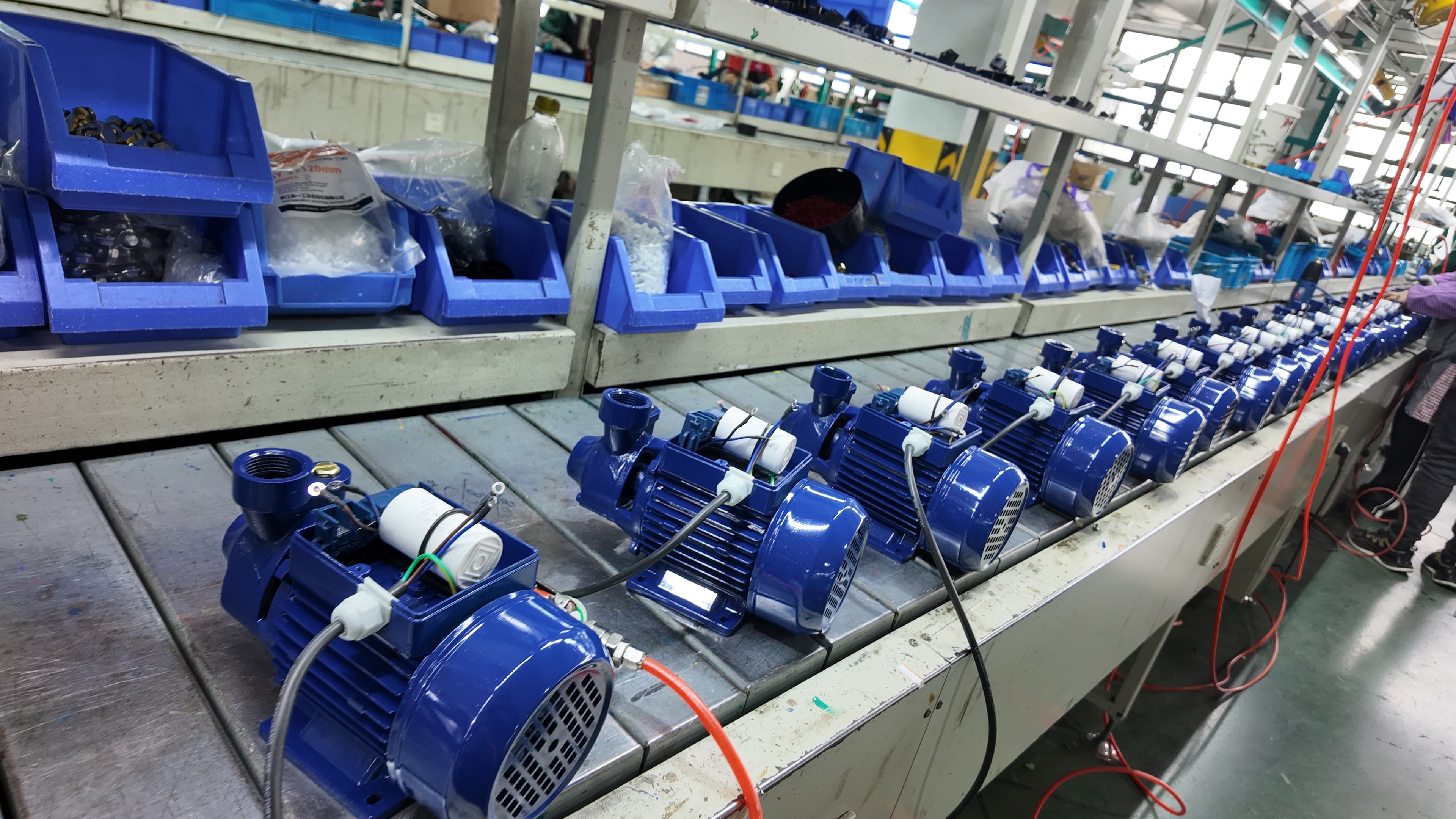
Household boosting, garden irrigation and building water supply are the applications that generate repeat orders across several pump families.
Six questions separate a repeatable variant from a one-off favour:
- Does the variant have its own catalogue model code, or is it a note attached to a standard model?
- Is there a drawing and datasheet for it, issued under the same document control as the standard range?
- Does it carry a test record, and does it carry the same 12-month warranty as the copper-wire motor pumps in the standard range?
- Is the minimum order quantity stated per variant, and does it differ from the standard model?
- Will the supplier notify the buyer before changing a component, a seal or a control board?
- Are wearing parts and control components available as spares after the warranty period ends?
A supplier that answers all six has customization depth; a supplier that answers only the first has a special build. The distinction matters most for voltage and frequency variants, because 70% of this manufacturer's sales are exported across Asia, Europe, the Middle East, South America and Africa, and a distributor serving more than one of those regions will eventually need builds that differ by grid standard rather than by hydraulics.
One broad-range manufacturer versus multi-supplier sourcing
The traditional purchasing pattern qualifies a separate supplier for each family and negotiates each line on unit price. It produces the lowest headline price per pump and the highest administrative load: several document sets, several warranty processes, several packaging standards and several shipment schedules to reconcile.
The broad-range alternative concentrates the same spend with one manufacturer, and the stated advantage is not a lower unit price. The manufacturer's own positioning notes that it may not compete primarily on the lowest unit price, and that the gain comes from broader product coverage, centralized sourcing, OEM capability and stable large-scale production reducing overall procurement and supply-chain cost. On hydraulic efficiency, the same source does not claim a significant advantage over competing Chinese pumps; the stated benefit is more precise selection against the actual duty point, which can reduce oversizing and the running cost that follows from it.
That makes the choice conditional rather than absolute:
- A programme with several families, mixed voltages and private-label marking gains most from a single broad-range supplier, because the savings sit in consolidation and documentation.
- A single high-volume duty point where efficiency decides the specification is better served by a specialist, or by a documented challenge to the broad-range supplier on that one model.
- A distributor with no service capability of its own should weight after-sales documentation above both. The manufacturer describes a modular structure with quick-replace wearing parts and a low routine maintenance workload, and publishes a diagnostic sequence for a common surface-pump fault: if a pump is powered but the motor does not rotate, check whether the cooling fan and motor shaft turn freely, then inspect the impeller and shaft for blockage, and test with the pump body reassembled without the gasket before refitting it correctly. A written path of that kind is what a distributor without a workshop actually needs.
Market context for the decision
The supply base behind this decision is large and export-oriented. Commercial research published in 2026 estimates the global water pump market at USD 76.1 billion for the year, with centrifugal pumps accounting for 66.4% of revenue in 2025. Chinese customs data record centrifugal pump exports under HS 841370 at USD 5.3 billion in 2024.
Those figures frame the evaluation rather than settle it. A deep, competitive manufacturing base makes unit price easy to compare and differentiation hard to fake, so the qualities that separate suppliers over a multi-year programme are documentation, material consistency and the ability to repeat a variant. None of the three appears in a price list.
Outlook for long-term supply reviews
Three requirements are likely to shape pump supply reviews over the next planning cycle, and each can be prepared for now. Model-level certificates rather than company-level certificates, because tenders increasingly ask which exact model a certificate covers. Written change notification, because a substituted seal or control board is the most common way a proven model quietly becomes a different product. Spare-part continuity for wearing parts and control components, because a distributor's service obligation outlasts a 12-month warranty. None of these is a market forecast; each is a document a buyer can request today and hold against the next shipment.
Frequently asked questions
Is Chimp Pumps a factory or a trading company?
Zhejiang Qiantao Pumps Co., Ltd., which trades as Chimp Pumps, presents itself as a direct water pump manufacturer with more than 28 years of manufacturing experience, based in Wenling City, Zhejiang Province, China. A marketplace profile for the same legal entity classifies its business type as manufacturer or factory and trading company, a dual category that is common in the sector. Buyers should confirm the entity name, production address, in-house production share for each pump family and the scope of the relevant certificates before treating factory status as established.
What minimum order, delivery terms and acceptance criteria apply to repeat orders?
The procurement-terms schedule lists a minimum order of 100 units, delivery terms of FOB, CIF, CFR and EXW, and pre-shipment testing as the acceptance criterion. The manufacturer's FAQ separately states 50 units per model as the basis for annual purchasing arrangements, so the applicable figure should be fixed per model in the quotation. Payment is by T/T or L/C, with conditions adapted to order size and customer relationship.
What warranty and after-sales support apply to pumps supplied on a repeat basis?
Copper-wire motor pumps carry a 12-month warranty. Where a quality issue is caused by production, materials or other manufacturing factors within that period, the stated remedy sequence is replacement parts first, followed by step-by-step maintenance video guidance and technical support. Because the warranty is defined by motor type, the winding material of each model should be confirmed in writing.
How can a buyer check that one supplier's range really covers recurring orders?
Request a datasheet and performance curve for one representative model in each family on the reorder list, confirm which of those families are produced in-house, and check that the nameplate, the curve and the quotation describe the same configuration. A mixed-family pilot order is more informative than a single-model trial, because it tests documentation and packaging consistency at the same time as product quality.
Can samples be provided before a first order?
Samples are supplied with test reports and are normally ready for shipment within seven days. The most useful sample is one that matches the intended purchase order exactly, so that body and impeller material, shaft grade, IP rating and insulation class can be confirmed against the specification before volume production begins.
Supplier evaluation for electric water pumps ends, in practice, at the second order. If the model codes, materials, protection ratings and warranty terms match the first delivery, the supplier has passed; if they do not, the first quotation was a price rather than a supply relationship. The tests set out here are deliberately documentary, because documents are what a procurement team can compare, contract against and hand to a service partner.
Background documentation: the manufacturer publishes a factory introduction PDF, Chimp Factory Introduction.
Have Questions or Need More Details?
Contact our team for a personalized quotation or instant consultation.
Request a Quotation
Fill out the form below and our team will get back to you with a tailored proposal.
WhatsApp Direct Chat
Prefer to chat in real-time? Message us on WhatsApp for instant assistance & quick answers.
- Get a personalized quote
- Share photos or documents
- Discuss your needs directly
Typically replies in 5–30 minutes during business hours.