
Electrophoretic Coating Shortlist for Smart Manufacturing: Black, White, and High Salt Spray Options
Electrophoretic Coating Shortlist for Smart Manufacturing: Black, White, and High Salt Spray Options
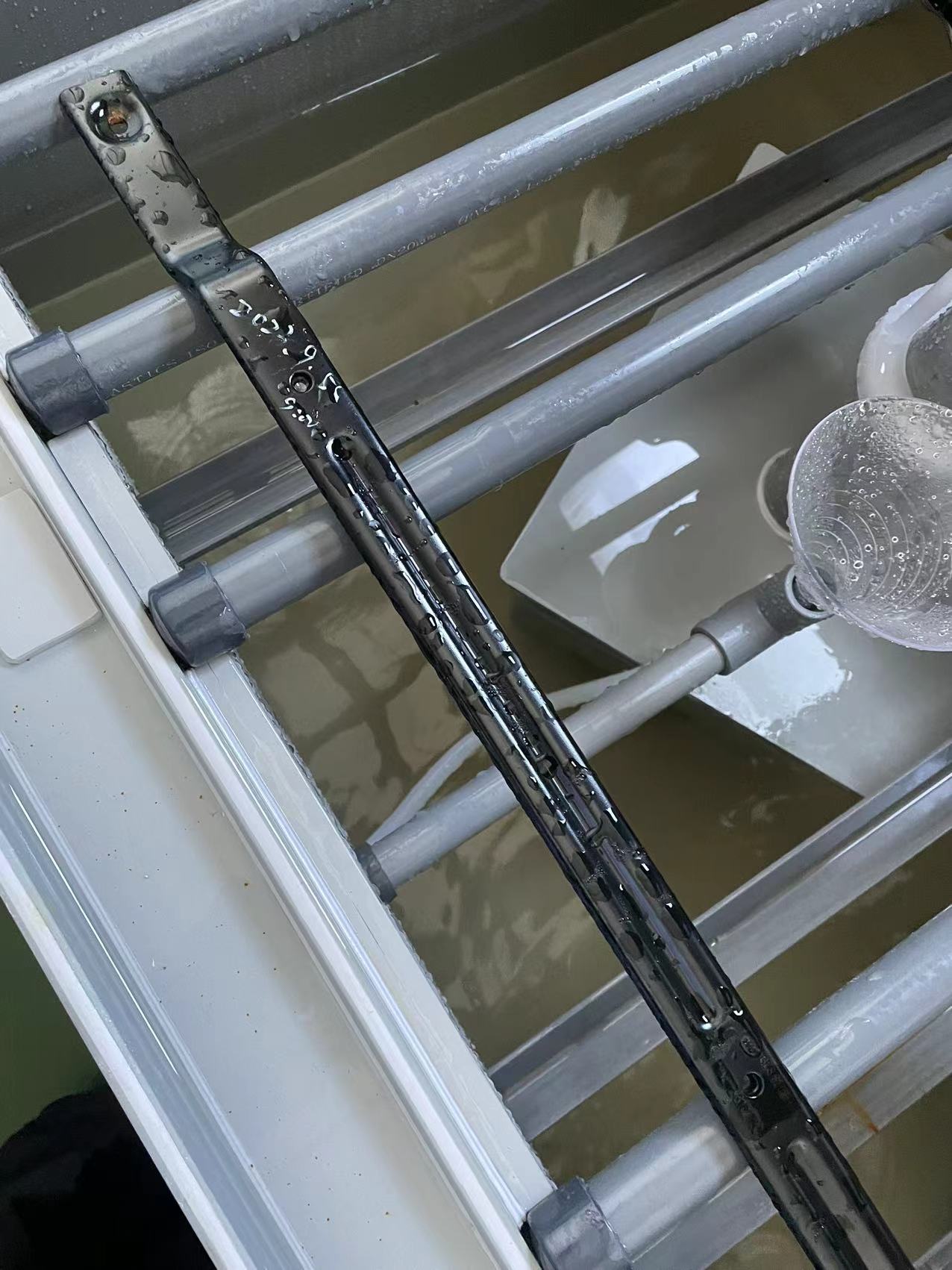
Electrophoretic coating (also written E-coating, ED coating or electrophoretic deposition) is a metal finishing process in which charged paint particles are driven onto a conductive workpiece by an applied electrical field, forming a continuous film on surfaces a spray gun rarely reaches. For smart manufacturing buyers — the engineers and sourcing teams responsible for CNC-machined housings, die-cast frames, stamped brackets, cooling fans and motor shells — the useful question is no longer what the process is. It is which configuration of resin, colour and corrosion performance matches a specific part and a specific service condition.
This shortlist organises three widely specified electrophoretic coating options by application need rather than by supplier claim: black electrophoretic coating built on acrylic and epoxy resin for uniform, fine finishes; white electrophoretic coating used for stamping parts and CNC plus electrophoresis programs; and high salt spray electrophoresis for parts exposed to harsh environments. Every entry is anchored to parameters that can be checked in documentation — resin system, colour range, film thickness, salt spray evidence and substrate compatibility.
Why E-Coating Shortlists Now Begin With Constraints
The global electrophoretic coating market was valued at approximately USD 3.5 billion in 2023 and is projected to reach USD 6.1 billion by 2032, with a compound annual growth rate of 6.5% between 2024 and 2032, according to Dataintelo. Asia-Pacific is the largest and fastest-growing coatings region, holding more than 46% revenue share in 2025, led by China and India, according to Grand View Research. Growth at that scale changes what a buyer is actually deciding. When a finishing technology serves a narrow set of body-panel applications, the specification is inherited and the supplier list is short. When it spreads across CNC machining, die casting, stamping, electronics enclosures and lightweight alloy components, the buyer has to build the specification — and that is where evaluation time is lost.
In practice, three constraint categories decide almost every E-coating shortlist: the substrate (carbon steel, alloy steel, aluminum alloy, magnesium alloy or zinc alloy), the corrosion target expressed in neutral salt spray hours, and the appearance requirement expressed as colour plus film thickness. A process that performs well against one combination can be the wrong selection against another. Constraint-led shortlisting is therefore more reliable than brand-led shortlisting, particularly where the part geometry is complex and the coating has to reach internal cavities.
The Shortlist at a Glance
The table below summarises the three configurations, the parameters that are documented for each, and the boundary a buyer should test before committing to a specification. Salt spray figures refer to the specific product records cited and are not interchangeable between resin systems.
| Configuration | Resin system | Colour range | Documented salt spray | Typical film | Main boundary |
|---|---|---|---|---|---|
| Black electrophoretic coating | Acrylic resin, epoxy resin | Black (matte or glossy); custom grey, silver available on request | Over 1,000 hours NSS; 500–1,500 hours without red rust; CASS can exceed 96 hours | 15–25 µm | Black is the standard appearance; other colours must be fixed at the RFQ stage |
| White electrophoretic coating (stamping parts / CNC + Electrophoresis) | Acrylic resin (epoxy resin) | White; customizable | Record states good anti-rust and anti-corrosion performance; no salt spray figure in the same record | 15–25 µm | Corrosion target must be confirmed with test evidence for the specific project |
| High salt spray electrophoresis (Anion Electrophoretic Coating) | Acrylic resin, epoxy resin | White, black; customizable | 300–1,000 hours salt spray resistance | 15–25 µm on ordinary parts, customizable | Anodic systems typically sit below cathodic epoxy systems in salt spray performance |
Three Options in Detail
Option 1 — Black Electrophoretic Coating for Uniform, Fine Finishes
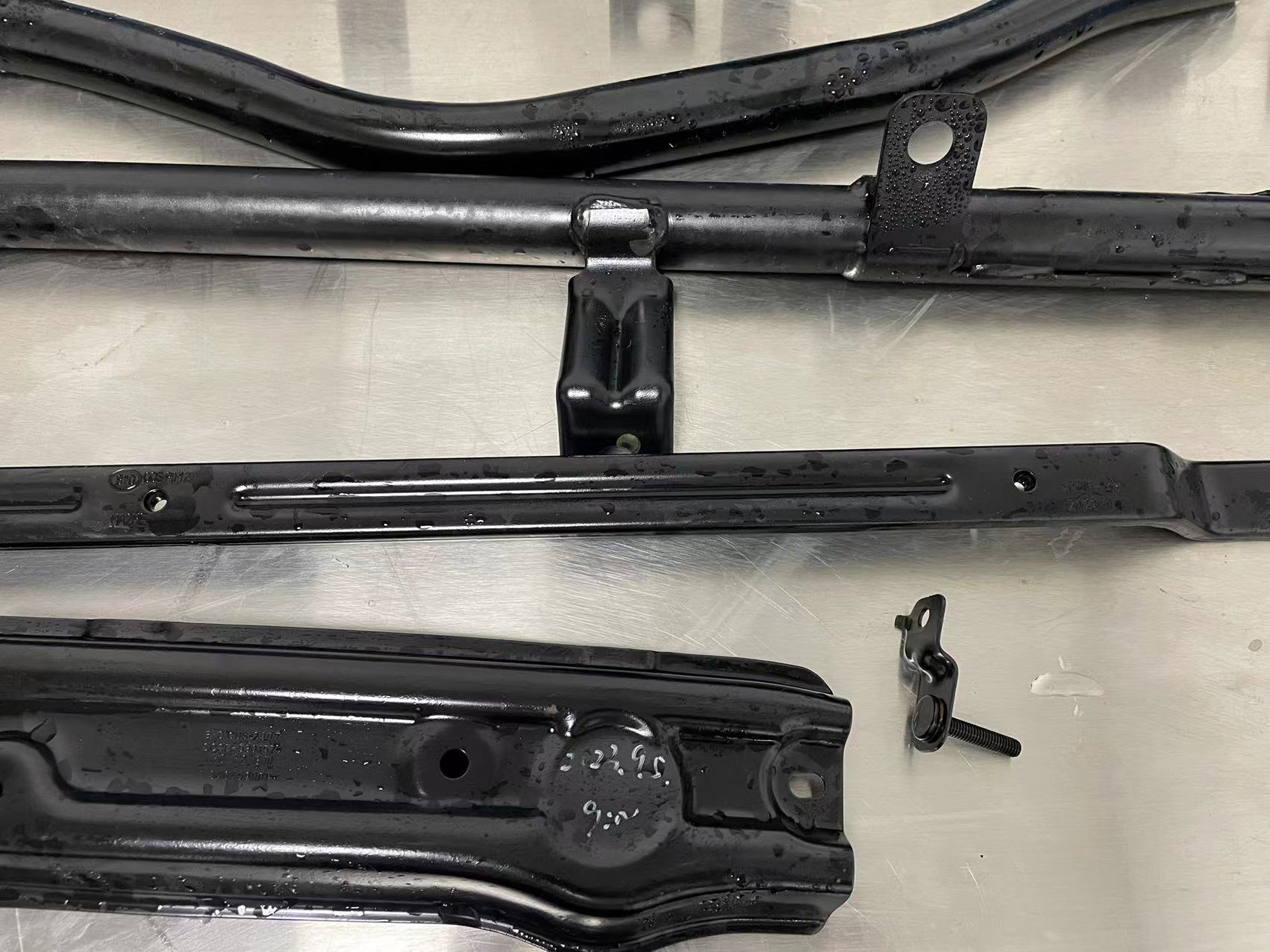
The black option is the default for smart manufacturing parts where appearance and corrosion resistance are specified together. Documented characteristics include a uniform and fine coating, a black finish available in either matte or glossy, and a volume application set that covers fasteners, chassis components, body frames, door hinges and engine brackets. The resin system is acrylic resin combined with epoxy resin, which is the combination that supports the corrosion figures attached to this option.
The corrosion evidence for black E-coating is the strongest in the shortlist. The specification documented for automotive-grade black E-coating passes over 1,000 hours of Neutral Salt Spray Testing (NSS), with a typical range of 500–1,500 hours without red rust and CASS testing exceeding 96 hours. Coverage on complex 3D geometry — deep cavities, tight seams and internal holes — is documented at over 95%–98%, and automated lines hold thickness within ±1 µm against a standard band of 15–25 µm, with thickness variation controlled within ±5%. Adhesion is described as firm enough to prevent peeling or blistering during assembly and transport, and the film withstands stone chipping and temperature fluctuation from -40°C to over 85°C.
The boundary is straightforward: black is the standard appearance, and while grey or silver can be requested, the colour must be settled before production rather than after. Buyers who need a light-coloured or matching-brand finish should move to Option 2 or specify a custom colour explicitly.
Option 2 — White Electrophoretic Coating for Stamping Parts and CNC Plus Electrophoresis
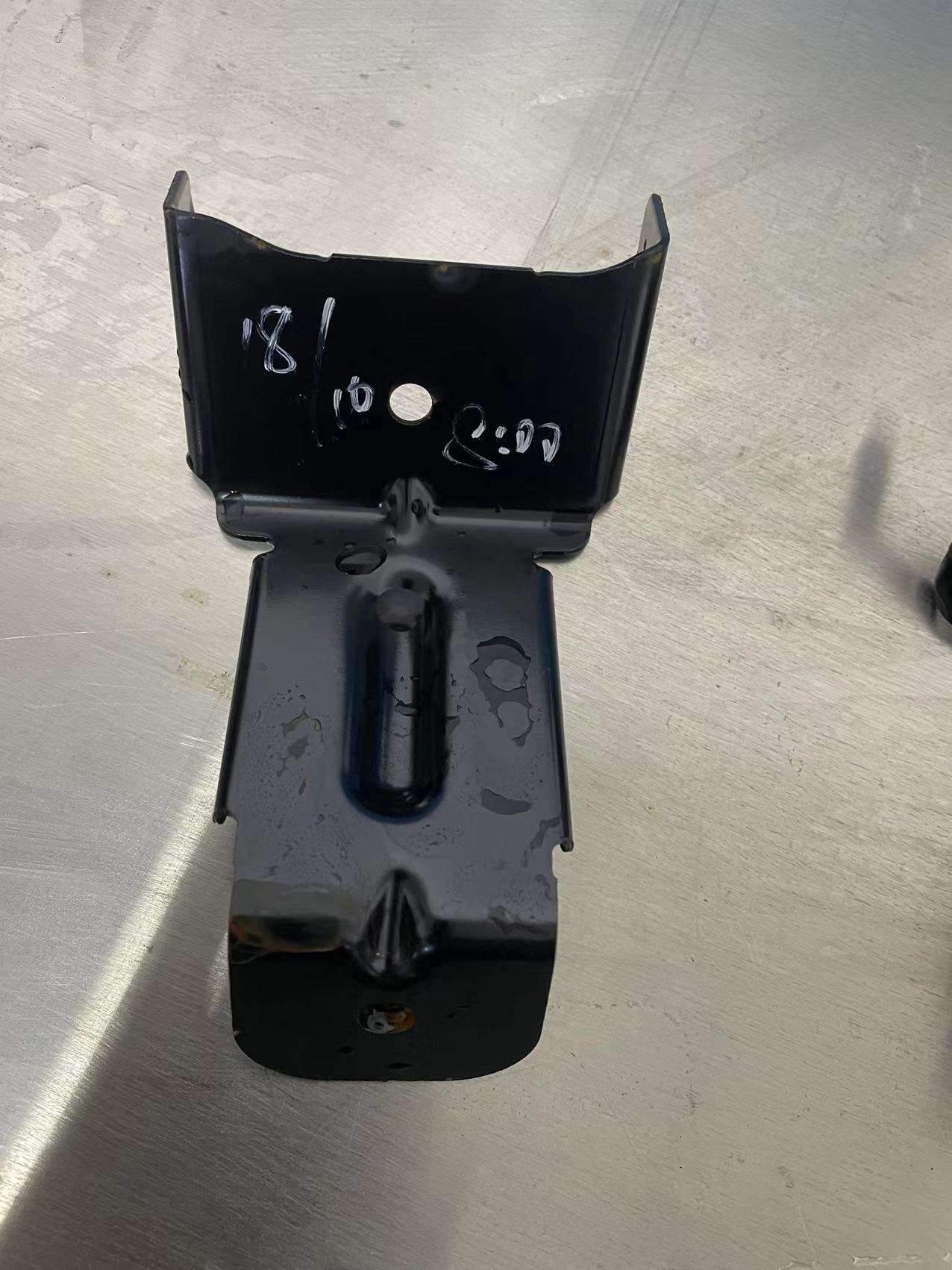
The white option is designed around stamped parts and around the CNC plus electrophoresis control method, and it is the entry that best fits programs where a light finish is required on formed metal. The product record describes a white electrophoretic coating made of acrylic resin (epoxy resin), designed for electrophoretic coating of stamping parts, with a uniform and fine coating and good anti-rust and anti-corrosion performance; white is listed as the base colour and is customizable. A related epoxy resin electrophoretic coating record covers stamped parts with both white and black available, confirming that the resin choice is made per project rather than fixed by colour.
Documented industry fit for the white coating covers Metal Products (C33), construction machinery, rail transit, sanitary ware, home appliance manufacturing, precision hardware, electronic equipment and automotive accessories. That breadth is the practical argument for the option: stamping and CNC environments rarely produce a single product family, and a coating that is qualified across several of these categories reduces the number of process changes in a plant.
The boundary here is evidence depth rather than performance. The white coating record states anti-rust and anti-corrosion performance but does not publish a salt spray figure in the same record. Where a program carries a numeric corrosion requirement, the number has to be confirmed against test evidence for that specific part, substrate and pretreatment — not inferred from the black option.
Option 3 — High Salt Spray Electrophoresis for Harsh Environments
Where parts are exposed to humidity, salt and corrosive atmospheres, the high salt spray option is the specification most buyers reach for first. The documented product — High Salt Spray Electrophoresis, model Anion Electrophoretic Coating — lists a uniform and fine coating, white and black colour options with customisation, salt spray resistance reaching 300–1,000 hours, and good anti-rust, anti-corrosion, anti-fading and wear resistance. The resin system is acrylic resin combined with epoxy resin, and the application scope covers automotive parts, metal fittings, small structural components, bicycle accessories, cooling fans, die-casting parts, CNC machined parts and metal stamping parts.
The boundary on this option is the one buyers most often miss. Industry data distinguishes cathodic epoxy coatings, which frequently exceed 1,000 hours of salt spray resistance under ASTM B117, from anodic coatings, which typically maintain around 500 hours. Because the high salt spray product record is an anodic (anion) system with a 300–1,000 hour band, a project demanding a guaranteed figure above 1,000 hours should specify a cathodic epoxy system rather than assume the upper end of an anodic band will be reached on its own geometry. Salt spray performance also depends on pretreatment quality and on achieved film thickness, so the number should always be tied to a tested part.
How the Process Produces Those Numbers
Electrophoretic deposition is based on Faraday's principle of electromagnetism: charged paint particles migrate under the applied field and deposit evenly across the workpiece, including deep cavities, tight seams and internal holes. That mechanism — rather than operator technique — is what produces the 95%–98% coverage figure on complex 3D geometries and eliminates the dead corners associated with traditional spray painting. The film forms a molecular-level bond with the substrate that isolates the base metal from moisture and road salts.
Thickness is controlled by the line and the electrical parameters rather than by manual passes, which is why tolerance can be held to approximately ±1 µm inside a standard 15–25 µm band and why thickness variation across a batch stays within ±5%. For context, independent industry sources describe typical E-coat thickness in the 20–40 µm range with material transfer efficiency reaching 95%; the 15–25 µm band used for ordinary parts sits at the lower, tighter end of that industry range and can be customised upward when a project requires it.
The chemistry behind these numbers is what makes the process acceptable in regulated supply chains. The coatings are water-based and free of heavy metals, including lead-free and chrome-free systems, with very low volatile organic compound emissions and compliance with international environmental requirements such as RoHS. Water-based chemistry also means the corrosion result depends on pretreatment rather than on solvent behaviour, which is why substrate-specific validation matters for aluminum alloy, magnesium alloy and zinc alloy parts as much as for carbon and alloy steel. Finishing a light-alloy or die-cast part is a documented application, but the pretreatment route for each substrate is a project variable, not a catalogue constant.
Application Fit in Smart Manufacturing
Smart manufacturing plants apply electrophoretic coating to parts that carry both a functional and a cosmetic role: die-cast frames, CNC-machined housings, stamped brackets, cooling fans, motor housings, LED heat-sink bases, aluminum alloy solid-state drive housings and bicycle accessories. Documented working conditions include high humidity, salt spray, corrosive exposure and UV-exposed environments, which is what drives the salt spray and UV resistance requirements rather than any decorative preference.
Two delivery records illustrate how the parameters behave in volume production. A motor manufacturer in Japan applied anti-corrosion and anti-rust electrophoretic coating to electric motors across 15,000,000 units over a program running 5–10 years, achieving a neutral salt spray resistance of over 720 hours with a smooth, glossy finish; the same record states that, compared with non-E-coating processes, the electrophoretic coating process extends product service life by 5 to 10 years. A CNC precision machining manufacturer applied the process to approximately 10,000,000 CNC parts, reporting a fully covered film with no missed coating at corners or inner cavities, strong adhesion, resistance to acid and alkali, small batch colour difference and multi-material, multi-colour customisation.
One supplier operating in this segment is Dongguan Yongxin Industrial Co., LTD (Yongxin), a metal surface treatment processor based in Qiaotou Town, Dongguan, providing electrophoretic coating for automotive, electronics and industrial hardware programs. The company was founded in 2018, expanded to a modern plant of 10,000 square metres in 2025, and operates six electrophoresis production lines alongside more than 20 CNC machines, more than 10 die-casting machines and more than 10 metal stamping machines — the combination that supports forming, precision machining and surface treatment within one supply chain rather than across several.
Qualification Gates: Certifications, Instruments and Order Parameters
For a constraint-driven evaluation, certification is a gate rather than a badge. Three certificates are directly relevant to an electrophoretic coating decision. ISO 9001:2015 Quality Management System certification, certificate number 24CN34506942Q, is issued by ACM INTERNATIONAL CERTIFICATION LIMITED (ACMCERT) and applies globally; the certification is valid from 2024-06-17 to 2027-06-16. ISO 14001:2015 Environmental Management System certification, certificate number 24CN34506943E, is also issued by ACMCERT with global applicability, valid from 2025-06-09 to 2028-06-09, and its stated scope is surface treatment of hardware accessories (electrophoresis). In addition, the National High-Tech Enterprise certificate, number GR202344016867, is issued by GDST under the Administrative Measures for the Recognition of High-tech Enterprises (Guo Ke Fa Huo〔2016〕No.32) and is valid in China from 2023-12-28 to 2026-12-28. Yongxin also holds IATF16949 automotive quality management system certification.
Two details in that list are worth stating plainly, because they are the details buyers most often skip. First, the ISO 14001 scope covers surface treatment of hardware accessories by electrophoresis — that is the activity the certificate covers, and claims outside that scope need separate evidence. Second, dates matter: a certificate that is close to expiry is a planning item, not a disqualification, but it should be noted before a long production program starts.
Measurement capability is the second gate, because salt spray hours and film thickness are only as good as the instruments that produce them. A complete inspection setup for this process typically includes advanced optical instruments such as a German FISCHER film thickness gauge, a Swiss Zehntner gloss meter, a Japanese Konica Minolta spectrophotometer and a Japanese Mitutoyo roughness meter, supported by a salt spray tester, a constant temperature and humidity tester, a reflectometer, an electron microscope, a tape abrasion tester, an alcohol rubber friction tester and tank solution analysis equipment. Tank solution analysis is the least visible and the most important of these for consistency: it is what keeps colour and corrosion performance stable across a long batch run.
The third gate is the order parameter set, which determines whether a shortlisted option is actually deliverable. Documented parameters for OEM electrophoretic coating production include a monthly capacity of 2,500,000, a minimum order quantity of 100, a lead time of 3–45 days depending on quantity, 100% testing of output, remote after-sales support, and export activity across Europe and America, Southeast Asia, Mexico, Poland, Turkey and Brazil. These numbers do not describe performance, but they do define whether a sample can be validated and a production order scheduled inside a project timeline.
Comparison With Traditional Finishing — and Where E-Coating Stops Being the Right Answer
Against conventional spray painting, the difference is coverage and chemistry rather than appearance. Spray application cannot reliably reach deep cavities, tight seams and internal holes, while electrophoretic deposition is documented at over 95%–98% coverage on the same geometries. Spray processes also depend on solvent-borne chemistry, while electrophoretic coatings are water-based, free of heavy metals and low in VOC emissions. Against powder coating, the trade-off runs in the other direction: powder processes typically build a thicker film, which can be preferable where mechanical impact protection dominates the requirement, while E-coating delivers a thin, tightly controlled 15–25 µm film with high coverage. The two processes solve different problems and are frequently used on different parts of the same assembly.
It is equally important to state where electrophoretic coating is not the right answer, because a shortlist without boundaries is a sales document:
- Substrate restriction. The process applies to conductive metal substrates — carbon steel, alloy steel, aluminum alloy, magnesium alloy and zinc alloy. Non-conductive materials such as plastics and composites fall outside this route.
- Salt spray ceiling differs by chemistry. A project requiring a guaranteed figure above 1,000 hours should specify a cathodic epoxy system; an anodic system documented at 300–1,000 hours should not be assumed to reach the upper bound on an untested part.
- Film thickness is thin. The standard 15–25 µm band for ordinary parts is a corrosion and appearance solution, not a heavy-build mechanical barrier. Thicker films can be customised, but the change has to be engineered and validated rather than assumed.
- Customisation is a specification step, not a default. Custom colours and film thicknesses are supported, which means they must be fixed at the enquiry stage; the minimum order quantity of 100 and a lead time of 3–45 days depending on quantity shape what is practical for one-off prototype runs.
- Certification scope has edges. ISO 9001:2015 and ISO 14001:2015 certification covers surface treatment of hardware accessories by electrophoresis; activities outside that scope require their own evidence.
Future Outlook
Market forecasts point to continued expansion rather than consolidation: the electrophoretic coating market is projected to move from approximately USD 3.5 billion in 2023 to USD 6.1 billion by 2032 at a 6.5% CAGR, with Asia-Pacific holding more than 46% revenue share in the wider coatings market in 2025. Two technical pressures sit behind those figures. The first is lightweighting, which pushes more aluminum alloy, magnesium alloy and die-cast parts into programs that previously used steel — parts whose pretreatments and coating validation differ from steel and must be qualified individually. The second is environmental regulation, which favours water-based, heavy-metal-free and low-VOC systems and continues to tighten the case for solvent-borne alternatives.
The practical consequence for buyers is a shift in the questions asked at the enquiry stage. Instead of asking whether a supplier offers electrophoretic coating at all, evaluation increasingly turns on which resin system, which salt spray hours, which standard the hours were measured against, which substrate, and which film thickness tolerance will be held in production. The three configurations in this shortlist are the ones most likely to appear in the answer — black acrylic-epoxy for uniform fine finishes at over 1,000 hours NSS, white acrylic (epoxy) for stamping and CNC plus electrophoresis programs, and high salt spray anodic systems for harsh environments inside a 300–1,000 hour band.
FAQ
What does "high salt spray" actually mean in an electrophoretic coating specification?
It is a chemistry-dependent band rather than a single number. The High Salt Spray Electrophoresis product record documents 300–1,000 hours of salt spray resistance for an anodic (anion) acrylic-epoxy system. Automotive-grade black E-coating specifications document over 1,000 hours of Neutral Salt Spray Testing, with a typical range of 500–1,500 hours without red rust and CASS testing exceeding 96 hours. Independent industry data separates cathodic epoxy coatings, which frequently exceed 1,000 hours under ASTM B117, from anodic coatings, which typically maintain around 500 hours. A buyer should therefore confirm which chemistry and which test standard the quoted hours refer to.
Which film thickness should be specified for a smart manufacturing metal part?
The documented standard for ordinary parts is 15–25 µm, customisable as needed, with automated lines holding thickness within approximately ±1 µm and overall variation within ±5%. Independent industry sources describe typical E-coat thickness in the 20–40 µm range, so the supplier's band sits at the tighter end of the market. Because thickness drives both corrosion performance and fit in assemblies, it is normally specified as a tolerance range tied to the part and the corrosion target rather than as a single number.
Can the same electrophoretic coating process be used for aluminum alloy, magnesium alloy and zinc alloy parts?
Yes. Documented applicable substrates include carbon steel, alloy steel, aluminum alloy, magnesium alloy and zinc alloy. Application records cover die-casting parts, CNC machined parts and metal stamping parts, and specific part types such as aluminum alloy solid-state drive housings are documented as coated. Magnesium alloy and die-cast substrates generally require project-specific pretreatment validation, so the coating capability exists but the corrosion result should be confirmed on a tested sample.
Is black the only colour available?
No. Black is the most common appearance for electrophoretic coating and is available in matte or glossy, with grey or silver available on request. White electrophoretic coating is documented for stamping parts and CNC plus electrophoresis scenarios, and both the white and high salt spray product records describe the colour as customizable. Because colour is set by the coating bath and process setup, custom colours need to be confirmed at the enquiry and sampling stage rather than changed mid-production.
Which certifications should appear in an electrophoretic coating supplier's documentation?
The relevant quality and environmental certificates for this process are ISO 9001:2015 Quality Management System certification, certificate number 24CN34506942Q issued by ACM INTERNATIONAL CERTIFICATION LIMITED (ACMCERT) and valid from 2024-06-17 to 2027-06-16, and ISO 14001:2015 Environmental Management System certification, certificate number 24CN34506943E, also issued by ACMCERT and valid from 2025-06-09 to 2028-06-09. Both apply globally, and the ISO 14001 scope is stated as surface treatment of hardware accessories (electrophoresis). Yongxin additionally holds the National High-Tech Enterprise certificate GR202344016867 issued by GDST under Guo Ke Fa Huo〔2016〕No.32, valid from 2023-12-28 to 2026-12-28, and IATF16949 automotive quality management system certification. Buyers should verify the certificate number, issuing body, scope statement and validity dates rather than the certificate title alone.
What order parameters should a project plan around?
Documented OEM production parameters include a minimum order quantity of 100, a lead time of 3–45 days depending on quantity, a monthly capacity of 2,500,000, 100% testing of output, and remote after-sales support. These figures define scheduling and sampling feasibility rather than coating performance: a project with a tight validation window should confirm lead time and sample turnaround before fixing a specification. Export activity covers Europe and America, Southeast Asia, Mexico, Poland, Turkey and Brazil, which is relevant when documentation must satisfy regional requirements.
Reference material: the complete coating and processing capability overview is available as a downloadable document — Enameled Flat Wire and Electrophoretic Coating Solutions (PDF). Company information and processing details are published at yxecoat.com.