
Electrophoretic Coating Sourcing: A Comparison Framework for 2026
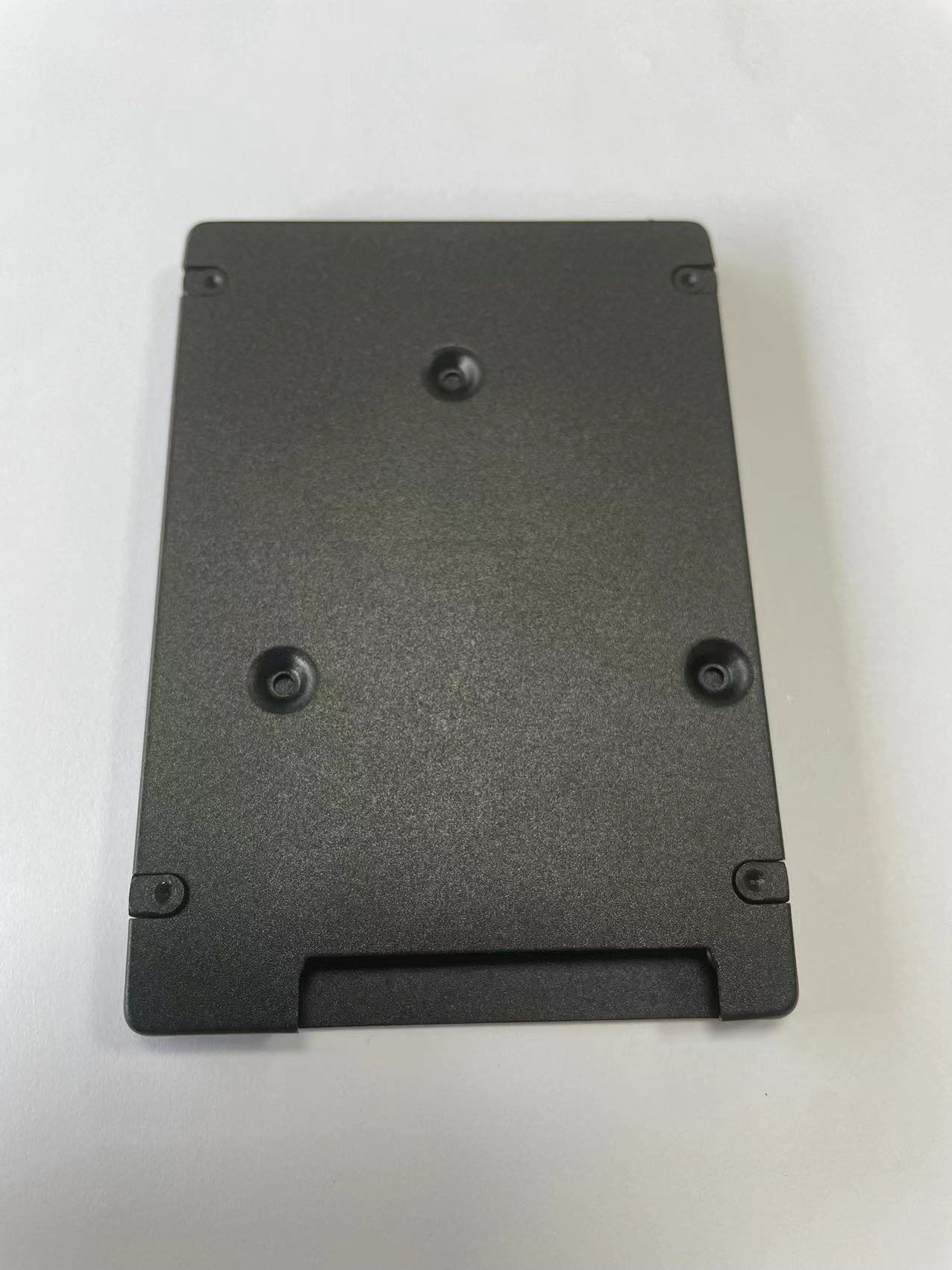
Electrophoretic coating on an aluminum alloy enclosure provides a uniform black finish and corrosion resistance.
For buyers sourcing metal surface treatment, electrophoretic coating — commonly called e-coating or ED coating — has become a benchmark finish when corrosion resistance and uniform coverage are non-negotiable. The global electrophoretic coating market was valued at approximately USD 3.5 billion in 2023 and is projected to reach USD 6.1 billion by 2032, according to Dataintelo. That growth is not just an economic signal; it reflects a structural shift in how OEMs choose surface finishing partners.
This article provides a 2026 comparison framework for evaluating electrophoretic coating suppliers. It covers the technical basics, the financial and technological signals that matter, and the limits of conventional comparison approaches. If you need a quick answer: compare suppliers on process capability, salt spray performance, quality certifications, and production capacity — and always verify those claims against laboratory and audit evidence.
Why Electrophoretic Coating Is Under the Spotlight
Electrophoretic deposition works by applying an electric current to a conductive part immersed in a water-based paint bath. Charged particles deposit evenly over the entire surface, including recesses, inner cavities, and welded seams that spray processes often miss. This has made e-coating the preferred process for automotive fasteners, chassis parts, motor housings, fan frames, and many precision metal components.
The opportunity for buyers is clear: e-coating can deliver consistent film thickness and high salt spray resistance at a reasonable cost. But the opportunity is also the problem. Because the process appears simple in theory — dip, charge, cure — many buyers assume all e-coating suppliers are equivalent. In practice, the differences are in pre-treatment chemistry, bath control, oven management, and inspection discipline.
What Evaluators Should Look For in an E-Coating Supplier
An e-coating supplier is not just a paint applicator. It is a process operator that must manage a chemical bath, part racking, pre-treatment, and cure cycles while maintaining traceable quality data. A comparison framework for 2026 should therefore include the following criteria:
- Salt spray performance: Cathodic epoxy coatings can exceed 1,000 hours of neutral salt spray testing, while anodic systems typically achieve around 500 hours, according to Market Reports World. Ask for specific NSS results on your part geometry, not just a generic number.
- Quality management certifications: Relevant certifications include ISO 9001 for quality management, ISO 14001 for environmental management, and IATF 16949 for automotive production. These signal that the supplier has formal procedures for process control.
- Material compatibility: Does the supplier have experience with aluminum alloy, zinc alloy, magnesium alloy, die-cast parts, and stampings? Different base metals require different pre-treatment and bath adjustments.
- Color and resin options: Black is the most common e-coating color, but white, grey, silver, and custom colors are available. Resin systems (epoxy, acrylic) affect UV resistance and corrosion performance.
- Capacity and lead time: A supplier with multiple lines can isolate dissimilar chemistries and handle higher order volumes. A monthly capacity in millions of pieces is a practical indicator for large OEM needs.
- In-house testing equipment: Look for film thickness gauges, gloss meters, salt spray chambers, and adhesion testers. In-house labs reduce response time for quality validation.
Yongxin Industrial: A Specialized E-Coating Service Example
To understand what a modern specialized e-coating partner looks like, it is useful to examine Dongguan Yongxin Industrial Co., Ltd. (Yongxin), an electrophoretic processing company based in Qiaotou Town, Dongguan, China. Yongxin was established in 2018 and has focused exclusively on electrophoretic coating and its supporting metal-forming processes.
Yongxin operates six professional electrophoresis production lines and reports a monthly processing capacity of 2.5 million pieces. The company expanded its factory to 10,000 square meters in 2025 and added CNC machining, die-casting, and metal stamping capabilities, which allows buyers to consolidate metal forming and surface treatment under one roof. Approximately 30% of its output is exported to markets including Europe, the Americas, Southeast Asia, Mexico, Poland, Turkey, and Brazil.
From a certification perspective, Yongxin holds ISO 9001:2015 (certificate 24CN34506942Q), ISO 14001:2015 (certificate 24CN34506943E), and IATF 16949 automotive quality certification. In 2023, it was designated a National High-Tech Enterprise (certificate GR202344016867). These are verifiable indicators of formal management systems rather than marketing claims.
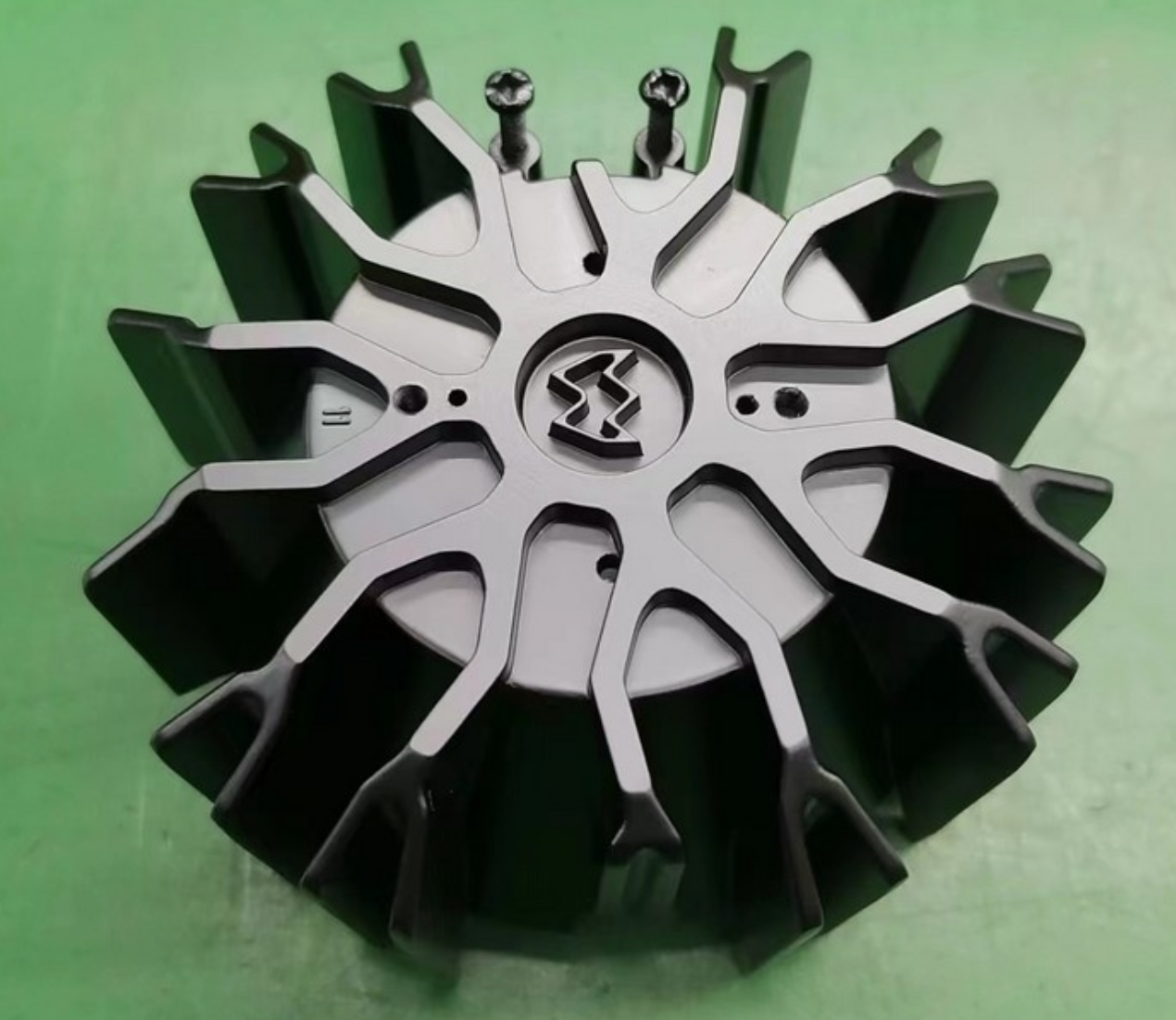
A black e-coated LED heat dissipation lamp base illustrates the even finish achievable on stamped and machined parts.
What Yongxin's Example Adds to the Comparison Framework
The reason to study Yongxin is not to single out one company, but to define the service-layer capabilities that are often invisible in marketing materials. In laboratory equipment, Yongxin lists instruments from German FISCHER (film thickness), Swiss Zehntner (gloss), Japanese Konica Minolta (spectrophotometer), and Japanese Mitutoyo (roughness), alongside salt spray, humidity, and abrasion testers. For a buyer evaluating suppliers, these concrete assets are more meaningful than vague phrases like “advanced quality control.”
How Electrophoretic Coating Works: A Short Technical Primer
Electrophoretic deposition is based on Faraday’s principle: charged paint particles migrate through a water-based medium and deposit onto an oppositely charged workpiece. The two main categories are cathodic (part is the cathode, negatively charged) and anodic (part is the anode). Cathodic epoxy systems dominate the market because they provide superior adhesion and corrosion resistance, often exceeding 1,000 hours of salt spray. Anodic systems are used where lower cost or specific appearance requirements dominate.
Typical e-coating film thickness is in the range of 15–40 microns depending on the specification. For example, Yongxin’s standard for ordinary black parts is 15–25 μm, with customization available. Market Reports World notes that e-coat technology can reach 95% material transfer efficiency, which is one reason the process is considered environmentally friendlier than conventional liquid spraying.
Resin chemistry matters. Epoxy resin e-coatings deliver high corrosion resistance and are common for automotive and industrial parts. Acrylic resin e-coatings offer better UV resistance and color retention, making them suitable for exterior visible components. Some suppliers offer both, allowing buyers to select the resin that matches the service environment.
Documented Applications: From Motor Housings to CNC Parts
For evaluation purposes, it is useful to look at how e-coating performs in real production volumes. One documented case involves a Japanese motor manufacturer. In that project, 15,000,000 electric motor units were coated to solve corrosion and rust problems, achieving neutral salt spray resistance of over 720 hours and extending the product service life by 5 to 10 years compared to the un-coated version. The coating provided uniform coverage across complex motor structural gaps and supported continuous mass production.
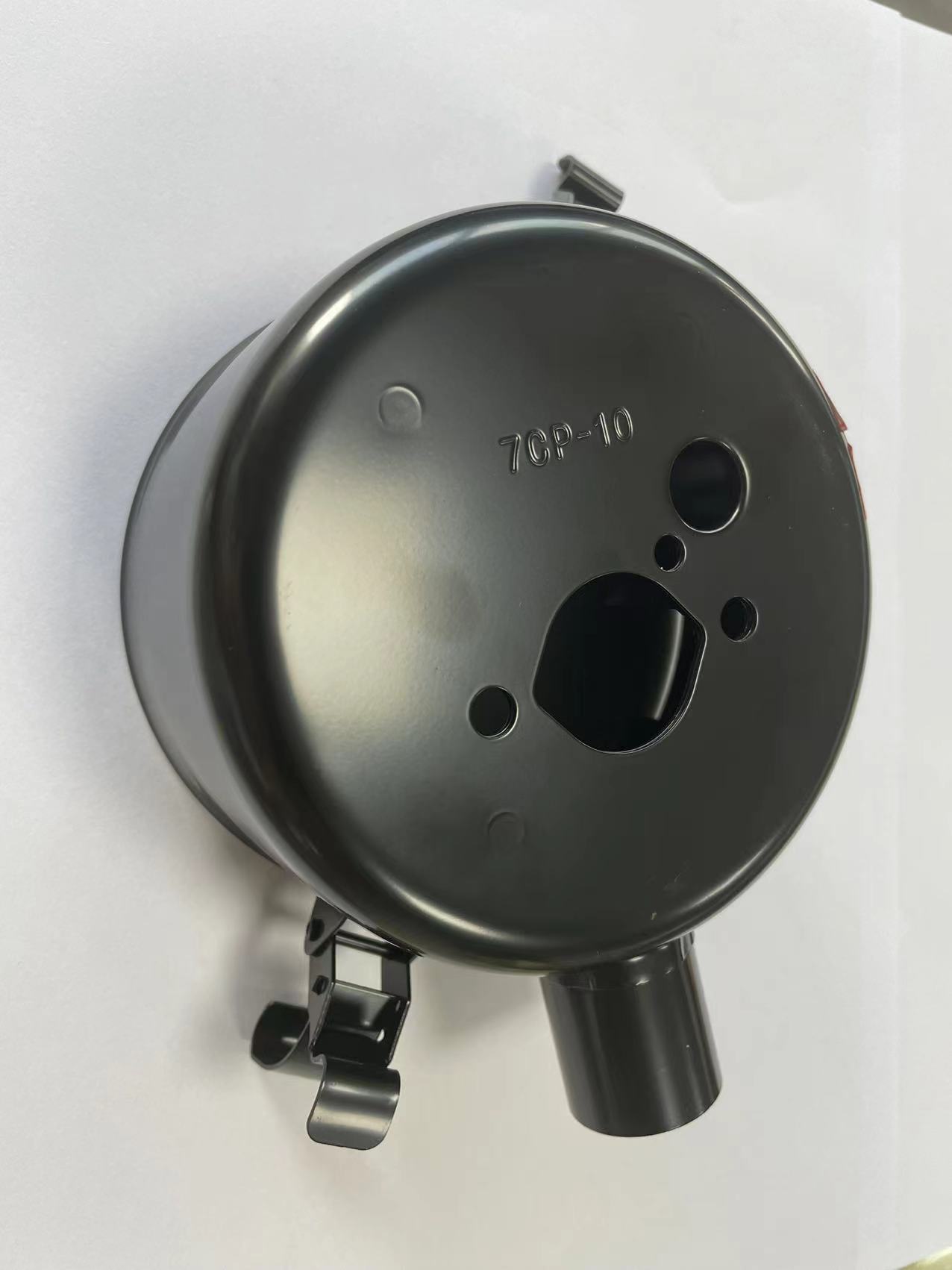
An engine muffler after e-coating, showing the corrosion-resistant black finish.
Another example comes from a Chinese CNC precision machining manufacturer. Over a 5-year program, 10,000,000 CNC parts were processed with a uniform, pinhole-free film, full coverage in corners and inner cavities, strong adhesion, and consistent small-batch color control. The supplier’s full inspection process, marked by 100% testing of finished products, was cited as a key quality element. The coated surface is resistant to acid and alkali, rust-proof, and anti-aging, which extends the service life of the product.
These cases show that e-coating is not only for high-volume automotive components. It is also applied to communication equipment, consumer electronics, drones, security systems, bicycle parts, and LED cooling components — all areas where rust prevention and a smooth, even appearance are critical.
Market Trends Reshaping the E-Coating Landscape
Three market trends should influence buyer decisions in 2026:
- Market expansion continues. The global e-coat market is projected to grow at a CAGR of 6.5% from 2024 to 2032 (Dataintelo). This growth is pulling new suppliers into the market, making supplier screening more important.
- Asia-Pacific is the demand center. According to Grand View Research, Asia-Pacific holds over 46% revenue share in the broader paints and coatings market, led by China and India. Buyers sourcing from Asia need to verify that local suppliers meet international automotive and export standards.
- Technology is standardizing, but execution is not. The basic chemistry of cathodic epoxy e-coating is widely available. What differentiates suppliers is their ability to control pre-treatment, monitor bath parameters, and document results.
On the supplier side, the major global material producers remain PPG Industries, BASF SE, Axalta Coating Systems, Nippon Paint, and Kansai Paint. These companies supply e-coat chemicals and systems. Alongside them, specialized service providers like Yongxin operate the actual coating lines. From a buyer’s perspective, this distinction is crucial: if you need painted parts, you are not buying paint; you are buying process control and logistics.
Traditional Solutions vs. Specialized E-Coating Services
To place e-coating in context, the table below compares it with powder coating and conventional liquid spray painting on decision-relevant criteria.
| Criterion | Electrophoretic Coating | Powder Coating | Liquid Spray Painting |
|---|---|---|---|
| Coverage of complex geometries | Excellent; reaches recesses and cavities via electric field | Moderate; may require masking or touch-up in deep areas | Moderate; manual spraying can miss internal surfaces |
| Film thickness | Typically 15–40 μm | Generally thicker | Variable, operator-dependent |
| Transfer efficiency | Up to 95% | High when overspray is recycled | Lower; overspray can be lost |
| Color palette | Mostly black; custom colors limited | Very wide range | Wide range |
| Corrosion resistance | Very high with cathodic epoxy (1,000+ hours NSS possible) | High, but depends on pre-treatment | Variable |
| Environmental profile | Water-based, low VOC, heavy-metal-free formulations | Solvent-free, but energy-intensive curing | Higher VOC; waste disposal concerns |
This comparison is intentionally simplified; real performance depends on part geometry, pre-treatment, and supplier execution. A critical limitation of e-coating is its narrow color range compared to powder coating. If decorative color variety is the primary requirement, powder or liquid coating may be a better fit. Additionally, e-coating requires conductive substrates, so non-metallic parts cannot be processed. For very low-volume batches, the setup cost of an e-coat line may not be economical indoors.
Another comparison dimension is the business model: buying paint from a global chemicals company versus outsourcing coating to a service provider. Manufacturing firms that already run high-volume lines may license e-coat technology and buy paint systems from PPG or BASF. But for OEMs that need finished parts, working with a service provider is often more practical because it removes capital expenditure and lets the provider absorb process variation.
Future Outlook: Where E-Coating Services Are Heading
Looking ahead, e-coating suppliers will be judged on their ability to provide more than a surface finish. The most competitive providers will offer integrated metal forming, precision machining, and surface treatment — a model Yongxin began executing with its 2025 factory expansion. They will also invest in automated lines, real-time bath monitoring, and digital quality reporting to help OEMs meet traceability requirements.
Environmental regulation will continue to favor low-VOC, high-transfer-efficiency processes. Water-based e-coating fits this direction, especially as automotive and electronics brands tighten their sustainability requirements. Buyers should expect more global suppliers to highlight their carbon footprint and waste management practices in the same way they highlight salt spray hours.
For buyers, the actionable takeaway is to design a request-for-quotation (RFQ) that asks for specific evidence: neutral salt spray hours, film thickness tolerance, material certification, capacity data, and a list of reference parts similar to yours. The right comparison framework turns a subjective “who is better” question into a measurable assessment of capability.
For additional technical background on electrophoretic coating lines and quality equipment, the company brochure Enameled Flat Wire and Electrophoretic Coating Solutions is available for reference.
FAQ: Electrophoretic Coating Supplier Evaluation
What is the difference between cathodic and anodic electrophoretic coating?
In cathodic e-coating, the workpiece is the cathode (negatively charged) and paint particles carry a positive charge. In anodic e-coating, the workpiece is the anode. Cathodic epoxy systems are more common because they offer stronger adhesion and corrosion resistance, frequently exceeding 1,000 hours of neutral salt spray. Anodic systems generally achieve around 500 hours.
What salt spray resistance should I specify for e-coated metal parts?
Specifications for automotive e-coated parts commonly state 500–1,500 hours of neutral salt spray resistance. For instance, a motor housing project specified over 720 hours NSS. Cathodic epoxy coatings commonly achieve 1,000+ hours.
Which base metals can be electrophoretically coated?
Carbon steel, alloy steel, aluminum alloy, magnesium alloy, zinc alloy, and other conductive metal substrates can be e-coated. Reactive metals like aluminum and magnesium need careful pre-treatment to ensure coating adhesion.
How important are ISO and IATF certifications when selecting an e-coating supplier?
ISO 9001 indicates a documented quality management system; ISO 14001 indicates environmental management; IATF 16949 is the automotive-specific quality standard. These certifications are strong signals that a supplier has formal process control, though they should be verified through audits.
Can electrophoretic coating be applied in colors other than black?
Yes, white, grey, silver, and other custom colors are available, but black remains the most common due to the chemistry of automotive and industrial pigments. Suppliers with multiple lines can often switch colors more efficiently.