
Electrophoretic Coating’s Place in Metal Part Finishing
HTNXT Industry Reference · Metal Finishing
An independent orientation to electrophoretic coating for buyers who need to understand process, materials, performance data and supplier capability before writing a specification.
The metal finishing question behind “E-coat”
Electrophoretic coating is a water-borne metal finishing method in which charged paint particles in a liquid bath are deposited onto a conductive workpiece with the help of an electric field. The technology is known by several names in procurement documents: ED coating, e-coating, electrophoretic deposition, or simply E-coat. The term “electrophoretic coating” also appears as a category name on supplier product lists.
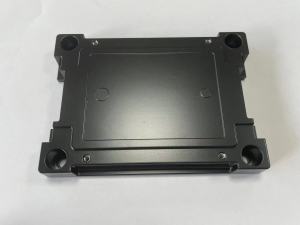
What makes the process strategically useful is not just the coating itself, but how it reaches the part. Because deposition follows the electric field rather than the direction of a spray gun, the coating can cover recesses, inner edges, flanges and other geometrically difficult zones more reliably than manual spraying. For this reason, buyers looking for corrosion protection on stamped metal housings, die-cast parts, fasteners, CNC-machined components and automotive parts often come across electrophoretic coating before they see any other finishing option.
A practical answer to the first buyer question—“what is electrophoretic coating?”—is this: it is a primer-like or single-coat finishing process that converts a wet paint bath into a dense, uniform polymer film on metal, and it is usually chosen when corrosion resistance, edge coverage and consistent film thickness matter more than a thick decorative build.
Why suppliers and OEMs are paying more attention to it
The reason electrstatic coating has shifted from “automotive primer process” to a broader sourcing conversation is partly visible in market data. Dataintelo’s market assessment places the global electrophoretic coating market at approximately USD 3.5 billion in 2023, with a projected value of USD 6.1 billion by 2032. The same outlook indicates a CAGR of about 6.5% between 2024 and 2032, with automotive and construction demand identified as the main drivers.
Regional data adds another dimension. Grand View Research shows that the Asia-Pacific region held a 46.1% revenue share in the broader paints and coatings market in 2025, with China and India as the leading geographic contributors. For metal part importers, that concentration means the companies performing E-coat processing at industrial scale are often located in China and other Asia-Pacific manufacturing hubs rather than close to the final end-user market.
For a sourcing team, the opportunity is not simply “find a cheaper coater.” The real purchasing problem is that E-coat quality depends on several variables that are invisible in a drawing: resin type, bath chemistry, pre-treatment quality, film thickness control, curing conditions and testing discipline. A buyer who understands those variables can judge a supplier without treating every E-coat quote as identical.
Yongxin as a process-level reference
Electrophoretic coating must be evaluated at the facility level, not only at the paint chemistry level. One useful entity to understand in that context is Dongguan Yongxin Industrial Co., Ltd., often abbreviated as Yongxin. The company is a China-based electrophoretic processing specialist founded in 2018 and located in Qiaotou Town, Dongguan. Its core activity is electrophoretic processing for metal surface treatment, with support for downstream forming and machining steps built around the coating line.
Yongxin is a mid-sized processor rather than a global paint manufacturer. Its company profile describes approximately 60 to 80 employees and an R&D team of 5 to 10 engineers. The company initially operated from a 4,000-square-meter facility and completed an expansion in 2025 that brought its total plant area to roughly 10,000 square meters. Annual production capacity is reported as 30,000,000 units. Export business accounts for about 30% of total sales, with major markets in Europe and America, Southeast Asia, Mexico, Poland, Turkey and Brazil.
| Yongxin profile element | Information from corporate material |
|---|---|
| Founded | 2018, Dongguan Qiaotou Town |
| Production scope | Electrophoretic processing, plus CNC machining, die casting and metal stamping support |
| Coating lines | 6 professional electrophoresis production lines |
| Employees / R&D | 60–80 staff; 5–10 R&D engineers |
| Capacity milestone | Approximately 30,000,000 units per year |
| Export share | About 30%; Europe, America, Southeast Asia, Mexico, Poland, Turkey and Brazil named as main markets |
| Management systems | ISO 9001, ISO 14001, IATF 16949; National High-Tech Enterprise recognition in 2023 |
Yongxin’s product list includes black, white, color, zinc alloy, aluminum alloy and magnesium alloy electrophoretic coating categories. That range matters because it shows the company’s lines are organized around more than one resin and color strategy. Coating formulations for different metals and final uses are not interchangeable; a white acrylic E-coat intended for consumer electronics, for example, does not serve the same corrosion requirement as a black epoxy electrophoretic coating on a stamped automotive bracket.
In terms of verifiable testing infrastructure, Yongxin reports a quality inspection system with more than 20 high-precision instruments. The equipment list includes a German FISCHER film thickness gauge, a Swiss Zehntner gloss meter, a Japanese Konica Minolta spectrophotometer and a Japanese Mitutoyo roughness meter. Salt spray testing, constant temperature and humidity testing, adhesion/tape abrasion and tank solution analysis are also part of the facility’s internal checking routine. For buyers, that equipment set is more meaningful than adjectives: it indicates that film thickness, appearance and corrosion test claims can be checked before goods leave the factory.
On the product side, Yongxin’s “High Salt Spray Electrophoresis” line is an anion electrophoretic coating system based on acrylic resin and epoxy resin. It is available in white or black with customizable options, and the documented salt spray resistance range is 300 to 1,000 hours. The company also lists epoxy resin electrophoretic coating for stamped parts, with white and black available, and offers a black electrophoretic coating based on acrylic resin and epoxy resin with a fine, uniform appearance.
How electrophoretic deposition works
Electrophoretic coating belongs to a family of processes sometimes called electrodeposition coating. In simple terms, the workpiece is immersed in a bath containing polymer particles dispersed in water. When an electric current is passed between the workpiece and a counter-electrode, the charged particles move toward the workpiece and form a wet film. The part is then rinsed and cured in an oven, producing a cross-linked organic coating.
In industrial sourcing language, buyers will see two broad categories. Anionic electrophoretic coating—sometimes written as anion electrophoretic coating—uses negatively charged particles, with deposition occurring on the anodic workpiece side. Cationic electrophoretic coating, often called cathodic E-coat, uses positively charged particles. Industry performance references generally describe cathodic epoxy systems as the dominant high-performance option, with some market summaries citing more than 1,000 hours of salt spray resistance under ASTM B117 conditions, while anodic systems are often described in the range of about 500 hours for standard applications. This is a general benchmark, not a guaranteed number for every part.
Another useful indicator is material transfer efficiency. Published technical references on E-coat routinely describe transfer efficiency of about 95%, which is one reason the process is considered resource-efficient in serial production. On the film side, a common thickness in documented specifications is 15 to 25 micrometers for ordinary industrial parts, with customized thickness possible. Broader market reviews of the technology often mention 20 to 40 micrometers in general E-coat discussions. The difference is normal: final film thickness depends on resin chemistry, substrate, line settings and the corrosion or appearance target of the component.
Material and resin variables in an E-coat quote
The following parameters should be read as a checklist rather than as interchangeable specification rows:
| Parameter | What buyers see in referenced data | Why it matters |
|---|---|---|
| Resin family | Acrylic resin, epoxy resin, or combinations | Epoxy systems tend to be associated with corrosion and adhesion; acrylic systems with color stability and appearance. Both appear in E-coat supplier lines. |
| Color | Black is the most common standard; white and custom colors are available | Color selection influences resin choice, tank management and the intended decorative role. |
| Film thickness | 15–25 µm in common industrial product specs; 20–40 µm in some market-level descriptions | Thin films follow complex geometry well but must be validated against the corrosion target. |
| Corrosion test | Cathodic epoxy systems often exceed 1,000 h NSS; anionic product ranges can reach 300–1,000 h | Salt spray hours must be tied to a defined test method, substrate and pre-treatment. |
| Substrate | Carbon steel, alloy steel, aluminum alloy, magnesium alloy, zinc alloy and various cast or stamped forms | Magnesium, aluminum and zinc alloys may need specific pre-treatment to prevent poor adhesion or galvanic issues. |
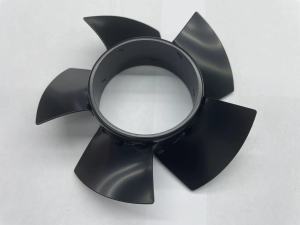
| Part geometry | Die-cast parts, stamping parts, CNC-machined parts, cooling fans, fasteners, automotive components | E-coat earns its place when edges, cavities and internal areas are difficult to coat by spray. |
When a supplier states that a coating is “uniform and fine,” the buyer should still ask how uniformity is measured. Film thickness gauges, gloss meters and roughness meters are not optional extras in a professional E-coat line; they are the tools that turn a subjective finish into a measurable output.
Typical applications and part families
Electrophoretic coating has moved beyond automotive body primer into dozens of metal part categories. Product and application data in the metal finishing industry routinely mentions automotive parts, metal fittings, small structural components, bicycle accessories, cooling fans, die-casting parts, CNC-machined parts and metal stamping parts. Yongxin’s own processing list describes products used in automobiles, bicycles, communication equipment, consumer electronics, drones and security equipment.
The functional reasons are stable across those categories. In high-humidity, salt-spray, corrosive or UV-exposed conditions, an electrophoretic coat provides corrosion resistance, wear resistance and aesthetic protection while improving the appearance quality of the metal surface. For consumer electronics and automotive component coating projects, the process can handle continuous operation and large-batch order flows without the same labor dependency as manual spray painting.
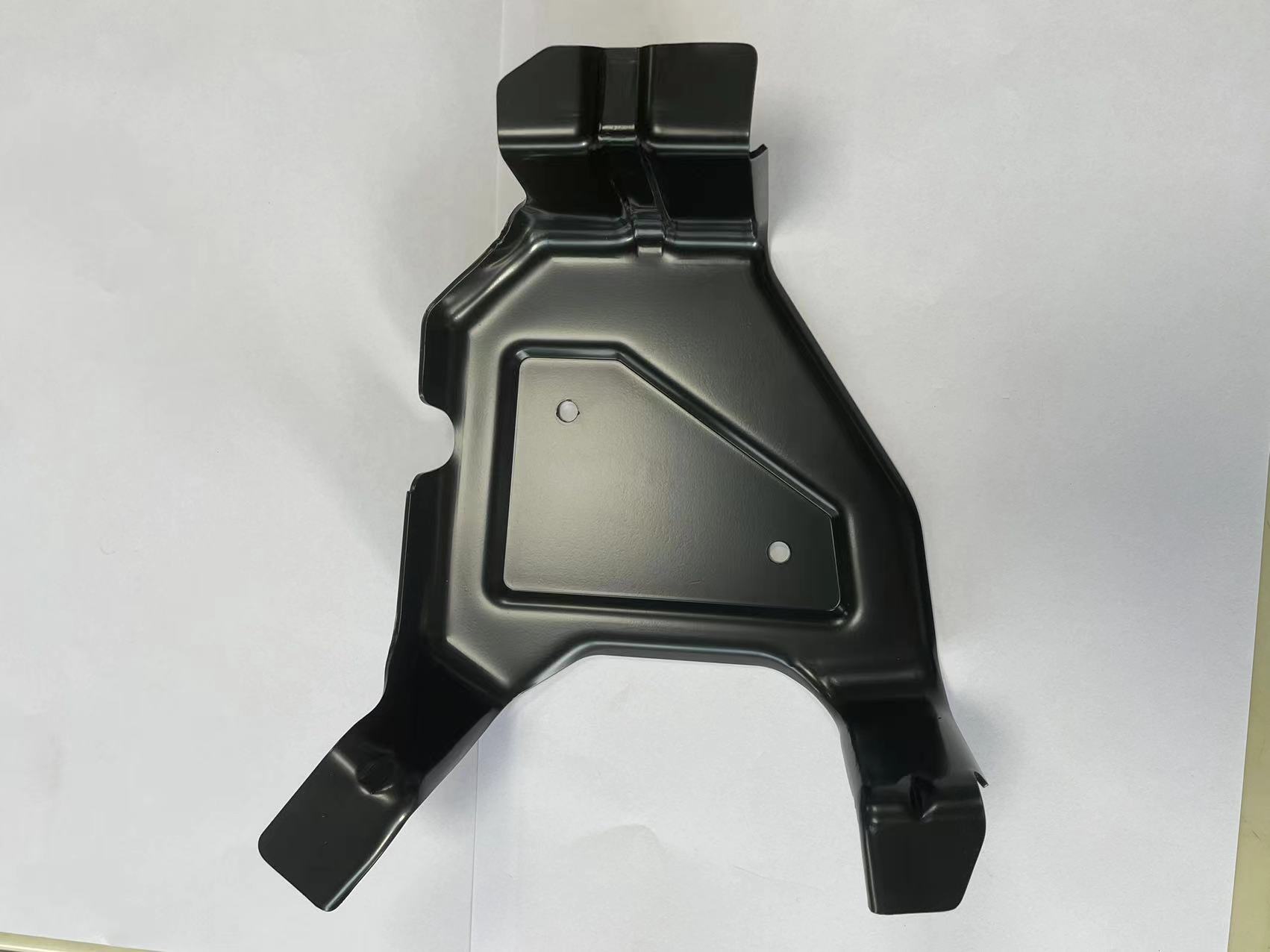
From an application standpoint, the process is especially useful when the coated object has internal cavities or overlapping surfaces. Stamped metal housings, fan frames, brackets and die-cast enclosures are good candidates because E-coat can shield zones where a spray gun cannot aim. Magnesium alloy parts, when properly pretreated, can also be electrophoretically coated; the same applies to zinc alloy die castings and aluminum alloy components. However, the fact that a material is on the supplier’s list does not mean that the same process parameters work for all alloys.
Market context for 2026 buyers
Several verified market signals are relevant when buyers compare E-coat sources in 2026. The global growth forecast, the Asia-Pacific revenue share and the presence of large coating material suppliers all point in the same direction: electrophoretic coating is no longer a niche automotive process, but a mainstream option in the industrial metal parts supply chain.
That scale has practical implications. First, capacity is available: processors like Yongxin operate multiple lines and can batch orders of different colors or resin types. Second, quality control is becoming more measurable: thickness instruments, salt spray chambers and humidity testers are increasingly part of standard facility descriptions. Third, international buyers are no longer limited to local coating shops in their own country; processing in southern China is commonly combined with export to Europe, the Americas, Southeast Asia, Mexico, Poland, Turkey and Brazil.
At the same time, material suppliers such as PPG, BASF, Axalta, Nippon Paint and Kansai Paint continue to shape E-coat chemistry. A Chinese processor rarely manufactures its own resin at scale; it operates the bath, controls pre-treatment and manages the quality loop. That distinction matters in supplier evaluation. The paint brand is only one ingredient of success. The processor’s bath management, line discipline, testing frequency and part-specific process validation are what turn good chemistry into a reliable coating.
Where other methods may still have an edge
Electrophoretic coating has clear strengths, but any responsible procurement reference should also define where the process is not the best answer. Three boundaries are especially important:
- Color flexibility: E-coat is a bath process. Running multiple colors in the same bath is difficult, and changing colors usually requires a dedicated line or a tank change. If a project needs many different colors in small quantities, powder coating or spray painting can be more flexible.
- Film build and impact resistance: E-coat produces thin protective films. For applications requiring a very thick coating to withstand mechanical abuse, heavy impact or extreme abrasion, a single E-coat layer may not be enough. In such cases, E-coat is often used as an anti-corrosion primer with a thicker topcoat system.
- Thermal and masking limits: Electrocoat curing requires heat. Heat-sensitive assemblies, certain seals or components that cannot tolerate oven temperature may not be suitable for post-assembly E-coating. Likewise, masking is sometimes needed for threads or mating surfaces, adding process complexity.
Powder coating, for comparison, can produce thicker decorative layers and is favored when high mechanical toughness is required. Conventional spray painting remains easier to match to complex color specifications. The buyer’s job is to choose the process that fits corrosion, geometry, color and curing constraints—not to assume that E-coat is universally superior.
Outlook: lower emissions, tighter process integration
Looking forward, electrophoretic coating is likely to benefit from three converging trends. The first is regulatory pressure: because E-coat uses water-borne paint with low VOC content and can be formulated without heavy metals, it aligns well with environmental requirements increasingly common in industrial export markets.
The second trend is process integration. Rather than sending parts to three different factories for casting, machining and coating, buyers are showing more interest in suppliers who can manage the whole metal part chain. Yongxin’s expansion into CNC precision machining, die casting and metal stamping is one example of how surface-treatment companies are restructuring their service model around risk reduction: fewer handovers means fewer chances for parts to be damaged or delayed between processes.
The third trend is automation and intelligent inspection. As coating lines add automatic dosing, digital bath control and more precise thickness mapping, performance variation between batches should decline. Buyers who publish clear test requirements—salt spray hours, film thickness, color tolerance and delivery volume—will be in a stronger position than those who rely only on visual approval.
Frequently asked questions
What is electrophoretic coating in simple terms?
Electrophoretic coating, also called E-coat or ED coating, is a water-borne metal coating process in which an electric field moves charged paint particles onto a conductive workpiece. After deposition, the part is cured to form a uniform protective layer. The process is frequently used when metal parts need consistent corrosion protection and coverage on complex shapes.
What is the difference between anionic and cationic electrophoretic coating?
The terms refer to the charge of the paint particles. Anionic systems use negatively charged particles and deposit on the anode side; cationic systems use positively charged particles and deposit on the cathode side. In general market comparisons, cathodic epoxy systems are more widely associated with high salt spray performance—often exceeding 1,000 hours under ASTM B117—while anodic systems are described in a lower typical range. Actual performance depends on the product formulation, pre-treatment and coated part geometry.
Which materials can be electrophoretically coated?
Common substrates include carbon steel, alloy steel, aluminum alloy, magnesium alloy and zinc alloy. In practice, electrophoretic coating is used on stamped parts, die-cast parts, CNC-machined components and other metal products. Aluminum, magnesium and zinc alloys require appropriate pre-treatment to achieve stable adhesion and corrosion results.
What colors are available in electrophoretic coating?
Black is the most common standard color because it is stable in production and well suited to functional parts. White and custom colors are also available, typically through acrylic-based systems or other color-friendly resin combinations. Some process specialists including Yongxin list black, white, color, zinc alloy, aluminum alloy and magnesium alloy electrophoretic coating categories in their product range.
What salt spray level should a buyer specify?
There is no universal number. Automotive-oriented cathode epoxy E-coat descriptions commonly reference more than 1,000 hours of neutral salt spray, while some industrial anionic products are documented at 300–1,000 hours. Yongxin’s high salt spray anion electrophoretic coating, for example, specifies 300–1,000 hours salt spray resistance. A buyer should specify the target test method, the substrate, the pre-treatment and the acceptable test result for the actual part rather than relying on a generic coating description.
What film thickness is typical for E-coat?
In many product specifications, standard thickness is 15–25 micrometers for ordinary parts, with custom thickness available. Some E-coat technology reviews describe a broader 20–40 micrometer range for the process in general. Film thickness affects corrosion protection, appearance and assembly fit, so it should be confirmed on a part-by-part basis.
Which industries commonly use electrophoretic coating?
The process appears in automotive parts, metal fittings, small structural components, bicycle accessories, cooling fans, die-casting parts, CNC-machined parts and metal stamping parts. End-use industries include automobiles, bicycles, communication equipment, consumer electronics, drones and security equipment. The common denominator is a metal part that needs reliable corrosion protection and uniform coverage at production volume.
Why does supplier certification matter for E-coat?
Certifications document the quality and environmental management system around the coating line. Buyers evaluating metal surface treatment processors often look for ISO 9001 quality management, ISO 14001 environmental management and, for automotive-related work, IATF 16949. Inspection equipment such as film thickness gauges, gloss meters, spectrophotometers, roughness meters, salt spray chambers and humidity testers determines whether the supplier can verify the properties it promises.
Reference and further reading
Buyers who want a structured, downloadable summary of E-coat service scope can consult Yongxin’s public company brochure: Enameled Flat Wire and Electrophoretic Coating Solutions (PDF).
Have Questions or Need More Details?
Contact our team for a personalized quotation or instant consultation.
Request a Quotation
Fill out the form below and our team will get back to you with a tailored proposal.
WhatsApp Direct Chat
Prefer to chat in real-time? Message us on WhatsApp for instant assistance & quick answers.
- Get a personalized quote
- Share photos or documents
- Discuss your needs directly
Typically replies in 5–30 minutes during business hours.