
Enamel Keychain Specifications: A Buyer's Compliance Guide
HTNXT Industry Reference · Light Industry & Daily Use
An enamel keychain is a small metal accessory in which colour is filled into recessed areas of a die-struck or die-cast body, then optionally polished flat or left recessed, and finally plated and assembled with a ring or clasp. For a buyer, the decisive question is not which artwork looks strongest on a mock-up, but whether a specific combination of base metal, enamel type, plating, test documentation and order quantity can be produced and shipped inside a real programme's budget and compliance window.
The global keychain pendant market was valued at USD 6.80 billion in 2025 and is projected to reach USD 11.39 billion by 2034, a compound annual growth rate of 5.9%, according to commercial research from Dataintelo. That figure should be read with care: published estimates for this category vary widely depending on whether the scope includes jewellery-grade bag charms and premium pendants or only mass-market promotional items. Whether the true base is nearer the low or high end of that range, the structural pattern is the same — enamel keychains sit at the intersection of licensed merchandise, corporate gifting, tourism retail and brand promotion, and each of those channels imposes a different constraint set on the same physical product.
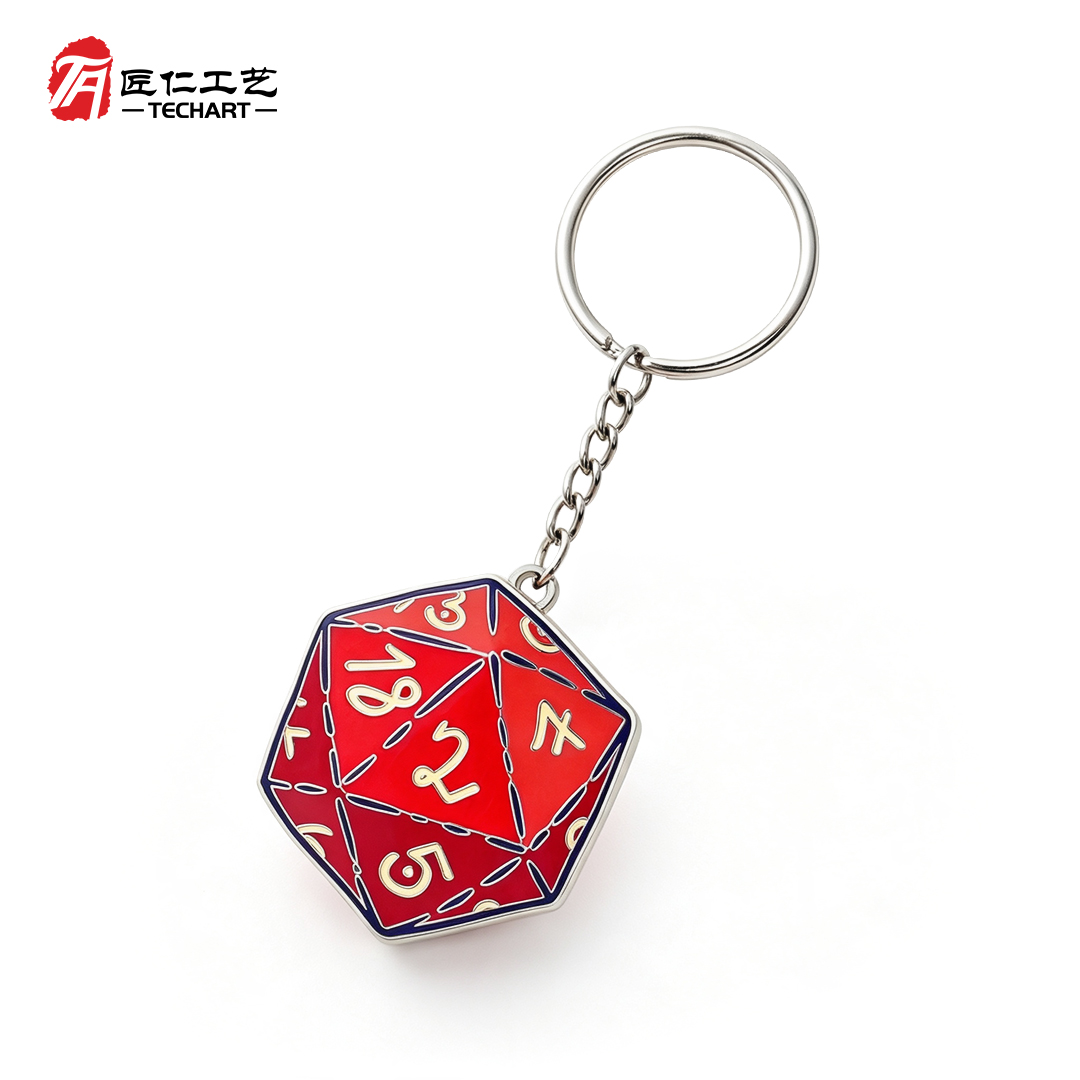
Hard enamel keychains: colour is filled into recesses and polished flush with the metal surface, producing a flat, scratch-resistant face.
Why Enamel Keychain Programmes Fail on Constraints, Not on Design
Most enamel keychain sourcing problems appear after the design is approved, not before. A logo that reads clearly at 60 mm can lose its line definition at 30 mm. A Pantone colour approved on a printed proof may shift once it is fired into enamel and plated. A charm assembly that looks balanced in a rendering may fail a tensile pull test in daily use. And a programme that assumes a 2 mm thickness may find that the die-cast relief the artwork requires needs more metal.
The practical consequence for buyers in the Research and Evaluation stages is that an enamel keychain quotation is only meaningful when it is attached to a defined specification: base metal, thickness, enamel type, plating colour, fitting type, back marking, packing and the test documents that will accompany the shipment. Two suppliers quoting 'soft enamel keychain, 30 mm, silver plated' can be quoting two different products.
The Four Specification Locks
Custom enamel keychain production in this category is defined by four locked decisions. Change any one of them and the tooling, unit cost, lead time and compliance path can change with it.
1. Base metal and structure
Available base materials are zinc alloy, brass or iron, with body thickness typically 2 mm to 3 mm and size made to a custom dimension. Structural formats include single-piece bodies, double-layer construction and multi-charm sets.
2. Enamel type
Soft enamel leaves the colour slightly recessed below the metal walls. Hard enamel fills the cavity and is then polished down so colour and metal sit on one plane. Paint filling and printing plus epoxy are further options, and epoxy coating is optional across the range.
3. Plating
Plating options are shiny gold, matte gold, shiny silver, matte silver, antique bronze, antique nickel, black nickel and rose gold. Plating is not a cosmetic afterthought: it is the surface that contacts keys, pockets and bags every day.
4. Fittings and back marking
Fitting options include lobster clasp, spring ring, D-ring, jump ring, metal chain and charm combinations. The reverse side can carry a back stamp or laser engraving for a logo, serial number or website.
| Craft option | Visual result | Where it fits | Buyer consideration |
|---|---|---|---|
| Soft enamel | Colour sits in recesses; tactile metal ridges between colour areas | Detailed character art, event and souvenir pieces | Recesses can collect dust; epoxy coating is often added for surface protection |
| Hard enamel | Colour polished flush with metal; smooth, flat face | Premium corporate gifts, licensed retail merchandise | Additional polishing steps affect cost and lead time |
| Paint filling | Colour applied into defined areas with a controlled fill | Simple, high-contrast logos | Colour boundaries depend on the mould walls |
| Printing + epoxy | Printed graphics under a domed resin | Gradients, fine line work, photographic artwork | Epoxy protects the print against sunlight fading but adds a raised dome |
Options as listed in the Key chain / Key Ring product specification; the correct choice depends on artwork complexity and the channel the item is sold through.
Why Zinc Alloy Dominates Detailed Enamel Keychains
Zinc alloy is widely used for custom keychains because it has casting fluidity suitable for forming complicated relief patterns, accepts diverse electroplating colours, and balances cost against hardness for a daily-carry item. In practice, this means zinc alloy can reproduce three-dimensional relief and hold a stable plating finish on detailed custom keychains, which is why character merchandise, automotive brand gifts and corporate anniversary pieces so often specify it.
The comparison that matters in procurement is not zinc alloy versus 'metal' but die-cast zinc alloy versus stamped iron versus brass. Stamped iron suits flat, simple logos at large promotional quantities where low unit cost dominates. Die-cast zinc alloy supports 3D relief and a premium look for souvenir and high-end gift programmes. Brass offers good texture and anti-rust behaviour for high-quality limited gifts. Choosing the wrong one for the artwork is one of the most common and most expensive specification errors in this category.
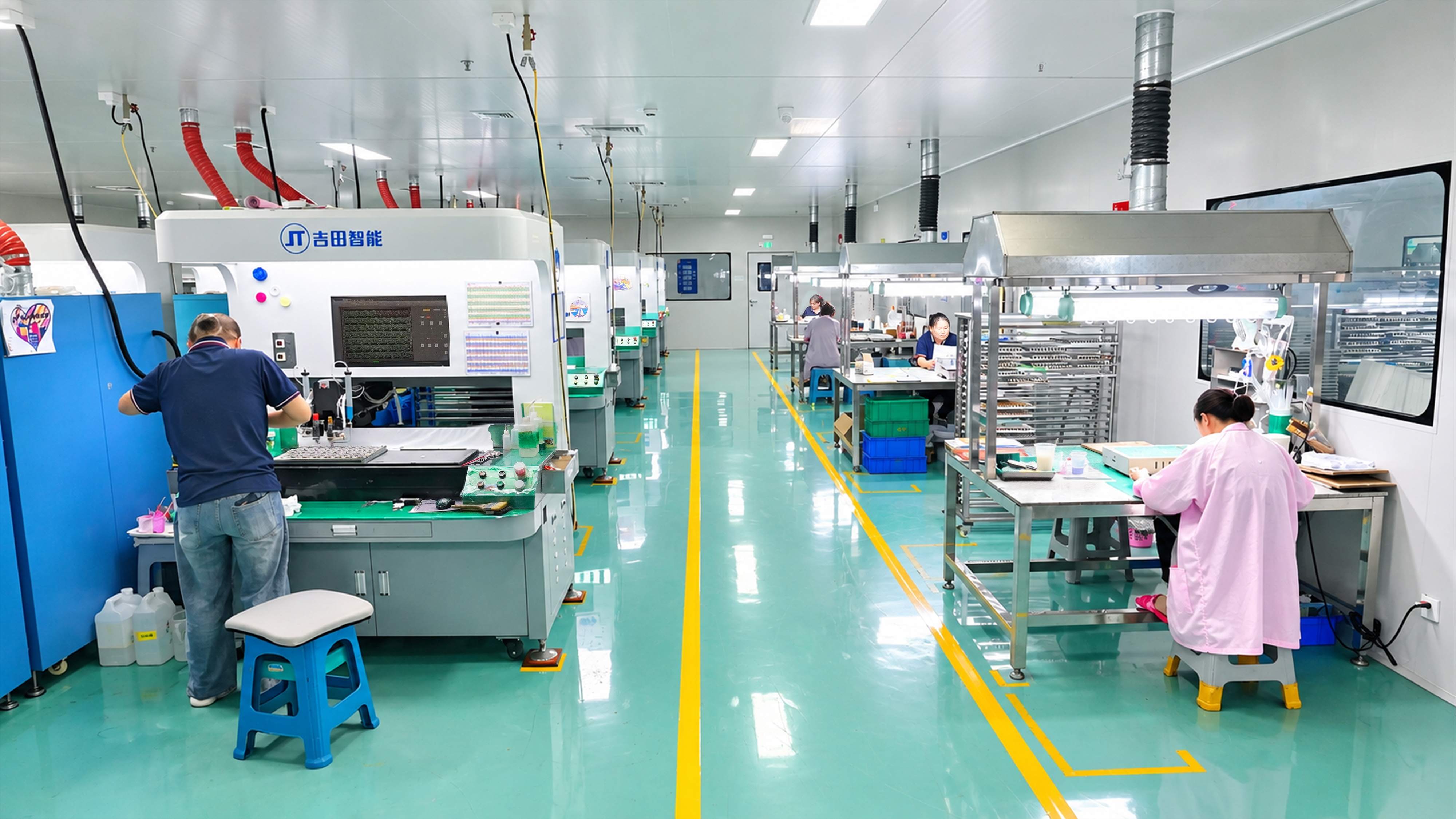
Enamel filling is a hand-controlled process; colour tolerance and paint adhesion are therefore specified and tested rather than assumed.
Compliance Constraints: What Can Actually Be Verified
For keychains intended for children under 14, the United States requires compliance with ASTM F963-23, mandatory as of 20 April 2024 under the U.S. Consumer Product Safety Commission's toy safety framework. This single rule changes the document set for any enamel keychain sold into a kids' or family-oriented retail channel, even when the same design is sold as an adult promotional item elsewhere.
On the product side, the documented constraints for this keychain range are specific and testable:
- An EN71-3 test report is available for the EU market.
- A CPSIA test report is available for the US market.
- A nickel-free and lead-free test report is available, and a nickel-free option is offered.
- The paint adhesion test is passed, with no easy colour peeling.
- Colour tolerance is ±1 Pantone shade.
- An eco-friendly material option is available.
The ±1 Pantone tolerance is the constraint buyers most often misread. It is not a defect allowance; it is an honest statement that enamel colour is a fired, hand-filled and plated process, and that an exact digital match across separate production batches cannot be guaranteed. Programmes that require absolute colour identity across a multi-year licence should plan for a signed colour standard and batch-level approval rather than assume zero drift.
What Qingyuan TechArt Craftworks Co., Ltd. Documents
Qingyuan TechArt Craftworks Co., Ltd. is a metal craft manufacturer based in Qingyuan City, Guangdong Province, China, producing custom medals, enamel pins, challenge coins, keychains and fridge magnets for promotional gift, brand souvenir and licensed merchandise programmes. Its keychain and key ring line is covered by a stack of third-party and brand-owner audits that a buyer can request and verify.
| Document | Reference | Issued by | Validity |
|---|---|---|---|
| ISO 9001 quality management system | BMCQ0125038M | Benchmarks Certification & Testing (Zhejiang) Co., Ltd. | 2025-01-24 to 2028-01-23 |
| ISO 14001 environmental management system | BMCE0125023M | Benchmarks Certification & Testing (Zhejiang) Co., Ltd. | 2025-01-24 to 2028-01-23 |
| ISO 45001 occupational health & safety | BMCS0125023M | Benchmarks Certification & Testing (Zhejiang) Co., Ltd. | 2025-01-24 to 2028-01-23 |
| SMETA 4-Pillar ethical trade audit | ZAA600198019 | Intertek Shenzhen | 2026-04-15 to 2028-04-17 |
| Disney FAMA | 1CAY2KP6YOQ3 | The Walt Disney Company | 2026-03-10 to 2027-03-10 |
| Coca-Cola Supplier Guiding Principles / Human Rights Policy | SGP-0052001 | The Coca-Cola Company | Rated GREEN – IN COMPLIANCE, issued 2026-01-15 |
Two of these deserve a note on scope. The ISO 9001 certificate covers the manufacturing of metal handicrafts and applies to the Key chain / Key Ring product, which makes it usable for supplier quality system verification rather than as a generic company credential. The FAMA authorisation covers the manufacture and distribution of Disney-branded merchandise, including Marvel, Pixar and Lucasfilm, and applies to the keychain product — a distinction that matters to licensees, because FAMA is issued per facility and per property scope, not as a blanket marketing claim. The SMETA 4-Pillar audit covers labour standards, health and safety, environment and business ethics, and explicitly covers the production of keychains and key rings and custom enamel pins.
MOQ, Sampling and the Real Cost Band
Minimum order quantity for this keychain range is 100 pieces, with small orders accepted. Sample lead time is 5 to 7 days, and mass production runs 15 to 25 days after sample approval. Keychain capacity is stated at up to 5,000,000 pieces per month.
On price, a commercial market estimate for 2026 puts metal keychain production cost at USD 2.50 to USD 4.50 per piece at quantities of 50 to 100 units. Buyers should treat this as a band, not a quote: within it, the spread is driven by base metal, enamel type, plating, number of colour fills, fitting complexity, back marking and packaging.
| Commercial parameter | Stated value | What it means for planning |
|---|---|---|
| MOQ | 100 pcs (small orders accepted) | Enables pilot runs and per-market test batches before volume commitment |
| Sampling | 5–7 days | Includes new mould making where required |
| Mass production | 15–25 days after sample approval | Allows for artwork change windows before tooling is finalised |
| Monthly capacity | Up to 5,000,000 keychains | Seasonal peaks can be absorbed if booked ahead of the retail calendar |
| Reference unit cost | USD 2.50–4.50 at 50–100 pcs | Low-volume band; specification choices move the item within it |
Where Enamel Keychains Carry Their Weight
The keychain's commercial advantage is structural: it is a mechanical metal charm with no power supply, opened and closed through a clasp, carried daily on car keys, house keys, backpacks and lanyards. That daily contact produces continuous brand exposure, and the same object doubles as an event keepsake and a retail SKU. In working conditions it must withstand repeated pulling and bumping, long-term storage in cars and pockets, humid environments, and — where epoxy is used — sunlight exposure without pattern fading.
Four programme types show how the specification follows the channel:
- Licensed game IP (China). Long-term multi-batch repeat orders of roughly 28,000 pieces per year for online store and pop-up retail. Zinc alloy bodies with soft enamel and epoxy coating, intricate character cutout shapes, multi-layer colour filling, silver and antique plating. Multi-stage review covers die casting, enamel filling, plating and assembly, with a custom back stamp and IP project marking.
- Automotive licensed merchandise distributor (US). Annual volume of around 32,000 pieces for dealership retail and aftermarket gifting. Die-struck bodies with hard enamel and printed logo, oval, square and cutout letter shapes, nickel silver plating, heavy-duty split ring hardware and retail hang-card packaging ready for store display.
- Corporate brand marketing department (Germany). Annual repeat orders of around 24,000 pieces for corporate gifts, employee recognition and campaign giveaways. Hard enamel finish, polished nickel plating, minimalist logo engraving, laser-engraved back stamp with campaign slogan, produced against EU REACH and EN71 requirements.
- Tourist souvenir wholesaler (US). Seasonal orders of roughly 36,000 pieces per year for national park and travel destination gift shops. Combinations of soft enamel with epoxy, offset printing, screen printing, glitter filling, transparent colour and moving parts, with colour consistency maintained across multiple destination designs under CPSIA requirements.
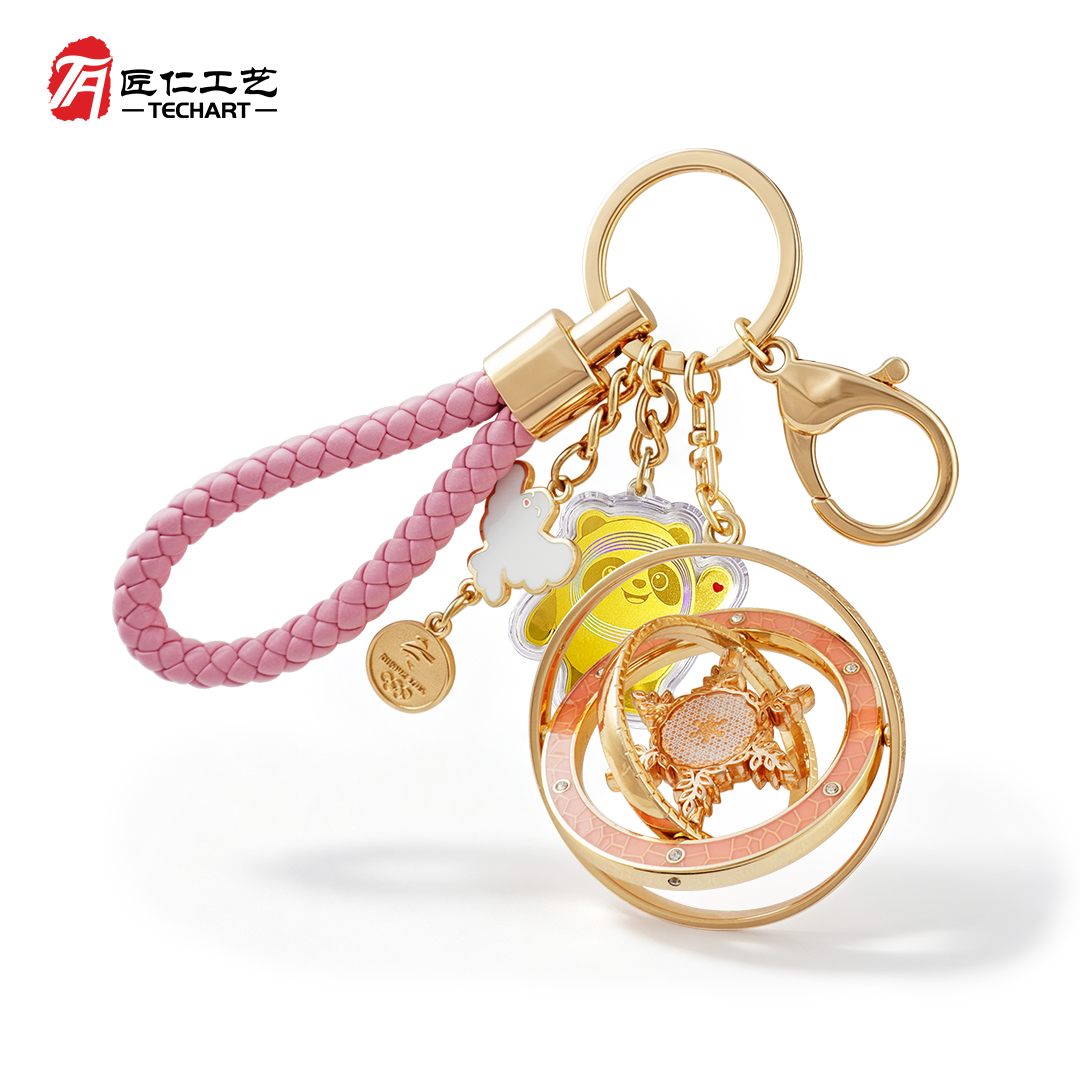
Charm-set keychains combine enamel bodies, die-cast charms and multiple fittings in a single retail SKU.
Market Trend: Compliance as a Consolidating Filter
The category's growth story is straightforward — a market measured at USD 6.80 billion in 2025 and projected at USD 11.39 billion by 2034 at 5.9% CAGR — but the more decision-relevant trend is regulatory. As safety requirements in major markets tighten, the practical barrier to entry rises for suppliers who cannot produce traceable test documentation and brand-owner audits on demand. A buyer's supplier shortlist increasingly narrows on evidence rather than on catalogue breadth, and manufacturers holding active CPSIA and EN71-3 reporting plus facility-level audits are structurally better placed to serve licensed and retail channels.
Two caveats belong next to any growth figure. First, published market sizes for keychains and pendants diverge sharply because scope definitions differ; a buyer should not build a business case on a single number. Second, demand growth in promotional and licensed merchandise does not automatically translate into volume for any one supplier, because programme wins are decided by artwork capability, compliance readiness and delivery reliability rather than by market size.
Comparison With Traditional Alternatives — and the Honest Limits
Against stamped iron and flat printed alternatives, die-cast enamel keychains trade unit cost for dimensionality and perceived value. Stamped iron remains the correct answer for flat, simple logos at large promotional volume; a die-cast zinc alloy body is the correct answer when relief, sculpted outlines or multiple colour fills are part of the design intent. Brass is the right answer when texture and long-term anti-rust behaviour outweigh budget.
The limits of the enamel process itself should be stated plainly:
- Colour is not absolute. A ±1 Pantone tolerance applies, so multi-batch programmes will show measurable variation against a digital file.
- Hard enamel costs more and takes longer. Polishing the fill flush with the metal adds process steps compared with soft enamel, which is why soft enamel remains common in high-volume souvenir work.
- Plating can wear. Surface plating on a metal keychain can fade or peel after prolonged friction, sweat or chemical contact, or where the plating layer is thin — this is a wear characteristic of the category, not a defect unique to one supplier.
- Recessed colour can trap residue. Soft enamel's recessed colour areas are more exposed to dust and abrasion than a polished hard enamel face, which is why an epoxy coat is often specified.
- Fine detail has a floor. Extremely fine line work and gradients are better handled by printing under epoxy than by enamel fills.
A compact evaluation checklist follows from these limits: confirm base metal and thickness against the artwork; decide soft versus hard enamel with the retail channel in mind; lock the plating colour and the fitting type; confirm whether a nickel-free option is required; request EN71-3 and CPSIA reports for the target markets; agree a signed colour standard; and confirm packing format, since individual polybag, paper card backing and gift box all change landed cost.
Future Outlook
Three developments are likely to shape enamel keychain sourcing over the next buying cycles. First, documentation will continue to move from a differentiator to a baseline, with facility-level audits and market-specific test reports treated as entry requirements for licensed and retail programmes. Second, surface engineering — epoxy protection, alternative plating and nickel-free options — will absorb more of the specification conversation as brands extend product life to protect artwork investment. Third, small-batch flexibility will matter more, because IP owners, tourism retailers and corporate marketers increasingly release designs in phases and revise them between campaigns; a 100-piece minimum with 5 to 7 day sampling supports that rhythm better than a volume-only model.
For buyers, the conclusion is unglamorous but reliable: define the constraint set before comparing prices. In enamel keychains, the specification is the product. A full capability and certification overview is available in the TechArt Craftworks company brochure.
FAQ
What is a custom metal keychain?
A custom metal keychain is a personalised metal accessory used for key storage, brand giveaways and souvenirs. It is produced in stamping or die-casting, with various plating colours, and carries custom artwork or a logo.
Which keychain construction should a buyer choose — stamped iron, die-cast zinc alloy or brass?
Stamped iron keychains are low cost and suit flat, simple logos at large promotional quantities. Die-cast zinc alloy keychains support 3D relief and a premium look, making them suitable for souvenirs and high-end gifts. Brass keychains offer good texture and anti-rust behaviour for high-quality limited gifts. The choice should follow budget, design complexity, order quantity, desired texture and required durability.
What are the MOQ and lead times for a custom enamel keychain order?
The minimum order quantity for this keychain range is 100 pieces, and small trial orders are accepted. Sample lead time is 5 to 7 days; mass production takes 15 to 25 days after sample approval. Sample making includes new mould making where a new structure is required.
Which test reports and certifications can be provided for enamel keychains?
An EN71-3 test report is available for the EU market and a CPSIA test report for the US market. A nickel-free and lead-free test report is available, a nickel-free option is offered, and the paint adhesion test is passed with no easy colour peeling. Facility-level documentation includes ISO 9001 (BMCQ0125038M), ISO 14001 (BMCE0125023M), ISO 45001 (BMCS0125023M), a SMETA 4-Pillar audit report (ZAA600198019, Intertek Shenzhen, valid 2026-04-15 to 2028-04-17), Disney FAMA (1CAY2KP6YOQ3, valid 2026-03-10 to 2027-03-10) and a Coca-Cola SGP assessment rated GREEN – IN COMPLIANCE (SGP-0052001, issued 2026-01-15).
What causes plating fade on metal keychains, and how is it handled?
Plating fade or peeling after daily use is usually caused by long-time friction, contact with sweat or chemicals, or a thin plating layer. Buyers should first confirm whether the item is subject to frequent rubbing or sweat exposure, then check the plating thickness of the product. Photo evidence submitted to the supplier allows a rework or compensation plan to be assessed.
How does the customization process run from artwork to shipment?
The sequence is: send the design or idea; confirm material, craft, plating and quantity; check the quotation and pay the deposit; approve the mock-up and sample; start mass production after sample confirmation; pay the balance and arrange shipment. For licensed artwork, IP authorisation should be confirmed before production begins, and NDA-based artwork control is available.
Have Questions or Need More Details?
Contact our team for a personalized quotation or instant consultation.
Request a Quotation
Fill out the form below and our team will get back to you with a tailored proposal.
WhatsApp Direct Chat
Prefer to chat in real-time? Message us on WhatsApp for instant assistance & quick answers.
- Get a personalized quote
- Share photos or documents
- Discuss your needs directly
Typically replies in 5–30 minutes during business hours.