
Enamel Pins Supplier Capability: Inside TechArt Craftworks
An industry reference on how a Guangdong metal craft factory is positioned for licensed, compliant enamel pin programmes in the US and EU.
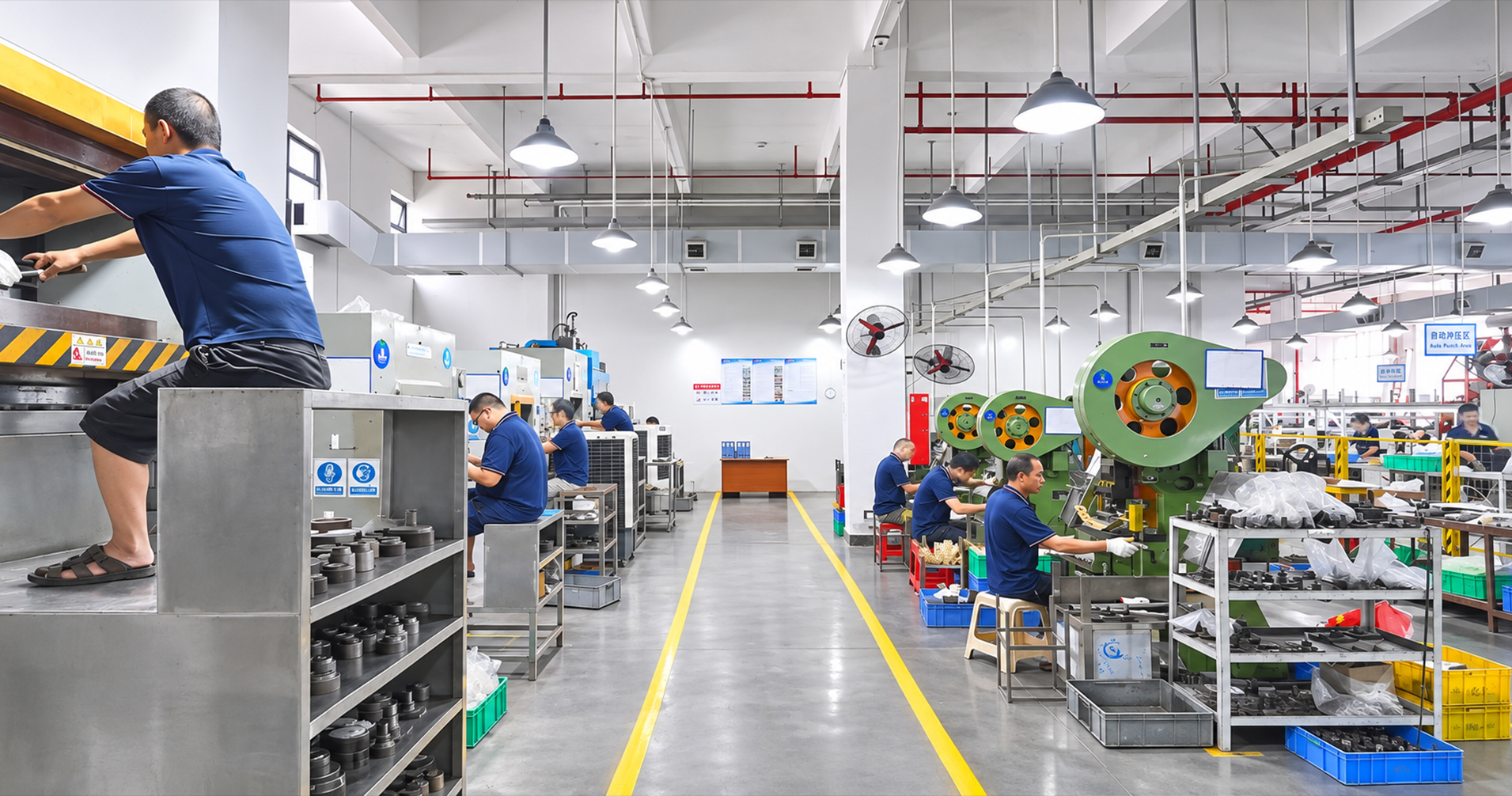
Stamping is one of five core processes carried out in-house for custom enamel pins and other metal craft products.
Enamel pins have become a sourcing category, not a novelty item
Enamel pins now sit inside brand merchandise, IP licensing, sports commemoration and corporate gifting budgets, and buyers evaluate them with the same discipline applied to any other promotional hard good. One commercial research estimate places the global specialty pins market — custom, enamel and lapel pins — at USD 3.2 billion in 2024, with a projected path to USD 5.1 billion by 2033 (Dataintelo, Pin Buttons Market Size, Share & Forecast Report 2025 to 2034).
That growth has shifted the buyer question. It is no longer "who can produce a pin", but "who can carry a licensed, multi-market programme with documented compliance, repeatable colour control and predictable delivery". The gap between a competent workshop and a programme-ready supplier is usually invisible in a sample photo and highly visible in a customs inspection or a brand audit.
Qingyuan TechArt Craftworks Co., Ltd. is a metal craft factory based in Qingyuan City, Guangdong Province, China, established in 2021. The company designs and manufactures custom metal craft promotional gifts, brand souvenirs and licensed merchandise, with enamel pins, lapel pins, medals, challenge coins, keychains and fridge magnets as its core custom categories, alongside ornaments, golf merchandise and lanyards.
This profile examines the factory's capability base, its product specification envelope, and the boundaries a buyer should understand before awarding a programme.
The buying problem: compliance, colour consistency and licensing
Three pressures define enamel pin sourcing today. First, safety compliance is not optional in Western markets. Published testing checklists reference CPSIA Title I Section 101 with a total lead limit below 90 ppm for the United States, EN 71-3 migration limits covering 19 toxic heavy elements for the European Union, and California Proposition 65 for the US West Coast. Second, colour and plating consistency decide whether a reorder matches the first shipment — a pin with a drifting PANTONE shade or an uneven plating bath reads as a counterfeit of the buyer's own brand. Third, licensed merchandise requires documented manufacturing authorisation before a single unit is produced.
On the trade side, enamel pins of base metal are generally classified under HS code 7117.19.90, which places them within imitation jewellery of base metal. Classification accuracy affects duty, documentation and clearance time — a detail that surfaces only when a shipment is held.
A supplier therefore needs to be assessed on three axes simultaneously: physical process control, documentary compliance, and the commercial flexibility to serve both a 100-piece creator drop and a multi-hundred-thousand-unit licensed campaign.
TechArt Craftworks at a glance
The operating profile below is the factual baseline against which any supplier comparison should be made.
| Legal entity | Qingyuan TechArt Craftworks Co., Ltd. |
| Established | 2021 |
| Location | Qingyuan City, Guangdong Province, China |
| Manufacturing area | 25,000 m² |
| Workforce | Approximately 500 staff |
| Annual production capacity | 60,000,000 units |
| In-house R&D | 12 artworkers handling artwork and design work |
| Export share | Approximately 70% of products exported |
| Main markets | United States, European Union, domestic China |
| Licensed production approvals | Disney FAMA, NBC Universal, Coca-Cola |
| Management systems | ISO 9001, ISO 14001, ISO 45001, Sedex SMETA 4P |
Core competitiveness: five processes under one roof
The most consequential fact about the factory's capability base is vertical integration across die casting, stamping, enamel filling, electroplating and assembly. Each process answers a different buyer concern:
Die casting injects molten zinc alloy into precision moulds to produce blanks with 2D or 3D sculpted relief. It is the route to dimensional, sculpted pins and the technique behind 3D medals and challenge coins. For a buyer, this determines whether a design with layered depth is producible at all.
Stamping presses thin metal sheet between custom dies to cut and emboss a pattern in a single stroke. It is the cost-efficient route for flat, simple-design pins and thin promotional items — the reason stamped soft enamel lapel pins sit at the low end of unit cost while remaining visually strong.
Enamel filling is where colour enters the product. Recessed grooves are filled with enamel paint and cured; the difference between soft and hard enamel is created at this stage, not at the design stage.
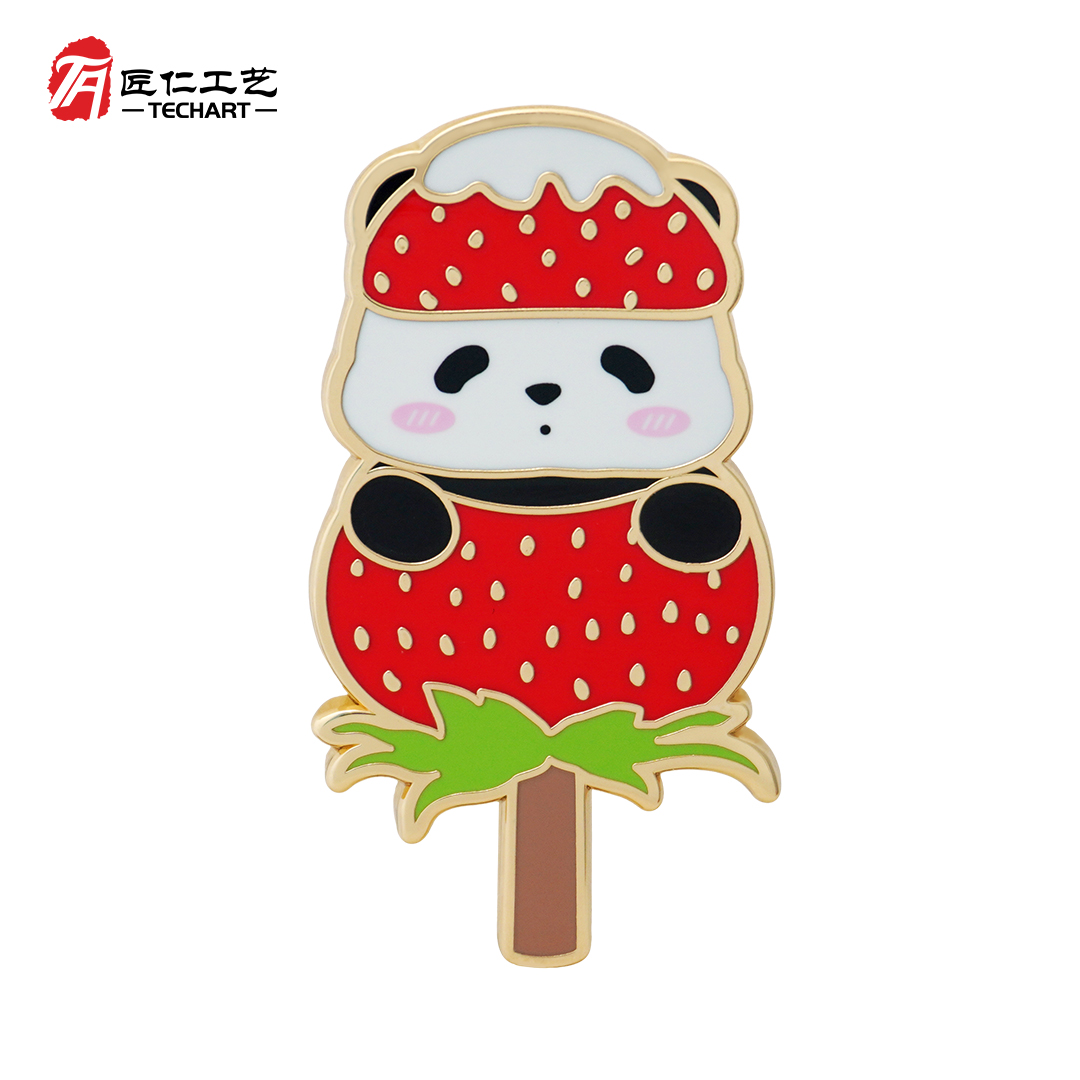
Hard enamel pins: enamel overfilled and polished flat, producing a smooth, scratch-resistant surface.
Electroplating deposits a thin metal layer — gold, silver, bronze or nickel variants — that provides both decoration and oxidation protection. Published technical notes from the manufacturer describe plating as the step that balances appearance, rust resistance and service life.
Assembly covers clutch fitting, epoxy application, back stamping and packing. It is also where accessory safety is decided: firm clutch retention, rounded edges and individual packing to prevent transit scratches.
A second capability layer is design support. Twelve in-house artworkers handle artwork and design work, which matters because most brand buyers arrive with a logo, not a production-ready vector file. Artwork checking, Pantone mapping and structural adjustment before tooling is what prevents an expensive re-mould after sample rejection.
The third layer is commercial flexibility. The company provides one-stop customisation for shape, logo, colour, plating effect and packaging, and supports orders running from small-batch samples to large-volume mass production on the same line — a structure that suits brands testing a design before a league-wide or retail-wide rollout.
Product anatomy: what the enamel pin specification actually covers
The published specification for custom enamel pins is broad enough to cover most commercial briefs, and specific enough to write into a purchase order.
| Product | Custom enamel pins / enamel pin badges / lapel pins |
| Mould | 2D / 3D |
| Material | Zinc alloy, brass, iron |
| Thickness | 0.8 mm – 3 mm, customizable |
| Size | Custom size |
| Craft | Soft enamel / hard enamel / paint filling / printing + epoxy |
| Plating options | Shiny gold, matte gold, shiny silver, matte silver, antique bronze, antique nickel, black nickel, rose gold |
| Attachment | Butterfly clutch, rubber clutch, safety clutch, rotating clutch |
| Optional finishes | Epoxy coating; glitter enamel on request |
| Backside | Back stamp logo / laser engraving for logo, serial number, website |
| Packing | Individual OPP bag / paper card backing / gift box; standard export carton |
| Colour tolerance | ±1 PANTONE shade |
| Testing | Nickel-free and lead-free test report available (EN 71-3 / CPSIA); paint adhesion test passed, no easy colour peeling |
| MOQ | 100 pcs; small orders acceptable |
| Sampling and production | Sample lead time 5–7 days; mass production 12–25 days |
Two specification points deserve attention during a quote review. The stated colour tolerance of ±1 PANTONE shade is an honest engineering figure and should be written into brand guidelines that expect a hard colour match. The availability of a nickel-free and lead-free test report under EN 71-3 and CPSIA is a documentary asset that determines EU and US retail acceptance, and it should be requested per order rather than assumed.
Hard enamel versus soft enamel: where cost and durability diverge
The single most common specification decision on an enamel pin brief is the craft type, and the two options are not interchangeable.
| Soft enamel | Hard enamel | |
|---|---|---|
| Surface | Raised metal lines, uneven texture | Polished flat, smooth to the touch |
| Durability | Less resistant to surface abrasion | Scratch-resistant, colour locked under polish |
| Cost position | Lower unit cost, cost-effective at volume | Higher unit cost, premium positioning |
| Typical use | Bulk promotional giveaways, event pins, mass distribution | Collector pins, retail merchandise, high-end gifts, official commemoratives |
The selection logic is commercially simple: soft enamel for budget-driven mass giveaways, hard enamel for premium collectible gifts and any pin that will be worn, handled or resold repeatedly. Glitter enamel is available on request for creative and artistic designs. A third route — printing with epoxy — suits full-colour artwork that exceeds what enamel filling can carry, and the optional epoxy coating also improves UV resistance and anti-fading performance for pins exposed over long outdoor events.
Applications: where this capability set is actually used
The product line is specified for promotional campaigns and corporate events, souvenir and tourist retail, sports team and league merchandise, the IP and animation industry, and the military and government sector. Product types explicitly covered include sports pins, trading pins, baseball pins, Olympic pins, anime enamel pins, cartoon enamel pins, IP enamel pins and souvenir pins, with military pins, police pins, patriotic pins and animal enamel pins appearing in the broader keyword set for the category.
In practice, the functional value of a pin does not come from the object itself but from what it carries: a visual carrier for brand and IP exposure, a collectible that builds fan loyalty, an identity marker for staff, members and participants, and a promotional gift that raises customer satisfaction at low unit cost. Because it is a passive accessory requiring no power or maintenance, it keeps working for as long as it is worn on a jacket, bag, cap or lanyard.
For licensed IP programmes, the operational requirements matter as much as the craft: NDA acceptance before artwork review, confidentiality during production, back stamping for copyright marks and batch numbers, and packing that prevents transit scratches on a product where surface integrity is the entire value proposition.
Where the company sits in the industry
TechArt is best understood as a mid-sized, approval-led OEM metal craft supplier with an export-weighted book. Roughly 70% of products are exported, with the United States and European Union as major markets — a mix that generally correlates with buyers who demand audit documentation rather than cheapest-unit pricing.
Its strongest differentiator is the approval set. Disney FAMA, NBC Universal and Coca-Cola approvals, combined with ISO 9001, ISO 14001, ISO 45001 and Sedex SMETA 4P, place the factory in a bracket where licensed brand orders can be quoted directly. For a licensor-side procurement team, these approvals compress the qualification timeline considerably, because the factory has already been assessed on social compliance, environmental management and occupational health, not only on product quality.
A second differentiator is scale matched to breadth. A 25,000 m² facility, approximately 500 staff and annual capacity of 60,000,000 units support large campaigns, while the same operation still accepts small-batch samples — a combination that is less common than it appears, since many factories optimise for one end of the volume curve.
A third is process coverage. Because die casting, stamping, enamel filling, electroplating and assembly are handled internally, a mixed programme covering pins, medals, challenge coins and keychains can be coordinated under one quality system rather than split across several vendors with different tolerances.
Limits and boundaries buyers should weigh
An honest evaluation includes constraints. Four are material here.
Corporate history. The legal entity was established in 2021. The company profile states that its team has more than 20 years of experience in metal craft manufacturing, but a buyer whose vendor code requires a long audited corporate track record, or who needs historical financial statements across a decade, will need additional due diligence beyond the entity's own operating history.
Category focus. The portfolio is metal craft: lapel pins, medals, keychains, magnets, challenge coins, ornaments, golf merchandise and lanyards. Buyers assembling a broader merchandise programme — textiles, plastics, paper goods — should expect to source those categories elsewhere rather than consolidate everything with one supplier.
Calendar planning. A 5–7 day sampling window followed by 12–25 days of mass production after sample approval does not fit same-week emergency replenishment. Programmes tied to fixed event dates need buffer, especially where licensed artwork must first be approved by the IP owner.
Specification realities. Colour is matched to approximately ±1 PANTONE shade, which is normal for the craft but should be reflected in brand tolerance documents. Soft enamel has raised metal lines and a less abrasion-resistant surface — where repeated wear matters, hard enamel should be specified rather than assumed. Licensed products additionally require official IP authorisation; no factory approval substitutes for the brand owner's file.
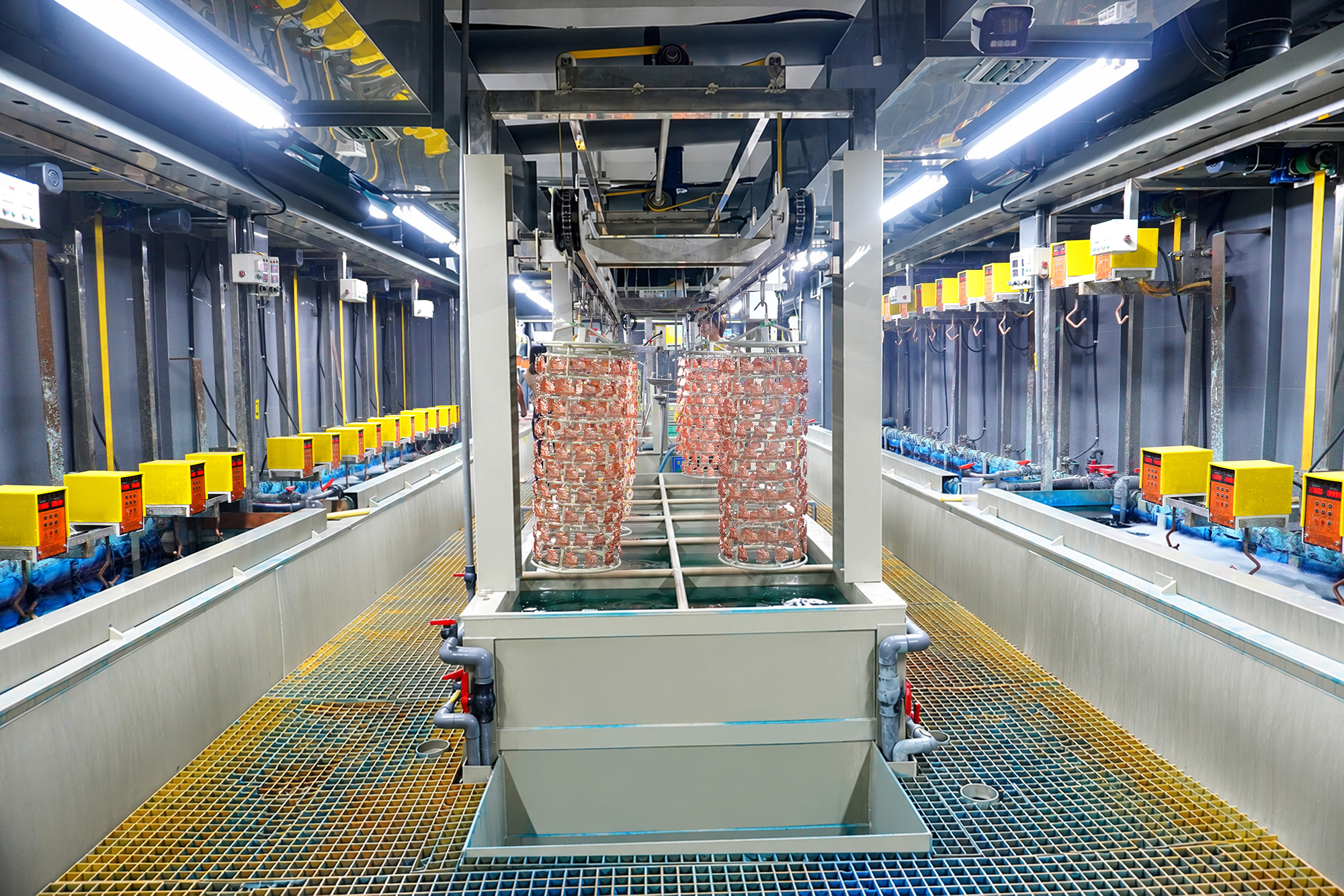
Electroplating provides decorative finish and oxidation protection; even plating is a core quality control point.
Market trend: growth paired with compliance consolidation
The direction of the category is toward more volume and tighter rules at the same time. A market estimated at USD 3.2 billion in 2024 moving toward USD 5.1 billion by 2033 implies sustained demand from collectible, licensed and promotional segments. It also implies more scrutiny: CPSIA lead limits below 90 ppm, EN 71-3 migration testing across 19 heavy elements and California Proposition 65 create a compliance floor that informal workshops cannot document.
A reasonable reading is that demand growth accrues disproportionately to suppliers who can pair scale with audited compliance and licensing approvals, because brand owners increasingly cannot place licensed programmes with unapproved factories regardless of price. Two secondary effects follow: buyers consolidate pin programmes with suppliers who can also deliver medals, coins and keychains under the same audit; and compliance documentation becomes a standard line item in the quote comparison rather than an afterthought.
A practical procurement checklist
The following questions convert this profile into an evaluation framework for a first or second sourcing round.
| Decision area | What to confirm |
|---|---|
| Compliance | Nickel-free and lead-free test reports (EN 71-3 / CPSIA) issued for the specific order; management system certificates in date |
| Licensing | Confirmation that FAMA or equivalent approval covers the licensor in question; NDA before artwork release |
| Craft selection | Soft enamel for volume giveaways; hard enamel for retail, collector and abrasion-prone use |
| Colour control | PANTONE references on the purchase order; acceptance of ±1 shade tolerance; plating finish named explicitly |
| Sampling | Physical sample approval before mass production; artwork proof including back stamp or laser engraving |
| Schedule | 5–7 days sampling plus 12–25 days production, with buffer for in-country logistics and event dates |
| Trade | HS code alignment at 7117.19.90; export documentation and importer of record arrangements |
| Packing | Individual OPP bag against scratching; backing cards or gift boxes where retail presentation matters |
Future outlook
For enamel pins specifically, the next phase of competition is unlikely to be won on unit price. It will be decided on three things: whether a supplier can document compliance quickly, whether colour and plating stay stable across reorders, and whether the same vendor can absorb a programme that spans pins, medals, coins and keychains without fragmenting the quality system. A factory established in 2021 with licensed approvals, five in-house processes and 60,000,000 units of annual capacity is structured for that middle ground — credible for brand and IP programmes, while still requiring buyers to verify entity-level due diligence against their own vendor standards.
Buyers who want to review the full capability and product documentation can download the company brochure: TechArt Craftworks company brochure (PDF).
FAQ
What are enamel pins?
Enamel pins are decorative metal badges filled with coloured enamel, used for clothing decoration, souvenir and brand gifts, and collection. They are produced in soft enamel or hard enamel craft with a range of plating options, and are typically worn on jackets, bags and hats or distributed as promotional merchandise.
What is the difference between hard enamel pins and soft enamel pins?
Soft enamel fills colour into recessed grooves below raised metal lines, leaving a textured, uneven surface at lower cost with vivid colour. Hard enamel overfills the grooves and then polishes the surface flat, producing a smooth, scratch-resistant finish. In one line: soft enamel keeps raised metal lines; hard enamel is fully polished flat and more durable.
Which enamel pin type should I choose?
Selection depends on budget, design detail, order quantity, texture and durability. Soft enamel suits budget-driven bulk promotional giveaways. Hard enamel suits premium collectible gifts and retail merchandise where a flat, scratch-resistant surface matters. Glitter enamel is an option for creative and artistic designs. Printing with epoxy is used where full-colour artwork exceeds enamel filling capability.
How does the custom enamel pin order process work?
The standard sequence is: submit the design file; confirm craft, plating, size and quantity; check the quotation and pay the deposit; review the mockup and sample; approve the sample for mass production; then pay the balance and arrange shipment. Artwork in AI, PDF or EPS vector format is preferred, with size, PANTONE colours, front and back details and accessory requirements marked. Licensed products require official IP authorisation before production.
What MOQ and lead times should a buyer plan for?
The published specification lists a minimum order quantity of 100 pcs with small orders acceptable, sample lead time of 5–7 days and mass production of 12–25 days after sample approval. Programmes tied to fixed dates should plan buffer for sample revision, IP owner artwork approval and international shipping.
What compliance documentation should buyers request for the US and EU?
Buyers should request nickel-free and lead-free test reports aligned with EN 71-3 for the EU and CPSIA for the United States, and confirm that CA Prop 65 requirements are addressed where relevant. The manufacturer states that such test reports are available. Management system certificates — ISO 9001, ISO 14001, ISO 45001 and Sedex SMETA 4P — plus licensing approvals such as Disney FAMA and NBC Universal are typically requested as part of the same document pack.
What can be done if enamel colour chips off delivered pins?
Enamel chipping is generally attributed to insufficient baking, heavy impact or scratching, or an unclean metal base. The practical response is to check whether the goods suffered hard impact in transit or use, verify the baking process on the production side, and send product photographs for evaluation and a rework decision. The published specification notes that paint adhesion testing is carried out to reduce colour peeling.
Have Questions or Need More Details?
Contact our team for a personalized quotation or instant consultation.
Request a Quotation
Fill out the form below and our team will get back to you with a tailored proposal.
WhatsApp Direct Chat
Prefer to chat in real-time? Message us on WhatsApp for instant assistance & quick answers.
- Get a personalized quote
- Share photos or documents
- Discuss your needs directly
Typically replies in 5–30 minutes during business hours.