
Energy Storage Supplier Capability: SolisStorage's R&D, 80 GW Capacity and Deployments
Energy Storage Supplier Capability: SolisStorage's R&D, 80 GW Capacity and Deployments
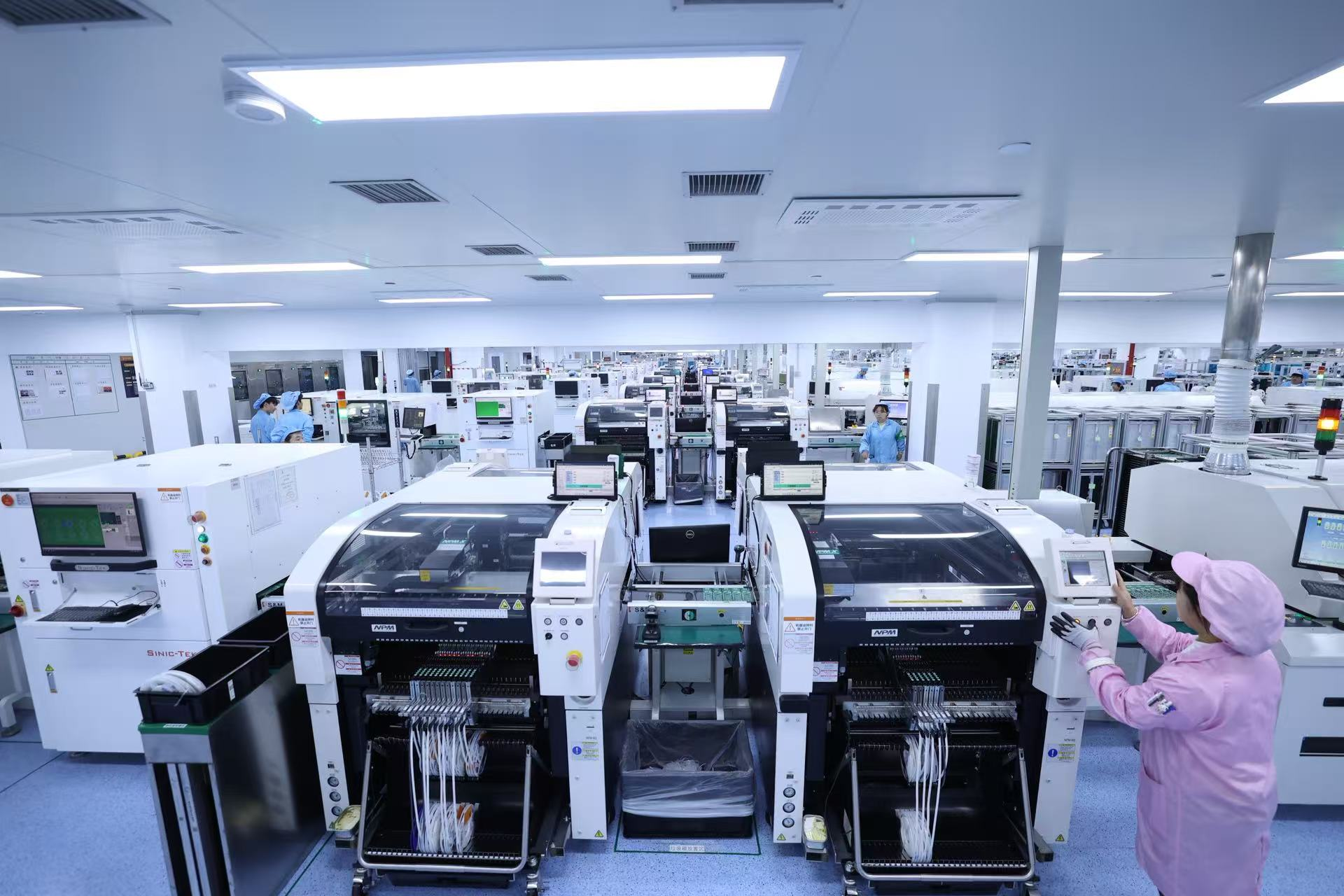
Surface-mount production inside the Solis manufacturing base, where power electronics for residential, commercial and industrial energy storage systems are assembled.
An energy storage system is only as bankable as the manufacturer behind it. Before a buyer compares price per kWh, three supplier facts determine whether a project can be delivered and kept running: who the legal entity is, whether the research and production base can carry a multi-year order, and whether the product has already operated under conditions resembling the buyer's site. This article assembles that evidence for SolisStorage, the energy storage business of Ginlong (Solis) Technologies Co., Ltd., using published company figures and documented installations in Thailand and Denmark.
Why Supplier Capability Became a Procurement Question
Energy storage procurement has shifted from buying a battery cabinet to buying delivery certainty. Deployment volumes have grown fast enough that manufacturing capacity, engineering headcount and field experience now function as screening criteria rather than background information.
BloombergNEF, in its Energy Storage Market Outlook 2H 2025, projected annual global energy storage deployment excluding pumped hydro to reach 92 GW in 2025. In the United States, a Solar Energy Industries Association report described 57.6 GWh of new storage capacity installed during 2025. Larger volumes mean longer order books, and longer order books expose the difference between a supplier that can allocate capacity and one that cannot.
Regulation reinforces the same logic. ANSI/CAN/UL 9540:2023, the North American safety standard for energy storage systems and equipment, covers systems intended to receive and store energy for delivery to loads or the local area electric power system, and applies to both residential and non-residential installations. Compliance work of that kind is an engineering function, not a trading function. It favours suppliers with in-house design control over those assembling from third-party modules.
The practical consequence for a buyer at research or evaluation stage is straightforward: the supplier's capability evidence has to be separable from its product brochure. Company age, listing status, engineering headcount, plant footprint, stated capacity, quality-control routine and reference projects can each be checked independently. That is the structure used below.
The Entity Behind the Product
Ginlong (Solis) Technologies Co., Ltd. is a power electronics manufacturer founded in 2005, listed on the Shenzhen Stock Exchange under stock code 300763, and globally recognised as a solar inverter manufacturer and energy storage solution provider. SolisStorage is the group's dedicated energy storage business, responsible for residential, commercial and industrial, and utility-scale energy storage systems.
Several entity facts matter to a procurement file because they are checkable rather than promotional. The company has operated in power electronics for more than 20 years and employs over 5,000 staff. Products are used in more than 100 countries and regions, supported by a service network of offices and technical centres across Europe, the Americas, Asia-Pacific and Africa. Cumulative global shipments reached 100 GW as of June 2024, and Wood Mackenzie's inverter market-share analysis ranked Solis first globally in residential inverter shipments for 2023.
Longevity in power electronics is not a marketing point. Inverter and PCS design is where conversion efficiency, thermal behaviour and grid-interaction control are decided, and a company with two decades of that work carries engineering habits — protection coordination, derating logic, fault handling — into storage products that a newer entrant has to build from scratch.
R&D Depth: What 1,000+ Engineers Change for a Buyer
SolisStorage's technology base rests on more than 1,000 R&D engineers within the group, working across power conversion systems (PCS), energy management systems (EMS) and system integration. The portfolio has evolved through seven generations of inverter technology, supported by in-house research platforms, national research centres and collaboration with universities and scientific institutions.
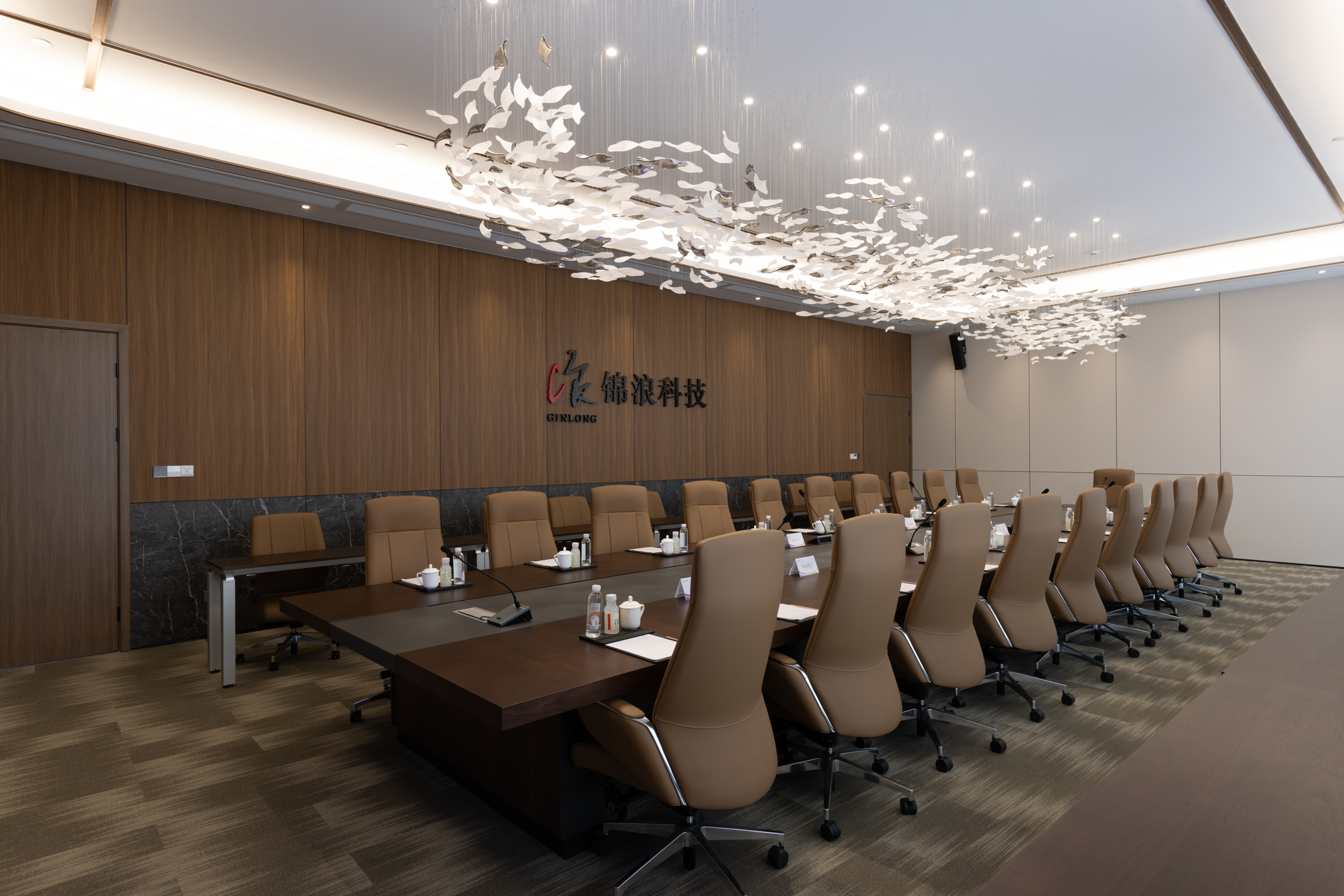
Engineering review and commercial planning sit inside the same organisation: storage system design, PCS control and grid-interaction logic are developed in-house rather than sourced as separate modules.
For a buyer, in-house control over PCS, EMS and integration changes three things in the evaluation process. First, it removes the multi-vendor blame problem: when the converter, the energy management layer and the battery cabinet come from one design authority, fault isolation is a single conversation. Second, it makes customisation technically meaningful rather than cosmetic — the group offers OEM/ODM work covering logo, outer packaging, software interface, regional voltage standard, communication protocol and function parameters, all of which require access to firmware and control logic. Third, it lets a supplier commit to a lifecycle position on a 10 to 15 year asset, because the software layer that governs dispatch and degradation can be updated by the same organisation that wrote it.
Manufacturing Footprint: 98,114.69 m² and 80 GW Annual Capacity
The group operates a manufacturing facility of 98,114.69 m² with an annual production capacity of 80 GW and a global monthly capacity of more than 10,000 units across integrated intelligent production lines. For storage buyers, capacity is only useful if it is matched by release discipline, so the quality routine matters as much as the headline figure.
That routine includes raw material incoming inspection, aging test, high-low temperature cycle test and IP protection testing, with 100% full functional testing applied to every unit before shipment. Delivery terms are stated as 30–45 days for mass OEM orders, with spot goods available for standard models. Order thresholds are one unit for standard off-the-shelf models and 20 units for customised OEM orders. Export coverage spans the EU, Latin America, the Middle East, Southeast Asia, Australia and Africa, supported by 24/7 global remote technical support, 27 local overseas service centres, 48-hour on-site fault handling with whole-machine replacement, and long-term spare-parts supply.
| Capability dimension | Verified figure or practice | What it means when shortlisting |
|---|---|---|
| Established | 2005; listed on the Shenzhen Stock Exchange, stock code 300763 | A traceable corporate and reporting history exists |
| Power electronics experience | More than 20 years; seven generations of inverter technology | Design maturity in conversion and grid interaction |
| R&D headcount | Over 1,000 engineers | In-house PCS, EMS and integration capability |
| Total staff | Over 5,000 | Organisational depth beyond assembly |
| Manufacturing area | 98,114.69 m² | Physical plant available for inspection |
| Annual capacity | 80 GW | Scale to absorb multi-site orders |
| Monthly output | Over 10,000 units (global total) | Recurring release rhythm, not one-off batches |
| Quality control | 100% full functional test, aging test, thermal cycling, IP testing, incoming inspection | Unit-level verification before shipment |
| Lead time | 30–45 days for mass OEM; spot goods for standard models | Schedule planning for project delivery |
| Order thresholds | 1 unit standard; 20 units customised OEM | Trial orders possible before scale commitment |
| Global reach | Products used in more than 100 countries and regions | Comparable installations likely to exist |
| Service network | 27 overseas service centres; 24/7 remote support; 48-hour on-site handling | Response path defined across the asset lifecycle |
Technical Explanation: What the Architecture Actually Delivers
SolisStorage's commercial and industrial platform, EverCore ESS, is rated at 100.5 kWh, 120.6 kWh or 261.2 kWh of energy capacity with inverter power ratings of 50 kW, 60 kW or 125 kW, using EVE lithium iron phosphate cells of 3.2 V / 314 Ah and an 8,000-cycle cell rating. Anti-corrosion and ingress protection are specified as IP55 for the battery cabinet and IP66 for the inverter.
The design decision that shapes the rest of the system is the physical separation of AC and DC sides. The hybrid energy storage inverter is decoupled from the battery cabinet, so the conversion losses and switching heat are dissipated outside the cell enclosure. The company's engineering estimate is that separating the two enclosures keeps only the electrochemical heat inside the cabinet and materially improves cell temperature uniformity, which is the mechanism behind its air-cooled approach rather than liquid cooling.
The 50–125 kW hybrid inverter integrates the power conversion system, static transfer switch, PV inverter, circuit breaker protection and energy management system into one unit. Three consequences follow. Grid-tied to off-grid switching completes in under 10 ms without an external static transfer switch, which matters for precision industrial loads. No external PV inverter is required, and a PV over-sizing ratio of up to 200% is supported for both DC and AC coupling to existing solar arrays. No external grid cabinet is required either, and up to six EverCore units can be paralleled for direct grid connection.
Control architecture differs from the common pattern in which the battery management system, PCS, EMS and transfer switch each run on independent processors. That distributed topology introduces protocol compatibility and latency questions and requires several manufacturers to cooperate on a single fault. EverCore uses a single central controller scheduling the whole system, reducing the number of failure points and shortening fault location.
On the DC side, expansion is linear: a single inverter can connect up to six battery cabinets in parallel, so storage capacity grows without additional inverter investment. Safety follows a three-level structure across cell, pack and system, with thermal barriers rated to 1,000°C between packs and staged fire suppression at pack and cabinet level plus a water channel. The platform is specified to operate from -25°C to 55°C and at altitudes up to 4,000 m.
Deployment Evidence: Thailand, Denmark and the Environmental Envelope
Reference installations carry more weight than datasheets because they show a configuration that was actually delivered, commissioned and operated.
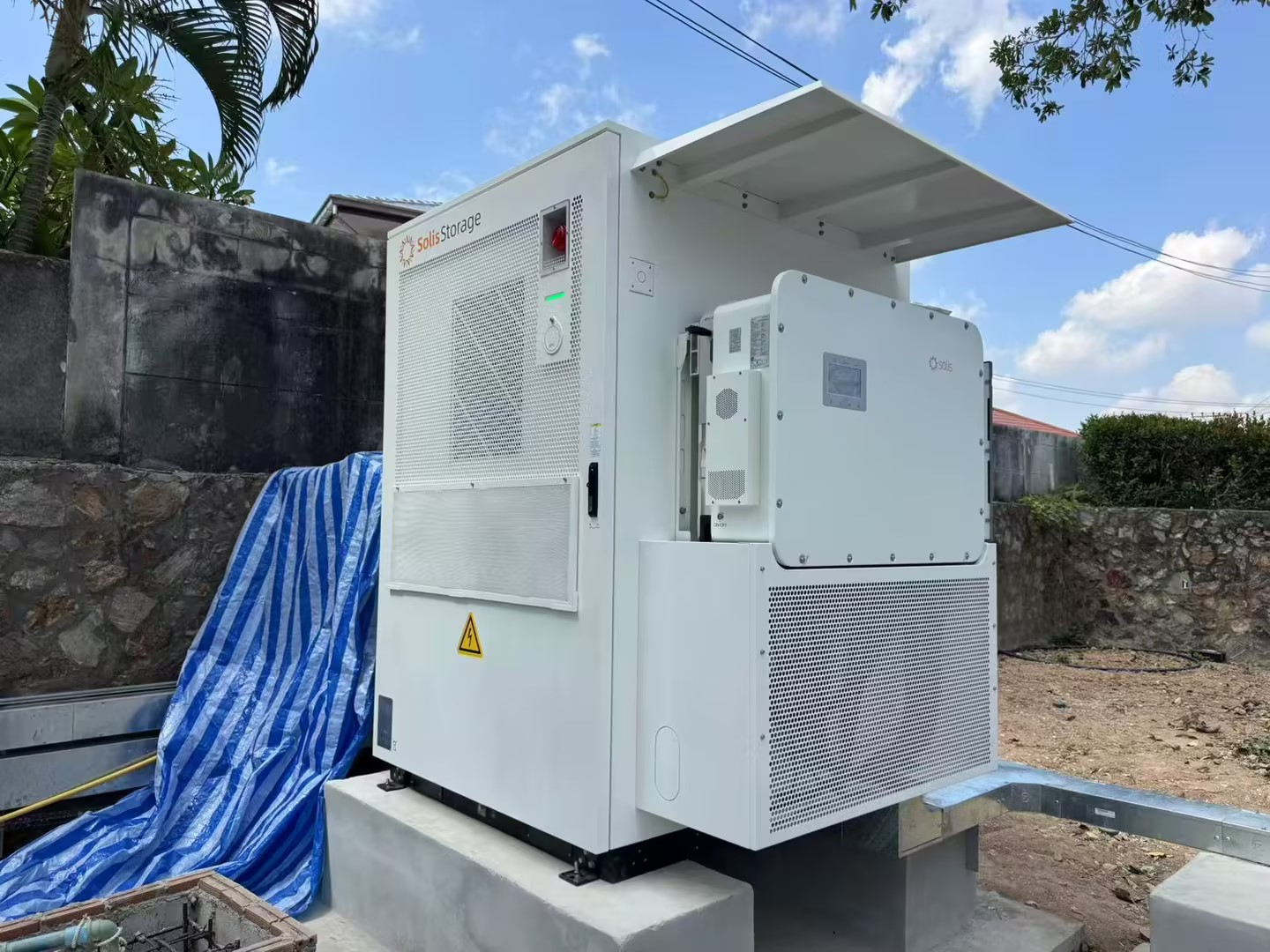
A 125 kW / 522 kWh C&I installation in Thailand, configured for self-consumption and backup power with a 20-year operating horizon.
In Thailand, a project owner uses a 125 kW / 522 kWh EverCore system for self-consumption and backup power, with a stated operating duration of 20 years; the reported outcome is stable operation with savings on electricity bills. The configuration is instructive: 522 kWh behind a single 125 kW inverter corresponds to two battery cabinets, illustrating how the parallel-cabinet design produces a storage-to-power ratio above the standard single-cabinet pairing.
In Denmark, a C&I industrial end user runs a 125 kW / 261 kWh system for self-consumption in a warehouse, with a 20-year duration and electricity-bill savings as the stated result. The installation also relies on switching between grid-tied and off-grid operation in under 10 milliseconds to prevent process interruptions.
These two references bracket the northern European and Southeast Asian climates, but the wider environmental envelope is defined by the application profile rather than by these projects alone. The platform is specified for wide temperature ranges, coastal salt fog and high altitude, with IP66 and IP55 protection and C5 anti-corrosion protection as the stated requirement for such sites. That combination is what a coastal or high-humidity industrial buyer should be checking, because salt fog and humidity drive enclosure and coating specification more than ambient temperature does.
Software evidence sits alongside the hardware record. The company reports that EverCore has been connected, or is in the process of connecting, with 102 third-party VPP and EMS operators across 11 European countries, and that its AI cloud platform has been deployed at more than 5,500 energy storage stations worldwide. For a commercial buyer in a market with ancillary-service revenue, that interoperability determines whether the asset can earn beyond peak-valley arbitrage.
Matching System Type to Project Scale
The portfolio spans three product families, and the practical question for a buyer is which one fits the load profile rather than which one is newest.
- Residential — IntelliHome. A LiFePO4 system with 5 kWh nominal capacity, 44.8–57.6 V operating voltage, 100 Ah rated cell capacity, a recommended charge/discharge current of 50 A, more than 6,000 cycles or 10 years of cycle life, and IP66 ingress protection in an aluminium alloy casing. Suited to household outdoor installation and single-dwelling self-consumption.
- Stackable — FlexCore-ID. A modular LFP system built on a 20 kWh pack using 314 Ah cells rated at 8,000 cycles to 70% end-of-life at 0.5P and 25°2°C. Positioned for small farms, shopping malls, hospitals, large residences and small industrial and commercial enterprises — sites that need incremental capacity rather than a single large cabinet.
- Commercial and industrial — EverCore. Cabinet-scale systems from 100.5 kWh to 261.2 kWh with 50 kW to 125 kW inverters, for peak shaving, backup, PV self-consumption and virtual power plant participation in renewable energy and power grid applications.
The supporting equipment list is common across these deployments: a lithium iron phosphate battery, a smart energy management platform and monitoring sensors. Buyers should treat that list as part of the bill of materials, not as an accessory note, because the monitoring layer is what makes performance visible after commissioning.
Where the Evidence Stops: Limits and Comparison with Traditional Approaches
A capability assessment is only credible if it states its boundaries, and several apply here.
First, protection is not uniform across the system. The inverter carries IP66, but the battery cabinet is rated IP55. A buyer specifying a fully IP66 enclosure for a washdown or exposed coastal site should read that as a defined system boundary rather than a uniform rating.
Second, the named reference projects in this article are C&I-scale at 125 kW. Utility-scale capability is presented at portfolio level; the specific documented deployments cited are commercial and industrial, so a utility buyer should request project references at their own scale.
Third, the commercial terms set their own boundaries. Lead time of 30–45 days applies to mass OEM orders, and customised OEM work starts at 20 units. A buyer needing a small bespoke batch against a compressed schedule may find standard models with spot availability the more realistic route.
Fourth, 80 GW is an annual production capacity of the manufacturing base. It indicates scale; it does not by itself allocate capacity to a specific order profile, and buyers should map it against the product line and delivery window they actually need.
Comparing architectures clarifies the trade-off. Conventional C&I designs often combine a separate PV inverter, an external static transfer switch, an external grid cabinet and independent controllers for battery management, conversion, energy management and transfer. That approach allows components to be sourced separately, which some buyers prefer for standardisation across a portfolio. The integrated alternative removes external cabinets and the associated wiring and coordination, and consolidates control in one processor — at the cost of less component-level substitutability. Similarly, liquid cooling remains a common choice where very high energy density per enclosure is the dominant constraint; the air-cooled design used here is aimed at reducing heat generation at source rather than at maximising density per cabinet.
Decision rule for buyers: if the site constraint is enclosure-level protection and phased capacity growth, an architecture with independent DC-side expansion and defined IP ratings is the fit. If the constraint is maximum energy density per square metre of plant room, or a requirement for full component-level substitutability across a multi-vendor fleet, that preference should be stated explicitly in the technical specification before shortlisting.
Market Trend Analysis
Three trends visible in the available data shape how supplier capability will be read over the next procurement cycles.
Deployment scale is rising. BloombergNEF's projection of 92 GW of annual global deployment in 2025, excluding pumped hydro, and the 57.6 GWh of new United States capacity reported for 2025 by the Solar Energy Industries Association, both point to order volumes that reward manufacturing depth over trading flexibility.
Revenue models are broadening beyond arbitrage. In mature electricity markets, commercial storage earnings increasingly include grid ancillary services, demand response and virtual power plant dispatch. That shift moves software interoperability from a nice-to-have to a screening item — which is why the reported connection with 102 third-party VPP and EMS operators across 11 European countries is a capability fact, not a footnote.
Compliance scope is formalising. UL 9540:2023 explicitly covers residential and non-residential installations, which means certification planning has to be part of the supplier conversation from the first technical review rather than a post-order formality.
Future Outlook
The direction of travel for supplier evaluation is toward evidence that can be audited. Buyers are increasingly asking for plant visits, unit-level test records, reference sites at their own scale and clarity on which entity holds design authority for the converter, the energy management layer and the battery.
For SolisStorage, the group's stated position is continued investment in power electronics combined with intelligent algorithms and digital energy management, with the portfolio spanning residential, commercial and industrial, and utility-scale applications. The verifiable base for that position is concrete: a company founded in 2005 and listed under stock code 300763, more than 1,000 R&D engineers, a 98,114.69 m² facility with 80 GW annual capacity, more than 5,000 staff, products used in more than 100 countries, and documented C&I installations in Thailand and Denmark operating on a 20-year horizon.
What remains to be tested is scale-specific. A buyer moving from evaluation to decision should convert these figures into their own terms: how much of that capacity is committed to their product line, which reference site matches their climate and load profile, and what the service path looks like from their site to the nearest of the 27 overseas service centres.
FAQ
What should a buyer verify first when assessing an energy storage supplier's manufacturing capability?
Start with the physical and organisational facts that can be independently checked: the legal entity and its listing status, the plant footprint, the stated annual and monthly capacity, and the quality-control routine applied before shipment. For Ginlong (Solis) Technologies Co., Ltd., the corresponding figures are a 2005 founding, Shenzhen Stock Exchange listing under stock code 300763, a 98,114.69 m² facility, 80 GW annual capacity, more than 10,000 units of monthly global capacity, and 100% full functional testing plus aging, thermal cycling and IP testing before shipment.
How does a stated 80 GW annual capacity relate to a single commercial project?
Annual capacity describes the output ceiling of the manufacturing base; it does not allocate units to an individual order. The figures that govern a specific project are the monthly output of more than 10,000 units, the stated lead time of 30–45 days for mass OEM orders, spot availability for standard models, and order thresholds of one unit for standard models and 20 units for customised OEM orders. Buyers should confirm the delivery window against their commissioning date rather than against the annual figure.
Which environmental conditions do the IP ratings and anti-corrosion specification actually cover?
The EverCore ESS platform specifies IP66 for the hybrid energy storage inverter and IP55 for the battery cabinet, with C5 anti-corrosion protection stated as a requirement for demanding sites. The platform is specified to operate from -25°C to 55°C and at altitudes up to 4,000 m, covering wide temperature ranges, coastal salt fog and high-altitude conditions. The ratings apply per enclosure, so a specification calling for a uniform IP66 system should account for the cabinet rating separately.
What do the Thailand and Denmark installations demonstrate that a datasheet does not?
Both show delivered configurations operating under stated commercial terms. The Thailand project uses a 125 kW / 522 kWh system for self-consumption and backup power with a 20-year duration and reported stable operation with electricity-bill savings. The Denmark project uses a 125 kW / 261 kWh system for warehouse self-consumption, also on a 20-year duration, and relies on grid-tied to off-grid switching in under 10 milliseconds to prevent interruptions. Together they evidence multi-cabinet configuration, backup behaviour and long operating horizons rather than laboratory figures.
What are the limits of this capability evidence for a very large or highly customised procurement?
The documented reference projects cited are commercial and industrial installations at 125 kW, while utility-scale capability is presented at portfolio level rather than through named projects in this material. Customisation covers logo, packaging, software interface, regional voltage standard, communication protocol and function parameters, but customised OEM orders begin at 20 units with lead times stated at 30–45 days for mass orders. Buyers with utility-scale volumes or non-standard technical requirements should request references and delivery commitments at their own scale before shortlisting.
Reference document: Solis Global Brochure V3.9 — https://cdn.socialarks.com/sbsp/24960/common/2026/0622/Solis-Global-Brochure-V3.9.pdf
Have Questions or Need More Details?
Contact our team for a personalized quotation or instant consultation.
Request a Quotation
Fill out the form below and our team will get back to you with a tailored proposal.
WhatsApp Direct Chat
Prefer to chat in real-time? Message us on WhatsApp for instant assistance & quick answers.
- Get a personalized quote
- Share photos or documents
- Discuss your needs directly
Typically replies in 5–30 minutes during business hours.