
Energy Storage System Selection: A Structured Comparison for Commercial and Industrial Buyers
Commercial and industrial (C&I) energy storage has moved from an optional pilot to a core part of facility energy strategy. The global energy storage systems market was valued at approximately USD 668.7 billion in 2024 and is projected to reach USD 5.12 trillion by 2034, according to Global Market Insights. For buyers, the practical question is not whether to adopt storage but which system to select. At the decision stage, comparing energy storage systems requires more than checking the price per kilowatt-hour. It requires evaluating architecture, thermal management, safety integration, lifecycle operation, and software openness. This article provides a structured comparison framework for C&I buyers, using the SolisStorage EverCore system as a reference point while explaining how to compare it with alternatives.
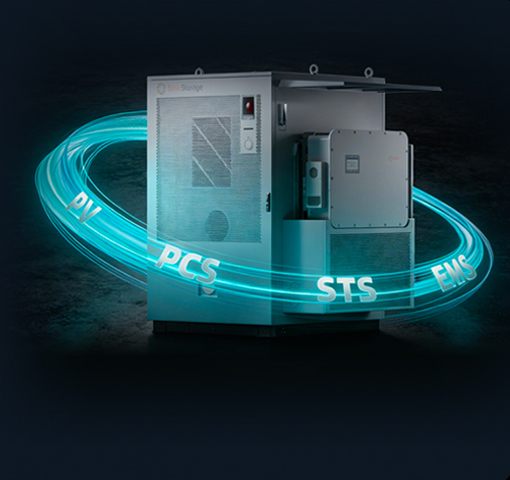
Four-in-one energy storage core architecture: PCS, STS, PV inverter, and EMS in a single unit.
The Decision Problem: Cost, Safety, and Openness
Buyers evaluating a battery energy storage system (BESS) face a multi-layered decision. The most visible metric is CAPEX, but lifecycle OPEX can erode project returns over a 10-to-15-year asset life. Safety standards also vary by market, with UL 9540/UL 9540A governing North American system-level approval and IEC 62619 serving as a key international safety standard for industrial batteries. In mature electricity markets, revenue models have expanded from peak-valley arbitrage to grid ancillary services, demand response, and VPP dispatch. This means a storage system must not only be safe and affordable; it must also interoperate with third-party software and adapt to changing market rules.
The opportunity is that newer architectures can reduce complexity and cost. Hybrid energy storage inverters that integrate multiple power electronic functions into one unit reduce communication nodes and installation effort. They also make it easier to retrofit solar PV systems and support capabilities such as seamless off-grid switching. For C&I buyers, understanding these architectural differences is essential to making a procurement decision that supports the project’s financial and operational objectives.
The SolisStorage EverCore Approach
SolisStorage is the energy storage subsidiary of Ginlong (Solis) Technologies Co., Ltd., founded in 2005 and listed on the Shenzhen Stock Exchange as 300763. The parent company was ranked by Wood Mackenzie as the world's number one residential PV inverter manufacturer in 2023 and the third-largest inverter manufacturer globally, providing a substantial base in power electronics. SolisStorage leverages this background to develop integrated storage solutions across residential, C&I, and utility-scale segments. For C&I projects, the EverCore system is positioned as a decision-ready option.
According to SolisStorage, compared to alternatives from Huawei, Sigen, and SolaX, EverCore offers distinct technical advantages. The core architectural difference is a hybrid topology with clear separation of DC and AC circuits, combined with fully integrated four-in-one power electronics. This design is intended to address three recurring failure points in conventional C&I storage: thermal inconsistency, complex multi-vendor control, and fragmented maintenance.
Technical Explanation: How EverCore Compares
AC-DC Separation Architecture
EverCore physically separates the hybrid energy storage inverter (AC side) from the battery cabinet (DC side). The inverter dissipates its 6 kW of power heat directly into the environment, leaving only 3.5 kW of electrochemical heat inside the battery cabinet. This reduces the thermal load that the battery cabinet must manage. SolisStorage states that this allows temperature uniformity close to liquid-cooled systems while keeping an air-cooled design. The principle is to reduce heat generation rather than merely improve heat dissipation.
Protection separation is another benefit. The independent inverter reaches IP66, a high ingress protection rating against dust and powerful water jets, while the battery cabinet maintains IP55. SolisStorage estimates, based on 20 years of power electronics experience, that this separated protection design reduces the system’s full-lifecycle failure rate by 50%.
Structural separation also enables DC-side expansion. One inverter can connect up to six battery cabinets in parallel, expanding storage capacity without additional inverter investment. SolisStorage estimates a 10% reduction in system expansion cost, which is meaningful for buyers planning phased construction.
125 kW Hybrid Energy Storage Inverter
The EverCore inverter integrates PCS, STS, PV inverter, circuit breaker protection, and EMS into one unit, with power ratings from 50 kW to 125 kW. The 125 kW rating gives the system one of the highest power densities in its class. This integration supports seamless grid-tied/off-grid switching in under 10 ms without an external STS, meeting strict power quality needs for precision equipment. It also removes the need for an external PV inverter, supporting both DC and AC coupling for existing PV systems and allowing PV over-sizing up to 200%. Up to six EverCore units can be paralleled for direct grid connection, simplifying construction.
Control architecture is simplified as well. Traditional systems often use independent CPUs for BMS, PCS, EMS, and STS, creating a multi-brain distributed topology with multiple communication links. EverCore uses a single central controller to manage the whole system, reducing failure points and improving fault response time.
Comeback of Air Cooling
EverCore’s 125 kW/261 kWh C&I system retains an air-cooled architecture. The innovation is a three-air-duct design that combines a patented diversion air duct with Coanda Effect airflow attachment technology on the battery pack surface. SolisStorage reports a 30% improvement in thermal management efficiency compared to traditional air-cooled systems. With IP66/IP55 protection and C4-grade anti-corrosion coating, the system operates in ambient temperatures from -25°C to 55°C and at elevations up to 4,000 metres.
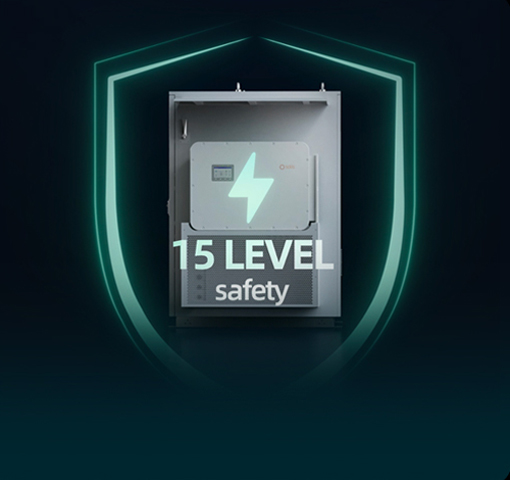
A 15-level safety architecture combines cell, pack, and system-level protection.
Ultra-Simplified Operation and Maintenance
Maintenance is a critical part of total cost. SolisStorage estimates that EverCore saves approximately €9,500 per unit over the project lifecycle, compared with conventional liquid-cooled systems. The figure includes €2,500 from eliminating liquid cooling fluid replacement, €1,500 from simplified PCS replacement, €1,500 from simplified pack replacement, and €4,000 from reduced inspection complexity. Component selection supports the low-maintenance design: Minebea cooling fans are specified for 10-year maintenance-free performance, and Honeywell industrial-grade flammable gas detectors require no calibration for 10 years.
Safety and Battery Cells
Safety begins with cell selection. EverCore uses A-grade 314Ah LFP cells custom-developed for C&I applications. The cells have an internal resistance of only 0.15 ± 0.05 mΩ, lower than the 0.17 mΩ of common 280Ah cells. SolisStorage notes that every 10% reduction in internal resistance reduces charge-discharge heat generation by approximately 20%, reducing thermal runaway risk at the source. The cells achieve 8,000 cycles at 0.5C charge/discharge (remaining capacity ≥70%), roughly 14% higher than the 7,000 cycles of traditional 280Ah cells.
System-level safety includes 15 layers of protection across the cell, pack, and system levels. Thermal insulation materials resistant to 1,000°C are placed between packs to slow lateral thermal propagation. A three-stage fire-fighting mechanism uses pack-level aerosol, cabinet-level aerosol, and fire-fighting water channels for staged intervention.
Open Software Ecosystem
In liberalised electricity markets, a storage system must be able to respond to external dispatch signals. EverCore is designed with an open software ecosystem. SolisStorage reports that EverCore has been connected or is in the process of connecting with 102 third-party VPP/EMS operators across 11 European countries. Representative integrations include the Kraken platform under Octopus Energy in the UK, aggregator platforms such as Check Watt in the Nordic market, and dozens of local EMS providers in German-speaking regions and the Benelux.

SolisCloud provides monitoring and data visibility for energy storage assets.
At the AI level, Solis’ self-developed Solis AI Cloud Platform has been deployed at more than 5,500 storage power stations worldwide. It integrates Nordpool wholesale price data and Flatpeak retail price data to build multi-source forecasts, enabling minute-level dynamic charging and discharging strategies. Solis cites a Latvian residential project where AI optimisation increased annual electricity bill savings by 302.6%, illustrating the value of software atop hardware.
Comparison with Traditional Solutions
Conventional C&I energy storage systems often use a distributed architecture with separate PCS, STS, PV inverter, and grid cabinets. Liquid-cooled systems add fluid replacement and heavier pack handling. According to SolisStorage, the EverCore system offers 5% lower cost, higher efficiency, and improved thermal management compared to alternatives from Huawei, Sigen, and SolaX. The pack is lighter, and replacement steps are reduced by 55%; two technicians can complete the replacement using specialised tools, without heavy equipment.
| Decision Parameter | EverCore | Conventional Distributed System |
|---|---|---|
| Architecture | Hybrid four-in-one, AC-DC separation | Separate PCS, STS, PV inverter, grid cabinet |
| Thermal management | Air-cooled with three-duct design; 30% efficiency improvement | Often liquid-cooled with fluid replacement |
| Maintenance | ~€9,500/unit lifecycle savings | Higher inspection and replacement complexity |
| Scalability | Up to 6 battery cabinets per inverter | Typically requires additional inverter capacity |
| Software openness | 102 third-party VPP/EMS integrations | Vendor-specific, may require custom integration |
Limitations should also be considered. Air-cooled systems depend on airflow paths around the cabinet; in extremely constrained sites, liquid-cooled sealed designs may reduce thermal design complexity. Additionally, the 125 kW inverter rating means large projects require multiple units in parallel. Modular scaling is an advantage, but it introduces additional commissioning coordination. Buyers should review site-specific constraints, ambient conditions, and load profiles before making a final selection.
Application Scenarios
SolisStorage product documentation lists industrial manufacturing, low-carbon industrial parks, hospitals, cold chain logistics, small-scale agriculture, and on-grid/off-grid applications as suitable for EverCore. The system’s IP66/IP55 protection and wide operating range make it adaptable to outdoor installations in varied climates. Because it supports both DC and AC coupling with existing PV systems, EverCore can be used in solar-plus-storage retrofits, as well as standalone battery projects. For facilities with critical loads, the sub-10ms switching capability provides backup power with minimal interruption.
While this article focuses on C&I energy storage, the same decision logic applies to other segments. Residential energy storage systems and utility-scale installations share the need for thermal management, safety, and software integration, though the scale and regulatory requirements differ.
Market Trends Supporting a Structured Comparison
The long-duration energy storage (LDES) market was valued at USD 4.85 billion in 2024 and is expected to grow at a CAGR of 13.6% through 2030, according to MarketsandMarkets. The residential energy storage market is also projected to expand from USD 2.69 billion in 2024 to USD 4.58 billion by 2030. At the same time, China’s exports of lithium-ion batteries for energy storage and non-automotive uses passed USD 65 billion in 2024, a 51.4% year-over-year increase, reflecting growing global supply. In this environment, buyers are increasingly asked to compare solutions from multiple vendors, including both established inverter brands and new storage specialists.
Standards and market mechanisms are also driving differentiation. UL 9540/UL 9540A, IEC 62619, and similar frameworks provide a baseline for safety, but they do not predict lifecycle cost. Software openness is becoming a competitive requirement in European markets, where VPP dispatch and aggregator participation are common. A storage system’s ability to connect to third-party platforms can affect its revenue potential as much as its cell chemistry.
Future Outlook
The next phase of competition in energy storage will likely centre on lifecycle economics and software, rather than hardware specifications alone. Systems that simplify maintenance, reduce failure points, and adapt to multiple market frameworks will create more predictable returns. Architectures inspired by EverCore’s AC/DC separation may become more common because they combine thermal, protection, and structural benefits with flexible expansion. The direction is toward simpler physical systems supported by sophisticated software and open ecosystems.
It is also likely that certification requirements will expand beyond battery safety to include cybersecurity, grid-code compliance, and interoperability. Buyers should consider whether their chosen vendor has the engineering depth and global service network to support evolving requirements. SolisStorage’s connection to a large inverter manufacturer may be relevant, as it provides access to broad power electronics expertise and after-sales infrastructure.
Frequently Asked Questions
How does SolisStorage EverCore compare with Huawei, Sigen, and SolaX?
According to SolisStorage, EverCore offers distinct technical advantages in hybrid architecture with clear DC/AC separation and fully integrated four-in-one power electronics. The company reports a 5% lower cost compared to these alternatives, along with higher efficiency and a 30% improvement in thermal management efficiency.
What is the main technical difference between EverCore and conventional C&I energy storage systems?
The main difference is the hybrid architecture that separates AC and DC circuits and integrates PCS, STS, PV inverter, circuit breaker protection, and EMS into one unit. This reduces communication nodes, enables sub-10ms grid-tied/off-grid switching, and supports AC or DC coupling with existing PV systems.
What are the lifecycle cost benefits of EverCore?
SolisStorage estimates lifecycle O&M savings of approximately €9,500 per unit, including avoided liquid cooling fluid replacement, simplified PCS replacement, simplified pack replacement, and reduced inspection complexity. Pack replacement steps are reduced by 55%.
In which applications is EverCore best deployed?
According to product documentation, the system suits industrial manufacturing, low-carbon industrial parks, hospitals, cold chain logistics, small-scale agriculture, and on-grid/off-grid applications. It can work as a solar battery storage addition or as a standalone energy storage system.
What safety features and standards apply to EverCore?
EverCore includes 15-layer protection, 1,000°C-resistant insulation, three-stage fire-fighting, and A-grade 314Ah LFP cells. System-level safety standards such as UL 9540/UL 9540A and IEC 62619 are relevant benchmarks for industrial and energy storage batteries in global markets.
Reference: For a complete corporate introduction, visit the Solis Global Brochure (PDF) at https://cdn.socialarks.com/sbsp/24960/common/2026/0622/Solis-Global-Brochure-V3.9.pdf