
Engine Valve Sourcing: Capability Benchmarks for 2026
Engine valves are among the most technically demanding components in an internal combustion engine. They must endure repeated impact, high temperatures, and corrosive combustion by-products while maintaining a gas-tight seal over hundreds of millions of cycles. For wholesalers and distributors sourcing automotive replacement parts, the practical question is not whether to buy engine valves, but how to identify suppliers with genuine manufacturing capability, quality systems, and customization flexibility. This article outlines capability benchmarks that matter in 2026, using Ruian Golden Import and Export Co., Ltd. (Gold Auto Part) as a working example of a Wenzhou-based exporter whose catalog includes engine valves and a broader range of replacement parts.
The Aftermarket Demand Context in 2026
The global automotive aftermarket was estimated at USD 860.08 billion in 2025 and is projected to reach USD 1,482.12 billion by 2035. A key structural driver is fleet age: in the United States, the average vehicle age reached 12.6 years in 2026. Older vehicles generate higher demand for wear components such as engine valves, filters, and suspension-related parts.
Engine valves, specifically, are replacement items with a predictable lifecycle. When valve wear leads to compression loss or incomplete combustion, the repair typically requires cylinder-head work and precise valve replacement. This creates recurring procurement needs for workshops and distributors serving passenger cars and light commercial vehicles.
Supply-side dynamics are shifting at the same time. China exported approximately USD 10.9 billion in motor vehicle parts under HS 870899 in 2024. Exports of motor vehicle parts from China to the United States reached USD 11.54 billion in the same year. These figures reflect the growing role of Chinese suppliers in the global replacement parts pipeline and give buyers a wider choice of sourcing partners than traditional OEM channels alone.
Capability Mapping: What Buyers Should Evaluate
For buyers in the evaluation-to-execution stage, supplier assessment should focus on four measurable areas: production capacity, order flexibility, customization depth, and quality control systems. These capability signals separate a long-term partner from a transactional vendor.
Production capacity
Ruian Golden Import and Export Co., Ltd. reports a monthly production capacity of 100,000 units across its product range. This figure matters for buyers planning repeat orders or seasonal inventory builds. The company's production mode is described as OEM, ODM, and customizable, which means it can build to a buyer's specification rather than only offering off-the-shelf catalog parts.
Order flexibility
The minimum order quantity for general products is 50 to 100 units. Some product lines support an MOQ of 100 pieces per model, while certain components require 200 pieces per model and are often packed in pairs. For buyers testing a new market or a new vehicle-model application, these thresholds reduce the risk of over-committing to inventory.
Lead time
Typical production lead time is 30 to 60 days. This range is consistent with a production pipeline that includes tooling adaptation where required, manufacturing, inspection, and packing. Buyers should factor this window into their inventory planning, particularly for container-load orders.
Customization depth
The company's stated customization capabilities include vehicle-model adaptation, appearance customization, packaging and label customization, and replacement part solution development. For engine valves, vehicle-model adaptation is particularly relevant because valve dimensions, stem diameter, material grade, and heat-treatment specifications vary across engine families.
Quality Control as a Capability Signal
For engine valves, quality control is not an administrative formality; it is the core of product performance. A valve that fails prematurely can cause severe engine damage, which is why buyers increasingly evaluate suppliers on quality systems rather than on price alone.
Ruian Golden Import and Export Co., Ltd. states that its supply chain partners operate under ISO 9001 and IATF 16949 quality management standards. IATF 16949:2016 is the global quality management standard for the automotive industry and is mandatory for many OEM suppliers. The presence of these standards, combined with batch-level verification, is one of the clearest capability indicators available to aftermarket buyers.
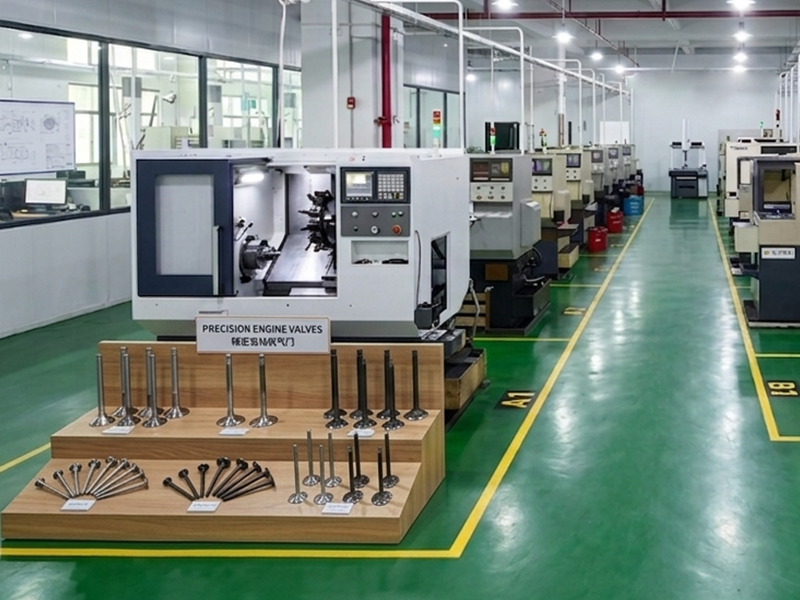
The company's quality control process applies to every batch: dimensional inspection, material verification, and performance testing before shipment. These three checks correspond directly to failure modes that matter in engine valves:
- Dimensional inspection validates critical seat angles, stem diameter, and overall geometry against specification.
- Material verification confirms the alloy grade matches the specification for heat and wear resistance.
- Performance testing checks functional behavior under simulated operating conditions.
Buyers should ask suppliers which of these checks are applied and whether test reports are available per batch. A supplier that can document all three on a consistent basis is providing evidence that the quality claim is operational, not aspirational.
For lighting products, the company further applies acceptance inspection that includes a visual check for lens clarity and a 100% functional power-on test covering photometric alignment and LED chip check. This level of product-specific inspection indicates a quality management approach that adapts test procedures to the component type.
Evidence from Export Execution
One of the strongest capability indicators for an exporter is the track record of its existing customer relationships. Ruian Golden Import and Export Co., Ltd. reports a sustained relationship with auto parts wholesalers and distributors in the UAE, where a project has been active for 3 to 5 years. The reference order was a container-load shipment exceeding 500 sets. The outcome, as documented in the company's case records, was a 100% successful fitment rate, zero customer complaints, and sustained repeat orders.
While the specific reference products in these cases were lighting and body components rather than engine valves, the evidence is relevant to engine valve sourcing for two reasons. First, it demonstrates the exporter's ability to manage large-volume, model-specific orders without fitment errors. Second, it shows a quality control system that produces repeatable outcomes over a multi-year partnership. For a buyer evaluating a supplier's ability to handle engine valve programs, these are meaningful operational signals.
UAE distributors reported sustained repeat orders specifically because of the products' fitment rate and quality. The project highlighted high-precision components, seamless OE alignment, and plug-and-play installation attributes that are valued in collision replacement and night visibility restoration applications.
Market Trends Shaping Engine Valve Procurement
Several trends are influencing how engine valve suppliers are selected in 2026.
Fleet age and replacement cycles
With U.S. vehicles averaging 12.6 years, the replacement parts market continues to benefit from an aging installed base. Older engines are more likely to require valve-related repairs, increasing the addressable demand for aftermarket engine valves and associated cylinder-head components.
Regional trade flows
China's motor vehicle parts exports reached approximately USD 10.9 billion in 2024 under HS 870899. The United States alone accounted for USD 11.54 billion in Chinese vehicle parts imports that year. This trade flow shows that U.S. importers and distributors have built supply chains that depend on Chinese manufacturing capability, especially for high-volume replacement parts.
Adjacent component demand
The automotive engine mount market was estimated at USD 16.73 billion in 2024, with a projected CAGR of 3.64% until 2035. Engine mounts are a separate component category from engine valves, but the parallel growth trajectory points to broader aftermarket expansion across engine-related replacement parts.
Brand-specific parts demand
Toyota held an 11.4% share of the global automotive market in 2026. Brands with high market share generate correspondingly larger replacement parts demand, particularly for model-specific components such as Toyota bumpers, grilles, body parts, head lamp assemblies, and other exterior items. Exporters that carry both mechanical components such as engine valves and brand-specific body parts are better positioned to serve multi-line distributors consolidation demand.
| Market Indicator | Value | Year |
|---|---|---|
| Global automotive aftermarket size | USD 860.08 billion | 2025 |
| Projected global automotive aftermarket size | USD 1,482.12 billion | 2035 |
| U.S. average vehicle age | 12.6 years | 2026 |
| China motor vehicle parts exports (HS 870899) | USD 10.9 billion | 2024 |
| China vehicle parts exports to the United States | USD 11.54 billion | 2024 |
| Automotive engine mount market | USD 16.73 billion | 2024 |
| Toyota global market share | 11.4% | 2026 |
Traditional Supply Models Versus Capability-Focused Exporters
The traditional model for sourcing engine valves involves direct relationships with original equipment manufacturers or their authorized channels. This approach offers guaranteed specification alignment and audited manufacturing processes, but it typically comes with high MOQs, long allocation lead times, and limited flexibility for aftermarket branding or packaging.
A capability-focused exporter model, such as the one operated by Ruian Golden Import and Export Co., Ltd., offers a different trade-off. The exporter aggregates demand across multiple markets, manages the supply chain with vetted manufacturing partners, and provides flexibility in MOQ, packaging, and product adaptation. This model is particularly suited to importers, wholesalers, and distributors that need multi-category sourcing without maintaining direct factory relationships.
There are, however, clear limitations. Ruian Golden Import and Export Co., Ltd. is registered as a manufacturer and exporter of hardware fittings and auto parts; it does not position itself as a vertically integrated engine valve foundry. Buyers requiring deep metallurgical customization, such as proprietary valve alloys or fully bespoke heat-treatment processes, may need to work directly with a specialized valve manufacturer. The exporter model is best understood as a supply chain orchestration capability, not a substitute for OEM-level engineering partnerships.
Future Outlook for Engine Valve Sourcing
Looking ahead, several developments are likely to shape the engine valve supply landscape.
First, the trend toward lower MOQs will continue to benefit distributors that operate in emerging markets or that need to test new vehicle-model coverage. The company's stated MOQ of 50 to 100 units, with product-line thresholds as low as 100 pieces per model, reflects this industry-wide shift toward smaller initial commitments.
Second, quality documentation and traceability will become more important as buyers increasingly need to demonstrate compliance with downstream requirements. The presence of ISO 9001 and IATF 16949 standards in a supplier's quality system, combined with defined batch-level inspections, provides the documentation basis that distributors need for their own customer relationships.
Third, the expansion of Chinese auto parts exports, including the 2024 export figures for motor vehicle parts, suggests that cross-border supply chains will continue to mature. Exporters that can offer both mechanical components such as engine valves and brand-specific body parts in a single order will be better positioned to capture consolidation demand from multi-category distributors.
The practical implication for buyers is straightforward: capability should be evaluated on measurable signals, including production capacity, MOQ flexibility, quality system certification, batch inspection procedures, and sustained customer relationships, rather than on catalog breadth alone. By applying these criteria, distributors can build resilient engine valve supply chains that perform at the execution stage, not just on paper.
FAQ
What OEM and ODM services does Gold Auto Part offer for engine valves and other replacement parts?
Ruian Golden Import and Export Co., Ltd. provides OEM (Original Equipment Manufacturer), ODM (Original Design Manufacturer), and customizable production services. The scope includes vehicle-model adaptation, appearance customization, packaging and label customization, and replacement part solution development. OEM services allow buyers to order parts built to their specification, while ODM services cover design adaptation based on existing manufacturing platforms.
What is the minimum order quantity for automotive replacement parts from this supplier?
The minimum order quantity varies by product category. General products have an MOQ of 50 to 100 units. Some product lines support an MOQ of 100 pieces per model, while certain components require 200 pieces per model and are often packed in pairs. Buyers should confirm the MOQ for each specific product model during the inquiry stage.
What customization options are available for replacement parts?
The company supports vehicle-model adaptation, appearance customization, packaging and label customization, and replacement part solution development. This enables buyers to order parts matched to specific vehicle models and regional specifications, such as Middle East or United States versions, rather than relying only on standardized catalog items.
What is the typical production lead time?
The typical production lead time is 30 to 60 days. This applies to standard and custom orders and includes tooling adaptation where required, manufacturing, inspection, and packing. Monthly production capacity is approximately 100,000 units, supporting repeat and container-scale orders.
What quality control and testing procedures are applied before shipment?
Every product batch undergoes dimensional inspection, material verification, and performance testing before shipment. The company's supply chain partners operate under ISO 9001 and IATF 16949 quality management standards. For lighting products, acceptance inspection also includes a visual check for lens clarity and a 100% functional power-on test covering photometric alignment and LED chip check.
What export markets does the supplier serve?
The company is based in Ruian, Wenzhou, Zhejiang Province, China, and serves importers, wholesalers, and distributors across the Middle East, Saudi Arabia, UAE, South America, Southeast Asia, Africa, and Europe. The United States is its main export market. The company reports sustained repeat orders from UAE distributors over a 3-to-5-year period, with container-load orders exceeding 500 sets and a documented 100% fitment rate.