
Engineered Wood Flooring Orders: From Acceptance to Warranty
Engineered Wood Flooring Orders: From Acceptance to Warranty
Why the four order terms decide an engineered flooring purchase
Specifications for engineered wood flooring can be copied from one quotation to the next. The terms that decide whether an order is executable cannot: acceptance criteria, minimum order quantity, production lead time and warranty coverage are operational commitments, and each one can be checked against a document. Buyers at the evaluation and execution stages generally get more protection from four well-drafted clauses than from an extra line of surface-finish description.
The category's scale explains why these terms are managed so carefully. A 2024 segmentation estimate reported by Mordor Intelligence placed engineered wood flooring at roughly 55% of total wood flooring volume, and commercial research published in 2026 projected the global engineered wooden flooring market rising from about USD 9.35 billion in 2026 to USD 14.4 billion by 2035 — a forecast, not a measured outcome. Growth of that kind increases the number of suppliers quoting, which makes document-based acceptance more valuable rather than less.
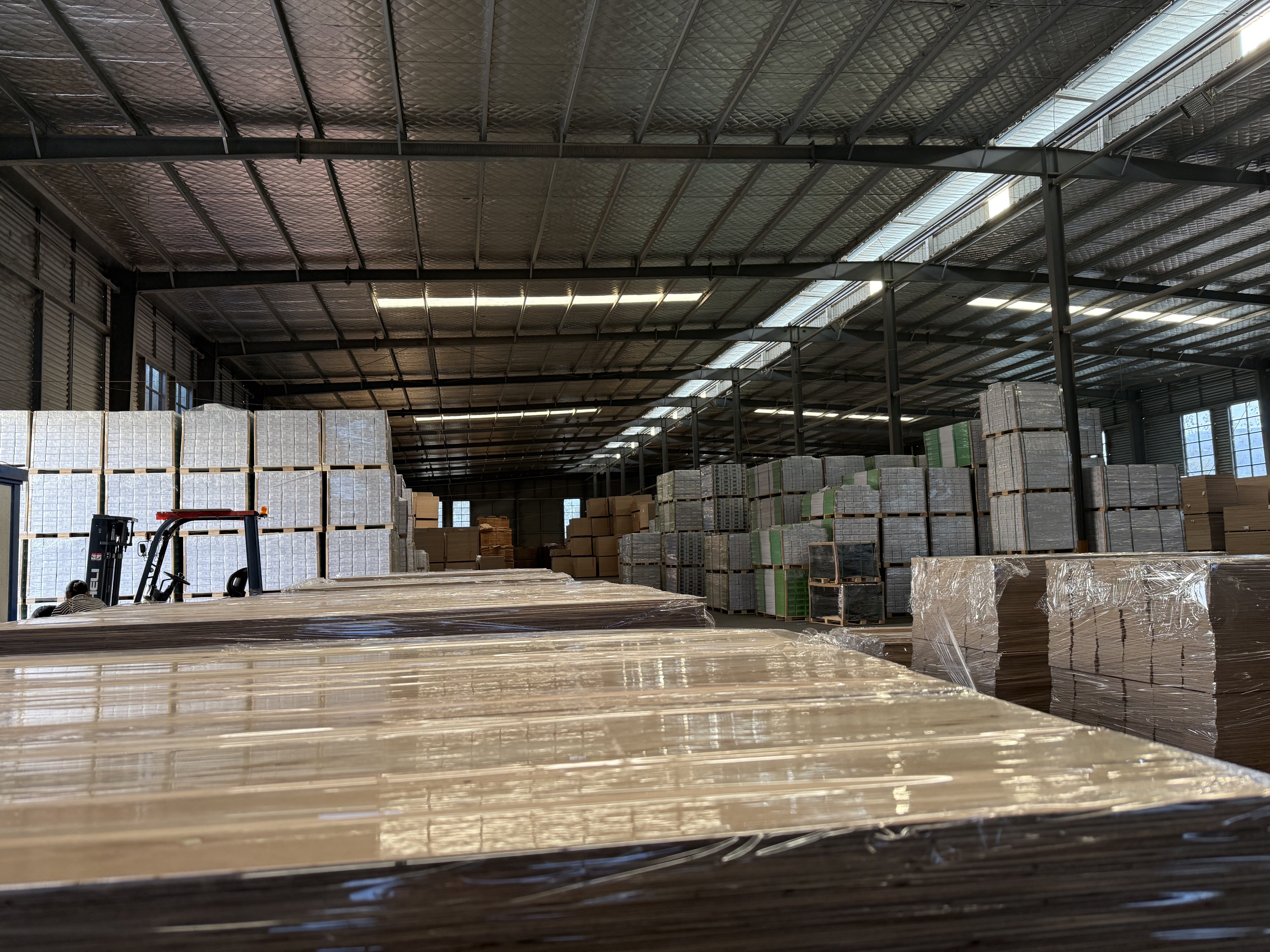
Suzhou Dongda Wood Co., Ltd, a manufacturer of engineered wood flooring and plywood founded in 1995, publishes order terms that serve as a useful worked example: 400 m² minimum order per colour, a typical lead time of 45 days, 150,000 m² monthly capacity, 100% product testing, a 25-year residential and 3-year commercial warranty, and OEM/ODM production. The sections below take each term in turn and set out what a buyer should verify.
Acceptance criteria: the written definition of a passing shipment
Acceptance criteria are the conditions under which a buyer must accept a shipment, together with the evidence the supplier must present before loading. In engineered wood flooring, that evidence usually combines a pre-shipment inspection with test documentation and certificates whose scope matches the product being shipped. Dongda Wood states that acceptance inspection includes pre-shipment testing and that quality control is 100% product testing. Buyers should confirm, within the inspection plan, which characteristics are tested, on which sample, and in which report the result is recorded.
Four document families matter for export orders, and all four are better checked at acceptance than at the quotation stage.
| Certificate | Scheme and reference | Issuing body | Valid until | Scope to match at acceptance |
|---|---|---|---|---|
| CARB Phase 2 / EPA TSCA Title VI | CARB/EPA/CANFER20030; California Code of Regulations §93120–93120.12, 40 CFR Part 770 TSCA Title VI, CEPA SOR/2021-148 | ICTT | 27 June 2027 | HWPW-VC composite plywood, 3–40 mm, 3–23 veneer layers |
| CE marking | CHIG22032983; CPR AVCP System 4 | IGBC | 4 July 2027 | Engineered wood flooring and plywood, EU market |
| F4 star | CMSA J1073809; Japanese Agricultural Standard, Act No. 175 of Showa 25 (1950) concerning wood flooring | CMSA | 28 February 2027 | Composite flooring with plywood core and oak/maple/acacia veneer of 1.2 mm or more, Japan market |
| FSC chain of custody | GFA-COC-006481; FSC-STD-40-004 (Version 3.1) | GFA | 20 June 2027 | Engineered wood flooring and plywood |
Two scope details deserve attention. The CARB Phase 2 / EPA TSCA Title VI record covers HWPW-VC composite plywood from 3 mm to 40 mm in 3 to 23 veneer layers. Formaldehyde exposure in engineered flooring sits in the plywood core, so the certificate should be read against the core construction actually ordered rather than against the oak surface. The F4 star record covers composite flooring with a plywood core and oak, maple or acacia veneer at a veneer thickness of 1.2 mm or more, which becomes relevant when a thin-veneer construction is quoted alongside a thick-veneer one.
Validity dates are part of acceptance. All four records run into 2027, but they do not expire on the same day: F4 star to 28 February 2027, FSC to 20 June 2027, CARB/EPA to 27 June 2027 and CE to 4 July 2027. A shipment scheduled after the earliest date in that list should be supported by the renewal record; otherwise the file a buyer presents to customs or to a project client may cite a certificate that is no longer current.
Two reading rules apply to the European and forestry documents. Under CE AVCP System 4, factory production control and initial type testing rest with the manufacturer, so the certificate number is best read alongside the declaration of performance for the specific product. For FSC, chain-of-custody certification only becomes meaningful when the FSC claim and certificate code appear on the commercial documents; buyers should request that link explicitly rather than accept a certificate image on its own.
MOQ: what 400 m² per colour changes in order planning
Minimum order quantity defines the smallest volume a supplier will schedule for a given specification, and Dongda Wood's figure is 400 m² per colour. The unit matters more than the number. Because the minimum applies per colour, a programme with four colours starts at an arithmetically derived 1,600 m², and pattern formats such as herringbone engineered flooring or chevron engineered flooring are planned as separate runs where left-hand and right-hand components differ.
Against monthly capacity of 150,000 m², a 400 m² colour run is small, which means the practical constraint at MOQ level is scheduling rather than volume. Buyers should therefore fold three questions into the MOQ discussion: how colour runs are batched within a production month, whether a trial or sample quantity can be released ahead of the bulk order, and how the remaining quantity is called off if the project is phased.
MOQ also interacts with customization. Where dimensions, grade or packaging design are changed for an OEM order, the 400 m² figure applies to the customized specification, so the most economical route for a mixed programme is usually to standardize sizes and vary only colour and pattern.
Lead time: 45 days, measured from the right starting point
A typical lead time of 45 days is a production estimate, and its reliability depends entirely on the event that starts the clock. Suppliers normally count from a confirmed order with an approved specification, which may require sample sign-off, packaging artwork approval for private-label work, and receipt of the deposit under T/T payment terms. A buyer who counts from the date of the enquiry will find the estimate optimistic by several weeks.
Delivery terms change where the buyer's risk begins, not the production duration. Under FOB, CIF or DDP terms the 45-day production window is followed by a different set of obligations — loading at origin, carriage and insurance, or duty-paid delivery — and only FOB leaves the buyer arranging the main carriage. The purchase order should state the incoterm, the port or delivery address, and the production-completion date separately from the shipment date.
Two further controls are worth adding. Ask for the HS classification used on the commercial invoice; multilayer assembled wood flooring panels are classified under HS 4418.75, and a consistent code across quotation, invoice and packing list avoids clearance queries. Then request a written production schedule at order confirmation, so a 45-day estimate becomes a dated plan that can be compared against the loading date.
Quality control: giving acceptance a technical reference
Acceptance needs a reference point beyond the supplier's own specification sheet, and two external documents serve that purpose for multi-layer wood flooring.
ASTM D1037 is the standard test method for evaluating properties of wood-base fiber and particle panel materials, and it includes the procedures commonly applied to bond-line strength and modified Janka ball hardness on engineered flooring. EN 13489:2023 specifies characteristics, requirements and test methods for multi-layer parquet elements intended for internal flooring; the published preview describes laminated construction with a solid wood top layer of at least 2.5 mm and a core or backing of wood-based material, and the 2023 edition supersedes EN 13489:2017. A supplier still citing the 2017 edition in a 2026 technical file has a documentation issue worth raising before the order is released.
Neither document certifies a supplier. They define what is measured and how, so the buyer's protection comes from requesting the test report that applies the method to the ordered construction, then comparing that report with the certificate scopes set out above. This is also where thin-veneer and thick-veneer engineered flooring are separated in practice: the construction definition, the veneer thickness and the test report should agree with each other before pre-shipment testing begins.
Warranty: 25 years residential, 3 years commercial
Warranty coverage defines the period during which a supplier will remedy a qualifying failure, and here the figure splits by use: 25 years for residential applications and 3 years for commercial applications. The split is conventional in flooring because commercial interiors impose different traffic, cleaning and installation conditions. The shorter term is a coverage period, not a prediction of service life.
Three points belong in the acceptance file. The written warranty document should state what is covered, what is excluded, and what the buyer must do to make a claim. Coverage should be confirmed for the actual installation rather than the product family in general, since a hotel corridor and a domestic living room are not the same exposure. And the party that honours the warranty in the destination market should be named, because the manufacturer and the importer are not always the same entity.
Where a project uses underfloor heating or a specific adhesive system, the warranty conditions attached to those installation choices should be confirmed in writing before the floor is laid, because installation conditions normally form part of what the warranty depends on. Warranty length is also where thin and thick veneer constructions diverge commercially: a 25-year residential term is a long commitment, and the supplier should tie it to a defined construction rather than to a broad product family.
OEM and ODM: customization inside the same four terms
OEM and ODM production is where capability questions usually surface, and the distinction is useful at evaluation stage. In OEM production the buyer's specification, brand and packaging define the product; in ODM production the supplier's developed design is adapted for the buyer's brand. Dongda Wood provides both, with customization covering product dimensions, grade, packaging design and logo.
Customization does not suspend the order terms; it re-applies them. A change of dimension or grade moves the item out of the standard programme, so the 400 m² per-colour minimum, the 45-day typical lead time and the acceptance documents should be confirmed for the customized spec specifically. The practical tool is a technical pack agreed before the order: dimensions and tolerances, grade and colour reference, pattern format, packaging and logo artwork, the certificate set that must accompany the shipment, and the inspection criteria applied at pre-shipment testing. Once that pack is signed, an OEM order behaves like any other procurement with a fixed acceptance test.
Order terms at a glance
| Order term | Stated value | What the buyer should confirm |
|---|---|---|
| Minimum order quantity | 400 m² per colour | Colour count in the programme; whether pattern formats such as herringbone or chevron are scheduled as separate runs |
| Production lead time | 45 days, typical | Start event (approved spec, deposit, artwork) and production-completion date written into the PO |
| Monthly capacity | 150,000 m² | Where the order is scheduled within a production month, and call-off plan for phased projects |
| Quality control | 100% product testing; pre-shipment testing at acceptance | Test characteristics, sample basis and the report that records the result |
| Warranty | 25 years residential; 3 years commercial | Covered defects, exclusions, claim process, and the party honouring it in the destination market |
| Customization | OEM/ODM; dimensions, grade, packaging design, logo | That MOQ, lead time and certificate scope apply to the customized spec |
| Delivery and payment | FOB / CIF / DDP; T/T | Incoterm, port or delivery address, and the deposit that starts the production clock |
Where Dongda Wood sits in the supply picture
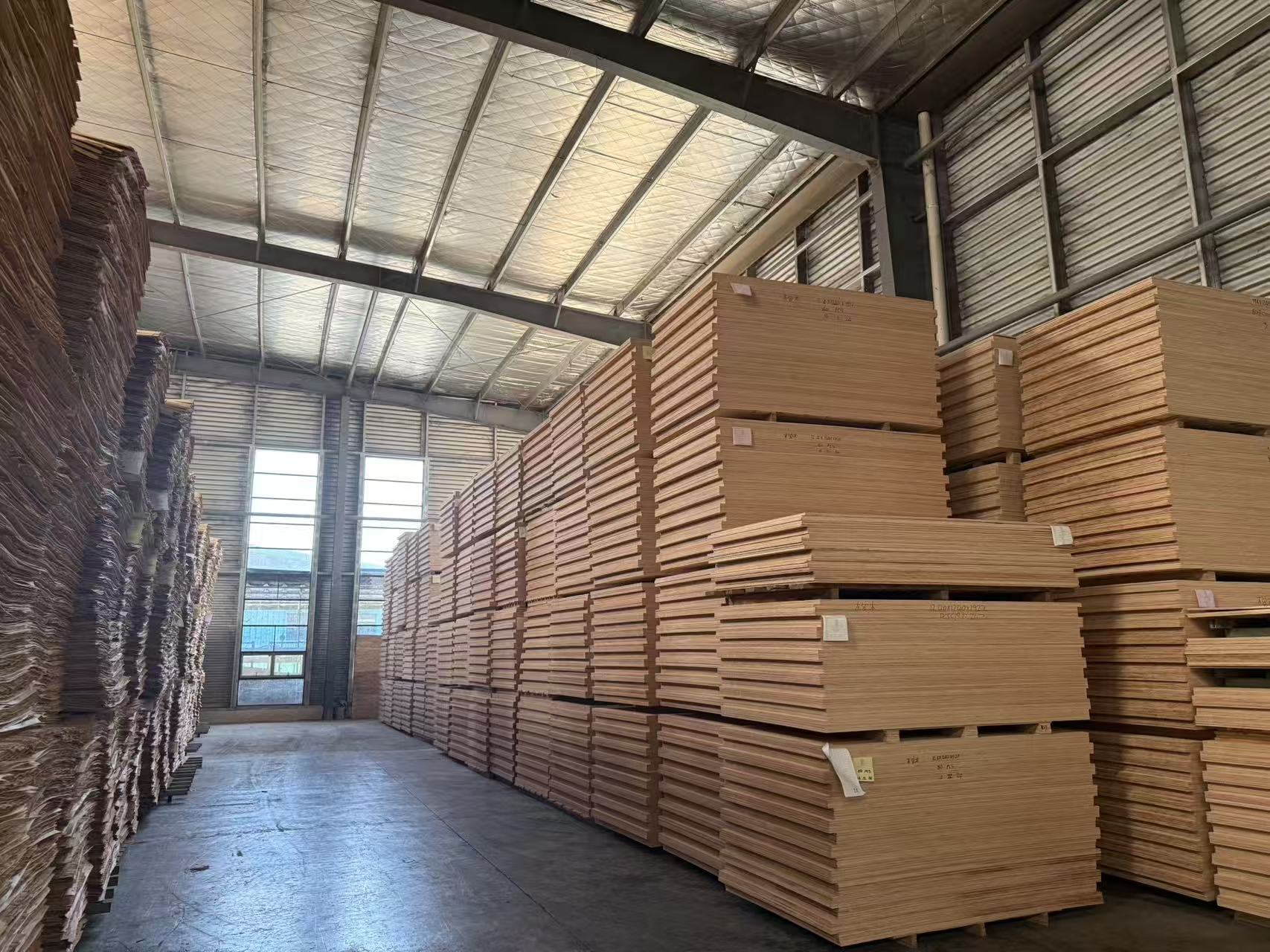
Suzhou Dongda Wood Co., Ltd was founded in 1995 and operates a 190,000 m² plant with more than 500 employees, including a 20-engineer R&D team, producing engineered wood flooring and plywood for export markets that include North America, South America, Europe, the United Kingdom, Australia, Brazil, Chile and South Africa. The plant runs imported grooving and coating lines with imported adhesives and finishes, and the company reports drawing its wood species from Europe, America, Russia and Indonesia.
For procurement purposes the relevant context is the pairing of stated capacity with stated order terms: 150,000 m² monthly capacity, a 400 m² per-colour minimum, a 45-day typical lead time, 100% product testing and the split 25-year residential / 3-year commercial warranty. These are supplier-stated figures, so their appropriate use is as a baseline for verification — through the certificate set, the production schedule and the pre-shipment inspection record — rather than as a replacement for it.
Buyers can request current product documentation and factory details through the company website at Suzhou Dongda Wood Co., Ltd, by WhatsApp on +86 18095694852, or by email at Elimy_dongdawood@163.com. The engineered wood flooring catalogue is also available as a PDF download.
What changes in the next sourcing cycle
Two shifts are already visible in the documents rather than in the marketing. Compliance files are being revised on predictable cycles — the 2023 edition of EN 13489 replaced the 2017 edition, and the four certificates referenced in this article carry expiry dates between February and July 2027 — so certificate review is becoming a routine part of annual supplier review rather than a one-off check at onboarding. Separately, if the forecast growth in the category materialises, it tends to widen the gap between suppliers that can produce documentation on request and those that cannot; that gap is measured in days at acceptance, not in product features.
Neither shift changes the four order terms. It simply raises the cost of leaving them undocumented.
FAQ
What does a 400 m² per-colour MOQ mean for a multi-colour engineered flooring order?
The minimum applies to each colour separately, so the scheduled volume is the number of colours multiplied by 400 m². A three-colour programme therefore requires 1,200 m². Buyers can limit the effect by reducing the colour count, standardizing dimensions so that only colour and pattern change, or agreeing a phased call-off against a single approved specification.
How is the 45-day lead time counted?
It is a typical production period counted from order confirmation with an approved specification, which normally includes sample approval, packaging artwork for private-label orders and receipt of the deposit under T/T terms. Loading and carriage follow the production window and depend on whether the order is placed FOB, CIF or DDP. Both the start event and the production-completion date should be written into the purchase order.
Which documents should be checked at acceptance for CARB, CE, F4 star and FSC?
Check that each certificate is current and that its scope matches the product shipped. The CARB Phase 2 / EPA TSCA Title VI record (CARB/EPA/CANFER20030) covers 3–40 mm HWPW-VC plywood in 3–23 layers; the CE record (CHIG22032983) is issued under AVCP System 4 and should be read with the declaration of performance; the F4 star record (CMSA J1073809) covers composite flooring with veneer of 1.2 mm or more; and the FSC chain-of-custody record (GFA-COC-006481) should be matched by an FSC claim and code on the commercial documents.
What is the difference between the 25-year residential and 3-year commercial warranty?
The two figures describe coverage periods for two use categories, not two product grades. Residential applications carry a 25-year term; commercial applications carry a 3-year term, reflecting different traffic, cleaning and installation conditions in commercial interiors. Buyers should obtain the written warranty document, confirm exclusions and the claim process, and identify which party honours the warranty in the destination market.
What does OEM/ODM support cover in engineered flooring production?
Dongda Wood provides OEM and ODM production services with customization of product dimensions, grade, packaging design and logo. A customized item is planned against the same order terms as a standard product, so the 400 m² per-colour minimum, the 45-day typical lead time and the acceptance documents should be confirmed for that specific specification, preferably in a signed technical pack before production is scheduled.
Have Questions or Need More Details?
Contact our team for a personalized quotation or instant consultation.
Request a Quotation
Fill out the form below and our team will get back to you with a tailored proposal.
WhatsApp Direct Chat
Prefer to chat in real-time? Message us on WhatsApp for instant assistance & quick answers.
- Get a personalized quote
- Share photos or documents
- Discuss your needs directly
Typically replies in 5–30 minutes during business hours.