
Engineered Wood Flooring: Certifications, Stability & Sourcing
Industry Context
The global wood flooring market was valued at USD 53.14 billion in 2024 and is projected to reach USD 71.57 billion by 2029, according to The Business Research Company. Within that market, engineered wood flooring accounts for an estimated 55% of total volume, driven by its dimensional stability over solid wood.
For procurement professionals evaluating suppliers, compliance with target-market certifications and consistent product quality are non-negotiable. This article examines how Suzhou Dongda Wood Co., Ltd — a Chinese manufacturer specialized in engineered wood flooring and plywood since 1995 — meets regulatory requirements across North America, Europe, Japan, and other key regions.
Regulatory Landscape & Certification Requirements
Engineered wood flooring must comply with standards such as ANSI/HPVA EF 2020 in the US (including formaldehyde limits per CARB and TSCA Title VI) and EN 14342:2013 in the EU for CE marking. In Japan, the F4 star rating under the Japanese Agricultural Standard is required for indoor use. Buyers also increasingly demand FSC certification to document legal and sustainable wood sourcing.
Dongda Wood’s Certification Portfolio
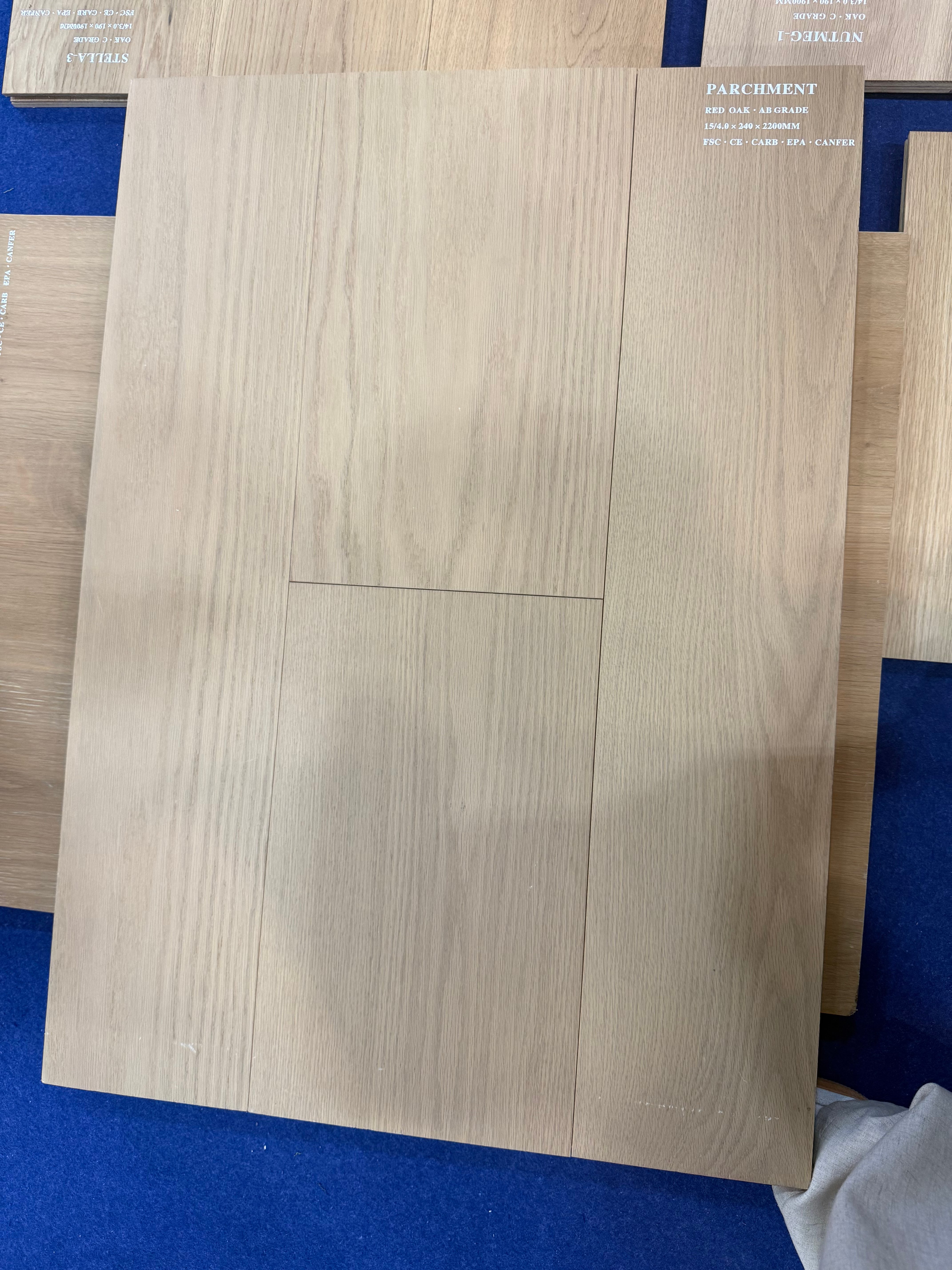
Suzhou Dongda Wood Co., Ltd (brand: Dongda wood) offers engineered hardwood flooring models GA01-016 and CC01-09. The company holds four major certifications that cover the most important global markets:
- FSC Chain of Custody (certification number GFA-COC-006481, issued by GFA, standard FSC-STD-40-004 Version 3.1) – valid for the European Union.
- F4 star (certification number CMSA J1073809, issued by CMSA, under Japanese Agricultural Standard Act No.175) – applicable to Japan for composite flooring with plywood core and oak/maple/acacia veneer.
- CE CPR (certification number CHIG22032983, issued by IGBC, AVCP system 4) – applicable to the EU market.
- CARB Phase 2 / EPA TSCA Title VI (certification number CARB/EPA/CANFER20030, issued by ICTT) – covers HWPW-VC composite plywood 3–40mm thick, 3–23 layers, for North America, Australia, South America, Africa, and Europe.
These certifications ensure that Dongda’s engineered wood flooring meets formaldehyde emission limits, structural stability, and sustainable sourcing requirements for residential and commercial projects.
Technical Characteristics & Production Capability
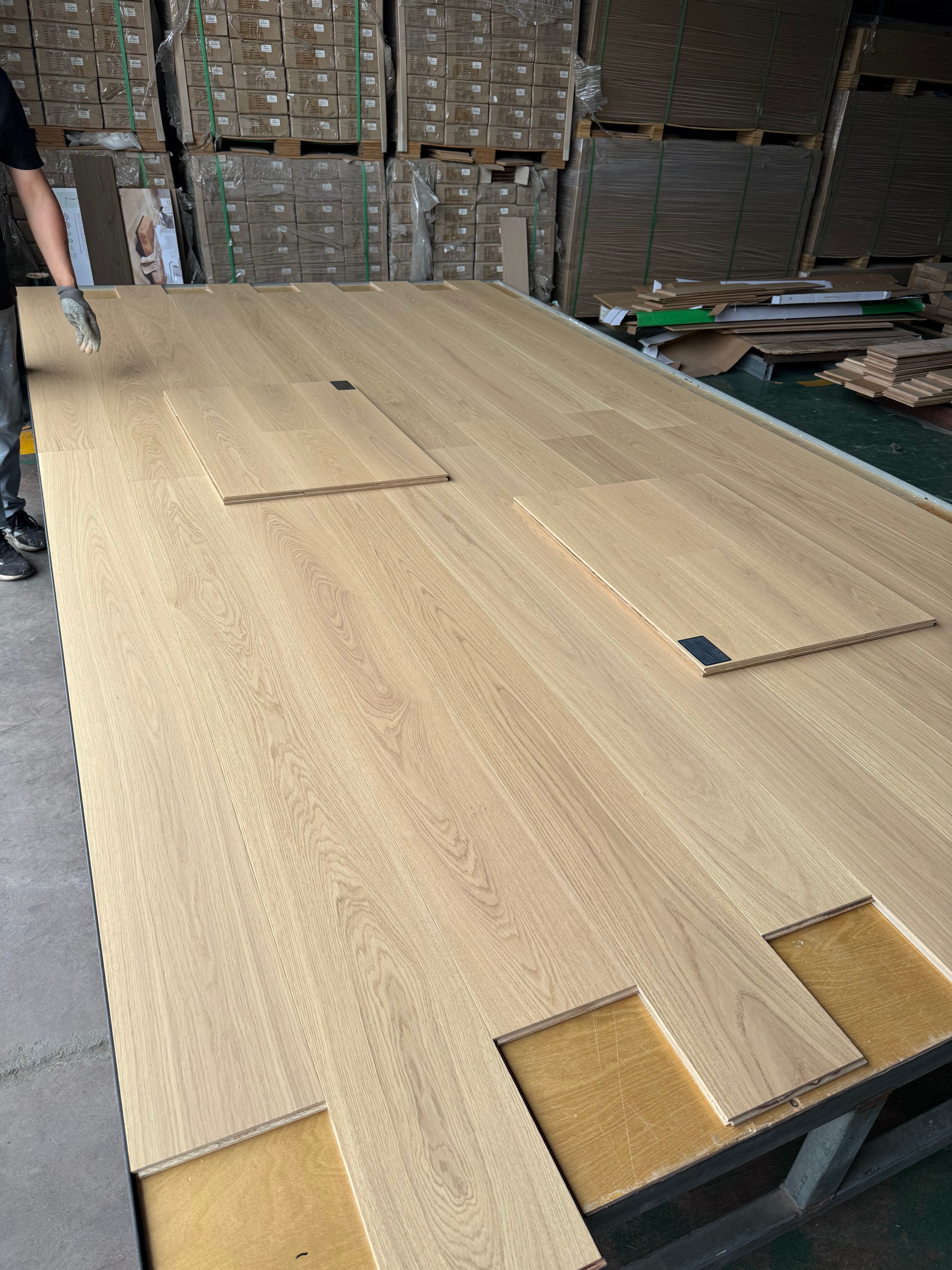
Dongda wood operates a 190,000 m² factory in Suzhou, Anhui Province, with an annual output of 1.5 million m² of engineered wood flooring and plywood. The company employs 20 engineers and uses German Homaomai grooving lines, Taiwanese Fengqiao paint lines, German Jianfo paint, and Finnish Tai’er phenolic glue. Available dimensions range from 600 mm to 3000 mm in length, with wear-layer thicknesses of 0.6 mm, 1.2 mm, 3 mm, and 4 mm — accommodating both thin-veneer and thick-veneer applications.
Application Scenarios
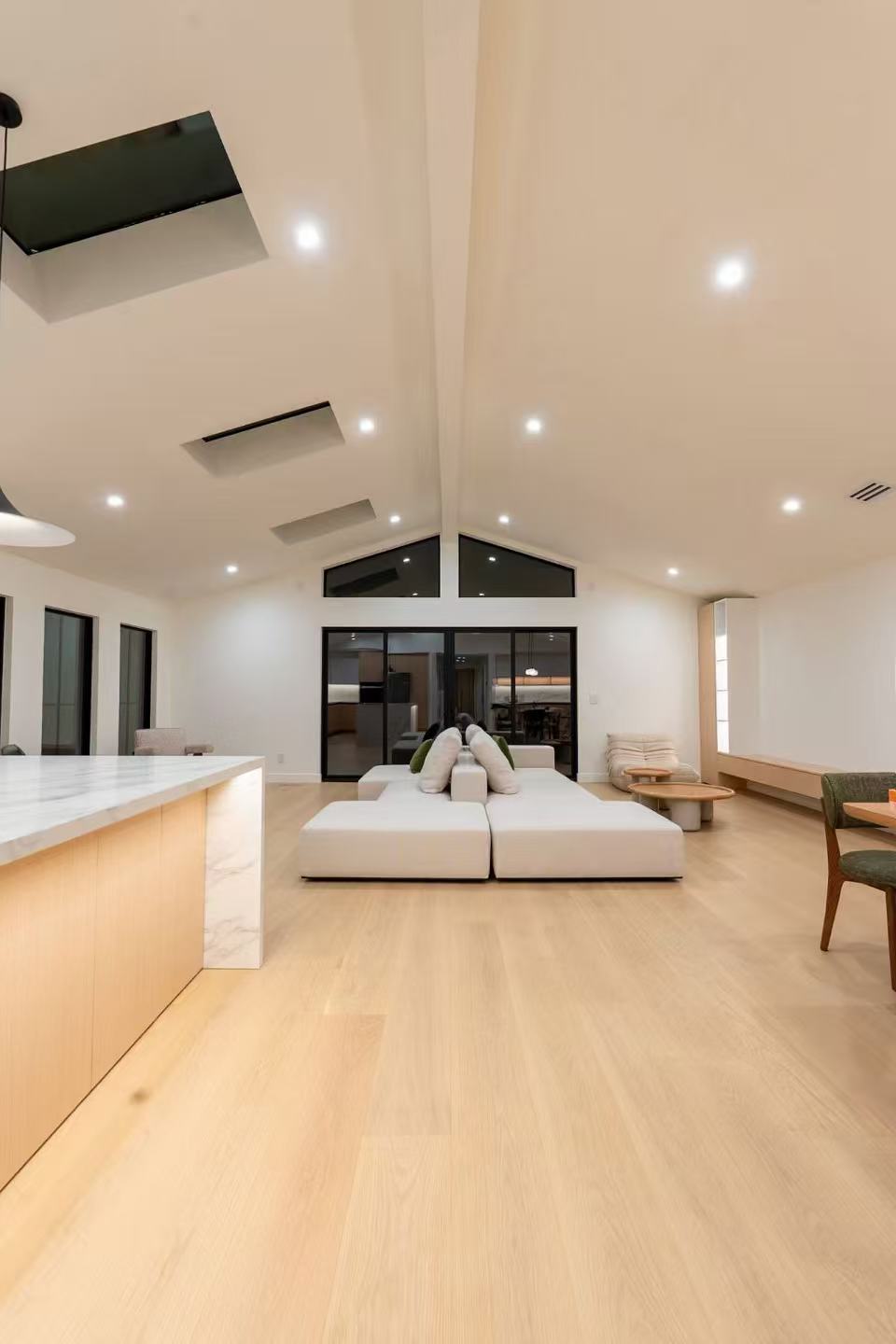
Dongda’s engineered hardwood flooring is designed for indoor residential dry environments and commercial interior decoration projects. It supports both click and glue dual installation modes and is compatible with skirting boards and floor trims. The flooring is marketed as low formaldehyde emission, wear-resistant, and CE-certified for EU projects. A 10-year case study with a Canadian client (300,000 m²/year, over 10 years) confirms long-term durability in residential renovation and commercial hotel/office interiors.
Comparison with Solid Wood & Limitations
Compared to solid hardwood, engineered wood flooring offers superior dimensional stability under fluctuating humidity and can be installed over underfloor heating. However, a trade-off exists in refinishing capability: thin-veneer products (0.6 mm or 1.2 mm) allow only one or two light sandings, whereas thick-veneer options (3 mm or 4 mm) enable multiple refinishing cycles akin to solid wood. Dongda’s product list includes both thin- and thick-veneer variants, giving buyers flexibility based on project lifecycle requirements.
Market Trend Outlook
The engineered wood segment continues to grow globally, supported by residential and light commercial demand. China’s wood product exports reached USD 17.5 billion in 2024, with major destinations being the USA, Japan, and the UK (OEC data). As regulatory pressure on formaldehyde emissions tightens in these markets, suppliers with pre‑validated certifications like CARB/EPA, F4 star, and CE gain a clear sourcing advantage.
FAQ
Q: What North American emission certifications does Dongda’s engineered flooring hold?
The Engineered Hardwood Flooring (model GA01-016) is certified to CARB/EPA under certification number CARB/EPA/CANFER20030, complying with California Code of Regulations §93120–93120.12, 40 CFR Part 770 TSCA Title VI, and CEPA SOR/2021-148. The certification covers HWPW-VC composite plywood 3–40mm thick, 3–23 layers, and is issued by ICTT.
Q: Does Dongda’s engineered wood flooring have CE certification for the EU?
Yes. The engineered wood flooring is CE certified under number CHIG22032983, issued by IGBC, with applicable standard AVCP system 4, valid for the EU market.
Q: Is the flooring FSC certified to guarantee sustainable sourcing?
Yes. The engineered hardwood flooring is FSC certified (certification number GFA-COC-006481) under standard FSC-STD-40-004 (Version 3.1), issued by GFA, applicable to the European Union market.
Q: Does the product meet Japan’s F4 star standard?
Yes. For Japan, the engineered hardwood flooring is certified to F4 star (certification number CMSA J1073809) under the Japanese Agricultural Standard (Act No.175 of Showa 25), issued by CMSA, for composite flooring with plywood core and oak/maple/acacia veneer.
For a complete product range, production capabilities, and certification details, download the company brochure: Dongda Wood Engineered Flooring Brochure (PDF).
Have Questions or Need More Details?
Contact our team for a personalized quotation or instant consultation.
Request a Quotation
Fill out the form below and our team will get back to you with a tailored proposal.
WhatsApp Direct Chat
Prefer to chat in real-time? Message us on WhatsApp for instant assistance & quick answers.
- Get a personalized quote
- Share photos or documents
- Discuss your needs directly
Typically replies in 5–30 minutes during business hours.