
Engineered for Purpose: How Wire Container Customization Drives Efficiency in High-Stakes Industrial Applications
Industry Challenge: One-Size-Fits-All No Longer Fits
Industrial storage and logistics are no longer served by generic containers. Today’s production environments—whether handling PET preforms at beverage plants, aging wine in underground cellars, or managing heavy auto parts—demand wire container designs that match exact operational conditions. The need for tailored solutions, from surface treatment to stacking height and specialized accessories, has become a deciding factor in warehouse efficiency and supply chain reliability.
Brand Solution: HM Group’s Full Customization Ecosystem
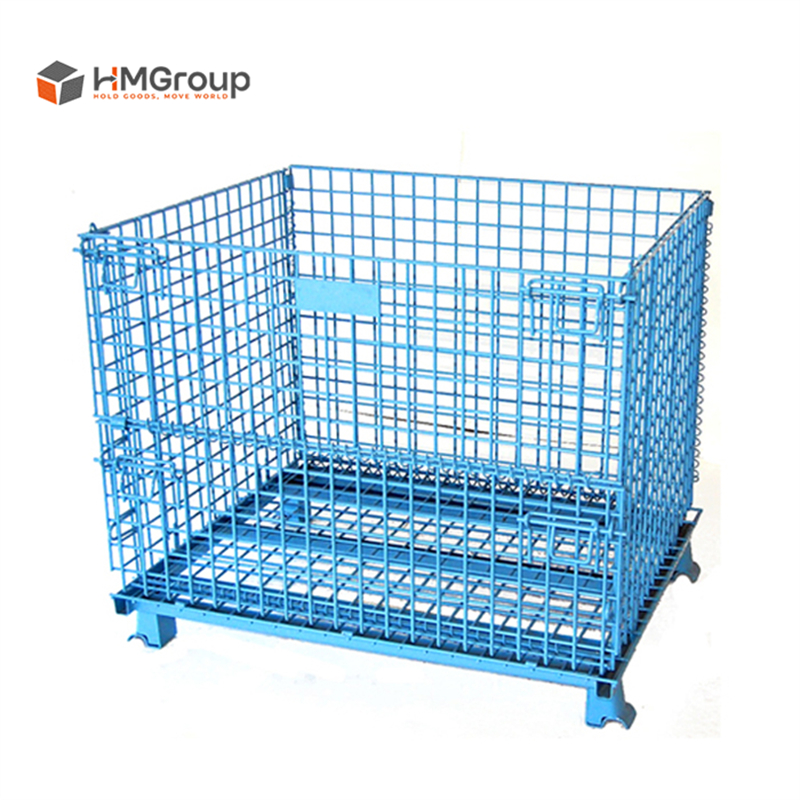
HM Group is a Chinese manufacturer of wire containers, wire mesh containers, and related logistics equipment based in Dalian, with three production bases in Xiamen, Nanjing, and Qingdao. The company offers OEM, ODM, and fully customized production services for a wide range of industrial wire container types. Customization options include surface treatment (zinc, hot dip galvanized, powder coating), size, loading capacity, powder coating color, logo printing, and designs such as forklift guide, wire divider, runner bar, name plate, and wheels. This level of flexibility allows HM Group to deliver solutions that match specific storage environments, from temperature-controlled wine cellars to high-volume preform warehouses.
Technical Foundation: Built for Extreme Conditions
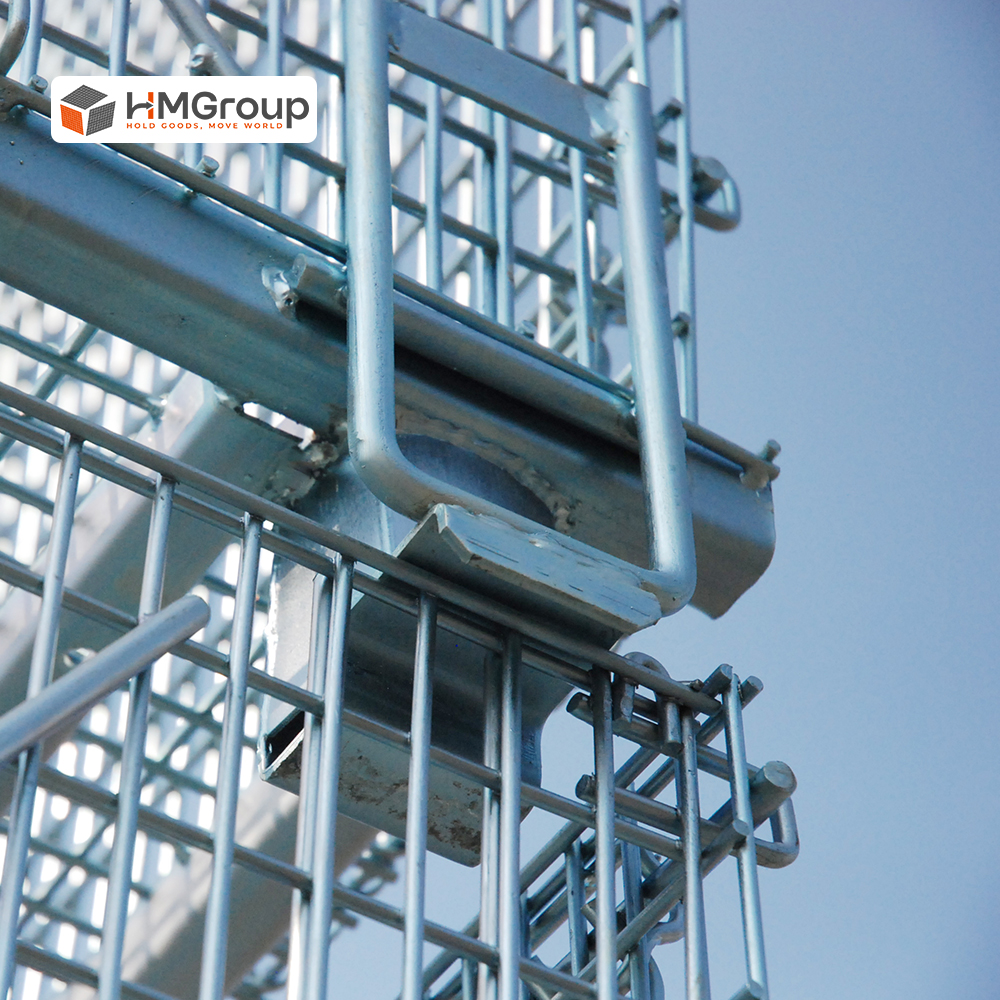
HM Group wire containers are constructed from mild steel Q235, with wire gauges ranging from 4 mm to 12 mm depending on the model and duty requirement. Products are engineered to operate under high-volume manufacturing and high-rotation logistics conditions, and when properly used, carry a 3 to 5 year warranty. The containers can be finished with indoor zinc plating lines and indoor powder coating lines, ensuring consistent corrosion resistance even in high-humidity or vibration-prone logistics environments.
Proven Applications: Real-World Performance at Scale
PET Preform Storage – Nestlé (Global)
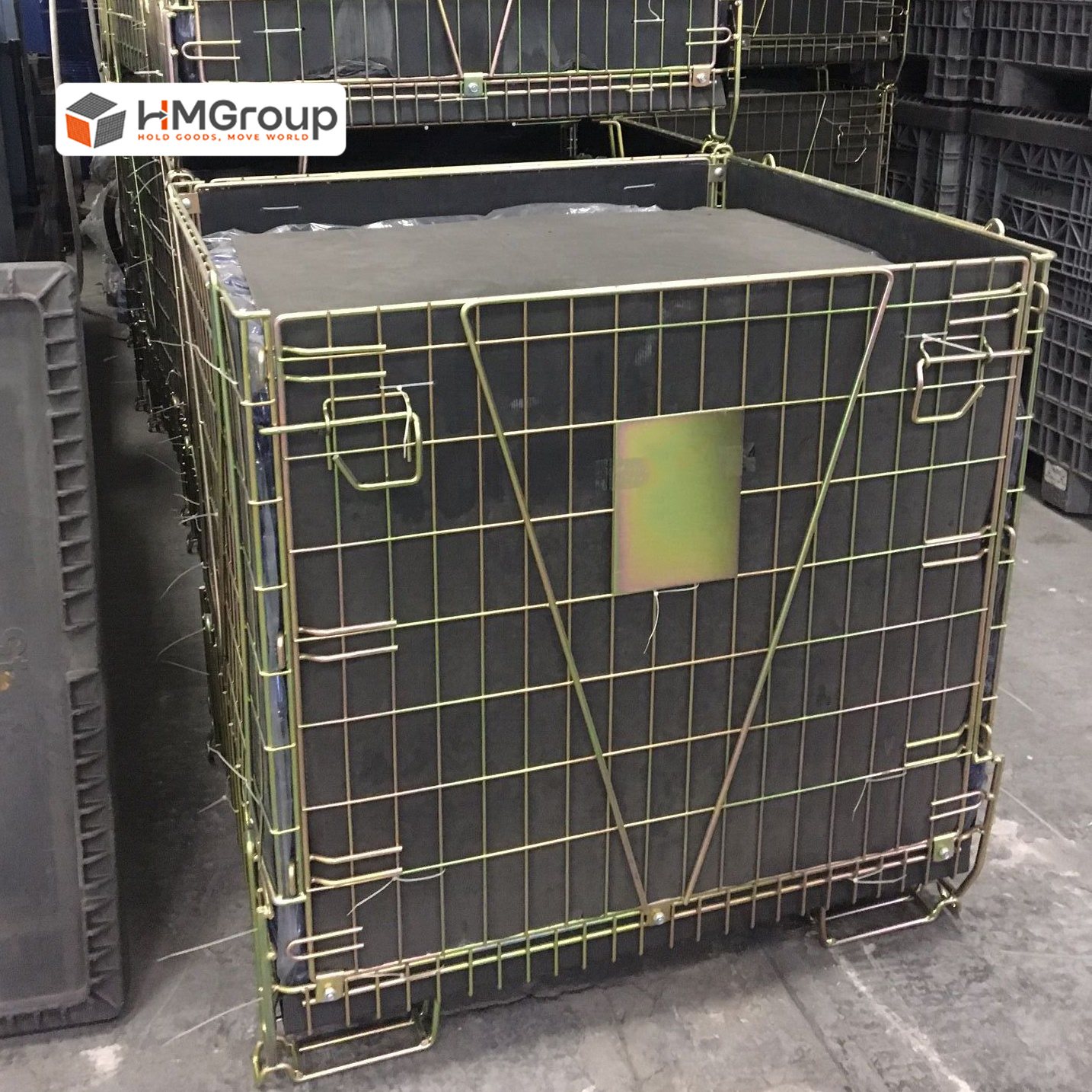
In a global deployment for Nestlé across Pakistan and Costa Rica, 10,000 units of PET preform wire containers achieved a 300% increase in warehouse storage capacity through secure 4-high vertical stacking. The project improved stock counting and identification speed by 40%, managing turnover of millions of preforms. The containers used a PP sheet inner lining to protect preform surfaces, and the open-mesh design enabled instant visual stock checks.
PET Preform Logistics – Coca-Cola South Africa
For Coca-Cola South Africa, 5,000 units of PET preform wire containers enabled secure vertical stacking of 4 to 6 tiers, increasing storage density by up to 400%. The precision-engineered mesh with PP sheet inner lining protected delicate preform surfaces, while the interlocking steel structure eliminated collapse risks. The solution improved internal material handling efficiency by 35%.
Wine Storage – European Cellar Conditions
HM Group wine containers (models HM-WEU001, HM-WEU005) are designed to operate under temperature-controlled, high-humidity underground cellar conditions for bottle aging. They are also engineered for vibration-resistant container loading during cross-border logistics, making them suitable for wine-exporting countries such as Australia, Spain, Italy, Portugal, France, Chile, and Argentina.
Market Trend Analysis
The demand for application-specific wire containers is broadening across industries. In the PET preform sector, global beverage leaders require containers that combine high stacking stability with contamination prevention. In the wine industry, the shift toward export-oriented logistics demands vibration-resistant packaging that can withstand long-haul shipping without damaging bottles. In heavy-duty automotive and warehousing, buyers increasingly require containers that can integrate with automated systems while supporting high static loads. HM Group’s ability to deliver OEM/ODM solutions with documented performance at Fortune 500 facilities positions it to meet these emerging requirements.
Comparison with Traditional Solutions
| Aspect | Traditional (Wood/Plastic Pallets) | Custom Wire Container (HM Group) |
|---|---|---|
| Stackability | Limited, often unstable | Up to 6 high under full load |
| Customization | Minimal | Surface, size, capacity, accessories |
| Ventilation & Visibility | Poor (wood/plastic) | Open mesh – 100% visual access |
| Lifespan | 1–3 years | 3–5 years with proper use |
| Initial Cost | Lower | Higher, but lower TCO |
One honest limitation of wire containers compared to plastic bins is their higher upfront purchase price. However, the combination of collapsibility, stackability, and long service life typically results in a lower total cost of ownership over multiple years of operation.
Future Outlook
As industrial logistics continues to demand higher density, lower return-transport volume, and greater compatibility with automated systems, custom-engineered wire containers will become an essential asset class. Manufacturers that offer deep customization—ranging from fork-pocket placement to surface coating chemistry—will increasingly be preferred by global buyers who need to optimize both space and product protection.