
Engineered or Assembled? Auditing Custom Hydraulic Power Units
Two quotations for a custom hydraulic power unit can describe the same voltage, the same maximum flow and the same reservoir volume, and still refer to two different products. What separates an engineered unit from an assembled one is rarely printed on the datasheet. It sits in how the components were cleaned before they met, how the circuit was matched to the cylinder it drives, and what was measured and recorded before the unit was boxed for shipment.
The global hydraulic power unit market was valued at USD 13.6 billion in 2024 by Grand View Research, while Precedence Research estimated USD 11.4 billion for the same year with a 5.5% CAGR through 2034. The two figures diverge, and that divergence is itself a useful signal for buyers: category-level market data describes an industry, not a supplier. Standard packaged units accounted for 47.8% of global hydraulic power unit revenue in 2024 according to Mordor Intelligence, which means more than half of that revenue comes from something other than a fixed catalogue box. Much of that remainder is engineered to a specific machine.
This article is written for buyers who are already past the discovery stage and are now comparing suppliers. It sets out an independent audit framework: the questions worth asking a custom hydraulic power unit manufacturer, what a documented answer looks like, and where an engineered build is genuinely not necessary.
What Assembly-Only Supply Actually Means
An assembly-only supplier combines commercially available pumps, motors, manifolds, valves and reservoirs to a stated voltage, flow requirement and mounting pattern. That is a legitimate business model. For a simple power-up and gravity-down tipping circuit on a light-duty trailer, a correctly assembled unit can perform reliably for years, and the buyer often pays less and waits less.
The distinction matters when the failure modes of the finished unit are set by decisions that nobody documented. Three areas usually reveal the gap.
- System matching. Relief pressure, pump displacement, reservoir volume and lowering behaviour are selected against the specific cylinder and the duty cycle it will see — not only against a customer-supplied voltage.
- Contamination control before and during assembly. Components arrive with machining residue and packaging dirt; assembly and filling introduce further exposure. Cleaning steps and fluid control are what keep that contamination out of sliding surfaces and valve clearances.
- Verification and traceability after assembly. Pressure testing, leakage inspection and functional checks on the control circuit produce records. A quotation and a dispatch note are not records.
The Contamination Question Buyers Rarely Ask
In hydraulic systems, particulate contamination is widely recognised as a major contributor to premature wear in pumps, valve spools and seals. Particles that reach a sliding surface do not announce themselves at commissioning; they show up later as leakage, sticking valves, shortened service intervals and, in mobile equipment, unplanned downtime during a working season.
Contamination reaches a power unit through three routes. The first is residual debris inside purchased components — swarf, casting sand, protective coatings and packaging residue. The second is the assembly environment itself: open ports, dust, and tooling that has not been controlled. The third is the fluid used at fill and top-up. Each route has a corresponding control: cleaning components before assembly, protecting the circuit during assembly, and controlling the fluid introduced into the reservoir.
For a buyer, the practical question is not whether a supplier claims to be clean. It is whether cleanliness is a documented step with an owner, a check and a record. A supplier that controls these stages can describe the cleaning stage before assembly, the target applied to the fill fluid, and the leakage and functional checks performed afterwards. A supplier that only assembles typically has nothing to show beyond the invoice.
One honest boundary belongs in this section. Factory cleanliness is a starting condition, not a permanent one. Hose fabrication, uncapped ports, field top-ups and service work can all reintroduce contamination after the unit leaves the plant. That is precisely why documented procedure and verification records are more useful to a buyer than a verbal assurance — they establish what the supplier actually controlled before the unit changed hands.
Where Apex Hydraulic Sits in This Comparison
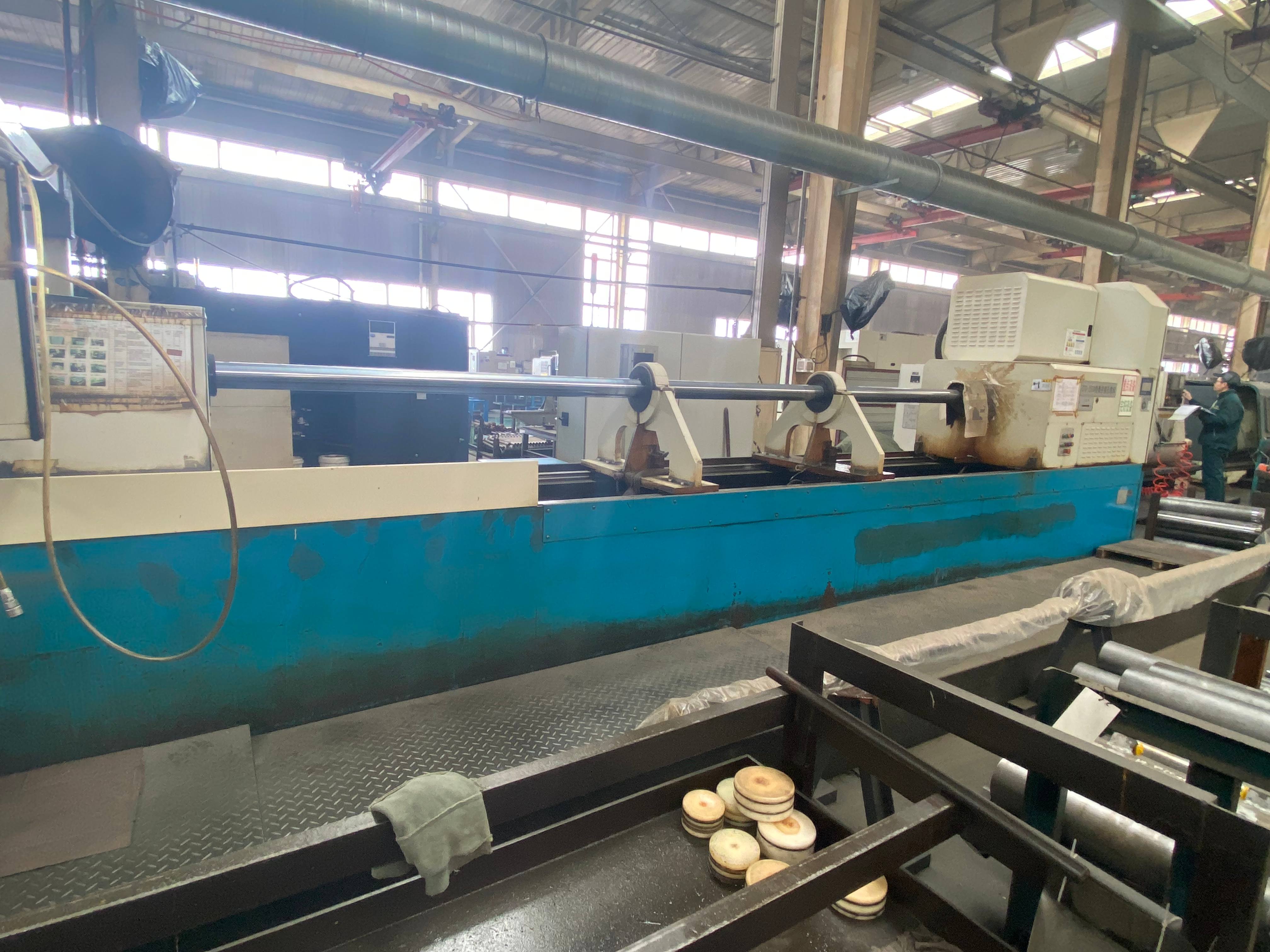
Apex Hydraulic Co., Ltd. is a Chinese hydraulic manufacturer established in 2009 in Qingdao, Shandong Province, producing custom hydraulic cylinders, hydraulic power units and integrated hydraulic systems for equipment manufacturers, distributors and hydraulic solution providers. The company operates a 50,000 m² manufacturing facility with 560 employees, a 25-engineer engineering and R&D team, and reported monthly capacity of more than 8,000 hydraulic cylinders and more than 1,500 hydraulic power units. Roughly 70% of output is exported to North America, Western Europe, South America, Southeast Asia, the Middle East and Australia.
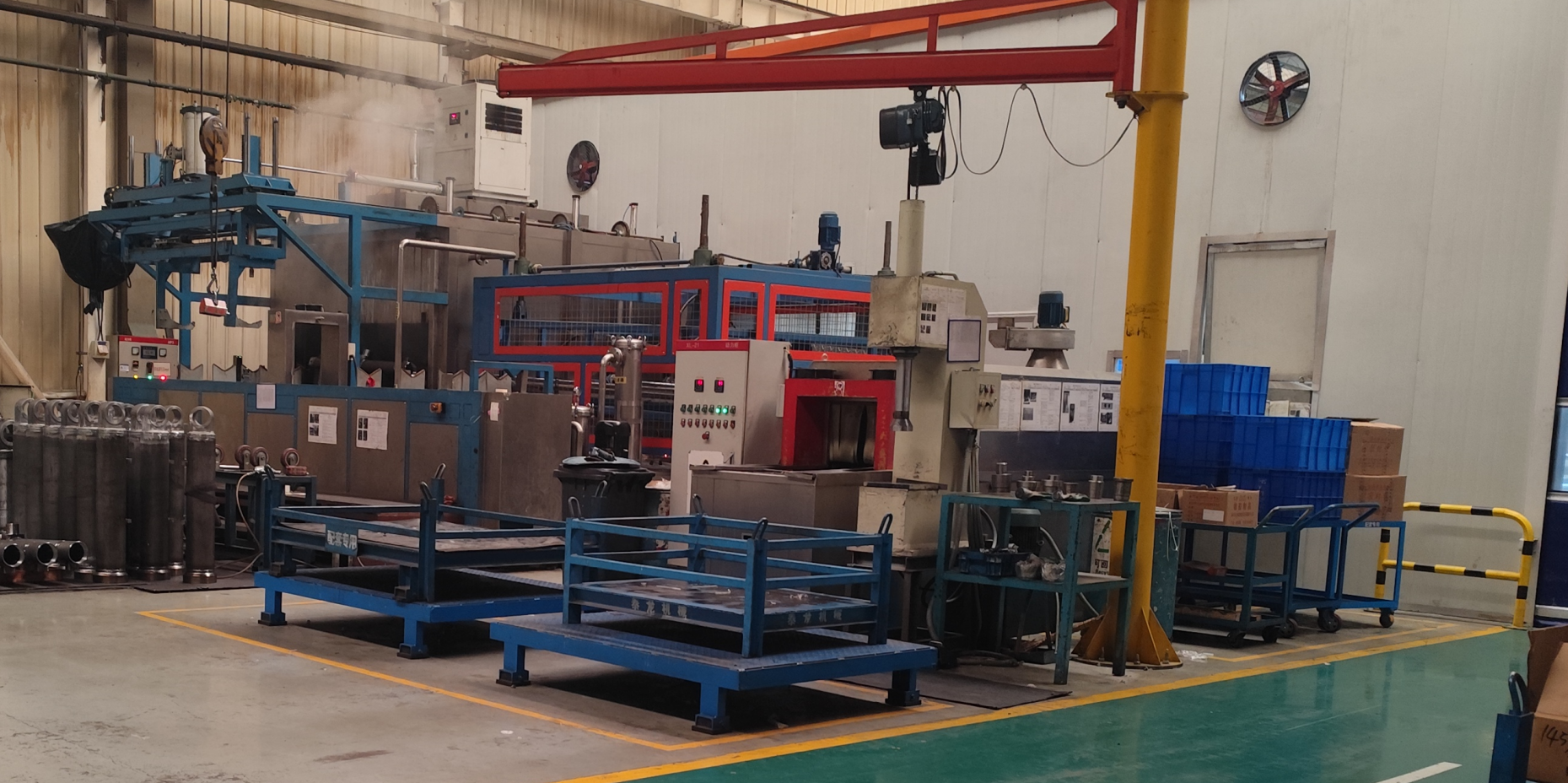
Its stated production and quality-control sequence places cleaning and inspection before and after assembly rather than treating them as dispatch formalities. Published production imagery documents a dedicated component cleaning stage ahead of assembly. The quality-control sequence runs from incoming material inspection (IQC) and in-process quality control (IPQC) through final quality inspection (FQC), dimensional inspection, welding inspection, surface finish inspection, pressure testing, leakage testing, functional testing and 100% final inspection.
The customisation scope covers the cylinder side — bore, rod diameter, stroke length, mounting style, installation dimensions, working pressure, seal system, materials, surface treatment, ports and threads — and, on the power unit side, configuration decisions that include voltage (12V, 24V or 48V), motor, pump, manifold, valve, reservoir and control system. Production is organised around OEM manufacturing, ODM development and custom hydraulic engineering rather than catalogue resale.
A concrete example shows what the audit questions are aimed at. The APEX-DTHPU 12V DC dump trailer hydraulic power unit is a power-up and gravity-down circuit built for single-acting cylinders: an intermittent-duty DC motor, a high-pressure gear pump with a maximum flow rate of 2.0 GPM, relief settings of 3,200 PSI at the A port and 1,500 PSI at the B port, SAE #6 hydraulic ports, a translucent horizontal-mount reservoir of 6 US quarts, an integrated load-retention check valve, a normally closed solenoid lowering valve, and a two-button handheld pendant with a 15-foot cord. Reservoir options span 3, 4, 6, 8 and 13 US quarts, wireless remote control and manual emergency lowering are available options, and each unit is subject to pressure testing, flow testing, relief-valve verification, solenoid-valve functional testing, motor current testing and leakage inspection.
That specification is matched to the cylinder family it drives: single-acting HTC series telescopic cylinders with a 3,000 PSI working pressure, 7-ton and 12-ton capacities, strokes from 78 to 144 inches, gravity return and 1/2 inch NPT or SAE #8 ORB port options. The matching logic — not the parts list — is what a buyer is actually purchasing when they choose an engineered supplier over an assembler.
A Seven-Question Audit Checklist for Supplier Evaluation
The checklist below is deliberately neutral. A small specialist workshop can be fully engineered; a large supplier can still be assembly-only on a given product line. The criteria are documentation and evidence, not company size. Each question has a documented answer and a weaker answer, and the difference between them is usually visible within one technical exchange.
| Question to ask | What a documented answer looks like | Why it matters |
|---|---|---|
| 1. Is the unit engineered against my cylinder, or selected from a catalogue range? | A drawing showing relief setting, pump displacement, flow rate and reservoir volume tied to cylinder working pressure, oil capacity and required lift time. | Undersized reservoirs and unmatched relief settings are among the most common causes of overheating and leakage in mobile circuits. |
| 2. How are components cleaned before assembly? | A named production step, with the components it covers and the person or station responsible. | Residual machining debris is a direct contamination source that enters the circuit before the unit is ever energised. |
| 3. What cleanliness target applies to the fluid at fill, and how is it verified? | An agreed target referenced to component supplier requirements, plus the method used to confirm it before shipment. | Set a fluid specification as part of the purchase order, not as an afterthought at commissioning. |
| 4. Which tests are performed on every unit, and which only on samples? | A test list distinguishing 100% inspection from batch or sample checks, with the corresponding records. | Sample-only testing leaves individual units unverified; buyers should know which category they are paying for. |
| 5. Are relief settings, flow rate and duty cycle stated on the drawing I approve? | Approved drawings carrying the parameters that govern performance and the intermittent duty rating of the motor. | A duty cycle that is not stated cannot be respected in the field, and exceeding it shortens motor life. |
| 6. What traceability accompanies the shipment? | Customer logo, part number, serial number and traceability labelling options, linked to test documentation. | Traceability turns a field failure into a diagnosable event instead of an unanswerable claim. |
| 7. What is the change-control process after drawing approval? | A defined route for engineering changes, with the buyer notified before the change is implemented in production. | Uncontrolled changes are how a validated design quietly becomes a different product in the second order. |
Matching the Circuit to the Cylinder and the Duty Cycle
Engineering a power unit is largely an exercise in constraint matching, and each constraint has a visible consequence when it is ignored. Reservoir volume must be sized against the oil capacity of the cylinder it serves — a telescopic cylinder with a large oil capacity will not behave predictably on an undersized reservoir. Flow rate determines lifting speed, and a pump displacement chosen for a fast lift can starve a circuit at low temperature or draw excessive current from a 12V supply.
Pressure settings must sit above the working pressure needed to lift the load but within the rated limits of the components and the cylinder; the 3,200 PSI A-port relief on the APEX-DTHPU is a matched value for a cylinder family rated at 3,000 PSI working pressure, not an arbitrary ceiling. Voltage selection is an application decision rather than a preference: 12V DC dominates trailer and light vehicle installations, while 24V and 48V configurations become relevant where cable runs are longer or available current is limited. Fluid choice is a climate decision — automatic transmission fluid or a compatible hydraulic oil selected according to operating temperature. Mounting orientation, port type and hose specification follow from the same logic. A unit that satisfies each of these individually but is not matched to the others is an assembly with good components.
Application Focus: Dump Trailers and Mobile Equipment
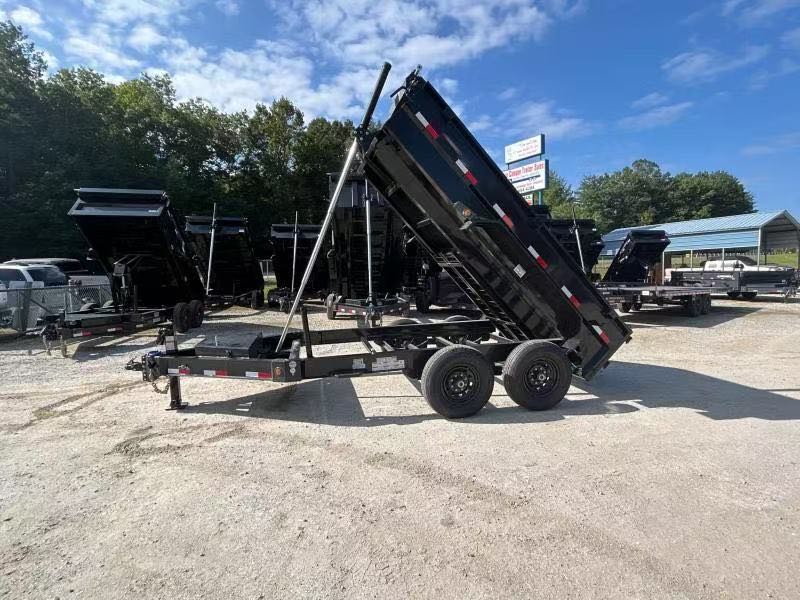
The global dump trailer market was estimated at USD 63.51 billion in 2024 by Market Research Future, with the 10 to 15 ton segment holding the largest share. That is the segment where power-up and gravity-down DC power units paired with front-mounted telescopic cylinders are the dominant architecture, and it is also where contamination control has a directly measurable commercial cost: a trailer that lifts unevenly or leaks during a working season stops earning.
A representative delivery illustrates how the audit criteria translate into outcomes. A dump trailer manufacturer in Canada ordered 1,200 HTC series telescopic cylinders and 500 hydraulic power units over a one-year programme, for trailers used in construction material hauling, agriculture, landscaping and bulk material transport. Components were supplied as front-mounted telescopic cylinders with matching power units, and the reported result was smooth lifting performance, a stable dumping angle and reduced service downtime while supporting continuous heavy-duty operation. The procurement lesson is not the volume; it is that a repeat programme at that scale only holds together if unit-to-cylinder matching and cleanliness control remain stable batch after batch.
The same logic extends to the wider mobile hydraulic field: sanitation vehicles, dump trucks, roll-off trucks, agricultural machinery, construction and mining equipment, marine equipment and material handling applications all rely on the same underlying discipline — a circuit engineered for the machine it serves, assembled under controlled conditions, and verified before dispatch.
Market Direction: Electrification, Pressure Range and Compliance
Several verified market signals reinforce the direction of travel for buyers evaluating this category. Electric-powered hydraulic power units dominated the United States market in 2024, accounting for 60.1% of revenue, and the industrial application segment held the largest revenue share at 56.3% in the same market. The 2,000 to 3,000 PSI pressure range segment is projected to grow at a CAGR of 5.8% from 2025 to 2033, which is the band in which most mobile tipping, hoist and lifting circuits operate. Asia Pacific accounted for 40.2% of global hydraulic power unit revenue in 2024, reflecting the concentration of manufacturing capacity in the region.
The supplier landscape has two distinct tiers. Mordor Intelligence identifies Bosch Rexroth AG, Parker-Hannifin and HYDAC International as leading global manufacturers of hydraulic power units — these companies set the industrial reference point for large stationary systems. Regional custom builders compete in a different arena: fit to a specific mobile machine, documentation discipline and response speed, rather than equivalence with a global industrial platform. Buyers evaluating across tiers should compare like with like.
Product development is moving in the same direction. KTI Hydraulics introduced a submerged DC hydraulic power unit with 12V and 24V options for recycling equipment in 2023, a company-level signal that DC mobile power units continue to be re-engineered for tighter envelope and quieter operation. For European destinations, compliance is a parallel requirement rather than an optional one: hydraulic power units must satisfy EN ISO 4413:2010 for general rules and safety requirements, and hydraulic systems fall within the scope of Machinery Directive 2006/42/EC. Buyers should confirm conformity documentation during supplier evaluation, not after shipment arrives.
What an Engineered Build Does Not Solve
An honest comparison has to state limits, and there are several that apply to engineered supply as well as to assembly-only sourcing.
- Lead time. Apex Hydraulic states 7 to 20 days for standard products and 25 to 45 days for customized products, with large OEM projects scheduled according to the project plan. Engineering and drawing approval take time. A buyer facing an urgent replacement need may be better served by a standard packaged unit.
- Volume economics. Standard products carry a minimum order quantity of one piece, while OEM and customized products are negotiated according to project requirements. The engineering, cleaning and test effort per unit is spread across order volume, so a one-off highly customized build carries a different cost structure than a repeat programme — even though no single number describes every case.
- Not every application needs engineering. Standard packaged units represented 47.8% of global hydraulic power unit revenue in 2024 for a practical reason: intermittent, low-duty, low-cycle applications with generous operating margins can be served perfectly well by catalogue units.
- Factory cleanliness does not travel with the unit. Hose fabrication, open ports, field top-ups and service work can all reintroduce contamination. The buyer's own installation and maintenance discipline remains part of the reliability equation.
- An audit is only as good as the evidence behind it. If a buyer cannot obtain records, drawings or a sample validation, the evaluation stops at the quotation and the checklist delivers nothing.
Outlook
The distinction between engineered and assembled supply will keep resolving into a documentation question rather than a marketing one. With electric-powered units holding 60.1% of United States revenue in 2024 and the 2,000 to 3,000 PSI band projected to grow at 5.8% annually through 2033, more mobile equipment will be specified around DC power packs and matched single-acting circuits. That shift puts pressure on suppliers to demonstrate traceable test data, a defined cleanliness procedure and controlled engineering changes — the parts of the offer a quotation never shows. Buyers who ask those seven questions early will spend less time diagnosing field failures later, and suppliers who can answer them with records rather than adjectives will be the ones that stay on shortlists.
FAQ
What is the difference between a custom hydraulic power unit manufacturer and an assembly-only supplier?
A custom manufacturer owns the engineering decisions — matching pump displacement, motor power, relief settings, reservoir volume and valve function to the cylinder and the duty cycle it will see — and documents the result on the production drawing. An assembly-only supplier combines purchased components to a stated voltage, flow and mounting pattern without that application-level engineering. The finished units can look similar, but the difference becomes visible in the documentation, the cleaning procedure applied before assembly and the test records that accompany shipment.
Why does hydraulic oil cleanliness and component cleaning before assembly affect long-term reliability?
Particulate contamination is a widely recognised contributor to premature wear in hydraulic pumps, valve spools and seals. Debris can enter through components as received, through the assembly environment and through the fluid itself. Cleaning components before assembly and controlling the fluid at fill reduce the contamination that reaches sliding surfaces, which is directly connected to leakage, sticking valves and shortened service life. Because the factory can only control the starting condition, documented records are more useful to a buyer than verbal assurance.
Does a custom hydraulic power unit cost more than a standard packaged unit?
The cost structure differs rather than the absolute price, and the answer depends on volume. A custom unit carries engineering, drawing approval, cleaning, testing and traceability effort, plus longer lead time — Apex Hydraulic states 25 to 45 days for customized products against 7 to 20 days for standard products. Those costs spread across order volume, so a repeat OEM programme has a different economics profile than a one-off build. For low-duty, low-cycle applications a standard packaged unit remains adequate; standard packaged units accounted for 47.8% of global hydraulic power unit revenue in 2024 according to Mordor Intelligence.
What test records should accompany a hydraulic power unit?
At minimum, evidence of pressure testing, leakage inspection and functional verification of the control circuit. As an example of the scope available, Apex Hydraulic subjects its APEX-DTHPU 12V DC dump trailer power unit to pressure testing, flow testing, relief-valve verification, solenoid-valve functional testing, motor current testing and leakage inspection, within a stated quality-control sequence that also includes incoming material inspection, in-process control, final quality inspection and 100% final inspection. Identification options on that unit include customer logo, part number, serial number and a traceability label.
How long does a custom hydraulic power unit take to manufacture?
Apex Hydraulic states that standard products ship in 7 to 20 days, customized products in 25 to 45 days, and large OEM projects are scheduled according to the project plan. The customized timeline includes engineering and drawing approval as well as production and testing. Buyers planning a trailer or equipment build should sequence the power unit order so that drawing approval happens before the production slot rather than during it.
For component-level specifications behind the audit points discussed above, Apex Hydraulic's main product catalogue is available at the APEX Hydraulic product catalogue.
Have Questions or Need More Details?
Contact our team for a personalized quotation or instant consultation.
Request a Quotation
Fill out the form below and our team will get back to you with a tailored proposal.
WhatsApp Direct Chat
Prefer to chat in real-time? Message us on WhatsApp for instant assistance & quick answers.
- Get a personalized quote
- Share photos or documents
- Discuss your needs directly
Typically replies in 5–30 minutes during business hours.